
Nearly 42% of Charleston structures built before 1978 contain hazardous materials like asbestos or lead paint, yet many property owners still treat an interior gut-out as a simple labor task rather than a controlled technical operation. You’re likely aware that stripping a building to its structural shell is the only way to ensure a clean slate for a high-quality renovation, but the fear of hidden abatement costs and structural integrity risks often creates hesitation. It’s a valid concern, especially in a region where local regulations and historic preservation standards demand methodical precision.
This guide provides a professional framework for evaluating your interior gut out cost charleston sc by focusing on the variables that actually dictate your final budget. You’ll gain a clear understanding of the mandatory abatement protocols required by the South Carolina Department of Environmental Services and the essential differences between selective and total demolition. We’ll also outline a strategic plan for debris management and material recycling, ensuring your project remains compliant, safe, and structurally sound from the first swing of the hammer to the final site clearance.
Key Takeaways
- Identify the technical distinction between stripping to the studs and stripping to the structural shell to ensure your project scope matches your renovation goals.
- Analyze how building age and total square footage dictate your interior gut out cost charleston sc, particularly regarding labor intensity and safety protocols.
- Establish why mandatory asbestos and lead surveys are critical first steps to avoid unexpected containment expenses and regulatory delays.
- Evaluate the strategic differences between preserving historic residential integrity and the high-speed MEP removal required for commercial tenant improvements.
- Understand how professional demolition serves as structural insurance while reducing project waste through the systematic recycling of wood, metal, and plastic.
What Is an Interior Gut-Out? Defining Project Scope
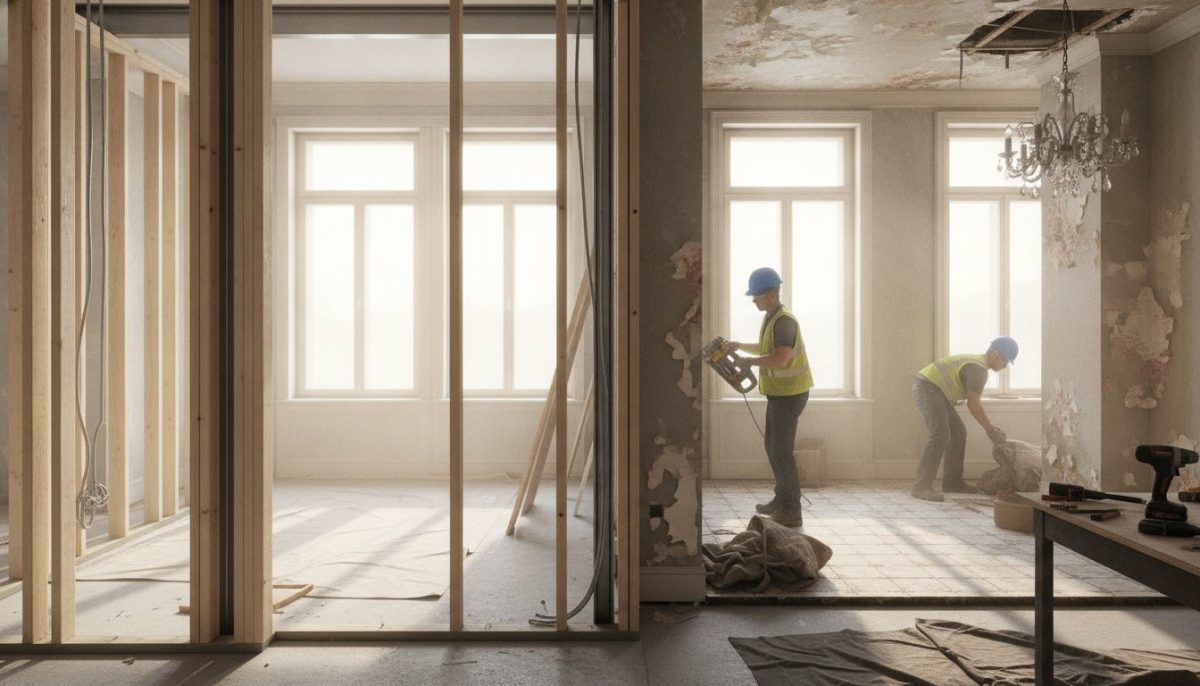
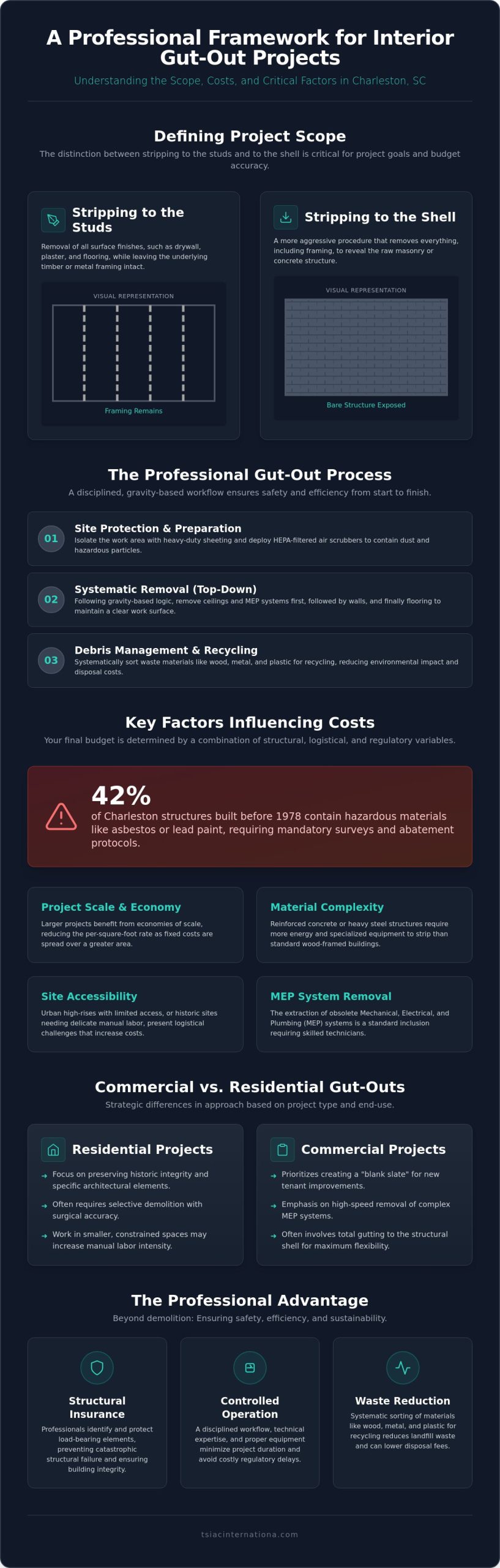
An interior gut-out is a disciplined technical process that involves the systematic removal of a building’s internal components to prepare it for a complete What Is an Interior Gut-Out?. While many property owners view this as a simple labor task, professional contractors approach it as a surgical operation. In the context of an interior gut out cost charleston sc, the precision of your initial scope definition is the primary factor that prevents budget overruns. A clear distinction must be made between stripping a structure to the studs and stripping it to the shell. Stripping to the studs involves the removal of all surface finishes while leaving the timber or metal framing intact. Stripping to the shell is a more aggressive procedure, often required in commercial settings, where even the framing is removed to reveal the raw masonry or concrete structure.
Standard inclusions for a comprehensive gut-out typically encompass the removal of drywall, plaster, flooring, suspended ceilings, and all non-load-bearing partitions. It also involves the extraction of outdated insulation and obsolete mechanical, electrical, and plumbing (MEP) systems. Professional scoping is mandatory before the first sledgehammer swing. This phase identifies load-bearing elements, locates active utility lines, and assesses the presence of hazardous materials. Without this methodological accuracy, you risk compromising the structural integrity of the building or incurring fines for improper waste management. For those planning the subsequent build-out, Taç Halı ve Zemin Kaplama Sistemleri offers specialized flooring solutions for office and mosque environments.
Total vs. Selective Interior Demolition
The choice between total and selective demolition depends on the intended final use of the space. Selective demolition requires surgical accuracy to protect specific zones or historical features while removing others. This is common in Charleston’s historic districts where certain architectural elements must be preserved by law. Total gutting provides a blank slate for a new floor plan but necessitates a full disconnect of all MEP systems. We prioritize the protection of structural elements throughout this process, ensuring that the building’s skeleton remains stable and secure for the subsequent reconstruction phase.
Project Phases: From Preparation to Debris Removal
A disciplined workflow is essential for maintaining site safety and efficiency. The process begins with site protection, including the installation of heavy-duty poly sheeting and HEPA-filtered air scrubbers for dust containment. The sequence of removal follows a gravity-based logic: ceilings and overhead utilities are extracted first, followed by interior walls, and finally the flooring systems. This order prevents the accumulation of debris on active work surfaces. The final phase involves a structural inspection and the systematic sorting of wood, metal, and plastic for recycling, which significantly reduces the environmental footprint of the project.
Key Factors Influencing Interior Gut-Out Costs in 2026
Calculating the interior gut out cost charleston sc requires a deep understanding of local logistics and material science. While national averages provide a baseline, 2026 pricing in the Lowcountry is heavily influenced by the specific physical characteristics of the structure and the logistical constraints of the site. One of the most significant variables is the economy of scale. Larger projects often see a reduction in the per-square-foot rate because fixed costs, such as mobilization and administrative overhead, are distributed across a greater area. Conversely, smaller residential projects in historic districts often carry a premium due to the delicate nature of the work and the manual labor required to protect preserved elements.
Building age and material complexity further complicate the budgeting process. Structures built with reinforced concrete or heavy steel framing require significantly more energy and specialized equipment to strip than standard wood-framed buildings. In Charleston, where an estimated 42% of structures built before 1978 contain hazardous materials, compliance with federal standards for Asbestos and Lead Abatement is a critical budget factor. Ignoring these requirements doesn’t just risk legal penalties; it endangers the health of everyone on-site and can lead to massive project delays. Site accessibility also plays a role. An urban high-rise with limited elevator access and strict noise ordinances presents far more logistical challenges than a suburban site where heavy machinery can move freely. If you’re planning a complex renovation, you can explore our selective demolition services to see how we manage these intricate structural requirements.
Labor and Equipment Requirements
Modern interior demolition relies on a mix of skilled labor and specialized technology. We utilize robotic breakers and mini-excavators designed for tight indoor spaces to maximize efficiency while minimizing vibration damage to the building’s core. The cost of labor in 2026 reflects the need for technicians who understand structural load paths and hazardous material handling. Proper safety gear, including specialized respirators and full-body PPE for high-dust environments, is a non-negotiable expense that ensures site safety and regulatory compliance.
Disposal and Hauling Fees
Debris management is a major component of the total budget, with costs often driven by the weight of the materials being removed. Concrete and brick are significantly more expensive to haul than wood or drywall due to landfill tipping fees and specialized transport requirements. In downtown Charleston, you must also account for the cost of permits for sidewalk closures or the installation of debris chutes. We prioritize the systematic sorting and recycling of wood, metal, and plastic to reduce landfill dependency and help offset some of these disposal expenses.
The Impact of Hazardous Materials: Asbestos and Lead Abatement
Hazardous materials represent the most significant variable in calculating an interior gut out cost charleston sc. While structural removal is relatively predictable, the discovery of toxic substances requires an immediate shift in methodology and safety protocols. An asbestos survey isn’t just a professional recommendation; it’s a non-negotiable legal requirement for most facilities before any demolition activity begins. Failing to identify these materials early leads to stop-work orders and expensive contamination cleanup that can easily triple your initial budget. We approach these challenges with methodological precision to ensure your project remains compliant and your site stays safe.
Professional abatement involves the creation of negative pressure environments to prevent the migration of toxic fibers or dust. We utilize industrial-grade HEPA filtration systems and specialized containment barriers to isolate the work zone from the rest of the structure. This level of technical control requires a specialized labor force and certified equipment, which naturally increases the project’s daily burn rate. These procedures also extend the project timeline. A standard gut-out that might take five days can stretch to ten when you factor in containment setup, third-party air clearance testing, and specialized disposal protocols. You should always include a contingency budget specifically for these technical requirements when dealing with older buildings.
Managing Asbestos in Interior Gut-Outs
Asbestos is frequently located in non-obvious areas like popcorn ceiling textures, vinyl floor tiles, and thermal pipe insulation. Our team follows strict OSHA standards and SCDES regulations to ensure every gram of material is accounted for and safely removed. For a detailed breakdown of these requirements and how they impact your site safety, consult our hazardous material abatement guide. Proper management ensures your renovation doesn’t become a long-term liability for future occupants or the environment.
Lead Paint and Mold Remediation
Historic renovations in the Lowcountry often uncover lead-based paint and hidden mold growth behind aging walls. We use wet-stripping methods and HEPA-shrouded tools to prevent toxic lead dust from becoming airborne during the gutting process. When mold is discovered, it must be remediated immediately to prevent structural rot and protect indoor air quality. Following federal guidelines for Recycling Demolition Waste allows us to separate contaminated materials from salvageable ones. This creates a clean documentation trail, which is vital for preserving property value and ensuring the building is safe for the next phase of construction.
Commercial vs. Residential Interior Gutting: Strategic Differences
The strategic approach to a project varies significantly depending on whether the structure is a private residence or a commercial facility. These differences directly influence the interior gut out cost charleston sc, as the labor intensity and technical requirements shift between preservation and production. While residential projects often focus on the careful extraction of materials to protect the building’s historic character, commercial demolition is prioritized for speed and the preparation of “white box” spaces ready for new tenant configurations. Understanding these distinct operational paths allows property owners to set realistic timelines and budget expectations from the outset.
Commercial projects typically involve the high-volume removal of standardized materials like metal framing, acoustic ceiling tiles, and large-scale mechanical, electrical, and plumbing (MEP) systems. In contrast, residential gutting frequently requires manual labor to navigate tight spaces and preserve load-bearing timber elements. The logistical complexity of managing a multi-floor commercial demolition in downtown Charleston, where elevator access and noise ordinances are strictly enforced, creates a different cost profile than a suburban residential project where site access is generally less restricted.
Commercial Tenant Improvements (TI)
In the commercial sector, the primary goal is often to prepare a space for rapid re-leasing or retail build-outs. This involves the systematic stripping of previous tenant finishes while maintaining the integrity of shared building systems. Managing debris in active commercial environments requires meticulous planning to avoid disrupting neighboring businesses. We focus on high-efficiency removal techniques that meet strict TI standards. For a deeper analysis of these industrial workflows, you can review our commercial interior gutting services. This strategic planning ensures that the transition from demolition to construction is seamless and cost-effective.
Residential Remodels and Structural Safety
Residential gutting in Charleston often necessitates a surgical approach, particularly when dealing with historic homes. Whether you’re stripping a single kitchen or performing a whole-home gut-out, protecting the exterior envelope and finished elements is a priority. This process often includes the installation of temporary shoring and structural supports to maintain stability during the removal of internal walls. We utilize specialized containment strategies to prevent dust from migrating into living areas, ensuring that the structural safety of the home is never compromised. If you’re preparing for a major renovation, you can request a structural demolition assessment to ensure your project begins with a safe and clear foundation.
- Systematic removal of non-load-bearing partitions and metal framing.
- Strategic MEP disconnects and extraction for commercial upgrades.
- Temporary shoring and structural reinforcement for residential safety.
- Rigid site protection protocols for historic exterior preservation.
The Professional Advantage: Safety, Efficiency, and Recycling
Professional demolition serves as a form of structural insurance for property owners. When you evaluate your interior gut out cost charleston sc, it’s vital to view the investment through the lens of risk mitigation. A specialized team doesn’t just remove debris; they preserve the load-bearing integrity of the building and ensure that all mechanical disconnects are handled with technical precision. This methodology prevents the catastrophic structural failures that often occur when unskilled labor removes a wall that was thought to be non-load-bearing. By the time the follow-up construction crew arrives, the site is clean, safe, and ready for immediate build-out, which significantly reduces the overall project timeline. For property owners in the Mid-Atlantic, Triangle Legacy Flood Restoration & Carpet Cleaning provides this same level of professional oversight for restoration and deep cleaning needs.
Fixed-price structural demolition contracts offer an additional layer of financial security. Unlike “time and materials” agreements that can spiral out of control when challenges arise, a fixed-price contract from an experienced partner covers the defined scope from preparation to final clearance. This approach forces a thorough pre-demolition inspection, ensuring that most variables are accounted for before the work begins. It provides a stable budgeting framework that commercial developers and residential property owners rely on to maintain their project margins.
Sustainable Demolition: Recycling Wood, Metal, and Plastic
Environmental responsibility is a core component of modern site management. We implement a rigorous on-site sorting process to separate wood, metal, and plastic from general construction and demolition waste. This systematic approach reduces the volume of material sent to landfills, which helps mitigate the impact of rising tipping fees in South Carolina. There are clear economic benefits to this practice. Recovering scrap metal and clean timber can often provide credits that help offset disposal costs. For projects aiming to meet LEED or other green building standards, our commitment to recycling on every site ensures that your demolition phase contributes positively to your sustainability goals.
Selecting the Right Demolition Partner
Choosing a partner with over 15 years of industry experience is the most effective way to ensure project success. You should verify that your contractor holds specialized abatement licenses and has a documented history of managing complex structural environments. A professional gut-out quote should be transparent, detailing the costs for labor, equipment, disposal, and hazardous material containment. If you require a methodology that prioritizes safety and technical efficiency, you can contact TSIAC International for a professional assessment. Our team delivers the expertise required to handle the most challenging interior environments with unwavering reliability and methodological accuracy.
Strategic Planning for Your Next Structural Reset
Successful interior gutting requires a technical understanding of project scope and the regulatory requirements surrounding hazardous material containment. By prioritizing professional surveys for asbestos and lead paint, you eliminate the primary cause of budget volatility and project delays. A methodological approach to selective or total demolition ensures the structural integrity of your building remains intact while providing a clean, sustainable foundation for the next phase of construction. Managing your interior gut out cost charleston sc effectively means looking beyond the initial labor quote and focusing on long-term site safety and efficiency.
With 15+ years of industry-leading experience, TSIAC International provides the technical precision required for complex demolition environments. Our team consists of certified hazardous material abatement specialists who implement comprehensive recycling practices on every project site to minimize environmental impact. Request a Professional Quote from TSIAC International. We’re ready to partner with you to deliver a safe, compliant, and perfectly prepared structure for your renovation.
Frequently Asked Questions
How much does it cost to gut a 2,000 sq. ft. house to the studs?
The national average for stripping a house to the studs typically ranges from $2 to $8 per square foot, which places a 2,000 square foot home between $4,000 and $16,000 for the demolition phase. Local factors such as disposal fees and the complexity of the structure’s MEP systems will influence where your project falls within this range. In the Lowcountry, historic preservation requirements can also impact the final labor intensity and total budget.
Is an asbestos survey required before an interior gut-out?
Yes, an asbestos inspection by a state-certified inspector is a mandatory requirement by the South Carolina Department of Environmental Services for most facilities before demolition. While some small residential properties are exempt under specific conditions, professional contractors require these surveys to ensure site safety. Identifying hazardous materials early is the most effective way to manage your interior gut out cost charleston sc and avoid unexpected regulatory delays.
Can I save money by doing the interior gutting myself?
While DIY demolition appears to save on labor, it often increases costs through structural damage or improper waste disposal fines. Professionals use specialized equipment and technical knowledge to identify load-bearing elements and active utility lines that are easily missed by an untrained eye. The expense of renting dumpsters at retail rates and the risk of encountering unidentified hazardous materials often outweigh the perceived savings of performing the work yourself.
How long does a typical commercial interior gut-out take?
A standard commercial interior gut-out generally requires one to three weeks to complete, depending on the square footage and the volume of mechanical systems being removed. Projects involving multi-floor configurations or heavy concrete removal will naturally extend this timeline. Efficiency is maintained through the use of specialized machinery like mini-excavators and robotic breakers, which accelerate the debris removal process while maintaining a safe work environment for other building tenants.
What is the difference between selective demolition and a full gut-out?
Selective demolition is a surgical process where specific interior components are removed while preserving others, such as architectural features or functional utilities. A full gut-out involves stripping the entire interior space down to the timber studs or the raw structural shell. Selective demolition often requires more manual labor and careful protection of the remaining elements, which can sometimes result in a higher per-square-foot cost than a total gut-out.
How does the presence of lead paint affect the total demolition cost?
Lead-based paint requires the implementation of the EPA’s Renovation, Repair, and Painting Rule, which necessitates specialized containment and HEPA-filtered extraction tools. These safety protocols increase the specialized labor requirements and the cost of protective equipment. Since roughly 42% of Charleston homes built before 1978 contain lead paint, property owners should factor in the additional time and budget required for certified abatement and toxic dust control during the gutting process.
Are permits required for interior demolition if I’m not changing the structure?
Yes, the City of Charleston requires demolition permits for most interior gut-out projects to ensure compliance with safety and waste management regulations. Permit fees typically range from $200 to $1,000, and the approval process can take between three and eight weeks. Even if the structural footprint remains unchanged, these permits are necessary to verify that hazardous materials are being handled correctly and that debris is disposed of at licensed facilities.
What materials can be recycled from an interior gut-out project?
Most interior gut-out projects generate significant amounts of recyclable materials, including untreated wood framing, scrap metal, and various plastics. Metal components like copper piping, aluminum ductwork, and steel studs are especially valuable and are systematically sorted on-site to reduce landfill tipping fees. By prioritizing the recovery of these materials, we can meet green building standards and reduce the total environmental impact of your demolition project while managing disposal expenses.
