
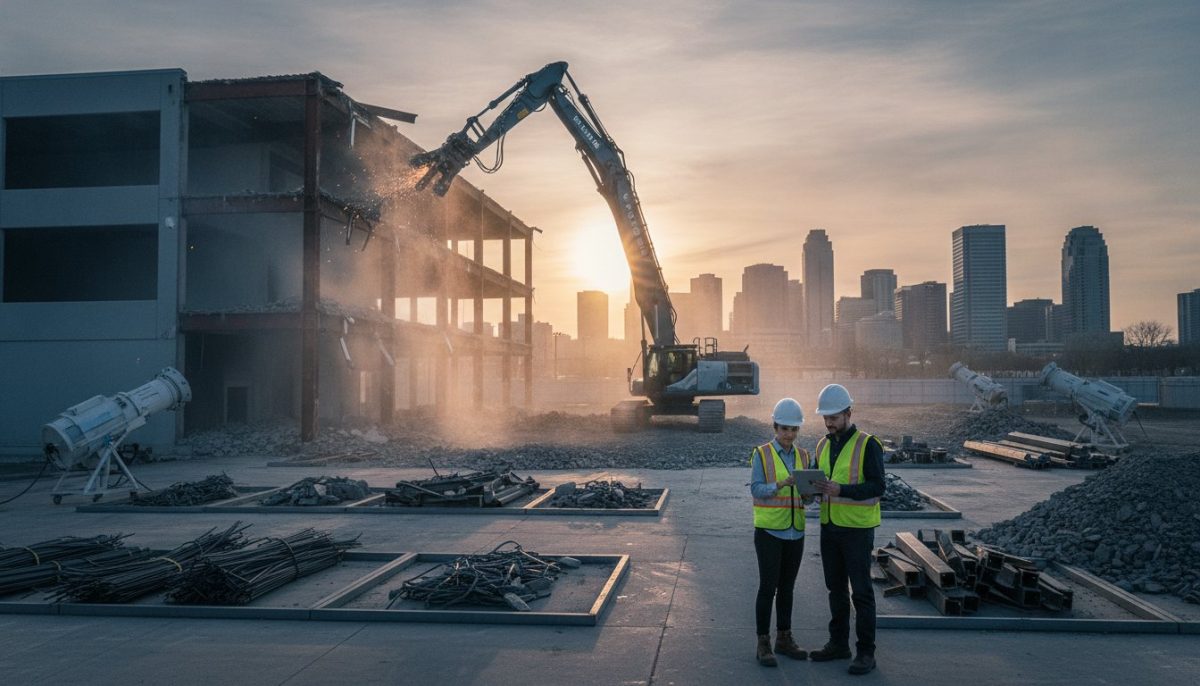
A single oversight in hazardous material notification can result in fines of up to $37,500 per violation, every single day. This reality underscores that modern demolition is no longer about blunt force; it’s a disciplined engineering process where material recovery and risk mitigation take precedence. Many property owners struggle to distinguish between simple interior gutting and complex structural removal, which often leads to costly delays and regulatory friction. When you’re evaluating demolition contractors greenville sc, you need a partner who views site preparation as a technical discipline rather than a simple clearing task.
We understand the pressure of maintaining strict project timelines while navigating complex notification requirements for asbestos and lead abatement. This guide provides a methodology for identifying and hiring contractors who prioritize safety and technical precision. You’ll learn how to evaluate hazardous material handling, verify necessary documentation, and implement recycling strategies that minimize environmental impact. By the end of this article, you’ll have a clear roadmap for securing a site that’s fully compliant and ready for the next phase of construction.
Key Takeaways
- Distinguish between total structural removal and surgical selective demolition to properly define your project’s technical requirements.
- Identify the essential vetting criteria for demolition contractors greenville sc, including the evaluation of safety metrics and specialized environmental insurance.
- Understand why professional hazardous material abatement must occur before any structural disturbance to avoid severe regulatory penalties.
- Follow a methodical five-step safety framework that aligns with OSHA and EPA standards to ensure site stability and risk mitigation.
- Learn how professional site management integrates interior gutting with material recycling to minimize environmental footprints and landfill waste.
Understanding the Scope: Structural vs. Selective Demolition
Professional demolition isn’t just about destruction; it’s a disciplined process of controlled dismantling. While evaluating demolition contractors greenville sc, it’s vital to understand the technical difference between structural and selective approaches. Structural demolition involves the complete removal of a building from its foundation up, essentially returning the plot to a greenfield state. Selective demolition, by contrast, is a surgical process where specific wings, floors, or interior sections are removed while preserving the primary building shell. Both require a methodical plan to ensure site stability and worker safety.
Structural projects rely on heavy excavators and high-reach shears to manage massive loads safely. Selective work often utilizes hand tools, skid steers, and robotic breakers to maintain precision in tight environments. Choosing between these Demolition methods depends on whether the goal is a total site reset or a strategic renovation. Commercial upgrades frequently favor selective methods to modernize aging facilities without the cost of new ground-up construction, whereas residential projects might require full structural teardowns to clear space for modern estates.
Total Structural Removal and Site Clearing
Total removal requires a high degree of logistical coordination. Before any physical impact occurs, utility disconnects must be verified to prevent hazardous leaks or electrical events. Maintaining structural integrity during the teardown phase is paramount; an unplanned collapse endangers personnel and complicates debris management. Modern site clearing involves the methodical sorting of wood, metal, and concrete to facilitate recycling. Effective hauling logistics ensure that large-scale materials leave the site in a flow that prevents bottlenecks. This systematic approach ensures the site is clean and ready for future development without hidden subsurface obstructions.
Selective Demolition for Renovations
Selective demolition is the preferred choice for tenant improvements and adaptive reuse projects. This process requires a deep understanding of load-bearing systems to ensure that removing one section doesn’t compromise the remaining structure. Interior gutting involves stripping a space down to the studs, removing drywall, and clearing out outdated mechanical systems. Specialized tasks, such as acoustic ceiling and flooring removal, require a light touch to avoid damaging the underlying building shell or shared utility lines. For demolition contractors greenville sc, the challenge lies in executing these removals within an occupied or partially operational building without disrupting surrounding activities or violating safety protocols.
Vetting Your Partner: Key Criteria for Selecting a Contractor
Selecting a partner for complex structural removal isn’t about finding the lowest bid. It’s about risk management. In an industry where a single error can compromise structural stability or trigger environmental violations, 15 years of experience serves as a necessary baseline. Experienced demolition contractors greenville sc understand that every site has unique geological and architectural challenges that require more than just force. They bring a methodical approach to identifying load-bearing hazards and utility conflicts before the first piece of equipment arrives on-site.
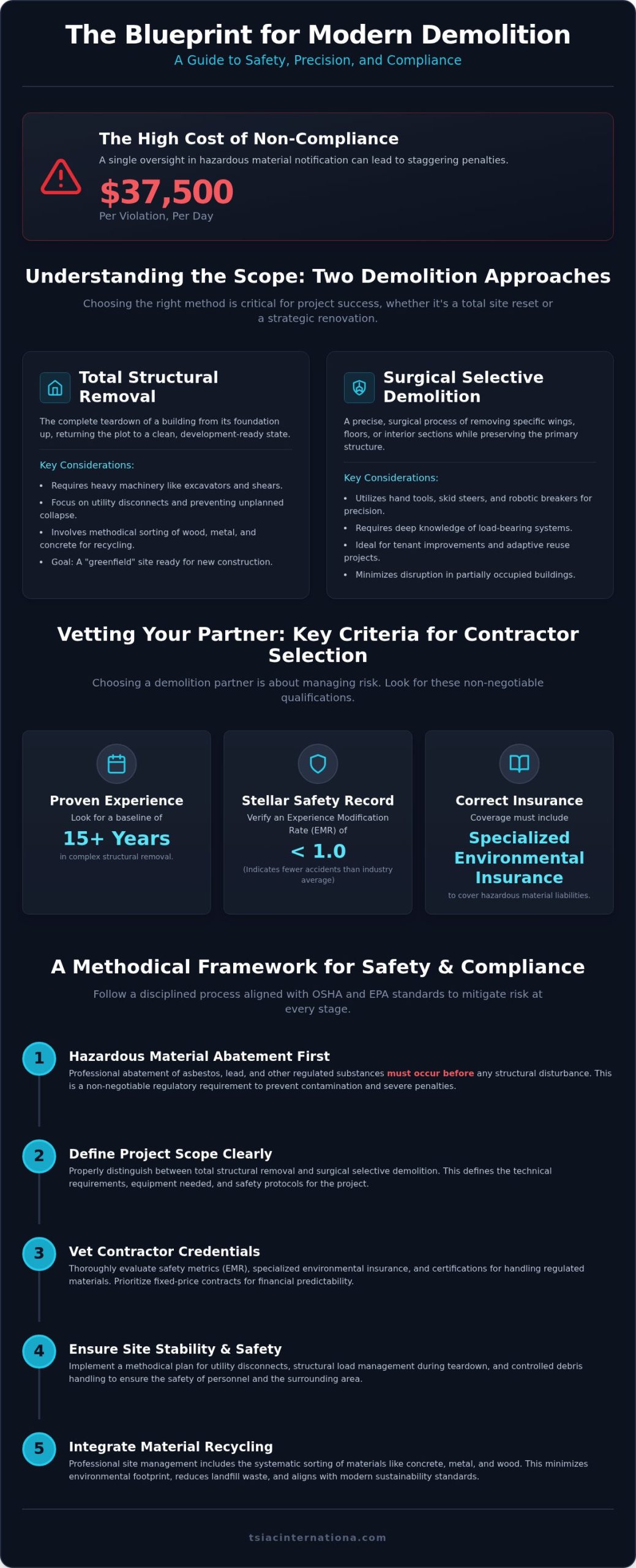
Financial predictability is equally vital for large-scale projects. While hourly estimates might seem flexible, they often lead to budget creep when unforeseen site conditions arise. A fixed-price contract model provides cost certainty, ensuring that the contractor absorbs the operational risks rather than the client. Additionally, you should evaluate a firm’s Experience Modification Rate (EMR). This metric reflects their safety history; a score below 1.0 indicates that the contractor operates with fewer accidents than the industry average, which directly impacts your project’s liability profile.
Licensing, Certification, and Insurance
Insurance coverage must go beyond standard general liability. For projects involving hazardous materials, specialized environmental insurance is mandatory. This protects the property owner from long-term liabilities associated with improper disposal or accidental releases. Verify that your contractor holds specific certifications for handling regulated substances according to Asbestos Laws and Regulations. In commercial sectors, bonding capacity also serves as a proof point of a contractor’s financial health and their ability to complete large-scale obligations without interruption.
Technical Capability and Equipment Fleet
Operational readiness depends on the strength of a contractor’s fleet. Firms that own their heavy machinery, such as high-reach excavators and specialized crushing attachments, maintain better control over project timelines than those relying on third-party rentals. Precision removal requires more than just heavy iron. It demands specialized tools for interior gutting and a dedicated crew trained in hazardous material containment. If you’re planning a complex renovation, partnering with a firm that offers comprehensive structural and selective expertise ensures that every phase of the teardown is handled with engineering-grade precision.
The Critical Necessity of Asbestos and Lead Abatement
Professional abatement is a non-negotiable prerequisite for any safe site transformation. It’s a legal mandate that must precede any structural or interior disturbance. Qualified demolition contractors greenville sc recognize that disturbing hazardous materials without a verified remediation plan triggers severe health risks and immediate site shutdowns. These materials are often hidden within the very fabric of older buildings; flooring, pipe insulation, and exterior siding are frequent culprits for asbestos contamination. Compliance with OSHA Demolition Standards ensures that toxic particulates aren’t released into the surrounding atmosphere, protecting both the workforce and the public.
Containment is the core of effective remediation. Specialized barriers and negative pressure systems prevent toxic dust from migrating to neighboring properties or clean zones within a building. Without these technical safeguards, a selective demolition project can quickly turn into an environmental crisis. High-efficiency particulate air (HEPA) filtration and meticulous site monitoring are essential tools that separate professional firms from those who treat safety as an afterthought.
Asbestos Abatement Protocols
The inspection and testing phase represents the first line of defense. You can’t rely on visual checks; only certified laboratory analysis of material samples can confirm the presence of asbestos. Once identified, the removal process follows a strict methodology. Technicians use wetting agents to keep fibers from becoming airborne while working within sealed environments. Negative pressure machines ensure that air only moves into the containment area, never out. Every gram of hazardous waste is double-bagged, labeled, and tracked through comprehensive regulatory documentation to ensure legal disposal at authorized facilities.
Lead Paint and Mold Remediation
Historic and aging structures present unique challenges, particularly regarding lead-based paint. Remediation in these environments requires specific mandated protocols to manage dust and debris. During the interior gutting process, crews often discover mold growth hidden behind drywall or within HVAC systems. Integrating mold remediation into the demolition workflow prevents these biological hazards from compromising the new construction phase. The ultimate goal is to deliver a “clean” site, verified by clearance testing, which provides the certainty needed for follow-on trades to begin their work without delay. If you’re managing a complex facility upgrade, ensure your demolition contractors greenville sc have the internal capabilities to handle these toxic variables simultaneously.
Safety Standards and Environmental Responsibility
A safe demolition site is the result of methodical planning rather than luck. Professional demolition contractors greenville sc operate under a strict five-step framework designed to eliminate structural surprises and environmental hazards. This process begins with a comprehensive site survey and the verification of utility isolations. Once the site is secured, contractors implement structural stabilization measures to protect adjacent properties. The physical dismantling phase follows a controlled sequence, concluding with systematic material sorting and site restoration. This engineering-led approach ensures that every phase of the project remains under total control.
Daily site operations are governed by a combination of OSHA and EPA regulations. These aren’t just bureaucratic hurdles; they’re essential protocols for managing physical risks and environmental impact. Compliance involves everything from air quality monitoring during concrete removal to the proper handling of runoff to prevent soil contamination. By adhering to these standards, contractors shield property owners from the legal and financial liabilities that follow substandard safety practices. Integrating safety into the daily workflow is what separates elite firms from general labor providers.
On-Site Safety and Risk Mitigation
Risk mitigation starts before the engines turn over. Daily safety briefings ensure that every crew member understands the specific hazards of the day’s tasks, from high-reach operations to manual interior gutting. Specialized PPE, including respiratory protection and impact-resistant gear, is mandatory for all personnel. In sensitive commercial environments, contractors must also manage vibration and noise levels to prevent disruption to neighboring businesses. Securing the perimeter with high-visibility fencing and professional signage ensures that the public remains insulated from the active work zone.
The Recycling Workflow: Wood, Metal, and Plastic
Modern demolition treats debris as a resource rather than a burden. Meticulous on-site sorting allows for the recovery of structural steel, copper, and aluminum, which are diverted to industrial reuse channels. Wood debris is often processed for mulch or biomass energy, while plastics are separated to prevent them from entering local landfills. This commitment to recycling provides a clear ethical advantage and can often offset logistical costs for the client. By maximizing material recovery, contractors significantly reduce the project’s environmental footprint.
If you’re ready to begin a project that prioritizes technical precision and environmental stewardship, you can learn more about our recycling and safety protocols to see how we manage complex site requirements.
The TSIAC International Advantage: Precision and Compliance
TSIAC International maintains a 15-year history of structural and selective expertise. We’ve built our character on the ability to manage technical challenges that force other providers to retreat. Many property owners face anxiety over project delays caused by poor site management or regulatory fines. We mitigate these risks by providing a “one-stop” solution. This means our team handles everything from the initial hazardous material assessment to the final interior gutting. When you’re vetting demolition contractors greenville sc, you deserve a partner whose word is a guarantee of quality and safety.
Our commitment to fixed-price contracts provides the cost certainty required for complex commercial budgets. We don’t believe in the ambiguity of hourly estimates that often lead to unforeseen financial surprises. Instead, we apply national-scale professionalism to every project site, ensuring that our technical standards remain consistent regardless of the project’s complexity. This disciplined approach allows us to maintain control over the most demanding work environments while protecting our clients’ interests.
A Methodical Approach to Every Site
We prioritize the integration of hazardous material abatement into the earliest phases of our project lifecycle. By identifying and removing asbestos or lead before structural work begins, we prevent site contamination and ensure worker safety. Our equipment fleet features specialized machinery, such as robotic breakers and high-reach shears, which allow for high-precision selective demolition in confined spaces. The project concludes with a thorough documentation and close-out phase. We provide the detailed manifests and clearance reports you need for final inspections and new construction permits.
Leading the Way in Environmental Stewardship
Our commitment to the environment is reflected in our detailed reporting on recycled material volumes. This data is essential for clients who must demonstrate ESG compliance or meet specific waste diversion mandates. We specialize in commercial interior gutting techniques that maximize the recovery of wood, metal, and plastic. By reducing the volume of debris sent to landfills, we provide a solution that is both ethically responsible and operationally efficient. Our focus remains on delivering a clear site that is ready for immediate redevelopment.
Take the first step toward a compliant and professionally managed site. Schedule a consultation with TSIAC International to review your upcoming project requirements.
Securing Your Site for Future Development
Professional site preparation is the critical foundation for any successful construction project. It requires a methodical transition from hazardous material abatement to high-precision structural removal. By prioritizing strict regulatory compliance and environmental responsibility, you effectively protect your investment from long-term legal liabilities and costly project delays. When you evaluate demolition contractors greenville sc, look for a partner who balances engineering-grade technical expertise with a commitment to sustainable waste diversion practices.
TSIAC International brings over 15 years of certified experience to every project site, offering comprehensive asbestos and lead abatement alongside EPA-aligned recycling practices that minimize landfill impact. Our fixed-price contract model ensures that your project budget remains predictable from the initial site survey through to the final close-out documentation. We specialize in transforming the most complex structural challenges into clean, ready-to-build environments with disciplined accuracy and unwavering reliability. You can move forward with confidence knowing that your site is managed by industry experts who value precision above all else.
Get a Fixed-Price Demolition Quote from TSIAC International
Frequently Asked Questions
Is a permit required for every demolition project?
Yes, almost every structural alteration or total teardown requires a specific permit from local authorities. This process ensures that utility disconnects are verified and environmental notifications are filed correctly with relevant regulatory agencies. Professional demolition contractors greenville sc handle this administrative burden as part of their comprehensive site management. Failing to secure proper permits can lead to immediate work stoppages and significant civil penalties.
What is the difference between abatement and remediation?
Abatement refers specifically to the permanent removal or encapsulation of hazardous materials like asbestos or lead-based paint. Remediation is a broader term encompassing the entire process of identifying, containing, and cleaning up a contaminated site to return it to a safe state. While abatement is a technical removal phase, remediation ensures the final environment meets all health and safety standards before new construction begins on the property.
How long does a typical commercial interior gutting project take?
Timeline varies based on square footage and the complexity of the building’s mechanical systems. A standard 5,000-square-foot office gutting might take seven to ten business days, provided no hazardous materials are discovered during the process. Larger industrial spaces or projects requiring surgical selective removal of load-bearing elements may extend to several weeks. A methodical schedule is essential to prevent delays for the follow-on metal framing and drywall crews.
Can I stay in my building during a selective demolition?
Occupancy is possible but requires rigorous engineering controls to manage noise, vibration, and air quality effectively. Selective demolition in an operational facility involves installing pressurized dust barriers and utilizing specialized HEPA filtration systems to protect inhabitants. However, the logistical constraints often make temporary relocation more efficient for the project timeline. Professional contractors prioritize total isolation to ensure that toxic particulates never migrate into occupied zones during the work.
What happens to the hazardous materials after they are removed?
Hazardous waste is double-bagged, labeled, and transported in sealed containers to authorized disposal facilities. Every shipment is tracked through a chain-of-custody manifest, which serves as your legal proof of compliance for future inspections. These materials are never mixed with standard construction debris. This rigorous documentation process is vital for defending against environmental claims and ensuring that all toxic substances are sequestered according to strict regulatory standards.
How does recycling demolition debris affect my project cost?
Strategic recycling can lower overall project expenses by reducing landfill tipping fees and recovering the scrap value of structural steel or copper. While on-site sorting requires more specialized labor, the diversion of wood, metal, and concrete often creates a net financial benefit. Leading demolition contractors greenville sc utilize this workflow to enhance environmental stewardship while providing a more competitive, fixed-price contract for the property owner during the bidding phase.
What insurance should I verify before hiring a contractor?
You must verify comprehensive general liability, workers’ compensation, and specialized pollution liability insurance. Standard policies often exclude claims related to asbestos or lead-based paint, leaving the property owner vulnerable to significant financial risk. A professional contractor should provide a certificate of insurance that specifically covers hazardous material remediation. High-limit bonding is also a critical indicator of a firm’s financial stability and their ability to fulfill large-scale commercial obligations.
Are fixed-price contracts better than hourly estimates for demolition?
Fixed-price contracts are superior for complex projects because they eliminate the risk of budget creep caused by unforeseen site conditions. Hourly estimates often fluctuate when technical challenges arise during the teardown phase. A fixed-price model forces the contractor to utilize their 15 years of experience to accurately assess risks upfront before work begins. This provides the client with absolute cost certainty and shifts the operational burden to the expert partner.
