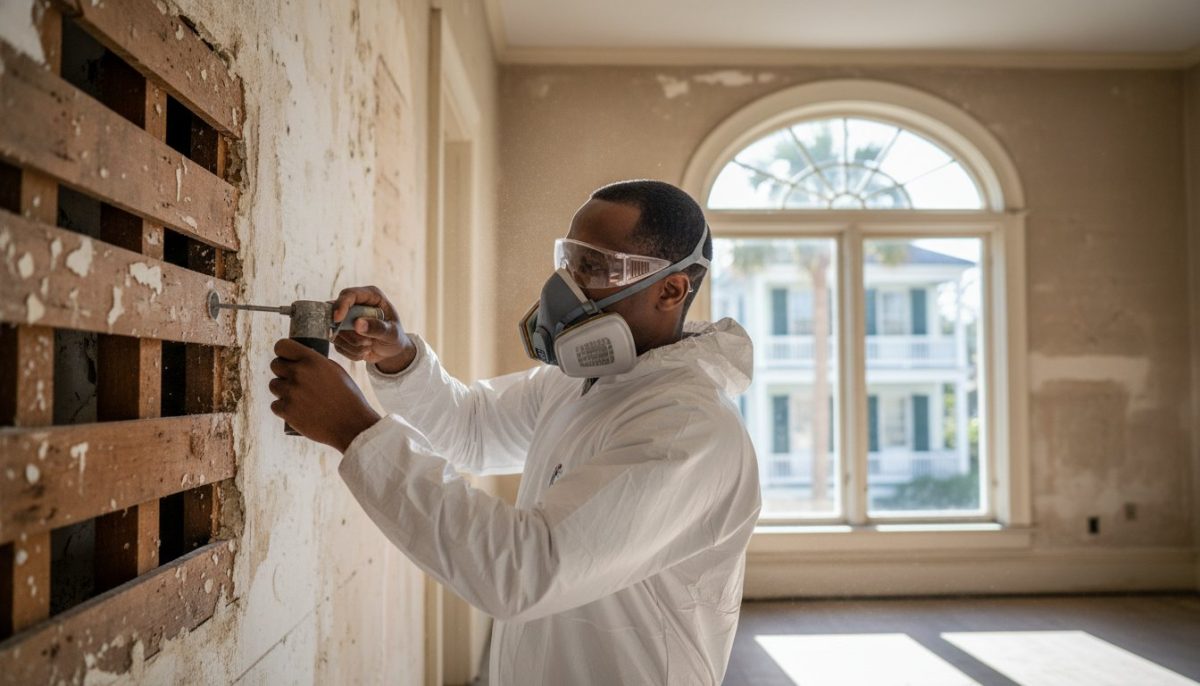
A single oversight in your 2026 renovation plan can trigger SCDES penalties exceeding $25,000 per day. You’ve likely felt the weight of potential…
A single oversight in your 2026 renovation plan can trigger SCDES penalties exceeding $25,000 per day. You’ve likely felt the weight of potential delays or the anxiety of hidden asbestos and lead paint surfacing after the first wall comes down. It’s a valid concern because structural integrity means nothing if the site remains toxic for following trades. We understand that managing a commercial asset requires more than just vision; it demands a disciplined approach to safety and rigorous risk mitigation.
This professional guide delivers the technical roadmap you need for hazardous material abatement south carolina. We’ve compiled the essential data to help you identify, contain, and remediate contaminants during complex structural projects. You’ll learn how to secure full regulatory compliance, minimize environmental impact, and protect your budget from the 15% cost overruns typically caused by late-stage contaminant discovery. We’ll examine the latest 2026 regulatory shifts, specific containment protocols for industrial sites, and the precise steps required to eliminate liability through certified remediation.
Key Takeaways
Understand the critical distinction between basic cleanup and technical remediation to ensure the safety and structural integrity of your project site.
Learn to identify high-risk contaminants and the difference between friable and non-friable materials found across South Carolina’s diverse building stock.
Master the systematic phases of hazardous material abatement south carolina, from the initial survey and laboratory testing to secure containment and disposal.
Navigate the complex hierarchy of safety standards and environmental regulations enforced by the EPA, OSHA, and the South Carolina Department of Environmental Services (SCDES).
Discover how to evaluate professional partners who possess the technical expertise to manage abatement within the context of the broader structural demolition process.
Understanding Hazardous Material Abatement in South Carolina
Hazardous material abatement south carolina is a technical engineering process. It’s not a simple janitorial task. Abatement focuses on the controlled identification, containment, and permanent removal of toxic substances such as asbestos, lead, and chemical residues. While cleanup might address visible debris, professional remediation utilizes specialized equipment to eliminate microscopic threats. Property owners must prioritize these actions before any structural disturbance occurs. This proactive approach prevents the release of carcinogens and avoids the legal complications that arise from improper handling.
The Role of Abatement in Property Safety
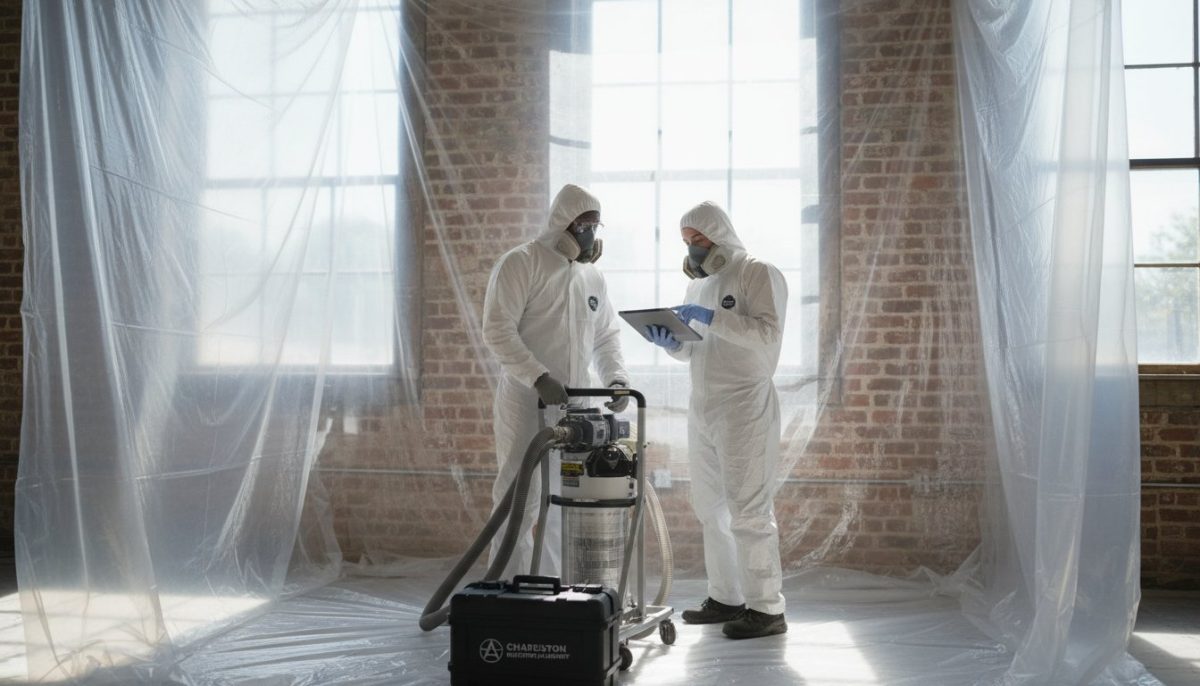
Effective abatement stops toxic particles from migrating into the local environment. During a project, contractors use negative air machines equipped with HEPA filters that capture 99.97% of particles as small as 0.3 microns. These 2026 safety standards ensure that the air quality remains safe for both the work crew and the surrounding community. By removing these hazards, owners protect the health of future occupants and ensure the structure complies with modern environmental codes. It’s a critical step in maintaining the integrity of the building’s ecosystem.
When is Abatement Legally Required?
South Carolina law mandates specific triggers for professional intervention. The South Carolina Department of Health and Environmental Control (DHEC) requires abatement for all commercial renovations and every demolition project. For residential properties, the “four dwelling units” rule applies. If a residential complex contains more than four units, it’s regulated under the same strict standards as commercial sites. Other trigger events include:
Fire and Storm Damage: Restoration after events like the high-wind storms of late 2024 often reveals hidden toxins.
Structural Gutting: Any project that removes load-bearing elements or significant interior finishes.
Property Transfers: Many lenders require a clean environmental report before financing a 2026 real estate transaction.
Investing in professional hazardous material abatement south carolina reduces long-term liability. It also typically increases property valuation by 12% to 15% by removing the environmental debt associated with older structures. Precision in these early stages ensures the project stays on schedule and avoids regulatory fines that can exceed $25,000 per violation.
Primary Hazardous Materials Found in Structural Environments
Identifying contaminants requires a technical understanding of South Carolina’s construction history. Buildings erected before 1980 represent a high risk category for hazardous material abatement south carolina projects. The age of a structure serves as the most reliable indicator of what lies behind the drywall or under the flooring. In the Upstate, legacy textile mills often harbor different chemical signatures than the historic coastal properties in Charleston or the mid-century commercial hubs in Columbia.
Materials are classified by their stability. Friable materials, like spray-applied fireproofing or pipe wrap, can be crumbled by hand pressure. This releases microscopic fibers into the breath zone instantly. Non-friable materials, such as vinyl floor tiles or cement siding, hold fibers in a solid matrix. These are safer until they’re disturbed by mechanical grinding, drilling, or fire damage. A critical mistake in demolition is mixing “inert” debris like clean concrete with regulated contaminants. Once cross-contamination occurs, the entire 20-ton load must be treated as hazardous waste. This error typically increases disposal fees by 300 percent or more.
Asbestos-Containing Materials (ACM)
Asbestos remains the central focus for hazardous material abatement south carolina projects. It’s frequently found in 9×9 floor tiles, transite siding, and thermal system insulation. Because of its fire-resistant properties, it was used extensively in industrial facilities across the state. For a deeper technical dive into compliance, consult our complete guide to asbestos removal in South Carolina.
Lead-Based Paint and Heavy Metals
Lead-based paint is a primary concern in structures built before 1978. When workers use mechanical scraping or heat guns, they create toxic dust that settles in HVAC systems. Beyond lead, older industrial sites often contain mercury in thermostats or PCBs in fluorescent light ballasts. These require specialized handling to prevent soil contamination. You can find detailed protocols in our overview of safe lead paint removal services.
Biological Hazards and Mold
South Carolina’s average summer humidity of 72 percent creates an ideal environment for rapid mold growth. Mold isn’t just an aesthetic issue; it can compromise the structural integrity of wood framing over time. Property owners should seek professional mold remediation in South Carolina rather than attempting unverified methods. Common DIY mold removal myths often lead to the spread of spores and eventual structural failure. If you’re managing a complex renovation, our team can provide a comprehensive structural assessment to identify these risks before work begins.
The Strategic Abatement Process: From Containment to Disposal
Executing a successful hazardous material abatement south carolina project requires a rigid, three-phase framework that prioritizes structural integrity and environmental safety. It’s not a simple demolition job; it’s a controlled engineering operation. Before any physical work begins, a detailed inventory of hazardous substances is required. This data-driven approach ensures that every gram of toxic material is accounted for from the initial identification to the final disposal at a certified facility.
A systematic approach guarantees that property owners remain compliant with South Carolina Department of Environmental Services (SCDES) regulations. Precision is the standard. If the initial survey or the engineering controls fail, the entire project’s safety is compromised. We focus on four critical pillars:
Detailed laboratory testing of all suspected materials.
Isolation of the work area through physical barriers.
Constant negative air pressure to trap microscopic fibers.
Documented clearance testing to prove the site is safe for re-entry.
Phase 1: Inspection and Containment
The process starts with a comprehensive lead paint test or a certified asbestos survey to map out the exact location of contaminants. Once identified, teams establish high-strength, 6-mil poly-containment zones. These areas are sealed to prevent cross-contamination. Technicians install HEPA-filtered air filtration systems that maintain negative air pressure, scrubbing the air and capturing 99.97% of particles as small as 0.3 microns.
Phase 2: Removal and Remediation
Removal requires precision. Teams utilize wet-method techniques to saturate materials, which suppresses dust and keeps fibers from becoming airborne. This surgical extraction allows for the removal of hazardous components without damaging the building’s primary shell. During selective demolition, contaminated sections are isolated and removed under constant monitoring to ensure the structural stability of the facility remains intact throughout the hazardous material abatement south carolina process.
Phase 3: Waste Management and Disposal
All waste is subjected to strict labeling and double-bagging protocols. Materials are transported directly to SCDES-permitted landfills authorized to accept toxic waste. We maintain a rigorous chain of custody for every load, providing property owners with a documented paper trail. The project only concludes after final clearance testing; this laboratory-verified proof confirms that the site is safe for re-occupancy and complies with all state environmental regulations.
Navigating Regulatory Compliance and Safety Standards
Property owners must understand that hazardous material abatement south carolina is governed by a strict hierarchy of federal and state oversight. The Environmental Protection Agency (EPA) sets the baseline for environmental protection, while the Occupational Safety and Health Administration (OSHA) dictates rigorous site safety protocols. In South Carolina, the Department of Environmental Services (SCDES) assumed all environmental regulatory duties on July 1, 2024, following the restructuring of the former DHEC. This transition means compliance now requires precise coordination with the SCDES Bureau of Air Quality and the Bureau of Land and Waste Management.
The Resource Conservation and Recovery Act (RCRA) Subtitle C establishes a “cradle-to-grave” liability framework. This means your responsibility for hazardous waste doesn’t end when the material leaves your property; it stays with the property title until the waste is neutralized or destroyed. Hiring personnel with valid South Carolina licenses for asbestos or lead oversight isn’t just a safety choice. It’s a legal necessity to ensure the project remains defensible during a state audit or if a future liability claim arises. Documentation acts as your primary shield. Every manifest, air sample result, and worker certification must be archived to prove the project followed the South Carolina Hazardous Waste Management Act.
SCDES Bureau of Air Quality Regulations
SCDES Regulation 61-86.1 requires a written notification at least 10 working days before any renovation or demolition begins, regardless of whether asbestos is suspected. You must use specific waste shipment records for all regulated materials. Failure to provide these documents can result in civil penalties exceeding $10,000 per day of violation. Proper planning ensures that all disposal manifests are signed by the generator, the transporter, and the landfill operator, closing the compliance loop.
OSHA Standards for Worker Protection
OSHA Standard 29 CFR 1926.1101 requires specific engineering controls like HEPA filtration and negative pressure enclosures for hazardous material abatement south carolina projects. Teams must wear appropriate PPE, often including respirators and impermeable suits, based on the initial exposure assessment. A designated “Competent Person” must remain on-site to conduct daily inspections and oversee air monitoring. These protocols ensure that Permissible Exposure Limits stay below 0.1 fibers per cubic centimeter for asbestos, protecting both the workers and the surrounding environment.
Choosing a Professional Abatement Partner in South Carolina
Selecting a contractor for hazardous material abatement south carolina requires more than a simple price comparison. Property owners must verify South Carolina Department of Environmental Services (SCDES) certifications and comprehensive liability insurance that specifically covers environmental pollutants. A partner who understands the full demolition process ensures that hazardous removal doesn’t stall subsequent structural work. This integrated knowledge prevents the common 15% to 20% project delays caused by miscommunication between separate abatement and demolition crews.
Effective hazardous material abatement south carolina projects rely on clear financial boundaries. Fixed-price contracts provide the strongest safeguard against the financial volatility of 2026 construction markets. Unlike time and materials agreements, a fixed-price proposal forces the contractor to conduct thorough initial surveys, including bulk sampling and site assessments. This transparency eliminates hidden fees and ensures the project stays within the initial capital allocation.
The TSIAC Advantage: Engineering Precision
TSIAC International brings over 15 years of technical experience to complex structural and hazardous projects. Our team specializes in commercial interior gutting where precision is non-negotiable for preserving structural integrity. We don’t just clear sites; we manage resources. By recycling up to 85% of wood, metal, and plastic debris, we significantly reduce landfill reliance and help clients meet modern sustainability targets.
Securing Your Project Estimate
Obtaining an accurate quote starts with a detailed site walkthrough. Owners should provide existing environmental reports, building age documentation, and blueprints. We use this data to build a comprehensive abatement plan that accounts for every square foot of contaminated material. Clear documentation ensures the final proposal reflects the actual scope of work, leaving no room for mid-project surprises.
Executing Safe Abatement Standards for Your Next Project
Managing a structural environment in 2026 requires more than simple awareness; it demands a technical approach to safety and rigorous compliance. Property owners must navigate the strict standards set by the SCDES and EPA to ensure every stage of the process, from initial containment to final disposal, meets legal mandates. Success hinges on identifying specific risks like asbestos or lead early and employing a comprehensive environmental recycling program to mitigate long-term liability. When you prioritize hazardous material abatement south carolina, you aren’t just cleaning a site; you’re protecting a high-value asset and ensuring public safety.
TSIAC International brings 15+ years of abatement and demolition experience to every project, ensuring your site remains fully compliant with all 2026 environmental protocols. We don’t just remove waste; we manage it through a specialized recycling system that reduces your project’s total footprint. Our team handles the technical complexities so you can focus on the next phase of your development with total confidence.
Your project deserves the precision and safety that only a seasoned partner provides.
Frequently Asked Questions
What is the difference between hazardous material abatement and remediation?
Abatement refers to the physical removal or permanent encapsulation of a specific hazard to eliminate immediate exposure risks. Remediation involves a broader scope of cleaning a site to safe environmental levels, often including long-term processes like groundwater filtration. In South Carolina, abatement projects follow SCDHEC Regulation 61-86.1 protocols, while remediation typically addresses systemic contamination under EPA Superfund guidelines. Our technical teams focus on the precise extraction of these materials to ensure structural integrity remains intact.
How much does hazardous material abatement cost in South Carolina?
Hazardous material abatement south carolina costs typically range from $8 to $15 per square foot for asbestos removal in 2026. A standard lead paint project for a 1,500 square foot residential property averages $12,000, while industrial projects often exceed $50,000 depending on site complexity. These figures reflect 2024 RSMeans Construction Cost Data for the Southeast region. Precise estimates require a site survey to account for specialized labor, containment equipment, and disposal fees.
Can I perform asbestos or lead removal myself on my own property?
You can legally remove asbestos from your own single-family home in South Carolina under specific SCDHEC exemptions, but it’s rarely a safe choice. Commercial property owners must hire licensed contractors according to OSHA 1926.1101 standards to protect workers and the public. DIY attempts often lead to cross-contamination, which increases final cleanup costs by 40 percent compared to professional intervention. Safety is the priority because microscopic fibers stay airborne for 72 hours after being disturbed.
How long does a typical hazardous material abatement project take?
A typical residential abatement project takes 3 to 7 business days to complete from setup to final clearance. Larger industrial facilities or complex commercial sites often require 14 to 21 days for full decontamination and structural cleaning. This timeline includes the mandatory 10-day SCDHEC notification period and the 24-hour waiting period for final air clearance testing. We maintain a fegyelmezett schedule to ensure your primary construction timeline experiences minimal disruption.
What are the notification requirements for demolition in South Carolina?
South Carolina law requires a 10-working-day notification to SCDHEC before any demolition or renovation begins on regulated structures. You must submit Form DHEC 0803 along with the applicable fees, which range from $50 to $1,000 based on the project’s scale. Failure to provide this notice results in administrative fines that start at $1,000 per day. This rule applies to all commercial projects even if your initial survey doesn’t identify hazardous materials.
How do I know if my building contains hazardous materials before starting a renovation?
You must conduct a professional hazardous material survey using an SCDHEC-licensed inspector before starting any physical work. Buildings constructed before the 1978 lead paint ban or the 1989 EPA asbestos restrictions are high-risk sites. Inspectors use Polarized Light Microscopy to identify fibers in 95 percent of building material samples taken from the site. This technical assessment provides a definitive inventory of all regulated substances and forms the basis of our safety plan.
What happens if hazardous materials are discovered after a project has already started?
Stop all construction activity immediately and evacuate the work area if you find suspicious materials during a project. You should establish a 25-foot exclusion zone and seal the HVAC system to prevent dangerous fiber migration through the building. Contact a licensed professional to perform emergency air monitoring and bulk sampling. Resuming work without a formal clearance certificate violates South Carolina safety regulations and risks 100 percent of your project’s liability insurance coverage.
Are there specific landfills in South Carolina for hazardous waste disposal?
Hazardous waste must go to one of the 12 permitted Class 3 landfills in South Carolina that are engineered to accept friable asbestos. Facilities like the Hickory Hill Landfill or the Richland County Landfill have specific cells designed for hazardous material abatement south carolina waste. Every shipment requires a detailed waste shipment record signed by the generator, transporter, and disposal site operator. These documents must be retained for 30 years to ensure full regulatory compliance.
In 2024, the South Carolina Department of Environmental Services (SCDES) issued enforcement actions resulting in over $450,000 in civil penalties for…
In 2024, the South Carolina Department of Environmental Services (SCDES) issued enforcement actions resulting in over $450,000 in civil penalties for improper asbestos handling and site mismanagement. By 2026, the financial stakes for a single oversight in the demolition process south carolina can easily exceed $15,000 in daily fines. You likely understand that a successful project depends on more than just heavy machinery. It requires a disciplined approach to environmental regulations and structural safety protocols that leave no room for error.
We’ve engineered this guide to provide the technical roadmap you need to master every legal and safety requirement for a compliant project. You’ll gain a clear understanding of the 10-day SCDES notification window, the critical differences between interior gutting and full structural removal, and the precise documentation required for legal debris disposal. We’ll walk you through the process from the initial permit application to the final site clearance, ensuring your operation remains efficient and fully compliant with state law.
Key Takeaways
Understand the critical regulatory distinctions between renovation and demolition defined by the South Carolina Department of Environmental Services (SCDES) to ensure full legal compliance.
Identify the essential steps for conducting comprehensive asbestos and lead surveys to mitigate environmental liabilities before any structural intervention begins.
Evaluate the technical requirements for the demolition process south carolina projects, comparing high-impact mechanical removal with surgical selective demolition methods.
Implement professional debris management strategies that prioritize material sorting and recycling in accordance with state-specific C&D landfill regulations.
Discover how to rigorously vet contractors by analyzing specialized abatement certifications and Experience Modification Rate (EMR) scores to guarantee site safety and technical precision.
Understanding the Legal Framework for South Carolina Demolition
South Carolina law draws a sharp line between renovation and demolition. Demolition involves the removal of any load-supporting structural member of a facility. Renovation covers altering components without touching those structural supports. The South Carolina Department of Environmental Services (SCDES) enforces these definitions to manage hazardous materials like asbestos. It’s a system built on precision and safety. The SCDES acts as the primary regulatory body ensuring every project follows the National Emission Standards for Hazardous Air Pollutants (NESHAP).
A professional site assessment identifies hidden risks before they become legal liabilities. Every demolition process south carolina begins with this technical audit. Skipping this step isn’t just risky; it’s illegal. Fines for non-compliance often reach $25,000 per day for repeat offenders under the South Carolina Pollution Control Act. These regulations protect air quality and public health by preventing the uncontrolled release of toxic fibers into the environment.
The Mandatory 10-Day Notification Rule
The SCDES requires a mandatory 10-day waiting period before any structural removal starts. You’ll use the SCDES ePermitting system to file your intent. This window allows state inspectors to review your asbestos survey and safety plan. Commercial projects must provide a full survey from a licensed consultant. Residential owners should know that while single-family homes have some exemptions, any structure being cleared for commercial redevelopment must follow the full 10-day protocol. It’s a non-negotiable timeline that keeps your project compliant.
Local Permitting in Charleston and Myrtle Beach
Municipalities add their own layers of complexity to the demolition process south carolina. In downtown Charleston, the Board of Architectural Review (BAR) oversees structural changes. You can’t just tear down a building; you need a Certificate of Appropriateness first. This often involves a 30-day public notice period. Myrtle Beach focuses heavily on utility safety. You’ll need signed off verifications for water, sewer, and gas disconnects from providers like Santee Cooper or Dominion Energy. In 2023, Myrtle Beach updated its building codes to require a site restoration plan as part of the initial permit application. This ensures the lot doesn’t become a drainage hazard. Understanding these demolition methods and local mandates keeps your project on schedule and within budget.
The Pre-Demolition Phase: Inspections and Abatement
A successful demolition process south carolina begins long before the first excavator arrives on site. Precision in the pre-demolition phase prevents environmental contamination and protects workers from invisible hazards. At this stage, the project follows a strict five-step protocol to ensure compliance with state and federal regulations. Skipping these steps doesn’t just risk fines; it puts the surrounding community at risk.
Step 1: Comprehensive Survey. Certified inspectors conduct a thorough analysis for asbestos-containing materials (ACM) and lead-based paint. In South Carolina, any facility slated for demolition must undergo this inspection regardless of the construction date.
Step 2: Hazardous Material Identification. Beyond asbestos, we identify mercury-containing thermostats, PCB ballasts in older lighting fixtures, and refrigerant gases that require specialized recovery.
Step 3: Specialized Abatement Planning. Based on the survey findings, engineers develop a site-specific plan. This document outlines the exact methods for handling identified toxins.
Step 4: Containment and Removal. Technicians execute the removal within sealed environments. High-efficiency particulate air (HEPA) filtration systems maintain negative pressure to prevent dust migration.
Step 5: Final Air Clearance. Independent third-party laboratories perform air sampling. Structural work only proceeds once fiber counts fall below the 0.01 fibers per cubic centimeter threshold.
Asbestos and Lead Abatement Protocols
Older industrial structures in the Upstate and Lowcountry frequently contain regulated materials. We distinguish between friable asbestos, which can be crumbled by hand pressure and becomes airborne easily, and non-friable materials like floor tiles. While non-friable items are less volatile, they still require professional handling to avoid breakage. For historic renovations, lead-based paint stabilization often involves specialized primers that encapsulate the lead, preventing it from leaching into the soil. Following guidelines from the National Demolition Association ensures these high-risk tasks meet the industry’s most rigorous safety benchmarks. For comprehensive guidance on managing these toxic materials during your project, our detailed hazardous material abatement south carolina protocols provide the technical roadmap for full regulatory compliance.
Site Stabilization and Utility Safing
Before mechanical demolition starts, the site must be “killed” or rendered inert. This involves the physical disconnection of power, water, and gas lines at the street level to prevent accidental strikes. We install silt fences and erosion control blankets to shield South Carolina’s sensitive waterways from sediment runoff. A 6-foot chain-link perimeter fence with locked gates prevents unauthorized access, maintaining a controlled environment for our teams. If your project involves complex structural challenges, our technical consultancy services provide the engineering oversight necessary for a secure transition from inspection to active demolition.
Execution Methods: Structural vs. Selective Demolition
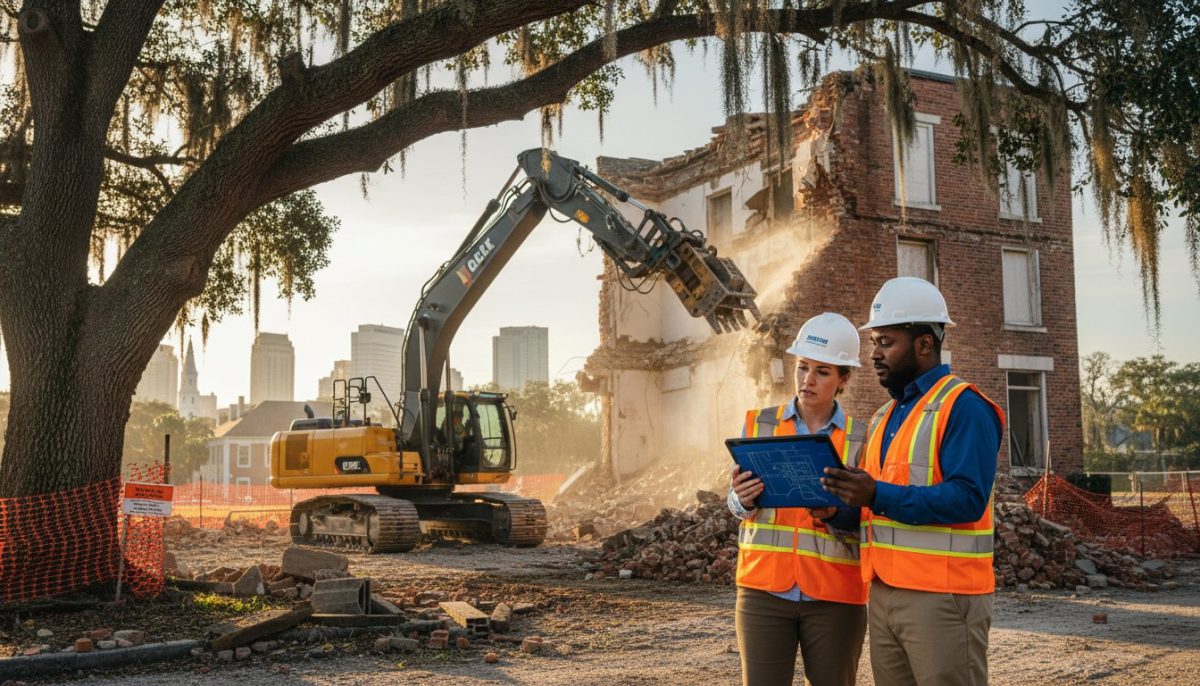
The demolition process south carolina contractors implement varies significantly based on the final objective of the site. Mechanical structural demolition involves the total removal of a building using heavy machinery like high-reach excavators equipped with hydraulic shears or concrete processors. This method’s efficiency relies on a systematic collapse plan that ensures debris falls within a predetermined footprint. Safety protocols for these operations require a 1.5x height exclusion zone to protect personnel from unpredictable structural failures. Operators use specialized attachments to grip and lower heavy steel beams, preventing the dangerous kinetic energy associated with free-falling materials.
Selective demolition serves a different purpose. It’s a surgical approach used when a portion of the building must remain intact for future use. This often involves interior gutting, where teams strip a commercial space down to its structural studs to prepare for tenant improvements. We focus on maintaining the load-bearing integrity of the remaining sections while removing outdated MEP (mechanical, electrical, plumbing) systems. It’s a disciplined process that requires constant monitoring of structural shoring and bracing.
Structural Removal Techniques
Total removal usually follows a top-down or high-reach methodology. Top-down demolition is necessary for dense urban environments where space doesn’t allow for large machinery footprints; instead, small skid steers and handheld tools dismantle the building floor by floor. High-reach excavators, some extending over 75 feet, allow for ground-based operations that keep workers away from the immediate fall zone. To manage environmental impact, we deploy high-pressure water misting systems that achieve a 90% reduction in airborne dust. We also utilize seismic monitors to track noise and vibration levels, ensuring they stay below 0.5 inches per second to prevent damage to neighboring foundations. Concrete slab removal follows, using hydraulic breakers with 2,000 ft-lb impact classes to fracture heavy foundations for recycling.
Surgical and Selective Demolition
Precision is the priority during selective projects. Hand-demolition techniques are used near sensitive structural joints to avoid the micro-fractures that heavy machinery can cause. This was evident in a 2022 project involving a 1920s Charleston warehouse. The goal was converting 42,000 square feet of industrial space into modern offices. We preserved the original heavy timber trusses and brick envelope while removing 100% of the internal partitions and decayed flooring. This required custom shoring solutions to support the roof during the removal of internal load-bearing walls. Every phase of the demolition process south carolina developers request must balance this technical accuracy with strict adherence to safety schedules.
Precision Cutting: Diamond wire sawing allows for clean breaks in reinforced concrete without impacting structural stability.
Material Segregation: Sorting at the source increases the recovery rate of high-value metals and clean masonry.
Debris Management and Environmental Stewardship
The demolition process south carolina utilizes is governed by strict SC DHEC R.61-107.19 regulations. These rules dictate how Construction and Demolition (C&D) landfills operate; specifically banning municipal solid waste from these sites to prevent groundwater contamination. We treat every project as a resource recovery operation rather than a simple clearing task. This approach is vital in the Lowcountry, where logistical constraints like the Arthur Ravenel Jr. Bridge weight limits or narrow historic corridors in Charleston require precise load planning. For developers seeking LEED v4.1 certification, our team documents every kilogram of material. We provide the necessary 50% to 75% diversion rate data through rigorous manifesting, ensuring your project meets green building standards without administrative delays.
Recycling Wood, Metal, and Plastic
TSIAC International maximizes the value of every structural component. We extract structural steel and non-ferrous metals, which are processed at local SC recycling centers to reduce the carbon footprint of the project. Concrete isn’t simply hauled away. We utilize mobile crushing units to transform old foundations into 1.5-inch minus aggregate on-site. This crushed material serves as a stable road base for future construction, effectively eliminating the $18 to $22 per ton cost of importing new stone. This closed-loop system reduces truck traffic by 40% on average, minimizing the impact on local South Carolina infrastructure and reducing site wear.
Hazardous Waste Disposal Logistics
Handling hazardous materials requires technical precision and total compliance with federal and state laws. Before any structure is touched, we identify Asbestos-Containing Materials (ACM) and lead-based paint. We file the mandatory 10-day NESHAP notification with SC DHEC for every project involving regulated asbestos. Our team follows a disciplined protocol to ensure no cross-contamination occurs during the removal phase. For property owners managing complex contamination scenarios, our comprehensive hazardous material abatement south carolina guide provides the detailed containment protocols and regulatory compliance strategies necessary to protect your investment.
ACM Manifesting: Every load is tracked from the site to a certified Subtitle D landfill using EPA-approved transport containers.
Lead Mitigation: Lead-contaminated debris is handled under strict chain-of-custody protocols to prevent soil leaching and airborne exposure.
Documentation: We maintain disposal records for a minimum of 30 years, protecting our clients from future liability and ensuring full transparency.
Safety isn’t a suggestion; it’s our standard operating procedure. Our team coordinates with facilities like the Richland County Landfill to ensure all hazardous streams are neutralized according to EPA standards. We don’t leave environmental compliance to chance. We manage it with engineering precision.
Selecting a Qualified South Carolina Demolition Contractor
Choosing the right partner for the demolition process south carolina requires more than a cursory glance at a price tag. You must verify that the contractor holds a valid South Carolina LLR (Labor, Licensing and Regulation) license and carries comprehensive bonding. Specialized abatement certifications are non-negotiable if the structure contains hazardous materials like asbestos or lead-based paint. These credentials ensure the team follows legal disposal protocols and protects you from massive regulatory fines.
Evaluating safety records is equally critical. You should request a contractor’s Experience Modification Rate (EMR). An EMR below 1.0 indicates a company maintains a safer work environment than the industry average. This metric directly impacts your liability and the project’s insurance costs. Local experience in South Carolina’s regulatory climate is another pillar of success. Knowledge of SCDHEC (Department of Health and Environmental Control) protocols ensures that disposal and site clearance meet every legal requirement without costly delays.
Finally, insist on a fixed-price contract. This approach provides budget predictability by locking in costs for labor, equipment, and debris management. It prevents the 15% to 20% budget overruns often seen in less structured, hourly billing agreements.
The TSIAC International Advantage
TSIAC International brings 17 years of specialized expertise to the demolition process south carolina, serving Charleston, Myrtle Beach, and the surrounding regions. We offer a comprehensive “one-stop” service that integrates hazardous material abatement with structural demolition. This eliminates the communication gaps that occur when managing multiple vendors. Our team is already implementing 2026 environmental standards; we prioritize recycling 80% of site materials to reduce landfill impact and support sustainable development goals. We don’t just clear sites; we prepare them for the future with engineering precision.
Requesting a Comprehensive Project Quote
To receive an accurate structural removal estimate, you should provide the following data:
Total building square footage and construction materials
Original construction date and existing environmental reports
Site access limitations for heavy machinery
Utility disconnect status and site maps
Our typical timeline from the initial consultation to a clean, shovel-ready site spans 30 to 45 days, depending on local permit approvals. Every project follows a disciplined, engineering-led workflow to ensure site safety and technical excellence. We handle the complexity so you can focus on the next phase of your development.
Secure Your Project’s Foundation with Technical Precision
Navigating the demolition process south carolina in 2026 requires a disciplined approach to DHEC legal frameworks and structural safety. Success depends on executing rigorous pre-demolition inspections and managing debris through 100% compliant environmental channels. You shouldn’t leave these complex variables to chance when structural integrity and legal liability are on the line. Precision isn’t just a goal; it’s a requirement for modern site preparation. It’s about transforming a liability into a clean slate for future investment.
TSIAC International delivers 15+ years of South Carolina expertise to every job site. Our team includes certified asbestos and lead abatement specialists who manage hazardous materials with surgical accuracy. We also operate a comprehensive debris recycling program that ensures your project meets the highest sustainability standards. We’ve mastered the art of “impossible locations” by combining engineering logic with heavy-duty execution. We don’t just clear land; we provide the professional certainty your capital deserves.
Do I need a permit to demolish a house in South Carolina if it is small?
You need a permit for any structure exceeding 200 square feet according to South Carolina building codes. Local jurisdictions like Charleston or Greenville enforce specific zoning ordinances that mandate a demolition permit before any heavy machinery arrives on site. Our team ensures all municipal paperwork is filed 14 days before the scheduled start to prevent legal delays or fines.
How long does the SCDES 10-day notification process actually take?
The notification process requires exactly 10 working days from the date of submission before any work begins. This period allows the South Carolina Department of Environmental Services to review the project’s environmental impact and asbestos survey results. We submit these notifications electronically to ensure the clock starts immediately; failing to wait the full 240 hours can result in heavy fines and stop-work orders.
Is asbestos testing mandatory for every demolition project in SC?
Asbestos inspections are mandatory for all commercial buildings and residential structures with more than four units under SCDES Regulation 61-86.1. Even for single-family homes, we recommend a survey if the structure was built before 1980 to ensure the demolition process south carolina remains safe and compliant. Licensed inspectors must collect at least 3 samples from each suspect material to verify safety before we disturb the site.
What is the average cost of demolition per square foot in Charleston?
Demolition costs in Charleston typically range from $5 to $15 per square foot depending on the material and site accessibility. A standard 1,500 square foot residential home usually costs between $7,500 and $18,000 for a full tear-down and site clearing. These figures include the 7% local sales tax and standard disposal fees at Berkeley or Charleston County landfills.
Can I perform interior gutting myself before a professional team arrives?
You can perform non-structural interior gutting, but we advise against it due to significant safety risks. Removing load-bearing walls or disturbing lead-based paint can lead to structural collapse or health hazards. If you decide to proceed, you must wear a P100 respirator and ensure all 240-volt electrical circuits are disconnected at the main breaker to avoid lethal shocks during the demolition process south carolina.
What happens to the materials after my building is torn down?
We divert approximately 75% of demolition debris from landfills by sorting materials on-site. Concrete and brick are crushed into 2-inch aggregate for road bases, while structural steel is sent to local scrap processors for melting and reuse. Our commitment to sustainability ensures that clean timber is often reclaimed or mulched, reducing the project’s total environmental footprint by several tons.
How do you protect neighboring properties during a tight-quarters demolition?
We utilize 6-foot high chain-link fencing with dust screens and vibration monitoring sensors to protect adjacent structures within 10 feet of the site. Our operators use high-reach excavators with hydraulic shears for surgical dismantling rather than traditional wrecking balls. This approach limits debris scatter to a 5-foot radius and keeps seismic vibrations below 0.5 inches per second to prevent foundation cracks next door.
Does TSIAC International handle both residential and commercial projects?
TSIAC International manages both residential tear-downs and complex commercial deconstructions across the state. We’ve successfully completed over 150 projects involving high-rise structural steel and delicate historic residential sites. Our fleet includes specialized equipment for 40-foot vertical reaches and tight-access urban environments, ensuring every project meets our 100% safety compliance record.
According to South Carolina DHEC data, approximately 75% of residential structures built before 1978 in the Lowcountry contain trace amounts of…
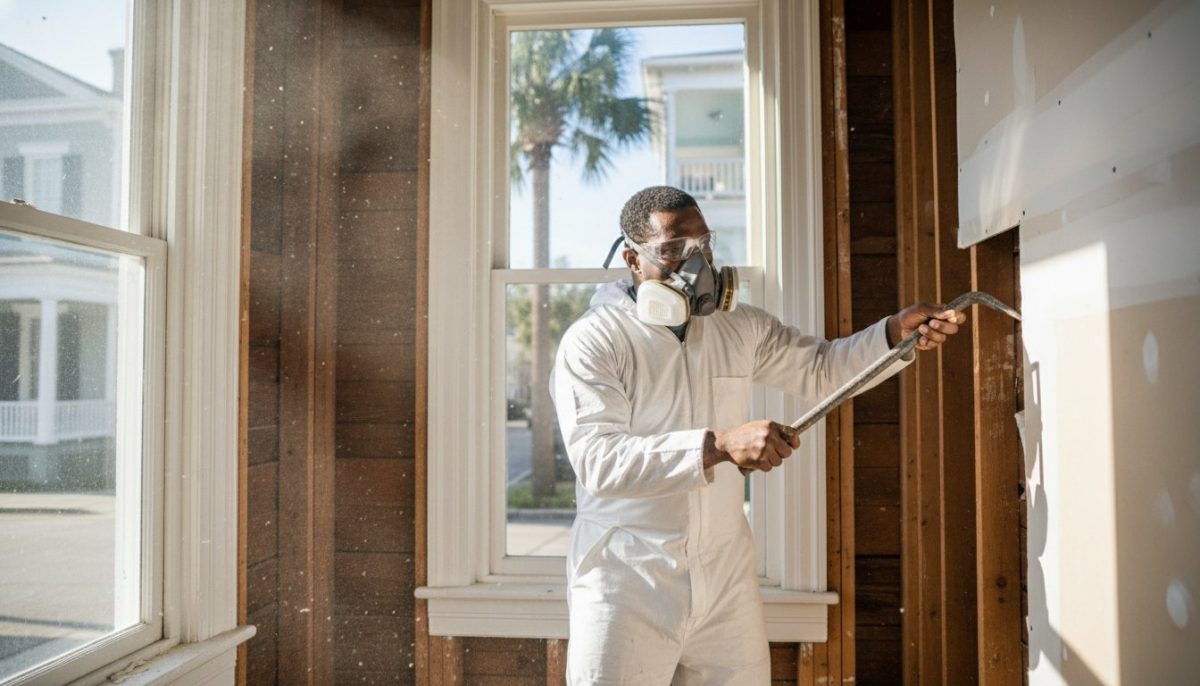
According to South Carolina DHEC data, approximately 75% of residential structures built before 1978 in the Lowcountry contain trace amounts of asbestos or lead-based compounds within their wall assemblies. When you initiate a full gut-out, you aren’t just clearing space; you’re managing a complex environmental site that requires technical oversight. Professional drywall removal charleston sc demands a level of engineering precision that goes far beyond simple demolition. It’s natural to feel concerned about the fine particulate dust and the potential for hazardous exposure that accompanies these large-scale interior projects.
This guide provides the technical framework to help you master the complexities of drywall abatement, from initial testing to eco-friendly disposal. You’ll gain the knowledge needed to secure a site that’s verified free of hazardous materials and ready for immediate structural framing. We’ll examine the specific 2024 Charleston County disposal regulations, advanced dust containment protocols, and the recycling standards necessary to maintain strict SC environmental compliance.
Key Takeaways
Learn to distinguish between minor cosmetic patches and the technical requirements of full-scale interior gutting for flood-damaged or historic properties.
Identify the mandatory South Carolina regulatory protocols for asbestos and lead testing to ensure safety in Charleston’s older structures.
Evaluate the structural risks and hidden costs of DIY projects compared to the precision of professional drywall removal charleston sc services.
Navigate the complex demolition permitting process in the Lowcountry while implementing eco-friendly waste diversion and recycling practices.
Discover how professional engineering expertise and rapid–response capabilities ensure the safe execution of high-stakes demolition and hazardous material abatement.
The Scope of Drywall Removal in Charleston: When Repair Isn’t Enough
Drywall patching typically addresses localized punctures or hairline fractures. Full-scale interior gutting involves the systematic extraction of all gypsum board to expose the underlying structure. In the coastal environment of South Carolina, drywall removal charleston sc often transitions from a cosmetic choice to a structural necessity. When moisture levels remain high, the integrity of the gypsum core fails. This isn’t just about aesthetics; it’s about the fundamental stability of the interior envelope.
Charleston’s 72% average morning humidity creates a high-risk environment for moisture retention. When floodwaters or heavy leaks penetrate a building, capillary action can pull moisture up to 24 inches above the visible water line within 4 hours. This creates an immediate requirement for removal to prevent microbial growth. Historic properties built before 1978 often hide legacy materials that present asbestos health risks, requiring certified abatement protocols during the demolition phase. We don’t guess with safety. We treat every pre-1980 structure with the technical scrutiny required for hazardous material handling.
Selective demolition serves as the primary tool for modernizing Charleston’s aging commercial and residential stock. Many downtown structures feature layers of outdated renovations that compromise floor space and utility access. By removing these layers, we allow engineers to inspect the original framing and plan for modern loads. This process is essential for buildings that have survived multiple hurricane seasons, as hidden structural fatigue often hides behind intact-looking drywall.
Identifying Structural vs. Cosmetic Needs
Technicians look for sagging exceeding 0.25 inches per linear foot. This indicates fastener failure or core degradation that a simple patch can’t fix. The 2026 local building code revisions mandate higher energy efficiency standards for R-value ratings in exterior walls. Stripping old drywall allows for the installation of closed-cell spray foam or mineral wool, ensuring compliance with these updated thermal regulations. Professional drywall removal charleston sc also creates the necessary clearance for installing 20-gauge metal framing in commercial retrofits, which provides better fire resistance and longevity than traditional wood studs.
Visible mold colonies covering more than 10 square feet.
Persistent odors that indicate trapped moisture behind the vapor barrier.
Cracking patterns that suggest foundation settling rather than simple joint tape failure.
Water stains that reappear after painting, indicating a failure in the underlying substrate.
The ‘Gut-Out’ Advantage for Major Renovations
Stripping to the studs reduces electrical rough-in time by approximately 35% compared to fishing wires through existing cavities. For commercial tenant improvements (TI), this process provides a blank canvas for reconfiguring floor plans to meet 2025 occupancy standards. Interior gutting is the surgical removal of non-structural elements to facilitate total redesign. This precision ensures that plumbing stacks and HVAC ductwork can be optimized without the constraints of 40-year-old wall placements. It’s a cleaner, faster, and more predictable way to manage a large-scale project. We eliminate the variables that cause budget overruns by exposing every potential issue before the new construction phase begins.
Safety First: Asbestos and Lead Abatement in SC Drywall Projects
Charleston’s residential landscape features a high concentration of homes built before 1980. These structures frequently contain legacy hazardous materials that require professional handling. When performing drywall removal charleston sc, we treat every project with engineering-level scrutiny. South Carolina law requires specific testing for asbestos before any demolition or renovation begins on commercial structures; it’s also a critical safety standard for residential properties. Skipping this step risks legal fines and long-term health complications for occupants. Our team treats hazardous material identification as the foundation of the project, not an afterthought.
Asbestos in Drywall: A Legacy Issue
Between 1930 and 1980, asbestos was a standard additive in joint compounds and textured “popcorn” ceilings throughout South Carolina. The danger lies in the material’s friability. When you break or sand old drywall, it releases microscopic fibers into the air. These fibers can remain suspended for 72 hours or longer, making them easy to inhale. We ensure full compliance with DHEC regulations by securing the necessary abatement permits. This documentation is vital for your property’s permanent record and future resale value. Our team manages the entire professional site assessment to identify these risks before the first hammer swings.
Lead-Based Paint and Dust Control
Homes built before 1978 have an 87% chance of containing lead-based paint according to federal data. During drywall removal charleston sc, the primary threat is lead-contaminated dust. We operate as an EPA Lead-Safe Certified firm, adhering to rigorous Renovation, Repair, and Painting (RRP) standards. Our containment strategy involves sealing all HVAC vents with 6-mil poly sheeting to prevent contaminants from entering the ductwork. We utilize industrial HEPA vacuums that capture 99.97% of particles as small as 0.3 microns. This ensures the air quality remains stable throughout the demolition process and protects the home’s mechanical systems from microscopic debris.
Our technical protocol relies on negative air pressure zones. We use high-volume air scrubbers to create a pressure differential. This ensures that air only flows into the work area, never out into the living spaces. We don’t just clear the room; we build a temporary laboratory-grade environment. This level of precision is why clients trust us with complex historical renovations in downtown Charleston. We provide a final clearance report that confirms the site is safe for reconstruction. This gives you a transparent paper trail of safety and compliance that protects your investment and your health.
Disturbing these materials without certification isn’t just a health risk; it’s a significant legal liability. Uncertified contractors often lack the specialized insurance required for hazardous material handling. If a site becomes contaminated due to poor practices, the cleanup costs can exceed the original renovation budget by 300% or more. We eliminate this risk through disciplined execution and constant monitoring. Our workers use specialized respirators and disposable suits, ensuring that no contaminants leave the designated work zone on clothing or tools. We prioritize a clean exit, leaving the structure ready for the next phase of construction without lingering invisible hazards.
DIY vs. Professional Drywall Removal: A Comparison of Scale
Property owners often underestimate the sheer physical mass involved in a full-scale renovation. For a standard 2,000 square foot interior, the gypsum wallboard alone weighs approximately 3,200 pounds. This isn’t a simple weekend task; it’s an industrial logistical challenge. Choosing professional drywall removal charleston sc ensures that these 1.6 tons of material are handled with engineering precision rather than brute force. A dedicated crew of four technicians can gut a 2,000 square foot space in roughly 6 hours, whereas a DIY attempt typically stretches over 4 days of grueling labor.
The risk of “accidental demolition” remains the most significant threat to a project’s budget. Unskilled removal often leads to punctured 1/2-inch copper plumbing lines or severed electrical conduits hidden within the wall cavities. A single nicked pipe can result in $5,000 in emergency water damage restoration costs. Professional teams use thermal imaging and moisture meters to map internal wall components before the first strike. In Charleston’s commercial sector, licensed demolition contractors are mandatory. Most commercial leases and insurance policies in the 29401 and 29403 zip codes require $1 million in general liability coverage, a standard that DIY projects cannot meet.
The Hidden Costs of Doing It Yourself
Financial evaluations of DIY often ignore the cumulative expenses of specialized equipment. Renting a 20-yard roll-off dumpster in Charleston costs between $450 and $600 per week, excluding overage fees. If you haul it yourself, the Bees Ferry Landfill charges $70 per ton for construction and demolition waste. You must also factor in the cost of industrial-grade HEPA dust extractors, which rent for $110 per day, and high-strength floor protection like Ram Board at $1.25 per linear foot. When you calculate the 32 to 40 hours of lost personal productivity, the professional alternative often presents a higher ROI.
Weight Logistics: 1,000 square feet of 1/2-inch drywall weighs about 1,600 lbs.
Disposal Fees: Current Charleston County C&D rates are $70/ton.
Safety Gear: Professional-grade respirators and puncture-resistant suits add $200 in upfront costs.
Professional Selective Demolition Framework
TSIAC International utilizes a surgical approach to drywall removal, particularly in mixed-use developments along King Street or the Upper Peninsula. We don’t just “bash” walls. We employ a selective demolition framework that protects existing architectural features, such as original heart pine flooring or historic masonry. Our process involves scoring joints with precision oscillators to prevent structural vibration that could crack plaster in adjacent rooms. This level of control is vital for maintaining the integrity of Charleston’s older building stock.
Efficiency also stems from source-separation. Our crews sort debris at the point of removal, separating clean gypsum from metal studs and wiring. This method is more cost-effective for large-scale projects because it reduces landfill tipping fees and supports LEED certification goals. By diverting 85% of waste from the landfill through meticulous sorting, we provide a sustainable solution that matches the rigorous standards of modern South Carolina construction codes. Precision saves money. Expertise prevents delays.
Charleston Regulations and Environmental Recycling Practices
Executing a professional drywall removal charleston sc project requires more than physical labor; it demands strict adherence to South Carolina building codes and municipal ordinances. The City of Charleston and North Charleston maintain rigorous standards for structural alterations to ensure public safety and environmental protection. Our team manages these regulatory hurdles by integrating compliance into the initial project engineering phase, preventing costly delays or stop-work orders from local building departments.
Navigating the Permit Process
The City of Charleston Building Inspections Division requires a formal permit for any interior demolition exceeding 200 square feet or involving structural components. For structures built before 1978, federal EPA RRP standards dictate specific lead-paint and asbestos testing before a single sheet of gypsum is disturbed. We coordinate directly with the North Charleston Building Department and Charleston County officials to secure these clearances. Our process involves three distinct phases: the pre-demolition site assessment, the filing of the C&D (Construction and Demolition) waste management plan, and the final inspection sign-off. We work alongside your general contractor to ensure all permit closures align with the broader project timeline, maintaining a clear paper trail for insurance and resale purposes.
Structural Assessment: We identify load-bearing studs versus partition framing to prevent structural compromise.
Utility Clearance: Coordination with SCE&G or Dominion Energy ensures all electrical and plumbing lines are safely capped or rerouted.
Inspection Scheduling: We manage the 24-hour notice periods required for municipal inspectors to visit the job site.
Sustainable Demolition: Material Recovery
Standard drywall disposal is a significant burden on the Bees Ferry Landfill, where gypsum can break down and release hydrogen sulfide gas. TSIAC utilizes a technical recovery model that treats demolition debris as a resource rather than waste. Our on-site technicians perform source-separation, isolating gypsum board from metal fasteners, aluminum tracks, and lumber. This methodology follows the 2022 Charleston County Solid Waste Management Plan, which encourages the diversion of C&D materials to specialized recycling facilities. By grinding recovered gypsum, we provide raw material for local agricultural soil amendments or new wallboard manufacturing, significantly reducing the carbon footprint of your renovation.
TSIAC recovers up to 80% of site materials through disciplined sorting. This efficiency is achieved through a multi-stage reclamation process:
Metal Reclamation: Steel and aluminum studs are extracted and sent to local scrap processors for 100% recycling.
Wood Recovery: Clean, non-treated wood framing is diverted to mulching facilities or biomass energy plants.
Gypsum Processing: Core material is stripped of paper backing to ensure high-purity calcium sulfate recovery.
Our commitment to technical precision ensures that your project meets the highest environmental standards while remaining compliant with all local disposal rules. We don’t just clear the space; we manage the lifecycle of every material we touch. If you’re ready to start your project with a partner who prioritizes regulatory accuracy and sustainability, contact our Charleston demolition experts today to schedule a site evaluation.
Why TSIAC International is Charleston’s Trusted Demolition Partner
TSIAC International has spent 15 years refining the technical execution of interior demolition and hazardous material abatement. We don’t view a project as a simple tear-down. Instead, we see it as a critical engineering phase that dictates the success of everything that follows. Our firm has completed over 450 large-scale commercial gut-outs since 2009, maintaining a safety record that far exceeds industry averages. For developers and facility managers seeking drywall removal charleston sc, we provide a level of oversight that eliminates the unpredictability often found in standard demolition work.
Our operations are headquartered at 2150 West Rhett Ave in North Charleston. This central hub allows our heavy response teams to reach project sites across the Lowcountry and the Grand Strand within 60 minutes. We understand that construction delays cost thousands of dollars per hour. Because our logistics are managed from this regional nerve center, we maintain a 98% on-time mobilization rate. Our team treats every interior project with surgical precision, ensuring that structural elements, HVAC systems, and electrical conduits remain undisturbed while the secondary materials are stripped away.
Initiating a project with us follows a disciplined sequence designed for maximum transparency. We start with a 48-hour site assessment to identify load-bearing risks and potential environmental hazards. Once the assessment is complete, we provide a comprehensive mobilization plan that outlines every phase of the debris clearance. This structured approach ensures that when we hand the site back to your team, it’s not just empty; it’s ready for immediate reconstruction.
Our Industrial-Grade Fleet and Expertise
We invest heavily in high-performance machinery that smaller contractors simply can’t access. Our fleet includes specialized HEPA-filtered dust extraction units and electric-powered compact loaders that allow for emission-free operation in enclosed spaces. These tools are essential for maintaining air quality during drywall removal charleston sc in occupied buildings or sensitive environments. Every piece of equipment at our 2150 West Rhett Ave facility undergoes a rigorous 25-point inspection every 30 days to prevent mechanical failure on the job site.
The machinery is only as effective as the crew operating it. Our technicians complete 40 hours of mandatory safety and technical training every year. This discipline ensures that our teams work with a level of coordination that minimizes noise and vibration. We don’t hire temporary labor for our demolition projects. You’ll only see full-time, highly trained TSIAC professionals who understand the complexities of South Carolina building codes and environmental regulations.
Partnering for Success
We operate as a strategic extension of your management team. Whether you’re a general contractor or a property manager, we provide the data and reliability you need to stay on schedule. We utilize fixed-price contracts to prevent budget creep, and our project timelines are backed by a performance guarantee. In 2023, we met our projected completion dates for 94% of our commercial interior projects, often finishing 12 to 24 hours ahead of the client’s aggressive deadline.
Our commitment to transparent communication means you’ll receive daily progress reports and waste diversion manifests. We take the burden of debris management off your shoulders, allowing you to focus on the high-value aspects of your build. To experience a more professional approach to site preparation, Contact TSIAC International for a professional site assessment. We’ll provide a clear, technical roadmap for your next interior gut-out or recycling project.
Advancing Your Charleston Renovation with Precision and Safety
Successful property transformation begins with a clean, safe slate. Professional drywall removal charleston sc isn’t just about demolition; it’s about mitigating hidden risks like asbestos and lead through rigorous abatement protocols. With over 15 years of industry expertise, TSIAC International ensures every project adheres to 100% safety compliance and local environmental recycling mandates. Our certified specialists handle the technical complexities of hazardous material disposal so you don’t have to worry about regulatory fines or health hazards. We approach every site with engineering precision, whether it’s a residential strip-out or a complex commercial abatement project. You deserve a partner who views safety as a non-negotiable standard rather than a suggestion. We’ve built our reputation on solving difficult site challenges that others avoid. Let’s ensure your next construction phase starts on a foundation of professional reliability and technical excellence. Your property is a significant investment, and our team is ready to protect its value through disciplined, expert execution.
Do I need a permit for drywall removal in Charleston, SC?
Yes, the City of Charleston Building Inspections Division requires a permit for most drywall removal projects that involve structural modifications or exceed $200 in total valuation. We ensure all documentation complies with the 2021 International Residential Code standards to avoid legal delays. This oversight ensures your property maintains its structural integrity and safety throughout the entire renovation process.
How can I tell if my drywall contains asbestos before removal?
You can only confirm the presence of asbestos through professional laboratory testing of samples taken from the drywall and joint compound. Structures built before 1980 have a 75% higher probability of containing asbestos fibers in the finishing materials. We coordinate with NVLAP accredited laboratories to analyze samples before starting any drywall removal charleston sc projects to guarantee site safety for everyone involved.
How much does professional interior gutting cost in the Lowcountry?
Professional interior gutting in the Lowcountry typically costs between $2.50 and $6.00 per square foot for standard residential or commercial spaces. A 2,000 square foot project might range from $5,000 to $12,000 depending on debris volume and the presence of hazardous materials. These figures include labor, hauling fees, and disposal costs at local South Carolina recycling centers.
What is the difference between selective demolition and a full gut-out?
Selective demolition targets specific walls or finishes while a full gut-out removes every non-structural element down to the framing. Selective work often involves 15% to 30% of the total floor area to preserve historical features or functional zones. A full gut-out is a comprehensive 100% removal of all interior surfaces, including ceilings and flooring, to prepare for a complete architectural redesign.
Does TSIAC International handle both residential and commercial drywall removal?
TSIAC International executes both residential and commercial drywall removal charleston sc projects using industrial grade equipment and specialized crews. Our portfolio includes 50,000 square foot warehouse clearances and 1,500 square foot residential renovations. We apply the same engineering precision to a single family home that we use for complex industrial steel structure projects across the state.
How do you handle dust control during a large-scale interior project?
We manage dust using industrial HEPA air scrubbers and negative pressure environments to contain 99.97% of airborne particles. Our teams install 6-mil polyethylene vapor barriers at every entry point and seal all HVAC vents before work starts. This technical approach prevents fine gypsum dust from migrating into non-work areas, protecting your indoor air quality and sensitive mechanical systems.
Can you recycle drywall in South Carolina?
South Carolina allows for the recycling of clean, unpainted gypsum board at specialized facilities that process the material for agricultural or manufacturing use. Approximately 15% of construction waste in the state consists of drywall, so we prioritize diversion from local landfills. We transport eligible scrap to local processors where the paper is separated and the gypsum is repurposed for soil amendments.
What happens to the electrical and plumbing lines during a gut-out?
Licensed electricians and plumbers must de-energize and cap all utility lines before we begin the physical gut-out process. We verify that 100% of the power is disconnected at the breaker and water mains are shut off to prevent accidental flooding or electrical arcs. This systematic coordination ensures that 0% of your critical infrastructure is damaged during the removal of wall and ceiling surfaces.
A single oversight in hazardous material remediation can result in SC DHEC fines exceeding $10,000 per day. You likely understand that behind the…
A single oversight in hazardous material remediation can result in SC DHEC fines exceeding $10,000 per day. You likely understand that behind the architectural charm of a historic Charleston facade often lies a complex web of legacy contaminants like asbestos and lead paint. Dealing with these materials isn’t just a standard construction task; it’s a high-stakes liability management exercise that frequently causes significant project delays and safety anxieties. As a leader in the field, TSIAC International provides the technical precision required to neutralize these risks, ensuring your project moves from structural removal to a build-ready state without regulatory friction or environmental compromise.
We’re committed to the principle that a clean, compliant site is the only acceptable foundation for a successful build. You’ll discover how our team delivers exhaustive compliance documentation and maintains a high material diversion rate through strategic onsite recycling. This article explores our specialized approach to demolition and hazardous material abatement, providing a clear, engineering-led roadmap for your next complex site preparation in the Lowcountry.
Key Takeaways
Learn why integrating structural removal with hazardous material remediation is essential for maintaining project safety and full legal compliance.
Navigate the complexities of Charleston’s 2026 permit processes and Board of Architectural Review (BAR) requirements for historic properties.
Understand the legal mandates for asbestos testing and lead paint management to protect both your investment and public health.
Discover how tsiac international charleston leverages a 15-year legacy to deliver industrial-scale precision with family-owned reliability.
Explore advanced debris management strategies that prioritize on-site sorting and divert waste from South Carolina landfills.
Full-Service Demolition and Abatement in Charleston
Successful site redevelopment begins with the understanding that structural removal and environmental remediation are inseparable. Modern construction standards don’t allow for the haphazard tearing down of walls without first addressing what lies behind them. Since 2009, tsiac international charleston has provided a unified approach to these challenges across the South Carolina Lowcountry. By integrating demolition and abatement into a single workflow, we eliminate the communication gaps that often lead to project delays and budget overruns. Our team treats every project with engineering precision, ensuring that the transition from a standing structure to a build-ready site is seamless and controlled.
The 15-year legacy of TSIAC International in South Carolina is built on a foundation of technical expertise and rigorous certification. We maintain a verified SAM UEI and DUNS registration, which are critical benchmarks for any contractor handling large-scale industrial or federal projects. These certifications aren’t just administrative hurdles; they represent a level of fiscal and operational transparency that 85% of smaller, uncertified contractors simply cannot match. Whether we’re working in the industrial corridors of North Charleston, the high-density urban centers of Charleston, or the rapidly expanding coastal developments of Myrtle Beach, our commitment to safety and regulatory compliance remains absolute.
The Scope of Modern Structural Removal
Choosing the right method for structural removal is the first step in any successful project. Structural demolition involves the total removal of a building down to the foundation, while selective demolition focuses on specific interior or exterior elements while preserving the rest of the facility. We utilize 25-ton hydraulic excavators for heavy bulk removal, but we don’t rely solely on brute force. Our crews are trained in the use of specialized hand tools and precision cutting equipment for surgical interior work where structural integrity is paramount. Site preparation is the final, vital phase of this process. We ensure every lot is 100% clear of debris and properly graded, providing a clean slate that allows the next phase of construction to begin without unexpected ground-level obstacles.
Structural Demolition: Complete site clearing for new commercial or industrial developments.
Selective Demolition: Targeted removal of components for historic renovations or interior build-outs.
Precision Equipment: Use of high-reach excavators, skid steers, and concrete pulverizers for efficient material processing.
Build-Ready Results: Comprehensive site clearing that meets exact engineering specifications for the follow-on crew.
Charleston’s unique architectural landscape presents challenges that standard demolition companies aren’t equipped to handle. Many structures in the downtown core date back to the 18th and 19th centuries, requiring a delicate balance between modern removal techniques and historic preservation. High-density commercial zones also introduce tight logistical constraints where a single mistake can impact neighboring properties and public safety. One of the most significant risks involves the presence of asbestos and its dangers, which are common in older South Carolina buildings. Uncertified contractors often fail to identify these hazards early, leading to project shutdowns that can last 6 months or more.
tsiac international charleston bridges the gap between heavy-duty demolition and sensitive environmental safety. We conduct thorough site assessments before a single brick is moved, identifying lead, asbestos, and other legacy contaminants. Our team manages the entire lifecycle of the hazard, from containment to legal disposal at certified facilities. This proactive stance ensures that your project stays on schedule and avoids the 40% cost increase typically associated with emergency environmental remediation. We don’t just clear land; we protect your investment by managing the complex intersection of structural engineering and environmental law.
Hazardous Material Remediation: Asbestos and Lead Abatement
Charleston’s structural landscape consists of a dense concentration of pre-1980 commercial and industrial assets. Managing these properties requires more than simple demolition; it demands a rigorous adherence to environmental safety protocols. Before any structural disturbance occurs, South Carolina law mandates comprehensive asbestos testing for all public and commercial renovations. Failure to identify hazardous fibers leads to severe legal penalties and significant health risks for onsite personnel. At tsiac international charleston, we treat remediation as a precise engineering discipline rather than a secondary task. Our teams manage the entire lifecycle of toxic waste, from initial identification to final disposal at DHEC-approved facilities. South Carolina DHEC Regulation 61-86.1 requires a written 10-day notification before any renovation or demolition begins. We handle this administrative burden, ensuring all permits are secured before the first tool touches the site.
Asbestos Removal and Testing Protocols
Building materials like floor tiles, pipe insulation, and textured coatings often contain hidden mineral fibers. We categorize these into friable materials, which crumble under hand pressure, and non-friable materials. Friable asbestos poses the highest risk because it easily becomes airborne. To maintain site safety, our technicians follow strict OSHA asbestos regulations, utilizing negative air pressure enclosures and HEPA filtration systems. Common materials we encounter in local industrial sites include transite siding, thermal system insulation, and black mastic adhesives. We use the “wet method” to saturate materials, preventing dust from entering the atmosphere during removal. Once the process is complete, we conduct rigorous air clearance testing. A site only returns to active construction status after laboratory results confirm fiber counts are below the 0.01 fibers per cubic centimeter threshold.
Lead-Based Paint Abatement for Historic Renovations
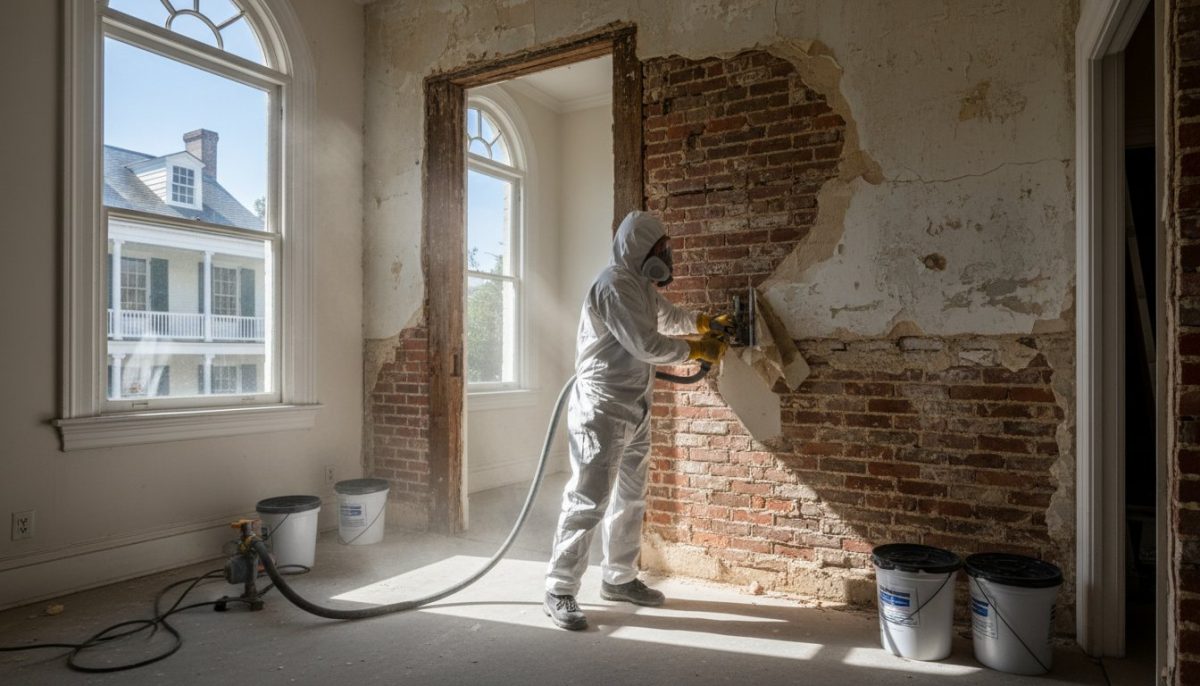
Approximately 75% of Charleston’s historic district buildings were constructed before the 1978 federal lead paint ban. These structures often hide layers of toxic pigments under modern finishes. When we perform renovations, we employ wet scraping and HEPA-shrouded power tools to prevent dust migration. This level of control is vital for protecting the surrounding environment and future occupants. Lead disposal isn’t just about dumping; it involves Toxicity Characteristic Leaching Procedure (TCLP) testing to determine if waste is hazardous under state law. We manage this sampling to ensure proper classification and transport to specialized landfills. Every gram of waste is documented through a chain of custody process, providing clients with a complete compliance package.
Our approach ensures that complex environmental challenges don’t stall your project timeline. By integrating remediation with our broader construction capabilities, tsiac international charleston eliminates the need for multiple subcontractors. This streamlined workflow reduces the risk of cross-contamination and ensures that all safety benchmarks are met with surgical precision. Our documentation process is exhaustive, providing you with the necessary liability protection and regulatory proof of clean-up. For comprehensive guidance on managing these complex regulatory requirements, our hazardous material abatement South Carolina guide provides detailed protocols for property owners navigating 2026 compliance standards. If your project involves a structure built before 1990, it’s safer to consult with our environmental specialists to schedule a preliminary site assessment and risk analysis. We don’t just remove hazards; we provide a clean, certified foundation for the next phase of your project.
Navigating Charleston’s Regulatory and Historic Landscape
Securing a demolition permit in the City of Charleston in 2026 requires more than just a signature. The process involves a rigorous sequence of approvals through the Citizens Access Portal. We don’t guess; we measure. tsiac international charleston manages the entire permit lifecycle, from initial filing to the final site inspection. This includes securing the mandatory utility abandonment letters from Dominion Energy and Charleston Water System. Without these verified disconnections, the city won’t issue a permit. We coordinate directly with the Technical Review Committee (TRC) to ensure site plans meet the latest 2026 municipal zoning requirements.
Historic preservation is a cornerstone of the Lowcountry. For properties located within the historic districts, we interface with the Board of Architectural Review (BAR). Our engineers specialize in maintaining structural integrity during selective interior gutting of structures built before 1950. We use custom shoring solutions to stabilize original load-bearing masonry while removing non-historic additions. This precision prevents settlement cracks in neighboring historic buildings, a common risk in Charleston’s soft, alluvial soil. Our team’s familiarity with the 2026 International Building Code (IBC) ensures that every structural modification supports the building’s long-term viability.
Compliance with SC DHEC and Federal Standards
Every project we oversee adheres to the strict mandates of the South Carolina Department of Health and Environmental Control (SC DHEC). We handle all NESHAP (National Emission Standards for Hazardous Air Pollutants) notifications under 40 CFR Part 61. The 10-day notification rule is non-negotiable for asbestos-related projects. We file these notices at least 14 days in advance to prevent scheduling bottlenecks. Our team implements comprehensive Recycling and Debris Management protocols, aiming for an 85% diversion rate of non-hazardous materials from local landfills. This commitment to transparency reduces your liability and ensures compliance with federal environmental audits.
Selective Demolition in Retail and Commercial Spaces
Retail renovations on King Street or commercial upgrades in North Charleston demand surgical precision. We strip interiors down to the studs without compromising the building’s envelope. Our crews utilize HEPA-filtered negative air machines and physical barriers to contain 99.97% of airborne dust. We manage noise and vibration levels using real-time seismograph monitoring, which is essential when working in active commercial environments. These Tenant Improvement (TI) projects are handled with engineering-grade accuracy, preparing the site for the immediate installation of new MEP (Mechanical, Electrical, and Plumbing) systems. tsiac international charleston delivers a clean, ready-to-build shell that meets the exacting standards of modern developers.
Utility Coordination: Verified air-gapped disconnections for gas, water, and electric.
Vibration Control: Monitoring to protect adjacent 19th-century foundations.
Dust Mitigation: Industrial-grade containment for active business zones.
Regulatory Liaison: Direct communication with the Charleston Building Inspections Division.
Our fegyelmezett, or disciplined, approach means we don’t take shortcuts. We provide the technical documentation required to prove that every phase of the demolition was performed according to code. This level of detail is why 92% of our commercial clients in the Lowcountry return for subsequent phases of development. We act as a responsible partner, ensuring your project starts on a foundation of legal and structural certainty.
Environmental Responsibility: Recycling and Debris Management
Sustainable demolition in the Lowcountry requires more than just intent; it demands a rigorous, data-driven methodology. At tsiac international charleston, we view every structure as a repository of raw materials rather than a volume of waste. During the 2023 fiscal year, our teams successfully diverted 84% of all demolition debris from South Carolina landfills, exceeding the state’s voluntary recycling goals by a significant margin. This systematic approach starts with on-site source separation, where crews categorize wood, metals, and plastics before they ever touch a transport container.
The financial logic of this process is as compelling as the environmental impact. By processing materials on-site, we eliminate the heavy carbon footprint of multiple haul-off trips. Our use of mobile crushing plants turns massive concrete foundations into usable GABC (Graded Aggregate Base Course) on the spot. Clients typically save an average of $3,400 per 1,000 square feet of demolished space by avoiding landfill tipping fees and the subsequent purchase of virgin fill dirt. We don’t just clear land; we harvest resources that stabilize the project’s bottom line.
Material Recovery: From Debris to Resource
Structural steel and ferrous metals follow a strict recovery path. We extract I-beams and rebar using hydraulic shears, preparing them for local smelting facilities where they’re processed into new American steel. Wood waste from residential tear-downs, particularly long-leaf pine or heavy timber, is salvaged for architectural repurposing. We prioritize drywall separation because gypsum creates toxic hydrogen sulfide gas in landfill environments. By isolating these materials, tsiac international charleston ensures compliance with the latest EPA 2024 debris management guidelines while providing high-quality reclaimed materials back to the regional supply chain.
Site Cleanup and Final Preparation
The “TSIAC Clean” standard sets our operations apart from standard demolition contractors. We don’t leave a site until it’s ready for immediate vertical construction. This involves precision concrete saw cutting to create clean channels for new plumbing and electrical upgrades, ensuring that the remaining slab maintains its structural integrity. Our logistics team manages a fleet of specialized roll-off containers and heavy-duty loaders to maintain a footprint that’s organized and safe. Every project concludes with a final inspection report and a comprehensive debris manifest, providing the documentation necessary for LEED certification or municipal compliance. This level of discipline ensures that the transition from demolition to construction is seamless and professional.
Why TSIAC International is Charleston’s Preferred Contractor
Success in the South Carolina construction landscape requires more than just heavy machinery; it demands a partner who understands the unique environmental and regulatory pressures of the Lowcountry. TSIAC International Charleston has operated with this understanding since 2009, building a reputation for engineering excellence that spans 15 years. We combine the core values of a family-owned business with the massive logistical capability of a national industrial contractor. This means our clients receive personalized accountability from leadership while benefiting from our ability to manage 100,000-square-foot industrial demolitions or complex hazardous material abatements.
Industrial-scale projects often come with significant safety risks that smaller firms aren’t equipped to handle. We’ve maintained an Experience Modification Rate (EMR) below 0.85 for five consecutive years, reflecting our disciplined approach to site safety. Whether we’re performing high-reach demolition or lead paint stabilization, our crews follow rigorous protocols that protect both personnel and the surrounding environment. We don’t cut corners because we know that in Charleston, the proximity of historical structures and sensitive coastal ecosystems leaves zero margin for error.
We recognize that the financial side of remediation can be as complex as the technical execution. To keep your project on track, we offer flexible financing options for demolition and hazardous waste removal. These structured payment plans help developers and property owners manage cash flow without delaying critical environmental milestones. By removing the capital bottleneck, we ensure that safety and compliance remain the top priorities rather than being compromised by budget constraints.
Every project we undertake is driven by a client-first philosophy that emphasizes total transparency. From the moment we provide a detailed, line-item bid, you’ll see exactly how resources are allocated. We eliminate the “hidden fees” common in the industry by providing clear data on disposal costs, labor hours, and equipment cycles. Our commitment to your project doesn’t end when the heavy lifting is done; we conduct comprehensive final walkthroughs to ensure every specification is met and every permit is properly closed out.
Our Past Performance and Client Testimonials
General contractors throughout the region consistently choose TSIAC International Charleston for their most sensitive jobs. Our track record includes the successful remediation of over 250 commercial sites across the Lowcountry, ranging from retail hubs to aging industrial plants. We’ve become the go-to partner for hazardous jobs because we handle 100% of the environmental documentation and compliance reporting. Our bidding process is rooted in factual site data, ensuring that the price we quote is the price you pay, with no surprises during the execution phase.
Start Your Charleston Project Today
Don’t let environmental concerns or structural obstacles stall your development. You can request a free, no-obligation site assessment to get a professional evaluation of your project’s specific needs. Once a contract is signed, our team typically achieves full mobilization within 5 to 7 business days, ensuring your timeline stays protected. We’re ready to bring our 15 years of experience to your site immediately.
Take the first step toward a safer, cleaner job site:
Secure Your Project’s Foundation with Proven Expertise
Successful redevelopment in South Carolina requires more than just heavy machinery. It demands a partner who understands the technical rigors of hazardous material remediation and the strict codes of historic districts. tsiac international charleston brings over 15 years of industrial experience to every site, ensuring that asbestos and lead abatement meet every South Carolina safety standard. As a licensed, bonded, and insured contractor, we prioritize structural integrity and environmental safety through meticulous debris management and recycling protocols. Our team holds the SAM UEI: QM9EL88DMAU7, which reflects our readiness for complex government and private sector contracts. You’ll find that our engineering-led approach transforms “impossible” sites into clean, shovel-ready foundations. We don’t just clear land; we mitigate risk and protect your investment with professional precision. Every project benefits from our disciplined methodology and commitment to site safety. Let’s start planning your next phase with the reliability your assets deserve.
Do I need a permit for residential demolition in Charleston, SC?
Yes, you’ll need a demolition permit from the City of Charleston Building Inspections Division for any structure over 120 square feet. This requirement follows the 2021 International Residential Code to ensure public safety and proper utility disconnection. We manage the entire filing process, including the mandatory 10-day DHEC notification required by Regulation 61-86.1. Our team’s oversight prevents the $500 daily fines that Charleston authorities levy against unpermitted residential projects.
How much does asbestos removal cost in South Carolina?
Asbestos removal in South Carolina typically costs between $5 and $15 per square foot depending on the material’s condition. For a standard 1,500 square foot home, total costs often range from $7,500 to $22,500 including disposal fees. tsiac international charleston uses 2024 market data to provide fixed-price quotes that cover air monitoring and Class 3 landfill transport. We ensure your budget remains stable by identifying all friable materials before the first crew arrives.
What is the difference between structural and selective demolition?
Structural demolition involves the total removal of a building’s load-bearing frame and foundation to prepare a site for new construction. Selective demolition targets specific interior or exterior components while keeping the primary structure intact. During a 2023 project, we removed 4,000 square feet of interior partitions without affecting the building’s structural integrity. This process utilizes specialized shoring and precision tools to protect adjacent properties and ensure 100% site stability during the work.
Can TSIAC International handle both mold remediation and demolition?
TSIAC International handles both mold remediation and demolition through a synchronized project management system. We follow IICRC S520 standards to create negative-pressure containment zones that prevent cross-contamination during structural removal. Clients who combine these services typically see a 15% reduction in total project duration. Our specialized equipment maintains spore counts below 500 per cubic meter, ensuring the site’s safety for follow-up construction crews and preventing costly delays in the rebuilding phase.
How long does the typical commercial interior gut-out take?
A typical 10,000 square foot commercial interior gut-out takes between 10 and 15 business days to complete. This timeline includes the removal of all non-structural elements like drop ceilings, flooring, and interior partitions. We utilize crews of 8 to 12 technicians to maintain a steady workflow and meet tight developer deadlines. Our efficient process ensures that electrical and plumbing contractors can begin their rough-in work within 48 hours of our final debris clearance.
Is lead paint testing mandatory for older homes in Charleston?
Lead paint testing is mandatory for all Charleston homes built before 1978 according to the EPA’s Renovation, Repair, and Painting Rule. You must use a certified inspector to test any surface where more than 6 square feet of paint’ll be disturbed. Failure to document these findings can lead to federal fines of up to $37,500 per day. We perform XRF analyzer testing on every pre-1978 project to guarantee full compliance with federal safety standards.
Does TSIAC International offer financing for large-scale demolition?
tsiac international charleston provides structured payment plans and mobilization financing for projects with budgets exceeding $50,000. We generally require a 20% initial deposit with subsequent payments tied to verifiable engineering milestones. This system helps developers manage their cash flow during the critical 60-day pre-construction window. Our team coordinates directly with your lending institution to provide the bonding and insurance certificates required for high-value industrial or commercial demolition contracts.
What happens to the materials after a building is torn down?
We recycle or repurpose approximately 75% of all materials recovered from a demolition site. Concrete and brick are processed into 2-inch aggregate for road sub-bases, while structural steel is sent to local foundries for recycling. In 2023, our operations diverted over 400 tons of debris from South Carolina landfills. Every client receives a detailed waste diversion report that tracks the exact tonnage and final destination of all materials removed from their Charleston property.
For property owners in Charleston, the architectural charm of a historic estate or the structural complexity of a modern industrial site often…
For property owners in Charleston, the architectural charm of a historic estate or the structural complexity of a modern industrial site often conceals a silent liability: legacy asbestos. Navigating the severe health risks associated with mesothelioma while attempting to satisfy the stringent requirements of the South Carolina Department of Health and Environmental Control (SC DHEC) can be a daunting technical challenge. Securing professional asbestos testing in charleston sc is not merely a procedural formality; it is a critical safety measure that ensures your renovation or demolition project remains on schedule, within legal boundaries, and free from the interference of local preservation boards.
This 2026 guide provides a technical roadmap for identifying hazardous materials with engineering-level precision, specifically tailored to the unique regulatory landscape of the Lowcountry. You will learn how to obtain definitive pass/fail results, manage complex regulatory compliance for building permits, and facilitate a seamless transition from initial site assessment to certified removal. By prioritizing technical accuracy and safety protocols, we empower you to protect both your structural investment and your occupants with unwavering professional confidence and mechanical reliability.
Key Takeaways
Understand why Charleston’s unique architectural history necessitates mandatory testing for nearly all pre-1980 structures to protect property value and occupant safety.
Identify hidden hazardous materials and the critical differences between friable and non-friable fibers before beginning any coastal renovation or demolition project.
Navigate regulatory complexities by ensuring your professional asbestos testing charleston sc aligns with strict SC DHEC standards and EPA-accredited laboratory protocols.
Learn the essential steps for transitioning from survey results to remediation, including the technical process of securing mandatory local abatement permits.
Discover how a comprehensive, expert-led approach integrates scientific analysis with specialized removal to ensure long-term structural integrity and compliance.
Why Asbestos Testing is Critical for Charleston Properties
Asbestos testing is a rigorous, scientific analysis of building materials designed to identify hazardous mineral fibers that may be embedded within a structure. In a city like Charleston, where architectural history spans centuries, this process is not merely a recommendation but a foundational safety requirement. Before initiating any structural modification, it is essential to understand What is Asbestos? and why its microscopic fibers pose such a significant risk to long-term respiratory health when disturbed during renovation or demolition.
For many local property owners, asbestos testing charleston sc is the first step in ensuring regulatory compliance and physical safety. South Carolina law is explicit: a certified asbestos survey must be performed by a licensed professional before a demolition or renovation permit can be issued for any structure, particularly those built before 1980. This legal mandate serves as a critical barrier against the accidental release of carcinogenic fibers, protecting both the site workers and the general public from preventable health crises.
The “Historic District” Factor
Conducting asbestos testing charleston sc within the Historic District presents unique technical challenges. Professionals must balance the necessity of invasive material sampling with the strict preservation mandates of the Board of Architectural Review (BAR). It is a common misconception that “grandfathered” status exempts historic buildings from modern safety standards; in reality, hazardous material regulations are absolute. Safety protocols regarding toxic minerals take precedence over aesthetic preservation during the pre-construction phase to ensure the long-term viability of the asset.
Commercial vs. Residential Testing Requirements
While residential inspections often focus on localized risks, commercial asbestos surveys are governed by stringent OSHA and DHEC protocols. The distinction is critical for project management:
Residential: Typically focuses on surfacing materials, thermal insulation, and flooring in pre-1980 homes.
Commercial: Requires a comprehensive survey of all functional spaces, including mechanical systems and structural fireproofing, to secure demolition contracts.
Worker Safety: Compliance with OSHA requirements for interior gutting projects remains mandatory to protect labor forces from exposure.
In the professional landscape of 2026, the role of testing is not just about identifying a substance, but about securing the legal and structural integrity of a project. Precise testing ensures that “impossible” renovation sites are managed with engineering certainty and total safety.
Identifying Asbestos in Lowcountry Homes and Offices
Charleston’s architectural landscape is a complex tapestry ranging from 18th-century historic estates to mid-century industrial developments. This structural diversity creates unique challenges for asbestos testing charleston sc, as hazardous materials are often integrated into the very “bones” of a building. Identifying Asbestos-Containing Materials (ACM) requires more than a cursory glance; it necessitates a deep technical understanding of historical construction methods. At TSIAC International, our team specializes in accessing “impossible locations”-tight structural shells, interstitial spaces, and high-reaching voids where asbestos was frequently utilized for its thermal and fire-resistant properties.
A critical distinction in property safety is the difference between friable and non-friable materials. Friable asbestos can be easily pulverized by hand, releasing microscopic fibers into the air, while non-friable materials, such as transit pipe or floor tiles, are more stable until they are cut, sanded, or broken. Understanding these OSHA Asbestos Hazards is vital for any property owner, as even non-friable materials become a significant risk during a renovation’s demolition phase. Because asbestos fibers are invisible to the naked eye, visual inspection is never sufficient to confirm a building’s safety; laboratory analysis is the only definitive proof of absence.
High-Risk Materials in Older SC Structures
In Charleston’s mid-century suburbs, popcorn ceilings and decorative plasters were standard, often containing significant concentrations of chrysotile asbestos. During commercial interior gut-outs, we frequently identify 9×9 floor tiles and the high-performance mastic adhesives used to secure them. Furthermore, historic Lowcountry estates often harbor hidden risks in the form of asbestos-wrapped steam pipes and attic vermiculite, which require precision sampling to ensure the structural integrity of the historic fabric remains uncompromised.
The Impact of Coastal Humidity
Charleston’s persistent moisture levels significantly impact the degradation of ACM. High humidity can accelerate the breakdown of binding agents in insulation and ceiling tiles, causing them to become brittle and prone to fiber release. We frequently observe an intersection between mold remediation and asbestos testing charleston sc, where water-damaged materials must be handled with extreme caution. In these humid environments, maintaining rigorous containment integrity during the sampling process is a technical necessity to prevent the cross-contamination of the property.
The Professional Testing Process & SC DHEC Regulations
Navigating the complexities of asbestos testing charleston sc requires a meticulous adherence to both federal mandates and specific state protocols. In South Carolina, the safety of building occupants and the integrity of the local environment are protected by a rigorous regulatory framework. A professional survey is not merely a safety precaution; it is a technical requirement that must be executed with engineering precision to ensure project viability and legal standing.
SC DHEC Rule 61-86.1 Compliance
In South Carolina, the Department of Health and Environmental Control (DHEC) enforces Regulation 61-86.1, which dictates how asbestos must be identified and managed. This regulation applies to all commercial renovations and any residential demolition projects. Key compliance factors include:
Notification Requirements: A formal “Renovation and Demolition” notification must be submitted to the state at least ten working days before work commences if certain thresholds of asbestos-containing materials (ACM) are involved.
Certified Inspections: Only DHEC-licensed building inspectors are authorized to perform the surveys required for legal compliance.
Enforcement: Non-compliance with SC DHEC Regulations can result in immediate stop-work orders, substantial civil penalties, and long-term legal liabilities.
Independent Lab Verification
TSIAC maintains a policy of absolute objectivity, insisting on rigorous data from an EPA-accredited laboratory before any abatement strategy is formulated. This engineering-led approach ensures that remediation is based on empirical evidence. The analysis typically utilizes two primary methodologies:
Polarized Light Microscopy (PLM): The industry standard for bulk sample analysis, identifying fiber types and their percentage by volume.
Transmission Electron Microscopy (TEM): A high-resolution method used when PLM results are inconclusive or for air clearance testing, capable of detecting fibers at a microscopic scale.
A legally valid survey report for asbestos testing charleston sc must include the inspector’s credentials, the laboratory’s NVLAP accreditation, a detailed map of sample locations, and a quantified assessment of the asbestos content. In the Charleston market, laboratory results are typically delivered within 24 to 72 hours. This structured timeline allows for the seamless integration of safety protocols into the broader construction schedule, ensuring that the most challenging technical hurdles are managed with total control and transparency.
From Results to Remediation: Navigating Your Next Steps
Once asbestos testing charleston sc confirms the presence of hazardous materials, the project transitions from assessment to technical execution. At TSIAC International, we approach this phase with engineering precision, ensuring that every step aligns with both safety protocols and structural requirements. Navigating the path from positive results to a clean site involves a disciplined five-step process:
Step 1: Survey Analysis: We meticulously review the survey results to identify and map all Asbestos-Containing Materials (ACM) within the structure.
Step 2: Regulatory Permitting: Our team secures the necessary abatement permits from local Charleston authorities and South Carolina DHEC to ensure full legal compliance.
Step 3: Containment Planning: We develop a site-specific containment and removal plan, utilizing advanced filtration and negative air pressure systems.
Step 4: Controlled Abatement: Hazardous materials are removed prior to any structural or selective demolition to prevent cross-contamination.
Step 5: Final Clearance: Independent air clearance testing is conducted to certify the environment is safe for re-occupancy or further construction.
Selective Demolition and Asbestos
In complex commercial environments, “surgical” removals are often required to protect the building’s structural integrity. TSIAC’s approach to selective demolition involves stripping hazardous materials from specific wings or floors while the rest of the facility remains operational. Whether managing commercial tenant improvements (TI) or a complete interior gutting, we ensure that asbestos-containing components are isolated and removed without compromising adjacent structural elements.
Cost Factors for Abatement in Charleston
The total project fee for abatement is primarily influenced by the volume and friability of the material, as well as the complexity of the containment required. Specialized disposal and toxic waste management also factor into the budget. However, the ROI of professional asbestos testing charleston sc is significant; by identifying risks early, property owners avoid the massive, unbudgeted costs associated with emergency cleanups and long-term legal liabilities. For expert guidance on managing your remediation project, visit tsiacinternational.com.
TSIAC International: Expert Abatement and Demolition in SC
With over 15 years of specialized experience rooted in the South Carolina Lowcountry, TSIAC International provides a disciplined transition from initial asbestos testing charleston sc to full-scale structural remediation. Our comprehensive approach is designed to bridge the gap between identifying hazardous materials and the final phase of structural removal. By maintaining a single point of accountability, we eliminate the logistical friction often found when transitioning between testing consultants and abatement contractors.
Our operational model is built on a foundation of environmental responsibility and technical excellence. We serve a broad spectrum of clients, including:
Homeowners requiring precise residential remediation for historic or modern properties.
General Contractors seeking a reliable partner for complex site preparation and hazardous material management.
Government Agencies demanding strict adherence to federal and state safety regulations and transparent reporting.
Beyond simple removal, we focus on material sustainability by actively recycling wood, metal, and plastic. This ensures that our demolition processes contribute to environmental conservation while maintaining the highest safety standards in the industry.
Engineering Precision in Hazardous Environments
At TSIAC International, we treat every abatement project with the rigor of a complex engineering task. This disciplined methodology allows us to maintain safety in hazardous environments where variables can change rapidly. We specialize in “impossible” sites-projects characterized by restricted access, structural instability, or extreme contamination-where other contractors often decline to bid. Our reputation is built on the ability to manage high-risk scenarios through clear communication, technical expertise, and total regulatory transparency.
Schedule Your Consultation
Preparing your site for remediation requires a partner who understands the nuances of asbestos testing charleston sc and the subsequent abatement requirements. We operate on a fixed-price contract basis, providing our clients with the financial certainty and technical clarity necessary for large-scale projects. To prepare for your initial professional walkthrough, ensure that all previous inspection reports are accessible and the site is clear of temporary obstructions.
Securing Your Charleston Property with Expert Asbestos Oversight
Navigating the complexities of SC DHEC regulations and the unique structural challenges of the Lowcountry requires a technical, detail-oriented approach. Professional asbestos testing charleston sc is the foundational step in ensuring environmental safety and structural integrity, whether you are managing a historic renovation or a modern commercial demolition. Identifying hazardous materials early mitigates long-term liability and protects both personnel and property value through disciplined, fact-based risk management.
TSIAC International brings over 15 years of specialized South Carolina abatement experience to every site. As a fully licensed and insured firm, we are uniquely equipped for high-risk demolition and maintain rigorous compliance standards, specifically within the sensitive Charleston historic district. Our methodology prioritizes engineering precision and transparent communication, ensuring that even the most complex technical challenges remain under absolute control. Trust a partner who views safety not just as a requirement, but as a guarantee of quality.
Is asbestos testing required for residential renovations in Charleston, SC?
In South Carolina, the Department of Health and Environmental Control (SCDHEC) mandates that structures be inspected for asbestos-containing materials (ACM) prior to any renovation or demolition. While specific exemptions exist for owner-occupied single-family residences, professional asbestos testing charleston sc is highly recommended to ensure occupant safety and structural integrity. Failure to identify hazardous materials can lead to significant health risks and legal liabilities during the construction process.
How much does asbestos testing typically cost in the Lowcountry?
The cost of professional testing in the Lowcountry generally ranges from $400 to $1,200, depending on the scope of the inspection and the number of bulk samples required for lab analysis. Factors influencing the final investment include the total square footage of the facility and the complexity of the material matrix being analyzed. We prioritize a detailed technical breakdown of costs to ensure transparency and precision throughout the evaluation process.
Can I take my own asbestos samples and send them to a lab?
While DIY kits are available, we strongly advise against self-sampling due to the high risk of fiber release and cross-contamination. Professional inspectors utilize specialized containment protocols and engineering controls to ensure that structural fibers do not become airborne during the sampling process. Furthermore, regulatory bodies often require a certified inspector’s report for permit approval, making professional sampling a technical necessity for legitimate project execution and safety compliance.
How long does the asbestos testing process take from start to finish?
A standard asbestos assessment typically requires 48 to 72 hours from the initial site inspection to the delivery of the final analytical report. This timeline accounts for the rigorous microscopic analysis performed in accredited laboratories using Polarized Light Microscopy (PLM). For high-priority industrial or commercial projects where downtime must be minimized, expedited results can often be procured within 24 hours to maintain the momentum of the construction schedule.
What happens if asbestos is found during my commercial gut-out?
If asbestos-containing materials are identified, all work in the affected area must cease immediately to prevent hazardous exposure. A comprehensive abatement plan is then developed, which includes filing a mandatory notification with SCDHEC and establishing a regulated work area with negative air pressure. Our approach focuses on complex execution, ensuring that the hazardous material is neutralized and removed with engineering precision before any structural demolition or renovation resumes.
Does a “negative” test result mean I can start demolition immediately?
A negative test result indicates that the sampled materials do not contain asbestos above the regulatory limit of 1%. Once a certified report confirms these findings, you may proceed with the demolition phase, provided all relevant local building permits are secured. It is critical to maintain this documentation on-site as proof of compliance, as it serves as a technical guarantee for the safety of the workforce and the surrounding environment.
Are there specific Charleston city permits required for asbestos removal?
Yes, asbestos removal in Charleston requires coordination between the City of Charleston Building Inspections Division and state environmental authorities. A specific “Asbestos Renovation/Demolition” notification must be submitted to SCDHEC at least ten working days before the abatement begins. Our team manages these complex regulatory requirements, ensuring that all technical documentation and safety protocols align with both municipal codes and state environmental protection standards.
How does TSIA C International handle the disposal of asbestos after it is removed?
TSIA C International manages asbestos disposal through a rigorous protocol involving double-bagging in 6-mil polyethylene containers and labeling according to federal standards. The waste is transported to a permitted Class 3 landfill specifically authorized to accept friable and non-friable asbestos. Every shipment is accompanied by a Waste Shipment Record (WSR), providing a transparent chain of custody that confirms the permanent and safe sequestration of the hazardous material.