In the high-stakes environment of urban renovation, the line between a successful interior gutting and a catastrophic structural failure is thinner than most developers realize. While many view the process as mere destruction, professional office demolition services require the precision of a surgical strike to protect a building’s core. You’re likely balancing the pressure of a strict 2026 project timeline against the very real fear of discovering hidden asbestos or compromising a load-bearing wall. It’s a complex puzzle where one wrong move doesn’t just cost money; it threatens the entire project’s viability.
We understand that achieving a clean “blank canvas” for your renovation requires more than just heavy machinery. It demands a rigorous methodology that integrates hazardous material abatement with structural engineering. This guide provides a professional roadmap for mastering selective demolition in 2026, covering everything from comprehensive regulatory compliance to high-efficiency waste recycling. You’ll learn how to safeguard adjacent structural elements and manage environmental risks while maintaining the momentum your commercial project demands.
Key Takeaways
- Learn how selective demolition serves as a surgical engineering process to preserve a building’s core while clearing the path for renovation.
- Understand why integrating asbestos and lead abatement into your initial workflow is critical for maintaining regulatory compliance and project safety.
- Discover how professional office demolition services south carolina leverage on-site recycling to divert up to 90% of debris and reduce total disposal overhead.
- Master the five-step technical process for site assessment and utility safe-offs to prevent accidental structural compromise.
- Identify the essential safety metrics, such as EMR scores and dual-licensing requirements, when evaluating a specialized demolition partner.
What is Commercial Selective Demolition?
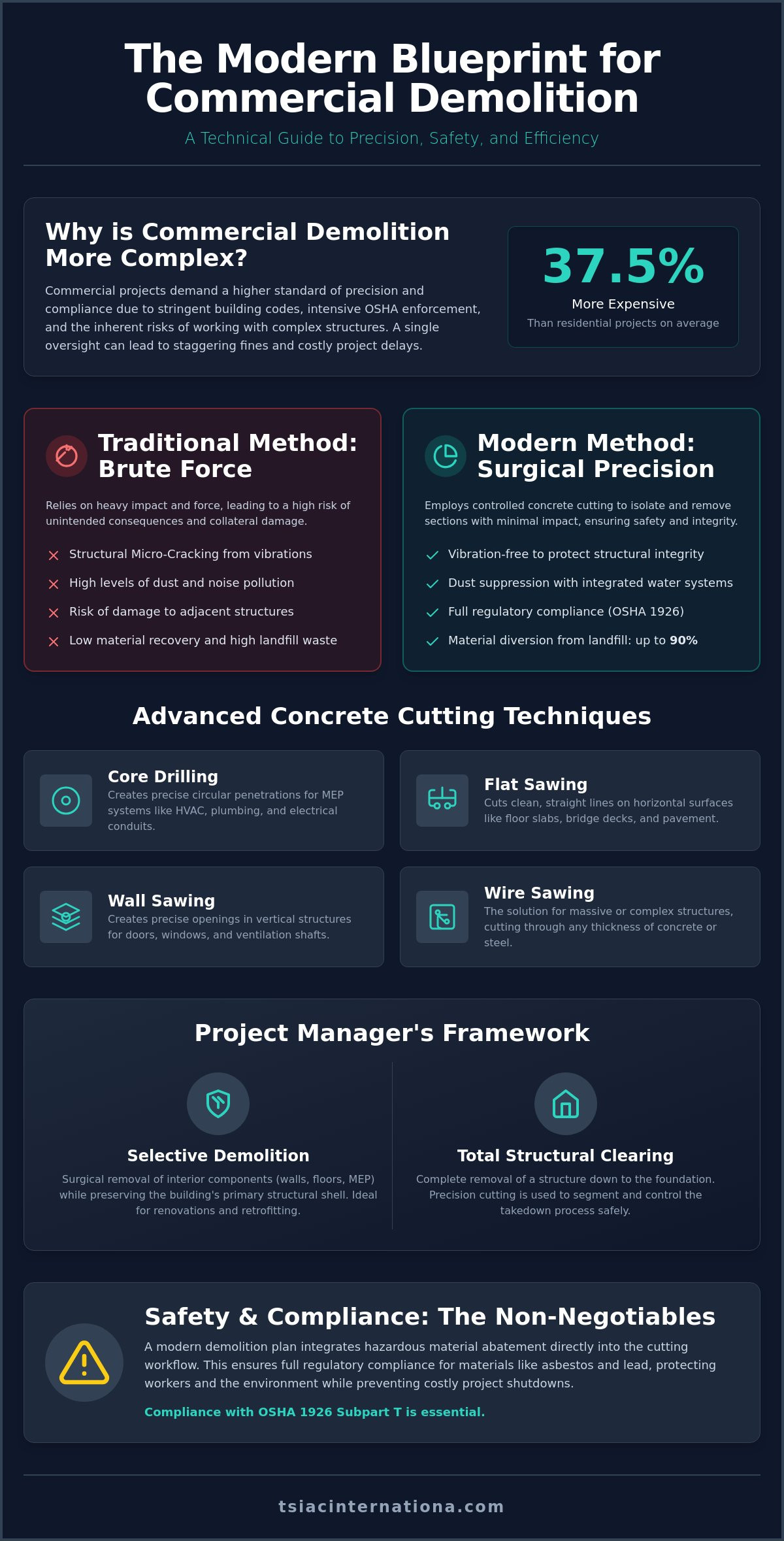
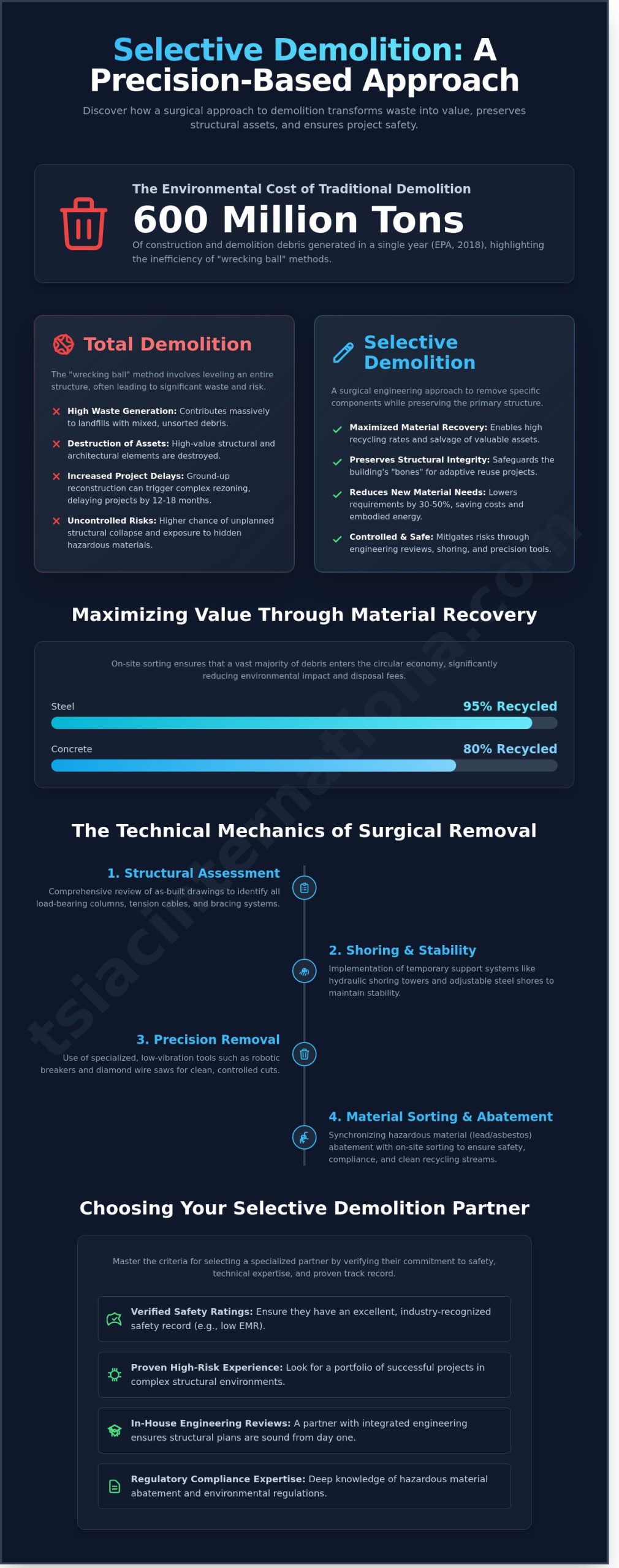
Commercial selective demolition is the methodological, surgical removal of specific building components while maintaining the overall structural integrity of the primary edifice. Unlike total Demolition, which clears an entire site for redevelopment, selective removal focuses on preserving the structural shell for future adaptive reuse. This process is an engineering necessity for facility managers who need to modernize outdated commercial spaces without the massive capital expenditure of a ground-up build. It’s widely considered the gold standard for historic preservation and commercial retrofits because it allows for the integration of modern amenities within a classic architectural framework.
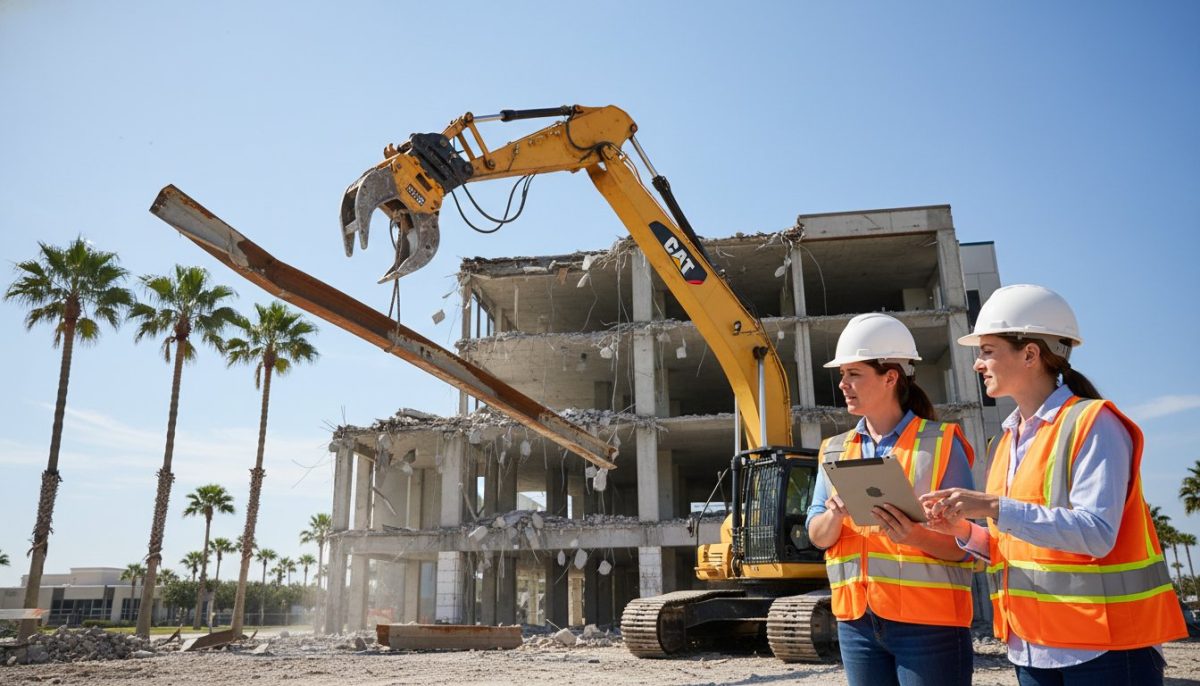
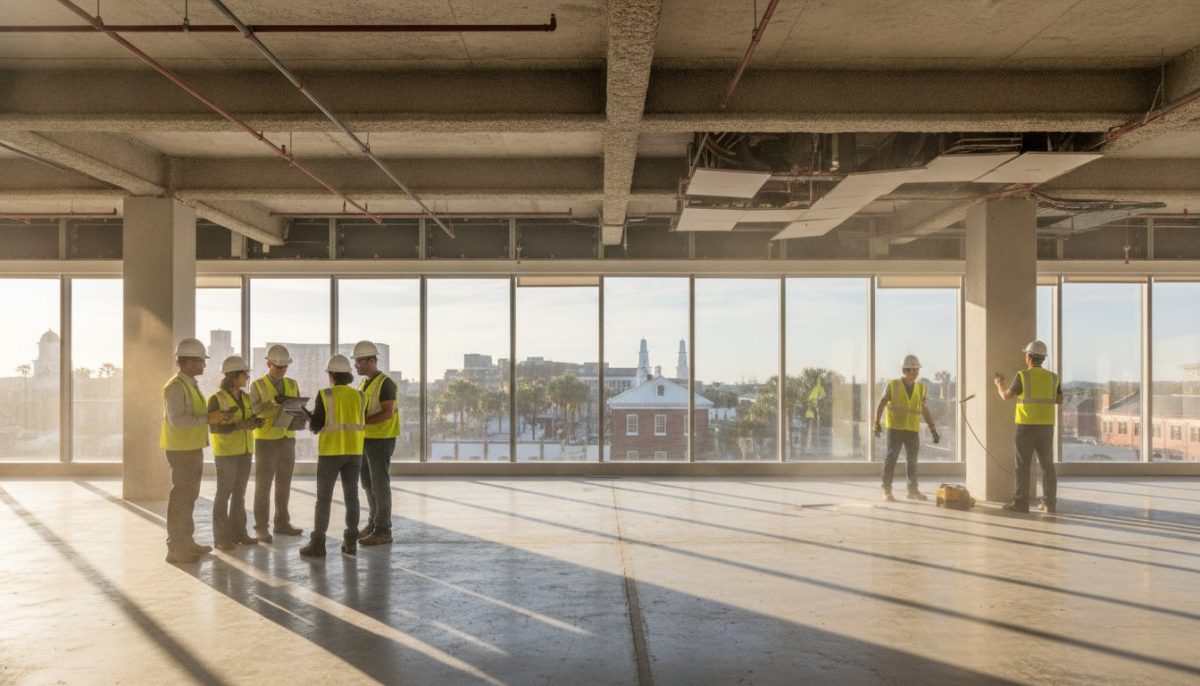
Effective office demolition services south carolina distinguish between interior gut-outs and exterior selective structural removal. An interior gut-out typically involves stripping a space down to its concrete slabs and structural steel, removing partitions, finishes, and non-load-bearing elements. Exterior selective removal involves the targeted extraction of specific sections, such as an outdated annex or a damaged facade, while protecting the remaining structural components from vibration or collapse. This level of precision requires a deep understanding of load paths and material science.
The Core Objectives of Precision Removal
The primary goal of this surgical approach is the preservation of high-value building assets for future tenant improvements. By retaining the primary structure, developers can significantly shorten the timeline for adaptive reuse projects. Precision is paramount. Specialized teams utilize tools designed to minimize noise, dust, and vibration. This is essential when working in or adjacent to occupied commercial spaces. This controlled environment also facilitates the complex upgrades of mechanical, electrical, and plumbing (MEP) systems, ensuring that new infrastructure integrates seamlessly with the existing bones of the building.
Selective vs. Total Demolition: When to Choose Which?
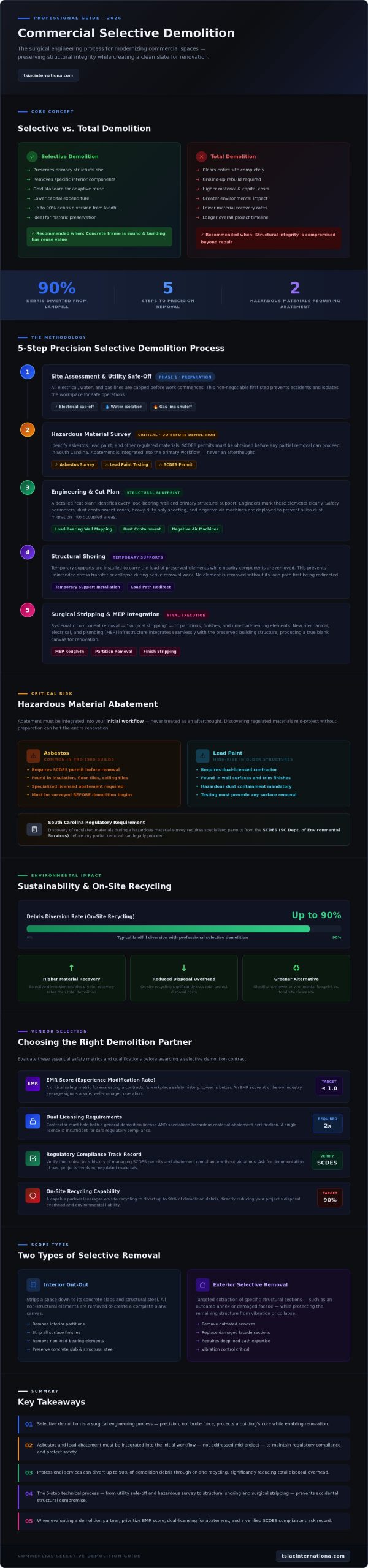
Deciding between selective and total demolition requires a detailed cost-benefit analysis of the existing structural components. Preserving a reinforced concrete frame often proves more economical than a total teardown, especially when considering the rising costs of raw materials in 2026. From an environmental standpoint, selective removal is the greener alternative. It allows for higher material recovery rates, diverting significant volumes of debris from landfills. Regulatory triggers often dictate the scope. In South Carolina, the discovery of regulated materials during a hazardous material survey may require specialized permits from the SCDES before any partial removal can proceed. Choosing the right office demolition services south carolina ensures these compliance triggers are managed before the first hammer swings.
The 5-Step Process for Precision Selective Demolition
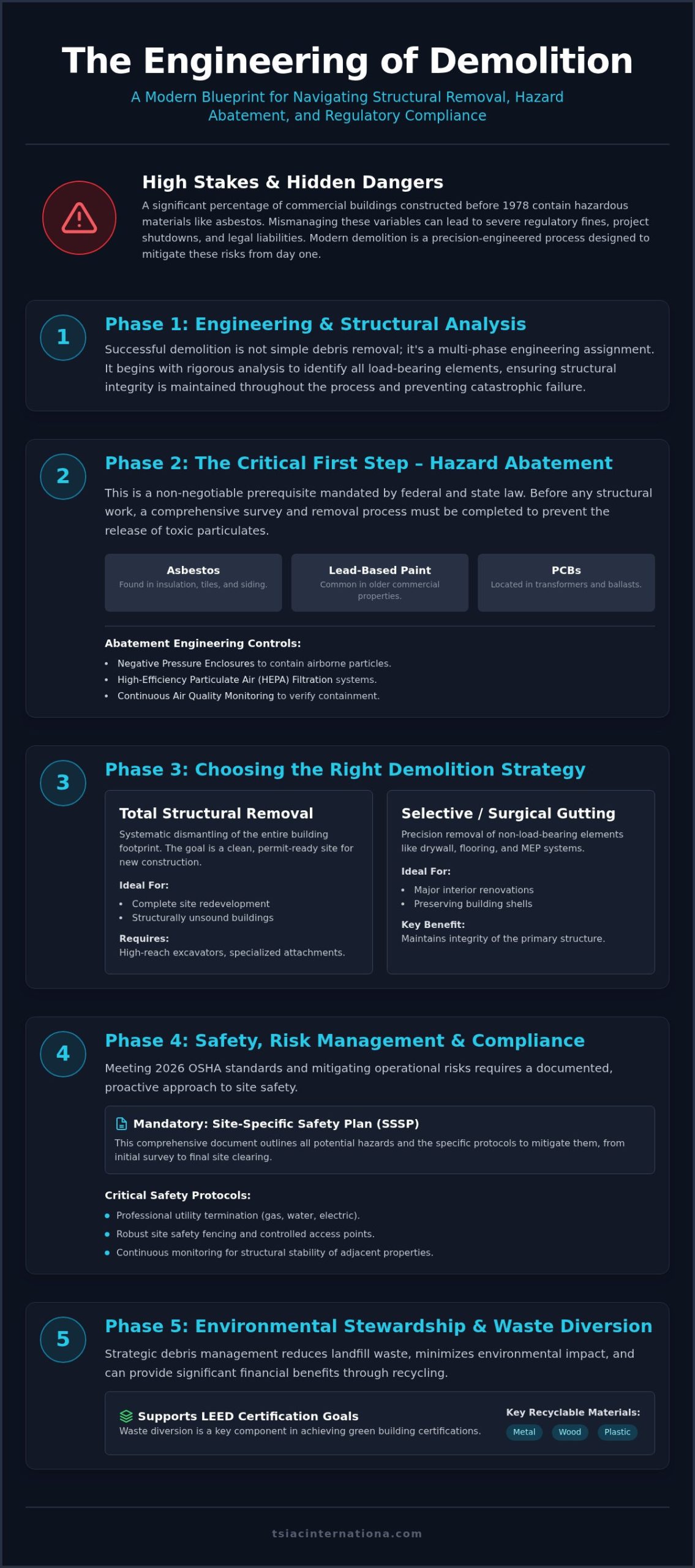
Precision in a commercial environment isn’t achieved through force; it’s the result of a rigorous engineering sequence. When executing office demolition services south carolina, contractors must follow a logical progression that prioritizes structural stability and environmental safety. This five step methodology transforms a potentially chaotic site into a controlled, surgical workspace. It begins with a comprehensive site assessment and utility safe-off, ensuring all electrical, water, and gas lines are capped before work commences. This is immediately followed by a hazardous material survey to identify integrated abatement needs, such as lead or asbestos, which must be addressed before the main demolition phase.
Phase 1: Engineering and Safety Preparation
The success of selective removal depends on the “cut plan,” a detailed blueprint that identifies load bearing walls and primary structural supports. Engineers must mark these elements clearly to prevent accidental collapse during the removal of non structural partitions. Safety perimeters and dust containment zones are established next. These barriers are vital for interior environments where adjacent spaces remain occupied. By using heavy duty poly sheeting and negative air machines, teams prevent the migration of silica dust and debris into sensitive commercial areas. Professional selective demolition teams treat this preparation phase with the same gravity as the physical removal itself.
Once the site is secured, the third step involves structural shoring. Temporary supports are installed to take the load of elements scheduled for preservation while nearby components are removed. This leads into step four, the systematic component removal or “surgical stripping.” During this phase, teams strip the building down to its core, removing finishes, MEP systems, and interior walls with mechanical precision.
Phase 2: Execution and Material Management
Execution requires a mix of specialized hand tools and robotic demolition equipment. These tools allow for high precision work in tight quarters where traditional heavy machinery would be too destructive. During the interior gutting process, crews work methodically to reach the building studs or structural steel. Continuous air monitoring is a non negotiable requirement during dust heavy activities. This protects on site personnel and ensures the building’s HVAC systems don’t become contaminated with particulate matter.
The final step is debris sorting and site documentation. By adhering to sustainable demolition practices, contractors can separate wood, metal, and plastic on site. This methodical sorting isn’t just an environmental choice; it’s a logistics strategy that reduces disposal fees and provides facility managers with accurate material recovery reports. Every phase of these office demolition services south carolina is documented to provide a clear paper trail for regulatory compliance and future construction teams.
Integrating Asbestos and Lead Abatement into Your Project
Hazardous material remediation is a non negotiable component of any modern commercial workflow. In South Carolina, professional Asbestos Removal in South Carolina must be conducted by licensed inspectors before any demolition activity begins. Statistics show that approximately 42% of pre-1978 commercial structures contain hazardous materials that can significantly impact a project’s safety profile and budget. These substances are often hidden in common building elements such as pipe insulation, vinyl floor tiles, and mastic adhesives. Ignoring these risks doesn’t just invite legal liability; it endangers everyone on the job site.
A rigorous “Abatement-First” rule governs high quality office demolition services south carolina. This protocol dictates that all regulated asbestos-containing materials and lead-based paints are fully mitigated before structural separation or interior gutting starts. This prevents the accidental release of microscopic fibers and toxic dust during the more aggressive phases of the project. Facility managers must account for the South Carolina Department of Environmental Services (SCDES) requirement of a written notification at least 10 working days prior to demolition, regardless of whether asbestos is suspected. This ensures the regulatory body has sufficient time to review the integrated abatement plan and verify compliance.
Compliance with OSHA and EPA Standards
Adhering to OSHA and EPA standards is essential for the safe transport and disposal of hazardous commercial waste. Every project requires a meticulous paper trail to maintain documentation for LEED certification and municipal building permit compliance. Once the physical removal is complete, the site must undergo third party air clearance testing. This independent verification confirms that fiber counts are within safe limits, allowing the next phase of construction to proceed without risk. For a deeper dive into these requirements, consult our Hazardous Material Abatement Guide.
Managing Lead Paint in Commercial Renovations
Lead paint management requires specialized stripping techniques designed to prevent dust aerosolization. During large scale interior gut out projects in occupied buildings, containment is the primary defense. Crews use high efficiency particulate air (HEPA) vacuums and wet scraping methods to keep lead particles from becoming airborne. These office demolition services south carolina utilize negative pressure environments to ensure that even the smallest contaminants remain trapped within the work zone. This level of control is what separates a professional abatement team from a standard wrecking crew, providing a safe transition from a contaminated environment to a clean construction site.
Sustainability and Recycling in Commercial Demolition
Environmental responsibility in modern construction is measured by the efficiency of material diversion. For 2026 commercial projects, the environmental ROI of selective removal is undeniable. By implementing rigorous on-site sorting, specialized teams can divert up to 90% of debris from landfills. This isn’t just a matter of ethics; it’s a disciplined financial strategy. Recycling wood, metal, and plastic significantly reduces project overhead by eliminating the high disposal fees associated with mixed-waste hauling. When office demolition services south carolina are executed with surgical precision, they transform a building into a repository of reusable resources rather than a pile of waste.
Selective demolition is a primary driver for earning LEED Certification points. These credits aren’t granted for simple cleanup; they require a methodology that prioritizes deconstruction. By carefully separating architectural elements, facility managers can maximize the value of salvaged materials. This process contributes to a circular economy where high-value components are reintegrated into the supply chain, directly supporting the sustainability goals of the modern enterprise.
Material Recovery Strategies
Strategic material recovery begins with the systematic extraction of metal framing. This material holds high scrap value and is easily diverted for industrial reuse. Concrete isn’t waste. Instead, masonry and concrete are processed into on-site fill or certified road base material. This approach is a core part of The Demolition Process Guide, which emphasizes recovery over destruction. When you hire professional office demolition services south carolina, you’re investing in a process that treats the structure as a resource liability.
LEED Documentation and Waste Management Plans
Achieving green building credits requires more than just recycling; it demands meticulous documentation. We create site-specific waste management plans for general contractors and developers that track every ton of diverted material. This data is essential for corporate sustainability reporting and municipal compliance. Tracking diversion rates for wood, metal, and plastic provides the final disposal documentation required for annual ESG metrics. This transparency ensures that your project meets the highest standards of environmental stewardship. If you’re ready to maximize your project’s material recovery, request a sustainability-focused demolition plan today.
Choosing a Commercial Selective Demolition Partner
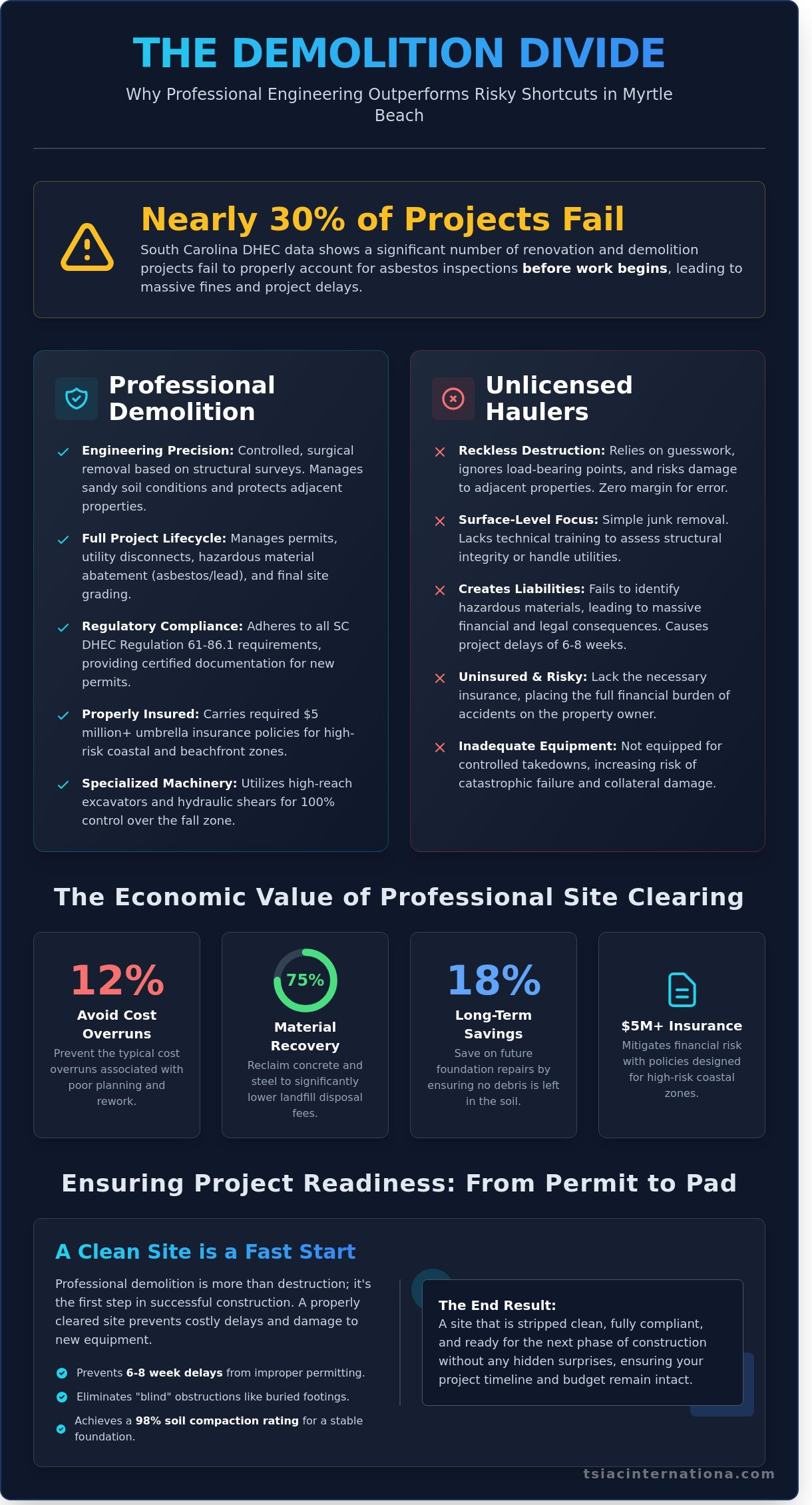
Selecting a partner for selective demolition isn’t just about the lowest bid; it’s an exercise in rigorous risk management. A contractor’s Experience Modification Rate (EMR) score provides an objective look at their historical safety performance. An EMR below 1.0 indicates a safer than average track record, which is a non negotiable metric when performing office demolition services south carolina in high stakes environments. You must also verify that the firm holds dual licensing for both structural demolition and hazardous material abatement. This integration prevents the logistical friction and liability gaps that occur when a demolition crew must wait for a separate abatement team to clear unforeseen contaminants discovered mid project.
A robust heavy equipment fleet and certified, experienced operators are the backbone of any successful surgical removal. Precision tools, such as remote controlled demolition robots and specialized concrete saws, allow for targeted extraction without compromising the building’s core. These assets ensure that the project stays on schedule while maintaining the highest safety standards. You can find a deeper analysis of these technical requirements in our guide on Why Choose TSIAC International.
Key Questions for Your Demolition Contractor
Facility managers should vet potential partners with specific, technical questions to ensure they’re prepared for the complexities of a 2026 commercial site. Ask how they manage dust and vibration in buildings that remain partially occupied. A professional response should involve negative air pressure systems and real time seismic monitoring. Inquire about their protocol for discovering unforeseen hazardous materials during an interior gut-out. A reliable partner will have an immediate containment and abatement plan ready to deploy. Finally, confirm they provide the detailed recycling and disposal documentation required for LEED projects to guarantee your sustainability targets are met.
The TSIAC Advantage: 15 Years of Precision
With over 15 years of industry experience, TSIAC International has refined a methodology that prioritizes budget predictability and technical accuracy. We utilize “Fixed-Price Structural Demolition” and “Selective Project Fees” models to ensure facility managers aren’t blindsided by hidden costs. Our expertise in complex commercial interior gutting projects allows us to navigate the unique challenges of modern regulatory environments with ease. We don’t just clear spaces; we prepare them for their next phase of life with methodical accuracy. We encourage you to request a comprehensive site assessment for your next office demolition services south carolina to ensure your renovation starts on a foundation of safety and precision.
Securing Your Project’s Future with Technical Precision
Commercial selective demolition is a disciplined engineering process that transforms complex structural challenges into ready-to-use renovation sites. By prioritizing structural integrity and environmental safety, facility managers can bypass the risks of accidental collapse or costly regulatory delays. Success in 2026 hinges on a partner who integrates hazardous material abatement directly into the demolition workflow while maintaining high material recovery rates. This surgical approach ensures that adjacent occupied spaces remain undisturbed throughout the interior gutting process.
When you choose professional office demolition services south carolina, you’re investing in a methodology that protects your building’s core assets. TSIAC International brings over 15 years of industry experience to every project, offering integrated asbestos and lead abatement alongside LEED-aligned recycling practices. This comprehensive approach ensures that your site is not only cleared but also fully compliant and environmentally responsible. We provide the technical certainty required for complex retrofits and adaptive reuse projects. Contact TSIAC International for a Professional Selective Demolition Quote today and ensure your next commercial renovation is executed with unwavering precision and safety.
Frequently Asked Questions
What is the primary difference between selective and total demolition?
Selective demolition targets specific interior or exterior components while preserving the primary structural shell. Total demolition involves the complete removal of all structures on a site to clear the land for new development. Selective removal is often preferred for tenant improvements and historic preservation. It requires high precision to avoid compromising load bearing elements that are scheduled to remain during the renovation process.
How long does a typical commercial interior gut-out project take?
Timeline depends on the square footage and complexity of the mechanical systems. A standard 10,000 square foot office demolition services south carolina project usually takes between two and four weeks. This includes site preparation, utility safe-offs, and the physical removal of finishes and partitions. Complex projects involving structural shoring or integrated hazardous material abatement will extend this duration significantly to ensure safety and compliance.
Is a separate asbestos survey required for selective demolition projects?
Yes, a professional asbestos survey is legally required before any demolition activity begins, regardless of the building’s age. Federal and state regulations mandate that a licensed inspector identifies all asbestos-containing materials. If these materials are discovered, they must be removed by a licensed abatement contractor before the selective removal process starts. This proactive step prevents the release of toxic fibers into the environment during the gut-out.
Can selective demolition be performed while a building is still partially occupied?
It’s possible to perform selective demolition in partially occupied buildings by using strict containment protocols. Teams establish physical barriers and negative air pressure zones to prevent dust and debris migration. Noise and vibration monitoring are also utilized to minimize disruption to tenants. Scheduling work during off peak hours or weekends is a common strategy to maintain a safe and productive environment for everyone in the facility.
What happens if lead paint is discovered during the interior demolition process?
If lead paint is discovered, the project must transition immediately to specialized lead abatement protocols. Work stops in the affected area to prevent the aerosolization of toxic dust. Licensed professionals use HEPA filtration, wet scraping, and chemical stripping to remove the lead safely. All waste is then containerized and transported to a certified disposal facility according to OSHA and EPA hazardous waste management standards.
How does selective demolition impact a project’s LEED certification score?
Selective demolition significantly boosts LEED scores by prioritizing material diversion and reuse. By diverting wood, metal, and plastic from landfills through on-site sorting, projects can earn points under the Construction and Demolition Waste Management category. Maintaining the existing structural shell also contributes to Building Life-Cycle Impact Reduction credits. Professional office demolition services south carolina provide the detailed disposal documentation and diversion reports needed to verify these green building achievements.
What permits are generally required for commercial interior demolition?
Most commercial projects require a combination of municipal building permits and state environmental notifications. A demolition notification must be submitted to the relevant environmental agency at least 10 working days before work starts. Local permits verify that the project complies with zoning and safety codes. If hazardous materials are present, specialized abatement permits are required to track the handling and disposal of toxic waste streams.
How are demolition costs calculated for selective removal projects?
Costs are typically calculated based on square footage, material types, and the complexity of the structural separation. Factors like the height of the building, accessibility for heavy machinery, and the presence of hazardous materials also influence the final price. Professional firms often provide fixed price structural demolition contracts or selective project fees. These models offer facility managers budget predictability by accounting for site preparation, labor, and recycling disposal fees upfront.