

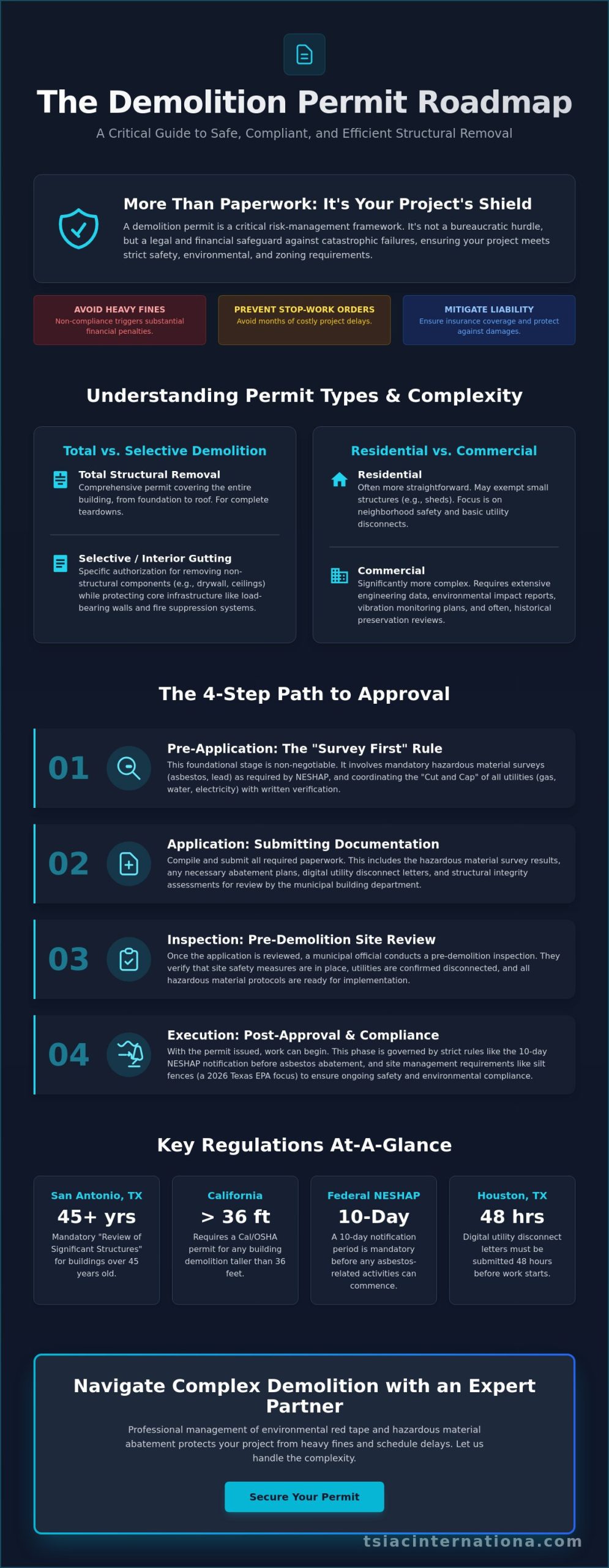
A demolition permit is not a bureaucratic hurdle to clear; it’s a critical risk-management framework that protects your project from catastrophic legal and financial failure. You’re likely concerned that paperwork errors or missed asbestos testing requirements will trigger heavy fines or halt your schedule entirely. In an era where San Antonio requires reviews for 45-year-old structures and California mandates Cal/OSHA permits for any building over 36 feet, mastering the demolition permit process is essential for operational continuity.
We understand that managing environmental obligations while balancing tight deadlines feels overwhelming. This comprehensive guide provides a clear roadmap for permit approval, from securing digital utility disconnect letters to passing final inspections. You’ll learn how to handle hazardous material surveys and identify a contractor who manages technical red tape with methodical precision. We’ll break down the 10-day NESHAP notification rules and specific 2026 Texas EPA focuses like silt fence requirements to ensure your structural removal remains safe and legal.
Key Takeaways
- Understand why a permit is a critical risk-management tool rather than just a document, protecting your project from legal and environmental liability.
- Learn why hazardous material surveys are the non-negotiable first step for any compliant structural removal and how they dictate your timeline.
- Master the demolition permit process by identifying the specific documentation required for utility disconnects and structural integrity assessments.
- Prepare for the pre-demolition inspection by knowing exactly what municipal officials look for before the first hammer swings.
- Discover how professional management of environmental red tape and hazardous material abatement protects your project from heavy fines and schedule delays.
What is a Demolition Permit and Why is it Legally Mandatory?
A demolition permit serves as the primary legal gateway for any structural removal project. It’s a formal authorization issued by a municipal building department that confirms your project meets specific safety, environmental, and zoning requirements. Without this document, the demolition permit process cannot legally commence. The permit acts as a safeguard, ensuring that the planned activity won’t compromise public health, damage neighboring properties, or cause irreparable environmental harm through improper waste disposal.
This regulatory requirement represents a convergence of federal, state, and local mandates. While local zoning boards manage land use, the EPA sets standards for hazardous material containment, and OSHA governs worker safety during the teardown. For a foundational look at these requirements, you can review this demolition process overview which highlights the necessity of pre-demolition safety checks and utility disconnections. The permit process forces a methodical review of these factors before the first machine arrives on site.
Proceeding without a permit is a high-stakes gamble that rarely pays off. Municipalities have the authority to issue immediate “Stop Work” orders, which can freeze a project for months and trigger substantial administrative fines. Beyond these penalties, the lack of a permit creates massive civil liability. If a neighboring structure is damaged or an environmental leak occurs on an unpermitted site, insurance providers frequently deny coverage. This leaves the property owner personally responsible for all damages and legal fees.
Total vs. Selective Demolition Permits
Total structural removal requires a comprehensive permit that covers the entire footprint of the building from the roof to the foundation. However, projects focusing on Selective Demolition or Interior Gutting also require specific authorizations. For commercial tenant improvements, interior gutting permits are essential to ensure that fire suppression systems, load-bearing walls, and shared utility lines remain intact. These permits focus on protecting the building’s core infrastructure while allowing for the precise removal of non-structural components like drywall and acoustic ceilings.
The Difference Between Residential and Commercial Permitting
The complexity of the demolition permit process scales with the size and use of the structure. Residential permits are often straightforward, sometimes exempting small structures like sheds or non-structural fences. In contrast, commercial projects demand extensive engineering data, vibration monitoring plans, and detailed environmental impact reports. Historical preservation is another critical factor. In cities like San Antonio, any structure over 45 years old undergoes a mandatory “Review of Significant Structures,” which can significantly extend the approval timeline compared to a standard residential teardown.
Pre-Application Requirements: Hazardous Materials and Site Safety
Successful project management begins long before the first excavator arrives. The demolition permit process requires several technical prerequisites that serve as the foundation for a legal teardown. Foremost among these is the “Survey First” rule. In 2026, federal NESHAP regulations mandate a comprehensive asbestos and lead survey for all commercial, industrial, and institutional buildings. This isn’t a suggestion; it’s a mandatory filing requirement. If hazardous materials are detected, a specialized abatement plan must be approved before the demolition permit is even considered.
Coordinating with utility providers represents another critical pre-application hurdle. You’ll need to manage the “Cut and Cap” process for water, gas, and electricity. Many jurisdictions, following a model similar to the municipal demolition permit process, require written verification from each utility company that services have been safely terminated at the property line. This prevents catastrophic accidents, such as gas explosions or water main breaks, during the structural removal phase. In Houston, for example, these disconnect letters must be submitted digitally 48 hours before any physical work starts.
Asbestos and Lead Abatement Documentation
A certified building inspector must perform the initial hazardous material survey to identify regulated materials. This documentation is vital because it links your abatement strategy directly to the permit application. You must provide proof of safe containment and disposal protocols to satisfy municipal health departments. For regional compliance, reviewing a dedicated asbestos removal south carolina guide can clarify the specific SCDES and LLR licensing requirements needed for a successful submission.
Environmental and Waste Management Plans
The 2026 regulatory landscape places a heavy emphasis on sustainability and site containment. Modern permits often require a debris recycling plan that documents the diversion of metal, wood, and concrete from landfills. The EPA has also increased its focus on erosion and sediment control. You must implement silt fences and runoff barriers to prevent debris from entering city sewers. Handling specialized components like acoustic ceilings or metal framing requires specific disposal manifests. Integrating these elements into a cohesive site safety plan protects the community and ensures your project remains compliant. Partnering with a specialist in asbestos abatement can help manage these complex environmental filings with technical precision.
The Step-by-Step Demolition Permit Application Process
The demolition permit process requires more than just filling out a form; it demands a meticulously organized technical dossier. Once you’ve completed the pre-application surveys and hazardous material assessments, the formal application sequence begins. This methodical approach ensures that every structural, environmental, and safety risk is mitigated before the first piece of equipment enters the site boundary. A fragmented application is the leading cause of project delays, making a disciplined submission strategy essential.
- Step 1: Structural Integrity Analysis. A qualified professional must analyze the building’s current state, identifying load-bearing elements and potential collapse zones that could impact safety.
- Step 2: Documentation Collection. You must gather all verified utility disconnect letters and environmental clearances, including the mandatory 10-day NESHAP notification receipts.
- Step 3: Packet Compilation. Assemble site maps, abatement plans, and contractor licenses into a single, cohesive technical submission.
- Step 4: Municipal Review. The application moves through various city departments, where officials scrutinize the plans for compliance with local and federal codes.
- Step 5: Issuance and Posting. Once approved, the permit must be prominently displayed on-site to avoid immediate work stoppages during unannounced field inspections.
Compiling the Technical Documentation Packet
Your application’s success hinges on the precision of your site plans. These drawings must accurately show property lines, setbacks, and the proximity of adjacent structures that could be affected by vibration or falling debris. For projects involving Selective Demolition, the role of a structural engineer is vital. They provide the necessary calculations to verify that the remaining portions of the building will stay stable during interior gutting. Additionally, you’ll need to provide proof of high-limit liability insurance and workers’ compensation. Professional contractors follow the safety and ethical guidelines established by the National Demolition Association to ensure every phase of the application meets these stringent municipal standards.
Navigating the Review and Revisions Phase
Don’t expect immediate approval for complex commercial projects. The review phase involves coordination between the Fire Department, Planning Commission, and Health Department. Rejections often stem from minor clerical errors or missing details in the waste management plan. While residential permits might clear in a few days, commercial applications frequently face a review period of several weeks. Anticipating these delays and responding to municipal comments with technical accuracy is the only way to maintain your project schedule. If your plan is rejected, address the specific code violations cited by the reviewer immediately to restart the clock on your approval timeline.
Post-Approval: Execution, Inspections, and Compliance
Receiving the permit is a major milestone, but the active phase of the demolition permit process requires continuous regulatory adherence. Before structural removal begins, a municipal official typically conducts a “Pre-Demo” inspection. They verify that the site is secured, silt fences are correctly installed, and utility terminations are verified. This visit ensures that the safety plans submitted during the application phase are physically implemented on the ground. Skipping this step or starting work before the inspector signs off can lead to immediate permit revocation.
Safe material handling is paramount, especially regarding hazardous substances. You must adhere to rigorous hazardous material abatement south carolina standards to prevent site contamination and worker exposure. Dust control and noise ordinances are not just courtesy; they’re legal requirements. In 2026, many cities require active water misting systems to suppress particulates during the teardown of large structures. Failure to manage debris or noise can lead to work stoppages and fines that far exceed the cost of proper mitigation equipment.
On-Site Compliance During the Structural Removal
Inspectors can arrive unannounced at any time. You must keep the physical permit and all safety documentation, including recent asbestos air monitoring results, accessible on-site. Managing the waste stream is equally critical. You are responsible for tracking recycling percentages and maintaining landfill manifests for every load of debris that leaves the site. Understanding the broader demolition process south carolina helps align your daily operations with these strict permit conditions and ensures your waste diversion goals are met.
Closing the Permit: Final Inspections and Sign-Off
The final phase involves a post-demolition site visit. Officials verify that all foundations are removed and utilities are permanently capped below grade. You’ll need to submit a final recycling report documenting that you met the mandated diversion rates for materials like concrete and metal. A properly closed permit is essential; failing to secure a “Certificate of Completion” can block future building permits for new construction on that parcel. It’s the final legal proof that the land is safe and ready for its next use.
Protect your investment and ensure a clean legal hand-off by partnering with experts in structural demolition and environmental compliance.
Why Professional Contractors are Essential for Permit Management
Navigating the demolition permit process requires more than digital tools; it demands a deep understanding of physical site conditions that software simply cannot detect. A professional contractor brings technical expertise to the table, identifying hidden hazardous materials and structural vulnerabilities during the initial survey phase. This foresight prevents the discovery of unmapped asbestos or lead during active teardowns, which would otherwise trigger immediate work stoppages and costly emergency abatement. By integrating these technical assessments into the permit application, a qualified firm ensures that the project’s regulatory foundation is as solid as its execution plan.
Established relationships with municipal departments serve as a significant advantage for property owners. Experienced contractors understand the specific documentation preferences of local fire marshals, planning commissions, and environmental reviewers. This familiarity doesn’t just reduce clerical errors; it often expedites the review period because officials trust the methodology and safety track record of the applicant. Furthermore, a professional partner provides comprehensive liability protection. They carry the high-limit insurance and specialized pollution riders necessary to shield the property owner from the financial fallout of accidental damage or environmental non-compliance.
The Risks of DIY Permitting for Commercial Projects
Attempting to manage a commercial permit without specialized support is a high-risk strategy. Minor paperwork errors, such as failing to submit a digital utility disconnect letter within the mandated 48-hour window, can derail a multimillion-dollar development schedule. The risks extend beyond financial loss; improper handling of regulated materials like asbestos or lead can lead to criminal liability and permanent debarment from future municipal projects. It’s why general contractors almost exclusively partner with specialized firms. They recognize that the technical red tape surrounding structural removal is best handled by those who live in that specialized environment every day.
TSIAC International: Your Partner in Compliant Demolition
With over 15 years of experience, TSIAC International provides the disciplined, safety-first approach required for modern regulatory environments. We’ve mastered the complexities of commercial interior gutting services and total structural removals, ensuring every permit condition is met with methodological precision. Our team handles the entire lifecycle of the demolition permit process, from the initial hazardous material survey to the final site cleanup and recycling manifest submission. We don’t just provide a service; we act as a responsible partner that manages the technical red tape so you can focus on the next phase of your development. Our word is a guarantee of quality and compliance in even the most extreme working conditions.
Don’t let regulatory hurdles delay your progress. Contact TSIAC International today for a professional consultation on your demolition project.
Securing Project Success Through Regulatory Precision
Navigating the demolition permit process in 2026 requires a disciplined approach to technical documentation and environmental safety. By prioritizing comprehensive asbestos surveys and coordinating utility disconnections early, you mitigate the risks of schedule delays and heavy municipal fines. A successful teardown isn’t just about structural removal; it’s about the methodical management of red tape that ensures your site is legally cleared for future development.
TSIAC International brings over 15 years of industry experience to every project, providing specialized asbestos and lead abatement certification alongside a comprehensive material recycling program. We handle the complexities of municipal reviews and on-site compliance so you can focus on your broader construction goals. Our team acts as a responsible partner, ensuring that every technical requirement is met with unwavering reliability and professional oversight.
Request a Professional Demolition and Abatement Quote from TSIAC International today. Let’s move your project forward with the confidence that comes from professional, safety-first execution.
Frequently Asked Questions
How long does the demolition permit process typically take in 2026?
The timeline for the demolition permit process depends on the project’s scale and local municipal efficiency. While residential permits may clear in five to ten business days, commercial applications often take several weeks due to complex inter-departmental reviews. You must also account for the mandatory 10-working-day federal NESHAP notification period required for all regulated structures before physical work begins.
Can I get a demolition permit if there is asbestos in the building?
You can obtain a permit for a building containing asbestos, but approval is contingent upon a certified abatement plan. Municipalities require documented proof that all hazardous materials will be professionally removed and disposed of before the main structural teardown begins. This sequence prevents the release of dangerous fibers into the environment and protects the safety of the surrounding community.
Do I need a separate permit for interior gutting vs. full structural removal?
Most jurisdictions distinguish between total structural removal and selective demolition. Interior gutting usually requires a renovation or selective demolition permit rather than a full teardown authorization. These permits focus on maintaining the integrity of load-bearing elements and shared utility systems while allowing for the removal of non-structural components like drywall and acoustic ceilings.
What happens if I start a demolition project without a permit?
Proceeding without a permit results in an immediate Stop Work order and significant administrative penalties. Beyond the fines, you assume total civil liability for any accidents or environmental contamination that occurs on an unpermitted site. Many municipalities also bar non-compliant owners from receiving future building permits for a specific period, delaying new construction indefinitely.
Are there specific recycling requirements for demolition debris?
Modern regulatory standards in 2026 place a heavy emphasis on material diversion. Many cities now mandate that a specific percentage of debris, such as concrete, metal, and clean wood, be sent to certified recycling centers rather than landfills. You’re typically required to submit a final waste management report and landfill manifests to close the permit successfully and avoid compliance fines.
Is a utility disconnect letter required before applying for a permit?
A verified utility disconnect letter is a mandatory prerequisite in most urban jurisdictions. You must provide written or digital confirmation from the electric, gas, and water providers stating that services have been safely terminated at the property line. This step is critical for preventing gas explosions or water main breaks during the structural removal phase of the demolition permit process.
How much does a demolition permit cost for a commercial property?
Commercial permit fees are determined by the local building department and vary based on the structure’s square footage or the total project valuation. These administrative costs are separate from the contractor’s service fees and are paid directly to the municipality. You should consult your local building department’s current fee schedule to determine the exact filing costs for your specific parcel.
Does a demolition permit expire if the work isn’t started immediately?
Demolition permits are not indefinite and typically expire if work doesn’t commence within six months of issuance. If a project is halted for more than 180 days, the permit may become void, requiring a new application and additional fees. Always check the specific expiration terms printed on your approved permit documentation to ensure your authorization remains active during project delays.
