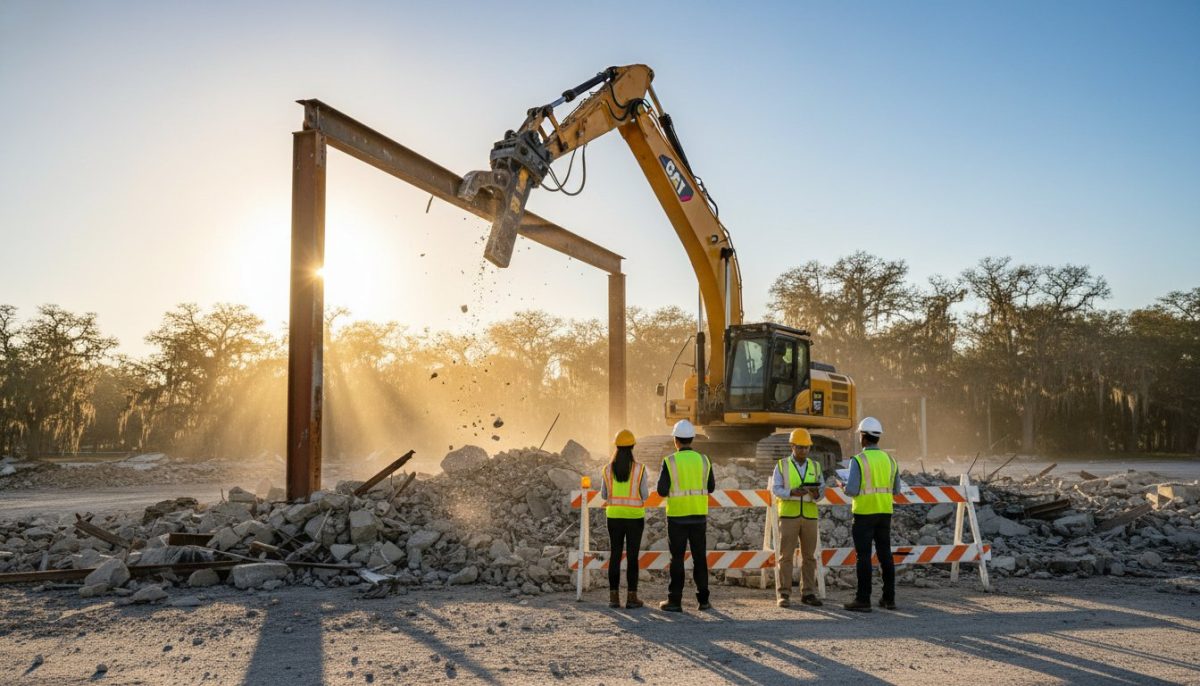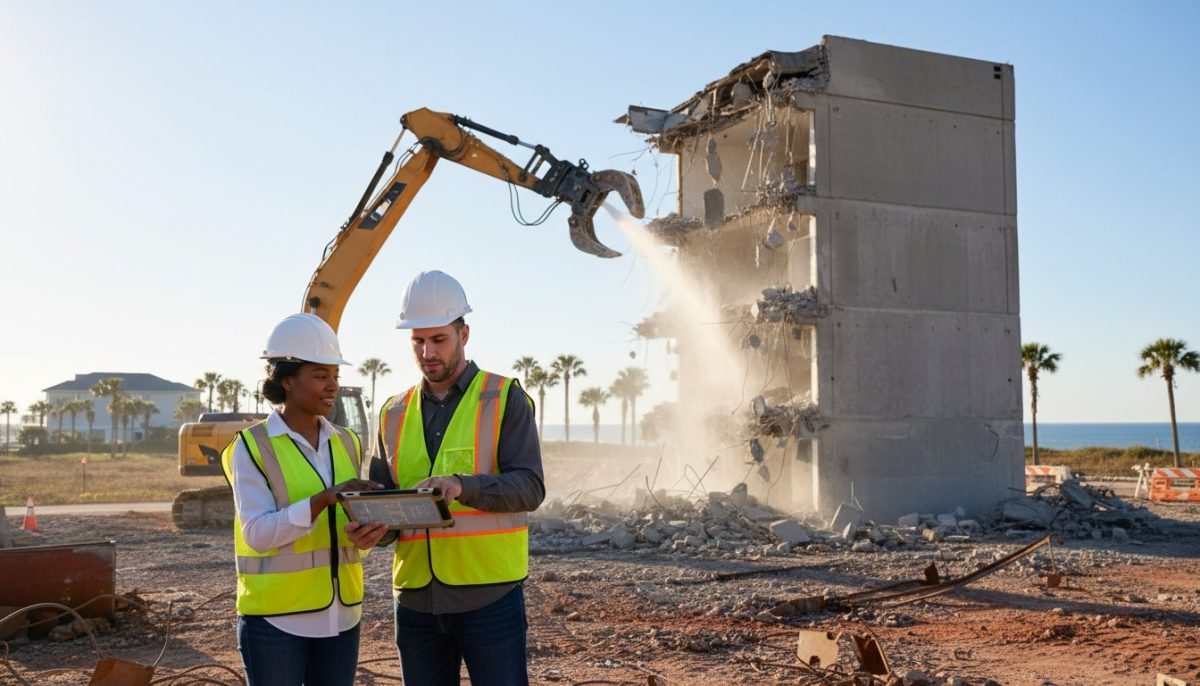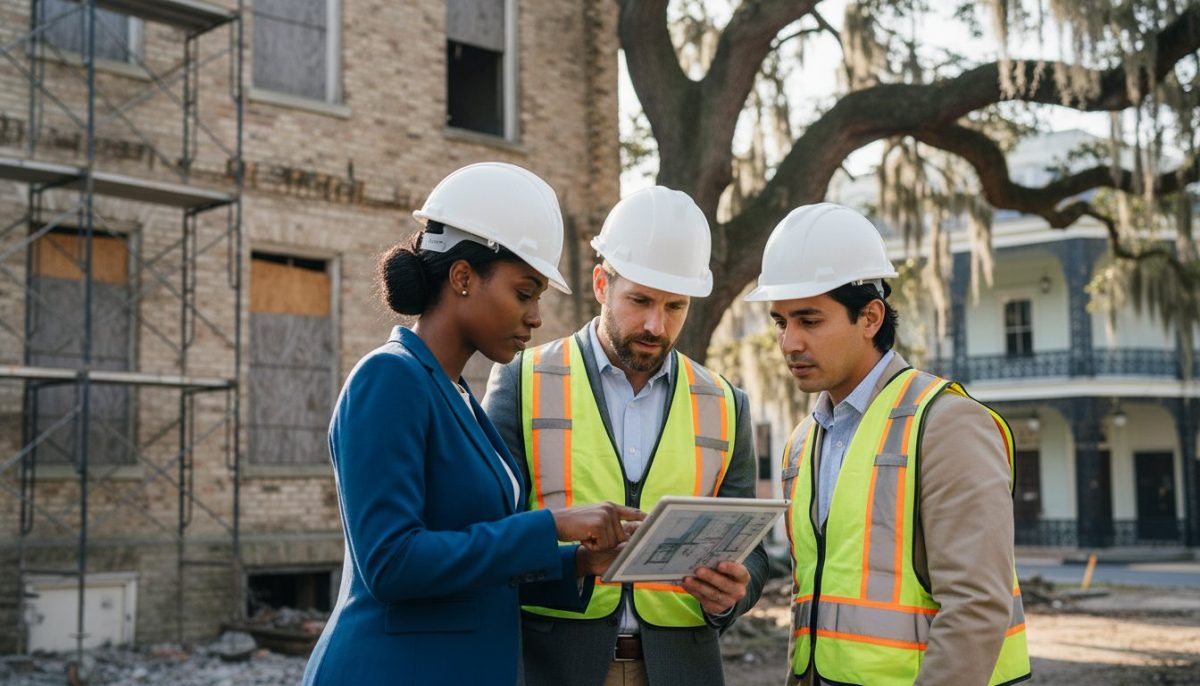
In 2025, approximately 42% of commercial demolition projects across various jurisdictions faced immediate stop-work orders because of misaligned municipal codes and environmental agency mandates. You recognize that a structural teardown involves far more than heavy machinery and site clearing. It’s a high-stakes engineering sequence where a single missing signature or an overlooked hazardous material survey can trigger regulatory fines exceeding $10,000 per day. Securing demolition permits charleston sc requires a disciplined approach to navigating both local zoning and broader regulatory frameworks to avoid these costly setbacks.
At TSIAC International, we provide the technical clarity you need to master these complexities through a professional engineering lens. This reference guide outlines the exact 2026 documentation requirements, the critical role of asbestos abatement in the approval timeline, and a precise roadmap for your submittal sequence. By following this framework, you’ll eliminate the administrative friction that leads to project delays and ensure your site remains compliant from the first inspection to final debris removal. You’ll gain a thorough understanding of how to manage hazardous material compliance while maintaining the structural integrity of the surrounding environment.
Key Takeaways
- Understand the critical legal distinctions between total structural removal and selective interior permits to ensure your project aligns with 2026 regulatory definitions.
- Identify mandatory NESHAP requirements and the essential role of certified asbestos surveys in the pre-application environmental phase.
- Master the structural engineering roadmap required to efficiently secure demolition permits charleston sc while maintaining rigorous safety standards.
- Learn how to coordinate essential utility “kill letters” and manage complex pedestrian safety plans to avoid logistical delays in high-density areas.
- Discover how leveraging 15+ years of professional compliance expertise can streamline the entire permitting and hazardous material abatement lifecycle.
Understanding Demolition Permits: Scope and Legal Necessity
A demolition permit represents a formal legal authorization issued by the City of Charleston’s Building Inspection Division. This document is not a mere administrative formality; it serves as the primary mechanism for ensuring that structural removal adheres to established safety standards and municipal zoning laws. For any property owner, securing demolition permits charleston sc is the first step in a high-stakes technical operation. The demolition process requires a controlled approach to mitigate risks associated with hazardous materials, utility disruptions, and structural instability. In 2026, the legal framework surrounding these permits has tightened to reflect modern safety requirements. Proceeding without valid authorization results in immediate stop-work orders and administrative penalties that often exceed $1,200 per day. Beyond financial loss, unauthorized work can lead to the permanent revocation of future building privileges on the site.
Structural vs. Selective Demolition Permits
Project managers must distinguish between total structural demolition and selective clearing. A total demolition permit covers the complete removal of a building down to the grade level. Conversely, selective permits are necessary for renovation projects that involve stripping internal components without altering the external structure. This distinction is critical when engaging commercial interior gutting services. These specialized services require permits that specifically detail how load-bearing elements will be protected. In Charleston, approximately 38% of residential permits issued in the historic district are for selective demolition, requiring a higher level of engineering oversight to preserve the integrity of the surrounding urban fabric.
The Role of the Registered Contractor
Most jurisdictions within the Charleston area mandate that a licensed and registered contractor pulls the permit. This regulation ensures that the individual overseeing the work possesses the technical competence to manage complex machinery and high-risk environments. The approval process involves several key requirements:
- Verification of a valid South Carolina contractor’s license with the appropriate classification.
- Submission of current general liability insurance and workers’ compensation certificates.
- Proof of a performance bond, often ranging from $5,000 to $25,000 for residential projects.
Upon permit issuance, the legal liability for site safety and regulatory compliance shifts from the property owner to the contractor. This shift protects the owner from direct litigation related to onsite accidents or environmental violations. It’s a system designed to place responsibility in the hands of professionals who understand the engineering precision required for safe structural removal. When a contractor signs the permit, they’re legally affirming that the project will meet all 2026 safety codes and environmental disposal regulations.
Environmental Prerequisites: Asbestos and Hazardous Material Inspections
Before heavy machinery arrives at a job site, environmental safety protocols dictate the project schedule. The National Emission Standards for Hazardous Air Pollutants (NESHAP) mandate that every facility, including residential structures destined for demolition, undergoes a thorough inspection for Asbestos-Containing Materials (ACM). You can’t bypass this step. In Charleston, a South Carolina licensed asbestos inspector must conduct a comprehensive survey to identify any regulated materials. This technical data forms the necessary foundation for following the City of Charleston Demolition Permit Guidelines. Skipping this or using an uncertified inspector results in immediate project halts and potential fines that often exceed $10,000 per violation day.
Hazardous material abatement isn’t just a safety measure; it’s a critical path item in your project management. Identifying friable asbestos early allows for controlled removal, preventing the release of microscopic fibers into the dense residential neighborhoods of the Lowcountry. This phase requires precise coordination between environmental consultants and the demolition crew to ensure the site remains stable throughout the transition.
The Link Between Abatement and Approval
Regulatory bodies require a “Notification of Demolition” filed with the South Carolina Department of Health and Environmental Control (DHEC) at least 10 working days before any structural work begins. This document proves that hazardous materials were either absent or professionally removed. Building departments won’t issue demolition permits charleston sc until they receive a clearance letter or a signed-off notification from the abatement contractor. For a deeper look at the technical requirements and 2026 safety standards, consult this asbestos removal South Carolina guide. Abatement typically adds 7 to 14 days to the pre-demolition phase, so it’s vital to factor this into your equipment scheduling.
Lead Paint and Mold Remediation Standards
Structures built before 1978 carry a high probability of containing lead-based paint. While federal rules focus heavily on occupied renovations, total demolition requires specific containment strategies to prevent lead dust from contaminating the local soil and groundwater. In our humid coastal climate, mold remediation often coincides with interior gutting permits. You’ll need to maintain rigorous Waste Shipment Records (WSRs) to prove that all toxic debris reached a licensed Subtitle D landfill. If you’re dealing with a complex site or a “impossible” location, securing expert technical oversight ensures these environmental hurdles don’t derail your timeline. Professional documentation is your only defense against future liability claims. Obtaining demolition permits charleston sc depends entirely on your ability to prove the site is clean and safe for the next phase of construction.
The Roadmap to Securing a Demolition Permit in 2026
Securing demolition permits charleston sc requires a sequence of technical milestones that ensure public safety and environmental compliance. Every project begins with a rigorous site assessment. Structural engineers must evaluate the building’s stability to determine the safest method of deconstruction, especially when dealing with historic or compromised residential structures. This phase prevents unforeseen collapses and protects adjacent properties in Charleston’s dense urban corridors.
Following the structural review, environmental surveys are mandatory. In 2026, South Carolina Department of Environmental Services (SCDES) regulations demand strict asbestos and lead-based paint inspections before any heavy machinery arrives on-site. If hazardous materials are identified, you must secure abatement clearances from certified professionals. Simultaneously, coordination with utility providers like Dominion Energy and Charleston Water System is vital. You’ll need “kill letters” to certify that electrical, gas, and water lines have been safely capped at the street level to prevent fire or flooding during the teardown.
Once these prerequisites are met, developers submit their formal packet through the City of Charleston’s official permit application portal. This submission must include a comprehensive site management plan detailing traffic control, noise mitigation, and dust suppression strategies. After the physical teardown is complete, a final site inspection by a municipal official is required to close the permit, ensuring the lot is stabilized and ready for its next use.
Essential Documentation for Application
Standard applications require detailed site plans that clearly distinguish between structures slated for removal and those remaining, such as protected grand oaks or neighboring boundary walls. For removals exceeding 5,000 square feet of land disturbance, the city mandates specific erosion and sediment control plans to prevent silt runoff into local marshlands. Sustainable projects also benefit from a recycling and debris management plan, which tracks the diversion of concrete, steel, and timber from regional landfills.
Timeline and Fee Expectations
Processing times for demolition permits charleston sc typically range from 14 to 21 business days for residential projects. Commercial applications often take 30 to 45 days due to the complexity of engineering reviews. Permit fees are calculated based on the total square footage and the estimated value of the work. Base fees often start at $100, with incremental costs added per $1,000 of project value. For a detailed breakdown of financial requirements, consult the cost of demolition Charleston SC guide to ensure your budget aligns with 2026 market rates and municipal schedules.
Common Permitting Hurdles: Utility Coordination and Site Safety
Securing demolition permits charleston sc requires more than just filling out a form; it involves a coordinated effort between municipal departments and private utility providers. In high-density areas like the French Quarter or South of Broad, the City of Charleston requires a detailed pedestrian and traffic safety plan. This plan must outline how you’ll maintain a 5-foot clear path for foot traffic or manage lane closures for heavy equipment. Projects involving structures older than 50 years often trigger a mandatory review by the Board of Architectural Review (BAR). This process can add 30 to 45 days to your timeline. You’re also required to provide a 10-day written notice to neighbors before work begins to ensure transparency and maintain community relations.
The Utility Disconnection Checklist
You can’t swing a sledgehammer until every utility provider issues a formal “kill letter.” This document confirms that services like natural gas from Dominion Energy or water from Charleston Water System are physically capped at the main. For properties in West Ashley or James Island, you must also provide proof of septic tank abandonment or sewer line capping, certified by a licensed plumber. Before any excavation begins, South Carolina law requires a 72-hour notice to the 811 “Call Before You Dig” system to prevent catastrophic damage to underground infrastructure. Managing these demolition permits charleston sc requirements early prevents costly work stoppages and safety hazards.
Site Protection and Debris Management
Site security is a non-negotiable safety requirement in the Lowcountry. Contractors must install 6-foot chain-link fencing around the entire perimeter to prevent unauthorized access. Noise ordinances in Charleston generally restrict heavy work to between 7:00 AM and 7:00 PM on weekdays. Efficient site clearing relies on the strategic use of concrete removal Charleston SC services. This ensures that heavy foundations and driveways are processed and hauled away according to the city’s strict debris management protocols. Proper signage must be visible at all entry points to warn the public of active demolition zones.
If you’re ready to start your residential project with engineering precision, contact our technical team for a comprehensive site assessment.
Professional Compliance Management with TSIAC International
Securing demolition permits charleston sc involves more than filling out forms; it requires a deep understanding of municipal codes and environmental mandates. TSIAC International leverages over 15 years of operational experience to manage the entire project lifecycle, from the initial site survey to final permit closure. Our team coordinates directly with the City of Charleston Building Inspections Division and the South Carolina Department of Health and Environmental Control (DHEC) to ensure every regulatory hurdle is cleared before the first machine arrives on site.
Safety isn’t a secondary consideration in our workflow. We operate under strict adherence to OSHA 29 CFR 1926 standards for demolition and EPA guidelines for hazardous material handling. This technical rigor prevents the costly delays and legal liabilities that often plague residential projects. As part of our commitment to sustainable development, we integrate environmental recycling into our permit closure process. We typically divert up to 85% of structural debris from landfills by sorting concrete, metals, and timber for reuse, meeting the highest standards of modern urban renewal.
Why Specialized Contractors are Essential
Attempting a DIY approach to permitting or hiring uncertified labor carries extreme financial risk. In the Charleston area, fines for improper asbestos abatement or unauthorized structural removal can exceed $10,000 per violation. TSIAC provides an integrated solution where abatement and structural removal happen under a single umbrella of liability. You can review our specific technical standards and safety protocols in our demolition process South Carolina guide, which outlines the engineering precision we bring to every job site.
Next Steps for Your Project
The path to a clean site starts with a professional assessment. Our engineers evaluate structural integrity, utility disconnect requirements, and potential environmental hazards to build a roadmap for your project. We provide a transparent, fixed-price contract that covers every phase of the work, including:
- Comprehensive hazardous material surveys and DHEC notifications.
- Securing all necessary municipal demolition permits charleston sc.
- Full site clearing and debris management with documented recycling rates.
- Final site stabilization and permit sign-off.
Don’t leave your property’s future to chance. Consult with TSIAC International for Expert Compliance to ensure your residential demolition is handled with the engineering accuracy it deserves.
Mastering the 2026 Charleston Permitting Landscape
Navigating the technical landscape of demolition permits charleston sc requires a disciplined approach to 2026 regulations. Success depends on rigorous asbestos inspections and strategic utility coordination before any physical work begins. These steps aren’t just administrative hurdles; they’re the bedrock of site safety and legal protection for your property.
TSIAC International brings 15+ years of hazardous material expertise to every project, ensuring that complex environmental challenges don’t stall your progress. We provide comprehensive fixed-price structural removal contracts that offer financial certainty in an unpredictable industry. Our integrated asbestos and lead abatement services streamline the transition from a hazardous structure to a clean, build-ready site. We’ve mastered the logistical nuances of Charleston’s 2026 standards, allowing us to manage your project with engineering precision and unwavering reliability.
Partner with TSIAC International for Seamless Demolition Permitting
Let’s secure your project’s future with the professional oversight and technical excellence it deserves.
Frequently Asked Questions
Do I need a permit for interior demolition if the exterior remains unchanged?
You need a permit for interior demolition if you’re altering structural components, plumbing, or electrical systems, even if the exterior remains untouched. The City of Charleston Building Inspections Division mandates these permits to ensure the building’s structural integrity isn’t compromised. For projects exceeding 200 square feet of interior renovation, specific trade permits are required alongside the general filing to maintain safety standards throughout the demolition process.
How long does it typically take to get a demolition permit approved in 2026?
Obtaining demolition permits Charleston SC residents require typically takes 15 to 30 business days in 2026. This timeline accounts for the increased volume of residential redevelopment projects and the mandatory 10 day notification period for DHEC. If your property is located within the Old and Historic District, the Board of Architectural Review process can extend this duration by 45 to 60 additional days due to mandatory public hearings and architectural assessments.
Can I pull a demolition permit as a homeowner, or do I need a contractor?
You can pull a demolition permit as a homeowner if the property is your primary residence for the next 24 months under the SC Residential Builder’s Commission exemption. However, hiring a licensed contractor is safer because they carry the $500,000 general liability insurance and workers’ compensation required for high risk work. Professional oversight ensures compliance with the 2021 International Residential Code, reducing the risk of legal complications or safety failures on your site.
What happens if asbestos is found after the demolition permit is already issued?
You must immediately stop all work and notify the South Carolina Department of Health and Environmental Control (DHEC) if asbestos is discovered after permit issuance. Regulation 61-86.1 requires a new inspection by a licensed consultant to assess the 1 percent threshold of asbestos containing material. You’ll need to revise your permit and hire a certified abatement team to remove the hazardous materials before the City of Charleston Building Department allows any further demolition to proceed.
Is a separate permit required for concrete slab and foundation removal?
A separate permit is often required for concrete slab and foundation removal if the work involves disturbing more than 2,500 square feet of land. This falls under the City of Charleston’s Stormwater Management requirements to prevent soil erosion and drainage issues. You must submit a grading plan showing how the 4 inch thick slab removal will affect the lot’s elevation and ensure proper backfilling with engineered soil to meet local 95 percent compaction standards.
What utilities must be disconnected before a demolition permit is granted?
You must disconnect water, sewer, natural gas, and electricity services before the demolition permits Charleston SC requires are officially granted. Charleston Water System requires a capped sewer inspection, while Dominion Energy must provide a “kill letter” confirming the 120/240V lines and gas meters are safely removed. You’ll need to present these four specific clearance documents to the permit office to prove the site is safe for heavy machinery and prevent accidental utility ruptures.
Are there specific permits for removing hazardous materials like lead or mold?
Specific permits aren’t required for lead or mold, but you must follow EPA RRP Rule protocols if the home was built before 1978. Contractors must be Lead-Safe Certified and use HEPA vacuum systems to contain dust containing more than 0.5 percent lead by weight. For mold, South Carolina doesn’t mandate a specific permit, but OSHA 1910.134 standards require workers to use N95 respirators if the affected area exceeds 10 square feet of contaminated surface.
How does the historic preservation status of a building affect the permit?
Historic preservation status adds significant complexity to the process, as any building over 50 years old or within the BAR districts requires a Certificate of Appropriateness. The Board of Architectural Review evaluates the 7 criteria for demolition, including the building’s architectural significance and its contribution to the 1670 city plan. You must provide a structural engineer’s report proving the building is beyond repair, or the city will likely deny the permit to protect heritage.