Professional Asbestos Testing in Charleston, SC: A 2026 Property Owner’s Guide

For property owners in Charleston, the architectural charm of a historic estate or the structural complexity of a modern industrial site often…

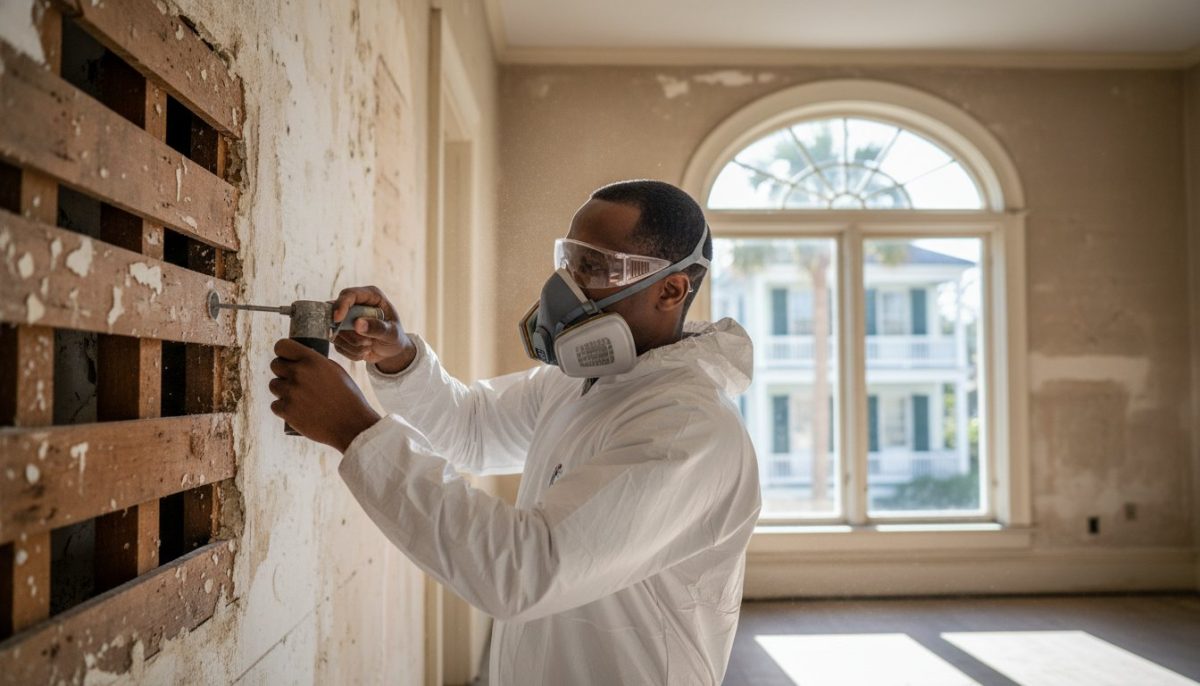
For property owners in Charleston, the architectural charm of a historic estate or the structural complexity of a modern industrial site often conceals a silent liability: legacy asbestos. Navigating the severe health risks associated with mesothelioma while attempting to satisfy the stringent requirements of the South Carolina Department of Health and Environmental Control (SC DHEC) can be a daunting technical challenge. Securing professional asbestos testing in charleston sc is not merely a procedural formality; it is a critical safety measure that ensures your renovation or demolition project remains on schedule, within legal boundaries, and free from the interference of local preservation boards.

This 2026 guide provides a technical roadmap for identifying hazardous materials with engineering-level precision, specifically tailored to the unique regulatory landscape of the Lowcountry. You will learn how to obtain definitive pass/fail results, manage complex regulatory compliance for building permits, and facilitate a seamless transition from initial site assessment to certified removal. By prioritizing technical accuracy and safety protocols, we empower you to protect both your structural investment and your occupants with unwavering professional confidence and mechanical reliability.

Key Takeaways

  • Understand why Charleston’s unique architectural history necessitates mandatory testing for nearly all pre-1980 structures to protect property value and occupant safety.
  • Identify hidden hazardous materials and the critical differences between friable and non-friable fibers before beginning any coastal renovation or demolition project.
  • Navigate regulatory complexities by ensuring your professional asbestos testing charleston sc aligns with strict SC DHEC standards and EPA-accredited laboratory protocols.
  • Learn the essential steps for transitioning from survey results to remediation, including the technical process of securing mandatory local abatement permits.
  • Discover how a comprehensive, expert-led approach integrates scientific analysis with specialized removal to ensure long-term structural integrity and compliance.

Why Asbestos Testing is Critical for Charleston Properties

Asbestos testing is a rigorous, scientific analysis of building materials designed to identify hazardous mineral fibers that may be embedded within a structure. In a city like Charleston, where architectural history spans centuries, this process is not merely a recommendation but a foundational safety requirement. Before initiating any structural modification, it is essential to understand What is Asbestos? and why its microscopic fibers pose such a significant risk to long-term respiratory health when disturbed during renovation or demolition.

For many local property owners, asbestos testing charleston sc is the first step in ensuring regulatory compliance and physical safety. South Carolina law is explicit: a certified asbestos survey must be performed by a licensed professional before a demolition or renovation permit can be issued for any structure, particularly those built before 1980. This legal mandate serves as a critical barrier against the accidental release of carcinogenic fibers, protecting both the site workers and the general public from preventable health crises.

The “Historic District” Factor

Conducting asbestos testing charleston sc within the Historic District presents unique technical challenges. Professionals must balance the necessity of invasive material sampling with the strict preservation mandates of the Board of Architectural Review (BAR). It is a common misconception that “grandfathered” status exempts historic buildings from modern safety standards; in reality, hazardous material regulations are absolute. Safety protocols regarding toxic minerals take precedence over aesthetic preservation during the pre-construction phase to ensure the long-term viability of the asset.

Commercial vs. Residential Testing Requirements

While residential inspections often focus on localized risks, commercial asbestos surveys are governed by stringent OSHA and DHEC protocols. The distinction is critical for project management:

  • Residential: Typically focuses on surfacing materials, thermal insulation, and flooring in pre-1980 homes.
  • Commercial: Requires a comprehensive survey of all functional spaces, including mechanical systems and structural fireproofing, to secure demolition contracts.
  • Worker Safety: Compliance with OSHA requirements for interior gutting projects remains mandatory to protect labor forces from exposure.

In the professional landscape of 2026, the role of testing is not just about identifying a substance, but about securing the legal and structural integrity of a project. Precise testing ensures that “impossible” renovation sites are managed with engineering certainty and total safety.

Identifying Asbestos in Lowcountry Homes and Offices

Charleston’s architectural landscape is a complex tapestry ranging from 18th-century historic estates to mid-century industrial developments. This structural diversity creates unique challenges for asbestos testing charleston sc, as hazardous materials are often integrated into the very “bones” of a building. Identifying Asbestos-Containing Materials (ACM) requires more than a cursory glance; it necessitates a deep technical understanding of historical construction methods. At TSIAC International, our team specializes in accessing “impossible locations”-tight structural shells, interstitial spaces, and high-reaching voids where asbestos was frequently utilized for its thermal and fire-resistant properties.

A critical distinction in property safety is the difference between friable and non-friable materials. Friable asbestos can be easily pulverized by hand, releasing microscopic fibers into the air, while non-friable materials, such as transit pipe or floor tiles, are more stable until they are cut, sanded, or broken. Understanding these OSHA Asbestos Hazards is vital for any property owner, as even non-friable materials become a significant risk during a renovation’s demolition phase. Because asbestos fibers are invisible to the naked eye, visual inspection is never sufficient to confirm a building’s safety; laboratory analysis is the only definitive proof of absence.

High-Risk Materials in Older SC Structures

In Charleston’s mid-century suburbs, popcorn ceilings and decorative plasters were standard, often containing significant concentrations of chrysotile asbestos. During commercial interior gut-outs, we frequently identify 9×9 floor tiles and the high-performance mastic adhesives used to secure them. Furthermore, historic Lowcountry estates often harbor hidden risks in the form of asbestos-wrapped steam pipes and attic vermiculite, which require precision sampling to ensure the structural integrity of the historic fabric remains uncompromised.

The Impact of Coastal Humidity

Charleston’s persistent moisture levels significantly impact the degradation of ACM. High humidity can accelerate the breakdown of binding agents in insulation and ceiling tiles, causing them to become brittle and prone to fiber release. We frequently observe an intersection between mold remediation and asbestos testing charleston sc, where water-damaged materials must be handled with extreme caution. In these humid environments, maintaining rigorous containment integrity during the sampling process is a technical necessity to prevent the cross-contamination of the property.

The Professional Testing Process & SC DHEC Regulations

Navigating the complexities of asbestos testing charleston sc requires a meticulous adherence to both federal mandates and specific state protocols. In South Carolina, the safety of building occupants and the integrity of the local environment are protected by a rigorous regulatory framework. A professional survey is not merely a safety precaution; it is a technical requirement that must be executed with engineering precision to ensure project viability and legal standing.

SC DHEC Rule 61-86.1 Compliance

In South Carolina, the Department of Health and Environmental Control (DHEC) enforces Regulation 61-86.1, which dictates how asbestos must be identified and managed. This regulation applies to all commercial renovations and any residential demolition projects. Key compliance factors include:

  • Notification Requirements: A formal “Renovation and Demolition” notification must be submitted to the state at least ten working days before work commences if certain thresholds of asbestos-containing materials (ACM) are involved.
  • Certified Inspections: Only DHEC-licensed building inspectors are authorized to perform the surveys required for legal compliance.
  • Enforcement: Non-compliance with SC DHEC Regulations can result in immediate stop-work orders, substantial civil penalties, and long-term legal liabilities.

Independent Lab Verification

TSIAC maintains a policy of absolute objectivity, insisting on rigorous data from an EPA-accredited laboratory before any abatement strategy is formulated. This engineering-led approach ensures that remediation is based on empirical evidence. The analysis typically utilizes two primary methodologies:

  • Polarized Light Microscopy (PLM): The industry standard for bulk sample analysis, identifying fiber types and their percentage by volume.
  • Transmission Electron Microscopy (TEM): A high-resolution method used when PLM results are inconclusive or for air clearance testing, capable of detecting fibers at a microscopic scale.

A legally valid survey report for asbestos testing charleston sc must include the inspector’s credentials, the laboratory’s NVLAP accreditation, a detailed map of sample locations, and a quantified assessment of the asbestos content. In the Charleston market, laboratory results are typically delivered within 24 to 72 hours. This structured timeline allows for the seamless integration of safety protocols into the broader construction schedule, ensuring that the most challenging technical hurdles are managed with total control and transparency.

Once asbestos testing charleston sc confirms the presence of hazardous materials, the project transitions from assessment to technical execution. At TSIAC International, we approach this phase with engineering precision, ensuring that every step aligns with both safety protocols and structural requirements. Navigating the path from positive results to a clean site involves a disciplined five-step process:

  • Step 1: Survey Analysis: We meticulously review the survey results to identify and map all Asbestos-Containing Materials (ACM) within the structure.
  • Step 2: Regulatory Permitting: Our team secures the necessary abatement permits from local Charleston authorities and South Carolina DHEC to ensure full legal compliance.
  • Step 3: Containment Planning: We develop a site-specific containment and removal plan, utilizing advanced filtration and negative air pressure systems.
  • Step 4: Controlled Abatement: Hazardous materials are removed prior to any structural or selective demolition to prevent cross-contamination.
  • Step 5: Final Clearance: Independent air clearance testing is conducted to certify the environment is safe for re-occupancy or further construction.

Selective Demolition and Asbestos

In complex commercial environments, “surgical” removals are often required to protect the building’s structural integrity. TSIAC’s approach to selective demolition involves stripping hazardous materials from specific wings or floors while the rest of the facility remains operational. Whether managing commercial tenant improvements (TI) or a complete interior gutting, we ensure that asbestos-containing components are isolated and removed without compromising adjacent structural elements.

Cost Factors for Abatement in Charleston

The total project fee for abatement is primarily influenced by the volume and friability of the material, as well as the complexity of the containment required. Specialized disposal and toxic waste management also factor into the budget. However, the ROI of professional asbestos testing charleston sc is significant; by identifying risks early, property owners avoid the massive, unbudgeted costs associated with emergency cleanups and long-term legal liabilities. For expert guidance on managing your remediation project, visit tsiacinternational.com.

TSIAC International: Expert Abatement and Demolition in SC

With over 15 years of specialized experience rooted in the South Carolina Lowcountry, TSIAC International provides a disciplined transition from initial asbestos testing charleston sc to full-scale structural remediation. Our comprehensive approach is designed to bridge the gap between identifying hazardous materials and the final phase of structural removal. By maintaining a single point of accountability, we eliminate the logistical friction often found when transitioning between testing consultants and abatement contractors.

Our operational model is built on a foundation of environmental responsibility and technical excellence. We serve a broad spectrum of clients, including:

  • Homeowners requiring precise residential remediation for historic or modern properties.
  • General Contractors seeking a reliable partner for complex site preparation and hazardous material management.
  • Government Agencies demanding strict adherence to federal and state safety regulations and transparent reporting.

Beyond simple removal, we focus on material sustainability by actively recycling wood, metal, and plastic. This ensures that our demolition processes contribute to environmental conservation while maintaining the highest safety standards in the industry.

Engineering Precision in Hazardous Environments

At TSIAC International, we treat every abatement project with the rigor of a complex engineering task. This disciplined methodology allows us to maintain safety in hazardous environments where variables can change rapidly. We specialize in “impossible” sites-projects characterized by restricted access, structural instability, or extreme contamination-where other contractors often decline to bid. Our reputation is built on the ability to manage high-risk scenarios through clear communication, technical expertise, and total regulatory transparency.

Schedule Your Consultation

Preparing your site for remediation requires a partner who understands the nuances of asbestos testing charleston sc and the subsequent abatement requirements. We operate on a fixed-price contract basis, providing our clients with the financial certainty and technical clarity necessary for large-scale projects. To prepare for your initial professional walkthrough, ensure that all previous inspection reports are accessible and the site is clear of temporary obstructions.

Ready to move forward with a partner who prioritizes precision and safety? Contact TSIAC International for expert asbestos and demolition services to schedule your comprehensive site assessment today.

Securing Your Charleston Property with Expert Asbestos Oversight

Navigating the complexities of SC DHEC regulations and the unique structural challenges of the Lowcountry requires a technical, detail-oriented approach. Professional asbestos testing charleston sc is the foundational step in ensuring environmental safety and structural integrity, whether you are managing a historic renovation or a modern commercial demolition. Identifying hazardous materials early mitigates long-term liability and protects both personnel and property value through disciplined, fact-based risk management.

TSIAC International brings over 15 years of specialized South Carolina abatement experience to every site. As a fully licensed and insured firm, we are uniquely equipped for high-risk demolition and maintain rigorous compliance standards, specifically within the sensitive Charleston historic district. Our methodology prioritizes engineering precision and transparent communication, ensuring that even the most complex technical challenges remain under absolute control. Trust a partner who views safety not just as a requirement, but as a guarantee of quality.

Request a Professional Abatement Quote from TSIAC International to secure your project’s future. Taking proactive steps today ensures a safer, more sustainable environment for Charleston’s architectural legacy tomorrow.

Frequently Asked Questions

Is asbestos testing required for residential renovations in Charleston, SC?

In South Carolina, the Department of Health and Environmental Control (SCDHEC) mandates that structures be inspected for asbestos-containing materials (ACM) prior to any renovation or demolition. While specific exemptions exist for owner-occupied single-family residences, professional asbestos testing charleston sc is highly recommended to ensure occupant safety and structural integrity. Failure to identify hazardous materials can lead to significant health risks and legal liabilities during the construction process.

How much does asbestos testing typically cost in the Lowcountry?

The cost of professional testing in the Lowcountry generally ranges from $400 to $1,200, depending on the scope of the inspection and the number of bulk samples required for lab analysis. Factors influencing the final investment include the total square footage of the facility and the complexity of the material matrix being analyzed. We prioritize a detailed technical breakdown of costs to ensure transparency and precision throughout the evaluation process.

Can I take my own asbestos samples and send them to a lab?

While DIY kits are available, we strongly advise against self-sampling due to the high risk of fiber release and cross-contamination. Professional inspectors utilize specialized containment protocols and engineering controls to ensure that structural fibers do not become airborne during the sampling process. Furthermore, regulatory bodies often require a certified inspector’s report for permit approval, making professional sampling a technical necessity for legitimate project execution and safety compliance.

How long does the asbestos testing process take from start to finish?

A standard asbestos assessment typically requires 48 to 72 hours from the initial site inspection to the delivery of the final analytical report. This timeline accounts for the rigorous microscopic analysis performed in accredited laboratories using Polarized Light Microscopy (PLM). For high-priority industrial or commercial projects where downtime must be minimized, expedited results can often be procured within 24 hours to maintain the momentum of the construction schedule.

What happens if asbestos is found during my commercial gut-out?

If asbestos-containing materials are identified, all work in the affected area must cease immediately to prevent hazardous exposure. A comprehensive abatement plan is then developed, which includes filing a mandatory notification with SCDHEC and establishing a regulated work area with negative air pressure. Our approach focuses on complex execution, ensuring that the hazardous material is neutralized and removed with engineering precision before any structural demolition or renovation resumes.

Does a “negative” test result mean I can start demolition immediately?

A negative test result indicates that the sampled materials do not contain asbestos above the regulatory limit of 1%. Once a certified report confirms these findings, you may proceed with the demolition phase, provided all relevant local building permits are secured. It is critical to maintain this documentation on-site as proof of compliance, as it serves as a technical guarantee for the safety of the workforce and the surrounding environment.

Are there specific Charleston city permits required for asbestos removal?

Yes, asbestos removal in Charleston requires coordination between the City of Charleston Building Inspections Division and state environmental authorities. A specific “Asbestos Renovation/Demolition” notification must be submitted to SCDHEC at least ten working days before the abatement begins. Our team manages these complex regulatory requirements, ensuring that all technical documentation and safety protocols align with both municipal codes and state environmental protection standards.

How does TSIA C International handle the disposal of asbestos after it is removed?

TSIA C International manages asbestos disposal through a rigorous protocol involving double-bagging in 6-mil polyethylene containers and labeling according to federal standards. The waste is transported to a permitted Class 3 landfill specifically authorized to accept friable and non-friable asbestos. Every shipment is accompanied by a Waste Shipment Record (WSR), providing a transparent chain of custody that confirms the permanent and safe sequestration of the hazardous material.
Top Demolition Contractors in Charleston, SC: A 2026 Expert Guide

Demolition in Charleston is rarely a simple act of tearing down a structure; it is a high-stakes operation demanding surgical precision. The…

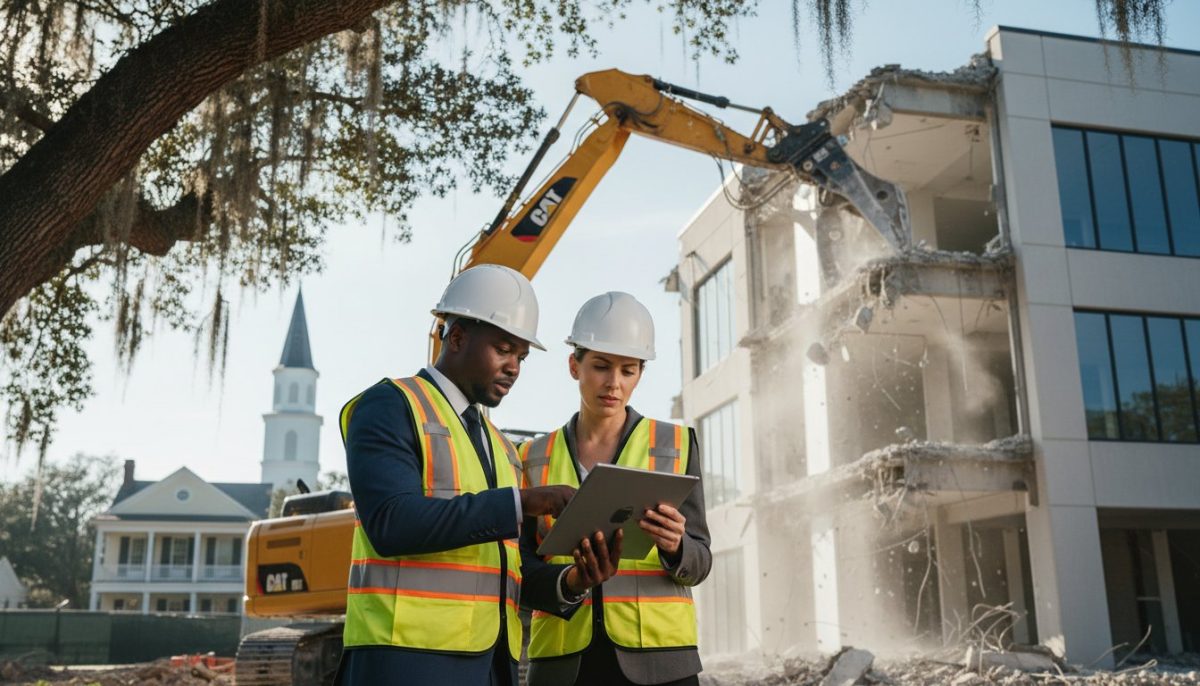
Demolition in Charleston is rarely a simple act of tearing down a structure; it is a high-stakes operation demanding surgical precision. The complexities of operating within a historic cityscape-from protecting adjacent centuries-old properties to navigating the rigorous BAR permitting process-can introduce significant risk and unforeseen costs. The anxiety over discovering hazardous materials like asbestos or lead mid-project only adds to the pressure. Selecting from the premier demolition contractors charleston sc is therefore not merely a logistical step, but the most critical decision for ensuring project integrity and financial viability.

This 2026 expert guide is engineered to provide clarity in this demanding environment. We will systematically analyze the leading firms, evaluating their technical capabilities, safety protocols, and proven track record in delivering clean, permit-ready sites. Our objective is to equip you with the detailed intelligence needed to partner with a contractor who can guarantee compliance, prevent environmental fines, and execute flawlessly, even in the most challenging downtown spaces. Consider this your definitive resource for a successful and secure demolition project.

Key Takeaways

  • Understand the critical role of engineering precision in Charleston’s historic districts to prevent catastrophic structural failures and significant liability.
  • Discover the essential steps for navigating the City of Charleston’s complex permitting process, including specific requirements from the Board of Architectural Review (BAR).
  • Learn why leading demolition contractors charleston sc integrate asbestos and lead abatement as a mandatory first step to ensure regulatory compliance and site safety.
  • Clarify the key differences between total structural and selective demolition to ensure you select a contractor with the right capabilities for your project’s goals.

Why Engineering Precision Matters for Charleston Demolition

In a city as architecturally significant and densely populated as Charleston, demolition is not a matter of brute force; it is a calculated engineering discipline. The narrow streets, zero-lot-line historic properties, and sensitive foundations demand a level of precision that far exceeds standard deconstruction. Opting for a lower bid from an unqualified operator often leads to catastrophic outcomes, including collateral damage to adjacent structures, unforeseen structural failures, and significant legal and financial liability. It is critical to distinguish between a simple hauling service and professional demolition contractors charleston sc, who bring a systematic, safety-first approach to every project, underpinned by rigorous OSHA standards and meticulous site-specific risk assessments.

The Risks of Improper Structural Removal

Every building is a complex system of load-bearing walls and supports. During demolition, the removal of any single element causes a dynamic shift in these forces, compromising lateral stability. Without expert planning, this can trigger a progressive collapse that endangers not only the work site but also neighboring properties. In Charleston’s historic downtown, this risk is amplified. We mitigate this through advanced vibration monitoring to protect fragile, centuries-old foundations and by employing deconstruction methods that systematically preserve the integrity of shared walls and adjacent structures.

Professional Standards in the Lowcountry

A non-negotiable criterion for any high-stakes project is verifiable local experience. A minimum of 15 years operating in the Lowcountry ensures a contractor understands the unique soil conditions, preservation board requirements, and logistical challenges of the area. True professionals deploy the right equipment for the specific context, choosing surgical manual demolition for delicate historic sites over heavy machinery better suited for open-lot clearing. A qualified firm provides comprehensive demolition services, which includes not just the physical teardown but also permitting, material abatement, and site remediation. Furthermore, robust insurance and bonding are essential, providing a critical layer of financial protection for high-value residential and commercial contracts in Charleston.

Comprehensive Demolition Services: From Structural to Selective

The scope of modern demolition extends far beyond simple teardowns, demanding a sophisticated, multi-faceted approach. The most capable demolition contractors charleston sc offer a full spectrum of services engineered to meet the specific technical demands of any project, from clearing a site for new commercial construction to meticulously gutting a historic space for adaptive reuse. This work requires a disciplined combination of heavy machinery operation, precision techniques, and an unwavering commitment to safety and environmental compliance.

A truly comprehensive service portfolio addresses every stage of the deconstruction process:

  • Total Structural Demolition: Complete and systematic removal of buildings, foundations, and other permanent structures.
  • Selective & Interior Demolition: Targeted removal of specific structural or non-structural elements without compromising the surrounding building.
  • Concrete and Asphalt Removal: The heavy lifting of breaking, processing, and hauling hardscape materials for site preparation.
  • Site Clearing & Grading: Final preparation of the land for the next phase of development.

Selective and Interior Demolition for Renovations

For complex renovation and tenant improvement projects, a surgical approach is not just preferred-it is essential. Selective demolition is the art of precisely removing interior components like non-load-bearing walls, MEP (mechanical, electrical, plumbing) systems, acoustic ceilings, and flooring, all while rigorously preserving the building’s core structural integrity. This is the foundational step for commercial gut-outs, allowing for complete interior reconfiguration. Leading contractors manage these operations in active environments by implementing stringent dust control, noise mitigation, and debris removal protocols to minimize disruption to adjacent businesses or tenants.

Structural Teardowns and Site Clearing

When a structure has reached the end of its operational lifecycle, a complete structural teardown is the definitive solution. This process involves large-scale mechanical demolition, utilizing specialized equipment like high-reach excavators and hydraulic hammers to systematically dismantle multi-story commercial buildings and residential homes. Navigating the logistical challenges of tight access in downtown Charleston or dense residential neighborhoods requires exceptional expertise. A critical and non-negotiable component of any structural demolition is the safe management of hazardous materials. Reputable contractors provide Integrated Asbestos and Lead Abatement in strict compliance with federal regulations to protect workers and the community. The project concludes with comprehensive site clearing and final grading, ensuring the land is stable and perfectly prepared for new construction.

The Hidden Danger: Integrated Asbestos and Lead Abatement

In South Carolina, any demolition or renovation project must begin with a crucial, non-negotiable step: a comprehensive hazardous materials survey. For Charleston’s historic properties, this is not a formality but a critical safety and legal mandate. Structures built before 1980 are presumed to contain asbestos and lead-based paint until proven otherwise by certified testing. Proceeding without this due diligence exposes property owners to significant liability, project delays, and severe health risks. The most proficient demolition contractors charleston sc provide integrated abatement services, streamlining the entire process from testing to final clearance.

Engaging a single, licensed contractor for both demolition and abatement offers unparalleled financial and logistical advantages. This unified approach eliminates coordination failures between separate teams, reduces administrative overhead, and creates a single point of accountability for regulatory compliance. It ensures a seamless transition from safe material removal to structural teardown, preventing cross-contamination and guaranteeing that the site is handed over in a verifiably clean state.

In older Charleston homes, asbestos-containing materials (ACMs) are frequently found in:

  • Transite Siding and Roofing: A cement-asbestos board common in mid-century construction.
  • Vinyl Floor Tiles and Mastic: 9×9 inch and 12×12 inch tiles, along with the black adhesive beneath them.
  • Pipe and Duct Insulation: Often a white, chalky wrap around plumbing and HVAC systems.
  • “Popcorn” Ceilings and Wall Plaster: Textured coatings popular from the 1950s to the 1980s.

Similarly, lead-based paint requires strict adherence to SCDHEC and EPA Renovation, Repair, and Painting (RRP) rules to prevent the dispersal of toxic dust, a particular concern in residential and historic preservation projects.

Asbestos Abatement Processes

Professional asbestos abatement is a highly controlled engineering process. Work areas are sealed under negative air pressure using specialized air-scrubbing machines with HEPA filters to capture microscopic fibers. This containment prevents any particles from escaping into the surrounding environment. Upon completion, strict documentation, including waste shipment records to approved landfills and third-party air clearance testing, provides legal proof that the area is safe for reoccupation and further construction activities.

Lead Paint and Mold Remediation

For Charleston’s historic structures, safe lead paint removal often involves non-abrasive techniques like chemical stripping or wet-sanding with HEPA-filtered vacuums to preserve delicate architectural details. During interior gutting, it is also common to uncover hidden mold growth from past water intrusion. Competent demolition firms address this immediately with professional mold remediation, ensuring the building’s structural cavity is dry, sanitized, and safe before the first new nail is driven.

Similarly, demolition can disturb long-hidden pest infestations, from termites to rodents, which can pose risks to adjacent properties or the future construction site. Addressing these issues promptly is crucial for a truly clean and secure site. For comprehensive pest management, many property owners rely on specialists like Mosquito Assassin Pest Control LLC.

Executing a demolition project in the Lowcountry requires more than just heavy machinery; it demands a deep understanding of complex local and state regulations. From the historic districts overseen by the Board of Architectural Review (BAR) to the specific municipal codes of the City of Charleston and North Charleston, every step is governed by strict protocols. As premier demolition contractors charleston sc, we provide comprehensive project management that integrates regulatory compliance and environmental stewardship from day one, ensuring a seamless and legally sound process for our clients.

The Permitting Roadmap in the Lowcountry

Our methodical approach to permitting eliminates delays and guarantees that all legal prerequisites are met with engineering precision. The critical path for obtaining a demolition permit typically involves these non-negotiable stages:

  1. Certified Asbestos Survey: A mandatory first step for most structures, this survey must be completed by a licensed professional to identify and plan for the safe abatement of any hazardous materials before demolition can commence.
  2. Site & Safety Plan Submission: We prepare and submit detailed site plans, including mandatory utility disconnect confirmations (water, sewer, electric), erosion control measures, and traffic management strategies to the appropriate municipal authority for approval.
  3. Public & Site Safety Protocols: Securing approvals for safety fencing and issuing formal neighbor notifications are critical for maintaining a secure work site and fostering positive community relations throughout the project’s duration.

For a comprehensive understanding of the exact documentation requirements and submittal sequence, our detailed guide on demolition permits charleston sc provides the technical clarity needed to navigate these complex regulatory frameworks.

Debris Management and Recycling

A successful demolition project is also defined by its environmental impact. Our commitment extends beyond the teardown to responsible debris management and material recovery. This focus on sustainability is not only ethical but also delivers tangible economic benefits.

  • Landfill Diversion: We implement rigorous on-site sorting protocols to separate wood, metal, concrete, and plastic, diverting a significant percentage of materials from South Carolina landfills to specialized recycling facilities.
  • Hazardous Waste Disposal: Any identified hazardous materials are handled and transported in strict accordance with state and federal laws, with final disposal occurring only at specialized, SCDHEC-approved facilities.
  • Economic & LEED Benefits: Through strategic material recovery, we can generate value from salvaged assets. Our documented recycling efforts contribute directly to achieving points for LEED (Leadership in Energy and Environmental Design) certification, enhancing the value of your future development.

Our integrated management ensures every regulatory and environmental detail is meticulously addressed. To discuss your project’s specific compliance requirements, contact TSIAC International for an expert consultation.

Choosing TSIAC International for Your Next Project

When selecting from the top demolition contractors charleston sc has to offer, the final decision rests on proven expertise, comprehensive capabilities, and unwavering reliability. TSIAC International distinguishes itself through a methodical, engineering-driven approach honed over 15 years of dedicated service in the South Carolina Lowcountry. Our extensive fleet of heavy machinery is meticulously maintained and ready to be deployed for projects of any scale, from precise interior gutting to large-scale structural demolition.

What truly sets us apart is the peace of mind that comes from our integrated expertise. We don’t just demolish structures; we manage complexity. Our in-house teams possess specialized certifications in hazmat remediation and a deep understanding of structural engineering, allowing us to identify and mitigate risks before they impact your timeline or budget. This holistic capability was recently demonstrated in the successful gutting of a multi-story commercial building in historic downtown Charleston, where tight access and the preservation of adjacent structures required surgical precision and meticulous planning.

Our Commitment to Safety and Reliability

Our ‘engineering-first’ mindset is the bedrock of our operational success. By conducting thorough structural analysis and logistical planning before a single machine arrives on site, we prevent the costly delays and unforeseen complications that can derail a project. This commitment to methodical execution is why Charleston’s leading general contractors and property owners repeatedly partner with us. As one GC recently stated, “TSIAC handles the impossible. When we have a site with zero-lot-line access or complex structural challenges, they are the only call we make.” We thrive on solving the most demanding site access challenges with custom-engineered solutions.

Get Your Quote Today

Initiating your project with TSIAC International is a straightforward process designed for clarity and efficiency. We specialize in providing fixed-price structural demolition contracts, ensuring you have complete budget certainty from day one. To begin, simply contact our North Charleston headquarters to schedule an initial site assessment. Our project managers will work with you to define the scope, identify potential challenges, and develop a comprehensive, transparent proposal tailored to your specific needs.

Take the first step towards a safe, efficient, and successfully executed demolition project. Request a Professional Consultation with TSIAC International.

Ensuring Your Project’s Success with Charleston’s Premier Demolition Partner

Selecting the right partner for your Charleston demolition project goes far beyond simple site clearing. It requires a deep understanding of engineering precision, a comprehensive approach to services including integrated hazardous material abatement, and the expertise to navigate the city’s complex environmental regulations. When evaluating the demolition contractors charleston sc has to offer, it is this synthesis of technical skill and regulatory mastery that defines a true industry leader.

TSIAC International brings this level of expertise to every site. With over 15+ years of industry experience, full SCDHEC Certified Asbestos Abatement, and a core commitment to environmentally responsible recycling practices, we provide the control and predictability your high-stakes project demands. For property owners facing complex contamination challenges, our comprehensive approach to hazardous material abatement south carolina ensures full regulatory compliance and risk mitigation. Secure Your Site with Charleston’s Demolition Experts and ensure your project begins on a foundation of safety and compliance.

Take the next step with confidence, knowing your project is in the hands of proven professionals.

Frequently Asked Questions About Demolition in Charleston, SC

Do I need an asbestos survey before demolition in South Carolina?

Yes, an asbestos survey is a mandatory prerequisite. South Carolina DHEC regulations require a thorough inspection by a licensed professional before any demolition or renovation activities can begin. This survey identifies any asbestos-containing materials that necessitate specialized abatement procedures. Securing a certified asbestos report is a non-negotiable step for obtaining a demolition permit and ensuring the safety and compliance of the entire project, protecting both workers and the public from hazardous exposure.

How much does structural demolition cost in Charleston, SC?

The cost of structural demolition is highly project-specific, influenced by the building’s size, construction materials, site accessibility, and the need for hazardous material abatement. Generally, residential demolition can range from $5 to $15 per square foot. However, a precise quotation requires a comprehensive on-site assessment to evaluate all variables. This allows for a detailed proposal that accurately reflects the full scope of work, from permitting and abatement to final site clearing and grading.

What is the difference between selective and total demolition?

Total demolition involves the complete removal of an entire structure, including its foundation, to clear a site for new construction. This method is often the most efficient for end-of-life buildings. Conversely, selective demolition is a more precise, surgical approach. It focuses on removing only specific interior or exterior components-such as walls, facades, or mechanical systems-while preserving the building’s primary structural integrity. This technique is essential for renovations, historical restorations, and phased redevelopment projects.

How long does it take to get a demolition permit in Charleston?

The timeline for a demolition permit in the City of Charleston typically ranges from four to eight weeks. This period accounts for the submission and review of required documentation, which includes a formal application, proof of utility disconnection, and the mandatory asbestos survey report. If the property is located within a historic district, the process will also require approval from the Board of Architectural Review (BAR), which can potentially extend this timeline. A professional contractor manages this process efficiently.

Can a demolition contractor also handle lead paint and mold?

Yes, many full-service demolition contractors in Charleston, SC are certified and equipped to manage hazardous material abatement, including lead paint and mold remediation. Engaging a single, qualified contractor with these in-house capabilities provides a streamlined, integrated solution. This approach ensures a single point of accountability for all pre-demolition environmental preparations, guaranteeing a safe and compliant site that is ready for the next phase of development without delays or coordination issues.

What happens to the debris after a house is torn down?

After demolition, all resulting debris is methodically managed according to a strict waste management plan. Materials are sorted on-site to separate recyclables like concrete, steel, and wood from non-recyclable waste. Recyclable materials are transported to certified processing facilities to be repurposed. All remaining debris is then loaded and hauled to a licensed landfill for proper disposal, ensuring full compliance with all local and state environmental regulations governing waste management.

Do you work with the Charleston Board of Architectural Review (BAR)?

Yes, we possess extensive experience navigating the complex requirements of the Charleston Board of Architectural Review (BAR). For any demolition project located within the city’s designated historic districts, we manage the entire BAR application and approval process. This includes preparing detailed demolition plans, documenting existing site conditions, and professionally presenting the project to the board. Our proficiency with BAR standards ensures a compliant and streamlined process for projects in these architecturally sensitive areas.

Is it safe to demolish a building next to a historic structure?

Yes, with meticulous engineering and precise operational controls, it is entirely safe. Demolishing a structure adjacent to a historic building demands a specialized methodology. We implement comprehensive, site-specific safety plans that include advanced vibration monitoring, structural supports, and protective barriers to completely isolate the neighboring property. Our techniques are designed to eliminate the risk of collateral damage, ensuring the structural and historical integrity of the adjacent asset is fully preserved throughout the project.