

What if the manifest you’re looking for doesn’t apply to most of the debris leaving a demolition site? It’s easy to confuse hazardous-waste manifests with routine disposal records, but they document different material streams. Keeping demolition material manifest and disposal records organized starts with knowing which paperwork belongs to regulated waste and which records track ordinary debris, recycling, or other project materials.
It’s reasonable to expect each load to have a clear paper trail, especially when project closeout, an audit, or owner documentation is approaching. The key is to match records to the material and shipment rather than treating one form as a universal receipt. This guide explains how hazardous-waste manifests differ from routine disposal and recycling records, what shipment details to retain, and how to arrange the documents for straightforward review. It also covers how an organized demolition and abatement workflow can support documented material handling, from asbestos or lead abatement through the sorting and recycling of materials such as wood, metal, and plastic.
Key Takeaways
- Match each document to the material stream and shipment it records; a manifest is not a universal debris receipt.
- Determine whether a hazardous-waste manifest applies based on the waste classification and shipment circumstances.
- Compare manifests, disposal tickets, recycling receipts, and load logs to identify what each record can document.
- Organize demolition material manifest and disposal records by project, date, material stream, load, and receiving facility for easier closeout review.
- See how coordinated demolition, abatement, and recycling workflows can support clear records of material handling and disposition.
What Demolition Material Manifests and Disposal Records Actually Document
A demolition disposal record is documentation that helps establish what material was identified, how it moved from the project, and whether it was received or recovered. It can include records for routine debris and recycling as well as paperwork for regulated waste. The term “manifest,” however, has a narrower use: it can refer to a tracking document for a regulated shipment, not a required form for every debris load.
A hazardous waste manifest tracks a regulated waste shipment through its handling and transport; a disposal receipt records material accepted at a receiving facility. These records can complement one another, but they serve different purposes. A scale ticket, load log, or recycling receipt may help document ordinary debris without being a hazardous waste manifest.
Keep these shipment records distinct from permits, inspection reports, and waste-management plans. Those documents address authorization, site conditions, or planned procedures; they don’t by themselves establish what a particular load contained or where it went. An organized project file may hold all of them, but each record should be understood according to the event it documents.
What information does a demolition disposal record capture?
Details depend on the document, material, shipment, and applicable requirements. A disposal ticket may show a material description, quantity or weight, date, and receiving facility. A load log may connect a load to a project, material stream, or transporter. A recycling receipt may identify recovered material and the receiving operation. Regulated shipment documents can contain additional tracking information and, where applicable, signatures from parties involved in the shipment.
Use the information available to connect each record to a specific load. A date and material description are more useful when paired with a project identifier or load reference. Don’t assume every record must contain an identical set of fields or signatures. Instead, preserve the original document and any related records that clarify what it covers, such as a scale ticket linked to a load log.
Which demolition materials may need different documentation?
Ordinary construction debris and material identified as regulated hazardous waste follow different handling and documentation processes. Concrete or mixed nonhazardous debris may be documented through disposal or scale tickets, while sorted wood, metal, and plastic may be recorded through recycling documentation. Those examples don’t determine a material’s classification on their own; classification and shipment circumstances shape the appropriate record trail.
Materials such as asbestos-containing material or lead-containing waste require careful assessment and handling. Their presence alone doesn’t establish the applicable classification for every shipment. The relevant requirements depend on the material and project circumstances, including applicable federal, state, and local rules. The overview of Demolition waste describes the varied composition of demolition debris and why some streams need separate consideration.
For practical closeout, the goal is to make each record explainable: identify the material stream, connect it to the shipment, and retain documentation of receipt or recovery where available. This is the working purpose of demolition material manifest and disposal records: to preserve a traceable account of distinct materials without treating one document as proof for every load.
When a Hazardous Waste Manifest Applies, and When It Does Not
A manifest isn’t automatically required just because a load leaves a demolition site. Whether hazardous-waste manifesting applies depends on how the material is classified and the circumstances of its shipment. Project teams should determine the waste classification and verify applicable federal, state, and local requirements before treating a particular form as mandatory. A material’s name alone, such as asbestos or lead-related waste, doesn’t settle every classification question.
The U.S. Environmental Protection Agency’s manifest system is designed to track covered hazardous-waste shipments through the parties handling them. It does not serve as a universal tracking form for concrete, mixed debris, or recyclable materials. The EPA Hazardous Waste Manifest System explains the federal system, including the electronic e-Manifest platform used for covered manifests.
How hazardous waste moves through the manifest chain
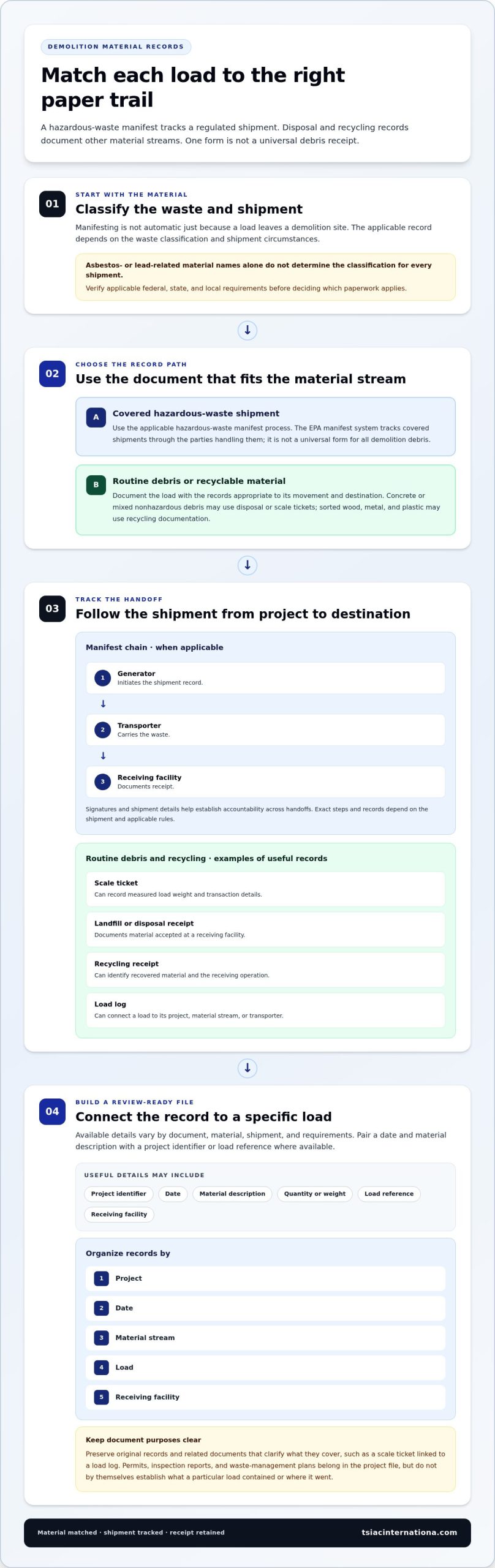
At a high level, the generator initiates the shipment record, a transporter carries the waste, and the receiving facility documents receipt. Signatures and other shipment details help establish accountability across those handoffs, including whether the waste reached its intended receiving facility. The exact steps and records depend on the shipment and applicable rules. EPA’s e-Manifest system provides the federal electronic system for manifests covered by it.
Why routine debris loads usually need a different record trail
Ordinary demolition debris is often documented through records that show load movement and facility receipt, rather than a hazardous-waste manifest. The specific paperwork varies with the material and project requirements, but may include:
- Scale tickets that record a load’s measured weight and transaction details.
- Landfill or disposal receipts that document material accepted at a receiving facility.
- Recycling receipts that help track material delivered for recovery.
- Internal load logs that connect a shipment to the project and material stream.
These records can support a clear project trail, but they aren’t interchangeable with one another, and none should be labeled a hazardous-waste manifest just because it documents a load. Likewise, a manifest, where applicable, doesn’t replace separate records needed to document other debris or recycling streams.
For example, a load of sorted metal may have a recycling receipt, while a load of mixed debris may be supported by a scale ticket and disposal receipt. Asbestos- or lead-related waste requires appropriate classification and handling; the correct record process follows from that determination and the shipment circumstances. State and local requirements can differ, so verify the rules for the project rather than assuming a process used elsewhere applies.
Clear demolition material manifest and disposal records begin with matching the document to the waste stream and shipment. In coordinated demolition and abatement work, TSIAC International documents compliance for hazardous-material disposal and manages debris, including recycling wood, metal, and plastic. Project teams can connect those workstreams to a well-organized closeout record trail through demolition and abatement services.
Manifest, Disposal Ticket, or Recycling Receipt: Match the Record to the Material
Choose records by what they document, not simply by the fact that material left the site. A manifest tracks a covered regulated-waste shipment, while tickets and receipts generally document a load’s measurement, acceptance, or recovery. A load log connects those documents to project activity. The table shows common uses, but actual formats and requirements vary by shipment and jurisdiction.
| Document type | Typical purpose | Material context | Typical record recipient |
|---|---|---|---|
| Hazardous waste manifest | Track a covered regulated shipment through transport and receipt | Waste classified and shipped under applicable manifest requirements | Parties in the shipment chain, with records retained as applicable |
| Disposal or scale ticket | Record a facility transaction, accepted material, or measured load | Concrete, mixed debris, or other loads accepted for disposal | Project file; facility or project parties, depending on the process |
| Recycling receipt or facility record | Document delivery or recovery of recyclable material | Sorted metal, wood, plastic, or other recovered streams | Project file and relevant project parties |
| Internal load log | Link a load to its date, material stream, and related documents | Any project stream, including mixed debris or separated materials | Project team and closeout file |
One project may need several record types because its material streams can be classified, transported, and received in different ways. For example, a concrete load may be documented with a facility ticket, while separated metal has a recycling receipt and regulated waste follows its applicable manifest process. These examples are not universal rules; the material classification and shipment circumstances guide the record trail.
What a disposal ticket or scale ticket can show
A facility ticket may identify the date, accepted material, measured weight, transaction, or receiving location. These details can help reconcile a load with project records, especially when the ticket is linked to a load log or dispatch information. Ticket formats and available fields vary by facility and shipment. A scale ticket documents a transaction or measurement, but by itself it doesn’t establish that every applicable regulatory requirement was met.
What recycling receipts add to the project record
Where available, a recycling receipt or facility record helps show that a separated material stream, such as wood, metal, or plastic, was delivered for recovery. This supports the project’s account of material disposition and can be filed alongside load information. The Construction & Demolition Recycling Association (CDRA) provides industry information about construction and demolition material recycling. Recycling documentation is distinct from proof of final handling for regulated waste, which must be supported by the records applicable to that shipment.
For a practical closeout file, connect each receipt or ticket to the relevant date, load, and material stream, then preserve any related documentation together. This makes demolition material manifest and disposal records easier to interpret without treating one form as evidence for every material. TSIAC’s demolition and recycling work includes documented hazardous-material disposal and recovery practices for wood, metal, and plastic. Learn how demolition and recycling services fit into an organized project workflow.
How to Organize Demolition Material Manifests and Disposal Records
A reliable closeout file lets a reviewer trace a material stream from identification to its documented destination or recovery. Build the record as work progresses rather than waiting until the last load has left the site. Use a consistent filing structure for each project, then connect each document to its date, material stream, load, and receiving facility. This makes gaps easier to identify while shipment details are still accessible.
A practical recordkeeping sequence for each material load
Use the same basic sequence for each load, adapting the documents to the material classification, shipment, and applicable requirements. Keep the link between the material identified on site and the record generated during transport or receipt clear.
- Identify the material. Record the material stream and the basis for its classification before selecting the applicable shipment documentation.
- Assign a project and load reference. Use a consistent identifier that can connect the material to its date, movement, and related records.
- Collect shipment details. Associate available transporter information and load documentation with that reference. For regulated waste, follow the manifest process that applies to the shipment.
- Capture receipt or recovery. File the receiving facility’s final receipt, a manifest copy, or available recycling documentation with the corresponding load information.
- Complete the project file. Sort records by project, date, material stream, load, and receiving facility, then check that each stream has a coherent record trail.
This structure helps distinguish a load of mixed debris from a separated recycling stream or regulated material, even when several shipments occur on the same day. Keep original records together with supporting load logs so each document can be understood in context.
Common documentation gaps to catch before closeout
Before closing out the project, review records for legibility and consistency. A missing receipt, a quantity that doesn’t align across related documents, or a load reference that appears on only one record can make the trail difficult to verify. Check for required signatures where applicable, without assuming every document uses the same signature fields.
- Locate missing disposal tickets, receipts, manifest copies, or recycling records.
- Compare dates, material descriptions, quantities, and load references across related documents.
- Replace or supplement illegible copies where an accurate copy is available.
- Keep amendments and corrections connected to the original record they clarify.
Retention periods and submission duties depend on the governing requirements for the material and project. Verify the applicable federal, state, and local rules rather than applying one project’s filing period or process to every job. A broader view of demolition project planning can also help place documentation in context, from initial work planning through closeout.
Consistent demolition material manifest and disposal records support a clearer handoff from site operations to project closeout. TSIAC International integrates demolition, abatement, debris management, and recycling practices into organized project workflows. Plan your demolition and abatement documentation with TSIAC.
How TSIAC Supports Documented Demolition, Abatement, and Recycling
Demolition and abatement can produce several distinct material streams, each with its own handling path and supporting records. Structural or selective removal may generate general debris and recoverable materials, while asbestos or lead abatement involves hazardous-material disposal documentation. Keeping those streams identifiable helps project teams connect the work performed with the records that describe how materials were handled.
TSIAC International brings demolition, interior gutting, abatement, and debris management into a coordinated project workflow. With more than 15 years of industry experience, the company documents compliance for hazardous-material disposal and supports recycling of materials such as wood, metal, and plastic. The specific records depend on the project, material classification, shipment, and applicable requirements, so the aim is a clear, accurate record trail rather than a one-size-fits-all document set.
Keeping abatement records distinct from general debris paperwork
Hazardous-material records should remain easy to identify within the larger project file. Filing them separately from ordinary debris tickets helps prevent a scale receipt or general load log from being mistaken for documentation of regulated waste handling. Clear project and material-stream references can still connect the records to the relevant work. A hazardous material abatement guide can provide additional safety context.
This separation matters during closeout, when an owner or project team may need to understand which records relate to abatement and which document routine debris movement or recycling. TSIAC International’s hazardous-material disposal work includes compliance documentation and safe disposal practices. The project record should reflect the actual material classification and shipment, without assuming that every abatement activity produces the same paperwork or that one record covers all requirements.
Connecting disposal records with material recovery
Sorting recoverable materials creates another documentation thread. Where records are available, linking a recycling receipt or facility record to a material stream and project load helps show how recovered wood, metal, or plastic fits into the project’s disposition history. That information adds transparency to debris management and distinguishes recycling activity from the handling documentation associated with regulated waste.
For an organized file, keep related documentation connected: note the project, date, material stream, and load reference so that each record can be understood alongside the work it supports. This coordination is especially useful when demolition, selective removal, and abatement proceed as separate phases or generate different types of material records. It helps owners and project teams review the documentation without treating a recycling record as proof of regulated-waste handling, or a hazardous-waste record as a summary of all debris.
Well-organized demolition material manifest and disposal records make project closeout more transparent by preserving the distinction between material streams and their handling. To discuss a demolition or abatement project with TSIAC International, start a project conversation.
Make the Project Record Work Beyond Closeout
A well-maintained file can do more than answer questions at the end of a job. It gives owners and project teams a dependable reference for reviewing how work progressed, supporting handoffs, and planning future demolition or abatement activities. Treat demolition material manifest and disposal records as part of the project’s working information: keep records connected to the decisions and material streams they document, and make the file clear enough for someone outside the daily field team to follow.
That kind of clarity starts with coordination between the work and its documentation. TSIAC International brings demolition and abatement experience to projects where safe material handling and organized records matter. If you’re planning work that involves demolition, hazardous-material abatement, or both, take the next step with a project discussion.
Discuss your demolition or abatement project with TSIAC, and move forward with a clear plan for the work and its records.
Frequently Asked Questions
What is a demolition material manifest?
A demolition material manifest is a shipment record used for certain waste streams, particularly regulated hazardous waste. It tracks information about the waste and its movement among responsible parties. It isn’t a catchall name for every debris ticket or recycling receipt. For clear demolition material manifest and disposal records, label files by document type and connect each item to the specific load it concerns.
Does every demolition debris load need a hazardous waste manifest?
No. A hazardous waste manifest is used for shipments covered by hazardous-waste requirements; ordinary debris may instead have a facility ticket or receipt. For example, a project file could contain a scale ticket for a debris load and separate shipment paperwork for material classified as regulated waste. Classification, shipment circumstances, and applicable federal, state, or local requirements determine which records apply.
What is the difference between a waste manifest and a disposal ticket?
A hazardous-waste manifest tracks a covered shipment through its responsible parties, while a disposal or scale ticket typically records a facility transaction or weighed load. One documents regulated shipment tracking; the other can help show that a facility weighed or accepted a load. They aren’t interchangeable. A project moving several material streams may need both, with each record filed against the load it documents.
What information should demolition disposal records include?
Useful details vary by document, but may include a project identifier, material description, shipment date, load or quantity information, transporter, receiving facility, and relevant signatures or receipt confirmation. For example, adding the project name and load reference to a scanned ticket can make it easier to match with dispatch notes. These examples aren’t a universal legal checklist; forms and requirements depend on the record and circumstances.
How long should demolition disposal records be kept?
There isn’t one retention period that applies to every demolition record. The applicable period can depend on document type, waste classification, jurisdiction, contract, and project circumstances. Identify the requirements that govern each record, then use a file index or retention schedule to track review dates. Keep related manifest copies, facility tickets, receipts, and corrections together so the project team can retrieve the full record trail when needed.
Can demolition recycling receipts replace disposal records?
No, not automatically. A recycling receipt can support documentation that a material stream was accepted for recovery, but it may not document other shipment details or regulated-waste handling. For instance, a receipt for recovered metal and a separate record for another material stream serve different purposes. File each item with its corresponding load and retain any other records applicable to that material and shipment.
Who is responsible for keeping demolition manifests and disposal records?
Responsibility depends on the waste stream, shipment, contract, and applicable requirements. A hazardous-waste manifest involves multiple parties in the shipment chain, and recordkeeping duties may apply to more than one party. On the project side, assign someone to collect and organize load documentation, then track whether related receipts or copies have been received. Don’t assume one party’s file or a general ticket satisfies every recordkeeping obligation.
