
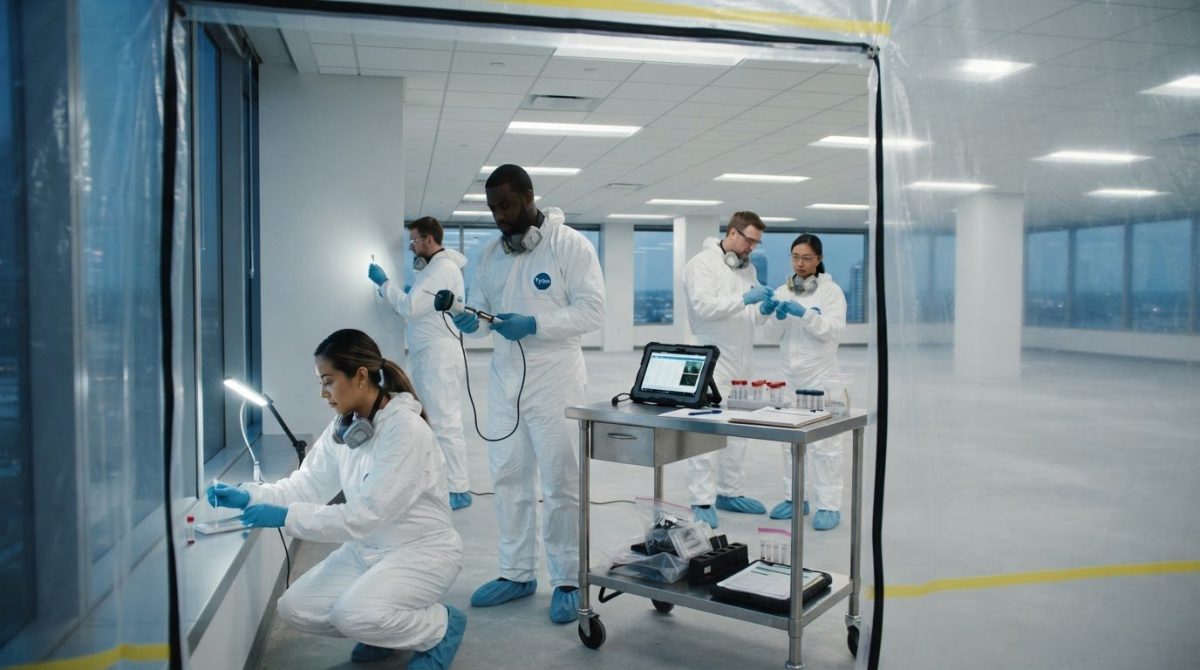
Can a freshly cleaned work area be ready for handoff before anyone documents what was checked? Post-abatement cleaning verification is not one universal test. A visual inspection can confirm that surfaces appear clean, but it does not establish what laboratory sampling may show.
That distinction matters when deciding whether an area is ready for the next phase of work or reopening. The appropriate steps depend on the material, project requirements, and evidence needed for closeout. Cleaning checks, air sampling, and dust-wipe testing answer different questions, so one should not be mistaken for another.
This article explains the process from abatement completion through verification and handoff. It covers what visual checks can establish, when air or dust sampling may be part of clearance, how sampling and reporting responsibilities are determined, and which records document the outcome. For asbestos and lead projects, a disciplined closeout connects completed work with the required documentation and supports a clear, accountable handoff.
Key Takeaways
- Use the project protocol to identify which post-work conditions must be checked before closeout.
- Understand what a visual inspection can establish and when sampling may provide additional evidence.
- Keep lead RRP examples distinct from asbestos clearance and other hazardous-material protocols.
- Prepare the area for evaluation by confirming scope, access, cleanup status, and controls on unrelated work.
- Organize post-abatement cleaning verification records with scope, completion notes, disposal documentation, and applicable test reports.
What Post-Abatement Cleaning Verification Checks
Post-abatement cleaning verification checks whether specified conditions meet the applicable project protocol. It does not, by itself, prove universal safety. The check is tied to defined work areas, materials, surfaces, and acceptance criteria. It may document that cleanup was completed as specified, identify visible residue that needs attention, or record sampling results when the protocol calls for sampling.
The phrase can refer to different types of evidence in different settings. A lead renovation project, asbestos abatement, and mold remediation do not automatically use the same inspection or sampling method. The material and scope of work matter, as do the contract, governing requirements, and project-specific plan. The key is to identify what the project requires before interpreting a check or test as clearance.
Cleaning verification versus clearance testing
A visual review documents what can be seen in the work area. It can record whether specified surfaces appear free of visible dust, debris, or residue, but it is not laboratory analysis and cannot measure an invisible contaminant. Sampling is different: a sample is collected from a defined medium, such as air or a surface wipe, then analyzed and interpreted against criteria that apply to the material and project.
Neither method is a universal substitute for the other. Some lead renovation protocols allow dust testing to serve a defined verification role only when specified conditions and procedures are met. Asbestos clearance may involve visual inspection and air sampling when required by the governing protocol. The details vary, so “clearance” should not be treated as proof that one fixed test applies to every abatement job.
For example, a clean-looking floor may be relevant to a visual check, while a dust-wipe result answers a question about material collected from a particular surface. Air sampling evaluates airborne material within the limits of the sampling method. Asbestos abatement procedures describe controls such as isolating work areas and specialized cleanup, but the applicable project criteria determine what evidence is needed for a specific closeout.
Why post-abatement verification matters
Documented checks create a traceable link between completed abatement work and the next project decision. They clarify what area was reviewed, which method was used, what was observed or measured, and whether follow-up was identified. This record supports an orderly handoff without making one inspection report stand in for every regulatory, contractual, or disposal requirement.
Sequence matters. If visible debris or residue remains where the protocol requires a clean condition before evaluation, address cleanup and the required visual review before sampling. Keeping occupants and unrelated work out of a controlled area during evaluation also helps preserve the conditions being assessed. The result is evidence tied to the actual scope, rather than an assumption that “clean” means the same thing for every material or project.
How the Post-Abatement Verification Process Moves from Cleanup to Records
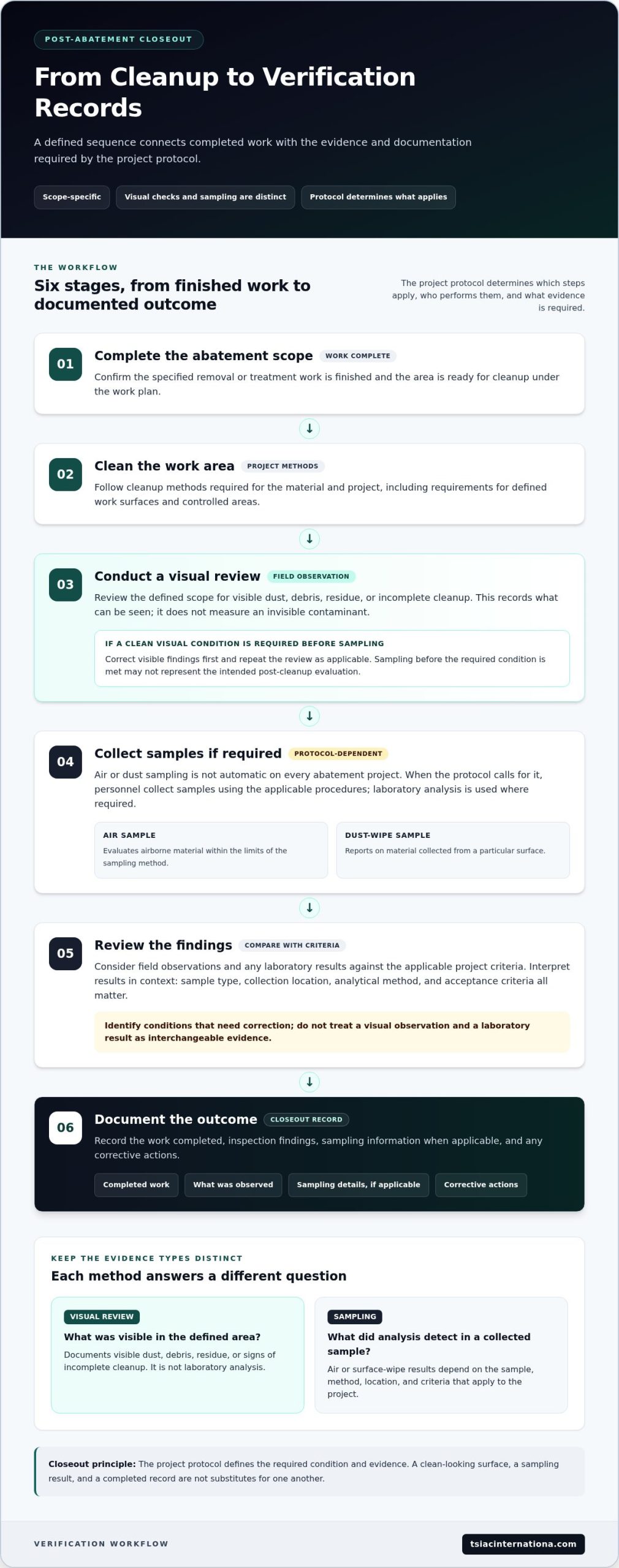
A reliable closeout follows a defined sequence, but the project protocol determines which steps apply, who performs them, and what evidence is required. Post-abatement cleaning verification is not a universal checklist. The workflow below shows how field observations, required sampling, and records fit together without treating them as interchangeable.
- Complete the abatement scope. Confirm that the specified removal or treatment work is finished and that the area is ready for cleanup under the work plan.
- Clean the work area. Follow the cleanup methods required for the material and project, including requirements for defined work surfaces and controlled areas.
- Conduct a visual review. Inspect the area within the agreed scope for visible dust, debris, residue, or incomplete cleanup.
- Collect samples if required. When the protocol calls for air or dust sampling, personnel collect samples for analysis using the applicable procedures.
- Review the findings. Compare field observations and any laboratory results with the project’s applicable criteria. Identify conditions that need correction.
- Document the outcome. Record the work completed, inspection findings, sampling information when applicable, and any corrective actions.
Process summary: Field observations describe what was visible in the defined area. Laboratory findings report what analysis detected in the samples collected. Keep these evidence types distinct in the project record.
Final visual review before sampling
Conduct the visual review according to the project-specific work plan, including its boundaries, access conditions, and surfaces to be examined. Look for visible dust, debris, or signs that cleanup is incomplete. This is an observation, not a measurement of contaminant concentration. If the protocol requires a clean visual condition before sampling, correct any findings first and repeat the review as applicable. Sampling before that condition is met may not represent the intended post-cleanup evaluation.
Sampling, results, and corrective action
Air or dust sampling depends on the protocol; it is not automatic on every abatement project. When required, personnel collect samples according to the applicable method, and a laboratory analyzes them where the protocol calls for laboratory analysis. Interpret the result in context: sample type, collection location, analytical method, and acceptance criteria all matter.
If observations or results do not meet the applicable criteria, follow the project’s corrective-action process. This may include additional cleaning, another visual review, and repeat sampling when required. Keep each stage traceable, including what was corrected, where, and what follow-up evidence was obtained. A clear sequence helps prevent a preliminary observation from being mistaken for final documentation.
TSIAC International brings more than 15 years of industry experience to asbestos and lead abatement. Its abatement work includes regulatory compliance documentation and safe disposal of hazardous waste as part of responsible project completion.
Cleaning Verification or Clearance Testing: Which Evidence Answers the Question?
The right evidence depends on the question the project needs to answer. A visual cleaning check documents observable conditions. A dust wipe or air sample evaluates material collected using a defined method. These approaches serve different purposes, and a result from one sample cannot establish conditions across every surface or location.
| Method | Purpose | Evidence produced | Context and limitations |
|---|---|---|---|
| Visual cleaning verification | Assess whether specified areas appear clean under the project procedure. | Inspection observations, sometimes supported by notes or photographs. | Documents visible conditions, not contaminant levels that require analysis. |
| Surface dust sampling | Evaluate residue collected from defined surfaces. | Laboratory results for the submitted dust-wipe samples. | Applies to sampled locations and material, not untested surfaces or air. |
| Air clearance sampling | Evaluate airborne material collected during a defined sampling period. | Laboratory analysis of air samples, using the specified method. | Applies to the sampled air and conditions; it does not measure settled surface dust. |
For any method, the governing rule, contract, work plan, and hazardous material determine the required procedure and acceptance criteria. Read a sampling report in light of its locations, collection method, analytical method, and project context. It is not a blanket finding about the entire building.
When visual cleaning verification may be relevant
A project procedure may use a defined visual or surface-cleaning check to document that specified areas meet cleanup requirements. EPA’s Renovation, Repair and Painting (RRP) guidance concerns covered lead renovation work. In particular circumstances, dust testing may be used in place of cleaning verification when required conditions and procedures are met. This lead-specific option should not be generalized to asbestos abatement or other hazardous-material work, where separate requirements may apply.
When air or dust clearance sampling may be relevant
Air sampling collects airborne material for analysis, while a dust wipe collects residue from a defined surface. In asbestos work, methods such as phase contrast microscopy (PCM) or transmission electron microscopy (TEM) may be specified, depending on the project and governing requirements. HUD, EPA, state, or contract requirements may prescribe particular procedures. Identify which current requirements apply before selecting a method or interpreting a result.
Use evidence that answers the actual closeout question. A visual pass cannot substitute for a required laboratory result, and a passing sample does not resolve an observed cleanup issue elsewhere. Clear post-abatement cleaning verification connects the method, sampled area, findings, and applicable criteria so the conclusion stays within what the evidence can support.
How to Prepare for Verification and Respond to Findings
Preparation keeps an evaluation focused on the work completed and the evidence the project requires. Before post-abatement cleaning verification, organize the work area, control access, and make the applicable protocol available to the people involved. This helps preserve the conditions being assessed and reduces avoidable delays.
Before the verification visit
Confirm the work-area boundaries and whether abatement and cleanup are complete. Gather the work plan, relevant sampling instructions, and prior inspection or test results. Coordinate access with the people responsible for the evaluation, and keep occupants and unrelated work out of the controlled area while it is being assessed. Avoid moving materials, performing additional work, or otherwise disturbing the area before evaluation unless the protocol directs it.
- Scope: Identify the rooms, surfaces, or other areas included in the review.
- Access: Make sure the defined area can be inspected without disrupting controlled conditions.
- Cleanup status: Confirm that required cleanup is finished and visible debris has been addressed.
- Protocol: Have the applicable project requirements and sampling directions ready for review.
These checks are practical preparation, not a substitute for the project protocol. If the defined work area has changed or cleanup status is uncertain, resolve that information before evaluation so the findings can be tied to the correct scope.
If the inspection or test identifies a problem
First, identify what the finding concerns and where it occurred. A visible residue observation and a laboratory sample result are different types of evidence, and each should be assessed against the applicable project criteria. A sample result speaks to the material and location sampled; it does not automatically describe conditions elsewhere in the work area.
Next, follow the protocol-directed corrective process. Depending on the finding, this may involve targeted re-cleaning, addressing another identified condition, or further evaluation. The appropriate response depends on the material and result. If the protocol calls for another visual review or repeat sampling, complete that step after corrective work and when the area is ready for evaluation.
Keep the project record continuous. Note the finding and its location, the correction performed, when it was completed, and follow-up checks or test results when applicable. This links the original observation to the response and final project decision without implying that one successful check proves every requirement has been met.
For abatement work that requires coordination from field activities through documentation, plan asbestos or lead abatement with TSIAC International.
How Abatement Documentation Supports a Clear Project Closeout
Closeout records connect the work performed to the decisions made after abatement. They show what was included in the project, what was completed, what verification was performed, and how identified issues were handled. No single inspection note, disposal record, or laboratory report proves that every project requirement has been met. Each document supports a particular part of the closeout and should be read in context.
Requirements vary with the hazardous material, scope of work, contract, and governing rules. Organize records so a reviewer can identify the area and activity each one covers, then confirm the project-specific documentation obligations before treating the file as complete. This makes the record useful for handoff and later review, rather than a collection of unrelated forms.
What a useful closeout file can contain
A practical file gives readers enough context to understand each record. Include the project scope and work-area details, then group completion, inspection, sampling, corrective-action, and disposal documents by the work they describe. If testing was part of the protocol, keep the associated reports with the relevant sample and area information.
- Scope and area details: Work description, defined boundaries, and relevant project-plan information.
- Completion notes: Records of abatement and cleanup activities, including dates or milestones where documented.
- Inspection findings: Visual observations, identified deficiencies, and notes on follow-up.
- Testing records: Sampling information and laboratory reports when required by the project protocol.
- Corrective-action records: Description of corrections and repeat evaluation results when applicable.
- Disposal documentation: Hazardous-waste records relevant to the completed abatement scope.
Keep each report attached to its purpose. A disposal manifest can document waste handling, for example, but it does not establish that a work area met a visual criterion or sampling requirement. Likewise, a post-abatement cleaning verification record supports the conditions it actually assessed, not every aspect of the project.
TSIAC International’s role in responsible abatement completion
TSIAC International is a demolition and abatement contractor with more than 15 years of industry experience. Its asbestos and lead abatement work includes regulatory compliance documentation and safe disposal of hazardous waste, connecting field work with organized project closeout.
A clear file supports an accountable handoff by showing what was done and which evidence applies to each requirement. To discuss an asbestos or lead abatement project, connect with TSIAC International.
Plan the Next Phase with a Clear Record
Before an area returns to use or crews move into the next phase, set a clear decision point: identify what evidence the project requires, who is responsible for reviewing it, and which findings must be resolved before handoff. Treat post-abatement cleaning verification as part of project sequencing, not paperwork to assemble after activity resumes. This gives everyone involved a shared basis for deciding what happens next.
Use closeout to clarify ownership of remaining actions and preserve continuity between abatement, evaluation, and follow-on work. If the project scope is still being planned, discuss documentation expectations early so responsibilities and records stay aligned as work progresses.
TSIAC International supports asbestos and lead abatement projects with an organized focus on responsible completion. Discuss your abatement project with TSIAC International and plan the work and closeout process.
Frequently Asked Questions
Is post-abatement cleaning verification the same as asbestos air clearance testing?
No. Post-abatement cleaning verification is a broader description of checking specified conditions after work, while asbestos air clearance testing evaluates air samples under an applicable asbestos protocol. A visual check may document whether visible residue remains, but it does not measure airborne fibers. The project’s scope and requirements determine whether air testing is needed and what other evidence must accompany it.
Can a project pass a visual inspection but fail air clearance testing?
Yes. A visual inspection may find no visible dust or debris, while an air sample collected in the area may still produce a result that does not meet the project’s criteria. The checks assess different conditions, and an air sample reflects only the sampled air during the collection period. If results conflict, review the sample locations, collection conditions, method, and applicable criteria before deciding on follow-up.
Who performs post-abatement clearance sampling?
Sampling is performed by personnel qualified under the requirements that apply to the project and method. Project documents should identify the sampling role and procedure; a laboratory analyzes samples when laboratory analysis is required. Responsibilities vary by material and protocol. Keep sampler details, sample locations, collection dates, and laboratory reports together so findings can be traced to the areas evaluated.
How long does post-abatement cleaning verification take?
There is no standard duration. Time depends on the size and layout of the work area, the number of surfaces or locations included, access conditions, and whether the protocol requires sampling. Field review and laboratory analysis are separate parts of the schedule, so results may not be available immediately after a site visit. Build time for review and any required corrective work into the handoff plan.
What happens if an abatement clearance test does not meet the project criteria?
A result that does not meet the applicable criteria calls for review and a protocol-directed response, not an assumption that the entire project has failed in the same way. Identify the affected location and result, determine the required correction, and record the action taken. If the protocol requires follow-up sampling or inspection, complete that evaluation before making decisions that depend on clearance.
Does every post-abatement project require air sampling?
No. Air sampling is required only when the applicable regulation, contract, or project protocol calls for it. Some projects may use other specified forms of inspection or testing, depending on the material and scope. A surface dust wipe collects material from a particular surface, while an air sample evaluates airborne material during collection. Neither method should be added or omitted based on assumptions from a different type of project.
What records should be retained after abatement verification?
Retain records that establish the work performed and the evidence used to evaluate it. Depending on project requirements, these can include the scope, work-area details, completion notes, inspection findings, sampling information, laboratory reports, corrective-action records, and hazardous-waste disposal documentation. Identify documents by date and area, and preserve any final review or handoff record. Required retention periods and file contents depend on applicable rules and contract terms.
