
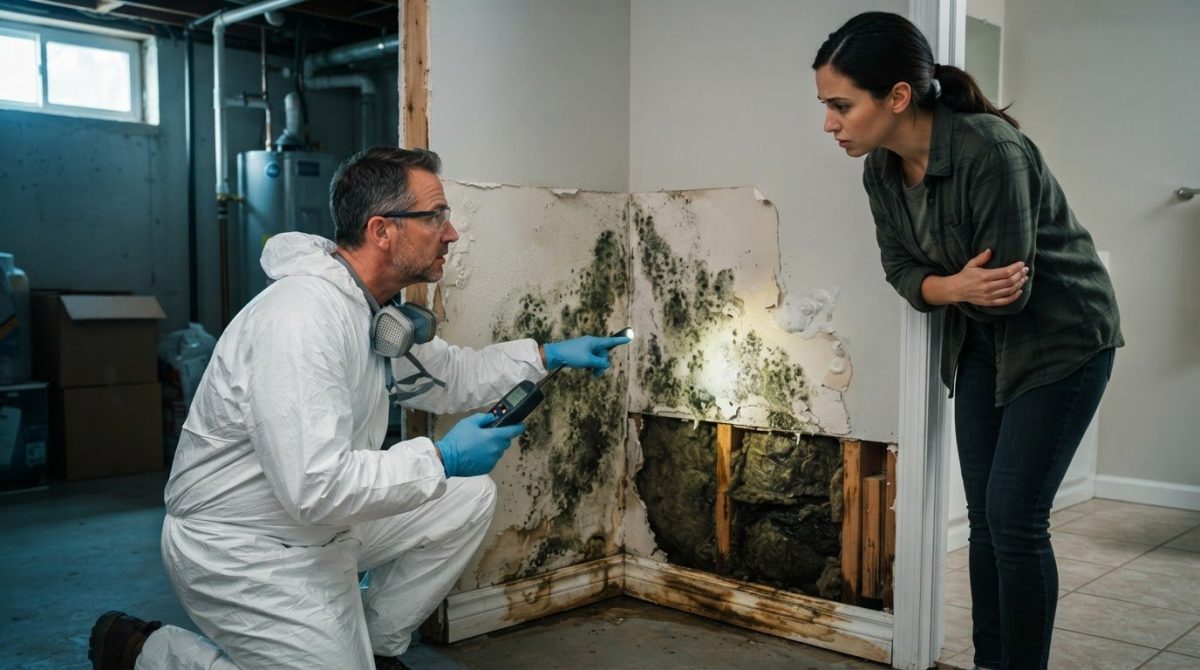
An estimated 47% of homes in the U.S. harbor dampness or mold, yet many property owners treat a dark patch on the drywall as a minor cosmetic issue rather than a biological hazard. You might wonder what happens if you ignore black mold, perhaps hoping the problem will stabilize if left alone. In reality, mold causes approximately $3 billion in property damage annually across the country. Delaying action doesn’t just increase the surface area of the infestation; it initiates a progressive degradation of your building’s structural components and compromises the safety of the indoor environment.
It’s natural to feel anxious about hidden repair costs or the distinction between a nuisance growth and a toxic threat. This guide details the progressive health, structural, and financial risks of untreated mold and explains when professional intervention becomes a necessity. We’ll examine the specific timeline of mold proliferation and the health symptoms that demand immediate attention. By the end of this analysis, you’ll have the technical clarity needed to decide if your situation requires professional hazardous material abatement to protect your property’s long-term value.
Key Takeaways
- Learn exactly what happens if you ignore black mold during the initial 24 to 48 hour germination window when spores begin bonding with high-cellulose building materials.
- Understand the critical shift from standard allergy irritants to chronic mycotoxin exposure, which triggers escalating health risks the longer the infestation remains untreated.
- Discover how unchecked fungal growth actively digests organic materials, leading to irreversible drywall failure and compromised structural integrity.
- Evaluate the long-term financial liabilities of property neglect, including steep drops in resale value and the likelihood of denied insurance claims.
- Identify the technical thresholds that dictate when surface cleaning fails, making professional hazardous material abatement or interior gutting a structural necessity.
Understanding Black Mold: Stachybotrys Chartarum and the Growth Timeline
Black mold is a toxigenic fungus that requires moisture and organic matter to colonize building materials. Scientifically classified as Stachybotrys chartarum, this specific fungus is more than a simple nuisance; it’s a slow-acting biological agent that targets the structural components of a property. Unlike common household mildews that grow on soap scum or tiles, this species thrives on high-cellulose, low-nitrogen materials. This includes the paper backing of drywall, wood subflooring, and ceiling tiles. When these materials remain damp for a window of 24 to 48 hours, dormant spores germinate and begin the colonization process.
If you choose to look the other way, the colony eventually creates its own micro-environment. Even if the primary moisture source, like a minor pipe leak, is addressed, a large colony often retains enough internal humidity within its dense fungal mass to self-sustain. This is what happens if you ignore black mold; the fungus transitions from an opportunistic growth to a permanent, self-regulating resident that continues to degrade your property’s value and safety every day it remains in place.
The Anatomy of a Spore Colony
Fungal growth isn’t merely a surface-level aesthetic issue. It utilizes hyphae, which are branching, thread-like filaments that serve as the root system of the fungus. In porous substrates like drywall or insulation, these hyphae penetrate deep into the material’s core. Standard surface cleaning with bleach or household detergents almost always fails because it only eliminates the visible fruiting bodies. The roots remain protected within the substrate, ready to regrow as soon as conditions allow. Stagnant air and consistent humidity levels above 60% act as catalysts, allowing these roots to anchor firmly into the building’s skeletal components.
The 30-Day Escalation Path
Fungal proliferation follows a predictable and aggressive trajectory when left unmanaged. Understanding this timeline is essential for determining when a simple cleanup must evolve into professional hazardous material abatement.
- Week 1: Initial colonization happens mostly out of sight. While you won’t see dark spots yet, the distinct, musty odor of microbial volatile organic compounds (mVOCs) signals that metabolic activity has begun.
- Week 2: Visible dark spotting appears on surfaces. The colony starts releasing spores into the air. These spores often find their way into the HVAC system, which then distributes the contamination to previously unaffected areas of the building.
- Month 1: The fungus achieves deep penetration into wall cavities and subflooring. At this stage, what happens if you ignore black mold becomes a structural liability. The cellulose is being actively digested, often necessitating professional interior gutting services to remove contaminated studs and insulation that are no longer salvageable.
The Health Risks of Chronic Exposure to Mycotoxins
While surface growth indicates a structural problem, the primary concern for occupants is the biological payload black mold carries. Most common molds trigger simple allergic reactions; however, Stachybotrys chartarum produces mycotoxins, which are secondary metabolites capable of causing systemic health issues. This is often termed “Toxic Mold Syndrome” in clinical discussions. Unlike a seasonal allergy that dissipates, chronic exposure leads to a cumulative toxic load. This is exactly what happens if you ignore black mold; the body’s natural filtration systems become overwhelmed by the constant inhalation of these microscopic compounds.
Vulnerable populations face the highest risk. Children, the elderly, and individuals with pre-existing conditions like COPD or cystic fibrosis experience accelerated symptom onset. When spores enter a building’s ventilation system, the HVAC unit acts as a distribution hub, turning a localized problem into a facility-wide health hazard. Understanding what happens if you ignore black mold in these environments is critical, as the spores don’t remain stationary; they circulate until they are inhaled or find new surfaces to colonize.
Immediate vs. Long-Term Respiratory Impact
Short-term exposure typically manifests as irritation of the eyes, nose, and throat. You might notice persistent coughing or a scratchy sensation that doesn’t resolve with standard medication. Over months, these minor irritations can evolve into chronic bronchitis. Research into the health effects of mold exposure suggests a strong link between damp indoor environments and the development of asthma in previously healthy children. Once inhaled, mycotoxins can cross the respiratory membrane and enter the bloodstream, leading to systemic inflammation and long-term pulmonary damage.
Neurological and Systemic Symptoms
The impact isn’t limited to the lungs. Many occupants report “brain fog,” chronic fatigue, and difficulty concentrating, which are often dismissed until the mold source is identified. Direct contact with contaminated surfaces or high concentrations of airborne spores also causes dermatological issues, including persistent rashes and skin irritation. Beyond the physical, the psychological stress of living in a compromised environment shouldn’t be overlooked. The constant anxiety over air quality and hidden repair costs adds a significant mental health burden to property owners. If you suspect your facility is affected, seeking professional mold remediation is the only way to ensure the biological threat is neutralized before symptoms escalate.
Structural Degradation: How Mold Destroys Your Property
While health concerns are the most immediate priority, the physical destruction of the building envelope is the most permanent consequence. Mold species like Stachybotrys don’t simply rest on surfaces; they actively digest building materials. By secreting enzymes that break down cellulose, which is the primary organic compound in wood, paper, and drywall, the fungus converts your property’s structure into a food source. This is what happens if you ignore black mold for extended periods; the materials that provide stability and insulation are chemically dismantled at a microscopic level.
Drywall is particularly susceptible because its paper facing provides a massive surface area of high-cellulose fuel. Once the fungal hyphae penetrate the gypsum core, the board loses its tensile strength and becomes brittle. At this point, the material can’t be restored with a coat of antimicrobial paint or a surface wash. It requires professional interior gutting to ensure every contaminated layer is removed. Hidden damage behind baseboards and within wall cavities is the most insidious, as it allows the fungus to compromise the building’s skeleton without visible warning. This hidden decay often leads to crumbling wall surfaces and structural instability that goes unnoticed until a major repair is unavoidable.
The Compromise of Load-Bearing Elements
Prolonged moisture doesn’t just invite mold; it creates a gateway for wood-destroying fungi that cause structural rot. When floor joists and wall frames remain damp, the transition from surface mold to deep-seated rot happens rapidly. The EPA highlights the dangers of mold exposure not just as a health risk, but as a direct cause of material destruction. Once a load-bearing element is structurally compromised, simple cleaning is no longer a viable technical response. We’ve seen cases where ignoring a small leak for six months resulted in the need for selective demolition of entire floor sections to ensure the building remained safe.
HVAC and Systemic Contamination
Systemic contamination represents the “total loss” scenario for many facilities. Porous materials like fiberglass insulation and flexible ductwork are essentially impossible to remediate once spores have embedded themselves deep within the fibers. The cost of cross-contamination throughout a large-scale commercial facility is immense. If the air handling unit continues to cycle air through a mold-infested space, the entire building’s infrastructure becomes a vector for spores. In these cases, what happens if you ignore black mold is a shift from a localized mold remediation project to a full-scale mechanical and structural overhaul that affects every floor and every occupant.

Financial and Legal Consequences of Mold Neglect
Neglecting a fungal infestation quickly shifts from a maintenance oversight to a major financial liability. While the biological growth digests your property’s structure, it simultaneously erodes its market value. Industry data indicates that a history of untreated mold can decrease a home’s resale value by 20% to 37%. This is a direct consequence of what happens if you ignore black mold; the market views the property as a high-risk asset requiring significant capital expenditure to restore. Beyond the loss in equity, property owners often face a staggering cost gap when they finally address the issue. A localized cleanup that might have been manageable initially can triple in price once the mold necessitates full-scale selective demolition and hazardous material abatement.
Insurance Denials and the “Sudden” Rule
Most property insurance policies operate on the principle of “sudden and accidental” occurrence. This means coverage typically applies to a burst pipe or a flash flood, but it rarely extends to “gradual damage” caused by neglect. When an adjuster arrives, they look for signs of long-term moisture, such as deep wood rot or extensive spore colonies. If the evidence suggests the problem has existed for months, the claim will likely be denied. Many policies also cap mold-related payouts between $1,000 and $10,000, which is often insufficient for large-scale remediation. Precise documentation of all leaks and repairs is critical to proving you haven’t been negligent, but once the growth is established, the financial burden usually falls entirely on the owner.
Impact on Real Estate Transactions
Modern real estate markets are highly sensitive to environmental hazards. Mandatory disclosure laws require sellers to list any known mold issues; failing to do so can lead to litigation long after the sale is finalized. Even if a buyer is willing to proceed, their financing often falls through during the appraisal or inspection phase. Lenders are hesitant to back properties with active biological growth because it threatens the collateral’s integrity. To move forward, you’ll almost certainly need a “clearance certificate” from a professional service. This document proves the area has been remediated according to industry standards, but obtaining it after months of neglect is far more expensive than early intervention.
For commercial landlords, the legal risks are even more acute. Courts are increasingly shortening the “reasonable time” allowed to address mold complaints, with some metropolitan areas favoring a 7-day response window over the traditional 30 days. Ignoring these timelines can lead to habitability lawsuits and massive increases in insurance premiums. If you’ve identified a persistent growth, you need a partner who understands regulatory compliance and safe disposal. Contact the experts at TSIAC International for professional mold remediation to protect your assets and limit your legal exposure.
Professional Abatement: When Cleaning Isn’t Enough
Surface-level cleaning often provides a false sense of security. While household detergents might remove the visible pigmentation, they don’t address the hyphae rooted within porous materials. This technical necessity is a direct result of what happens if you ignore black mold; the fungus eventually embeds itself so deeply that topical treatments are ineffective. When the contamination reaches the structural skeleton of a building, property owners must transition from simple remediation to comprehensive hazardous material abatement protocols to ensure the safety of the indoor environment.
In cases of extensive neglect, the mold colony often compromises the integrity of wall studs and subflooring. At this stage, professional interior gutting services become mandatory. This process involves the controlled removal of all organic materials that have been structurally weakened or heavily colonized. To prevent cross-contamination, experts utilize high-efficiency particulate air (HEPA) filtration and negative air pressure machines. These systems ensure that disturbed spores are captured rather than redistributed through the facility’s ventilation system, which is a common failure point in DIY attempts.
The Professional Remediation Protocol
A disciplined approach to abatement follows a precise methodological sequence to guarantee results. We follow these steps to manage the risks associated with what happens if you ignore black mold for too long:
- Step 1: Containment. Technicians establish physical barriers using 6-mil polyethylene sheeting. Negative air pressure is maintained within the work zone to prevent spore migration to clean areas of the property.
- Step 2: Controlled Removal. Contaminated porous materials like drywall and fiberglass insulation are carefully removed, double-bagged, and disposed of as hazardous waste according to regulatory standards.
- Step 3: Specialized Cleaning. Non-porous surfaces undergo HEPA vacuuming followed by antimicrobial washing. Air scrubbers run continuously to achieve the required air exchange rates and capture airborne particulates.
Choosing a Certified Abatement Contractor
The technical precision required for mold containment is identical to the standards used in asbestos removal. A contractor with experience in high-risk material abatement brings a level of discipline that standard cleaning companies don’t possess. You should verify that your chosen partner holds the necessary licensing, comprehensive liability insurance, and specialized permits for hazardous waste disposal. The final and most critical step is the post-remediation verification (PRV) test. This independent air quality analysis confirms that spore counts have returned to baseline levels, providing a technical guarantee that the facility is once again safe for occupancy. Don’t settle for a visual inspection when biological safety and property value are at stake.
Securing Your Asset Through Technical Intervention
Ignoring biological growth is a gamble with your property’s structural integrity and your occupants’ health. We’ve detailed the aggressive timeline of fungal proliferation and the systemic risks of chronic mycotoxin exposure. Understanding what happens if you ignore black mold helps you recognize the critical transition from a manageable cleaning task to a mandatory hazardous material abatement project. Once hyphae penetrate structural studs or HVAC systems, technical intervention is the only reliable way to restore safety and preserve asset value.
TSIAC International brings over 15 years of hazardous material experience to every project, specializing in complex interior gutting and structural removal. Our teams maintain strict adherence to environmental and safety regulations, ensuring every contaminant is contained and neutralized with methodological precision. You don’t have to manage these risks alone. Protect your property and health; contact TSIAC International for expert hazardous material abatement today. Taking decisive action now ensures a secure, compliant, and healthy environment for the future.
Frequently Asked Questions
Can I just bleach black mold and leave it?
Applying bleach to black mold is not an effective long-term solution. Bleach is a surface-level oxidizer that only kills visible spores on non-porous materials like tile. It cannot penetrate the hyphae, or root systems, that anchor deep into porous materials like drywall or wood. If you rely on bleach, the roots remain alive, and the colony will likely regrow as soon as moisture levels fluctuate again. Professional remediation is required for deep-seated infestations.
How long can you live in a house with black mold before getting sick?
There is no universal timeline for when symptoms appear, as individual sensitivity and the concentration of airborne mycotoxins vary significantly. Some occupants report respiratory irritation within 48 hours, while others develop systemic issues after months of chronic exposure. Understanding what happens if you ignore black mold is vital, as the biological load on your immune system increases the longer you remain in a contaminated environment without proper hazardous material containment.
Will black mold eventually die if I dry out the area?
Drying out an area will cause black mold to go dormant, but it does not kill the fungus. Spores and toxic metabolites remain present in the building materials and can still trigger health issues through inhalation. If moisture returns due to high humidity or a new leak, the dormant colony will reactivate immediately. True removal requires the physical extraction of contaminated materials through specialized abatement protocols to ensure the environment is biologically safe.
Does home insurance cover black mold removal if I waited to report it?
Most standard homeowners’ insurance policies exclude coverage for mold resulting from neglect or lack of maintenance. Insurance is designed to cover sudden and accidental water discharge, such as a burst pipe. If an inspector determines that the mold resulted from a long-term leak that you failed to address, the claim will likely be denied under the “gradual damage” clause. This highlights the financial risk of what happens if you ignore black mold for extended periods.
What is the “musty smell” and does it always mean black mold?
The distinct musty odor is caused by microbial volatile organic compounds, or mVOCs, which are gases released during the mold’s metabolic process. While this smell is a reliable indicator of active microbial growth, it doesn’t always signify the presence of Stachybotrys chartarum. Other species like Aspergillus or Penicillium also produce similar odors. Regardless of the species, a persistent musty smell indicates a moisture problem that requires a professional assessment to prevent structural decay.
When does mold remediation require a full interior gut-out?
A full interior gut-out is necessary when the fungal growth has compromised the structural integrity of porous building components. If the hyphae have penetrated deep into wall studs, floor joists, or fiberglass insulation, these materials cannot be effectively sanitized. In these scenarios, selective demolition is the only way to ensure all contaminated organic matter is removed. This prevents the mold from continuing to digest the building’s skeleton from the inside out.
Can black mold grow back after professional treatment?
Professional treatment effectively removes existing colonies, but mold can grow back if the underlying moisture source is not permanently resolved. Fungal spores are omnipresent in the environment and will colonize any high-cellulose material that remains damp for more than 48 hours. Successful remediation must be paired with moisture control strategies, such as repairing leaks and maintaining indoor humidity levels between 30% and 50% to prevent a recurrence of the infestation.
Is it safe to stay in the house during a mold abatement project?
Safety during an abatement project depends on the scale of the contamination and the effectiveness of the containment barriers. For localized projects, technicians use negative air pressure and physical barriers to isolate the work zone, making it possible to remain in other parts of the building. However, for large-scale commercial gut-outs or extensive hazardous material removal, we typically recommend vacating the premises to avoid any risk of accidental exposure during the demolition process.
