
Did you know that 34% of residential structures in South Carolina built before 1978 still contain lead-based paint hazards? For property owners and contractors, failing to strictly follow lead abatement regulations south carolina can result in civil penalties reaching $37,500 per violation, per day. With the recent split of the South Carolina Department of Health and Environmental Control into the SC Department of Environmental Services and the Department of Public Health, staying compliant has become more complex than ever before.
It’s understandable to feel overwhelmed by the overlapping requirements of the EPA and these new state agencies. You shouldn’t have to guess which rules apply to your specific project or risk the health of your occupants. This guide provides the expert breakdown you need to ensure your operations remain safe and fully compliant with the latest standards. We’ll clarify the critical differences between RRP and full abatement, detail the 2026 certification requirements, and explain how to manage your documentation to avoid heavy liabilities and protect your professional reputation.
Key Takeaways
- Navigate the updated regulatory landscape following the 2024 split of SC DHEC and understand how the EPA maintains direct oversight of lead programs in the state.
- Distinguish between lead-safe renovation (RRP) and lead abatement regulations south carolina to determine the specific permit and certification requirements for your property.
- Identify the 2026 standards for mandatory risk assessments and why specialized testing is the only way to achieve documented legal clearance.
- Learn the technical requirements for site safety, from establishing 6-mil plastic containment zones to the implementation of HEPA-filtered air filtration systems.
- Understand the legal and health risks of DIY removal and how professional abatement safely integrates with complex structural demolition projects to minimize liability.
Understanding South Carolina’s Lead-Based Paint Regulatory Framework
The regulatory landscape for hazardous materials in the Palmetto State underwent a significant restructuring on July 1, 2024. This change split the former DHEC into two distinct entities: the South Carolina Department of Environmental Services (SC DES) and the South Carolina Department of Public Health (DPH). For property owners and contractors, adhering to lead abatement regulations south carolina is no longer a matter of simple best practice; it’s a legal mandate enforced through the coordination of SC DES and the U.S. Environmental Protection Agency (EPA). Under South Carolina Law R.61-99, lead abatement is defined as a set of measures designed specifically to permanently eliminate lead-based paint hazards. This differs fundamentally from interim controls or temporary repairs that only mask the risk.
The 2026 compliance standards prioritize long term safety over short term mitigation. Modern enforcement focuses heavily on target housing and child-occupied facilities. Target housing includes any residential dwelling constructed before 1978, with specific exceptions for housing dedicated to the elderly or persons with disabilities unless a child under six resides there. Child-occupied facilities are defined as buildings, or portions of buildings, visited regularly by the same child, six years of age or under, on at least two different days within any week. Understanding these legal classifications is vital for determining whether your project requires specialized abatement protocols or standard renovation practices.
The Role of SC DES and EPA Coordination
Since South Carolina doesn’t operate its own state-authorized lead program, the EPA maintains direct administration over certification and training requirements. However, SC DES remains the primary body for environmental oversight and local enforcement. The 2026 enforcement priorities emphasize the Lead-Based Paint Renovation, Repair and Painting (RRP) Rule, which applies whenever more than six square feet of interior paint or twenty square feet of exterior paint is disturbed in pre-1978 structures. This dual oversight ensures that hazardous materials are managed from the initial site assessment through to final disposal. Contractors must maintain meticulous records for at least three years, including “Renovate Right” receipts and clearance reports, to prove they’ve followed every federal and state directive.
Historical Context: Why 1978 Remains the Critical Threshold
The history of lead-based paint regulations shows a steady progression toward stricter containment, culminating in the current 2026 standards. The 1978 ban by the Consumer Product Safety Commission remains the legal dividing line for modern inspections, as any property permitted before this date is legally presumed to contain lead unless a certified risk assessment proves otherwise. This historical threshold is the foundation of current safety protocols. It dictates the level of containment required during structural modifications. For those managing complex projects, professional lead remediation often integrates with structural demolition to ensure that hazardous dust doesn’t migrate into the surrounding environment during the gutting process. This integrated approach is the only way to balance structural integrity with the absolute requirement for a lead-free workspace.
Lead Abatement vs. RRP Rule: Navigating SC Compliance
Misinterpreting the scope of a project is one of the primary reasons property owners and contractors face severe legal consequences in the Palmetto State. The lead abatement regulations south carolina distinguish sharply between activities intended to permanently remove hazards and those that merely disturb paint during general construction. Abatement is a specialized, long term solution designed for the permanent elimination of lead-based paint hazards. In contrast, the EPA’s Renovation, Repair and Painting (RRP) Rule focuses on lead-safe work practices during projects where lead removal isn’t the primary objective. Misclassifying an abatement project as simple renovation can lead to civil penalties of up to $37,500 per violation, per day.
Liability risks for property owners are substantial when projects aren’t properly categorized. If a contractor performs work on a pre-1978 structure without the correct firm certification, the owner may be held liable for any resulting environmental contamination or health issues. This is particularly critical in multi-family units where insurance premiums are projected to rise by 18% in 2026 for uncertified historic properties. Professional oversight ensures that the project follows the correct regulatory path from the outset.
When is Permanent Abatement Legally Required?
Abatement isn’t always a choice; it’s often a legal mandate. Effective October 15, 2025, the South Carolina Department of Public Health (DPH) lowered the threshold for initiating environmental lead risk assessments to 8 mcg/dL for children under six. If an investigation reveals lead hazards, the state can mandate permanent abatement. Furthermore, HUD-assisted housing and public structures often require full abatement rather than interim controls. While interim controls like specialized painting or cleaning provide temporary relief, only abatement offers the permanent elimination required for high risk facilities.
The Renovation, Repair, and Painting (RRP) Rule for Contractors
For contractors, compliance in 2026 requires active firm and individual certifications. An RRP firm certification costs $300 and is valid for five years, while a full abatement firm certification is $550. Beyond certification, record-keeping is the backbone of legal defense. You must maintain all documentation, including the “Renovate Right” pamphlet receipts and dust-wipe clearance reports, for a minimum of three years. For a deeper look at these requirements, see our guide on hazardous material abatement in South Carolina. If you’re planning a complex project, consulting with a specialized partner like TSIAC International can help you determine the exact level of containment needed to satisfy both state and federal inspectors.
Mandatory Lead Testing and Risk Assessment Protocols
Compliance with lead abatement regulations south carolina in 2026 demands a rigorous, data-driven approach to site evaluation. A simple visual inspection is no longer legally sufficient to clear a project for renovation or demolition. While peeling paint is an obvious sign of decay, lead hazards are often invisible to the naked eye, residing in settled dust or underlying paint layers. The federal Lead Disclosure Rule requires South Carolina property owners to provide specific lead warning statements and all available records to buyers or tenants. In the demolition planning phase, a Certified Lead Inspector acts as a critical strategist. They map out the site to ensure that hazardous materials are identified before any structural disturbance begins, preventing the accidental release of toxic particles into the environment.
Relying on outdated testing methods or “presumed presence” without documentation can lead to significant project delays and legal complications. Modern protocols require a clear distinction between a lead-based paint inspection, which identifies the presence of lead on every surface, and a risk assessment, which determines the severity of the hazard. For property owners, these reports aren’t just paperwork; they’re the technical foundation for a safe and compliant work site.
XRF Testing and Laboratory Analysis Standards
Modern inspections rely on X-Ray Fluorescence (XRF) technology to provide instant, non-destructive results by measuring the lead content in paint through multiple layers of substrate. This allows for rapid site mapping without damaging historic finishes or structural components. However, if XRF readings are inconclusive or if the substrate interferes with the signal, paint chip laboratory analysis becomes mandatory to supplement the data. XRF technology offers a high degree of precision in modern lead detection, identifying lead levels down to the milligram per square centimeter with laboratory-grade accuracy. This technical precision ensures that abatement efforts are focused exactly where they’re needed, reducing unnecessary costs and material waste.
The Risk Assessment Report: Your Legal Shield
A comprehensive SC risk assessment must detail the specific locations of hazards, including lead-contaminated soil and interior dust. These reports serve as the foundation for a safe work plan, often informing the strategy for asbestos removal in South Carolina when both materials are present in the same structural elements. Following the assessment, owners must notify occupants and workers of the results within five business days. This documentation acts as your primary legal shield, proving that you’ve exercised due diligence in identifying risks before work commenced. It also provides the baseline data required for final clearance testing once the abatement process is complete.
Safe Execution: Lead Removal and Containment Standards
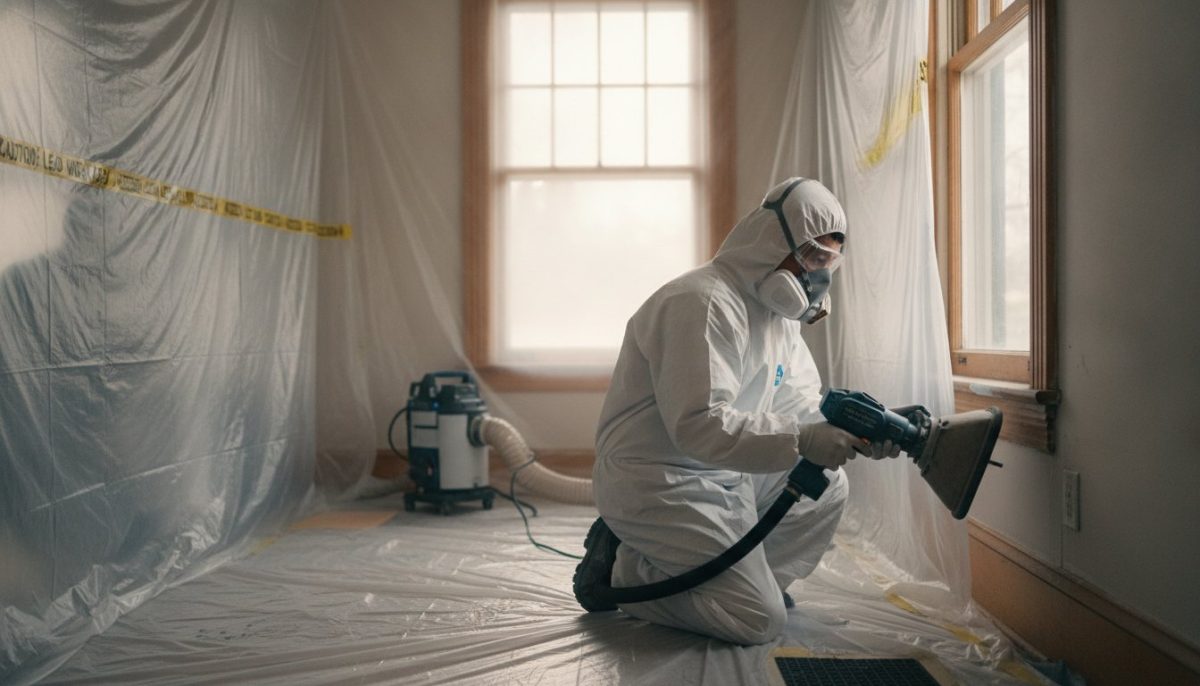
Executing a lead removal project requires more than just technical skill; it demands a disciplined adherence to a multi-stage safety protocol. The primary goal of lead abatement regulations south carolina is to ensure that toxic dust generated during the process doesn’t migrate beyond the immediate work area. This process begins with the establishment of specialized containment zones. Professionals use 6-mil plastic sheeting to create airtight barriers, sealing off all windows, doors, and non-treated surfaces. This physical isolation is the first line of defense in protecting the structural integrity of the rest of the building while hazardous materials are being disturbed.
Once the site is secured, the technical removal follows a methodical five-step process designed for maximum containment:
- Step 1: Containment Setup. Establishing the 6-mil plastic barriers and creating a dedicated decontamination room for workers.
- Step 2: HEPA Filtration. Deploying high-efficiency particulate air (HEPA) filtration systems to scrub the environment.
- Step 3: Wet-Scraping. Utilizing wet-scraping and specialized removal techniques to keep lead-based paint moist, which prevents the formation of airborne dust.
- Step 4: Worker Decontamination. Implementing strict wash-down protocols for all personnel and equipment leaving the containment zone.
- Step 5: Final HEPA Cleaning. Conducting a comprehensive HEPA vacuuming followed by specialized wet-cleaning of all surfaces within the work area.
Specialized Containment and HEPA Filtration
Maintaining negative air pressure is essential for preventing dust migration into adjacent rooms. By using negative air machines equipped with HEPA filters, professionals ensure that air only flows into the containment zone, never out of it. This setup requires sealing all HVAC vents and entry points with double layers of plastic and tape. Throughout the abatement process, air quality monitoring provides real-time data to verify that containment remains uncompromised. If you’re managing a high-stakes project, you can contact TSIAC International for a professional consultation on advanced containment strategies.
Hazardous Waste Disposal and Clearance
The job isn’t finished until the site is legally cleared and the waste is properly managed. SC DES (formerly part of DHEC) maintains strict regulations for the transport and disposal of lead-contaminated debris, which must be handled as hazardous waste. Once the final cleaning is complete, a mandatory clearance inspection occurs. This involves dust-wipe sampling analyzed by an accredited laboratory to ensure lead levels are below the federal threshold for re-occupancy. Only after these samples pass can you obtain the final Certificate of Lead-Based Paint Compliance, which serves as your primary documentation for legal and insurance purposes. This certificate is the final piece of evidence that the project met every requirement of the lead abatement regulations south carolina.
Professional Lead Remediation: Ensuring 2026 Regulatory Compliance
Attempting DIY lead removal is a dangerous gamble that rarely pays off. For structures built before 1978, the legal framework is rigid and unforgiving. When property owners bypass certified experts, they risk more than just their health. They face the full weight of the lead abatement regulations south carolina, which include heavy fines and potential criminal charges. Professional remediation isn’t merely about removing paint; it’s about the comprehensive management of toxic materials within a complex industrial environment. A methodical approach ensures that every particle is accounted for, protecting the site and the community at large.
Managing the documentation required by state agencies is a specialized skill set. With 15+ years of experience, we’ve developed a rigorous system for tracking every ounce of hazardous material from the site to the final disposal facility. This level of oversight is essential for protecting property owners from future claims. When abatement is handled by the same team managing the recycling services, the project gains significant efficiency. Metal, concrete, and other materials can be diverted from landfills safely once the lead hazards are permanently eliminated. This integrated model provides the most reliable path to full regulatory compliance in 2026.
The Risks of Non-Certified Lead Handling
Non-certified lead handling triggers immediate civil penalties. These fines can reach $37,500 per day for each violation. Beyond the immediate financial impact, long-term liability remains a significant concern. If a property is found to have residual lead dust due to improper handling, the owner faces a high risk of litigation from future occupants. This negligence also impacts property value and insurance eligibility. As noted in recent industry projections, uncertified historic properties in South Carolina are seeing an 18% increase in insurance premiums as carriers tighten their liability requirements. Failure to comply can effectively render a property uninsurable and unsellable.
Choosing a Certified Abatement Partner
Selecting a certified partner is a strategic decision. You need a contractor who understands how lead removal integrates seamlessly with structural demolition. TSIAC International brings deep professionalism to every project, ensuring that SC DES paperwork is handled with technical precision. A unified contractor provides a streamlined workflow by managing lead abatement, interior gutting, and recycling services under one roof. This approach eliminates the coordination gaps that often lead to safety breaches or regulatory delays. A partner who is deeply familiar with the demolition process in South Carolina can anticipate challenges before they arise. By verifying firm certifications and worker training records, you ensure that your project remains a safe, compliant, and valuable asset for years to come.
Securing Your Property Against 2026 Lead Liabilities
Adhering to lead abatement regulations south carolina requires more than a basic understanding of safety; it demands technical precision and meticulous documentation. We’ve explored how the 2024 agency restructuring and the lowered blood lead level thresholds have shifted enforcement priorities toward the permanent elimination of hazards. Whether you’re managing a historic residential renovation or a complex commercial gutting project, the difference between a successful clearance and a $37,500 daily fine lies in the hands of your certified partners. Professional oversight is the only way to ensure that toxic dust remains contained and that your project meets every federal and state mandate.
Don’t leave your project’s legal standing to chance. With 15+ years of certified experience, TSIAC International provides comprehensive hazardous material remediation that integrates seamlessly with structural demolition. We handle the complex SC DES paperwork and provide the documented regulatory compliance you need to protect your investment and avoid long term liability. Contact TSIAC International for Expert Lead Abatement & Demolition to ensure your site is safe, cleared, and ready for its next phase. Your commitment to professional standards today is the best guarantee for a secure and profitable project tomorrow.
Frequently Asked Questions
Do I need a permit for lead abatement in South Carolina?
Yes, any project defined as abatement requires firm certification from the EPA and proper notification to the South Carolina Department of Environmental Services (SC DES). While general renovations follow RRP guidelines, lead abatement regulations south carolina mandate that permanent removal projects are performed by licensed professionals who have submitted the necessary project notifications. This ensures the state can monitor hazardous material handling and disposal from start to finish.
What is the difference between lead abatement and lead remediation?
Lead abatement refers to activities designed to permanently eliminate lead-based paint hazards for at least 20 years. This includes paint removal, component replacement, or permanent enclosure. Remediation is a broader term often used interchangeably with interim controls, which are temporary measures like specialized cleaning or repainting. Abatement carries much more stringent documentation and testing requirements than simple remediation or renovation work.
How do I know if my building needs a lead risk assessment?
Any residential or child-occupied structure built before 1978 is a candidate for a risk assessment, especially if you plan to disturb more than six square feet of interior paint. If a child under six has a blood lead level of 8 mcg/dL or higher, the South Carolina Department of Public Health (DPH) will likely mandate an environmental assessment. This process identifies specific hazards in dust, soil, and paint rather than just confirming the presence of lead.
Can a general contractor perform lead paint removal in SC?
A general contractor can only perform lead paint removal if they or their firm hold a current EPA RRP or Abatement certification. Standard construction licenses don’t grant the authority to handle hazardous materials. Performing this work without specific lead certifications exposes the contractor and the property owner to significant legal penalties and health liabilities. It’s essential to verify their firm certification on the EPA’s public locator before work begins.
What are the 2026 EPA RRP certification requirements for firms?
In 2026, firms must pay a $300 fee to the EPA for an RRP certification that remains valid for five years. Individual workers must also complete an accredited eight-hour training course to become Certified Renovators. The firm is responsible for ensuring that at least one certified renovator is assigned to every project and that they follow all lead-safe work practices, including proper site containment and waste management.
How is lead-based paint waste disposed of in South Carolina?
Lead-based paint waste is managed under SC DES environmental protocols to prevent soil and groundwater contamination. While some residential household waste may be disposed of in municipal landfills under specific exemptions, commercial and industrial debris must be treated as hazardous waste. This involves using leak-proof containers, manifest tracking, and disposal at permitted facilities that are equipped to handle toxic heavy metals.
Is lead paint common in commercial buildings in SC?
Lead paint is extremely common in South Carolina commercial buildings, particularly in historic districts and industrial zones developed before the 1978 ban. An estimated 34% of older structures in the state contain lead hazards. In commercial settings, lead is frequently found on structural steel, window headers, and exterior masonry. This makes professional testing a critical step before any selective demolition or interior gutting begins.
What happens if a property owner fails to disclose lead-based paint?
Failing to disclose known lead-based paint hazards is a violation of the federal Lead Disclosure Rule and can result in severe legal consequences. Property owners may be liable for triple the amount of actual damages suffered by a tenant or buyer. Additionally, the EPA and state agencies can impose civil penalties for each violation. Proper disclosure is a non-negotiable legal requirement for all real estate transactions involving pre-1978 properties.
