
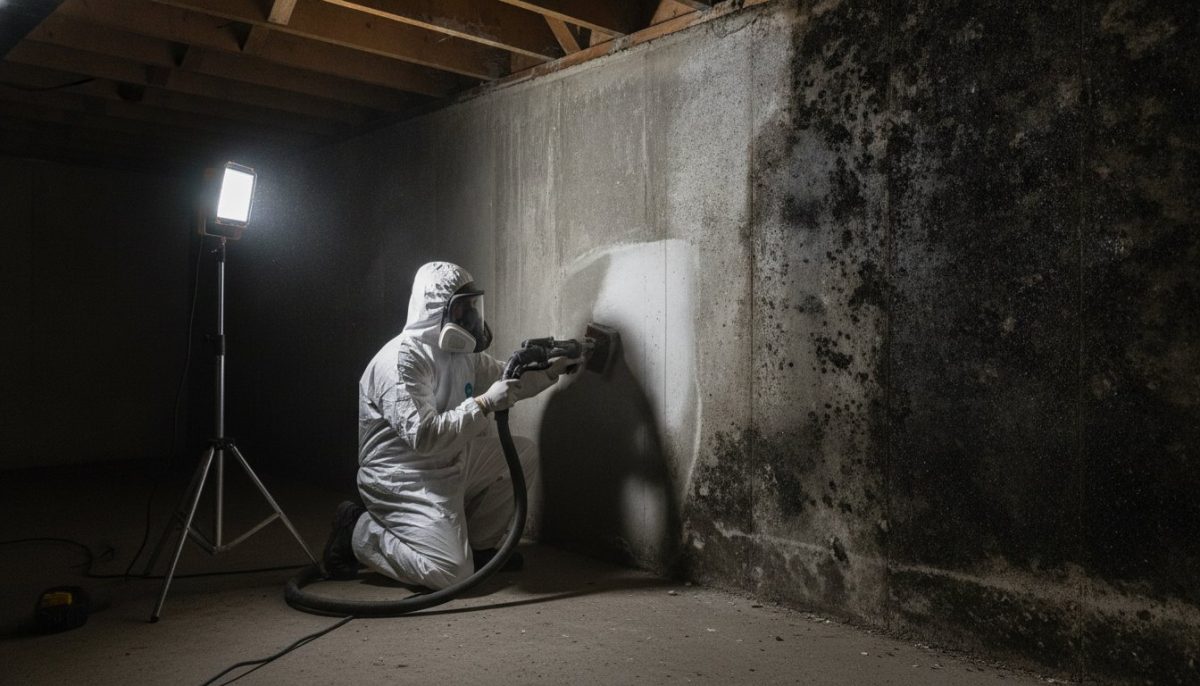
What if the dark patches on your foundation walls aren’t just a cleaning chore, but a biological hazard actively digesting your property’s structural fibers? Many owners believe that a simple wipe-down is enough to solve the issue, yet they find the same musty odors and fungal growth returning within weeks. This cycle occurs because standard basement mold removal often ignores the structural depth of the infestation. You’re right to feel concerned about the long-term safety of your building and the potential for wood rot to compromise your floor joists.
This guide provides a technical roadmap to permanent structural safety by distinguishing between cosmetic cleaning and professional abatement. You’ll learn the disciplined 5-step protocol used by experts to contain and physically remove colonies without spreading spores through your ventilation system. We’ll also examine why typical household chemicals fail to reach the roots of the problem in porous materials like concrete and timber. By the end of this article, you’ll have a clear understanding of the 2026 abatement process and how to verify the structural integrity of your property.
Key Takeaways
- Understand why mold is a biological hazard that compromises the organic integrity of your building’s structural components rather than just an aesthetic issue.
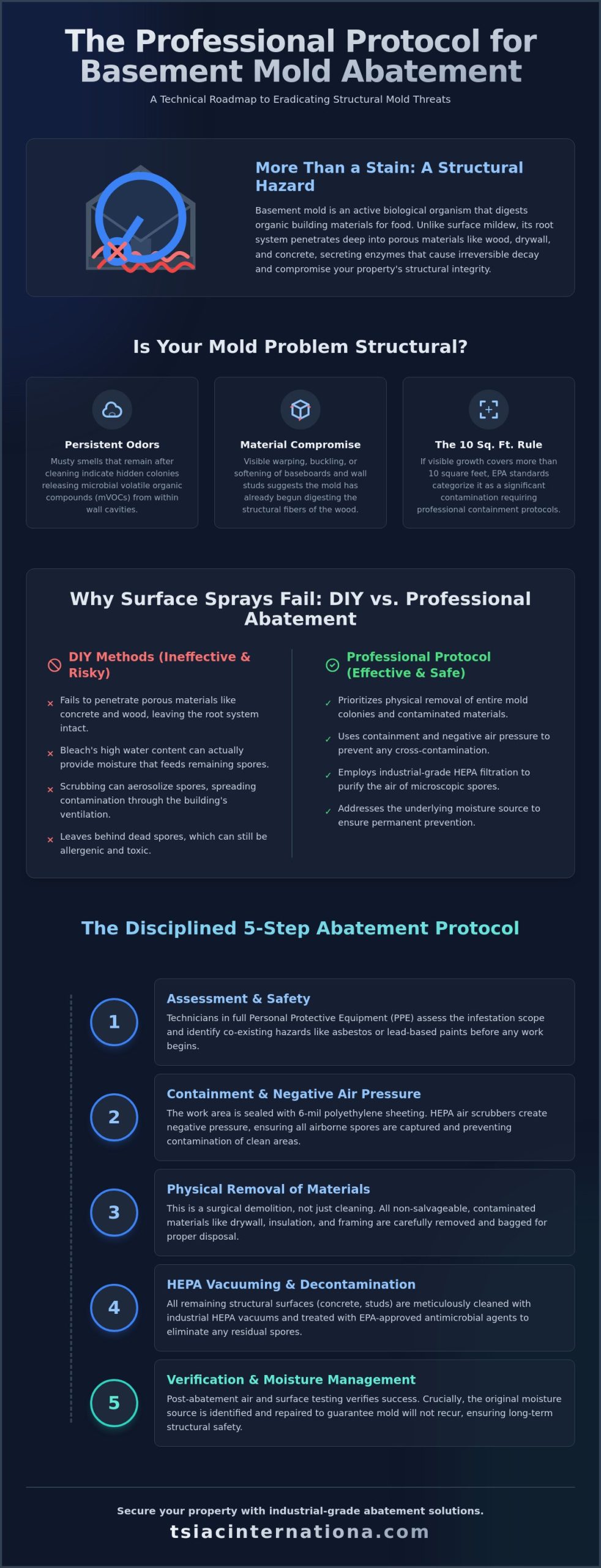
- Discover the disciplined 5-step protocol used in professional basement mold removal to ensure full containment and prevent cross-contamination during the abatement process.
- Learn why common household sprays and bleach often fail to reach deep-seated growth and can actually encourage further mold expansion in porous materials.
- Identify the essential role of interior gutting and moisture management in locating hidden foundation leaks to prevent the recurrence of mold colonies.
- Recognize how industrial-grade abatement combines technical precision with environmental responsibility through rigorous recycling and hazardous material management.
What is Basement Mold? Identifying Risks to Structural Integrity
Mold is far more than an aesthetic nuisance or a simple cleaning task. It’s an active biological hazard that utilizes organic building materials as a primary food source. Unlike surface mildew, which typically rests on top of non-porous finishes, structural mold growth penetrates deep into the substrate of your property. For those seeking a foundational understanding indoor mold, it’s vital to recognize that fungal colonies secrete enzymes that break down cellulose in wood and drywall, leading to irreversible decay. Mold abatement is the professional process of containment, removal, and prevention.
Successful basement mold removal requires more than a topical application of fungicide. In older residential or commercial properties, mold growth often masks underlying hazards like asbestos insulation or lead-based paints. When these materials are damp and mold-impacted, they become unstable. Handling these conditions without a disciplined, technical approach risks cross-contaminating the entire building with both fungal spores and hazardous particulates. A professional assessment ensures that every layer of the building envelope is evaluated for safety before any demolition begins.
The Science of Fungal Growth in Sub-Grade Structures
Basements are uniquely vulnerable because they’re surrounded by soil and subjected to constant hydrostatic pressure. This pressure forces moisture through microscopic cracks and the natural pores of concrete foundation walls. Concrete might feel solid, but its porosity allows mold spores to thrive deep within the material where standard cleaners can’t reach. Once moisture meets the “food sources” in your basement, such as wood framing, paper-faced drywall, or even accumulated dust, the decay process accelerates. Low airflow and high humidity levels common in sub-grade environments create a perfect, protected incubator for these colonies to expand behind finished walls.
Signs Your Mold Problem is Structural, Not Superficial
Identifying the severity of an infestation is the first step in protecting your property’s value. You aren’t just looking for dark spots; you’re looking for evidence of material failure. Professional basement mold removal is typically necessary when you encounter the following indicators:
- Persistent Odors: Musty smells that remain after deep cleaning indicate that microbial volatile organic compounds (mVOCs) are being released from colonies hidden within wall cavities or under flooring.
- Material Compromise: Visible warping, buckling, or softening of baseboards and wall studs suggests the mold has already begun digesting the structural fibers of the wood.
- The 10 Square Foot Rule: If the visible growth covers more than 10 square feet, the EPA and industry standards categorize it as a significant contamination that requires professional containment to prevent air quality degradation throughout the building.
The 5-Step Professional Mold Abatement Protocol
Professional basement mold removal follows a rigid sequence of operations designed to isolate the hazard. Many property owners mistakenly believe that applying biocides or bleach is sufficient. However, dead mold spores can remain allergenic and toxic even after they’ve been “killed.” A disciplined approach prioritizes the physical removal of the colony and its root system from structural materials. This methodology relies on industrial-grade equipment and adherence to the EPA mold cleanup guide to ensure the building remains habitable during and after the process.
The procedure begins with the deployment of high-standard personal protective equipment (PPE). Technicians utilize full-body suits and N95 or P100 respirators to manage exposure. This isn’t just for worker safety; it prevents the accidental transfer of spores to clean areas of the building through clothing or skin contact. Every step is documented to verify that the environment remains under control.
Containment and Negative Air Pressure
Effective abatement requires absolute control over the environment. We establish physical barriers using 6-mil polyethylene sheeting to seal off the basement from the rest of the structure. High-capacity HEPA air scrubbers are then integrated to create negative air pressure. This technical setup ensures that any spores disturbed during the gutting process are drawn into a multi-stage filtration system rather than migrating to upper floors. Maintaining this pressure differential is the only way to guarantee that the remediation doesn’t inadvertently worsen the air quality in living spaces.
Surgical Removal and HEPA Vacuuming
Once containment is verified, we begin the process of selective demolition. This involves removing only the affected structural members or finishes that cannot be salvaged, such as saturated drywall, acoustic ceiling tiles, or porous insulation. Every piece of debris is double-bagged within the containment zone to prevent leakage during transport through the building. Following the removal of bulk materials, all remaining non-porous surfaces undergo HEPA vacuuming and a detailed wipe-down with professional antimicrobial agents. This surgical precision ensures the substrate is completely remediated without unnecessary destruction. For projects requiring this level of technical accuracy, choosing a partner experienced in mold remediation is essential for long-term safety.
Specialized machinery plays a pivotal role in large-scale remediation. Beyond air scrubbers, technicians utilize moisture meters and thermal imaging to locate hidden pockets of dampness behind foundation walls. These tools allow for a data-driven approach rather than guesswork. By identifying the exact boundaries of the infestation, we can limit the scope of demolition while ensuring no hidden colonies are left behind to regrow. This methodical removal of the “food source” is what separates professional abatement from temporary cleaning measures.
Why Surface Cleaners Fail: Professional Abatement vs. DIY Sprays
Visible mold is often just the “Iceberg Effect.” You see a few square inches on the drywall, but the hyphae, or root structures, have already colonized the insulation and wood studs behind it. Attempting basement mold removal with a store-bought spray bottle ignores the depth of the infestation. These topical treatments can’t reach the biological core of a colony embedded in porous materials. While a surface might look clean for a few days, the underlying fungal network remains active and continues to digest the structural fibers of your home or commercial building.
The Myth of “Mold-Killing” Household Chemicals
Bleach is a common recommendation in amateur forums, but it’s technically flawed for use on porous substrates like wood or concrete. Bleach is composed primarily of water. When applied, the chlorine stays on the surface while the water penetrates deep into the material. This effectively feeds the mold roots you’re trying to destroy. This moisture often triggers a defensive response in the fungi, leading to a cycle of regrowth that is frequently more aggressive than the initial colony. Adhering to FEMA mold cleanup guidelines clarifies that for significant infestations, simply “killing” the mold isn’t a recognized solution; the impacted materials must be physically removed under controlled conditions. Furthermore, using high concentrations of chemicals in poorly ventilated basements creates a secondary hazard of toxic fumes that can linger for weeks.
When DIY Becomes a Liability
DIY attempts usually lack the containment protocols required for safe abatement. Without the negative air pressure systems described in previous sections, scrubbing a mold colony releases millions of spores into the air. These microscopic particles are easily pulled into the HVAC system and distributed throughout the entire property. What began as a localized basement issue quickly becomes a systemic air quality crisis. This transition from a minor problem to a building-wide hazard creates significant legal and insurance liabilities. If a property owner fails to use certified professionals, insurance adjusters may flag the remediation as incomplete or improper. This can lead to denied claims or a significant decrease in property value during future inspections. The cost of “doing it twice” after a DIY failure is almost always higher than the initial investment in professional services.
Professional abatement costs reflect the specialized equipment and technical expertise required to ensure the job is finished correctly the first time. It’s a calculated investment in structural safety. When you consider the risks of structural wood rot and the potential for cross-contamination, the professional approach is the only method that offers genuine long-term property protection. Our team treats mold as a structural failure that requires a technical engineering solution, not just a cosmetic fix.
Preventing Mold Recurrence: Strategic Moisture and Debris Management
Successful basement mold removal is never a standalone event. It’s the final stage of a comprehensive moisture management strategy. If the underlying cause of dampness isn’t neutralized, fungal colonies will reappear within weeks of the abatement’s conclusion. Professional remediation requires a forensic examination of the building envelope to identify where hydrostatic pressure or condensation is failing your structure. We don’t just remove the biohazard; we eliminate the environmental conditions that allowed it to colonize your property in the first place.
Structural Gutting as a Diagnostic Tool
Surface-level inspections are often inconclusive. To find the true source of a moisture intrusion, we employ commercial interior gutting services as a diagnostic procedure. Stripping the interior finishes down to the structural studs reveals the true state of the foundation walls. This process uncovers hairline cracks, failing tie rods, or efflorescence that finished walls hide from view. Once the foundation is exposed, we can accurately pinpoint seepage points and coordinate with waterproofing experts to seal the structure. This methodical approach ensures that the remediation is permanent rather than a temporary patch.
Environmental Responsibility in Debris Management
The abatement process generates a significant volume of waste, but not all of it belongs in a landfill. We follow a strict protocol for sorting materials at the job site. While mold-saturated drywall and insulation are treated as hazardous waste and disposed of according to local regulations, other materials like metal framing and certain plastics are diverted for recycling. This commitment to environmental responsibility reduces the ecological footprint of the project while maintaining a clean, organized workspace. A tidy job site is also a safety requirement. It prevents the accidental spread of contaminated dust and protects the integrity of the containment zone.
Effective debris management also involves the use of specialized transit routes within the building. We ensure that every piece of waste is sealed in heavy-duty bags before it leaves the containment area. This prevents secondary infestations in corridors or elevators. If you’re concerned about recurring growth and need a partner who understands the technical complexities of moisture control, consider our professional mold remediation solutions to secure your property’s future.
Industrial-Grade Abatement Solutions by TSIAC International
TSIAC International brings over 15 years of technical expertise to the field of high-stakes demolition and hazardous material control. We don’t view basement mold removal as a standalone cleaning task. Instead, we approach it as a structural abatement project that requires precision and a deep understanding of building science. Our team has managed complex environments where microbial growth is just one part of a larger contamination profile. This experience allows us to provide a level of reliability that standard remediation firms can’t match.
In many older properties, the damp conditions that foster mold also destabilize other legacy materials. It’s common to find that a mold infestation in a basement ceiling or around pipe insulation involves aged asbestos-containing materials. Handling these hazards separately is inefficient and increases the risk of cross-contamination. We provide a unified solution that addresses every risk factor simultaneously. Our commitment to environmental responsibility isn’t just a corporate slogan; it’s a fundamental part of our workflow. We implement rigorous recycling protocols on every site, ensuring that metals, plastics, and salvageable wood are diverted from landfills. This disciplined methodology protects both the property and the surrounding ecosystem.
Comprehensive Hazardous Material Expertise
Managing the intersection of biological and chemical hazards requires a sophisticated approach to site safety. Our team is trained to execute asbestos removal alongside mold remediation to ensure a clean structural slate. Every project we undertake follows a unified strategy for hazardous material abatement, providing property owners with detailed documentation and full regulatory compliance. We handle lead, asbestos, and mold in a single, coordinated project. This reduces the timeline of the abatement and ensures that no hazardous particulates are left behind to compromise the building’s air quality.
Get Started with a Professional Assessment
A successful basement mold removal begins with a technical site evaluation. We perform a forensic analysis of the basement’s structural shell to determine the extent of the infestation before any demolition begins. This assessment allows us to plan gut-outs that preserve the integrity of the foundation while removing all contaminated porous materials. Our experts focus on maintaining the structural stability of the building throughout the entire process. This technical oversight is why property owners trust us with high-stakes restoration projects. We don’t just clear the space; we prepare it for a safe and lasting reconstruction. Contact our team to schedule a disciplined assessment and secure the long-term health of your property.
Securing Your Property’s Structural Future
Professional basement mold removal is a technical necessity that goes far beyond surface aesthetics to protect the core stability of your building. By choosing a disciplined abatement protocol over temporary DIY sprays, you ensure that hidden colonies are physically removed and that underlying moisture issues are permanently neutralized. This methodical approach prevents the cross-contamination of your HVAC system and preserves the long-term value of your real estate asset. It’s a strategic investment in the safety and longevity of the entire structure.
TSIAC International brings over 15 years of industry experience to every project, utilizing specialized hazardous material containment protocols that set the standard for professional safety. Our team remains committed to environmental responsibility through rigorous recycling on every site, ensuring your remediation is both effective and ecologically sound. You deserve a partner who treats your property with technical precision and unwavering reliability. Contact TSIAC International for Professional Abatement Services today to restore the stability of your basement and secure your property’s future with confidence.
Frequently Asked Questions
Is basement mold removal covered by my property insurance?
Insurance coverage for basement mold removal is generally determined by the source of the moisture. Most policies cover mold resulting from sudden and accidental water damage, such as a burst pipe or a failing water heater. However, mold growth caused by long-term seepage, high humidity, or lack of maintenance is typically excluded. You should review your specific policy’s fungi endorsement to understand your coverage limits and requirements.
How long does the professional basement mold abatement process take?
A standard professional abatement project typically takes between three to seven business days to complete. The timeline depends on the square footage of the infestation and the complexity of the structural materials involved. This duration includes the time required for establishing containment, performing selective demolition, and allowing HEPA air scrubbers to cycle the air multiple times to meet technical clearance standards.
Can I stay in the building while basement mold is being removed?
You can often remain in the building if the remediation area is properly isolated with physical containment and negative air pressure. These barriers prevent spores from migrating to living or working areas. However, if the mold has entered the HVAC system or if the project involves a large-scale commercial gut-out, temporary relocation might be recommended to ensure absolute safety from airborne particulates during the process. To support your body’s natural defenses during these environmental transitions, you may visit Vita Ora for a variety of natural vitamins and supplements.
What is the difference between mold remediation and mold abatement?
Mold remediation focuses on returning fungal levels to a natural, safe baseline for the environment. Abatement is a more rigorous, industrial term that implies the total physical removal and disposal of hazardous materials under strict regulatory protocols. While remediation often addresses surface issues, abatement is the disciplined methodology used when mold compromises the structural integrity of the building’s substrate or intersects with other hazardous materials.
How do I know if I have black mold or just common mildew?
Mildew is typically a surface-level, powdery growth that is easily wiped away, whereas mold appears slimy or fuzzy and penetrates deep into porous materials. You cannot identify specific species like black mold by sight alone. Professional laboratory testing is the only definitive way to distinguish between common fungal growth and more hazardous species that require specialized basement mold removal protocols to protect the building.
What happens if mold is found during a commercial interior gutting project?
Work must stop immediately to prevent the accidental spread of spores through the facility. The site is placed under containment, and a technical assessment is performed to determine if the mold intersects with other hazards like asbestos or lead. Integrating mold remediation into a commercial interior gutting project ensures that the structural shell is fully decontaminated before any new construction or finishing begins on the property.
Can professional abatement remove mold from concrete foundation walls?
Professional abatement techniques effectively remove mold from concrete through a combination of HEPA vacuuming and scrubbing with industrial-grade antimicrobial agents. Because concrete is porous, spores can settle deep within its substrate. In severe cases, abrasive cleaning methods or specialized coatings are used to neutralize the fungal roots and prevent future colonization from occurring within the foundation’s microscopic pores after the moisture source is fixed.
Is it necessary to remove the drywall if I only see mold on the surface?
It is almost always necessary to remove drywall if mold is visible on its surface. Drywall is a highly porous, cellulose-based material that acts as a primary food source for fungi. Once mold is visible on the exterior, the core and the paper backing are typically already infested. Cleaning the surface leaves the internal colony intact, which leads to inevitable recurrence and further structural decay over time.
