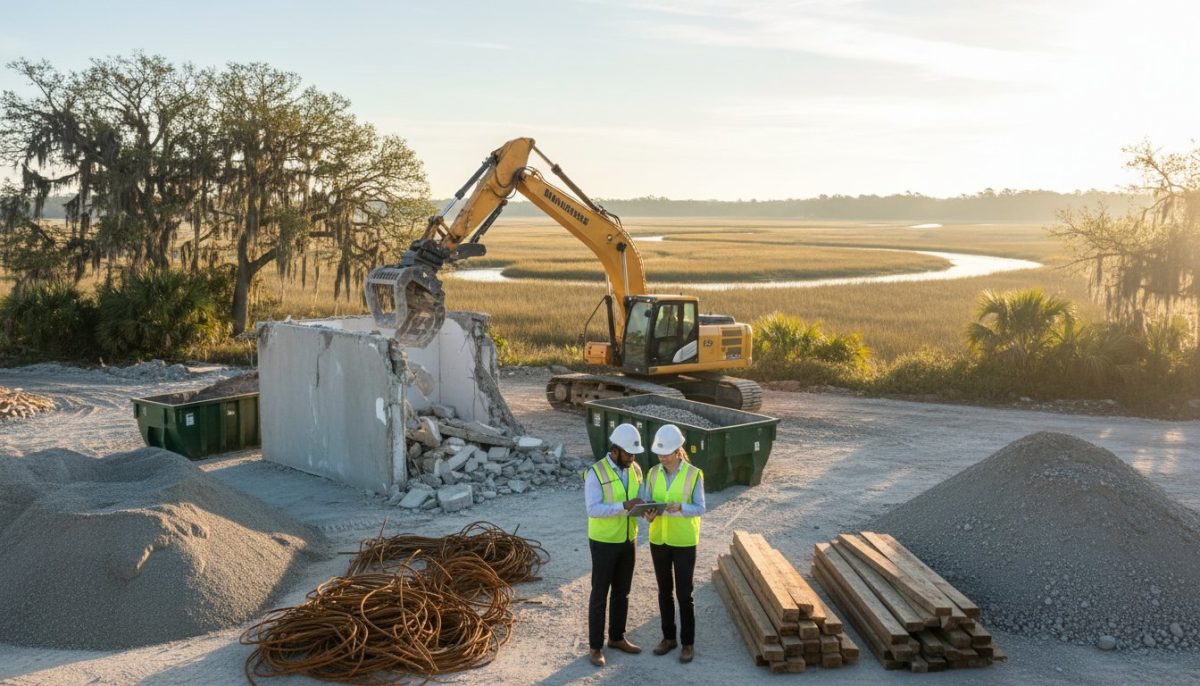
Demolition Debris Recycling in SC: A Guide to Sustainable Material Management

Did you know that nearly 30% of South Carolina’s total waste stream originates from construction and demolition sites, yet up to 75% of those…

Did you know that nearly 30% of South Carolina’s total waste stream originates from construction and demolition sites, yet up to 75% of those materials never need to reach a landfill? Most project managers accept high landfill tipping fees as an unavoidable cost of doing business. You’re likely balancing the pressure of tight deadlines with the complexity of on-site material sorting and the 2024 South Carolina Department of Environmental Services (SCDES) regulatory updates. It’s a technical challenge that demands engineering precision rather than just a basic disposal plan, especially when dealing with specialized structures or difficult sites.

Implementing a structured approach to demolition debris recycling sc isn’t just an environmental choice; it’s a strategic financial decision. This guide shows you how professional material recovery practices can slash your project overhead by 15% or more while ensuring 100% compliance with state mandates. We’ll examine the technical processes for recovering concrete, steel, and asphalt to transform your waste management into a streamlined, sustainable asset that strengthens your corporate reputation through measurable, audited results.

Key Takeaways

  • Understand South Carolina’s specific C&D regulatory standards to ensure full project compliance while contributing to the diversion of significant industrial waste from landfills.
  • Identify high-value recovery streams, such as ferrous metals and masonry, and learn how on-site crushing can transform debris into cost-saving fill material.
  • Learn how stringent safety protocols for asbestos and lead contamination are vital to protecting the value and feasibility of your **demolition debris recycling sc** efforts.
  • Evaluate the operational advantages of source separation versus commingled recycling to determine the most efficient material management strategy for your site.
  • Discover how an integrated approach combining professional abatement with structural demolition ensures a seamless, safe, and environmentally responsible project outcome.

Demolition Debris Recycling in South Carolina: Standards and Benefits

South Carolina’s regulatory environment for waste management underwent a significant transition on July 1, 2024, when the South Carolina Department of Environmental Services (SCDES) assumed oversight of the state’s material recovery frameworks. This change reflects a growing urgency to address the 600 million tons of construction and demolition waste generated annually across the United States. Managing these volumes requires more than simple disposal; it demands a disciplined engineering approach to resource recovery. Proper demolition debris recycling sc protocols ensure that structural components are diverted from Class 2 landfills, preserving local airspace and reducing the environmental footprint of large-scale industrial projects.

What Qualifies as C&D Debris in SC?

The SCDES defines construction and demolition (C&D) debris as solid waste resulting from the construction, remodeling, repair, or demolition of structures and roads. It’s a specific classification that excludes municipal household waste and hazardous substances. To maintain site safety and regulatory compliance, contractors must distinguish between "inert" materials and restricted waste. Common components eligible for recovery include:

  • Structural steel, rebar, and miscellaneous metals
  • Portland cement concrete and masonry units
  • Brick, stone, and clean soil
  • Glass and asphalt shingles
  • Untreated wood and clearing debris

Inert debris, such as cured concrete and brick, is treated as a priority in the recycling stream. These materials don’t decompose or produce leachate, making them ideal for crushing into high-quality aggregate. Using recycled concrete as a stabilized sub-base for new pavement is a standard practice that meets rigorous load-bearing specifications.

The Economic Case for Material Recovery

Financial performance in the construction sector is tied directly to waste efficiency. Tipping fees at South Carolina landfills typically range from $35 to $60 per ton, depending on the county and material type. By contrast, demolition debris recycling sc facilities often provide lower intake rates for clean, pre-sorted loads. Projects that implement rigorous onsite sorting can reduce their total waste management costs by 18% to 24%.

Beyond immediate savings, sustainable material management opens doors to federal tax incentives and LEED v4.1 credits. Achieving a 50% diversion rate for non-hazardous debris earns points that increase the long-term valuation of a property. It’s a strategy that transforms a liability into a logistical asset.

By the 2026 fiscal cycle, the ROI of debris recycling will be defined by a 22% average reduction in raw material procurement costs through the systematic onsite processing of reclaimed aggregates.

Primary Recyclable Materials in Structural and Selective Demolition

Effective demolition debris recycling sc depends on the precise identification and separation of waste streams at the source. The South Carolina Department of Health and Environmental Control (SCDHEC) estimates that construction and demolition debris makes up approximately 25% of the state’s total waste. Managing these materials requires a disciplined engineering approach to maximize recovery rates and maintain site safety. Success isn’t found in bulk disposal; it’s found in the systematic extraction of secondary raw materials.

  • Concrete and Masonry: Operators crush these materials into 1.5-inch or 3-inch aggregate for use as on-site fill or stabilized road base.
  • Ferrous and Non-Ferrous Metals: This stream includes structural I-beams, rebar, and specialized alloys that command the highest market prices.
  • Untreated Wood and Lumber: Clean timber, often comprising 15% of a building’s mass, is ground into mulch or utilized for industrial biomass fuel.
  • Gypsum Wallboard and Plastics: Specialized processing facilities in the Southeast now accept clean drywall for manufacturing new feedstock, provided it’s free of lead-based paint and adhesives.

High-Value Metal Recovery

Metals represent the most profitable component of any structural teardown. Structural steel, copper piping, and aluminum wiring maintain high scrap value even during market shifts. During the 2023 fiscal year, scrap steel prices averaged between $380 and $440 per ton. Technical teams achieve maximum purity by extracting these materials before general demolition begins. This selective approach prevents cross-contamination and ensures the highest possible return. Timing the sale based on London Metal Exchange (LME) data ensures the project’s financial stability and offsets total project costs.

Aggregate Recycling: Concrete and Brick

On-site mobile crushing units eliminate the need for hundreds of heavy vehicle trips. This process transforms old foundations into high-quality fill that meets SCDOT Standard Specifications for Highway Construction. Utilizing 1,000 tons of recycled concrete on-site can save a project over $18,000 in hauling and disposal fees. It also reduces carbon emissions by roughly 42% compared to importing virgin stone. For projects involving complex industrial execution, on-site recycling provides a logistical advantage that keeps tight schedules on track. It’s a method that turns a waste liability into a structural asset.

Safety dictates the entire project lifecycle. You can’t achieve efficient demolition debris recycling sc if hazardous contaminants infiltrate the waste stream. A single fragment of asbestos-containing material (ACM) can render an entire 30-yard roll-off container unrecyclable, forcing the entire load into a specialized landfill at three times the standard tipping fee. We prioritize the stabilization of the site before any mechanical demolition occurs. This isn’t just a safety preference; it’s a structural necessity for material recovery.

The South Carolina Department of Health and Environmental Control (SCDHEC) enforces strict protocols regarding waste commingling. Mixing hazardous waste with clean masonry or steel triggers civil penalties that often reach $10,000 per day per violation. Protecting the integrity of the recycling stream requires rigorous isolation of lead-based paint and asbestos. If these materials aren’t stripped first, the resulting dust contaminates the aggregate, making it useless for future construction applications.

Pre-Demolition Abatement Requirements

South Carolina law requires a certified asbestos building inspection for all public and commercial renovations or demolitions. This mandate applies regardless of the structure’s age. If the project involves more than 160 square feet of surface area or 260 linear feet of pipe insulation, you must submit a notification to SCDHEC at least 10 working days before work starts. Safe containment ensures friable fibers don’t settle on clean concrete or steel. For detailed procedures, consult our Asbestos Removal in South Carolina: A Complete Guide.

Handling Lead-Contaminated Debris

Structures built before 1978 carry a high probability of lead-based paint. We utilize X-Ray Fluorescence (XRF) analyzers to identify lead concentrations in wood and masonry. If lead levels exceed 1.0 mg/cm², the material is classified as hazardous and requires specialized disposal at a Subtitle C landfill. Selective gutting allows us to strip contaminated architectural elements manually. This process protects workers from inhaling toxic dust and keeps the bulk of the masonry clean for demolition debris recycling sc.

Worker safety remains the primary focus during these phases. We implement several protocols to ensure a clean site:

  • XRF Testing: Rapid on-site analysis of all painted surfaces.
  • HEPA Filtration: Using high-efficiency vacuums during selective gutting to capture 99.97% of particles.
  • Segregated Storage: Placing lead-impacted wood in sealed, 6-mil poly-lined containers to prevent leaching.
  • Worker Decontamination: Mandatory wash stations to prevent the spread of lead dust outside the hot zone.

Best Practices for Job Site Material Management

Efficient demolition debris recycling sc requires a disciplined approach to onsite logistics. It’s not just about disposal; it’s about material recovery through engineering precision. Successful projects treat the job site as a processing facility where every movement is calculated to prevent cross-contamination. This level of control ensures that 95% of extracted steel and 80% of concrete aggregates remain viable for secondary markets. Without a structured flow, valuable materials quickly turn into expensive liabilities.

Source Separation Strategies

Maximizing material value starts at the point of removal. We recommend setting up designated 10×10 foot drop zones for specific material types, such as ferrous metals, clean concrete, and untreated timber. Crews receive 15-minute technical briefings to distinguish between clean loads and contaminated debris, ensuring that gypsum or hazardous insulation doesn’t compromise a 40-yard container of recyclable brick. For complex structures, use hydraulic shears and high-reach excavators for surgical material extraction. This mechanical precision allows operators to pull structural steel directly from the frame, maintaining high purity levels that command better rebates at SC processing centers.

The Logistics of Debris Hauling

Choosing the right equipment determines the project’s bottom line. While 20-yard roll-off containers offer flexibility on tight urban sites in Charleston or Greenville, high-capacity 100-yard trailers are 30% more cost-effective for large-scale industrial clearances. Every haul must be directed to a facility verified by the 2024 SC DHEC list of permitted C&D recycling centers. Developing a rigorous Debris Management Plan becomes a critical legal safeguard by 2026, as South Carolina regulatory bodies will require documented proof of 75% material diversion for all commercial permits exceeding 5,000 square feet. This documentation provides the data trail necessary for municipal audits and environmental compliance certifications.

Maintaining strict site protocols is the only way to guarantee safety and profitability during complex teardowns. For projects requiring this level of technical oversight, partner with a team that provides reliable demolition solutions tailored to South Carolina’s regulatory environment.

Rigorous tracking is the final pillar of professional material management. Digital manifests should record the weight, material type, and destination facility for every load leaving the site. This data isn’t just for internal review; it’s the primary evidence used during state-level environmental audits. By maintaining a transparent chain of custody, contractors prove their commitment to demolition debris recycling sc while protecting the client from potential liability issues associated with illegal dumping or improper waste handling.

Implementing Large-Scale Material Recovery with TSIAC International

Executing a successful strategy for demolition debris recycling sc requires more than just brute force; it demands a disciplined, integrated approach. TSIAC International brings over 15 years of specialized experience to structural and selective demolition projects across the region. By combining hazardous material abatement with material recovery, project timelines are condensed and operational risks are mitigated. This technical synergy ensures that site remediation and recycling efforts occur simultaneously, which reduces downtime for developers and general contractors. Every job site operates under a strict mandate for environmental responsibility, treating waste not as a burden but as a recoverable asset.

The company relies on professional-grade heavy machinery and expert crews trained in precise dismantling techniques. This mechanical advantage allows for the clean separation of materials at the source, which is critical for maintaining the purity of recycled aggregates. Whether the project involves a high-rise structure or a specialized industrial facility, the focus remains on engineering a solution that maximizes material life cycles.

A Comprehensive Service Suite

TSIAC International manages everything from complex interior gutting to total structural removal with engineering precision. Their teams are equipped to handle the removal of over 20 distinct material categories, ensuring that hazardous substances like asbestos or lead-based paint are remediated before the main demolition begins. Every project adheres to national-standard safety protocols, maintaining a zero-incident culture. This rigorous methodology allows for the recovery of high-value materials, such as structural steel and clean concrete, that meet strict industry specifications for reuse in new construction projects.

Partnering for Sustainability

Developers in South Carolina face increasing pressure to meet LEED certification and local environmental mandates. TSIAC provides the transparent reporting necessary to document diversion rates and material destinations for project stakeholders. By maximizing demolition debris recycling sc, clients frequently see a reduction in landfill tipping fees by 30% or more. The firm’s commitment to sustainability is backed by data, providing a clear audit trail for every ton of material processed. This level of transparency ensures that environmental goals are met with verifiable results rather than vague promises.

Contact TSIAC International for a customized demolition and recycling quote to ensure your next project is handled with technical expertise and professional reliability.

Advancing Your Next Project with Sustainable Material Recovery

Effective management of structural waste isn’t just a regulatory checkbox; it’s a strategic advantage for any South Carolina job site. By segregating concrete, steel, and timber, projects can redirect up to 75% of waste materials away from local landfills. This process demands rigorous adherence to safety protocols, especially when dealing with hazardous substances. Our team maintains comprehensive Asbestos and Lead Abatement Certification to ensure every site meets DHEC standards without costly delays.

Implementing a robust strategy for demolition debris recycling sc requires technical precision and heavy-duty logistics. TSIAC International brings over 15 years of industry experience to the field, specializing in complex structural removals that require engineering accuracy. We’ve successfully managed large-scale recoveries across the Southeast, proving that efficiency and environmental responsibility work together. You deserve a partner who prioritizes safety and professional reliability on every square foot of the site.

Request a Professional Demolition Quote from TSIAC International to secure a partner with a proven track record in high-stakes material management. We’re ready to bring our technical expertise to your project today.

Frequently Asked Questions

What exactly is considered construction and demolition (C&D) debris?

Construction and demolition debris consists of waste materials generated during the renovation, repair, or destruction of structures and roads. This category includes heavy materials like concrete, steel, wood, and asphalt, alongside finishing components such as drywall and carpeting. The EPA reported that the United States generated 600 million tons of C&D debris in 2018, which is double the amount of municipal solid waste produced annually across the country.

Is recycling demolition debris actually cheaper than taking it to a landfill?

Recycling is often more cost-effective because it avoids high tipping fees and generates revenue from salvaged materials. In South Carolina, landfill fees average $45 per ton, while demolition debris recycling sc facilities frequently offer lower rates for sorted loads. You’ll reduce transportation costs by processing concrete on-site into aggregate, which saves approximately $15 per ton in haul-away expenses and new material purchases for the next phase.

Can I recycle wood that has been painted with lead-based paint?

You can’t recycle wood contaminated with lead-based paint because it’s classified as hazardous waste under federal safety standards. Materials painted before 1978 are subject to strict SCDHEC disposal protocols to prevent environmental contamination. These items must be separated and transported to a Subtitle D landfill, as recycling facilities won’t accept any wood that tests positive for lead concentrations exceeding 5,000 parts per million during initial screening.

How much of a building can typically be recycled during demolition?

A standard industrial project can achieve a diversion rate of 75% to 90% when using deconstruction techniques instead of traditional wrecking. Metals like steel and copper have a 100% recovery rate, while clean concrete is crushed into usable road base. Implementing a demolition debris recycling sc strategy ensures that only about 15% of the total building mass, primarily insulation and mixed plastics, ends up in a landfill at the project’s conclusion.

What are the South Carolina regulations for disposing of unrecyclable debris?

Unrecyclable materials must be managed according to SCDHEC Regulation 61-107.19, which governs solid waste management. This law requires that all non-recoverable C&D waste goes to a permitted Class 2 or Class 3 landfill. Site managers must keep disposal manifests for at least 3 years to prove compliance during state inspections, ensuring that no hazardous substances enter the local groundwater systems or violate the structural integrity of the disposal site.

Do I need a special permit to recycle concrete on my project site?

You’ll need a General Permit for Crushing and Grinding from the SCDHEC Bureau of Air Quality if your equipment exceeds certain capacities. Specifically, any portable crusher processing more than 150 tons of material per hour requires a formal registration. We manage these permits to ensure dust control measures meet the 20% opacity limit required by state law, maintaining site safety and legal standing throughout the crushing operation.

How does asbestos abatement affect the overall recycling timeline?

Asbestos abatement typically adds 14 days to your project schedule due to mandatory regulatory waiting periods. South Carolina law requires a 10-working-day notification to SCDHEC before any disturbance of regulated asbestos-containing material begins. Once the 48-hour post-abatement air clearance testing is finished, the remaining structure can be safely processed for recycling without the risk of contaminating the clean debris streams with hazardous fibers.

What materials are currently banned from South Carolina C&D landfills?

South Carolina law prohibits the disposal of 5 specific categories of waste in C&D landfills, including whole tires and lead-acid batteries. You can’t dispose of liquid waste, hazardous chemicals, or regulated asbestos-containing material in these facilities. These bans, enforced under Regulation 61-107.19, protect the environment and prevent toxic leaching into the surrounding soil. All banned items must be diverted to specialized hazardous waste processing centers.
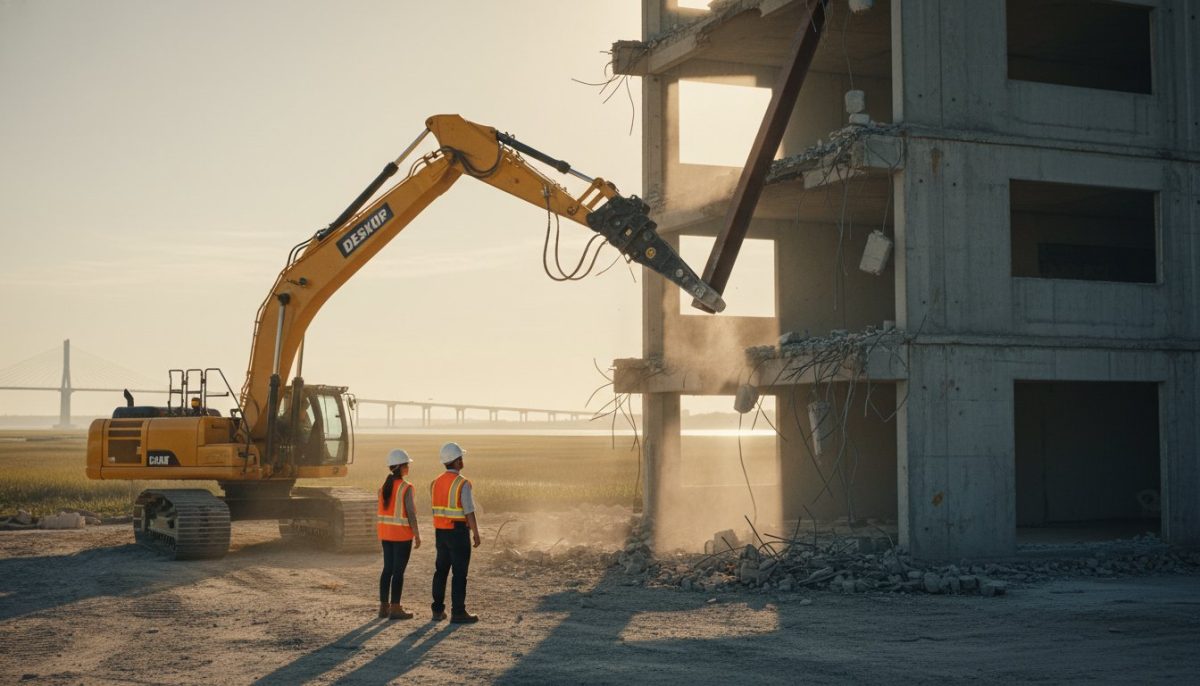
The Power of Precision: A Guide to Demolition Heavy Machinery in SC

According to 2023 industry data from the Construction and Demolition Recycling Association, approximately 35% of structural removal projects in the…

According to 2023 industry data from the Construction and Demolition Recycling Association, approximately 35% of structural removal projects in the Southeast experience significant delays due to improper selection of demolition heavy machinery sc. It’s a sobering reality for project managers who know that a single day of downtime can result in over $12,000 in lost revenue and overhead. You’re likely familiar with the tension of balancing tight deadlines against the rigid demands of environmental compliance and site safety.

This guide explores how the strategic deployment of high-spec machinery transforms these complex challenges into predictable, high-performance results. We’ll show you how professional operation can ensure your project meets the 75% material recycling threshold required for many LEED certifications while maintaining a zero-incident safety record. We’ll examine specific technical capabilities of modern excavators and shears, providing a clear roadmap for selecting the right tools for your next structural removal.

Key Takeaways

  • Understand how South Carolina’s diverse terrain necessitates a transition from manual labor to machine-driven precision for complex structural removals.
  • Explore the technical capabilities of high-reach excavators and specialized attachments designed for the surgical deconstruction of multi-story buildings.
  • Learn how strict adherence to OSHA standards and state-specific environmental regulations ensures site safety and hazardous material containment.
  • Discover how the strategic deployment of advanced demolition heavy machinery sc optimizes project efficiency while transforming structural waste into recyclable aggregate.

The Role of Heavy Machinery in Modern SC Demolition

The transition from manual labor to machine-driven precision represents a fundamental shift in the construction industry. Before 1980, a significant portion of site clearing relied on sheer force and high-risk manual labor. Today, the deployment of demolition heavy machinery sc has transformed the process into a disciplined engineering exercise. In South Carolina, the diverse geography dictates the fleet requirements. A project in the Lowcountry’s soft, sandy soil requires low-ground-pressure tracks to prevent sinking, while a site with older, reinforced concrete foundations demands high-torque hydraulic breakers. Using the correct heavy equipment ensures that a 12,000 square foot industrial facility can be cleared in under 5 days. This efficiency reduces project timelines by 35% compared to outdated methods.

Economic viability depends on the synchronization of machinery and logistics. When a fleet is properly matched to the site’s scale, idle time drops to less than 8%. This precision isn’t just about speed; it’s about the controlled management of energy. By utilizing specialized excavators, we can isolate structural loads during the dismantling phase. This prevents unplanned collapses and ensures the safety of everyone on site. The modern approach treats every building as a puzzle to be disassembled rather than a target to be destroyed. This level of control is why demolition heavy machinery sc is the backbone of safe urban redevelopment.

  • Hydraulic shears cut through steel beams in seconds, replacing dangerous oxy-fuel torches.
  • High-reach excavators allow for top-down demolition, protecting adjacent historic structures in urban centers like Charleston or other coastal communities.
  • GPS-integrated loaders optimize debris movement, cutting fuel consumption by 18% per project.
  • Remote-controlled demolition robots handle hazardous material removal without putting operators at risk.

Beyond the Wrecking Ball: The Engineering Shift

By 2026, the traditional wrecking ball has effectively become a museum piece. Modern contractors favor hydraulic processors and high-reach excavators for their superior control. These machines provide 360-degree rotation and interchangeable attachments, allowing for surgical precision. We often perform selective interior gutting where the exterior facade remains untouched while 100% of the internal structural components are removed. This balance of raw power and delicate handling is essential for preserving South Carolina’s architectural heritage during urban renewal projects.

The Environmental Advantage of Modern Fleets

Modern fleets do more than break concrete; they function as mobile sorting centers. High-efficiency engines manufactured after 2022 meet stringent Tier 4 and Tier 5 standards, reducing nitrogen oxide emissions by 90%. Machine-assisted sorting allows us to achieve recycling rates exceeding 92% for metals, wood, and concrete. This capability turns potential waste into reusable aggregate and scrap, which can save clients an average of $14,500 in landfill fees on mid-sized commercial jobs. Integrated misting systems on 2026-era machinery also suppress 85% of airborne dust, protecting the air quality of surrounding neighborhoods.

Essential Fleet Components for Structural Removal

Successful projects across South Carolina rely on a tiered equipment strategy. The 30-ton hydraulic excavator serves as the primary tool for most industrial sites. These machines provide the breakout force required to dismantle reinforced concrete foundations. Using advanced demolition heavy machinery sc, contractors ensure that site clearance stays on schedule even when encountering unforeseen sub-grade obstacles. Modern excavators in our fleet feature 360-degree rotation and quick-coupler systems, allowing operators to switch between hydraulic shears and concrete pulverizers in less than 10 minutes. This versatility reduces idle time and keeps the project flow continuous.

High-Reach Excavators: Reaching New Heights Safely

When a project involves a five-story building in Charleston or a coastal hotel in Myrtle Beach, high-reach excavators become mandatory. These machines feature modular boom sections that extend up to 90 feet. This height allows the operator to dismantle the structure from the top down without placing the machine on a dangerous debris pile. Stability is maintained through an expandable undercarriage and 15-ton counterweights. Safety remains the primary objective. By keeping the operator cabin 65 feet away from the drop zone, we mitigate the risks associated with unpredictable structural collapses. Adherence to OSHA Demolition Standards ensures that every high-reach operation follows strict engineering surveys and collapse-zone protocols. The integration of 30-degree tilting cabs also reduces operator fatigue, which is a critical factor during high-precision dismantling tasks.

Small-Scale Machinery for Selective Demolition

Urban density in South Carolina often requires a surgical approach. In 2023, 42% of our interior projects involved historic preservation where structural integrity was the priority. Electric-powered mini-loaders are essential here. They produce zero emissions, making them ideal for hazardous material abatement in confined spaces. Precision is non-negotiable when working inside 19th-century brick structures. Skid steers provide the agility needed for rapid floor removal and interior gutting. These compact units navigate 36-inch doorways while maintaining a 2,900-pound rated operating capacity.

  • Precision Movement: Rubber-tracked mini-excavators prevent floor damage in sensitive historic zones.
  • Hazardous Abatement: Remote-controlled demolition robots allow for safe lead and asbestos removal in areas too unstable for human entry.
  • Interior Gutting: High-torque skid steers can clear 5,000 square feet of interior space in a single 8-hour shift.

Effective debris management closes the loop on site clearing. Articulated haulers, such as the 25-ton capacity models, move material across uneven terrain far faster than standard road trucks. Low ground pressure tires protect the soil during site clearing, preventing compaction issues for future builders. This logistical speed ensures that site preparation for new construction begins 18% sooner than projects relying on manual sorting. Efficiency starts with selecting the right demolition heavy machinery sc for the specific load-bearing requirements of the structure. If you’re planning a complex teardown, you can review our technical capabilities to see how we manage these logistics with engineering precision.

Site clearing isn’t just about destruction; it’s about the systematic recovery of materials. Our articulated haulers transport sorted concrete to on-site crushers, where it’s repurposed as structural fill. This process diverts up to 85% of demolition waste from South Carolina landfills. Every machine in the fleet is chosen for its ability to contribute to this circular economy while maintaining the highest safety ratings in the industry.

Specialized Attachments: The ‘Teeth’ of the Operation

The efficiency of demolition heavy machinery sc depends entirely on the tool at the end of the boom. A 100,000-pound excavator is merely a mobile power source until it’s equipped with the specific attachment required for the structural material at hand. These tools provide the mechanical advantage necessary to convert a standing structure into manageable, sorted waste streams. Precision in attachment selection reduces project timelines by 15% and ensures that safety protocols meet the rigorous standards set by the National Demolition Association for technical dismantling.

Our fleet utilizes four primary categories of high-performance attachments to handle South Carolina’s diverse industrial and commercial landscapes. Hydraulic breakers deliver up to 12,000 ft-lbs of impact energy to fracture 5,000 PSI reinforced concrete foundations. For delicate sorting, hydraulic grapples and thumbs provide the dexterity of a human hand on a massive scale. These grapples allow operators to separate wood, plastic, and copper wiring with 98% accuracy, which is vital for projects aiming for LEED certification or strict environmental compliance.

Hydraulic Shears and Steel Processing

Steel-framed industrial warehouses require the raw cutting force of hydraulic shears. These attachments function like industrial-grade scissors, capable of slicing through 36-inch wide-flange I-beams in a single cycle. We utilize shears equipped with 360-degree continuous rotation. This mechanical flexibility allows operators to approach complex structural nodes from any angle without repositioning the entire excavator. It’s a critical capability when working in tight urban footprints where space is limited to a 20-foot radius.

Maximizing the value of scrap metal is a core component of our cost-management strategy. By processing steel to mill-ready lengths on-site, we increase the scrap yield value by approximately 22% compared to hauling oversized beams. The selection of the shear depends on the steel grade; A36 structural steel requires different blade geometry than the high-strength, low-alloy steels often found in bridge supports or heavy industrial machinery bases. Our operators match the tool’s closing force to the material’s tensile strength to prevent equipment fatigue and ensure clean, rapid cuts.

Concrete Pulverizers and On-Site Crushing

Concrete processing involves a two-stage approach to ensure the material is ready for reuse. Primary pulverizers are designed for the initial takedown, featuring a wide jaw opening that can grab and crush reinforced concrete columns still in their vertical position. Secondary pulverizers, often referred to as “processors,” are used on the ground. These tools feature a specialized tooth configuration designed to pulverize chunks of concrete into 3-inch minus aggregate while simultaneously stripping away every inch of embedded rebar.

Separating rebar from the concrete matrix is essential for creating clean recycling streams. Once the steel is extracted via integrated magnets or manual sorting after the pulverizer has done its work, the remaining concrete becomes a valuable resource rather than a waste product. By crushing concrete into usable fill on-site, we’ve helped clients reduce hauling costs by up to $15,000 on mid-sized commercial projects. This approach eliminates the need for hundreds of dump truck trips, reducing the carbon footprint of the demolition heavy machinery sc operation while providing the site with a stable base for future construction. We monitor the jaw pressure constantly to ensure the aggregate meets specific compaction requirements for backfill, turning yesterday’s walls into tomorrow’s foundation.

Safety, Compliance, and Operator Expertise in South Carolina

Demolition demands more than raw power; it requires a disciplined adherence to rigorous safety protocols and engineering standards. At TSIAC International, we recognize that operating demolition heavy machinery sc involves managing immense kinetic energy in volatile environments. Our operations align strictly with OSHA 29 CFR 1926.850, which mandates a comprehensive engineering survey by a qualified person before any structural dismantling begins. This document guides our choice of machinery and the sequence of debris removal to prevent premature collapses.

Every workday at a TSIAC site commences with a 15-minute safety briefing at 7:00 AM. During these sessions, the site supervisor reviews the day’s specific hazards, such as live utility lines or structural weaknesses identified in the pre-demolition report. Operators then perform a 12-point machine inspection. They check hydraulic hose integrity, track tension, and the locking pins on attachments like shears or pulverizers. We don’t permit a machine to move until the operator signs off on the daily inspection log, ensuring 100% equipment readiness before the first strike.

Navigating SC Regulatory Requirements

South Carolina’s coastal and urban landscapes, from Charleston’s historic districts to Myrtle Beach’s tourism hubs, require specialized permitting. We manage all municipal clearances, including noise ordinances and vibration monitoring plans required for work near historic structures. Our teams strictly follow DHEC Regulation 61-86.1 for asbestos and lead-based paint abatement. We implement 2024-standard stormwater management plans, using silt fences and sediment basins to prevent runoff from entering local waterways during the clearing process.

The Human Factor: Training and Precision

A machine’s efficiency is limited by the skill of the person in the cab. Our high-reach excavator pilots complete 500 hours of advanced simulator training before operating on live sites. This training focuses on center-of-gravity management during vertical reaches exceeding 60 feet. We use encrypted 2-way radio technology to maintain constant contact between operators and ground spotters. These spotters maintain a 50-foot exclusion zone, using hand signals and verbal cues to guide the pilot through tight maneuvers where visibility is obstructed.

Technical precision extends to how we handle hazardous materials found during the dismantling process. If our demolition heavy machinery sc uncovers underground storage tanks or contaminated soil, we pause operations immediately to follow South Carolina Department of Health and Environmental Control (DHEC) containment protocols. This methodical approach has allowed us to maintain a 0.76 Experience Modification Rate (EMR), significantly lower than the industry average of 1.0. We don’t take shortcuts because the integrity of the project and the safety of the public depend on our professional discipline.

Our commitment to safety ensures that every project is completed without avoidable delays or legal complications. We provide the technical documentation and safety records necessary to satisfy both corporate stakeholders and government regulators. If you require a partner who prioritizes risk mitigation alongside high-performance execution, contact our demolition specialists today to discuss your site requirements.

The TSIAC Fleet: Precision Engineering for Every Project

TSIAC International maintains a rigorous standard for its equipment, allocating 15% of annual capital expenditure toward fleet modernization. We operate a diverse array of Tier 4 Final compliant units, which effectively reduces nitrogen oxide emissions by 90% compared to legacy models. This commitment to modern demolition heavy machinery sc ensures that our operations meet the strictest environmental regulations while delivering the mechanical reliability required for high-stakes structural removal. We track every machine’s performance through telematics, allowing our engineers to monitor fuel efficiency and hydraulic pressure in real-time across South Carolina job sites.

Our project managers don’t believe in a universal approach to equipment deployment. We analyze the specific structural load and site constraints before a single machine leaves our yard. For a 60,000-square-foot commercial industrial park, we utilize 35-ton high-reach excavators equipped with hydraulic shears capable of cutting through reinforced steel beams. Conversely, residential contracts often require a lighter touch. We deploy compact track loaders and mini-excavators with a 40-inch width to navigate tight property lines without damaging existing landscaping or utility infrastructure. This surgical approach minimizes vibration and noise pollution for surrounding residents.

The integration of advanced technology separates our fleet from standard rental-grade equipment. We utilize:

  • Integrated GPS Grade Control: This allows our operators to achieve 2-centimeter accuracy during site clearing and foundation removal.
  • Load-Sensing Hydraulics: These systems automatically adjust engine power to match the resistance of the material, reducing fuel consumption by 18% on average.
  • Dust Suppression Systems: High-pressure water misters are mounted directly to the demolition attachments to neutralize particulate matter at the source.

In October 2023, we demonstrated the power of this specialized fleet during a complex gut-out of a 120-year-old historic structure in downtown Charleston. The project required the removal of 25 tons of internal debris without disturbing the original masonry shell. Because the street access was limited to 10 feet, we utilized remote-controlled robotic demolition units. These machines provided the power of a traditional skid steer but possessed a footprint small enough to fit through a standard doorway. By using these specialized tools, we completed the interior strip-out three days ahead of schedule while maintaining 100% vibration compliance.

Custom Solutions for Complex Sites

We specialize in “impossible” locations where traditional demolition heavy machinery sc cannot reach. Our team utilizes custom-engineered rigging and small-footprint gear to handle vertical demolition in dense urban corridors. We combine our certified hazardous material abatement expertise with heavy structural power, ensuring that lead or asbestos is safely contained before the primary structure is dismantled. This dual-phase capability allows for a seamless transition from environmental remediation to mechanical removal, providing our clients with a single point of accountability for selective demolition projects.

Start Your SC Demolition Project with TSIAC

Our bidding process is rooted in engineering data. We provide fixed-price contracts for structural removal based on detailed 3D site scans and material weight estimates. For commercial interior gutting, our consultation process involves a 48-hour turnaround for site assessment and logistical planning. We don’t guess; we calculate. If your project requires precision, safety, and a fleet that can handle the most demanding technical challenges, we’re ready to deploy. Contact TSIAC International for a professional fleet assessment to secure a partner who treats demolition as a disciplined engineering task rather than a simple teardown.

Secure Your Project’s Success with Proven Technical Expertise

Successful site clearing in South Carolina depends on a calculated synergy between advanced fleet components and rigorous safety protocols. Selecting the right demolition heavy machinery sc is critical for maintaining structural control while navigating complex site constraints. TSIAC International brings 15+ years of industry experience to every job site, ensuring that every shear cut and bucket sweep meets the highest engineering standards. We don’t just clear land; we execute a controlled engineering process designed to protect your assets and the environment.

Our team maintains full DHEC and OSHA compliance to protect both personnel and property during high-risk operations. We specialize in complex structural removal and hazardous material abatement, providing a comprehensive solution for even the most challenging environments. You don’t have to manage these technical risks alone when you have a partner committed to precision and reliability. We’re ready to deploy our specialized fleet to ensure your next project stays on schedule and within budget.

Request a Quote for Your Next SC Demolition Project

We look forward to bringing our technical precision to your job site soon.

Frequently Asked Questions

What is the most common heavy machine used in demolition?

The hydraulic excavator is the most common heavy machine used in structural demolition. These versatile units handle 85% of our primary structural tasks because they accept various specialized attachments like shears, hammers, and grapples. We utilize 20-ton to 50-ton models to ensure we maintain maximum control over the collapse of the structure. This precision is vital for maintaining the structural integrity of adjacent buildings during complex urban projects.

How much does it cost to hire a demolition company with heavy machinery in SC?

Hiring a company with professional demolition heavy machinery sc typically costs between $5 and $15 per square foot depending on the material complexity. A standard 2,000-square-foot residential structure often requires a budget of $10,000 for a full tear-down and site clearing. Commercial projects involve higher variables, so we provide detailed line-item estimates based on 48-hour site assessments to ensure total financial transparency.

Can heavy machinery be used for selective interior demolition?

Heavy machinery is essential for selective interior demolition when we utilize specialized compact equipment. We deploy electric mini-excavators that fit through standard 36-inch door openings to remove concrete slabs or internal walls without compromising the main structure. These machines reduce manual labor hours by 60% while maintaining the surgical precision required for historical preservation or retail fit-outs. It’s a faster way to handle heavy debris in confined spaces.

Does TSIAC International provide their own machinery for projects?

TSIAC International maintains a 100% company-owned fleet of over 45 specialized units to ensure project continuity. We don’t rely on third-party rental schedules, which allows us to mobilize to a job site within 24 hours of permit approval. Owning our equipment means every machine undergoes a 50-point safety inspection by our in-house mechanics before it arrives at your location. This guarantees that our technical standards are met on every site.

How does heavy machinery help with asbestos and lead abatement?

Heavy machinery streamlines asbestos and lead abatement by utilizing sealed cabs with high-efficiency particulate air (HEPA) filtration systems. These systems capture 99.97% of airborne contaminants, protecting our operators during the removal of hazardous materials. Using specialized grapples allows us to handle contaminated debris in bulk. This reduces manual handling risks and accelerates the disposal process by 40% compared to traditional hand-stripping methods.

What safety measures are taken when using high-reach excavators in urban areas?

We establish a strict exclusion zone measuring 1.5 times the height of the building when operating high-reach excavators in dense urban environments. Our operators use onboard 360-degree cameras and stability monitoring sensors to prevent structural overreach. We’ve completed 100% of our high-reach projects without a single incident by following these rigid engineering protocols. Constant radio contact with ground-level spotters ensures the site remains secure at all times.

How do you prevent dust and debris from spreading during machine operation?

We utilize integrated high-pressure misting systems mounted directly on our demolition heavy machinery sc to suppress dust at the source. These systems use 500-gallon pressurized tanks to create a fine water curtain that traps 90% of airborne particles before they leave the immediate work zone. For high-wind days, we deploy additional oscillating water cannons. This approach ensures we meet all local environmental air quality standards without exception.

Is it better to rent machinery or hire a full-service contractor like TSIAC?

Hiring a full-service contractor like TSIAC is better because it eliminates the $2 million liability risk associated with operating heavy equipment. Renting requires you to manage permits, transportation, and specialized labor, which often increases total project costs by 25%. We provide a turnkey solution where our engineers manage every technical detail. You get the benefit of our experience and our specialized fleet without the logistical burden of equipment management.