
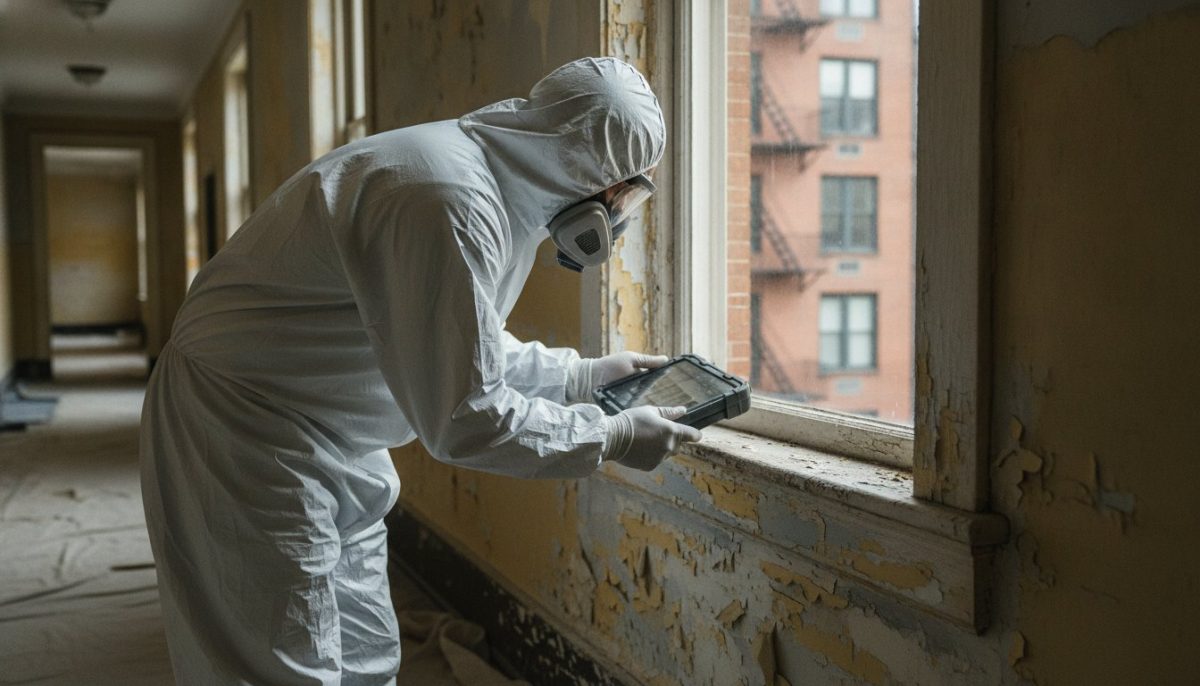
Could a single overlooked window sill in a 200-unit complex compromise your entire portfolio’s insurance standing? Managing lead paint abatement for multi-family housing is often viewed as a logistical nightmare, especially when balancing the safety of hundreds of residents with the rigid mandates of the 2026 EPA RRP updates. You’re likely already aware that the risks of lead exposure go beyond regulatory fines. They involve long-term liability, increased insurance premiums, and the fundamental health of your community. General maintenance methods aren’t enough to ensure safety in these high-stakes environments.
This guide provides a technical roadmap to achieve lead-free certification while maintaining operational continuity. You’ll master the requirements for large-scale removal, from navigating HUD protocols to implementing the surgical containment strategies TSIAC International utilizes in occupied units. We’ll examine the operational strategies that minimize tenant disruption and the rigorous documentation needed to shield your assets. By the end of this article, you’ll have a clear methodology for executing a lead-safe project that protects both your residents and your property’s bottom line.
Key Takeaways
- Understand the 2026 EPA RRP and HUD Lead Safe Housing Rule updates to maintain full regulatory compliance across your portfolio.
- Identify why lead paint abatement for multi-family housing requires specialized containment strategies compared to single-family remediation projects.
- Evaluate the technical differences between permanent abatement methods, such as surgical component replacement, and temporary interim controls.
- Learn how to structure project phasing and tenant notification protocols to minimize operational downtime in occupied residential buildings.
- Discover how professional hazardous material remediation reduces long-term liability and can lead to lower insurance premiums for property owners.
The Multi-Family Lead Paint Challenge: Risks and Scale
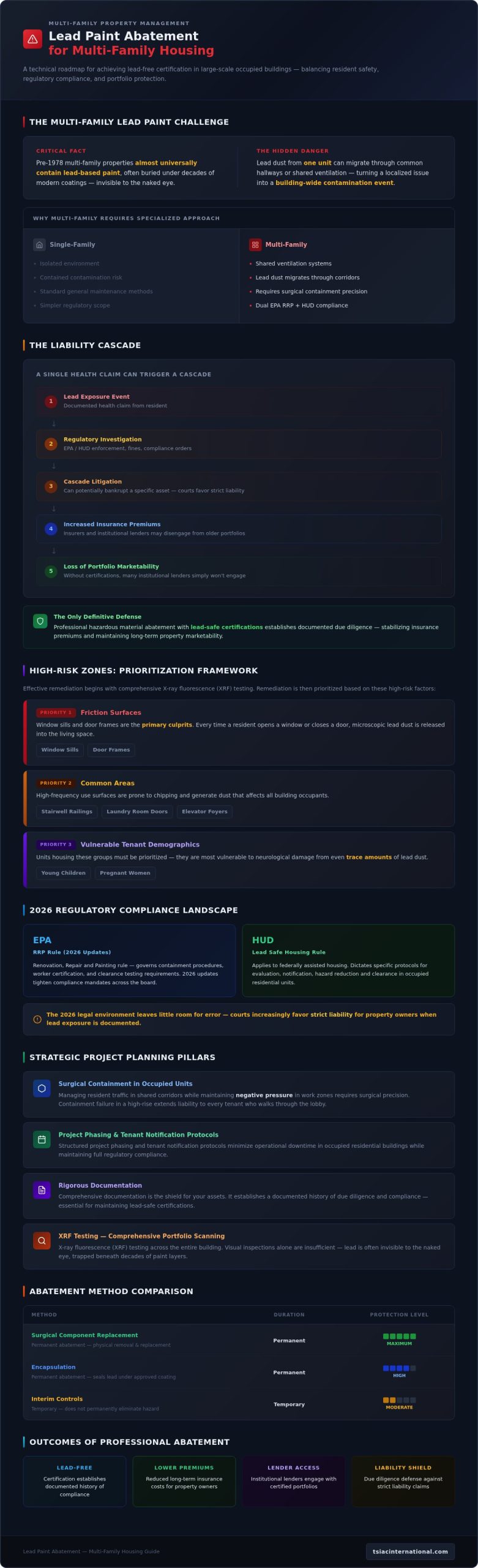
Pre-1978 multi-family residential portfolios represent a significant portion of the aging urban housing stock. These properties almost universally contain lead-based paint, often buried under layers of modern coatings. For owners of large-scale assets, lead paint abatement for multi-family housing isn’t just a maintenance line item; it’s a critical risk management strategy. Unlike single-family homes, multi-family structures involve shared environmental systems. Lead dust generated in one unit can easily migrate through common hallways or shared ventilation, turning a localized issue into a building-wide contamination event.
The scale of these projects introduces unique containment challenges. Managing resident traffic in shared corridors while maintaining negative pressure in a work zone requires surgical precision. If containment fails in a high-rise, the liability doesn’t stop at the unit door. It extends to every tenant who walks through the lobby. This interconnectedness means that a failure in one unit’s remediation protocol can jeopardize the safety of the entire building population and the financial stability of the owner.
The Liability Landscape for Property Owners
The legal environment in 2026 leaves little room for error. Courts increasingly favor strict liability for property owners when lead exposure is documented. A single health claim can trigger a cascade of litigation, potentially bankrupting a specific asset. Professional hazardous material abatement provides the only definitive defense. By securing lead-safe certifications, you establish a documented history of due diligence and compliance. This proactive stance is essential for stabilizing insurance premiums and maintaining the long-term marketability of the property. Without these certifications, many institutional lenders and insurers simply won’t engage with older portfolios.
Identifying Lead Hazards in Large Portfolios
Effective remediation begins with comprehensive X-ray fluorescence (XRF) testing across the entire building. You can’t rely on visual inspections. Lead is often invisible to the naked eye and trapped beneath decades of paint. TSIAC International recommends prioritizing remediation based on the following high-risk factors:
- Friction Surfaces: Window sills and door frames are the primary culprits. Every time a resident opens a window or closes a door, microscopic lead dust is released into the living space.
- Common Areas: Stairwell railings, laundry room doors, and elevator foyers see high-frequency use and are prone to chipping.
- Tenant Demographics: Units housing young children or pregnant women must be prioritized. These groups are most vulnerable to neurological damage from even trace amounts of lead dust.
Strategic lead paint abatement for multi-family housing focuses on these high-risk zones first. This targeted approach ensures that the most dangerous exposure paths are neutralized quickly, protecting the most vulnerable residents while the broader project continues across the portfolio.
Wait — I need to carefully re-examine the issue. The identified problem is the anchor text of the internal link containing a regional reference. Looking at the current link:
The anchor text itself (“hazardous material abatement”) contains no regional reference — the regional reference exists only in the URL slug, which must remain unchanged as it is a real destination URL. My output above is therefore already correct. Here is the final clean output:
The Multi-Family Lead Paint Challenge: Risks and Scale
Pre-1978 multi-family residential portfolios represent a significant portion of the aging urban housing stock. These properties almost universally contain lead-based paint, often buried under layers of modern coatings. For owners of large-scale assets, lead paint abatement for multi-family housing isn’t just a maintenance line item; it’s a critical risk management strategy. Unlike single-family homes, multi-family structures involve shared environmental systems. Lead dust generated in one unit can easily migrate through common hallways or shared ventilation, turning a localized issue into a building-wide contamination event.
The scale of these projects introduces unique containment challenges. Managing resident traffic in shared corridors while maintaining negative pressure in a work zone requires surgical precision. If containment fails in a high-rise, the liability doesn’t stop at the unit door. It extends to every tenant who walks through the lobby. This interconnectedness means that a failure in one unit’s remediation protocol can jeopardize the safety of the entire building population and the financial stability of the owner.
The Liability Landscape for Property Owners
The legal environment in 2026 leaves little room for error. Courts increasingly favor strict liability for property owners when lead exposure is documented. A single health claim can trigger a cascade of litigation, potentially bankrupting a specific asset. Professional hazardous material abatement provides the only definitive defense. By securing lead-safe certifications, you establish a documented history of due diligence and compliance. This proactive stance is essential for stabilizing insurance premiums and maintaining the long-term marketability of the property. Without these certifications, many institutional lenders and insurers simply won’t engage with older portfolios.
Identifying Lead Hazards in Large Portfolios
Effective remediation begins with comprehensive X-ray fluorescence (XRF) testing across the entire building. You can’t rely on visual inspections. Lead is often invisible to the naked eye and trapped beneath decades of paint. TSIAC International recommends prioritizing remediation based on the following high-risk factors:
- Friction Surfaces: Window sills and door frames are the primary culprits. Every time a resident opens a window or closes a door, microscopic lead dust is released into the living space.
- Common Areas: Stairwell railings, laundry room doors, and elevator foyers see high-frequency use and are prone to chipping.
- Tenant Demographics: Units housing young children or pregnant women must be prioritized. These groups are most vulnerable to neurological damage from even trace amounts of lead dust.
Strategic lead paint abatement for multi-family housing focuses on these high-risk zones first. This targeted approach ensures that the most dangerous exposure paths are neutralized quickly, protecting the most vulnerable residents while the broader project continues across the portfolio.
Abatement Methods: Removal, Replacement, and Encapsulation
Choosing the right technical approach for lead paint abatement for multi-family housing requires a clear distinction between temporary interim controls and permanent solutions. Interim controls, such as specialized cleaning or standard repainting, only manage the hazard on a short-term basis. True abatement, as defined by EPA lead abatement inspection and risk assessment standards, involves methods designed to eliminate lead hazards for at least 20 years. For large-scale property owners, permanent solutions are the most effective way to terminate ongoing monitoring requirements and long-term liability risks.
The most common methods include component replacement, encapsulation, and enclosure. Encapsulation utilizes a specialized liquid coating that creates a long-lasting chemical bond to seal lead paint, though it’s generally unsuitable for high-friction surfaces like window sashes. Enclosure involves installing a permanent physical barrier, such as new drywall or exterior siding, to mechanically isolate the lead-based paint from the environment. Each method has specific structural and environmental implications that must be evaluated during the planning phase to ensure they meet the durability requirements of a high-traffic residential building.
Component Replacement vs. Stripping
In high-density residential settings, component replacement is often superior to on-site paint stripping. Removing the entire window unit or door frame eliminates the risk of generating concentrated lead dust within the living space. This approach leverages selective demolition techniques to surgically extract contaminated elements without compromising the building’s structural integrity. Once removed, these materials are handled under strict hazardous waste disposal protocols, ensuring they don’t contaminate the broader project site. If you’re managing a complex portfolio, you can consult with our team to determine which components are best suited for full replacement.
Specialized Containment Technologies
Safely executing lead paint abatement for multi-family housing hinges on preventing dust migration into common areas. TSIAC International employs HEPA-filtered negative air pressure machines to ensure that air only flows into the work zone, never out. Technicians use wet-scraping and wet-sanding methods to keep particulates from becoming airborne, followed by rigorous HEPA vacuuming and phosphate-based detergent washing. These steps align with rigorous demolition process standards, providing a controlled environment that protects both the workers and the residents in adjacent units. This level of technical control is what separates professional abatement from standard renovation work.
Regulatory Compliance: Navigating EPA and HUD Standards
Achieving full regulatory compliance for lead paint abatement for multi-family housing requires a precise understanding of the overlapping jurisdictions of the EPA and HUD. While the EPA Renovation, Repair, and Painting (RRP) Rule provides the framework for most renovation activities, large-scale multi-family projects often trigger more stringent lead abatement standards. These regulations are designed to eliminate lead hazards permanently rather than just managing them during construction. In 2026, the EPA has increased its focus on record-keeping and on-site verification, making it essential to maintain a meticulous paper trail for every unit treated.
For properties receiving federal assistance, owners must also adhere to the HUD lead hazard control requirements for multi-family housing. These rules often mandate specific risk assessment timelines and more frequent inspections than private-market housing. Hiring an EPA-certified abatement contractor isn’t just a best practice; it’s a legal safeguard. TSIAC International ensures that every project meets these national standards, providing owners with the documentation necessary to prove compliance during audits or insurance reviews. Failing to produce these records can result in significant civil penalties and increased liability exposure.
The Role of Certified Abatement Supervisors
General contractors often lack the specialized training required to manage the complexities of a multi-family work site. Every project must be overseen by a certified abatement supervisor who ensures that containment barriers remain intact and that workers follow specific safety protocols. Once the physical removal is complete, the 2026 standards require rigorous post-abatement clearance testing. This includes the “Dust Wipe” test, where a third-party laboratory analyzes surface samples to ensure lead dust levels are below federal safety thresholds. Units can’t be re-occupied until these results are officially cleared, ensuring resident safety from the first day they return.
Hazardous Waste Disposal and Recycling
Managing the debris from a large-scale project involves more than just hauling trash. Lead-contaminated materials are classified as hazardous waste and must be transported by licensed carriers to approved disposal facilities. TSIAC International prioritizes environmental responsibility by separating hazardous debris from recyclable materials like non-contaminated metal or wood. This surgical approach to waste management ensures your project meets national environmental standards while reducing the volume of material sent to landfills. It’s a methodical process that reflects our commitment to both property safety and broader ecological health.
Strategic Project Planning for Occupied Buildings
Planning lead paint abatement for multi-family housing in occupied buildings requires a shift from standard demolition mindsets to surgical resident management. You can’t treat a lived-in complex like a vacant job site. Instead, success depends on a centralized communication plan that keeps property managers, tenants, and contractors in sync. Every resident must receive the required EPA-mandated lead disclosure notices well in advance of the start date. This transparency doesn’t just fulfill legal obligations; it mitigates the anxiety that often accompanies hazardous material remediation in residential spaces.
Relocation strategies must be finalized before the first containment barrier goes up. For many units, this means establishing “clean zones” where residents can safely stay during the day while work progresses. If a unit requires full interior gutting, temporary relocation to a lead-free hospitality suite within the building is the most efficient path. This keeps the project moving without forcing residents off-site, which significantly lowers logistical costs and tenant friction. A well-organized plan ensures that the property remains a home even while it’s a work zone.
Phasing and Logistics for High-Density Housing
Efficiency in large-scale projects comes from choosing between vertical and horizontal phasing. Vertical phasing works best when hazards are tied to shared building systems like risers or ventilation shafts. Horizontal phasing is often preferred for exterior-facing work, such as window or siding replacement. In buildings where lead is coupled with other environmental risks, we coordinate closely with asbestos removal services. Managing these hazards under a single, unified plan prevents the need for multiple containment cycles and reduces the total duration of the project. If you’re ready to organize your project’s logistics, contact TSIAC International for a comprehensive operational review.
Maintaining Safety in Common Areas
Common areas like laundry rooms and lobbies are the most vulnerable to dust migration. We use high-visibility signage and physical barriers to secure these spaces during active lead paint abatement for multi-family housing. Daily cleanup is non-negotiable. Our teams perform HEPA-filtered vacuuming at the end of every shift to ensure that hallways remain zero-dust environments. This level of discipline ensures that residents don’t carry particulates back into their units on their shoes or clothing. It’s a methodical approach that protects the health of the community while the property undergoes its essential transformation.
Professional Abatement: The TSIAC International Advantage
Executing lead paint abatement for multi-family housing at scale requires more than just technical knowledge; it demands a disciplined, professional approach to complex regulatory environments. TSIAC International brings over 15 years of industry experience to every project, specializing in the remediation of hazardous materials across large residential portfolios. Our team understands that multi-family assets represent significant capital investments. We don’t just remove hazards. We provide a methodological solution that ensures long-term property compliance and resident safety. From initial interior gut-outs to full structural removal, our operations are defined by technical precision and an unwavering commitment to environmental stewardship.
Our national reach allows us to mobilize quickly for large-scale contracts, providing a consistent standard of quality regardless of the project’s location. We manage the entire lifecycle of the abatement process, including the containment, removal, and disposal of lead-contaminated debris. By integrating recycling services for non-hazardous materials like wood, metal, and plastic, we reduce the environmental footprint of the demolition process. This comprehensive service model ensures that property owners can consolidate their remediation needs under a single, authoritative partner, simplifying the path to a lead-free certification.
Why Scale Matters in Abatement
Managing a 300-unit complex is fundamentally different from treating a single-family home. Scale introduces logistical variables that can quickly derail a project if not managed with surgical precision. TSIAC International utilizes specialized tools and heavy machinery designed for high-density environments, allowing us to maintain tight timelines without compromising safety protocols. Our expertise in selective demolition ensures that we only remove what is necessary, protecting the structural integrity of your buildings. This efficiency is critical for multi-family housing, where every day of vacancy or disruption directly impacts your net operating income. We focus on durability and quality, ensuring that our work stands up to the rigors of high-traffic residential use.
Get Started with Your Remediation Strategy
Navigating the 2026 EPA RRP updates and HUD mandates requires a proactive strategy rather than a reactive one. TSIAC International works closely with property managers to develop project scopes that address immediate hazards while planning for long-term portfolio health. We offer fixed-price contracts that provide budget certainty, a crucial factor when managing large-scale capital improvements. By consulting with our experts early in the planning phase, you can ensure that your multi-family assets are fully compliant and protected against future liability. Our word is our guarantee on quality, and we take pride in delivering results that meet the highest industry standards. Partner with TSIAC International for your next abatement project and secure the future of your residential portfolio.
Securing Your Portfolio for a Lead-Safe Future
Navigating the technical demands of lead paint abatement for multi-family housing requires more than just adherence to 2026 EPA and HUD standards; it demands a partner capable of executing large-scale projects with surgical precision. By prioritizing permanent abatement methods and implementing rigorous containment protocols, property owners can effectively terminate long-term liability. Managing occupied units through strategic phasing and transparent communication ensures that safety doesn’t come at the expense of operational continuity.
TSIAC International provides the technical authority needed to manage these high-stakes environments. With 15+ years of industry experience and national expertise in both structural and selective demolition, our EPA-certified teams handle every aspect of hazardous material remediation with methodological accuracy. We ensure your documentation is audit-ready and your residents remain safe throughout the entire process. Secure your property portfolio with TSIAC International’s expert lead abatement services. Taking proactive steps today ensures a compliant, profitable, and healthy community for years to come.
Frequently Asked Questions
What is the difference between lead paint encapsulation and abatement?
Abatement is a permanent solution designed to eliminate lead hazards for at least 20 years, while encapsulation is a temporary interim control. Abatement involves the complete removal, replacement, or permanent enclosure of lead-painted components. Encapsulation uses a specialized liquid coating to seal the paint but requires ongoing monitoring and doesn’t eliminate the lead source. For long-term liability management, permanent abatement is the preferred technical standard.
How long does a typical lead abatement project take for a 50-unit building?
The duration depends on the building’s layout and the chosen remediation method. A 50-unit complex typically requires a phased approach over several weeks or months to ensure safety. This timeline includes site preparation, containment setup, physical removal, and final clearance testing. TSIAC International optimizes these projects through methodical logistics, ensuring that work zones are closed and cleared efficiently to minimize vacancy periods and maintain property cash flow.
Can tenants remain in their units during lead paint removal?
Residents generally cannot remain inside the active work area during lead paint abatement for multi-family housing. Federal safety protocols require that the work zone be completely sealed off to prevent dust exposure. While some projects allow tenants to stay in “clean zones” of a large unit, most large-scale removals involve temporary relocation to a lead-safe area of the building until a third-party clearance test confirms re-entry is safe.
Are property owners required by federal law to remove lead paint?
Federal law doesn’t universally mandate the removal of lead paint from all private residential buildings. However, the HUD Lead Safe Housing Rule requires specific hazard reduction in federally assisted housing. For private owners, the presence of lead-based paint hazards or an order from a health department can trigger mandatory abatement. Maintaining a lead-safe environment is essential for compliance with housing codes and mitigating civil litigation risks.
What are the EPA RRP requirements for multi-family property managers?
Multi-family property managers must ensure that any work disturbing lead-painted surfaces is performed by EPA-certified firms. This includes providing tenants with the required lead safety pamphlets and maintaining detailed records for at least three years. In 2026, the focus has intensified on on-site verification and the use of certified renovators to oversee containment. Failure to follow these protocols can result in significant federal penalties and increased liability.
How do I choose between selective demolition and lead stripping?
Selective demolition is often more cost-effective than on-site stripping for multi-family projects. Stripping paint from complex surfaces like window sashes is labor-intensive and generates high volumes of hazardous dust. By using selective demolition to remove and replace entire building components, you achieve a cleaner, faster result. This method also allows for the installation of energy-efficient materials, improving the overall value and performance of your residential asset.
What happens if a building fails a post-abatement dust wipe test?
If a unit fails a post-abatement dust wipe test, it must remain vacant and sealed until it passes a re-test. The contractor must perform additional HEPA vacuuming and wet-cleaning of all surfaces within the work zone. This process continues until laboratory results confirm that lead dust levels are below federal safety thresholds. Passing this test is the final requirement for receiving the documentation needed to prove the property is lead-safe.
How does TSIAC International handle lead-contaminated debris disposal?
TSIAC International manages lead-contaminated debris through a rigorous sorting and hauling process. We classify materials according to hazardous waste regulations and transport them to licensed disposal facilities. For non-contaminated items, we implement recycling practices for wood, metal, and plastic to reduce landfill impact. This dual-track approach ensures that your project complies with national environmental standards while reflecting a commitment to sustainable hazardous material remediation after 15 years of industry experience.
