
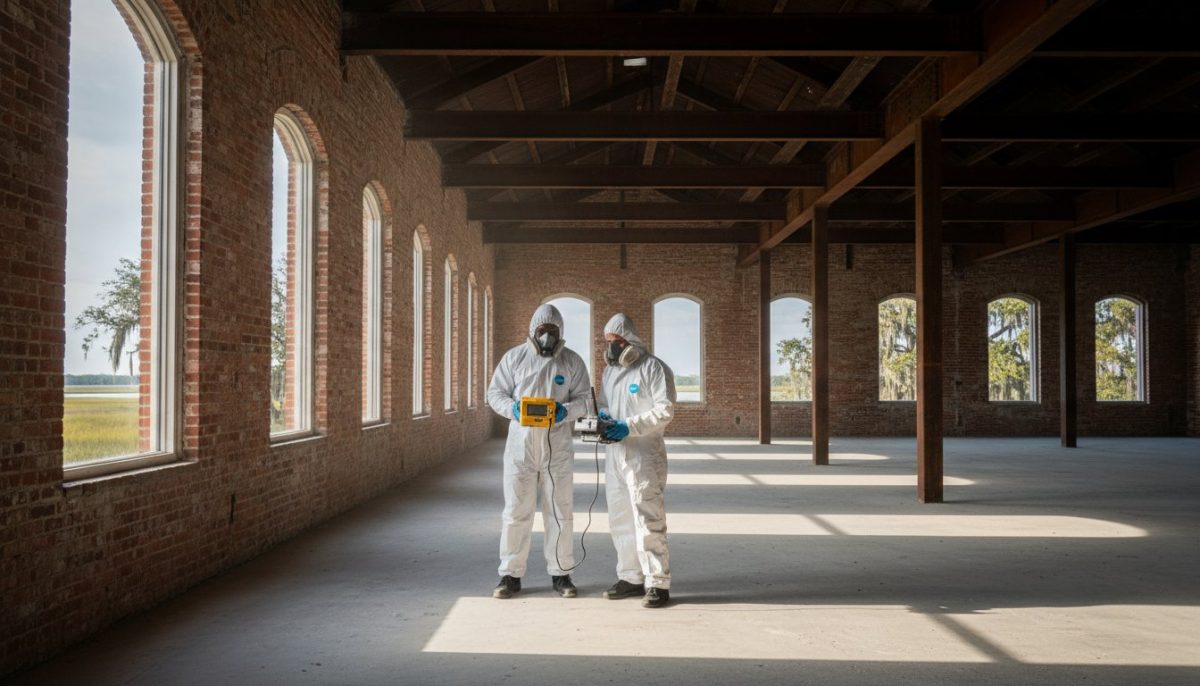
In 2024, approximately 18% of large scale industrial renovations were halted by regulatory bodies because of inadequate initial site surveys. You likely understand that discovering hazardous materials mid-project is a professional nightmare that triggers immediate delays and massive potential liabilities. Selecting the right asbestos abatement services is no longer just a safety requirement; it’s a critical strategic decision for your property’s 2026 valuation and legal standing.
We agree that the confusion surrounding varying technical quotes and complex remediation methodologies often leads to decision paralysis. This guide provides the engineering precision you need to evaluate contractors and secure full regulatory documentation for your permanent records. We’ll break down the specific criteria for hiring specialized teams, ensuring you achieve zero contamination while maintaining a 100% predictable workflow for your next renovation phase.
Key Takeaways
- Understand the critical regulatory distinctions between standard demolition and hazardous material remediation to ensure total site safety and compliance.
- Learn how to evaluate professional asbestos abatement services by verifying specialized insurance, bonding, and advanced technical monitoring capabilities.
- Discover the long-term ROI and safety implications of choosing between total removal, encapsulation, and enclosure for your specific facility needs.
- Master the professional procurement roadmap, from initial laboratory testing to the development of site-specific work plans and regulatory notifications.
- Explore the operational advantages of an integrated approach that combines hazardous material remediation with expert structural demolition for seamless project delivery.
Defining Professional Asbestos Abatement Services in 2026
Professional asbestos abatement services represent a specialized engineering discipline rather than a simple demolition task. This process involves the meticulous identification, containment, and elimination of asbestos-containing materials (ACM) to prevent the release of microscopic fibers. While standard demolition focuses on structural removal, remediation protocols prioritize atmospheric control and environmental safety. By 2026, the industry has shifted toward total elimination of even trace exposures following the EPA’s 2024 final rule on chrysotile asbestos. This transition ensures that property values remain intact during structural renovations. Failing to follow Asbestos abatement procedures can lead to legal liabilities and permanent contamination of a building’s internal systems.
The Science of Containment and Remediation
Professionals categorize materials as either friable or non-friable. Friable materials pose the highest risk because they crumble under hand pressure, releasing fibers instantly. Modern remediation relies on the physics of negative air pressure. We use high-efficiency particulate air (HEPA) filtration systems that capture 99.97% of particles as small as 0.3 microns. These systems create a vacuum that prevents fibers from escaping the work zone. Attempting DIY removal isn’t just dangerous; it’s a violation of federal safety statutes. Unqualified individuals lack the specialized equipment required to maintain these critical pressure differentials.
Regulatory Framework: EPA and OSHA Standards
Compliance in 2026 is anchored in EPA NESHAP and OSHA standards. The EPA requires a 10-day notification before any activity disturbs more than 160 square feet of ACM. OSHA worker safety requirements under 29 CFR 1926.1101 protect the property owner from significant liability. If a worker isn’t properly protected, the owner shares the legal responsibility for long-term health claims. Every project must generate a rigorous paper trail. This includes the initial site survey, air clearance reports, and the final Waste Shipment Record (WSR). These documents prove the hazardous material reached a licensed landfill safely.
Engaging asbestos abatement services ensures that every technical step meets these 2026 benchmarks. It’s about protecting the structural integrity of the asset while maintaining a zero-exposure environment for occupants. Professional firms provide the engineering precision needed to handle “impossible” locations, such as high-rise elevator shafts or complex industrial boiler rooms, where standard methods often fail.
Key Criteria for Evaluating an Abatement Contractor
Selecting a partner for asbestos abatement services requires a rigorous technical audit. You aren’t just hiring a contractor; you’re managing a high-stakes environmental liability. Professional firms carry specialized Pollution Liability and Errors and Omissions (E&O) insurance with minimum limits of $5 million per occurrence. Standard general liability policies usually contain an “asbestos exclusion” clause, leaving the asset owner exposed to massive litigation risks if a fiber release occurs. Every technician must hold a state-validated license, and a dedicated project safety officer should oversee the site to ensure 100% compliance with OSHA 29 CFR 1926.1101.
Certifications and Insurance: Non-Negotiable Assets
Verification of credentials goes beyond viewing a certificate. You must confirm that the contractor’s bonding capacity matches the project scale. A firm with a 15-year history of clean safety records provides more security than a startup with lower premiums. This level of oversight mirrors the stringent protocols found in the University of Oregon’s asbestos program, which emphasizes continuous monitoring and documented compliance as the baseline for safety. Demand to see the last 24 months of worker training logs and medical surveillance records before signing any contract.
Technological Sophistication in Remediation
Modern asbestos abatement services rely on precision engineering. High-performance HEPA filtration units must maintain a negative pressure of at least -0.02 inches of water gauge within the work area. We use advanced wetting agents that penetrate porous materials 35% faster than standard water, significantly reducing the risk of airborne friability. Digital manometers and laser-based particle counters provide real-time data, allowing supervisors to adjust ventilation instantly. This technological edge is why many industrial clients seek specialized engineering solutions for complex structural environments.
- Disposal Transparency: The contractor must provide a completed Waste Shipment Record (WSR) signed by the receiving landfill within 35 days of waste removal. This document is your only legal proof of proper disposal.
- Structural Experience: Review past project performance in similar environments, such as high-rise HVAC systems or industrial boiler rooms. A contractor who understands the specific load-bearing constraints of your facility will avoid accidental damage.
- Constant Supervision: A certified supervisor must remain on-site at all times. They manage the “dirty room” protocols and ensure no worker exits the containment area without following a 3-stage decontamination process.
- On-site Monitoring: Independent third-party air monitoring should occur daily. This ensures that fiber counts remain below the permissible exposure limit of 0.1 fibers per cubic centimeter of air.
Strategic Mitigation: Removal vs. Encapsulation vs. Enclosure
Facility managers often mistake asbestos remediation for a single-track process. It isn’t. Professional asbestos abatement services require a calculated choice between removal, encapsulation, or enclosure. Each path carries distinct engineering requirements, cost structures, and long-term liability profiles. The U.S. Environmental Protection Agency (EPA) on asbestos confirms that management-in-place is a viable strategy if the material is in good condition, yet the decision must align with the building’s 10-year master plan. By 2026, property valuation trends show that “asbestos-free” certifications can increase asset liquidity by 15% compared to buildings with managed-in-place contaminants.
When to Choose Full Asbestos Removal
Total removal stands as the only permanent resolution for property owners seeking to eliminate long-term regulatory risk. If your 2026 capital improvement plan involves structural changes, removal is usually the only logical path. This strategy becomes vital when integrated with commercial interior gutting services. During a full interior demolition, hidden Asbestos-Containing Material (ACM) is almost certainly disturbed. Removing it before the main crew arrives prevents project shutdowns that can cost $5,000 or more per day in liquidated damages. It’s the most expensive upfront option, but it secures a “clean” status that simplifies future insurance renewals and real estate transactions.
Encapsulation and Enclosure: Tactical Alternatives
Encapsulation involves sealing fibers with a specialized chemical bond, typically a high-solids polymer penetrant or bridging mastic. This prevents fiber release without the disruption of physical extraction. Enclosure, conversely, requires building airtight mechanical barriers around the ACM, such as permanent impact-resistant panels or sheet metal jackets. These methods offer a 40% to 60% reduction in initial costs compared to full removal.
These aren’t “set and forget” solutions. They demand a rigorous Operations and Maintenance (O&M) program. Facility managers must conduct documented inspections every 6 to 12 months to ensure the barriers remain intact. Deferred maintenance on encapsulated materials often leads to air quality failures during routine building vibrations or minor plumbing repairs. If you don’t have the internal infrastructure to manage long-term monitoring, the initial savings of encapsulation will eventually be erased by the costs of specialized compliance audits.
The Professional Abatement Workflow: A Procurement Roadmap
Procuring professional asbestos abatement services requires a structured sequence to mitigate liability and ensure structural integrity. The 2026 standard for industrial safety dictates a five-stage engineering protocol that prioritizes containment and objective verification.
- Initial Survey and Laboratory Analysis: Certified inspectors collect bulk samples from suspicious materials. These samples undergo polarized light microscopy (PLM) at NVLAP-accredited laboratories to determine fiber concentration.
- Regulatory Compliance and Planning: Contractors must file a 10-day NESHAP notification with environmental agencies before disturbing more than 160 square feet of regulated material. The site-specific work plan outlines the exact methodology for extraction.
- Containment and Decontamination: Crews build airtight barriers using 6-mil fire-retardant polyethylene. A three-stage decontamination unit provides a controlled transition for personnel and equipment.
- Precision Removal: Technicians use wet-removal methods to keep fibers from becoming airborne. All waste is double-bagged in labeled, 6-mil poly bags and sealed with a gooseneck tie.
- Final Clearance: The project concludes only after air samples meet the EPA AHERA standard of less than 0.01 fibers per cubic centimeter.
Pre-Project Planning and Site Preparation
Site preparation is a logistical exercise in risk isolation. Professional crews begin by de-energizing electrical circuits and executing a 100% HVAC shutdown. All supply and return vents are sealed with critical barriers to prevent cross-contamination. This phase includes a pre-work walkthrough with facility managers to confirm that 100% of fire suppression systems remain operational but protected. Clear communication with stakeholders is vital; we provide a 48-hour mobilization notice to all adjacent occupants to maintain site transparency and safety.
The Final Clearance: Ensuring a Clean Bill of Health
Independent verification is the only way to guarantee safety. A third-party industrial hygienist must conduct the final air monitoring to avoid conflicts of interest. While PCM testing is common for many commercial sites, TEM (Transmission Electron Microscopy) is the gold standard for 2026 high-occupancy environments because it identifies asbestos fibers as small as 0.01 microns. Your final close-out package should include waste shipment records (WSR), worker certifications, daily pressure logs, and the lab-certified clearance report. This document acts as your permanent legal defense against future environmental claims.
TSIAC International: The Gold Standard in Hazardous Remediation
TSIAC International brings over 15 years of disciplined experience to high-stakes hazardous material projects. We don’t just remove waste; we engineer solutions for the most complex abatement challenges. Our technical precision makes us the primary choice for government agencies and commercial enterprises requiring absolute compliance. We maintain a 100% project completion rate on sites with high structural risk or environmental sensitivity, ensuring that every phase of the remediation meets rigorous federal and state standards.
Unmatched Expertise in Complex Environments
Managing remediation in occupied buildings requires more than just standard PPE. It demands a “no-compromise” safety culture. We’ve successfully executed asbestos abatement services in sensitive structural shells where integrity was compromised, ensuring zero cross-contamination. Our track record spans 500+ residential projects and heavy industrial facilities where precision is non-negotiable. This rigorous approach reduces your project’s risk profile, preventing costly regulatory delays or long-term health liabilities that arise from substandard work.
Seamless Integration with Demolition Services
Efficiency isn’t just about speed; it’s about a unified workflow. Our integrated model combines abatement with structural demolition for seamless project delivery. Using a single contractor eliminates the communication gaps that often plague multi-vendor sites. By consolidating these services, we’ve helped clients reduce mobilization costs by an average of 18% through shared logistics, equipment, and on-site management teams.
- Rigorous waste management protocols that prioritize recycling and environmental stewardship.
- Unified project management for both hazardous material abatement and site clearing.
- Strict adherence to NESHAP and OSHA standards, providing detailed documentation for every cubic yard of waste removed.
- Advanced containment technology that allows for continued operation in adjacent building wings.
Our commitment to environmental stewardship isn’t a secondary goal. It’s a core component of our technical execution. We implement waste management protocols that prioritize recycling, often diverting up to 85% of non-hazardous debris from landfills during integrated projects. This level of detail is why technical directors at government and commercial agencies prefer our partnership. We provide the documentation, safety data, and engineering precision required for high-security and high-liability environments. Our team handles the heavy lifting, from initial site assessment to final waste disposal, adhering to the strictest environmental standards. Contact TSIAC International today for a professional project consultation to secure your site’s future with asbestos abatement services you can trust.
Securing Your Infrastructure for 2026 and Beyond
Navigating the complexities of hazardous material remediation requires more than just standard compliance; it demands a technical partnership rooted in engineering precision. By 2026, the distinction between simple removal and strategic encapsulation will define the lifecycle of your industrial assets. Selecting a contractor based on rigorous procurement roadmaps ensures your project stays on schedule and within regulatory bounds. Success depends on moving from reactive fixes to proactive, expert led management strategies.
TSIAC International brings 15+ years of hazardous material experience to every site, specializing in the difficult locations that others often avoid. We’re fully licensed and insured for high liability remediation, providing a layer of financial and operational security for your facility. Our team delivers comprehensive close-out documentation for every project, ensuring your records are audit ready and transparent. When you prioritize long term structural integrity, choosing professional asbestos abatement services becomes a vital investment in your property’s future. Secure your property with TSIAC International’s professional abatement services.
Let’s build a safer environment through engineering excellence and unwavering reliability.
Frequently Asked Questions
What is the average cost of asbestos abatement services in 2026?
Average costs for asbestos abatement services in 2026 range from $15 to $35 per square foot. A standard 1,500 square foot residential project typically requires a budget between $4,500 and $9,000 for full remediation. These figures include labor, specialized filtration equipment, and disposal fees. Costs have risen 8% since 2024 because of stricter landfill regulations and updated safety requirements.
How long does a typical asbestos removal project take to complete?
A typical asbestos removal project takes 2 to 5 days to complete for standard residential or small commercial properties. Larger industrial sites or complex structural removals often extend to 14 days. The timeline accounts for site preparation, the actual removal process, and the final 24 hour air clearance testing period. We ensure every phase meets engineering precision to prevent project delays.
Can I stay in my building during the asbestos abatement process?
You can’t stay in the immediate work area or any connected zones while abatement is active. Safety protocols require the establishment of negative pressure enclosures that prevent fiber migration to clean areas. While some large facilities allow partial occupancy in separate wings, residential projects usually require a total evacuation for the 72 hour duration of the high risk phases. It’s the only way to ensure 100% safety.
What is the difference between an asbestos inspection and an abatement service?
An asbestos inspection identifies the presence and location of hazardous materials, while an abatement service involves the physical removal or encapsulation of those substances. Inspectors use polarized light microscopy to confirm fiber types in a laboratory setting. Abatement teams follow these technical reports to execute a remediation plan using HEPA filtration and specialized containment barriers to secure the site.
How do I know if my building needs asbestos abatement before a renovation?
You’ll need a professional survey if your building was constructed before 1980, as 90% of structures from that era contain asbestos in floor tiles or pipe insulation. OSHA regulation 1910.1001 mandates an inspection before any renovation that might disturb structural components. If your 2026 renovation plan involves cutting into walls or ceilings, a certified technician must pull samples for laboratory verification first.
What certifications should I look for in an asbestos removal company?
Look for contractors holding EPA Model Accreditation Plan (MAP) certification and a valid state asbestos contractor license. Every on site supervisor should possess an OSHA 40 hour HAZWOPER certification to prove they’re trained for hazardous waste operations. Verification of these credentials through the state database ensures the team follows the 2026 safety standards for asbestos abatement services and maintains high professional integrity.
What happens to the asbestos waste after it is removed from my property?
Asbestos waste is sealed in double layers of 6 mil polyethylene bags and transported to a licensed Type I hazardous waste landfill. Each shipment requires a Waste Shipment Record (WSR) that tracks the material from your property to the final disposal cell. These specialized facilities bury the sealed containers under 6 inches of non asbestos material within 24 hours of arrival to prevent fiber release.
Is lead paint removal usually included in asbestos abatement services?
Lead paint removal isn’t standard in a basic asbestos contract, though many firms offer it as a separate, specialized service. While both involve hazardous materials, they require different chemical strippers and containment protocols under EPA RRP rules. You should request a combined environmental remediation quote if your pre 1978 building requires both lead and asbestos mitigation to streamline the project timeline effectively.
