
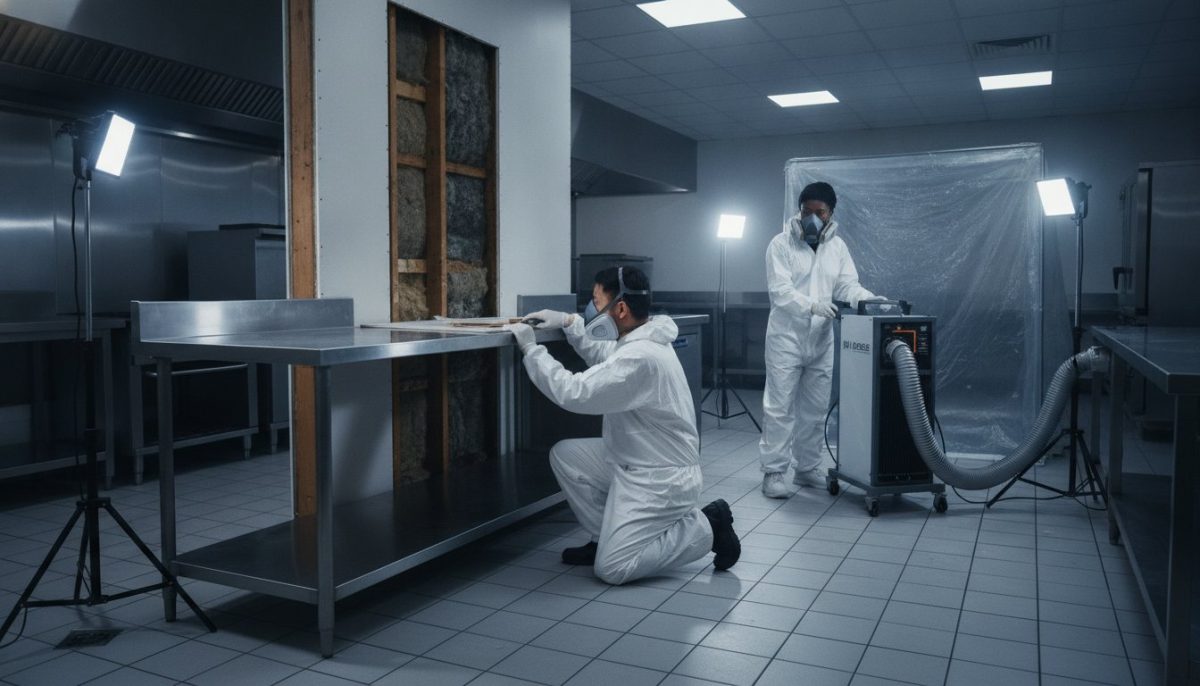
What if the small patch of discoloration near your dish pit is actually a symptom of a systemic structural failure? For facility managers and restaurateurs, the sight of fungal growth isn’t just a cleaning chore; it’s a direct threat to operational continuity. You’re likely concerned about the hidden spread behind stainless steel backsplashes or beneath specialized flooring, and you know that a failed health inspection can lead to immediate closure. When surface cleaning fails to address the root cause, professional commercial kitchen mold remediation becomes the only viable path to protecting your investment and your reputation.
It’s understandable to feel uncertain about the extent of the damage or the potential for prolonged downtime during the abatement process. This article provides the technical roadmap you need to identify, eliminate, and prevent structural mold to ensure full health compliance and operational safety. We’ll examine the rigorous standards of professional abatement, the necessity of precision moisture control, and the specialized structural solutions required to restore a high-moisture environment to industrial-grade standards.
Key Takeaways
- Understand the “triangle of growth” to identify why commercial kitchens are uniquely vulnerable to systemic, hidden mold infestations.
- Discover why professional commercial kitchen mold remediation requires advanced moisture mapping and negative air pressure containment rather than simple surface cleaning.
- Learn to distinguish between cosmetic surface issues and structural failures that necessitate interior gutting and the removal of contaminated porous materials.
- Master the documentation and safety standards required to satisfy health department inspectors and maintain long-term operational compliance.
- Evaluate the logistical advantages of partnering with a contractor who integrates abatement with selective demolition and responsible material recycling.
Understanding the Risks of Mold in Commercial Food Environments
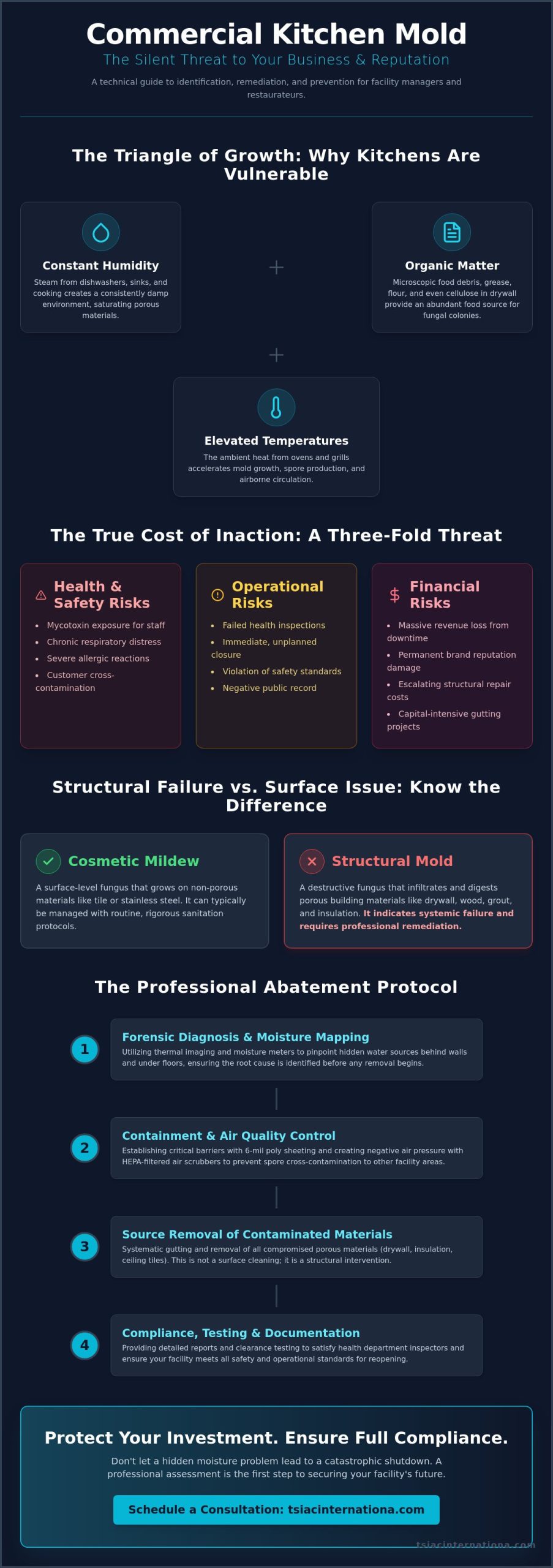
Commercial mold remediation is a specialized technical discipline. It involves the strategic containment and systematic removal of fungal colonies that have compromised a building’s substrate. In a professional food service environment, this isn’t a cosmetic procedure. It’s a structural necessity. Fungi thrive on what experts call the “triangle of growth”: consistent humidity from dishwashers and steam, organic food debris like grease or flour, and elevated ambient temperatures. When these three factors converge, mold doesn’t just sit on the surface. It integrates into porous materials like drywall, ceiling tiles, and grout, leading to systemic failure.
Distinguishing between aesthetic mildew and hazardous structural growth is critical for facility management. Mildew typically remains on non-porous surfaces and can be managed with routine sanitation. Structural mold, however, feeds on the building itself. If left unaddressed, it leads to wood rot, compromised metal framing, and the eventual degradation of the kitchen’s physical integrity. Professional commercial kitchen mold remediation addresses the root cause by identifying hidden moisture sources and removing all infested materials to prevent a recurrence.
Health and Safety Implications for Staff and Customers
High-heat kitchen environments accelerate the release of spores into the air. These fungi can produce toxic compounds called mycotoxins. For employees working long shifts, constant exposure leads to chronic respiratory distress and severe allergic reactions. The risk extends to customers through cross-contamination. Spores are microscopic; they travel through ventilation systems and settle on active food preparation surfaces. Business owners carry significant legal liability regarding indoor air quality. Data from the EPA suggests that dampness and mold exposure contribute to millions of asthma cases, emphasizing that air quality is a non-negotiable safety standard in food service.
The True Cost of Mold-Induced Downtime
Ignoring a moisture problem is a financial ticking clock. A failed health inspection often results in an immediate, unplanned closure. The cost of a planned commercial kitchen mold remediation is manageable compared to the revenue lost during an emergency shutdown. Beyond the daily ledger, your brand reputation faces permanent damage if a closure becomes public record. Structural rot also escalates repair budgets. Fungi digest the cellulose in building materials, weakening the facility’s bones. Addressing a small leak behind a backsplash is a routine technical task. Waiting until the wall requires a full gutting is a capital-intensive catastrophe.
The Professional Remediation Process: Beyond Surface Cleaning
Effective commercial kitchen mold remediation begins with a forensic approach to moisture detection. Professionals don’t just look for visible growth; they use thermal imaging and moisture mapping to find the hidden reservoir feeding the colony. This diagnostic phase ensures the repair isn’t just a temporary patch. Following EPA guidelines for mold remediation, the project scope is defined by the total affected area and the type of substrate involved. Without identifying the source of the leak or condensation, any cleaning effort is destined for failure.
Containment and Air Quality Management
Containment is non-negotiable in food zones. We establish physical barriers using 6-mil polyethylene sheeting to isolate the work area from active service or storage spaces. Standard HVAC systems must be disabled to prevent the mechanical distribution of spores through the building’s ductwork. Air scrubbers equipped with HEPA filtration continuously cycle the air within the containment zone to capture airborne particles. Negative air pressure is the engineering standard used to ensure that air only flows into the contaminated space, preventing cross-contamination to dining areas or storage rooms.
Hazardous Material Testing and Compliance
Older commercial structures often present hidden complications. Before removing old pipe insulation or floor tiles during commercial kitchen mold remediation, we must test for asbestos. Lead-based paint is another common factor in buildings constructed before 1978. If these materials are present, the project shifts from standard remediation to a regulated abatement process. For a detailed look at regional requirements, review this hazardous material abatement south carolina guide. This step is vital for staying compliant with OSHA and local health regulations.
Once containment is secure, technicians perform HEPA vacuuming to capture settled spores on all surfaces. Non-porous materials like stainless steel or ceramic tile receive an antimicrobial treatment to neutralize any remaining microscopic biological load. This isn’t a standard bleach wipe-down; it’s a technical application of industrial-grade biocides. All contaminated debris is double-bagged and disposed of according to hazardous waste regulations. This methodical approach ensures the facility passes post-remediation verification and air quality tests. If you suspect structural contamination, consulting a specialist in selective demolition and abatement is the most efficient way to protect your property.
Structural vs. Cosmetic Remediation: When to Gut the Space
Distinguishing between a surface cleaning task and a structural abatement project is the most critical decision a facility manager will make. Many general cleaning services claim that “wiping down” visible growth is sufficient. This is a dangerous misconception in high-moisture environments. True commercial kitchen mold remediation acknowledges that fungi don’t just sit on the surface; they root into the building’s materials. If the mold has reached the drywall, insulation, or subflooring, cosmetic cleaning is no longer an option. At this stage, the material itself is the contaminant.
Porous materials cannot be “sanitized” once a colony is established. The hyphae, or root-like structures of the fungus, penetrate deep into the substrate where topical biocides cannot reach. This creates a hidden reservoir of spores that will re-emerge as soon as the kitchen returns to its normal high-heat, high-humidity operating state. Attempting to clean these materials only delays the inevitable and often leads to higher costs when the infestation inevitably spreads.
Selective Demolition in Commercial Kitchens
Selective demolition allows for the surgical removal of compromised sections without necessitating a total facility shutdown. This method targets specific areas, such as the bottom two feet of a wall where moisture often wicks upward, or specific sections of flooring under a leaky dish pit. By removing only the infested components, we maintain the building’s overall structural integrity while ensuring the biological threat is physically extracted. For projects where the contamination is widespread, more extensive commercial interior gutting services may be required to strip the space back to its non-porous skeleton.
Identifying Non-Salvageable Materials
Not all materials can be saved through decontamination. Porous substrates act like sponges, pulling spores and moisture deep into their fibers. In a commercial kitchen, the following materials are typically non-salvageable once infested:
- Drywall and Gypsum Board: These materials provide an ideal food source (cellulose) for mold growth and cannot be fully dried once saturated.
- Fiberboard and Ceiling Tiles: Once damp, these lose structural integrity and harbor deep-seated colonies.
- Saturated Insulation: Fiberglass or mineral wool insulation cannot be effectively cleaned once mold spores are present.
Painting over mold is a common but catastrophic error. It traps moisture inside the wall and provides a temporary mask while the fungus continues to digest the structure from the inside out. This leads to the unique Challenges in food processing facilities where biofilms and fungal reservoirs can persist despite high-level surface sanitation. Removing every trace of contaminated debris is the only way to prevent future outbreaks. A disciplined, methodical approach to material removal ensures that your commercial kitchen mold remediation results in a space that isn’t just clean, but structurally sound and biologically inert.
Compliance and Safety Standards for Food Preparation Areas
Adherence to industry standards is the primary differentiator between a temporary fix and a legally defensible restoration. Professional commercial kitchen mold remediation must align with established EPA and CDC guidelines to ensure the facility meets the rigorous demands of local health departments. These protocols dictate specific levels of containment, personal protective equipment (PPE), and waste disposal that protect both the workforce and the food supply chain. Ignoring these standards doesn’t just risk a recurrence; it exposes the business to significant regulatory penalties and potential litigation.
The selection of cleaning agents is equally critical in food-sensitive environments. Technicians use industrial-grade biocides that are either specifically rated as food-safe or are thoroughly neutralized and rinsed away before any food preparation equipment is re-installed. This methodological precision ensures that the solution to a biological problem doesn’t create a chemical safety hazard. Every step of the process is designed to return the kitchen to a state of clinical cleanliness that exceeds standard daily sanitation requirements.
Documentation for Health Inspections
A comprehensive paper trail is your strongest defense against permanent closure or extended downtime. Following a successful commercial kitchen mold remediation, a professional contractor provides a formal certificate of completion. This document serves as technical proof that the biological hazard was removed according to industry standards. Inspectors also require evidence of the “source fix.” This might include a documented plumbing repair, a roof patch, or an HVAC calibration from a provider like SOCAL Heating and Air Conditioning that addressed the underlying moisture issue. To finalize the process, third-party air quality testing provides an unbiased validation that spore counts have returned to acceptable levels. This objective data is often the deciding factor in clearing a kitchen for re-opening after a violation.
Long-Term Prevention and Moisture Control
Remediation is only half of the solution; proactive moisture management is the other. High-efficiency dehumidification systems are essential for managing the significant steam and heat generated during peak service hours. Routine inspections of refrigeration gaskets, floor drains, and sink seals help identify minor leaks before they trigger a systemic failure. Maintaining an indoor relative humidity range between 30% and 50% is the critical threshold for preventing fungal regrowth. If you need to verify the integrity of your facility’s air quality or structural components, our team specializes in commercial kitchen mold remediation and structural abatement to ensure your operation remains compliant and safe.
Why Professional Abatement is the Logical Choice for Food Facilities
Selecting professional abatement over general cleaning is a strategic decision rooted in rigorous risk management. A general janitorial service isn’t equipped to handle the structural complexities of a deep-seated fungal infestation. Professional commercial kitchen mold remediation requires a contractor who understands the intersection of building science, hazardous material handling, and structural integrity. By hiring a specialist, you ensure that the remediation isn’t just a cosmetic mask but a permanent removal of the biological threat. This approach protects the facility’s long-term value and prevents the recurring costs associated with failed surface treatments.
Liability reduction is another critical factor for food service operators. Professional contractors carry specialized environmental insurance and adhere to strict OSHA safety protocols that protect your business from third-party claims. When a kitchen undergoes abatement, there’s no room for technical error. A professional partner provides the rigorous oversight needed to ensure that workers are protected and that the facility’s air quality is restored to a state that satisfies both health inspectors and insurance underwriters. This level of accountability is essential for maintaining brand reputation and ensuring the safety of both staff and customers.
Comprehensive Debris Management
At TSIAC International, we view debris management as a critical component of the containment process. Simply removing contaminated material isn’t enough; it must be hauled and disposed of in a way that prevents secondary contamination of the surrounding environment. Our logistical approach prioritizes environmental responsibility and site cleanliness. We actively sort and recycle wood, metal, and plastic materials whenever possible, reducing the project’s overall landfill impact. This disciplined approach to site logistics is a hallmark of the demolition process in South Carolina, where technical precision meets environmental stewardship. Proper hauling ensures that spores aren’t inadvertently spread through the facility during the removal phase, maintaining the integrity of the containment zone.
Selecting a Partner for High-Stakes Remediation
When the stakes involve public health and operational continuity, the contractor’s pedigree is paramount. You should look for a partner with extensive licensing, a transparent safety record, and a proven history in specialized environments. With 15+ years of experience in hazardous material handling and structural demolition, we provide the technical depth required to resolve even the most complex infestations. We don’t just clear a violation; we restore the safety and value of your property through methodical precision. Our team understands the unique pressures of the food service industry and works with disciplined focus to minimize downtime. Contact TSIAC International today for expert mold remediation and comprehensive structural abatement solutions that keep your facility in full compliance and operational safety.
Restoring Operational Integrity and Safety
Maintaining a high-performance food service environment requires moving beyond superficial cleaning to address the building’s core structural health. We’ve examined how systemic moisture issues lead to rapid fungal colonization and why porous materials must be physically extracted to prevent a recurring biological threat. Professional commercial kitchen mold remediation is a disciplined technical process that combines moisture mapping, negative air pressure containment, and precise material removal to ensure long-term operational safety.
Success in this high-stakes sector depends on technical precision and a steadfast commitment to safety standards. With over 15 years of hazardous material experience, TSIAC International provides the comprehensive structural gut-out and demolition capabilities needed to restore your facility’s integrity. Our team prioritizes job site safety and environmental responsibility through dedicated material recycling protocols, ensuring that every project meets the highest industrial standards. Don’t let an unaddressed moisture problem threaten your business continuity or brand reputation. Secure Your Facility with Professional Abatement Services today and build a safer foundation for your future operations.
Frequently Asked Questions
Is professional mold remediation required by law for commercial kitchens?
Health departments view mold as a critical sanitation violation under general food safety and sanitation guidelines. While federal law doesn’t mandate a specific mold license in every state, the EPA recommends hiring professionals for any affected area larger than 10 square feet. Failing to address structural growth can lead to immediate facility closure, fines, and legal liability for health code violations.
How long does the commercial kitchen mold remediation process take?
The timeline for commercial kitchen mold remediation depends on the contamination’s depth and the required structural intervention. A standard project focused on containment and surface treatment may conclude in 48 to 72 hours. If the scope includes selective demolition of wall cavities or subflooring, the process often extends to a week or more to allow for structural drying and mandatory air clearance testing.
Can my staff perform mold removal in a restaurant setting?
Staff should only handle very small, topical cleaning on non-porous surfaces like stainless steel. They lack the specialized PPE and negative air pressure equipment necessary to handle structural infestations safely. Attempting to scrub large colonies without containment often aerosolizes spores, which can contaminate the entire facility’s HVAC system and food preparation surfaces.
Will mold remediation require a full kitchen closure?
Full closure isn’t always mandatory if the affected zone can be effectively isolated from the rest of the facility. We use 6-mil polyethylene barriers and air scrubbers to create a sealed work environment, which sometimes allows for limited operations in unaffected areas. However, if the mold is located in primary prep zones or requires high-vibration demolition, a temporary closure is the most responsible way to ensure zero cross-contamination.
What is the difference between mold cleaning and mold abatement?
Cleaning is a topical sanitation process used for non-porous materials that haven’t been structurally compromised. Abatement, or remediation, is a more intensive technical discipline. It involves the physical removal of infested porous materials like drywall and insulation that harbor deep-seated fungal roots. Abatement ensures the biological threat is extracted from the building’s skeleton rather than just hidden behind a surface treatment.
How much does commercial mold remediation typically cost?
General industry data shows that commercial kitchen mold remediation typically costs between $10 and $25 per square foot. For complex projects involving hidden wall cavities or HVAC systems, costs can reach $30 per square foot. Most professional firms also have a minimum project charge ranging from $500 to $1,500 to account for the specialized equipment and containment protocols required for food-safe environments.
Does mold remediation include fixing the underlying moisture problem?
Professional remediation identifies the moisture source through mapping and thermal imaging, but mechanical repairs are often separate technical tasks. While the remediation process removes the biological growth and decontaminates the space, the building owner must ensure that the specific plumbing, roofing, or HVAC failure is corrected. This ensures the kitchen stays within the safe 30% to 50% relative humidity range required to prevent regrowth.
What happens if mold is found behind heavy kitchen equipment or walls?
Hidden mold requires a surgical process known as selective demolition. Technicians move heavy equipment under controlled conditions to access the area without spreading spores. If the fungus has penetrated the wall, we remove the compromised drywall and insulation to inspect the studs and subflooring. This ensures that no dormant fungal reservoirs remain behind the stainless steel backsplashes or equipment lines.
