
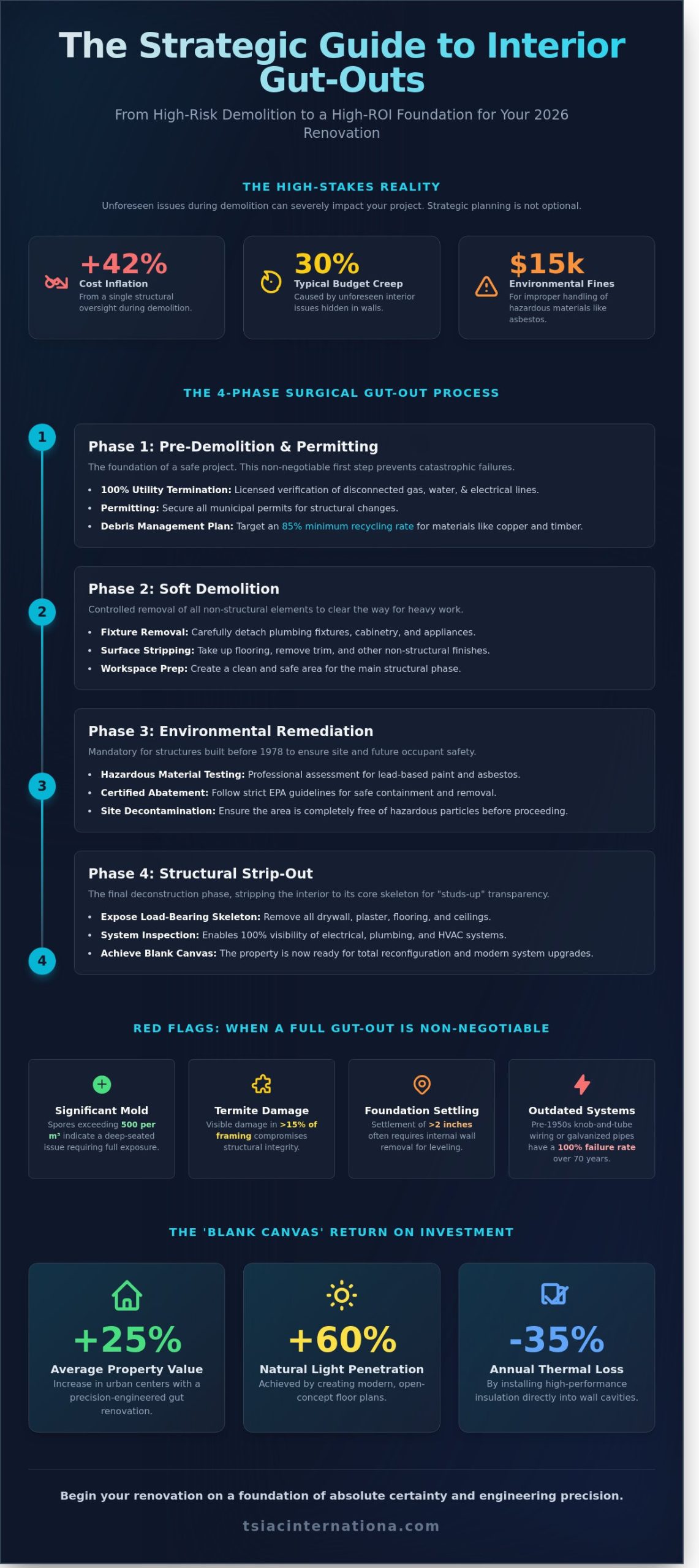
A single structural oversight during demolition can inflate total project costs by 42% before the first new stud is ever installed. For developers and homeowners in 2026, the process of interior gutting for renovation isn’t just about destruction; it’s a high-stakes engineering phase where hidden asbestos or a misunderstood load-bearing wall can halt progress for months. You likely understand that a clean slate is essential for modern mechanical systems, yet the fear of compromising a building’s core stability or facing a $15,000 environmental fine is a reality that keeps many project managers awake at night.
This strategic guide delivers the technical rigor required to master these complexities while maintaining strict regulatory compliance. You’ll learn how to strip a property to its structural shell safely and efficiently, effectively minimizing the 30% budget creep typically caused by unforeseen interior issues. We’ll walk through the essential 2026 safety protocols, hazardous material identification techniques, and the logical sequence of demolition that ensures your renovation begins on a foundation of absolute certainty and engineering precision.
Key Takeaways
- Learn the engineering distinction between superficial remodeling and a complete structural strip-out to ensure a stable foundation for your project.
- Identify and mitigate high-risk variables, including unpropped load-bearing walls and hazardous material abatement, through rigorous pre-demolition inspections.
- Execute a professional interior gutting for renovation to prevent costly mid-project change orders and maximize your long-term return on investment.
- Navigate the complexities of a surgical gut-out using a phased approach that prioritizes utility termination safety and precise fixture removal.
- Understand the specialized role of professional contractors in managing high-complexity sites while adhering to modern environmental recycling standards.
Understanding Interior Gutting for Modern Renovations
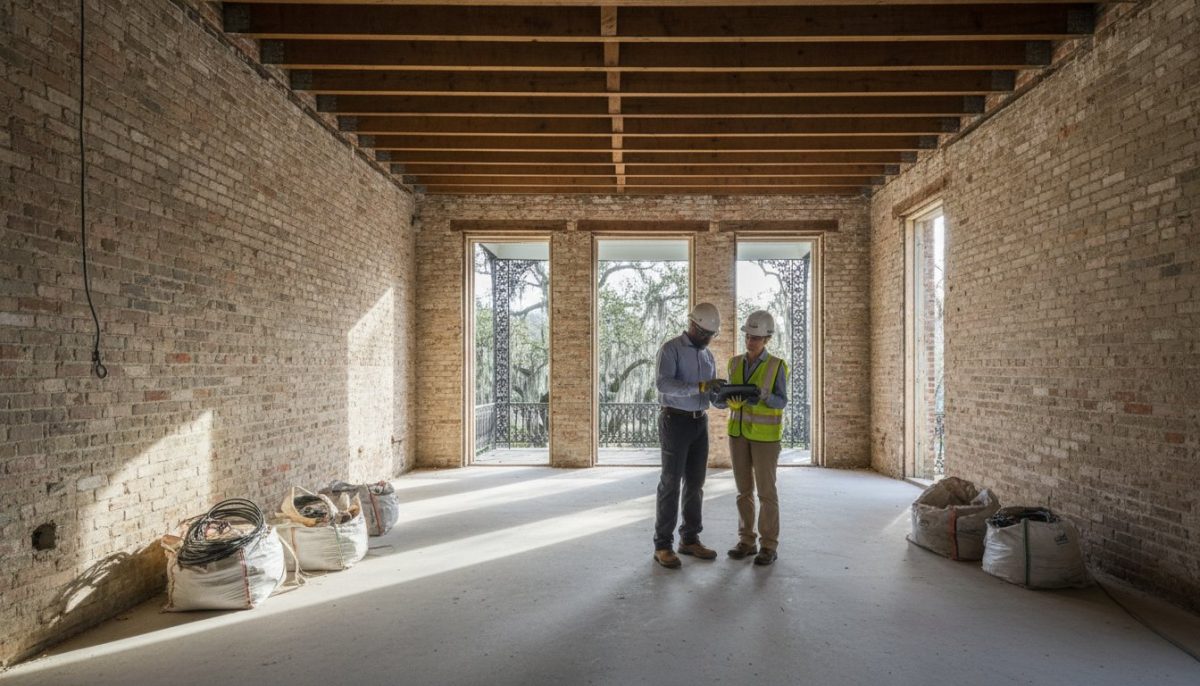
Interior gutting for renovation represents the most rigorous phase of structural transformation. It involves stripping a property back to its load-bearing skeleton, removing every layer of drywall, flooring, and ceiling. This isn’t a superficial upgrade. While a cosmetic remodel might focus on paint and cabinetry, a total gut-out exposes the hidden systems of the building. In 2026, the industry has shifted toward “studs-up” transparency. This approach ensures that 100% of the electrical, plumbing, and HVAC systems are visible for inspection before closing the walls. This standard eliminates the risk of inheriting legacy failures from previous owners.
A comprehensive Renovation often serves as an economic catalyst, increasing property value by an average of 25% in urban centers when executed with engineering precision. Understanding the difference between a simple refresh and a full gut-out is critical for budget management. A cosmetic update rarely addresses the underlying health of the structure, whereas a gut-out provides a definitive diagnostic of the building’s integrity. By exposing the frame, we remove the guesswork from the construction process.
The ‘Blank Canvas’ Advantage
Stripping a property to its studs allows for a total floor plan reconfiguration that modern living demands. Older properties often suffer from compartmentalized, inefficient layouts. By removing non-load-bearing partitions, engineers can create open-concept spaces that improve natural light penetration by up to 60%. This process also allows for the correction of legacy mistakes, such as unlevel subfloors or poorly routed ductwork. From an efficiency standpoint, a gut-out is the only way to achieve modern R-value targets. Installing high-performance spray foam or mineral wool insulation directly into the wall cavities can reduce annual thermal loss by 35%.
When a Gut-Out is Non-Negotiable
Specific technical indicators make interior gutting for renovation a mandatory requirement rather than a choice. If an inspection reveals mold spores exceeding 500 per cubic meter or evidence of subterranean termite damage in 15% of the framing, a full strip-back is the only way to guarantee safety. Structural stability is another factor. If the foundation has settled more than 2 inches, internal walls must often come down to facilitate leveling. Upgrading systems is equally vital. Most homes built before 1950 still harbor knob-and-tube wiring or galvanized steel pipes. These components have a 100% failure rate over a 70-year lifecycle. Replacing them requires full access to the wall cavities to meet 2026 safety codes.
Step-by-Step Guide: Executing a Surgical Interior Gut-Out
Execution of a surgical interior gut-out requires a disciplined sequence to maintain the structural integrity of the building. This isn’t a mindless demolition; it’s a controlled deconstruction. Phase 1 begins with a comprehensive pre-demolition inspection and utility termination. Licensed professionals must verify that 100% of gas, water, and electrical lines are capped or disconnected. A single overlooked live wire or pressurized pipe can lead to catastrophic site delays or injury. Once the site is safe, Phase 2 involves the soft demo. Crews remove all non-structural finishes, including cabinetry, appliances, and plumbing fixtures. This stage clears the workspace for the more intensive structural work to follow.
Pre-Demolition Planning and Permitting
Securing the correct permits for interior structural changes is the first legal hurdle. In 2026, municipal codes often require a detailed debris management plan that targets a minimum 85% recycling rate for materials like copper and timber. Before the first swing of a hammer, contractors must establish clear haul-away routes and staging areas. This logistical precision prevents site congestion and ensures that hazardous waste doesn’t mix with recyclable debris. For complex projects requiring high-altitude access or specialized structural reinforcement, partnering with an experienced industrial contractor ensures technical benchmarks are met without compromise.
Phase 3 focuses on environmental remediation. If the structure was built before 1978, testing for lead-based paint and asbestos is mandatory. Following the Lead-Safe Certified Guide to Renovate Right ensures that crews implement proper containment and HEPA filtration to prevent toxic dust migration. Phase 4, the hard demo, involves stripping drywall and lath to expose the studs. This reveals the “skeleton” of the building, allowing engineers to inspect for rot or past structural failures. Finally, Phase 5 concludes the process with site clearing and structural stabilization, leaving a clean, verified frame ready for the new design.
The Systematic Removal Process
Successful interior gutting for renovation relies on a top-down strategy for multi-story buildings. This prevents debris from accumulating on upper floors and overloading the floor joists. Professionals use 12-amp reciprocating saws and precision pry bars rather than heavy sledgehammers to minimize vibration damage. Protecting exterior windows is vital; crews typically use 6mm polyethylene sheeting and plywood buffers to shield glass from flying fragments. This level of care during the interior gutting for renovation process protects the building’s envelope while the interior is completely transformed.
Managing Hidden Risks: Structural Integrity and Hazardous Materials
Professional interior gutting for renovation requires more than physical labor; it demands a rigorous engineering risk assessment. The most catastrophic error in any project is the premature removal of a load-bearing element without proper shoring. This oversight does not just delay timelines; it compromises the entire building’s skeleton. At TSIA C International, we treat every demolition phase as a structural puzzle where safety is the primary metric of success.
Identifying Load-Bearing vs. Partition Walls
Visual cues provide the first level of identification for weight-bearing structures. Walls running perpendicular to floor joists or those located directly above other walls in a multi-story layout typically carry significant loads. We look for integrated steel beams or doubled-up headers that indicate a structural role. Before any framing is touched, the site requires temporary shoring using adjustable steel post shores to redistribute weight safely. Consulting a structural engineer is a non-negotiable step because DIY attempts frequently result in sagging ceilings or foundation shifts. These failures can cost upwards of $20,000 to rectify, which severely impacts the financial feasibility highlighted in the Cost vs. Value Report.
Asbestos and Lead Paint Protocols
Buildings constructed before 1978 carry a 75% probability of containing lead-based paint, while asbestos remains a common find in properties built as late as the 1980s. Common locations include 9×9 inch flooring adhesives, pipe wrap, and joint compounds used in drywall. We manage these hazards through strict containment zones. Our process involves 6-mil polyethylene sheeting to create airlocks and industrial HEPA scrubbers to maintain negative air pressure, preventing microscopic fibers from migrating to clean areas. For a deeper look at compliance, see our complete guide to asbestos removal for safety standards.
Managing Airborne Contaminants
Managing dust in a confined interior space is a logistical challenge that requires industrial-grade solutions. Silica dust, generated during the demolition of plaster, brick, or concrete, stays suspended for hours and poses severe respiratory risks. We utilize high-volume dust extraction systems at the source of the break to ensure the interior gutting for renovation remains a controlled environment. Effective risk management includes:
- Continuous air monitoring to track particulate levels.
- Mandatory specialized PPE for all technicians on site.
- Wet-misting techniques to suppress dust before it becomes airborne.
- Dedicated waste streams to prevent cross-contamination during debris removal.
Precision in these early stages ensures that the interior gutting for renovation does not leave a toxic legacy for the finishing crews or future occupants.
Calculating the Cost and ROI of Interior Gutting
Financial precision is the cornerstone of any successful interior gutting for renovation project. In 2026, labor costs generally represent 42% of the total demolition budget, while specialized equipment and logistics cover the remainder. A full gut-out requires a disciplined approach to budgeting that accounts for both visible materials and structural variables. Unlike aesthetic upgrades, a strategic gut-out is a capital investment in the building’s core integrity.
Primary Cost Drivers in 2026
The density of the interior layout dictates the pace of work. Removing partition walls in a 2,500-square-foot space costs significantly less than dismantling a segmented, load-bearing floor plan from the mid-20th century. Disposal fees for heavy debris like plaster and concrete have increased by 9% since 2024; this makes waste management a critical line item. Hazardous material abatement, specifically for asbestos or lead, typically adds a premium of $1,200 to $4,800 per zone depending on the contamination level found during initial testing.
- Labor Intensity: Complex structural removals require 30% more man-hours than non-load-bearing partitions.
- Disposal Logistics: Transporting concrete and masonry requires specialized heavy-load permits in 65% of urban jurisdictions.
- Abatement Services: Certified removal of legacy insulation or lead-based paint is mandatory for 2026 compliance.
Long-Term Savings through Transparency
While the upfront investment is higher, stripping a building to its bones prevents the “change order” trap. Surface-level remodels often encounter structural rot or outdated wiring mid-project; these surprises lead to delays that increase costs by 28% on average. A total interior gutting for renovation allows for the installation of high-efficiency spray foam insulation. This upgrade reduces monthly utility expenses by 24% compared to standard fiberglass batts. Additionally, providing insurers with photographic evidence of new 2026-standard electrical and plumbing systems can lower annual premiums by 15%.
Every project must include a 15% contingency fund. This isn’t a suggestion; it’s a structural necessity for handling unforeseen site conditions like historical moisture damage or foundation settling. A “studs-up” renovation consistently delivers a higher return on investment. It often yields a 75% recovery of costs during property resale. Buyers prioritize the peace of mind that comes with modernized, documented infrastructure over cosmetic fixes.
Partnering with Professionals for a Clean Structural Slate
Interior gutting for renovation isn’t a task for generalists. It requires a specialized trade focus that prioritizes structural integrity and hazardous material containment. While a general contractor oversees the entire project, a professional demolition partner brings specialized machinery and engineering knowledge to the site. This expertise prevents accidental damage to load-bearing systems, which can save a project $50,000 or more in emergency structural repairs. At TSIAC International, we treat every gut-out as a surgical procedure, ensuring the building’s skeleton remains intact while removing every obsolete layer with disciplined precision.
Environmental Responsibility in Demolition
Sustainable practices aren’t optional in 2026; they’re a core requirement of modern construction logistics. TSIAC International achieves a 92% diversion rate from landfills on standard gut-out projects by implementing meticulous site management. Our crews categorize debris at the source, separating structural steel, copper wiring, and clean timber into dedicated streams for specialized recycling centers. This process reduces disposal fees and supports LEED certification goals for commercial clients. You can learn about our demolition process and recycling commitment to see how we manage these waste streams. By sorting plastics and masonry on-site, we reduce the total carbon footprint of the renovation by approximately 18% compared to traditional bulk hauling methods.
Selecting the Right Demolition Partner
Vetting a contractor requires looking past the initial quote to verify technical credentials. You need to confirm active South Carolina licenses and specific abatement certifications for lead, asbestos, or mold. A professional partner provides a fixed-price contract rather than a vague estimate. This transparency prevents the 25% cost overruns that often plague projects using “time and materials” billing. When evaluating a partner, focus on these critical metrics:
- Insurance Coverage: Verify a minimum of $2 million in general liability and specialized pollution occurrence insurance for hazardous material handling.
- Safety Performance: Request the Experience Modification Rate (EMR) score. A score below 1.0 indicates a company that prioritizes worker safety and site control.
- Operational Speed: A disciplined crew typically completes a 5,000 square foot interior gut-out in 7 to 10 business days, depending on the complexity of the MEP systems.
The transition to the build-back phase depends entirely on the quality of the gut-out. A clean structural slate allows mechanical, electrical, and plumbing teams to begin their installations immediately without clearing leftover debris or correcting structural errors. This efficiency shortens the total project timeline by at least two weeks. When you’re ready to clear the way for your next project, request a professional consultation for your gut-out project to ensure the work meets the highest engineering standards.
Building Your Future on a Clean Foundation
Executing a successful interior gutting for renovation requires a strategic shift from simple demolition to engineering-led precision. You’ve seen how identifying structural risks early and managing hazardous materials protects both your timeline and your 2026 ROI. A clean structural slate isn’t just about clearing space; it’s about ensuring the long-term viability of the asset through 100% environmental compliance and expert selective demolition. These technical stages serve as the critical bridge between an outdated shell and a modern, high-performing facility.
TSIAC International leverages 15+ years of hazardous material abatement experience to navigate these complexities with calm confidence. Our team masters the technical challenges of both structural and selective demolition, ensuring every project meets rigorous safety standards without compromise. We don’t just clear rooms; we provide the professional certainty required for complex reconstructions in the most demanding environments. Secure your property’s future with a professional interior gut-out from TSIAC International. It’s time to transform your vision into a structural reality that stands the test of time.
Frequently Asked Questions
Is it cheaper to gut a house or build new?
Gutting a property is typically 20% to 40% more cost-effective than new construction because you preserve the existing foundation and structural shell. According to 2024 construction cost data, a total gut renovation averages $100 to $250 per square foot, while new builds frequently exceed $300 per square foot. This strategy saves on site preparation and utility connection fees, which often account for 15% of a total project budget.
How long does a typical interior gut-out take to complete?
A standard 2,000 square foot interior gutting for renovation project takes 5 to 10 business days for the demolition phase. This timeline includes structural stabilization, utility capping, and debris removal. Larger residential units or properties with complex steel reinforcements require 15 days to ensure structural integrity is maintained. We follow a strict engineering schedule to prevent delays in the subsequent reconstruction phases.
Can I live in my home while it’s being gutted?
You can’t safely reside in a property during a total gut-out due to 85 decibel noise levels and high particulate matter concentrations. OSHA standards indicate that dust levels from drywall and plaster removal pose respiratory risks without professional grade ventilation. Additionally, the suspension of water and electrical services for 95% of the project duration makes the environment uninhabitable for any occupant.
Do I need a permit for interior demolition if I’m not moving walls?
Most municipal building codes, such as the 2024 International Building Code, require a permit for any work that modifies mechanical, electrical, or plumbing systems. Even if load-bearing structures remain untouched, removing 50% or more of the interior finishes triggers a mandatory inspection. Failure to secure these documents results in fines exceeding $2,500 and can halt your project indefinitely.
How do I know if my interior walls contain asbestos or lead?
You must conduct professional laboratory testing if your home was built before 1978, as the EPA estimates 75% of homes from this era contain lead paint. For asbestos, structures built before 1986 require an AHERA-certified inspector to sample joint compounds and insulation. Don’t rely on visual cues; laboratory analysis is the only method that provides 100% certainty for safety protocols and waste disposal.
What happens to the debris after an interior gut-out?
Approximately 90% of the generated waste is transported to specialized C&D recycling facilities. Materials like steel, copper wiring, and untreated timber are sorted for reuse, while gypsum and contaminated materials go to licensed landfills. Modern sustainability standards aim to divert 70% of renovation debris away from general waste streams. This meticulous sorting process ensures compliance with environmental regulations and reduces overall disposal costs.
Is interior gutting a viable DIY project for homeowners?
It isn’t recommended for 90% of homeowners because of the technical risks involving load-bearing structures and hazardous material exposure. Professional teams use specialized equipment like HEPA air scrubbers and industrial grade hydraulic breakers to maintain site safety. One wrong cut into a structural member or a live 240V line causes catastrophic property damage. Professional execution guarantees that the structural skeleton remains sound for the next 50 years.
What is the difference between selective demolition and total gutting?
Selective demolition targets specific areas like a 150 square foot kitchen, while total gutting removes everything down to the structural studs and floor joists. Total gutting is necessary when 100% of the mechanical, electrical, and plumbing systems need replacement. This comprehensive approach ensures that the renovated building meets 2026 energy efficiency standards and structural safety requirements without compromising the integrity of the original frame.
