
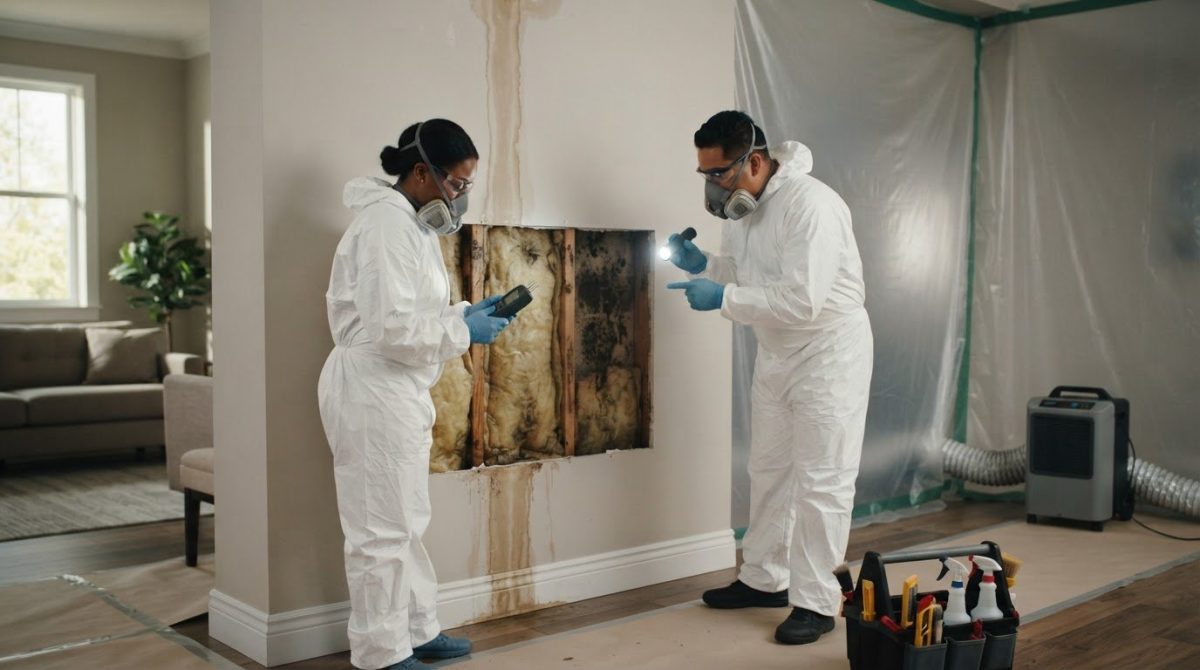
What if the visible stain is only where moisture surfaced, while damp material remains hidden behind the wall? That’s why mold remediation for water-damaged drywall must follow the moisture path, not just the mark you can see. Drying the room may not dry the wall cavity, and disturbing suspect materials can spread dust and debris.
It’s reasonable to wonder whether the drywall can be dried or needs to be removed. The answer depends on the water source, how long the material was wet, the drywall’s condition, and whether moisture or mold has reached insulation or other materials. This guide explains how to address ongoing moisture, assess the damage without disturbing suspect areas, and understand the factors that shape drying, removal, and remediation decisions.
You’ll also learn what to look for when choosing a qualified contractor and reviewing a clear scope of work, including how it addresses affected materials and the source of moisture. TSIAC International offers mold remediation, selective demolition, and interior gutting, with more than 15 years of industry experience. The appropriate project scope depends on site conditions and should be established through an assessment.
Key Takeaways
- Use the water source, exposure duration, drywall condition, and signs of concealed dampness to help determine whether materials need further assessment or removal.
- Effective mold remediation for water-damaged drywall accounts for affected materials beyond the visible surface and includes planning for the moisture source.
- Before work begins, clarify how the project scope addresses material removal, containment, and worker protection based on site conditions.
- Surface cleaning may not be suitable when drywall is damaged or moisture and mold may extend into the wall. Disturbing affected materials can spread debris.
- Before reconstruction, ask what materials were removed, whether moisture remains, and what documentation or conditions will guide the handoff.
How to assess mold on water-damaged drywall before remediation
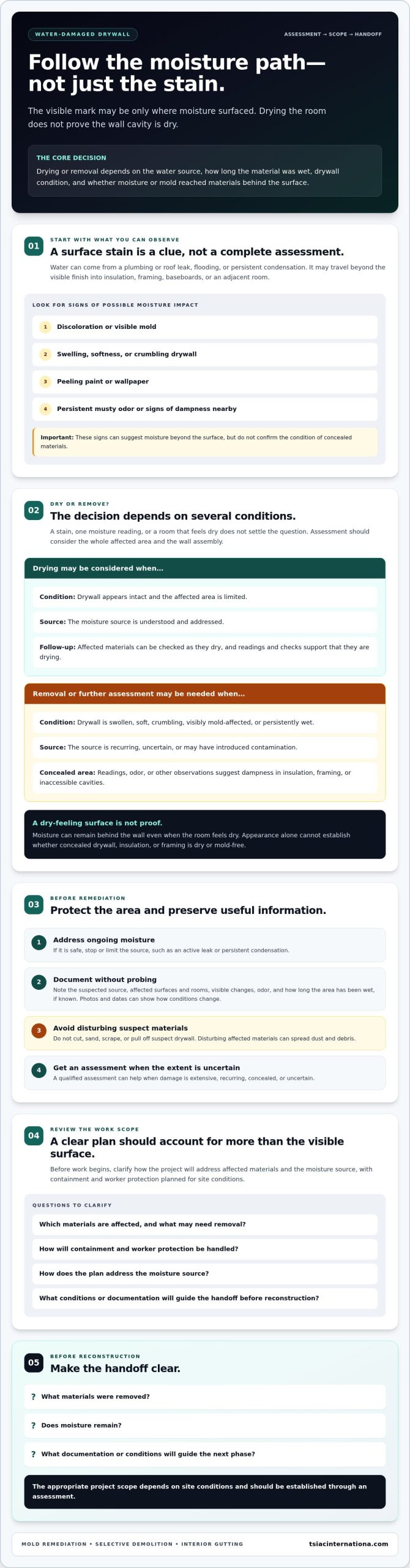
Visible staining signals a concern, but it doesn’t establish how far water or mold extends. A plumbing or roof leak, flooding, or persistent condensation can wet the drywall and materials behind it. The mark on the room-facing surface may be only one clue in a larger wall assembly, so start by documenting what you can observe without opening or disturbing the area.
Visible mold is evidence of a surface problem, not a complete assessment of the wall assembly. Porosity affects whether a material can be salvaged, as described in this general overview of disaster restoration. Appearance alone cannot establish whether concealed drywall, insulation, or framing is dry or mold-free.
What signs suggest water damage extends beyond the drywall surface?
Look for discoloration, swelling, softened or crumbling drywall, peeling paint or wallpaper, and a persistent musty odor. These signs can indicate that moisture has affected more than the visible finish, but they don’t confirm the condition of hidden materials. Dampness may also reach insulation, framing, baseboards, or an adjacent room, particularly if water has traveled along the wall or floor.
Record what you observe without probing the wall. Note the suspected water source, affected surfaces and rooms, visible staining, changes in the drywall’s shape or firmness, any odor, and how long the area has been wet, if known. Photos and dates can help show how conditions have changed.
What should you do first after finding mold on wet drywall?
If it’s safe, stop or limit the source of moisture before planning repairs. That may mean addressing an active leak or reducing persistent condensation. Don’t assume that drying the room has dried the wall cavity. Avoid cutting, sanding, scraping, or pulling off suspect drywall, since disturbing affected material can release dust and debris.
- Keep people from unnecessarily contacting or disturbing the affected area.
- Document visible conditions and the known or suspected moisture history.
- Seek a qualified assessment if damage is extensive, recurring, concealed, or uncertain.
These steps help preserve useful information while the next scope is determined. Mold remediation for water-damaged drywall should be planned around the extent of moisture and affected materials, not just the visible stain. A site assessment can help clarify whether further investigation or controlled material removal is appropriate.
Dry or remove water-damaged drywall? How remediation decisions are made
Drying or removal is not decided by a stain, a single moisture reading, or a universal time limit. An assessment considers how far moisture traveled, what caused it, the drywall’s condition, how long it stayed wet, and whether concealed materials remain damp or are affected. The water source matters because it can affect what hazards or contamination need to be considered before work begins.
Drying the visible face of drywall doesn’t prove that the wall cavity behind it is dry. Moisture can remain in insulation, framing, or enclosed spaces even after the room feels dry. The EPA guide on mold investigation describes approaches for assessing concealed areas, including inspection tools used behind walls.
| Potentially dryable, subject to assessment | Removal or further assessment may be needed |
|---|---|
| Drywall appears intact, and the affected area is limited. | Drywall is swollen, soft, crumbling, visibly mold-affected, or persistently wet. |
| The moisture source is understood and corrected, and drying can be monitored. | The source is recurring, uncertain, or may have introduced contamination. |
| Moisture readings and follow-up checks support that affected materials are drying. | Readings, odor, or other observations suggest dampness in insulation, framing, or inaccessible cavities. |
When might drying and monitoring be considered?
Drying may be considered when an assessment finds that the drywall remains intact, the moisture source has been addressed, and affected materials can be checked as they dry. A surface that feels dry to the touch isn’t enough evidence by itself. Moisture readings taken in relevant locations, followed by monitoring, give a clearer basis for deciding whether drying is progressing. Salvage isn’t guaranteed; the decision depends on site-specific findings.
When is removal or further investigation more likely?
Professionals should evaluate drywall that is visibly deteriorated, remains wet, or shows mold growth, especially if moisture may extend into insulation or an inaccessible cavity. Recurring leaks and dampness in adjacent materials also affect the scope. Before reconstruction, confirm that the source has been corrected and that affected surrounding materials have been assessed. The appropriate scope may involve additional investigation, removal, or both.
For a project that may require remediation alongside material removal, review TSIAC International’s mold remediation and selective demolition services. The appropriate scope should be established from the conditions found at the site.
How professional mold remediation for water-damaged drywall proceeds
Professional mold remediation for water-damaged drywall should follow a defined sequence: control the moisture, assess the affected assembly, plan the work, then remove or address materials according to their condition. The precise scope depends on site findings, the water source, and any hazards identified. Containment and worker protection should match those conditions and the planned work, rather than follow a one-size-fits-all prescription.
How assessment, containment, and removal fit together
A clear work plan connects investigation to material work. It should identify affected areas and, where possible, concealed materials before the wall is disturbed. It should also define work boundaries, access, protection measures, and debris handling. If drywall or other materials may contain asbestos or lead, assess their status before disturbance where applicable. Confirm project-specific technical guidance and requirements before work begins.
- 1. Address the moisture source. Identify and correct the leak, flooding pathway, or condensation condition so new moisture doesn’t undermine the work.
- 2. Assess and document. Record affected surfaces and evaluate whether dampness or visible contamination may extend behind the drywall or into adjacent materials.
- 3. Set the scope and protections. Establish work boundaries, access, containment, worker protection, and debris handling based on the site and planned tasks.
- 4. Remove or retain materials as specified. Remove drywall identified for removal using the planned controls. Removal is distinct from cleaning or treating materials that remain, which must be assessed separately.
What happens after affected drywall is removed?
Once the wall is open, exposed framing and nearby materials can be evaluated for moisture and visible contamination. The findings may change the work scope. Cleaning or drying methods depend on the material, its condition, and the approved plan. Don’t assume that surface treatment alone will resolve a problem within porous or concealed materials. The health department’s mold guidance explains that killing mold isn’t the same as removing it, and that contaminated materials such as drywall may need removal.
- 5. Clean and dry as appropriate. Address remaining materials according to their condition and the project scope, while managing moisture and checking drying progress.
- 6. Confirm readiness for repair. Replacement should wait until the moisture problem has been addressed and affected materials are suitably dry for the planned repair.
Before work proceeds, ask what findings would change the scope, how remaining materials will be evaluated, and what conditions must be met before replacement begins. A well-defined sequence connects assessment, removal, and repair decisions without assuming every wall needs the same treatment.
DIY cleanup or professional remediation: how to choose the right scope
A small area of surface growth on an intact, nonporous surface is different from mold on wet drywall. Limited cleaning may be reasonable for some surface conditions, but damaged drywall, signs of concealed moisture, or widespread affected materials call for a more careful assessment. Scrubbing, cutting, or pulling off mold-affected material can spread dust and debris, so DIY work isn’t automatically safe just because the visible patch looks manageable.
Choose the scope based on the material and moisture conditions, not appearance alone. If the damage is extensive, recurring, hidden inside a wall, or uncertain, seek a qualified evaluation. Use added caution if occupants are especially vulnerable to mold exposure or if building materials may contain asbestos or lead. Don’t disturb suspect materials until their status and appropriate precautions are understood.
Which conditions call for a qualified remediation contractor?
Professional evaluation is prudent when drywall is soft, swollen, crumbling, persistently damp, or visibly mold-affected; when a leak has returned; or when moisture may have reached insulation or other concealed areas. If you’re considering a size threshold for DIY cleanup, check current guidance from an authoritative source such as the U.S. Environmental Protection Agency rather than treating a general limit as a guarantee of safety. Porous, water-damaged drywall requires a different assessment from a small spot on a hard surface.
What should a clear remediation proposal explain?
A written scope helps you understand what will happen and how the work area may affect daily routines. Ask the contractor to define the affected-area boundaries, planned removal, containment approach, moisture-source responsibilities, debris handling, and how exposed materials will be assessed and dried. The proposal should also explain the work sequence and how changes in scope will be communicated if concealed damage is found.
- Which materials are included for removal, and which will remain?
- How will moisture control and drying be addressed before repair?
- What documentation will be provided during or after the work?
- Is testing or post-remediation verification included? If so, who performs it?
A defined work area and sequence can make disruption easier to anticipate, though the final scope depends on site conditions. For a project that may involve both mold remediation and controlled material removal, contact TSIAC International about mold remediation and clarify which assessment, containment, and verification tasks are included in the proposed work.
Plan drywall repair after mold remediation and choose your next steps
Replacing drywall before the moisture problem is corrected can leave the conditions for damage in place. Treat reconstruction as a separate stage of mold remediation for water-damaged drywall: first confirm the water source has been addressed, then review what was removed and whether remaining materials are suitably dry for repair.
What should be confirmed before replacing drywall?
Before scheduling replacement, establish what the remediation work found and what still needs attention. Ask how moisture in framing and adjacent materials was evaluated, what documentation is available, and whether any areas remain damp or inaccessible. The handoff should make clear that the remediation scope is complete and site conditions support reconstruction, rather than relying on the room-facing surface alone.
- Has the source of water been identified and addressed?
- Which drywall and other materials were removed, and which remain?
- How were exposed framing and adjacent materials assessed for moisture?
- What records, readings, or other documentation can be shared?
- Are there any unresolved conditions that should delay replacement?
Clear answers help the repair contractor understand the condition of the assembly and avoid closing in materials before the work is ready to proceed. If the scope changes after concealed materials are exposed, ask that the findings and next steps be documented before reconstruction continues.
How can TSIAC support a complex removal or remediation project?
When a project involves both mold remediation and a broader interior removal scope, TSIAC International may be a resource to discuss the work. Its listed services include mold remediation, selective demolition, and interior gutting. The company reports more than 15 years of industry experience. The appropriate scope depends on site conditions, so confirm directly which assessment, containment, cleaning, or verification tasks are included in any proposed work.
If materials may contain asbestos or lead, avoid disturbing them until their status and appropriate next steps are understood. TSIAC also provides hazardous-material abatement. For broader removal work, ask how the proposed scope defines affected areas, material handling, and the sequence of work.
Once moisture conditions and the repair handoff are clear, discuss the project scope with TSIAC to determine whether its listed remediation or removal services fit the work required.
Move Forward With a Clear Remediation Plan
Visible staining can reveal a problem, but it doesn’t show the full condition of the wall. The decision to dry or remove drywall depends on moisture, material condition, and what an assessment finds behind the surface. Before repairs begin, confirm that the moisture source has been addressed and that affected materials are suitably dry.
A clear scope also helps keep remediation and reconstruction aligned. Confirm what will be removed, how the work area will be managed, what documentation you’ll receive, and what conditions must be met before drywall replacement.
TSIAC International has more than 15 years of industry experience, with listed services that include mold remediation, selective demolition, and interior gutting. If you’re weighing the next steps for mold remediation for water-damaged drywall, discuss your drywall remediation project with TSIAC International.
A careful assessment and a well-defined scope can help you move ahead with greater confidence.
Frequently Asked Questions
Can water-damaged drywall be dried instead of removed?
Sometimes, if an assessment finds the drywall is intact, the water source is addressed, and moisture levels can be monitored as materials dry. The decision also depends on the water source, how much of the wall was affected, how long it remained wet, and whether moisture reached insulation or other concealed materials. If drywall is mold-affected or deteriorated, removal may be necessary. Touch alone can’t confirm that the wall is dry.
How do you know if mold is behind water-damaged drywall?
You can’t reliably confirm hidden mold from the room-facing surface alone. Musty odors, recurring dampness, staining, swelling, or soft drywall can raise concern, but they don’t show the full extent. A qualified assessment may use moisture measurements or appropriate inspection methods to investigate concealed areas. Avoid cutting or pulling drywall off just to check, since disturbing suspect material can release dust and debris into the room.
What happens if moldy drywall is not removed?
If mold-affected drywall remains in place, the material may continue to deteriorate, and mold may persist if moisture conditions remain. Moisture can also affect concealed materials, so covering a stain with paint or installing new drywall over an unresolved problem won’t address its cause. The right response depends on which materials are affected and why they became wet. Seek an assessment if growth is recurring, damage is concealed, or the scope is unclear.
Is it safe to remove moldy drywall yourself?
Not in every situation. Cutting, sanding, or pulling mold-affected drywall can disperse dust and debris, and the work may expose concealed moisture or materials that need special handling. Consider qualified help if the affected area is extensive, recurring, hidden, or uncertain, or if occupants are especially vulnerable to mold exposure. Suspected asbestos- or lead-containing materials should not be disturbed until their status and appropriate precautions are understood.
How long does mold remediation for water-damaged drywall take?
There isn’t one reliable timeline for mold remediation for water-damaged drywall. Duration depends on the extent of affected materials, whether concealed areas need investigation, how removal is scoped, and how long drying takes after the moisture source is corrected. Repair or replacement may be a separate stage. Ask the contractor to explain the expected sequence, what could change the schedule if hidden damage is found, and how drying progress will be assessed.
Should drywall be replaced after a water leak if there is no visible mold?
Not automatically. No visible mold doesn’t prove the drywall or wall cavity is wet, but it also doesn’t confirm that everything is dry. The decision depends on the amount and duration of water exposure, the drywall’s condition, the water source, and whether insulation or framing was affected. Have moisture assessed where appropriate, address the source, and base repair or replacement on the condition of the materials rather than appearance alone.
Can mold return after water-damaged drywall is remediated?
Yes, mold can return if moisture conditions persist or develop again. A repair may not remain effective if a leak is unresolved, condensation continues, or damp affected materials remain behind the replacement drywall. Before reconstruction, confirm that the moisture source has been addressed and that remaining materials are suitably dry. If staining, dampness, or musty odors recur, investigate the cause rather than simply covering or cleaning the visible area again.
