
Real mold remediation is a structural engineering challenge, not a simple cleaning task. You’ve likely dealt with the frustration of recurring growth or the persistent anxiety that hidden spores are compromising your air quality and property value. It’s common to feel that once you’ve scrubbed a surface, the problem should vanish, yet the high humidity of the Lowcountry often proves otherwise. Professional mold remediation charleston sc requires more than a bucket and a brush; it demands a disciplined, technical approach to source removal and environmental control.
We understand that protecting your investment means adhering to rigorous safety protocols and the latest industry benchmarks. This guide will help you master the technical requirements for large-scale structural hazardous material removal while ensuring compliance with emerging standards. You’ll learn how the IICRC S520 standard and recent legislative shifts, such as South Carolina bills H. 5109 and H. 3232, are raising the bar for professional accountability. We’ll walk through the transition from temporary fixes to total source removal, focusing on how to restore structural integrity through proven, methodical abatement processes.
Key Takeaways
- Distinguish between superficial cleaning and professional structural abatement by applying the IICRC S520 industry standards for permanent results.
- Understand the critical role of engineering controls, such as negative air pressure and HEPA filtration, in preventing spore migration during site work.
- Learn why the permeability of porous building materials necessitates physical removal rather than relying on chemical biocides or surface encapsulants.
- Follow a disciplined, multi-phase protocol for mold remediation charleston sc that integrates comprehensive moisture mapping with strict isolation procedures.
- Identify the technical overlap between mold abatement and other hazardous material removals to ensure a safe, compliant, and restored environment.
Defining Professional Mold Remediation Charleston SC and Abatement Standards
Professional mold remediation charleston sc is a technical discipline that extends far beyond surface aesthetics. While consumer-grade solutions often rely on topical applications, true structural abatement requires a methodical approach to eliminate the microbial source. The threshold for professional intervention typically begins when the affected area exceeds ten square feet, but the complexity of the building’s assembly often dictates a more aggressive response. If moisture has compromised structural components, simple cleaning is insufficient to prevent recurrence. We approach these projects as engineering challenges where the goal is the permanent removal of hazardous biological contaminants.
Abatement vs. Remediation: Understanding the Terminology
Technical precision in language reflects technical precision in the field. Abatement involves the physical removal of hazardous materials from a structure to ensure they no longer pose a risk. In contrast, remediation is the broader process of returning an environment to a “pre-loss” condition. This includes moisture control, air filtration, and structural repairs. For a comprehensive Indoor Mold Explained perspective, one must recognize that mold isn’t just a biological presence; it’s a symptom of a mechanical or structural failure. We don’t just remove the growth; we address the underlying moisture source that allowed the spores to colonize in the first place. Without this foundational step, any physical removal is merely a temporary delay.
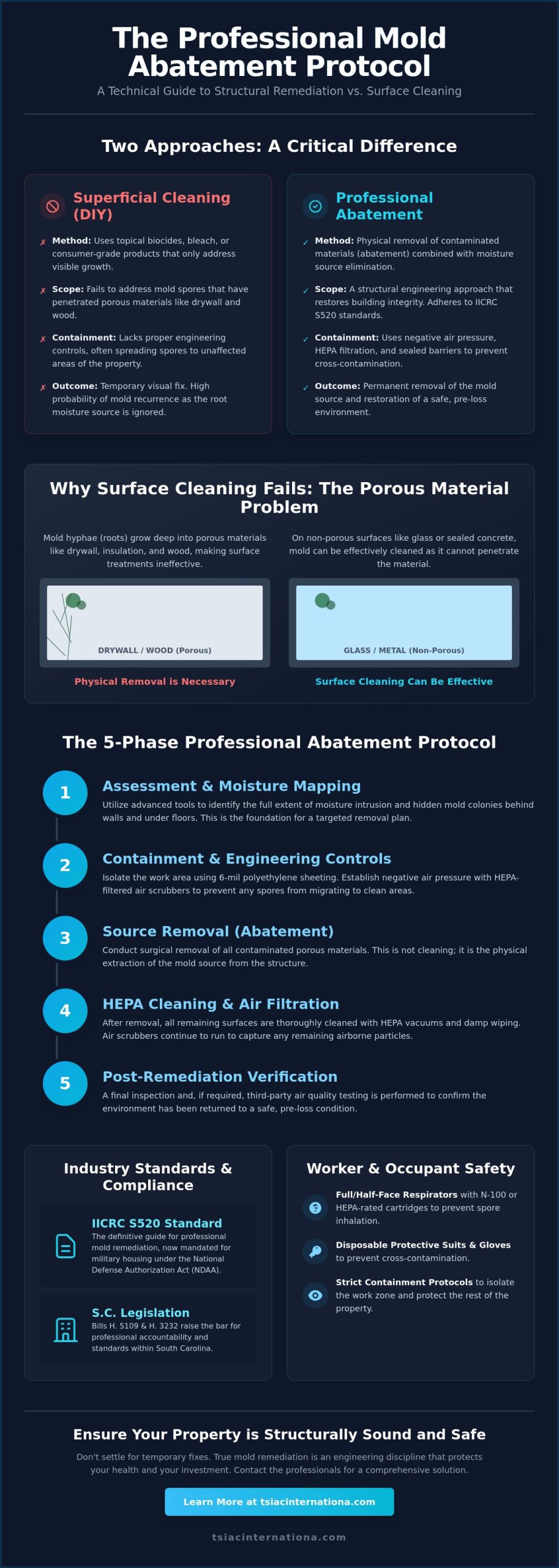
When performing mold remediation charleston sc, the IICRC S520 standard serves as the definitive procedural guide. This document was recently integrated into federal policy through the December 2025 National Defense Authorization Act (NDAA), mandating its use for military housing. This shift underscores the necessity of standardized, professional practices over informal cleaning methods. Porous materials, such as drywall and certain wood types, often require surgical removal because fungal hyphae can grow deep into the material’s matrix, making surface biocides ineffective. We prioritize the removal of these contaminated substrates to ensure the integrity of the remaining structure.
Health and Safety Regulatory Compliance
Executing a safe project requires strict adherence to OSHA and EPA guidelines. Worker protection is paramount during the removal of hazardous spores. Professionals must use specific engineering controls and Personal Protective Equipment (PPE) to manage risk. Key safety components include:
- Full-face or half-face respirators equipped with N-100 or HEPA-rated cartridges to prevent inhalation of spores.
- Disposable protective suits and gloves to prevent cross-contamination of non-affected areas.
- Moisture mapping tools to identify hidden pockets of dampness behind structural barriers.
- Strict containment protocols to isolate the work zone from the rest of the property.
These safety measures ensure that the remediation process doesn’t inadvertently worsen the air quality in other parts of the building. By following these established standards, we provide a disciplined path to a safe and habitable structure. This methodical approach is the only way to guarantee that the environment is truly restored and compliant with health regulations.
Technical Standards for Hazardous Material Containment and Air Filtration
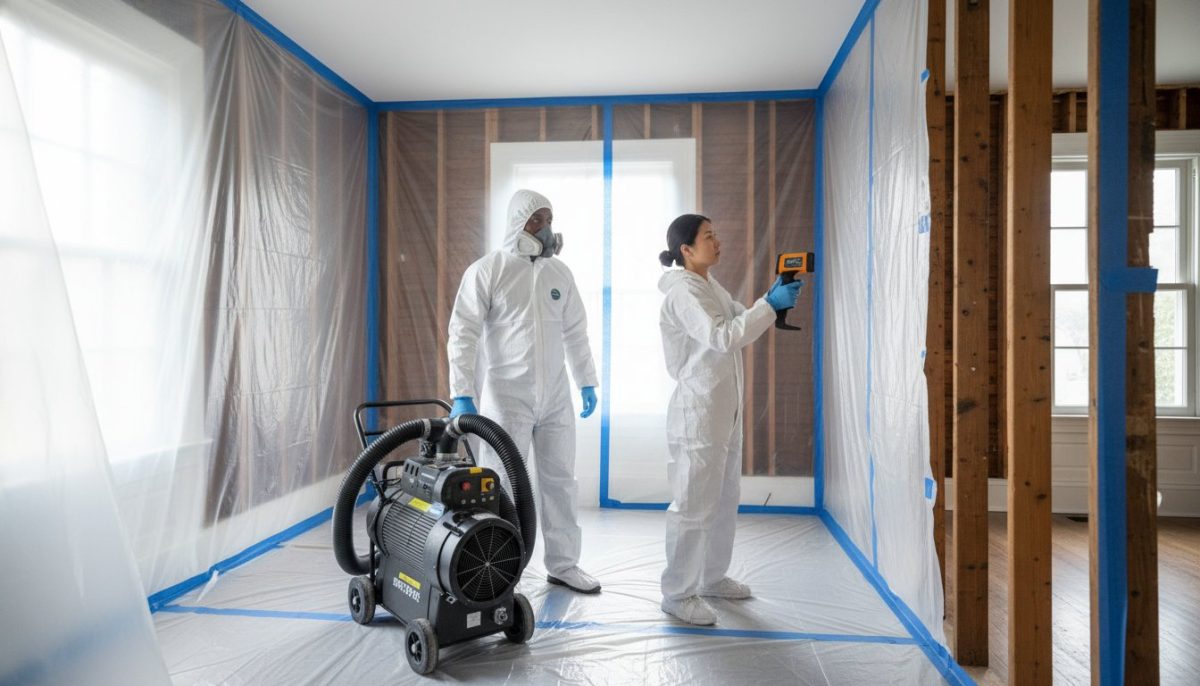
Isolating the work area is the most critical step in preventing the spread of hazardous spores during a project. We establish physical barriers using heavy-duty 6-mil polyethylene sheeting, creating a robust seal over all openings, including doorways and HVAC vents. For complex or large-scale projects, we install multi-chamber decontamination systems. These airlocks serve as a buffer between the contaminated zone and the rest of the property, allowing technicians to clean their gear and dispose of waste without risking the integrity of the non-affected areas. This level of technical rigor is essential for successful mold remediation charleston sc in humid environments where spores can easily migrate. For projects that require this level of technical oversight, partnering with an experienced environmental contractor ensures all safety and engineering standards are met.
The Role of Negative Air Pressure
Engineering a negative air pressure environment requires precise calculations and specialized equipment. It’s not just about moving air; it’s about controlling the direction of airflow. We use industrial-grade air movers to pull air out of the containment, creating a vacuum effect. This ensures that any airborne spores are trapped within the filtration system rather than leaking into adjacent rooms. Industry standards, including EPA Mold Cleanup Guidance, emphasize that professional oversight is vital for projects involving structural damage or extensive contamination. To maintain this environment, we use digital manometers to monitor the pressure differential in real-time, ensuring it stays within the required range to prevent cross-contamination. We typically aim for at least four to six air changes per hour (ACH) to maintain a safe working environment.
Advanced Filtration and Spore Management
High-Efficiency Particulate Air (HEPA) filtration is the only reliable method for capturing microscopic biological contaminants. These filters are designed to capture 99.97% of particles at the 0.3-micron level, which includes the vast majority of fungal spores. During the abatement phase, we deploy high-volume air scrubbers that cycle the internal air multiple times per hour. This continuous filtration reduces the spore count in the air while the physical removal of materials is underway. It’s important to distinguish between air scrubbing and local exhaust; the latter involves venting the filtered air outside the building to create the necessary negative pressure. After the physical work is finished, we continue air scrubbing for a specified “polishing” phase to ensure the environment reaches the required clearance levels before the containment is dismantled. This methodical approach ensures that the mold remediation charleston sc project results in a truly clean environment.
Structural Removal vs. Surface Treatments: Addressing the Root Cause
Effective abatement begins with a technical evaluation of material permeability. Building components are classified as porous, semi-porous, or non-porous, and each requires a different level of intervention. Non-porous materials, such as metal framing or concrete removal areas, can often be decontaminated through HEPA vacuuming and antimicrobial washing. However, porous materials like drywall, ceiling tiles, and fiberglass insulation act as biological sponges. Surface treatments, including chemical biocides or plant-based enzymes favored by some contractors, fail to reach the fungal hyphae embedded deep within these substrates. For property owners investing in mold remediation charleston sc, the decision to physically remove contaminated materials is a structural necessity rather than an optional expense.
The economic reality of environmental hazards often favors a one-time structural removal over recurring surface cleanings. Property owners who rely on topical “fogging” often find themselves in a cycle of failed clearance tests and returning growth. Stripping an area to the studs allows for a comprehensive visual inspection of the wall cavity, ensuring no hidden reservoirs remain. Adhering to Professional Mold Remediation Guidelines ensures the project moves beyond cosmetic fixes toward total environmental restoration. This methodical approach prioritizes long-term habitability and protects the building’s underlying value.
When to Choose Selective Demolition
Selective demolition is the disciplined removal of specific building components that are technically beyond salvage. This process focuses on materials where the cost of cleaning exceeds the cost of replacement or where decontamination is physically impossible. By integrating commercial interior gutting services into the remediation plan, we can systematically clear the path for thorough decontamination. This requires surgical precision to maintain the building’s load-bearing integrity while removing every trace of organic growth. It’s the only way to guarantee a clean slate for reconstruction and ensure the moisture source is fully exposed.
The Risks of Incomplete Source Removal
Incomplete removal is the primary cause of remediation failure. While surface sprays might lower airborne spore counts temporarily, they leave the underlying colony intact. Dormant spores are resilient; they can remain inactive for years and reactivate the moment humidity levels rise. Hidden growth behind wall cavities or under subflooring often goes undetected without aggressive structural investigation. Without physical removal of the contaminated source, you’re merely masking a structural defect. In the high-humidity environment of mold remediation charleston sc, anything less than total source removal leads to structural decay and persistent health risks.
The Professional Protocol for Comprehensive Mold Abatement Projects
Executing a successful mold remediation charleston sc project requires a rigid, five-phase protocol. We don’t rely on guesswork or superficial visual inspections. The process begins with Phase 1: a comprehensive site assessment that utilizes moisture mapping technology to identify the exact boundaries of the intrusion. This data ensures we address the source rather than just the symptoms. Phase 2 involves the setup of the engineering controls and containment systems discussed previously. Once the environment is stabilized, we move to Phase 3: the controlled removal and disposal of contaminated materials. This step is performed with surgical precision to minimize the release of spores into the containment air.
Phase 4 focuses on the decontamination of the structural shell. This involves detailed HEPA vacuuming of all surfaces followed by the application of professional-grade antimicrobial cleaners to non-porous structural members. Finally, Phase 5 is the verification stage. We mandate final clearance testing by an independent third party to ensure the environment meets safety standards before any containment is removed. This separation of duties provides an objective guarantee of quality. If you’re managing a complex facility that requires this level of technical oversight, you can request a professional consultation to begin the assessment process.
Material Management and Disposal
Handling hazardous debris is a high-risk activity that requires strict adherence to safety standards. We employ a double-bagging protocol for all contaminated materials to prevent accidental punctures or leaks during transport. Each bag is sealed within the containment zone and wiped down before being moved through the airlock. While microbial waste is subject to specific regulatory requirements, we remain committed to recycling demolition debris from the non-contaminated portions of the project. This disciplined approach to waste management prevents cross-contamination and ensures the safety of the surrounding community.
Post-Remediation Verification (PRV)
A “passed” clearance report is the only acceptable conclusion to an abatement project. This verification process includes a rigorous visual inspection for dust and debris, followed by air and surface sampling. We don’t consider a project finished until the spore counts inside the containment are lower than or equal to the outdoor baseline. This objective data confirms the building is safe for reconstruction and subsequent drywall installation. By securing this independent verification, property owners gain the documented proof needed for insurance compliance and long-term peace of mind. It’s the final, essential step in restoring the structural and environmental integrity of your property.
Integrated Remediation Solutions with TSIAC International
Complex environmental projects rarely exist in isolation. In the context of mold remediation charleston sc, the discovery of microbial growth often coincides with the identification of other regulated materials. Older structures common in the Lowcountry frequently require a dual approach where mold removal overlaps with professional asbestos removal. We leverage over 15 years of experience in high-risk environmental contracting to manage these multi-faceted challenges. By acting as a single-source partner for gutting, abatement, and debris management, we eliminate the logistical friction that occurs when multiple vendors are on-site. This integrated model ensures that every phase of the project adheres to the same rigorous safety and quality benchmarks.
Managing large-scale hazardous material abatement requires a level of technical oversight that general contractors often can’t provide. We specialize in the intersection of structural demolition and environmental safety. Our teams are trained to handle the complexities of industrial and commercial environments where the stakes for compliance are high. We don’t just clear the mold; we manage the entire structural environment to ensure it’s ready for the next phase of its lifecycle. This comprehensive approach is what allows us to deliver results that meet both environmental regulations and structural requirements.
The TSIAC Advantage: Disciplined Execution
We apply demolition-grade precision to every mold remediation charleston sc project we undertake. This disciplined execution is essential when working with government agencies and commercial entities that demand strict adherence to federal standards. We manage the complex logistics of site isolation, waste stream management, and real-time pressure monitoring with methodical accuracy. Our background in structural demolition allows us to perform surgical removals that protect the building’s integrity while ensuring every trace of contamination is extracted. This professional rigor is what defines our role as a reliable partner in environmental restoration.
Beyond Remediation: Preparing for the Future
Our work is designed to facilitate faster renovation timelines. By utilizing selective demolition, we can strip a building to its core components, providing a clean and verified slate for new construction. We take environmental responsibility seriously, sorting materials on-site to maximize recycling opportunities and reduce the project’s overall waste footprint. This focus on long-term sustainability and structural health is a core component of our service delivery. If you’re facing a complex structural challenge, you can request a technical consultation to discuss the specific parameters of your project and ensure a compliant, professional outcome.
Secure Your Property’s Structural Integrity Through Professional Abatement
Professional mold remediation charleston sc requires a disciplined transition from temporary surface fixes to permanent structural solutions. You’ve seen that effective abatement relies on rigorous engineering controls, such as negative air pressure, and the physical removal of contaminated porous materials. By adhering to the IICRC S520 standards and addressing the root cause of moisture, you ensure a habitable environment that meets federal safety requirements. Large-scale projects often involve complex hazardous material overlaps, making the choice of a single-source contractor vital for project efficiency and long-term compliance.
TSIAC International brings over 15 years of hazardous material experience to every project. As a fully licensed and insured environmental contractor, we’re specialists in large-scale structural removal and comprehensive site decontamination. We handle the technical complexities of gutting and abatement so you don’t have to. Don’t leave your structural health to chance. Contact TSIAC International for a Professional Abatement Consultation to secure a methodical, permanent solution for your environment. We’re ready to help you restore your property’s value and safety.
Frequently Asked Questions
Is mold remediation the same as mold removal?
Mold removal refers specifically to the physical extraction of contaminated materials, whereas mold remediation is a comprehensive environmental process. This includes moisture mapping, containment, air filtration, and the restoration of a property to its pre-loss state. For a successful mold remediation charleston sc project, we focus on the entire structural environment to prevent the recurrence of fungal growth through disciplined engineering controls and total source removal.
How much does professional mold remediation cost for a commercial building?
Commercial costs vary based on the total square footage and the permeability of the affected building materials. Factors such as the degree of structural damage and the necessity of high-volume hazardous material containment influence the final investment. Because each project presents unique engineering challenges, property owners should request a technical assessment to determine the specific scope of work and logistical requirements for their facility.
Can mold be removed without gutting the walls?
Surface cleaning is only effective for non-porous materials like metal framing or concrete. If mold has penetrated porous substrates such as drywall, insulation, or ceiling tiles, physical removal via selective demolition is the only permanent solution. Relying on topical biocides for porous materials leaves fungal hyphae intact within the material’s matrix, which inevitably leads to recurring growth once moisture levels fluctuate in the Lowcountry.
How long does a typical structural mold abatement project take?
A typical project timeline ranges from three to seven days, depending on the complexity of the containment and the volume of material removal. Large-scale structural abatement requires a multi-phase approach, including site setup, physical removal, and a 24-hour to 48-hour “polishing” period for air scrubbing. Complex commercial projects involving multi-chamber decontamination systems may require additional time to ensure all safety protocols are meticulously followed.
What happens if mold is found during an asbestos abatement project?
Discovering mold during asbestos removal requires an integrated abatement strategy that addresses both hazardous materials simultaneously. Since both processes utilize similar engineering controls, such as negative air pressure and HEPA filtration, a single-source contractor can manage the combined risks efficiently. This prevents logistical delays and ensures that all hazardous waste is handled according to strict federal and state environmental regulations for the safety of the structure.
Do you provide third-party clearance testing after remediation?
We mandate that final clearance testing be performed by an independent third-party environmental professional. This separation of duties ensures an objective assessment of the work zone’s air quality and surface cleanliness after the abatement is finished. A project is only considered complete once a passed Post-Remediation Verification (PRV) report is issued, providing property owners with documented proof that the environment is safe for reconstruction.
Is it safe to stay in a building during structural mold removal?
Occupants must remain outside the designated work zone while mold remediation charleston sc is underway to avoid exposure to aerosolized spores. While properly engineered 6-mil polyethylene containment and negative air pressure protect adjacent areas, large-scale structural projects often make building occupancy impractical during the demolition phase. We prioritize the safety of all occupants by establishing strict airlock systems and maintaining real-time pressure monitoring throughout the project.
What certifications should a mold remediation contractor have in 2026?
In 2026, contractors should strictly adhere to the IICRC S520 standard, which is now mandated for federal projects under the NDAA. While South Carolina bill H. 5109 is currently in committee to establish state-level certification requirements, property owners should prioritize contractors with documented experience in high-risk environmental abatement. Look for professionals who demonstrate mastery of engineering controls and have a proven track record in structural hazardous material removal and disposal.
