
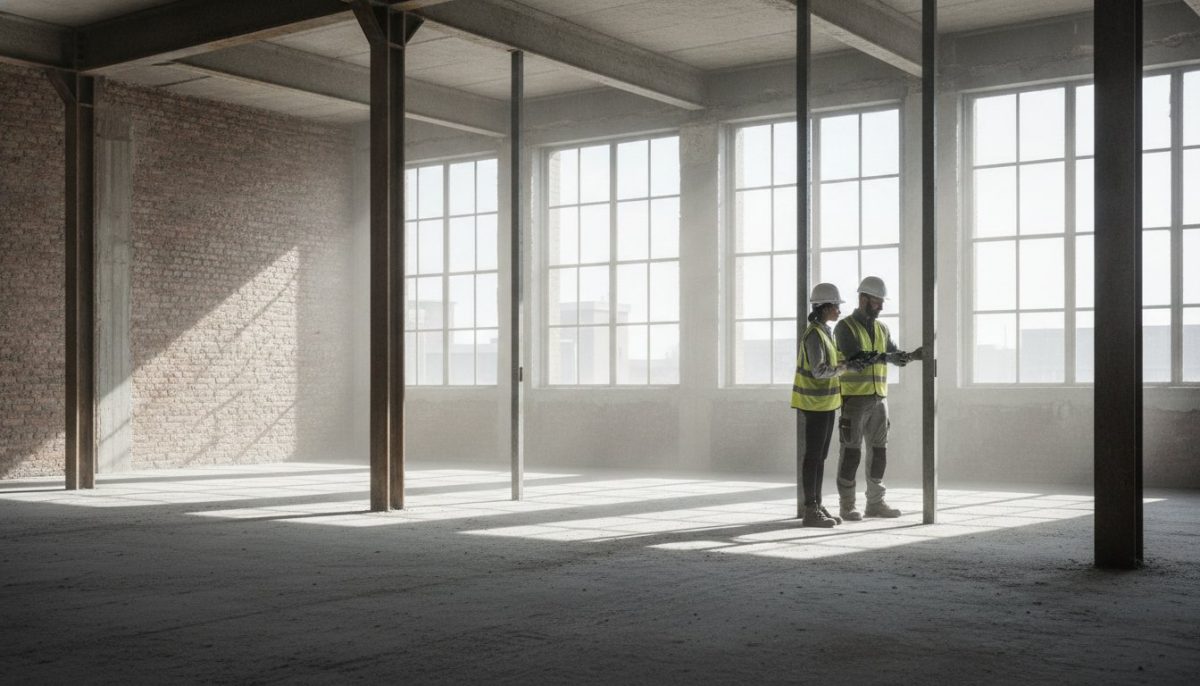
A successful commercial renovation doesn’t begin with the first new brick. It starts with the disciplined removal of every element that could compromise the structure’s future. You likely understand that stripping a facility is a high-stakes operation where hidden variables can quickly derail a timeline. When stakeholders look for professional commercial interior gutting services, they aren’t just seeking labor. They’re looking for a methodical partner to manage the invisible risks of asbestos, lead, and structural integrity. Managing these variables requires more than just force. It demands a surgical precision that respects the building’s core while clearing the path for progress.
We agree that the discovery of hazardous materials or a poorly planned strip-out can turn a profitable project into a liability nightmare. This guide will help you master the technical complexities of the process, from initial abatement to final shell preparation. You’ll learn how a strategic approach ensures full regulatory compliance and delivers a clean structural canvas ready for its next phase of life. We’ll examine the methodology behind safe debris management and the specialized procedures necessary to transform a cluttered interior into a pristine, project-ready shell.
Key Takeaways
- Learn to distinguish between “white box” and “to-the-studs” finishes to ensure your site preparation matches your specific construction requirements.
- Identify the critical safety protocols and testing requirements for asbestos and lead abatement that protect your project from liability and unforeseen delays.
- Master the technical requirements for commercial interior gutting charleston sc to ensure your facility is stripped to the shell with full regulatory compliance.
- Evaluate the advantages of selective demolition for historic preservation or phased renovations where structural integrity and surgical precision are required.
- Implement a rigorous vetting process for demolition partners that focuses on environmental responsibility and 15+ years of technical field experience.
What is Commercial Interior Gutting? Defining the Scope of Strip-Outs
Commercial interior gutting represents a disciplined, systematic approach to clearing a space for its next lifecycle. Unlike general demolition, this process focuses exclusively on the removal of non-structural elements while preserving the building’s core integrity. This phase is the foundational step for any tenant improvement project or facility repurposing. When property managers investigate commercial interior gutting charleston sc, they’re looking for a clean slate that meets specific lease requirements or architectural plans. A successful gut-out ensures that the structural shell is ready for new construction without the interference of legacy materials.
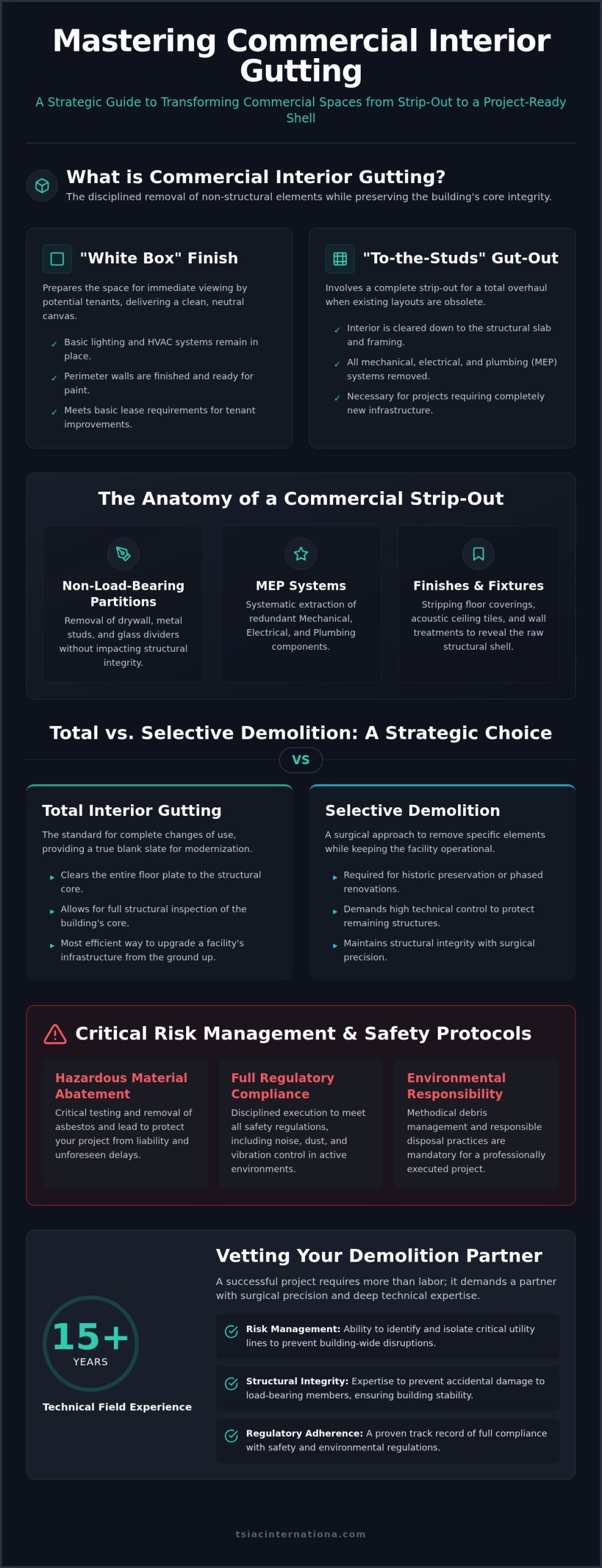
The scope of a gut-out typically falls into two distinct categories based on the project’s end goals. A “white box” finish prepares the space for immediate viewing by potential tenants, often leaving basic lighting, HVAC, and finished perimeter walls in place. In contrast, a “to-the-studs” gut-out involves stripping the interior down to the structural slab and metal framing. This level of removal is necessary when the existing layout or mechanical systems are entirely obsolete and require a complete overhaul to meet modern standards.
The Anatomy of a Commercial Strip-Out
A professional strip-out follows a logical sequence to ensure safety and efficiency. The process involves more than just clearing floor space. It requires the specialized handling of integrated building systems. Key components typically removed include:
- Non-load-bearing partitions: Removing drywall, metal studs, and glass dividers without impacting the structural skeleton.
- MEP Systems: The systematic extraction of redundant mechanical, electrical, and plumbing components.
- Finishes and Fixtures: Stripping floor coverings, acoustic ceiling tiles, and wall treatments to reveal the raw structural shell.
Why Commercial Projects Require Professional Execution
Attempting a large-scale gut-out without specialized expertise introduces significant risk. Professional execution is vital because commercial spaces rarely exist in isolation. Often, work must proceed in active building environments where noise, dust, and vibration control are mandatory. A disciplined team understands how to maintain a site that respects neighboring tenants while meeting aggressive production schedules.
Expert teams prioritize the preservation of shared utility lines. In multi-tenant facilities, a single error in cutting a pipe or wire can disrupt operations for an entire building. Professionals utilize 15+ years of field experience to identify and isolate these critical lines before demolition begins. This technical rigor prevents accidental damage to load-bearing members, ensuring the building remains stable and compliant with all safety regulations throughout the demolition phase.
Selective vs. Total Interior Demolition: Determining Your Project Requirements
Choosing between total and selective demolition is a strategic decision that impacts every subsequent phase of your project. Total gutting involves clearing the entire floor plate to the structural core, providing a true blank slate. This is often the primary objective when clients search for commercial interior gutting charleston sc to prepare for significant layout changes. Selective demolition, by contrast, requires a surgical approach to remove specific elements while keeping the remaining facility operational and intact. Both methods demand a high degree of technical control to ensure the building remains safe and viable.
When to Opt for Total Interior Gutting
Total gutting is the standard protocol for projects involving a complete change of use. If you’re converting a legacy warehouse into a modern office suite, the existing partitions and MEP systems are likely insufficient. When stakeholders initiate commercial interior gutting charleston sc for high-tech tenant requirements, they often find that legacy systems simply cannot be integrated. This thorough approach also allows for a full structural inspection of the building’s core, ensuring there aren’t any hidden defects before the new build-out begins. It’s the most efficient way to modernize a facility’s infrastructure from the ground up.
The Precision of Selective Demolition
Selective demolition is a technically demanding discipline that prioritizes the protection of adjacent finished spaces. It’s the preferred method for wing renovations or historic preservation projects where certain architectural features must remain. This process often involves complex shoring and bracing to provide temporary structural support while specific sections are removed. Success depends on tight coordination with MEP engineers to cap and safe-off utility branches. This ensures that building services remain active in non-renovated zones without interruption. Precision is the priority here, as any deviation can compromise the finishes of the areas intended to be saved.
This surgical methodology significantly reduces waste by preserving viable materials and avoiding unnecessary destruction. It’s a cost-effective strategy that minimizes the volume of debris sent to landfills while shortening the reconstruction timeline. If your project requires this level of technical accuracy, it’s essential to partner with a team that understands selective demolition as a precision trade rather than a blunt-force activity. This disciplined focus ensures that your facility’s active areas remain undisturbed while the renovation progresses with methodical speed.
Hazardous Material Abatement: The Critical Risk in Interior Gutting
The most significant obstacle in any commercial interior gutting charleston sc project isn’t the physical demolition of partitions. It’s the management of toxic materials that often lie dormant behind finishes. Asbestos and lead paint represent hidden liabilities that can halt a project instantly if discovered unexpectedly. While some contractors focus on “build-back” aesthetics, a disciplined property manager knows that the safety of the structural shell determines the viability of the entire renovation. Mandatory testing for older commercial structures is a legal and ethical requirement that protects workers, future occupants, and the owner’s investment.
Professional abatement is a specialized discipline that must precede the general strip-out phase. Ignoring these risks doesn’t just invite project delays; it creates significant liability risks from non-compliant waste disposal. A methodical approach ensures that these substances are identified and neutralized before they can contaminate the wider facility. This technical rigor is what separates a professional demolition partner from a general labor crew.
Identifying Asbestos and Lead Risks
Asbestos is frequently embedded in 9×9 floor tiles, thermal system insulation on piping, and spray-applied fireproofing or ceiling textures. These materials remain stable until they’re disturbed during the gutting process. Lead-based paint is another pervasive risk, especially on structural steel members and older masonry surfaces common in commercial shells. When these substances are present, we implement rigorous containment protocols. Containment is the use of HEPA filtration systems and physical polyethylene barriers to isolate the work area from the rest of the facility. For more detailed information on local requirements, consult our comprehensive guide to asbestos removal.
Regulatory Compliance and Safe Disposal
Handling hazardous waste requires a transparent and documented chain of custody. We ensure that all lead and asbestos debris is transported to certified disposal facilities using specialized containers and transport protocols. This process provides the property owner with essential “cradle-to-grave” documentation. This paperwork is your primary defense against future liability claims, proving that the hazardous materials were identified, removed, and disposed of according to federal and state standards.
Technical precision also extends to air quality management. Third-party air monitoring during and after the abatement process is a standard safety measure we utilize to verify that the environment is clear of microscopic fibers. Our team draws on 15+ years of industry experience to manage these high-stakes environments with total control. We don’t just clear the space; we ensure it’s legally and physically safe for the next trade to enter. This methodical approach eliminates the risk of project delays and ensures that your facility remains a compliant, valuable asset.
Safety Protocols and Environmental Responsibility in Demolition
Safety in demolition is a non-negotiable standard that protects both the workforce and the property owner’s assets. When executing commercial interior gutting charleston sc, the integration of heavy machinery and manual labor creates a complex risk profile. Managing these hazards requires a disciplined safety culture that goes beyond basic compliance. TSIAC International treats every site as a controlled environment where technical precision prevents accidents and ensures a seamless project flow. This methodical approach minimizes disruption and maintains the structural integrity of the facility throughout the strip-out process.
Job Site Safety and OSHA Compliance
Our crews operate under strict OSHA standards, beginning with comprehensive Personal Protective Equipment (PPE) requirements. This includes specialized respiratory protection for dust-heavy environments and high-visibility gear for sites with active machinery. Every shift begins with a mandatory safety briefing and a site-specific risk assessment. These meetings address the unique challenges of the day, such as the removal of heavy MEP systems or high-reach ceiling work. We don’t leave safety to chance; we engineer it into every movement our team makes.
Fire prevention and dust suppression are critical components of interior work. We utilize advanced misting systems and HEPA-filtered air scrubbers to maintain air quality and visibility. These measures prevent the accumulation of combustible debris and protect the building’s existing HVAC systems from contamination. For a deeper look at our technical approach, you can review our detailed demolition process guide, which outlines the specific safety benchmarks we maintain on every project.
The Economics of Demolition Recycling
Environmental responsibility is a core pillar of our methodology. Traditional demolition often treats all debris as waste, but our approach prioritizes material recovery. TSIAC International implements a rigorous on-site sorting process that separates wood, metal, and plastic into dedicated streams. This discipline significantly reduces the volume of material sent to landfills, aligning your project with modern sustainability goals. It’s a standard part of our debris management plan that reflects our 15+ years of industry experience.
The recovery of scrap metal plays a vital role in this process. By extracting and recycling copper piping, steel studs, and aluminum ductwork, we help offset project debris management costs. This isn’t just an environmental choice; it’s a strategic financial decision that benefits the project’s bottom line. TSIAC International remains committed to these sustainable practices, ensuring that your renovation starts with a clean, responsible footprint. If you’re ready to partner with a team that values precision and sustainability, contact us for professional interior gutting services.
Selecting a Strategic Partner for Commercial Interior Gutting
Selecting a partner for a complex strip-out is fundamentally an exercise in risk management. When stakeholders evaluate options for commercial interior gutting charleston sc, they must prioritize technical credentials over the lowest bid. A poorly executed demolition can lead to structural damage or environmental contamination that far exceeds any initial savings. You need a partner who views the building’s shell as a valuable asset that requires protection, not just a target for destruction. This disciplined focus ensures that the site remains safe and the project stays on its critical path.
Vetting Your Demolition Contractor
A rigorous vetting process should focus on a contractor’s ability to handle technical and regulatory hurdles. Property managers should demand proof of specific licensing for hazardous material abatement, as general demolition licenses don’t cover lead or asbestos removal. Verify that the contractor carries comprehensive insurance for both structural and environmental liabilities. A track record of 15+ years in large-scale commercial strip-outs is a reliable indicator of a team’s ability to navigate unforeseen site conditions without compromising the project timeline. Ask for documentation of previous projects that required surgical precision in active building environments.
The Advantage of Unified Demolition and Abatement
Project friction often occurs when separate teams manage demolition and environmental remediation. Selecting a single-source contractor to handle both gutting and abatement streamlines the project schedule and eliminates communication gaps. This unified approach ensures that hazardous materials are identified and contained before the general strip-out begins, preventing cross-contamination. It also simplifies the documentation process, providing you with a single point of accountability for all regulatory filings and safety reports. This integration is essential for maintaining a clean, compliant site from start to finish.
This strategic alignment is why TSIAC International is the strategic choice for nationwide projects. Our team integrates 15+ years of industry experience into every phase of the project, from initial assessment to final shell preparation. We don’t just clear spaces; we provide the disciplined execution necessary to transform a cluttered interior into a pristine structural shell. By managing the complexities of commercial interior gutting charleston sc with a single, expert team, you ensure your renovation starts on a foundation of safety and technical precision. TSIAC International delivers the peace of mind that comes from knowing every hazardous risk is controlled and every structural element is respected.
Preparing Your Facility for its Next Lifecycle
Success in commercial redevelopment depends on the precision of the initial strip-out. By prioritizing hazardous material abatement and surgical selective demolition, you protect your investment from the risks of contamination and structural compromise. A disciplined approach ensures that your building is stripped to the shell with 100% regulatory compliance, providing a clean canvas for future construction. When you manage the complexities of commercial interior gutting charleston sc with technical rigor, you eliminate project friction and secure a predictable renovation timeline.
TSIAC International brings 15+ years of specialized experience to every project site. Our team handles certified asbestos and lead abatement with the same methodical accuracy we apply to structural demolition. We don’t just clear debris; we provide the peace of mind that comes from professional, safe, and efficient site preparation. We’re ready to help you transform your facility into a project-ready shell with the highest standards of safety and environmental responsibility.
Contact TSIAC International for a Strategic Consultation on Your Interior Project
Frequently Asked Questions
What is the difference between interior gutting and structural demolition?
Interior gutting focuses on the systematic removal of non-structural components like drywall, ceilings, and MEP systems to prepare for a new build-out. Structural demolition involves the complete removal of the building’s skeleton, including foundations and load-bearing walls. While gutting preserves the structural shell for reuse, structural demolition clears the entire site for new construction. Both require technical precision to manage debris and ensure site safety.
Is an asbestos survey required before a commercial interior strip-out?
Federal and state regulations require a comprehensive asbestos survey before any commercial renovation or demolition begins. This testing identifies hazardous materials in floor tiles, insulation, and adhesives that could become friable during the strip-out. Identifying these risks early prevents project delays and protects the property owner from liability. We manage this process as part of our integrated abatement and demolition services to ensure full regulatory compliance.
How long does a typical commercial interior gutting project take?
Project duration depends on the facility’s square footage and the complexity of the integrated building systems. A typical floor-plate strip-out might span several weeks, though hazardous material discovery can extend that duration. Our team utilizes 15+ years of industry experience to create realistic schedules that account for abatement and material sorting. We prioritize efficiency without compromising the technical rigor required to deliver a clean structural shell.
Can I stay open for business while an interior gut-out is performed?
It’s possible to maintain operations in other parts of a facility while an interior gut-out is performed. We utilize selective demolition techniques to isolate the work zone using physical barriers and HEPA-filtered air scrubbers. This containment prevents dust and debris from migrating to active tenant spaces. We also schedule high-impact activities during off-peak hours to minimize noise disruptions for your staff and customers, ensuring business continuity.
What happens to the materials removed during a commercial gutting project?
We implement a rigorous recycling protocol on every project site to minimize environmental impact. Debris is sorted into specific streams for wood, metal, and plastic to ensure maximum recovery. This process reduces landfill fees and supports sustainable building practices. Hazardous materials follow a different path. These are sealed in specialized containers and transported to certified toxic waste facilities with complete “cradle-to-grave” tracking documentation for your records.
How do you protect the building’s structural integrity during selective demolition?
Protecting structural integrity requires a surgical approach to demolition. Our team reviews the building’s original structural drawings to identify load-bearing columns and beams before work begins. We use temporary shoring and bracing to support the shell while non-structural partitions are removed. This methodical execution ensures the building remains stable and safe for the next trade to enter, reflecting our 15+ years of commitment to technical precision.
Are there specific permits required for interior gutting projects?
Most jurisdictions require specific demolition and environmental permits before work can commence. When performing commercial interior gutting charleston sc, you must also file notifications with health and environmental agencies if hazardous materials are present. These permits ensure the project meets safety and waste management standards. We handle the documentation process to ensure your project remains fully compliant with all state and federal regulations throughout the strip-out.
What is the role of air monitoring during hazardous material abatement?
Air monitoring is a critical safety measure used during lead and asbestos abatement. It involves independent third-party testing to measure the concentration of airborne fibers or dust particles. These tests verify that our containment systems are functioning correctly and that the air outside the work zone remains safe for other occupants. Once the abatement is complete, final clearance testing confirms the space is safe for re-occupancy or further construction trades.
