
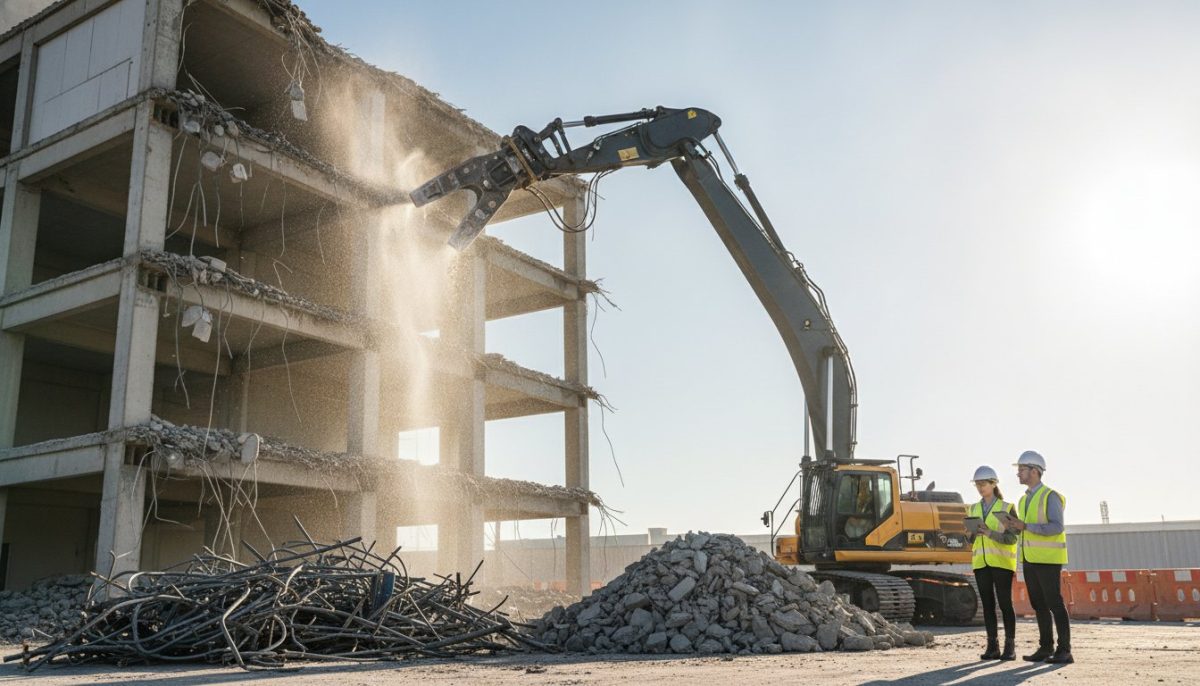
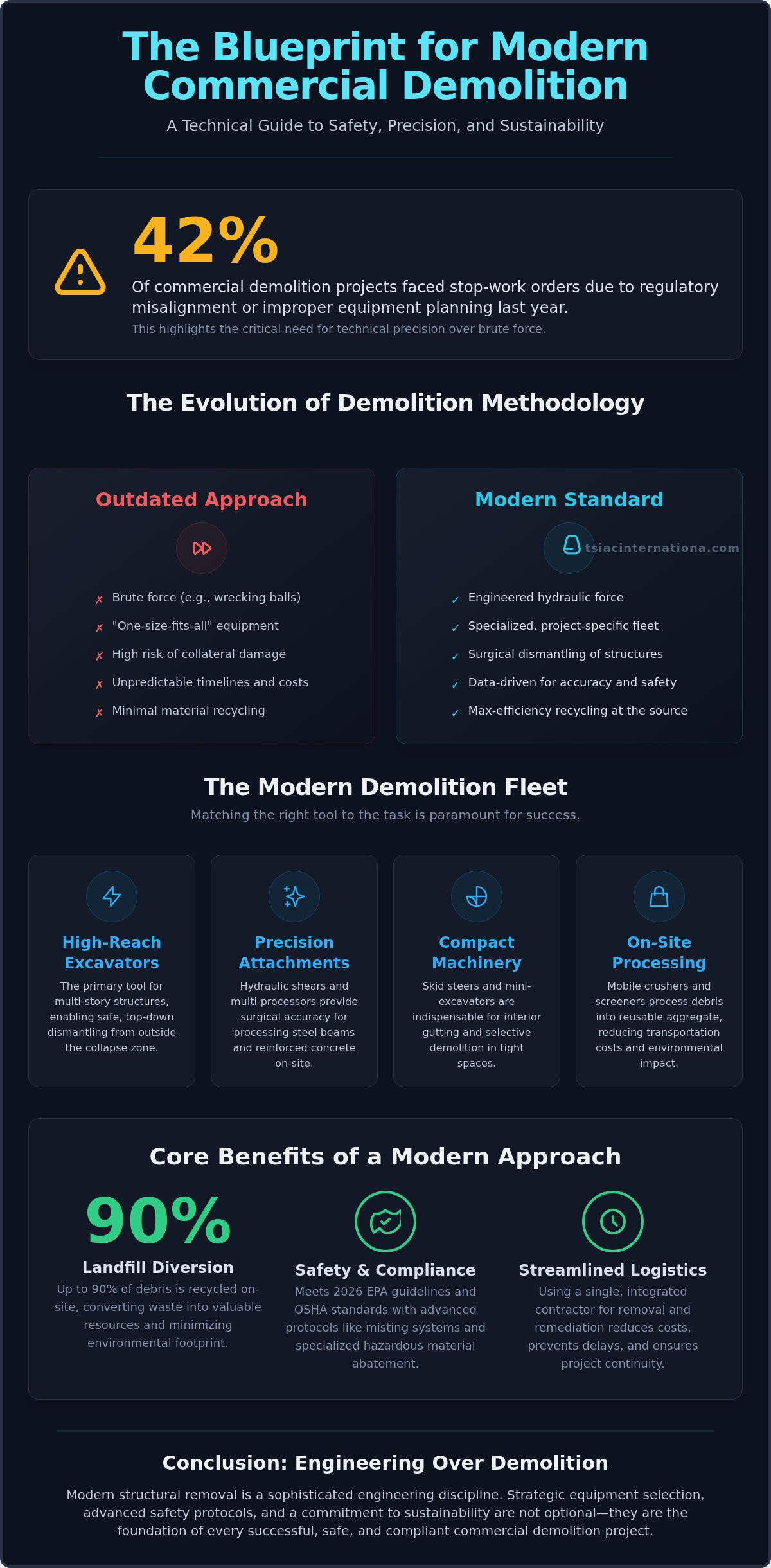
Did you know that nearly 42% of commercial demolition projects faced stop-work orders last year because of regulatory misalignment or improper equipment planning? This statistic highlights the complexity of modern site clearing, especially when you’re searching for reliable commercial demolition services that prioritize technical precision over brute force. It’s understandable why project managers feel anxious about hidden costs and shifting timelines; the presence of hazardous materials like asbestos only adds to the pressure of maintaining a safe, compliant job site.
We agree that uncertainty has no place in high-stakes structural removal. You shouldn’t have to wonder if your contractor’s fleet is capable of handling the specific demands of your project or if they’re following the latest safety protocols. This guide promises to show you how specialized heavy machinery and strategic equipment selection drive safety, speed, and environmental recycling. We’ll preview the essential roles of a modern fleet, from high-reach excavators to on-site concrete crushing, and explain how integrated abatement services ensure your project meets 2026 EPA guidelines while diverting up to 90% of debris from the landfill.
Key Takeaways
- Learn why matching specific mechanical force to structural material is the most effective way to prevent project delays and mitigate safety risks.
- Discover the technical requirements for commercial demolition charleston sc projects, including the essential roles of high-reach excavators and precision attachments.
- Understand how hydraulic shears and multi-processors provide surgical accuracy when processing steel beams and reinforced concrete on-site.
- Explore the integration of 2026 safety protocols, such as high-pressure misting systems and specialized abatement procedures for hazardous materials.
- Identify the operational advantages of using a single contractor for both structural removal and remediation to maximize recycling and streamline logistics.
The Strategic Role of Heavy Machinery in Modern Demolition
Modern demolition is a sophisticated engineering discipline rather than a simple act of destruction. It involves a coordinated suite of specialized hydraulic and mechanical tools designed for maximum efficiency and safety. When you’re planning for commercial demolition charleston sc, the strategic selection of these tools determines the trajectory of the entire operation. The industry has moved away from the unpredictable nature of wrecking balls; instead, we rely on high-precision hydraulic attachments that allow for the surgical dismantling of complex structures. This shift is essential for meeting modern 2026 recycling standards and ensuring material separation at the source. Using “one-size-fits-all” equipment is a liability that often leads to project delays and severe safety risks. Reliability starts with a well-maintained fleet. Rigorous maintenance schedules ensure project continuity and prevent the mechanical failures that can compromise a site’s security.
Why Machinery Selection Dictates Project Success
The success of a structural removal depends on matching the machine’s reach to the building’s height. If an excavator’s reach is insufficient, operators can’t maintain the necessary safety radius during a controlled collapse. This is a critical factor in high-stakes commercial demolition charleston sc projects where urban density is a concern. Equipment weight must also be balanced against site soil stability. Oversized machinery can inadvertently crush underground utilities or destabilize the ground. There’s a direct correlation between proper machine selection and reduced labor costs. Efficient machines complete tasks in fewer cycles, which keeps the project on schedule and within its original scope.
Engineering Force: The Science of Controlled Demolition
Hydraulic pressure provides a level of control that blunt force simply can’t match. By utilizing various demolition methods, contractors can achieve cleaner and more predictable removals. In 2026, the most advanced fleets utilize specialized sensors and GPS technology to monitor machine performance in real time. These systems allow operators to monitor structural integrity and machine positioning with millimeter accuracy. This data-driven approach is vital in congested environments where protecting adjacent properties is just as important as the demolition itself. Balancing raw power with this type of technical precision ensures that even the most challenging structural elements are handled with methodological accuracy.
Essential Equipment for Structural and Selective Demolition
Executing a successful project requires more than just heavy lifting. It demands an inventory of machinery that aligns perfectly with the structural composition of the building. For high-stakes commercial demolition charleston sc, the high-reach excavator serves as the primary tool for multi-story structures. These machines allow operators to dismantle buildings from the top down while remaining safely outside the collapse zone. Adhering to OSHA demolition standards is mandatory for these operations to ensure that every mechanical movement is accounted for in the site safety plan. The 2026 regulatory landscape demands that equipment selection isn’t just about power but about compliance. This means deploying machines with integrated telematics that provide real-time feedback on structural load shifts to prevent accidental collapses.
While structural removal relies on scale, selective demolition requires surgical precision. Skid steers and mini-excavators are indispensable for interior gutting. Their compact frames allow them to navigate through standard doorways and operate on floor slabs with limited load-bearing capacity. To manage the resulting waste, articulated haulers move massive debris loads across the site without damaging the underlying terrain. Modern sites also utilize mobile crushers and screeners. These units process concrete and masonry into reusable aggregate on-site, supporting the 90% landfill diversion goals common in 2026 projects. This machinery-led approach to recycling reduces transportation costs and minimizes the environmental footprint of the operation.
Primary Movers for Total Structural Removal
Standard excavators are versatile, but long-reach configurations are necessary when building heights exceed three stories. The choice depends on the specific engineering requirements of the site and the proximity of adjacent structures. Once the main structure is down, bulldozers take over for site clearing and final grade preparation. They ensure the land is stable and ready for future development. Wheel loaders complement this process by providing rapid debris management. Their ability to load trucks quickly is essential for maintaining a tight project timeline and preventing bottlenecks in the waste stream.
Specialized Tools for Selective and Interior Demolition
When environments are structurally unstable or contain hazardous materials, robotic demolition machines offer a remote-controlled solution. These units keep personnel out of harm’s way while delivering high-impact force in confined areas. For enclosed spaces, electric-powered equipment is the standard in 2026. These machines eliminate exhaust emissions, which is vital for maintaining air quality during interior gut-outs. This small-scale machinery allows us to preserve the structural integrity of a building during complex renovations. If you’re managing a sensitive site, partnering with an experienced structural demolition specialist ensures these tools are applied with technical accuracy.
Hydraulic Attachments: Precision Beyond the Bucket
Modern commercial demolition charleston sc relies on the versatility of hydraulic attachments to transform standard excavators into specialized engineering tools. These components allow for a level of control that far exceeds the capabilities of a traditional bucket. By utilizing a diverse array of attachments, contractors can maintain high production rates while strictly adhering to OSHA demolition safety standards. This mechanical flexibility is essential for managing the complex material compositions found in 2026 commercial structures, where steel, reinforced concrete, and composite materials are often integrated into a single frame. Precision at the “business end” of the machine ensures that structural elements are neutralized without compromising the stability of the remaining building or adjacent properties.
The Power of Hydraulic Shears and Breakers
Hydraulic breakers are the primary tool for fracturing high-density concrete slabs and foundations. The selection of the breaker tip is a technical decision based on material density; a moil point is typically used for general penetration, while a blunt tip is more effective for shattering oversized concrete masses through impact vibration. Hydraulic shears represent a significant advancement in site safety. They sever structural steel beams and rebar with mechanical force, which effectively eliminates the need for manual torch cutting at heights. This reduction in open-flame work significantly lowers the risk of site fires and worker exposure to toxic fumes. To effectively sever heavy-gauge structural steel, hydraulic systems must consistently maintain operating pressures between 5,000 and 7,000 PSI. Multi-processors further enhance this efficiency by allowing a single attachment to rotate between concrete crushing and steel cutting jaws as the project’s needs evolve.
Grapples and Pulverizers for Material Management
Efficient material handling is what separates a professional operation from a simple clearing job. Rotating grapples act as the “hands” of the demolition site, providing the dexterity required for surgical selective demolition and the organized dismantling of structural components. These tools allow operators to sort wood, metal, and plastic directly at the source, which is a critical step in maximizing the value of recycled materials.
- Rotating Grapples: Essential for picking through debris and placing materials into specific recycling streams.
- Concrete Pulverizers: These tools crush concrete into manageable aggregate while simultaneously separating it from embedded rebar.
- Secondary Processing: Reducing material size on-site minimizes the number of haul-off trips required, lowering the project’s overall carbon footprint.
By processing materials into smaller, uniform sizes before they leave the site, we ensure that debris is ready for immediate recycling or disposal. This systematic approach supports the 2026 industry goal of diverting up to 90% of demolition waste from landfills. It’s a method that prioritizes environmental responsibility without sacrificing the speed of the commercial demolition charleston sc project.
Safety Protocols and Hazardous Material Abatement
Safety in high-stakes structural removal is governed by rigorous engineering controls and methodological precision. When executing commercial demolition charleston sc, the primary focus shifts from simple destruction to the controlled management of environmental hazards. This process requires the seamless integration of heavy machinery with established asbestos removal in South Carolina protocols. Modern 2026 EPA and OSHA standards mandate that every phase of the project, from initial gutting to final debris transport, adheres to strict containment rules. High-pressure misting systems are deployed as a first line of defense. These dust suppression units create a fine fog that binds to airborne hazardous particles, forcing them to the ground before they can migrate beyond the site perimeter. For interior work, specialized filtration systems on gutting equipment ensure that air quality remains within safe limits for both operators and nearby occupants. This level of technical oversight is essential for maintaining site integrity throughout the project lifecycle.
Machinery in the Abatement Zone
Protecting the workforce in contaminated environments requires advanced technical solutions. Operators working in toxic or hazardous zones utilize machines equipped with HEPA-filtered cabs, which maintain positive pressure to prevent the ingress of microscopic fibers or lead dust. When dealing with lead-coated steel components, we use specialized hydraulic attachments that minimize the creation of fine particulates during the shearing process. This machinery doesn’t just dismantle; it facilitates the safe containment and transport of toxic debris by loading it directly into sealed, lined containers. This approach minimizes manual handling and significantly reduces the risk of environmental cross-contamination. It’s a method that prioritizes safety without compromising the speed of the demolition process.
Vibration and Noise Control in Sensitive Areas
Urban demolition often occurs in close proximity to sensitive structures such as hospitals, schools, or residential zones. We utilize low-vibration hydraulic technology to neutralize structural elements without sending shockwaves through adjacent foundations. Noise-dampening attachments are standard for these projects, ensuring that decibel levels remain within municipal 2026 limits. To guarantee safety, we employ real-time seismic monitoring systems that provide immediate feedback on ground movement during heavy structural demolition. This data-driven oversight allows for immediate adjustments to the work plan if vibration thresholds are approached. This data ensures the structural stability of neighboring properties is never compromised. If your project involves complex environmental challenges, our team provides the asbestos abatement expertise needed to maintain total site compliance.
Partnering with TSIAC International for Large-Scale Projects
Selecting a partner for high-capacity structural removal requires a balance of technical capability and logistical expertise. TSIAC International brings over 15 years of industry experience to every site, ensuring that complex projects are executed with methodological precision. While many contractors focus solely on the act of removal, our approach centers on the strategic application of force and environmental stewardship. We deploy professional-grade machinery and expert personnel on a national scale, making us a reliable choice for those seeking commercial demolition charleston sc services that exceed standard industry expectations. This national perspective allows us to apply lessons learned from diverse structural challenges across the country to your specific project site.
The TSIAC Advantage: Integrated Services
A primary advantage of our operational model is the ability to act as a single point of contact for the entire project lifecycle. This eliminates the logistical friction often found when coordinating between separate demolition and remediation teams. We manage a seamless transition from commercial interior gutting services to total structural removal. Our teams possess the expertise to handle asbestos, lead, and mold remediation within the primary demolition scope. By naturally integrating specialized abatement tools into the overall project flow, we maintain a secure site and prevent hazardous materials from ever entering the general waste stream. This unified approach results in tighter timelines and clearer communication for stakeholders.
Environmental Stewardship Through Machinery
We view every project as a resource recovery operation rather than a waste-generating event. Our commitment to 2026 environmental standards is reflected in our rigorous on-site sorting processes. Utilizing advanced hydraulic attachments, we separate wood, metal, and plastic directly at the source to maximize recycling percentages and material value. Reducing landfill impact is a core pillar of the demolition process in South Carolina. Modern equipment serves as the catalyst for these sustainable practices. It allows for the precise downsizing of concrete and steel, which reduces the total volume of haul-off trips required. This systematic approach ensures that every commercial demolition charleston sc project we undertake is both operationally efficient and environmentally responsible. We don’t just clear sites; we prepare them for the future with a focus on durability and professional integrity.
Securing Site Success Through Engineering Precision
The landscape of 2026 structural removal demands a shift from blunt force to methodological precision. Success in commercial demolition charleston sc now depends on the seamless integration of high-reach machinery and specialized hazardous material abatement. By prioritizing a single-contractor approach, you ensure that safety protocols and recycling standards are maintained without the logistical delays caused by misaligned teams. This technical focus doesn’t just protect your timeline; it safeguards your investment and the surrounding environment through a disciplined, engineering-first mindset.
TSIAC International brings 15+ years of industry expertise to every project, offering full-service abatement and demolition integration across the country. Our national service coverage and site management capabilities mean we’re equipped to handle the most complex structural challenges with unwavering reliability. We’re dedicated to helping you achieve your project goals through transparent communication and technical excellence that meets the highest safety standards. Our word is our guarantee on every site we manage.
Contact TSIAC International for a Professional Demolition Quote and experience the confidence that comes from partnering with a disciplined, expert team. We look forward to providing the professional foundation your next development project requires.
Frequently Asked Questions
What is the most important piece of machinery for structural demolition?
The high-reach excavator is the cornerstone of modern structural demolition. It provides the necessary elevation to dismantle multi-story buildings from the top down, keeping the operator safely outside the potential collapse zone. These machines are often equipped with specialized attachments like shears or breakers to handle specific material compositions. When planning a commercial demolition charleston sc project, ensuring the contractor utilizes high-reach technology is vital for both site safety and structural control.
How does heavy machinery help with asbestos removal?
Heavy machinery plays a critical role in hazardous material containment by reducing manual handling and worker exposure. For example, excavators equipped with HEPA-filtered cabs provide a pressurized, clean-air environment for operators working in abatement zones. Specialized hydraulic shears can sever lead-coated steel components without creating the toxic fumes associated with traditional torch cutting. These mechanical solutions allow for the efficient loading of hazardous debris into sealed containers, maintaining strict 2026 regulatory compliance.
Can heavy equipment be used for interior gutting without damaging the building shell?
Specialized compact equipment is designed specifically for high-precision interior gutting without compromising the building’s structural shell. Mini-excavators and skid steers can navigate through standard doorways and operate on floor slabs with limited load-bearing capacity. In 2026, electric-powered versions of these machines are standard for indoor use, as they eliminate exhaust emissions and reduce noise levels. This allows contractors to strip interiors down to the studs while preserving the integrity of the exterior walls and primary structural members.
What are the safety requirements for operating high-reach excavators in 2026?
In 2026, OSHA standards for high-reach excavator operation require advanced integrated safety systems and rigorous operator certification. Machines must be equipped with real-time stability sensors and telematics that provide immediate feedback on structural load shifts. Furthermore, site plans must establish a clearly defined exclusion zone that accounts for the machine’s full reach and potential debris trajectory. Regular mechanical inspections and documented maintenance logs are also mandatory to prevent hydraulic failures that could lead to catastrophic site accidents.
How do demolition contractors handle dust and debris on-site?
Contractors utilize high-pressure misting systems to neutralize dust and airborne particulates at the source. These units create a dense fog that binds to dust, causing it to settle immediately rather than migrating off-site. For debris management, we implement on-site sorting and processing using mobile crushers and screeners. This systematic approach ensures that materials are categorized and reduced in size before transport, which minimizes the number of haul-off trips and keeps the project site organized and secure.
Why is material recycling important in a demolition project?
Material recycling is a fundamental pillar of modern environmental stewardship, aiming to divert up to 90% of debris from landfills. By recovering wood, metal, and plastic, contractors reduce the demand for virgin materials and lower the overall carbon footprint of the project. On-site processing of concrete into reusable aggregate also provides significant logistical advantages. This commitment to sustainability is a key requirement for any commercial demolition charleston sc operation seeking to meet 2026 green building standards and corporate responsibility goals.
What is the difference between a hydraulic shear and a concrete pulverizer?
A hydraulic shear is engineered to sever structural steel and rebar using immense mechanical pressure, typically maintaining between 5,000 and 7,000 PSI. In contrast, a concrete pulverizer is designed to shatter masonry and concrete slabs into manageable aggregate. While shears focus on cutting, pulverizers use a crushing action to separate embedded metal from the concrete matrix. Both tools are essential for efficient material processing, but their application depends on whether the primary goal is structural dismantling or secondary material recycling.
How do I choose the right demolition contractor for a commercial project?
Selecting the right contractor requires verifying their technical expertise, safety record, and fleet capabilities. You should look for a firm with at least 15 years of industry experience and a proven track record in integrated abatement and structural removal. It’s essential to confirm they follow 2026 safety standards and have the specialized equipment necessary for your specific building type. A reliable partner acts as a professional consultant, providing clear documentation of their recycling practices and hazardous material handling protocols.
