
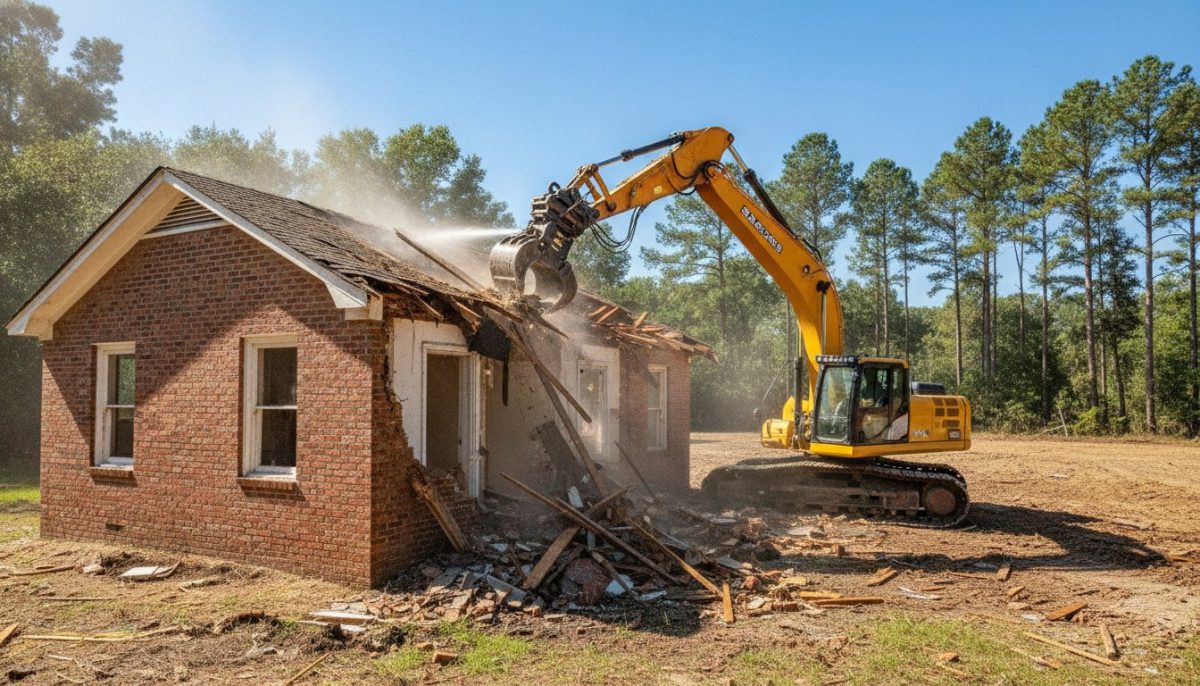
In South Carolina, the difference between a successful property cleared for construction and a $16,550 OSHA fine often comes down to a single 10-day notification window. You likely realize that residential demolition south carolina involves more than just bringing in a bulldozer; it’s a high-stakes technical operation where hidden asbestos or lead can stall your project for months. We understand the pressure of managing these safety risks while trying to maintain a strict development timeline.
This guide provides the expert breakdown you need to handle the complexities of structural removal, asbestos regulations, and site clearing while maintaining full compliance with SCDES standards. We’ll examine the mandatory notification protocols, the 2026 asbestos inspection mandates, and the methodical steps required to transform a hazardous structure into a clean, build-ready lot. By following this professional framework, you can ensure that your site is prepared safely and efficiently, avoiding the common pitfalls of unexpected hazardous material discovery.
Key Takeaways
- Understand the mandatory 10-day SCDES notification requirement and ePermitting protocols to prevent costly regulatory penalties and project delays.
- Learn how professional structural integrity assessments dictate the safest and most efficient demolition methods for your specific property.
- Discover the critical methodology for integrating professional asbestos and lead abatement into your structural removal timeline.
- Ensure a clean, build-ready lot by following a standardized process for residential demolition south carolina that prioritizes site clearing and material recycling.
- Identify the specific licensing and insurance benchmarks required to select a qualified demolition partner in the 2026 regulatory environment.
Understanding Residential Demolition Requirements in South Carolina
South Carolina state law defines demolition through a lens of structural mechanics. The South Carolina Department of Environmental Services (SCDES) classifies it as the wrecking or removal of any load-supporting structural member of a facility. This technical definition is vital because it separates minor cosmetic renovations from high-risk structural engineering projects. When planning residential demolition south carolina, property owners must recognize that any project affecting the skeleton of a house triggers specific environmental and safety protocols. In 2026, many homeowners are opting for teardowns due to the rising costs of maintaining aging structures or to leverage the South Carolina Abandoned Buildings Revitalization Act, which recently expanded tax credit eligibility through the signing of S.853.
The choice of method depends entirely on the physical state of the building. Demolition for small residential buildings often involves hydraulic excavators or manual deconstruction, but the strategy is dictated by the structural integrity of the foundation and framing. If the core components are compromised by extensive wood rot, severe mold, or previous fire damage, a surgical approach is usually discarded in favor of a total structural removal to ensure a safe, build-ready lot. We prioritize a methodical assessment of these physical parameters before any equipment arrives on site.
Total Structural Removal vs. Selective Demolition
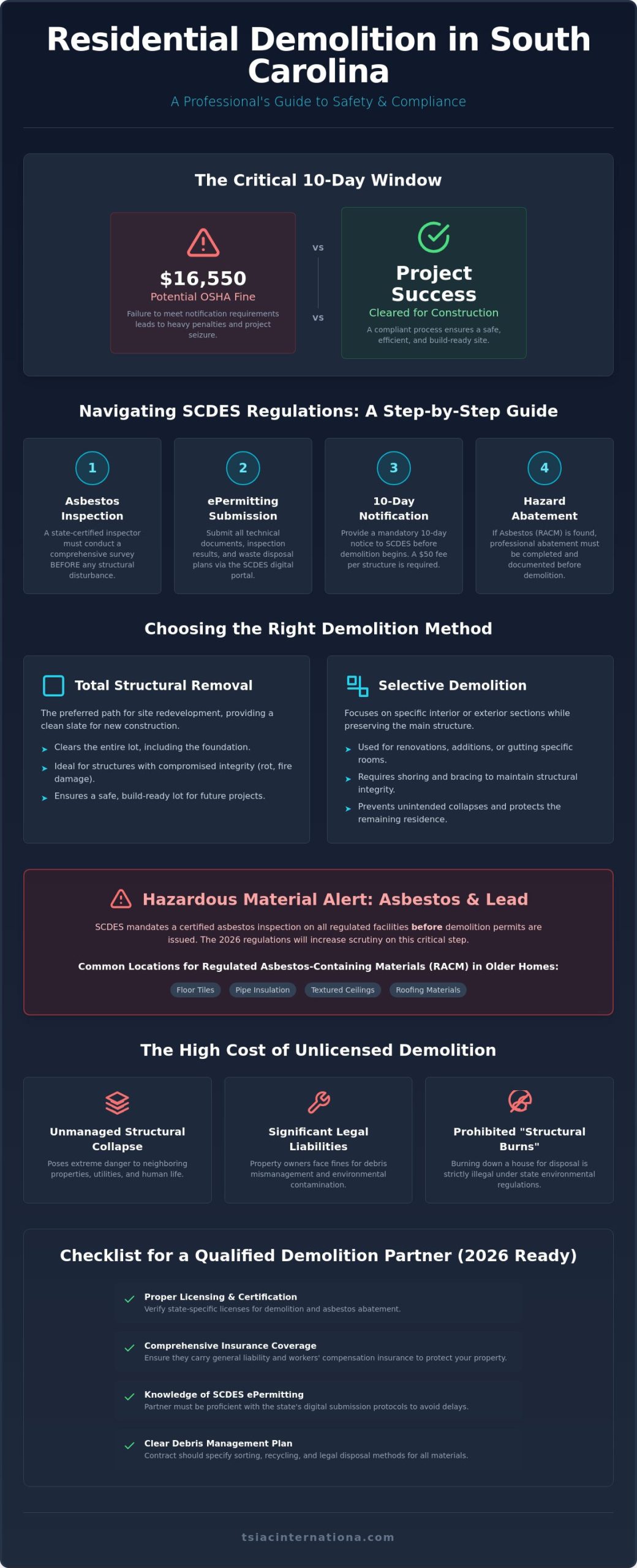
A full teardown is the preferred path for site redevelopment where the existing footprint no longer serves the property’s value. This process clears the entire lot, including the foundation, to provide a blank slate for new construction. Conversely, selective demolition focuses on specific interior or exterior sections, such as gutting a kitchen or removing a load-bearing wall for an addition. During selective projects, we prioritize shoring and bracing to maintain the structural integrity of the remaining sections. This prevents unintended collapses that could endanger the rest of the residence or the safety of the crew.
The Risks of Non-Professional Demolition
Attempting a “DIY” teardown or hiring unlicensed labor introduces severe physical and legal hazards. Unmanaged structural collapse is a primary risk on residential lots where nearby utilities or neighboring homes are at stake. Property owners also face significant legal liabilities for debris mismanagement. SCDES maintains strict oversight on how materials are sorted and transported to prevent environmental contamination. It’s critical to remember that “structural burns”, the practice of burning down a house for disposal, are strictly prohibited by state environmental regulations. Violating these laws leads to substantial fines, making professional oversight a non-negotiable requirement for any residential demolition south carolina project.
Navigating SCDES Regulations and Asbestos Permits
Compliance with the South Carolina Department of Environmental Services (SCDES) is the most critical phase of project planning. For residential demolition south carolina, the regulatory framework ensures that hazardous materials don’t enter the municipal waste stream or endanger local air quality. The state utilizes an ePermitting system, a centralized digital portal where property owners or their authorized contractors must submit all technical documentation. This isn’t just a formality; it’s a rigorous auditing process that requires detailed structural data, waste disposal plans, and certified inspection results. Missing a single field in the ePermitting application can reset your project timeline and delay construction for weeks.
The financial aspect of state permitting is straightforward but strictly enforced. As of July 2026, the SCDES requires a $50 fee per structure for the mandatory “Notification of Demolition.” This fee applies to all regulated facilities, even if the initial inspection reveals no hazardous materials. Owners must also account for the additional costs of professional abatement permits if asbestos is identified. Providing accurate information, such as the exact building square footage and the designated landfill for construction and demolition (C&D) debris, is essential for a successful application and avoids the risk of permit revocation.
Mandatory Asbestos Inspections
Before any structural member is disturbed, a state-certified inspector must conduct a comprehensive survey. This mandate applies to almost all regulated facilities to identify Regulated Asbestos-Containing Materials (RACM). In older South Carolina homes, these materials are frequently found in floor tiles, pipe insulation, and textured ceilings. While single-family homes with four or fewer units may have specific exemptions from certain licensing rules, the property owner is still legally responsible for the safe disposal of any toxic materials. A certified inspection provides the technical baseline needed to avoid environmental violations and protect the health of the crew.
The 10-Day Notification Timeline
The SCDES 10-day rule is a non-negotiable waiting period that begins the moment your notification is successfully filed. This window allows the state to perform oversight and verify that all abatement protocols are in place. You can’t bypass this timeline, even for minor structures. Coordinating the abatement of hazardous materials and the subsequent structural removal within this period requires methodological precision. Starting work even one day early can lead to OSHA serious violation penalties, which in 2026 can reach $16,550 per item. Working with a qualified demolition expert ensures that every state filing is handled with the necessary accuracy to keep your project on schedule.
The Residential Demolition Process: A Step-by-Step Guide
Once the mandatory 10-day SCDES notification period expires, the project transitions from administrative planning to physical execution. The success of residential demolition south carolina depends on a methodical sequence that prioritizes site stabilization before a single load-bearing wall is touched. This phase begins with a final site walk-through to verify that all hazardous material abatement, as detailed in previous sections, is complete and that the structure is vacant. We then move into the critical phase of utility management, which is the most significant safety barrier between a controlled removal and a catastrophic site accident.
Managing the logistical transition requires a deep understanding of both state environmental laws and local municipal building codes. Beyond the state-level ePermitting process, most South Carolina counties require specific local demolition permits. These documents ensure that the project adheres to local zoning and noise ordinances. Our team handles this technical paperwork to ensure that every aspect of the takedown is documented, providing property owners with a clear audit trail that is essential for future construction financing and insurance requirements.
Pre-Demolition Logistics and Utility Safety
Utility disconnection is a high-precision task that involves more than just flipping a switch. We coordinate directly with local providers to ensure that electrical services are physically pulled from the transformer. Capping water, sewer, and gas lines at the property line is mandatory to prevent site flooding or gas accumulation during the structural takedown. This step also involves protecting public infrastructure, such as sidewalks and fire hydrants, using specialized barriers. These measures prevent collateral damage to neighboring properties, which is a common source of legal liability in dense residential areas.
Structural Takedown and Debris Management
The physical takedown utilizes hydraulic excavators to collapse the structure inward, a technique that minimizes dust and contains debris within the building footprint. This is not a “smash and haul” operation. We implement a rigorous on-site sorting process to maximize material recovery. With landfill tipping fees in counties like York and Horry reaching $46 per ton in 2026, efficient sorting is a financial necessity. We separate wood, metal, and concrete for recycling, directly addressing the fact that 17% of the state’s municipal waste consists of recyclable materials. The final stage involves removing the foundation and grading the soil to create a stable, build-ready lot for your next project.
Hazardous Material Abatement: Asbestos and Lead
Integrating environmental remediation with structural removal is the only way to maintain a predictable project timeline. When managing residential demolition south carolina, the discovery of toxic substances often occurs during the initial site assessment. Rather than treating these as separate events, we embed abatement into the primary demolition schedule. This unified approach prevents the logistical friction that occurs when multiple vendors compete for site access. It also ensures that the demolition crew isn’t exposed to airborne contaminants during the physical takedown phase.
South Carolina regulations require a high degree of technical precision for the transport and disposal of hazardous waste. Every pound of material must be tracked from the point of origin to a licensed landfill capable of accepting toxic debris. By combining these services, we maintain a single chain of custody for all site materials. This documentation is vital for property owners to prove full compliance with state environmental laws and to avoid the severe OSHA penalties mentioned earlier in this guide. Centralizing these responsibilities under one expert partner reduces the administrative burden and provides a more cohesive safety strategy for the entire property.
Professional Asbestos Removal Services
Effective asbestos management requires rigid containment protocols. We utilize heavy-duty poly sheeting and negative air pressure machines equipped with HEPA filtration to prevent fiber migration. This specialized containment is essential during the removal of floor tiles, siding, or insulation. Once the material is safely extracted, we provide the necessary regulatory compliance documentation to verify that the site is clear. For a deeper technical breakdown, you can learn more about asbestos removal in South Carolina to understand the specific safety standards we uphold on every residential lot.
Lead Paint Remediation and Mold Abatement
Older residential structures, particularly those built before 1978, frequently contain lead-based paint. In Charleston alone, approximately 42% of older structures contain hazardous materials like asbestos or lead paint, a trend that requires careful management in the residential sector. During the process of residential demolition south carolina, this paint can become a significant environmental hazard if not handled through specialized containment or wet-scraping methods. Similarly, interior gutting often reveals mold infestations that require immediate remediation to prevent spore dispersal. See our guide on hazardous material abatement in South Carolina for detailed procedures on handling these specific contaminants. To secure your site and ensure a safe, build-ready lot, you should contact our abatement specialists today.
Choosing the Right Demolition Contractor in 2026
Selecting a partner for residential demolition south carolina requires a rigorous evaluation of technical credentials rather than a simple comparison of price points. In a regulatory environment where SCDES oversight is increasing, the contractor’s ability to navigate ePermitting and manage hazardous material abatement is paramount. A professional firm doesn’t just operate machinery; they manage the entire environmental and legal liability of your property. This transition from a standing structure to a build-ready lot must be handled with methodological precision to avoid the $16,550 OSHA penalties and environmental citations that often plague less experienced operators.
Essential Credentials for Demolition Contractors
A reputable contractor must possess specific SCDES-recognized abatement certifications to handle the complexities of older South Carolina homes. You should verify their insurance coverage to ensure it includes specific riders for pollution and hazardous material handling, as standard general liability often excludes these risks. Reviewing a firm’s past project performance and safety metrics provides an objective view of their operational discipline. We recommend asking for a documented history of successful SCDES notifications and completed abatement projects. You can read why we are considered the gold standard in South Carolina demolition by reviewing our technical approach to site safety and regulatory compliance.
TSIAC International’s Commitment to Excellence
TSIAC International brings over 15 years of industry experience to every residential demolition south carolina project. Our expertise extends beyond structural removal to include specialized selective demolition and interior gutting. We recognize the environmental impact of structural waste, which is why we implement industry-leading recycling practices on every site. By separating wood, metal, and plastic, we help property owners reduce landfill tipping fees while addressing the state’s goal of recovering the 17% of municipal waste that currently goes unrecycled. This commitment to sustainability doesn’t compromise our speed or technical accuracy. We provide a disciplined, expert-led process that guarantees your site is cleared safely and in full accordance with all state environmental laws. Contact us today to receive a fixed-price structural demolition contract and ensure your property is prepared by a partner who prioritizes safety and professional integrity.
Securing a Build-Ready Site for Your Next Project
Transforming a residential property begins with a disciplined approach to structural removal. Success in residential demolition south carolina requires more than just heavy machinery; it demands strict adherence to the SCDES 10-day notification window and methodical hazardous material abatement. We’ve detailed how professional oversight prevents the discovery of unexpected asbestos from derailing your timeline or resulting in severe regulatory fines. By prioritizing on-site material recycling and technical precision, you ensure that your lot isn’t just empty; it’s a safe, stable foundation for future investment.
While your current focus is on site preparation in South Carolina, if your project is part of a larger relocation strategy, you can visit Interstate Canberra Removalist to learn more about professional logistics and interstate moving standards.
With 15+ years of industry expertise, TSIAC International provides the specialized containment and regulatory mastery needed for complex teardowns. As an SCDES-compliant abatement specialist, we manage every environmental risk while maintaining a steadfast commitment to on-site recycling of wood, metal, and plastic. Don’t leave your property’s safety to chance or uncertified labor. Request a Professional Demolition Quote from TSIAC International to secure a partner who guarantees technical accuracy and full state compliance. We’re ready to help you clear the path for your new construction project with confidence.
Frequently Asked Questions
Do I need an asbestos inspection for a residential demolition in South Carolina?
Yes, SCDES regulations require a comprehensive asbestos inspection by a state-certified professional for most structures before work begins. This mandatory step identifies Regulated Asbestos-Containing Materials (RACM) that could become airborne during structural removal. Even if your building appears modern, hidden layers in flooring, roofing, or pipe insulation often contain toxic fibers; roofing experts like Thoughtful Roofer Inc. suggest that identifying these hazards early is essential for safety during structural teardowns.
How long does the demolition permit process take with SCDES?
The process requires a minimum of 10 working days following the successful submission of your “Notification of Demolition” through the ePermitting system. This waiting period is a non-negotiable state requirement that allows for regulatory oversight and verification of your waste disposal plan. You should also factor in the time needed to conduct the initial asbestos survey and receive certified lab results before filing your notification.
Can I perform my own residential demolition to save costs?
We strongly advise against DIY structural removal due to the immense physical safety risks and legal liabilities involved. While some exemptions exist for specific owner-occupied single-family homes, you remain legally responsible for hazardous material disposal and utility safety. Improper handling of lead or asbestos can lead to OSHA serious violation penalties of up to $16,550 per item and significant environmental citations.
What is the difference between demolition and renovation according to state law?
State law defines demolition as the wrecking or taking out of any load-supporting structural member of a facility. Renovation involves altering a facility or its components in any other way that doesn’t affect the structural skeleton. Understanding this distinction is vital because a project classified as a residential demolition south carolina triggers stricter SCDES notification requirements and a mandatory $50 fee per structure.
How is hazardous waste like asbestos disposed of after a house teardown?
All asbestos-containing waste must be double-bagged, labeled, and transported to a licensed landfill specifically permitted to accept hazardous materials. It isn’t permitted in standard municipal waste streams or construction and demolition (C&D) landfills. We maintain a rigorous chain of custody and provide all necessary disposal manifests to prove your project complied with South Carolina environmental laws and protected local air quality.
What utilities must be disconnected before demolition begins?
You must ensure the physical disconnection and capping of electricity, natural gas, water, and sewer lines at the property boundary. This process involves direct coordination with local utility providers to pull meters and verify that no live services remain. Proper utility management is the primary defense against site fires, flooding, or gas explosions during the structural takedown phase, protecting both the crew and neighboring properties.
Does a demolition contractor handle the recycling of materials like metal and wood?
Professional contractors manage the on-site sorting of wood, metal, and concrete to maximize material recovery and reduce project costs. A 2025 study found that 17% of South Carolina’s municipal waste is recyclable, representing a significant lost market value. We prioritize recycling to mitigate landfill tipping fees, which have reached $46 per ton in counties like York and Horry as of July 2026.
Are there specific regulations for demolishing historic homes in South Carolina?
Yes, historic structures are often subject to additional local municipal ordinances and Board of Architectural Review approvals. These local requirements exist alongside state SCDES regulations and may require specific deconstruction methods to salvage historic materials. You must always verify local zoning and historic preservation rules in cities like Charleston before initiating the mandatory 10-day state notification process.
