
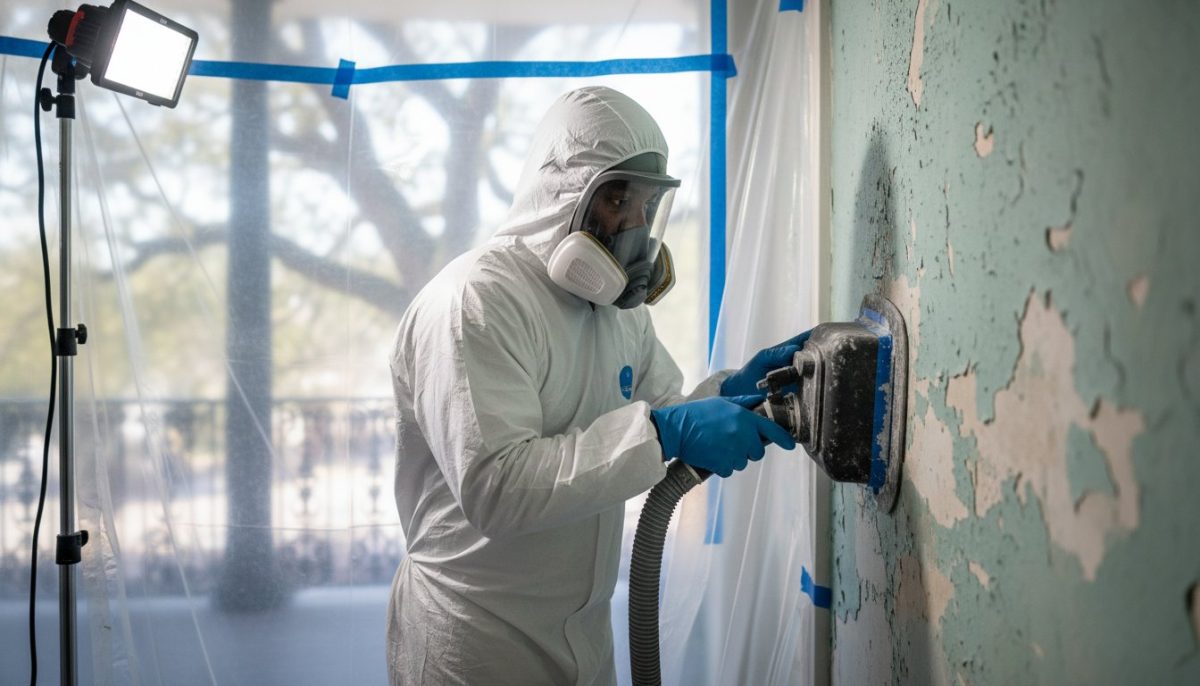
The EPA currently mandates fines of up to $37,500 per violation, per day, for non-compliance with lead safety protocols, yet many facility managers still treat surface preparation as a routine renovation task rather than a controlled hazardous operation. You likely recognize that managing an aging industrial asset involves more than just aesthetics; it’s about mitigating long-term structural and legal risks. When you face the reality of deteriorating coatings, the complexity of the lead paint abatement process can feel overwhelming, especially when balancing the conflicting demands of OSHA worker safety standards and EPA environmental mandates.
This guide provides the technical clarity you need to move from liability to a lead-free certification. We’ll break down the engineered phases of permanent removal, from initial XRF testing to the final clearance report. You’ll gain a transparent understanding of how professional containment and specialized HEPA vacuum systems ensure your project stays on schedule while meeting the strict 1992 Residential Lead-Based Paint Hazard Reduction Act requirements. We’re outlining the exact workflow that transforms a high-risk site into a safe, compliant, and fully documented asset.
Key Takeaways
- Distinguish between temporary remediation and permanent abatement to secure the long-term safety and structural integrity of your property.
- Master the technical phases of the lead paint abatement process, from initial hazardous material mapping to the engineering of critical containment barriers.
- Evaluate specialized methods such as enclosure, encapsulation, and removal to determine the most effective strategy for wood, steel, and masonry substrates.
- Ensure full regulatory compliance by understanding the latest 2026 EPA and OSHA standards for site safety and worker protection.
- Identify the critical credentials and specialized pollution insurance required to partner with a high-tier professional abatement contractor.
Lead Paint Abatement vs. Remediation: Choosing Permanent Safety
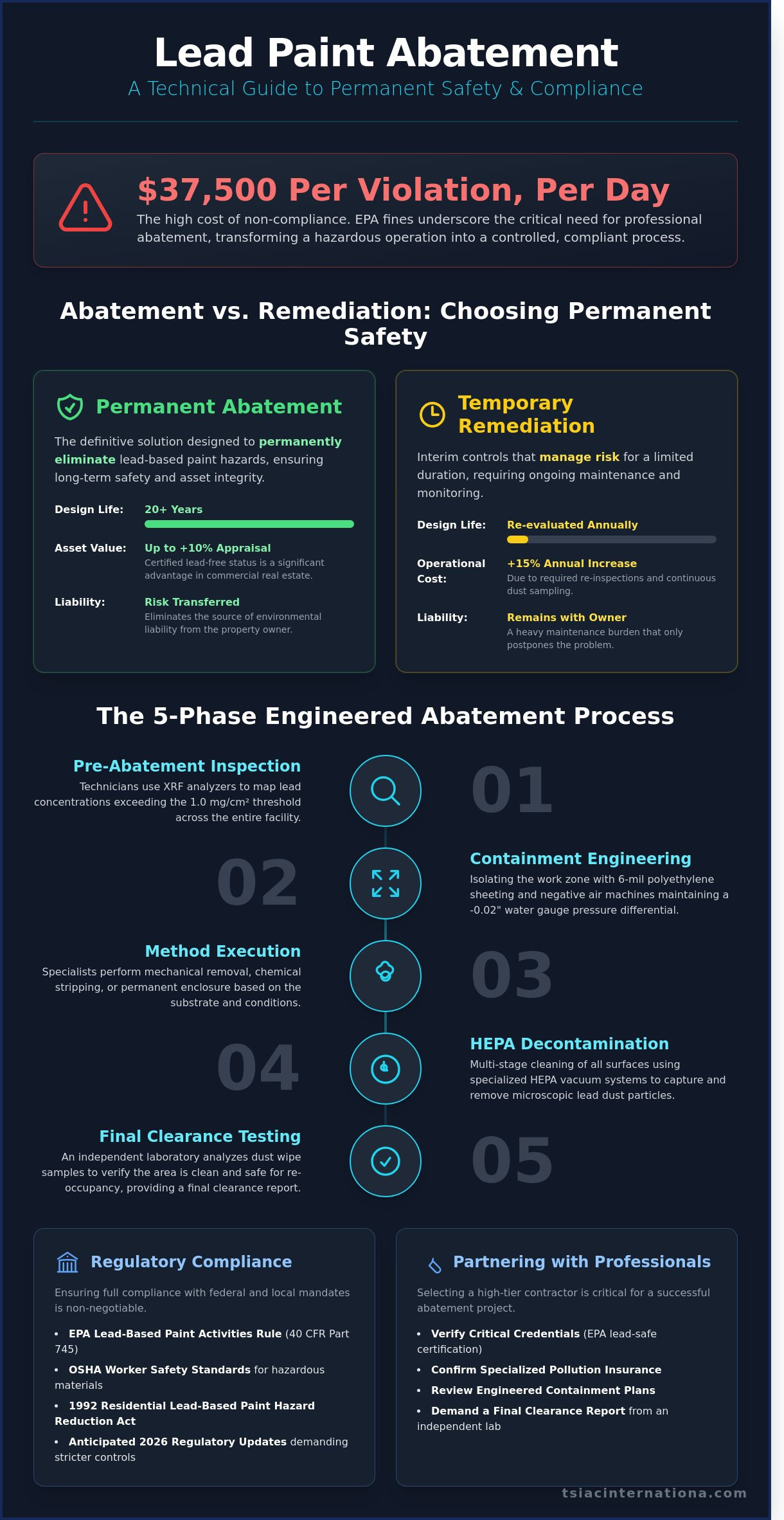
Understanding the lead paint abatement process requires a clear distinction between temporary risk management and permanent hazard elimination. While many facility managers initially look for quick fixes, the 2026 regulatory updates demand a more rigorous approach to long-term liability. Abatement refers specifically to a set of measures designed to permanently eliminate lead-based paint hazards. This differs fundamentally from interim remediation, which only manages the risk for a limited duration through maintenance and monitoring.
The EPA governs these technical interventions through the Lead-Based Paint Activities Rule, specifically detailed in 40 CFR Part 745. This regulation ensures that only certified professionals handle the removal, preventing the accidental dispersal of toxic dust that occurs during unmanaged renovations. For a comprehensive lead abatement overview, one can see that the distinction lies in the intent and the documented longevity of the solution. Professional contractors don’t just hide the problem; they remove the source of the toxicity to meet strict safety benchmarks.
Interim Controls: The Temporary Mitigation Strategy
Interim controls include specialized HEPA vacuuming, paint stabilization, and minor structural repairs. These methods act as short-term fixes. They’re appropriate when a building is slated for demolition within 24 months or when immediate budget constraints prevent full removal. However, they carry a heavy maintenance burden. Property owners often see a 15% increase in annual operational costs due to the required re-inspections and dust sampling needed to verify that the environment remains safe for occupants.
Abatement: The Permanent Solution for Structural Integrity
True abatement yields a minimum 20-year design life. It involves heavy-duty techniques like component replacement, enclosure with specialized barriers, or complete mechanical removal. From a technical standpoint, structural removal is often the most cost-effective path over a decade. It eliminates the need for the perpetual monitoring required by the EPA and HUD. Implementing a professional lead paint abatement process can increase commercial property appraisals by 10% or more. It also significantly lowers insurance premiums by removing the primary source of environmental liability. Our teams prioritize these methods to ensure the structural integrity of the asset remains intact while the hazard is surgically extracted.
- Design Life: Abatement provides 20+ years of safety; interim controls require re-evaluation every 12 months.
- Liability: Permanent removal transfers the risk away from the property owner.
- Asset Value: Certified lead-free status is a significant advantage in commercial real estate transactions.
The 5-Phase Lead Paint Abatement Process
Successful projects require a structured, five-stage approach to eliminate toxicity and ensure structural integrity. The lead paint abatement process isn’t a simple renovation; it’s a controlled engineering operation that demands absolute precision. Professionals execute this workflow to ensure compliance with EPA lead regulations and local safety mandates.
- Phase 1: Pre-abatement inspection. Technicians use XRF (X-ray fluorescence) analyzers to map lead concentrations exceeding 1.0 mg/cm² across the facility.
- Phase 2: Containment engineering. The team establishes physical barriers and pressure differentials to isolate the work zone.
- Phase 3: Method execution. Specialists perform mechanical removal, chemical stripping, or permanent enclosure based on the substrate’s condition.
- Phase 4: HEPA decontamination. This involves multi-stage cleaning of all surfaces to remove microscopic dust.
- Phase 5: Clearance testing. Independent laboratories analyze dust wipe samples to verify the area is safe for re-occupancy.
Site Preparation and Containment Engineering
Technical precision starts with isolating the hazard. We use 6-mil polyethylene sheeting to seal every vent, window, and doorway, creating a redundant barrier system. To prevent lead dust migration, negative air machines must maintain a minimum pressure differential of -0.02 inches of water gauge. These units pull air through HEPA filters, exhausted outside the building. For projects in high-altitude or complex industrial environments, establishing three-stage decontamination units is mandatory. These units ensure that personnel and equipment don’t transport lead particles into “clean” zones during transitions. If you’re managing a facility with difficult access points, our team provides specialized industrial coating and abatement solutions for the most challenging environments.
Post-Abatement Cleanup and HEPA Vacuuming
Cleaning after lead removal is a rigorous mechanical process. Specialists utilize the “wet-mist” technique, lightly spraying surfaces with water to weigh down particles before they become airborne. Standard shop vacuums are strictly prohibited because they exhaust fine lead dust back into the atmosphere. Instead, we use industrial HEPA vacuums certified to capture 99.97% of particles as small as 0.3 microns. After the initial vacuuming, the team performs a wet-wash with high-phosphate detergents, followed by a final vacuum pass. A certified inspector then conducts a white-glove visual inspection. They look for any visible dust or debris in corners, cracks, and floor-to-wall joints before the final clearance samples are collected for laboratory analysis.
Professional Abatement Methods: A Strategic Comparison
Selecting the correct lead paint abatement process isn’t a matter of preference; it’s a technical decision dictated by the substrate material and the building’s future utility. Wood, steel, and masonry each react differently to chemical and mechanical interventions. Professionals must calculate the risk of dust migration against the speed of project completion. A strategic approach ensures that the chosen method doesn’t just hide the hazard but manages it according to the structural needs of the facility.
The choice of method depends heavily on the specific surface being treated:
- Wood Substrates: Best handled through replacement or wet scraping. Wood is porous, meaning lead particles can migrate deep into the grain.
- Steel and Metal: Often requires chemical stripping or abrasive blasting with HEPA-filtered vacuum attachments to prevent airborne contamination.
- Masonry and Concrete: Typically requires enclosure or vacuum-shrouded needle scaling to address the textured surface.
Component Replacement: The Gold Standard
Removing contaminated elements like window sashes, door frames, and decorative trim represents the most decisive path to safety. This strategy bypasses the need for intensive on-site sanding, which significantly reduces the volume of hazardous dust. Modern selective demolition allows for the precise extraction of these components without damaging the surrounding structure. In most commercial retrofits, the labor hours required to strip a single door frame can exceed the cost of a high-quality replacement by 15% to 25%. This method simplifies the final inspection because the source of the toxin is physically gone from the site. It’s the most reliable way to achieve a “lead-free” designation rather than just “lead-safe” status.
Enclosure and Encapsulation Strategies
Enclosure utilizes permanent, rigid barriers like specialized siding, 5/8-inch gypsum board, or paneling to isolate lead-based paint from the environment. It’s a high-durability solution for large surface areas where removal is structurally impractical or too costly. Encapsulation is a different technical approach; it employs liquid-applied coatings that are chemically engineered to stay flexible and resist peeling. These aren’t typical hardware store paints. They are elastomeric polymers designed to withstand thermal expansion and create a long-lasting bond.
You can’t use encapsulants on friction surfaces or damp masonry, as the bond will fail within 12 to 24 months. When planning hazardous material abatement in South Carolina, the choice between these methods must align with EPA lead abatement regulations to ensure long-term compliance. Every enclosure must be mechanically fastened and sealed at the edges to prevent the escape of lead dust over time. This requires an engineering mindset to ensure the new barrier doesn’t trap moisture and cause underlying structural rot.
Regulatory Compliance and Safety Standards in 2026
Executing a lead paint abatement process requires strict adherence to a complex web of federal and state mandates. In 2026, the distinction between the EPA Renovation, Repair, and Painting (RRP) rule and full abatement is sharper than ever. While RRP focuses on “lead-safe” work practices during minor renovations, abatement is a specialized, permanent solution aimed at total hazard elimination. This high-stakes work falls under the OSHA Lead in Construction Standard (29 CFR 1926.62). This regulation dictates everything from mandatory blood lead level monitoring for workers to the specific types of HEPA-filtered respirators required on-site. Compliance isn’t a suggestion; it’s a structural necessity for any industrial or commercial project.
Safety protocols must extend beyond the active work zone. A third-party clearance inspection is the final, non-negotiable gatekeeper in the process. This independent verification ensures that the abatement contractor has met all cleanup standards before the area is re-occupied. This separation of duties prevents conflicts of interest and guarantees that the environment is truly safe. For projects involving structural changes, understanding the demolition process in South Carolina is often the next step in ensuring site-wide safety and regulatory alignment.
The Role of the Certified Lead Inspector
An independent Certified Lead Inspector provides the technical oversight necessary for legal validation. They use X-Ray Fluorescence (XRF) technology to identify lead concentrations in real-time. This handheld analyzer uses low-level radiation to excite lead atoms, allowing the inspector to see through multiple layers of paint without damaging the substrate. After the lead paint abatement process is complete, the inspector performs dust wipe sampling. In 2026, the EPA has maintained rigorous clearance levels, such as 10 µg/ft² for floors, to ensure no microscopic hazards remain. These samples are sent to a certified laboratory for final confirmation.
Hazardous Waste Disposal and Documentation
Lead-contaminated debris cannot be discarded with standard construction waste. Federal law under the Resource Conservation and Recovery Act (RCRA) requires contractors to characterize waste through Toxicity Characteristic Leaching Procedure (TCLP) testing. If lead levels exceed 5.0 mg/L, the debris is classified as hazardous waste. This necessitates specialized transport and disposal at a permitted facility. Maintaining a “Chain of Custody” is vital for regulatory audits; it provides a paper trail from the moment the lead is removed to its final disposal. This level of documentation is as critical as the work itself, much like the standards required for asbestos removal in South Carolina.
Ensure your facility meets every 2026 safety mandate by partnering with experts who prioritize technical precision. Contact TSIA C International for a professional lead abatement consultation today.
Partnering with a Professional Abatement Contractor
Selection of a contractor determines the long term liability and safety of a property. While state licensing represents a baseline requirement, it doesn’t guarantee the technical proficiency needed for complex industrial or commercial sites. A professional partner must demonstrate a deep understanding of the lead paint abatement process through documented past performance and rigorous adherence to EPA Lead-Safe Certification standards.
One critical differentiator is the possession of Pollution Occurrence Insurance (POI). Standard general liability policies often exclude hazardous material releases. Without POI, the property owner remains financially vulnerable if lead dust migrates beyond the containment zone during the project. You should always verify that a contractor’s insurance specifically covers lead-related claims. This technical detail separates professional remediation firms from general contractors who lack the specialized infrastructure to manage toxic particulates.
The TSIAC International Advantage
TSIAC International brings 15+ years of specialized experience to high-stakes remediation projects. We don’t view lead removal as an isolated task; it’s a critical phase of structural integrity management. Our teams integrate abatement with selective demolition, allowing for a streamlined workflow that saves time on large scale renovations. By utilizing industrial grade equipment and advanced containment strategies, we manage "impossible" sites where traditional methods fail.
Our commitment extends to environmental recycling protocols, ensuring that lead contaminated waste is processed according to EPA Title 40 CFR standards. We prioritize site safety to protect both our technicians and your future occupants. This engineering-led approach reduces project overhead by 15% to 20% compared to using separate contractors for demolition and hazardous material removal.
Evaluating Project Quotes and Timelines
A professional lead abatement bid must be granular. It should detail the specific methods used, such as chemical stripping or vacuum-shrouded power tools, and provide a clear timeline for each phase. Be wary of low cost proposals that lack specific details on waste disposal or air monitoring. These "red flags" often indicate a lack of certification or a plan to cut corners on safety.
A legitimate quote will include costs for third party clearance testing to verify the site is safe for re-occupancy. If you require a partner who manages technical complexity with engineering precision, contact TSIAC International for a professional lead abatement consultation to receive a comprehensive project breakdown. We provide the technical documentation and safety guarantees that ensure the lead paint abatement process is completed correctly the first time.
Securing Your Property Through Permanent Lead Removal
Executing a comprehensive lead paint abatement process is the only way to ensure long-term structural integrity and occupant safety. Temporary remediation often fails to address the underlying toxicity, leading to costly re-interventions. By following the 5-phase methodology and adhering to the 2026 EPA regulatory standards, property owners mitigate both health risks and legal liabilities. It’s a technical challenge that demands engineering precision rather than quick fixes.
TSIAC International leverages over 15 years of hazardous material experience to manage these complex environments. Our team consists of EPA-certified lead abatement specialists who understand the nuances of high-stakes industrial sites. We integrate comprehensive structural demolition and recycling capabilities into every project, ensuring that no hazardous residue remains. Our track record proves that even the most difficult locations can be restored to full safety through disciplined execution and technical expertise.
Secure your property with TSIAC International’s professional abatement services and gain the peace of mind that comes with a lead-free facility. We’re here to help you navigate every technical hurdle with confidence.
Frequently Asked Questions
How long does the lead paint abatement process typically take?
A standard lead paint abatement process typically takes between 3 and 14 days to complete. Small residential tasks finish in 72 hours, while complex industrial structures require 14 days for full containment and removal. The timeline depends on the total surface area and the chosen removal method, such as mechanical scraping or chemical stripping. We provide a precise schedule after the initial site assessment to ensure your operations resume quickly.
Can I stay in my home or building during lead abatement?
Occupants can’t stay in the immediate work area or adjacent rooms during the lead paint abatement process. EPA safety protocols and OSHA standards require us to establish sealed containment zones using 6-mil plastic and HEPA-filtered air systems. You’ll regain access only after a certified inspector confirms the area is safe. This strict approach prevents lead dust inhalation and ensures 100% safety for your family or employees.
Is lead paint abatement required by law for commercial properties?
Federal law, specifically Title 40 CFR Part 745, mandates lead-safe practices for any commercial building constructed before 1978. Property owners face fines of $37,500 per day for non-compliance with EPA regulations during renovations. While abatement is often voluntary, it’s the only way to eliminate long-term legal liability and reduce insurance premiums. Most commercial entities choose permanent removal to protect their 10-year capital improvement plans and avoid future litigation.
What is the difference between an RRP contractor and a lead abatement contractor?
RRP contractors handle minor renovations that disturb paint, while abatement contractors perform permanent hazard elimination. RRP certification is a 1-day course focused on lead-safe work practices during general repairs. Abatement requires a 40-hour supervisor certification and specialized equipment to remove lead forever. Our teams possess these advanced credentials to manage high-risk industrial sites where standard renovation techniques aren’t sufficient for total safety.
How much does professional lead paint abatement cost per square foot?
Professional lead abatement costs between $8 and $15 per square foot for most standard surfaces. Specialized projects involving industrial alpinism or complex steel structures can reach $25 per square foot due to the technical difficulty. These figures include labor, high-grade containment materials, and specialized waste management fees. A typical 2,000 square foot facility requires a budget of $16,000 to $30,000 for a complete, certified removal project.
What happens if a property fails the final lead clearance test?
The contractor must reclean the entire work area and repeat the dust-wipe testing if a site fails its clearance. HUD guidelines specify that floor lead levels must stay below 10 micrograms per square foot. If levels exceed this limit, the crew uses HEPA vacuums and specialized wet-wiping techniques again. We don’t consider a project finished until the third-party laboratory results confirm the site is safe for occupancy.
Are there specific disposal requirements for lead-painted wood and metal?
Lead-painted waste is classified as hazardous under RCRA regulations if it exceeds 5.0 mg/L in a TCLP test. Wood and metal components must be separated and transported to licensed Category C landfills that accept hazardous materials. We document every ton of debris with a formal waste manifest. This ensures 100% traceability and prevents legal complications for the property owner during future environmental audits or property transfers.
How does lead abatement impact the resale value of a building?
Certified lead removal typically increases a building’s resale value by 5% to 12% by eliminating significant buyer liability. Prospective buyers in the industrial sector prioritize “lead-free” certifications to avoid future renovation costs and health risks. A clean environmental record speeds up the closing process by 20 days on average. It transforms a high-risk asset into a premium, market-ready property that commands a higher appraisal value.
