
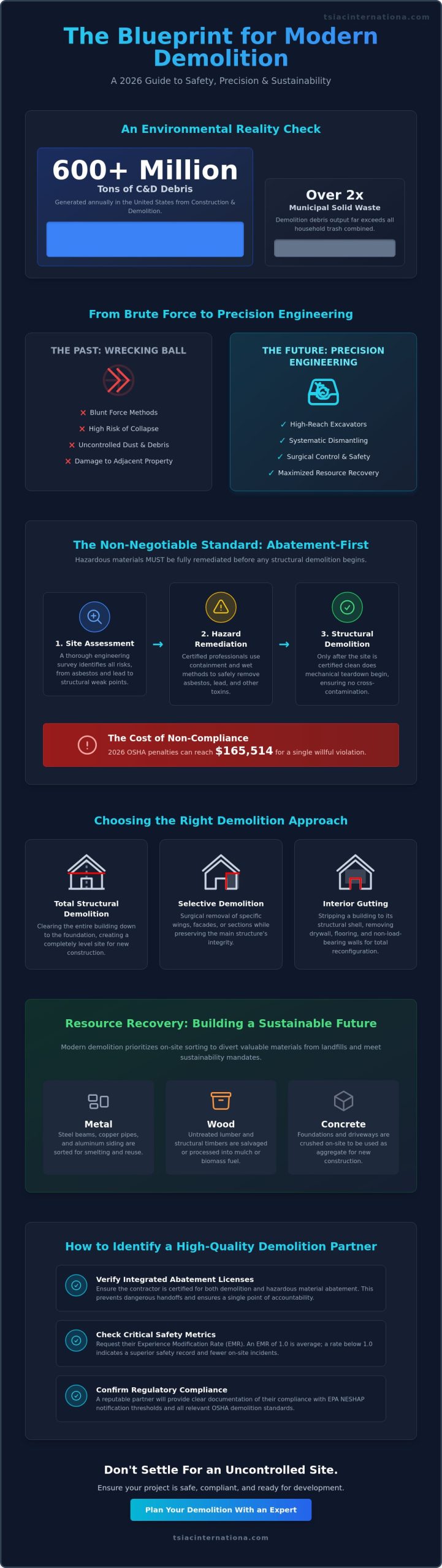
The United States generates over 600 million tons of construction and demolition debris annually; this volume is more than double the country’s total municipal solid waste output. When you’re researching residential demolition services, it’s easy to feel overwhelmed by the technicalities of hazardous material abatement and the strict 2026 OSHA penalty structures that can reach $165,514 for a single willful violation. You likely recognize that a successful teardown requires more than just heavy machinery; it demands a disciplined approach to environmental safety and municipal compliance.
You don’t have to manage these risks alone or settle for an uncontrolled site. This expert-led guide provides a technical roadmap to mastering the complexities of structural removal, from asbestos mitigation to sustainable debris recycling. We’ll examine the essential abatement-first workflow, explain the EPA NESHAP notification thresholds, and show you how to identify a safe, bonded contractor who can deliver a site ready for your next phase of development.
Key Takeaways
- Understand the transition from traditional wrecking methods to systematic dismantling through high-reach and manual precision techniques.
- Master the “abatement-first” workflow to ensure hazardous materials like asbestos and lead are fully mitigated by professional residential demolition services before structural removal begins.
- Learn how selective demolition acts as a surgical solution for renovations, utilizing advanced vibration and dust control to protect adjacent structures.
- Adopt resource recovery protocols that prioritize on-site sorting of metal, wood, and concrete to meet modern sustainability and diversion mandates.
- Identify high-quality partners by evaluating integrated abatement licenses and critical safety metrics, such as the Experience Modification Rate (EMR).
Understanding Residential Demolition Services in 2026
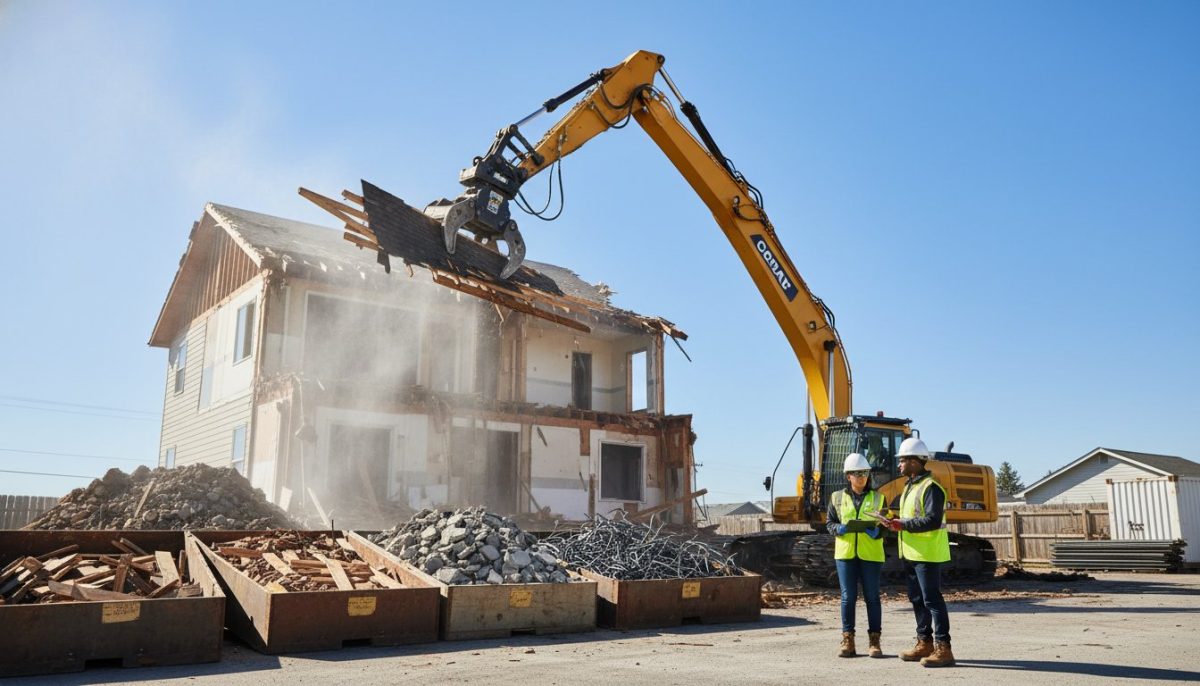
2026 marks a turning point where residential demolition services have evolved from blunt force into a branch of precision engineering. Modern Demolition is defined as the systematic dismantling of a home or auxiliary structure. This methodology ensures that every component is handled with technical accuracy. The industry has largely retired the “wrecking ball” in favor of high-reach excavators and manual dismantling techniques. These tools allow for surgical control, minimizing noise and vibration while maximizing safety for neighboring properties. It’s a process that prioritizes stability over speed.
Every project now begins with an environmental-first mindset. This shift is driven by a commitment to resource recovery and strict compliance with updated safety standards. Contractors don’t just clear a lot; they manage a complex site where hazardous materials are identified and isolated before mechanical intervention occurs. This disciplined approach protects the local ecosystem and ensures a clean slate for future development. By focusing on the material science of the structure, professionals can predict how a building will respond to stress, ensuring a controlled environment throughout the project lifecycle.
Total Structural Demolition vs. Selective Gutting
Choosing between total removal and selective intervention depends on the project’s ultimate objective. Total structural removal involves clearing the entire building down to the foundation, leaving a level site for new possibilities. Selective demolition focuses on the surgical removal of specific wings or exterior sections while preserving the main structure’s integrity. Interior gutting goes a step further by stripping the home to its studs. This process involves removing drywall, flooring, and non-load-bearing walls to prepare the interior for a complete reconfiguration while maintaining the structural shell.
Common Residential Demolition Projects
Modern residential demolition services encompass a diverse range of technical tasks tailored to specific property needs. Common projects include:
- Whole-house teardowns: These are necessary for structures that are structurally compromised or no longer fit for modern redevelopment.
- Detached structure removal: This involves the controlled dismantling of garages, barns, or sheds that have reached the end of their lifecycle.
- Concrete and asphalt removal: Professionals use specialized equipment to remove driveways, patios, or pool decks without causing sub-surface damage.
Each of these tasks requires a site assessment to identify structural integrity and utility disconnect points. This methodical preparation prevents unplanned collapses and protects the existing infrastructure of the neighborhood.
The Integrated Demolition Process: Safety and Abatement
Professional residential demolition services operate on a strict “Abatement-First” protocol. It’s a non-negotiable standard in 2026. Hazardous materials must be fully remediated before any structural impact occurs. This prevents the aerosolization of toxins like asbestos or lead dust into the surrounding environment. A disciplined site assessment identifies these risks alongside structural weak points and utility disconnect locations. This phase ensures the project complies with OSHA Demolition Standards, which mandate a thorough engineering survey before operations begin. By integrating these steps, we eliminate the risk of cross-contamination that often occurs when abatement and teardown are treated as unrelated tasks.
Hazardous Material Remediation (Asbestos & Lead)
Older homes often hide asbestos in vinyl floor tiles, cement siding, and pipe insulation. Lead-based paint is another critical concern, particularly in pre-1978 structures. During structural dismantling, containment strategies like HEPA-filtered vacuuming and wet methods are essential to prevent toxic drift. For those managing properties in specific regions, following a localized hazardous material abatement south carolina protocol ensures all state-specific environmental regulations are met. If you’re concerned about hidden contaminants, professional lead and asbestos abatement provides the necessary clearance to proceed safely.
The 5 Steps of a Professional Teardown
A systematic approach minimizes risk and maximizes efficiency. Our methodology follows a logical sequence to maintain site control:
- Step 1: Utility disconnection and site security. Every gas, water, and electrical line is capped at the street level. Fencing is installed to prevent unauthorized entry and protect the public.
- Step 2: Hazardous material abatement and interior soft-strip. Specialized teams remove all hazardous materials and non-structural interior components like carpets and cabinetry.
- Step 3: Structural dismantling. We use a top-down approach with high-reach excavators to maintain control over the building’s center of gravity and prevent unplanned collapses.
- Step 4: Slab and foundation removal. Heavy machinery breaks up concrete foundations. This material is often crushed on-site for use as stabilized fill or recycled aggregate.
- Step 5: Final grading and site stabilization. The site is leveled and compacted, leaving a clean footprint ready for new development.
Success in these stages depends on specialized heavy machinery. Excavators equipped with hydraulic shears and grapples allow for precise material separation, while skid steers handle debris in confined residential spaces. Navigating local permitting is equally vital. Each municipality has distinct ordinances regarding noise, dust control, and debris hauling. Our team manages these complex compliance requirements to ensure your project remains on schedule and within legal boundaries.
Selective Demolition: The Precision Choice for Renovations
Selective demolition represents the surgical side of residential demolition services. It involves the strategic removal of specific interior or exterior components while preserving the rest of the building’s structural integrity. This methodology is the foundation of high-end home remodels. You aren’t just clearing a lot; you’re modifying an existing asset with technical precision. It’s a process that requires a deep understanding of load paths and material science to ensure the remaining structure remains uncompromised.
In occupied residential neighborhoods, vibration control and dust containment are paramount. We use specialized equipment like electric-powered saws and HEPA-filtered air scrubbers to ensure that the dismantling process doesn’t compromise the air quality or the structural stability of adjacent rooms. This level of detail mirrors the high standards seen in commercial interior gutting services, where precision is a requirement rather than an option. Every cut is planned to prevent micro-fractures in the masonry or foundation.
Protecting Structural Integrity
The most critical phase of selective demolition is identifying load-bearing walls versus simple partition walls. Removing the wrong element can lead to catastrophic structural failure or long-term settling issues. Professional teams utilize temporary shoring and bracing techniques to support the roof or upper floors during the removal process. When we deal with masonry or concrete, we use diamond-blade precision cutting. This disciplined approach ensures the house remains stable throughout the renovation and prevents damage to the home’s primary skeleton.
Interior Gut-Outs: From Ceilings to Floors
A complete interior gut-out involves a systematic process of stripping a space to its studs. We begin with the removal of acoustic ceilings and drywall, followed by the careful extraction of flooring materials. A major part of this work involves the safe disconnection and removal of MEP (Mechanical, Electrical, and Plumbing) systems. This requires coordination to ensure that active lines serving the rest of the house remain untouched and functional.
Throughout this process, we adhere to EPA demolition regulations to manage debris and potential environmental hazards. By the time the interior gut-out is finished, the construction team is left with a clean slate. Every piece of debris is sorted and removed, leaving only the structural skeleton ready for new framing and modern finishes. This methodology prevents the renovation surprises that often plague less disciplined projects.
Sustainability in Demolition: Recycling and Debris Management
Modern residential demolition services in 2026 have moved beyond simple waste disposal to embrace a methodology of resource recovery. We no longer view a dismantled structure as a pile of trash. Instead, it’s a source of valuable raw materials. This shift requires a disciplined on-site sorting process where wood, metal, and plastic are separated at the point of origin. By isolating these streams, we reduce landfill impact and improve project efficiency. The economics of this approach are clear; salvaged materials can often offset project costs. You can find more detail on these material flows in our technical overview of the demolition process south carolina.
It’s a mistake to treat all debris as equal. Effective site management requires a logistical plan that accounts for the specific lifecycle of every material removed. This doesn’t just happen; it’s the result of a well-organized work environment where every technician understands the value of the materials they’re handling. By focusing on recovery rather than disposal, we turn a teardown into a sustainable start for the next project.
Material-Specific Recycling Protocols
Our material recovery protocols follow a technical hierarchy. We focus on the high-value extraction of ferrous and non-ferrous metals, including copper wiring and structural steel. These materials are processed for immediate re-entry into the manufacturing sector. Wood waste is categorized by grade. High-quality structural timber is salvaged for architectural reuse, while other wood debris is diverted for processing into mulch or biomass fuel. Concrete and masonry represent the largest volume of debris. We utilize on-site crushing technology to turn these materials into stabilized fill or road base, which eliminates the need for expensive hauling and new aggregate.
Environmental Responsibility and LEED Credits
Environmental stewardship during a teardown is essential for homeowners seeking green building certifications like LEED. High diversion rates are a requirement for these credits, and our systematic sorting provides the necessary documentation. We also prioritize site protection. This includes managing hazardous runoff and implementing soil protection measures to prevent contamination during the structural removal. Every load of debris is handled according to national environmental protection standards, ensuring that waste hauling is both legal and ecologically responsible.
If you’re seeking a partner who prioritizes sustainable resource recovery, our recycling services ensure your site meets the highest environmental standards.
Choosing a Residential Demolition Contractor
Selecting a partner for residential demolition services is a high-stakes technical decision. It’s not merely about clearing a lot; it’s about risk mitigation and regulatory compliance. You shouldn’t settle for a contractor who lacks integrated licenses for both structural dismantling and hazardous material abatement. When these services are fragmented, communication gaps often lead to environmental violations or safety lapses. A disciplined contractor manages the entire lifecycle of the project under one roof. For those seeking a benchmark of professional excellence, TSIAC International Charleston represents the gold standard in maintaining these rigorous operational protocols.
Before signing a contract, you must evaluate a firm’s safety record by requesting their Experience Modification Rate (EMR). This number provides an objective look at their safety performance relative to the industry. An EMR below 1.0 suggests a firm that prioritizes worker protection and site stability. Additionally, verify that the contractor carries comprehensive insurance and bonding. This step is vital to protect you from liabilities arising from property damage or site accidents. A professional partner doesn’t just promise safety; they prove it through documentation and established metrics.
Key Questions for Your Demolition Expert
A transparent contractor provides clear answers to technical queries. Use these questions to vet your candidates:
- Is the hazardous material survey included in the fixed-price contract? You don’t want hidden costs for asbestos or lead removal appearing mid-project.
- What percentage of the site debris is diverted from landfills? A disciplined firm should provide a clear resource recovery plan.
- How do you manage dust and noise for the surrounding neighborhood? Professional teams use air scrubbers and wet methods to maintain community relations and air quality.
The Value of Professional Project Management
The “cheap and fast” approach often results in regulatory fines or structural instability. Professional project management ensures that timelines are realistic and based on methodical dismantling rather than brute force. This includes the delivery of comprehensive close-out reports. These documents provide proof of legal abatement and verified recycling weights; they are essential for your building permits and environmental records. Finally, a professional service ensures the site is build-ready. This means the lot isn’t just empty; it’s graded, compacted, and cleared of all sub-surface obstructions. This disciplined finish allows your construction team to begin work immediately without costly site preparation delays.
Securing Your Site for Future Development
Successful structural removal in 2026 requires a disciplined integration of environmental safety and precision engineering. You’ve learned that a build-ready site is achieved through an “abatement-first” workflow and rigorous material recovery protocols. These steps don’t just protect the environment; they ensure your project stays within the strict regulatory frameworks established by OSHA and the EPA. Choosing professional residential demolition services means prioritizing long-term stability over short-term speed.
Site safety and compliance aren’t areas where you should compromise. With over 15 years of structural removal expertise, our team provides the technical precision your property deserves. We’re licensed hazardous material abatement specialists who maintain comprehensive material recycling programs to maximize resource recovery. You can move forward with confidence knowing your site is in expert hands. Request a Professional Residential Demolition Quote from TSIAC International today to begin your project with methodical accuracy. Your vision for a new home starts with a clean, safe, and professionally managed foundation.
Frequently Asked Questions
Do I need an asbestos survey before demolishing my home?
Yes, a pre-demolition asbestos survey is a mandatory legal requirement for most structures under EPA NESHAP regulations. This inspection identifies regulated asbestos-containing material that must be professionally remediated before structural removal begins. The survey ensures that toxic fibers aren’t released into the air during the teardown. Failure to conduct this assessment can lead to significant OSHA penalties and environmental liabilities. It’s a critical safety step for any professional residential demolition project.
How much does residential demolition usually cost per square foot?
The cost of residential demolition services is determined by several technical factors rather than a single fixed rate. These variables include the total square footage, the presence of hazardous materials like asbestos or lead, and the complexity of the foundation removal. Site accessibility and the distance to recycling facilities also influence the final budget. Homeowners should request a detailed site assessment to receive an accurate quote based on their specific structural requirements.
Can I stay in my home during a selective interior demolition?
Staying in the home during selective interior demolition is typically not recommended due to safety and health risks. Even with advanced dust containment and HEPA filtration, the process generates significant noise and airborne particulates. Utility disconnections for plumbing and electrical systems often make the living space uninhabitable during the active phase. It’s best to vacate the area to ensure a controlled environment and allow the technicians to work with maximum efficiency.
How long does it take to demolish a standard single-family house?
A standard single-family house teardown usually requires two to five days for the physical structural removal. However, the entire timeline often spans several weeks when you include the pre-demolition survey, hazardous material abatement, and permitting process. Each phase must be completed sequentially to maintain site safety. Factors like weather conditions and the complexity of the slab removal can also impact the final schedule for site stabilization and final grading.
What permits are required for residential demolition?
Residential demolition requires a combination of municipal building permits and environmental notifications. You’ll typically need a specific demolition permit from your local building department and verification of utility disconnections for water, gas, and electricity. Additionally, the EPA requires a NESHAP notification at least 10 working days before demolition begins if certain asbestos thresholds are met. A professional contractor manages these filings to ensure the project remains in full legal compliance with local ordinances.
How do you handle hazardous materials like lead paint during a teardown?
We manage lead-based paint through strict containment and specialized handling protocols. During a teardown, we use wet methods to suppress dust and prevent toxic particles from migrating off-site. For partial or selective removals, we follow the EPA Lead RRP Rule thresholds for interior and exterior surfaces. All lead-contaminated debris is segregated and transported to licensed disposal facilities according to national environmental protection standards to prevent soil and groundwater contamination.
Is it possible to recycle the materials from my old house?
It’s highly possible and often required to recycle a significant portion of your old house. Modern residential demolition services focus on recovering concrete, metals, and structural timber for future use. Concrete is often crushed into aggregate, while copper and steel are processed for industrial manufacturing. This approach reduces landfill waste and can help projects meet green building certifications like LEED by diverting a high percentage of debris from disposal sites.
What is the difference between soft demolition and structural demolition?
Soft demolition involves the removal of non-structural components like drywall, flooring, and cabinetry, which is often referred to as interior gutting. Structural demolition is the systematic dismantling of the building’s primary skeleton, including load-bearing walls, roofs, and foundations. While soft demolition is used to prepare a space for renovation, structural removal is required for a complete house teardown. Both processes require precise engineering to ensure the safety of the site and any adjacent structures.
