
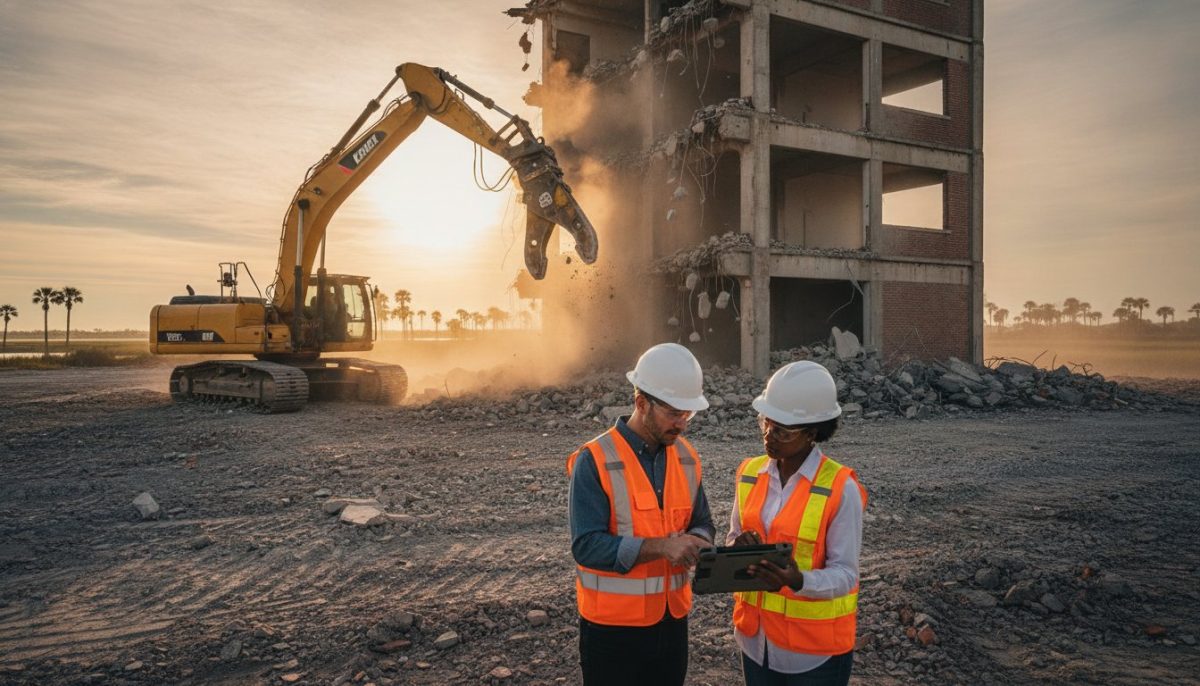
Did you know that a significant percentage of commercial buildings constructed before 1978, particularly in established urban and industrial zones, contain hazardous materials like asbestos? When you’re managing commercial demolition projects, these hidden variables often represent the difference between a streamlined site turnover and a legal nightmare involving stringent state and federal environmental regulation violations. It’s a high-stakes environment where a single oversight in pre-demolition planning can lead to significant regulatory fines or structural damage to adjacent properties.
We understand that your primary goal is a clean, permit-ready site that transitions seamlessly into new construction without the burden of unforeseen delays. This article, presented by TSIAC International, provides a technical blueprint for navigating large-scale structural removal, hazardous material abatement, and the rigorous regulatory compliance required in 2026. You’ll gain a clear understanding of the latest OSHA safety standards, the specific permitting requirements, and the precision required for selective interior gutting that preserves structural integrity. By following this methodology, you can ensure your project remains on schedule and fully documented from the first survey to the final site clearing.
Key Takeaways
- Understand why modern commercial demolition is treated as a multi-phase engineering process rather than basic debris removal to ensure long-term site stability.
- Learn the mandatory protocols for asbestos and lead abatement that must be completed before any structural work begins for commercial demolition charleston sc projects.
- Discover how surgical interior gutting techniques allow for significant structural modifications while preserving the integrity of adjacent building wings.
- Identify the critical components of a Site-Specific Safety Plan (SSSP) required to meet 2026 OSHA standards and mitigate operational risks.
- Explore how waste diversion strategies for metal, wood, and plastic can support LEED certification goals and reduce environmental impact.
The Scope and Complexity of Modern Commercial Demolition
Executing a successful project involving Modern Commercial Demolition requires a shift in perspective. Professional contractors don’t view these projects as simple debris removal; they treat them as multi-phase engineering assignments where every mechanical action is preceded by rigorous structural analysis. In the context of commercial demolition charleston sc, the complexity often doubles due to the proximity of historic structures and the specific seismic considerations of the Lowcountry. Whether the goal is the total removal of a multi-story office complex or the surgical extraction of specific building components, the process demands disciplined coordination and technical precision.
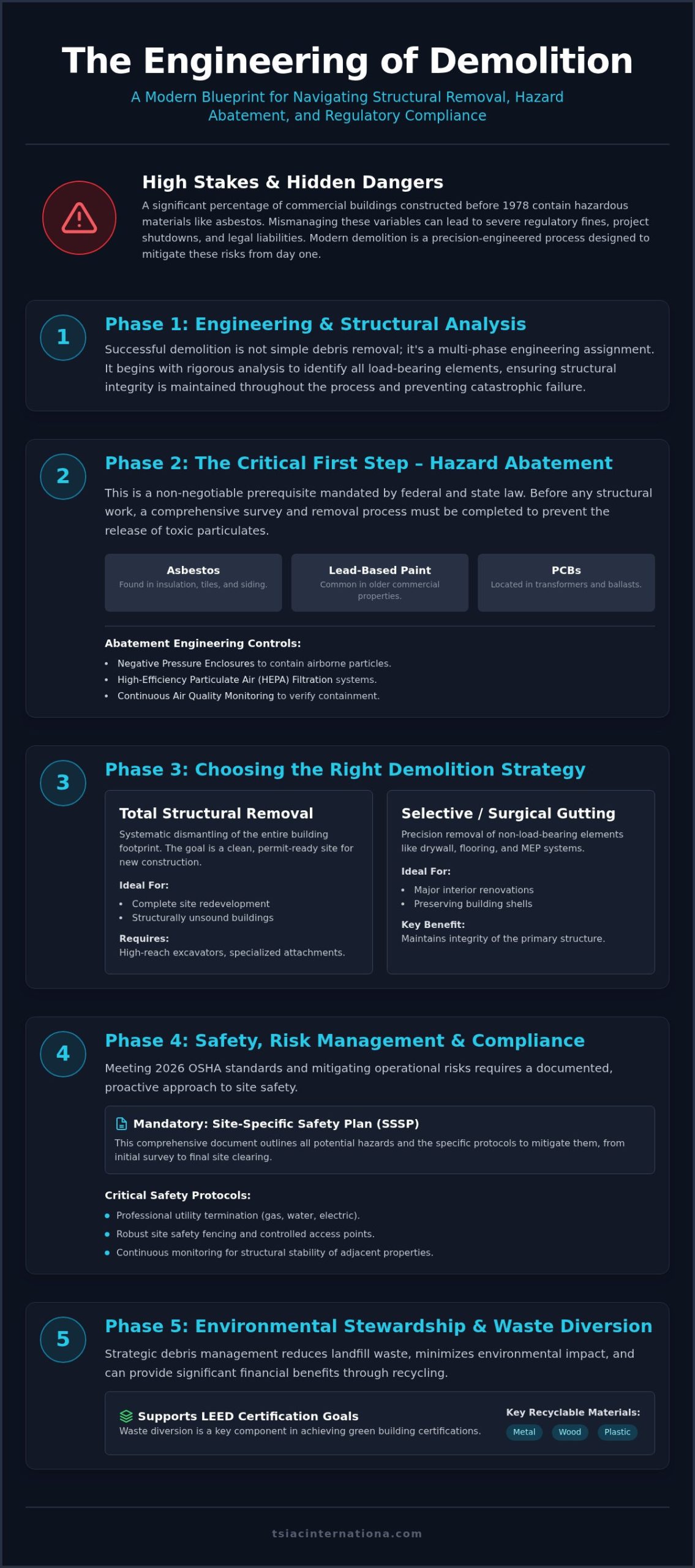
The distinction between total structural removal and selective demolition is fundamental to project planning. Total demolition involves the systematic dismantling of the entire building footprint, often requiring high-reach excavators and specialized attachments to manage steel and reinforced concrete. Selective demolition, or interior gutting, focuses on removing non-load-bearing elements like drywall, flooring, and MEP (mechanical, electrical, plumbing) systems while keeping the primary structure intact. High-volume commercial execution relies on a synergy between heavy machinery and skilled manpower to ensure that the site is cleared efficiently without compromising the integrity of adjacent properties or future construction phases.
Structural vs. Non-Structural Considerations
Before any heavy equipment arrives on site, a thorough engineering survey identifies load-bearing elements that must remain supported during the process. Initiating mechanical demolition without this data risks catastrophic structural failure. In Charleston’s dense urban environments, site safety fencing and utility termination are not just logistical hurdles; they’re critical safety protocols. Commercial projects require significantly more robust insurance and bonding than residential work because the liabilities involve complex environmental factors and higher property values. Ensuring that gas, water, and electrical lines are professionally capped at the street level prevents hazardous leaks during the structural removal phase.
The Economic Impact of Proper Site Preparation
Efficiency in debris management directly influences the financial health of a project. When site clearing is handled with methodological precision, the transition to new construction is seamless. A clean, well-excavated site reduces foundation costs for new builds by eliminating the risk of buried obstructions that could damage new equipment. Developers in the region increasingly favor “fixed-price” structural demolition contracts. This approach provides essential budget stability, shielding the project from the price volatility often associated with poorly planned debris disposal or unforeseen site conditions. By prioritizing thorough preparation, stakeholders ensure that the land is truly permit-ready for its next chapter.
Hazardous Material Abatement: The Critical First Phase
Hazardous material identification is the non-negotiable prerequisite for any structural impact. In the context of commercial demolition charleston sc, skipping this phase doesn’t just risk environmental contamination; it invites severe legal liability and project shutdowns. Before a single excavator bucket touches a building, a comprehensive survey must identify regulated materials such as asbestos, lead-based paint, and PCBs. This sequence is mandated by federal and state laws to prevent the release of toxic particulates into the surrounding Lowcountry atmosphere. Adhering to established Safety Standards and Risk Management protocols ensures that these toxins are neutralized while the building remains structurally stable.
The technical process of abatement requires rigorous engineering controls. Specialists establish negative pressure enclosures using high-efficiency particulate air (HEPA) filtration systems to prevent cross-contamination. During the removal phase, air quality monitoring is performed continuously to verify that containment measures are functioning as designed. This disciplined approach protects the workforce and the public, ensuring that hazardous fibers or dust don’t migrate beyond the designated work zone. If you’re planning a project, consulting with a firm that provides integrated structural demolition and abatement services can streamline these initial hurdles.
Asbestos and Lead Remediation Protocols
Managing friable and non-friable asbestos requires distinct technical responses. Friable materials, such as spray-on fireproofing or pipe insulation, can be crumbled by hand and pose a high inhalation risk. Non-friable materials like floor tiles or roofing felt are more stable but still require professional handling during mechanical demolition. For historic or industrial facilities in Charleston, lead paint abatement is equally critical. We employ specialized scraping, chemical stripping, or abrasive blasting techniques within contained environments to ensure full compliance with asbestos removal south carolina safety standards and lead exposure limits.
Regulatory Documentation and Compliance
Proceeding to structural demolition is impossible without official “clearance” reports. These documents, issued by independent third-party laboratories, confirm that the site is free of hazardous concentrations and safe for general labor. Managing the chain of custody for hazardous waste disposal is another vital component of the process. Every pound of regulated material must be tracked from the job site to a licensed hazardous waste landfill. This meticulous record-keeping for hazardous material abatement south carolina protects property owners from EPA violations and future litigation, providing a definitive paper trail of environmental stewardship.
Selective Demolition and Surgical Interior Gutting
Selective demolition is a surgical engineering process that stands in stark contrast to traditional wrecking. In high-density zones requiring commercial demolition charleston sc, the ability to remove specific building sections while preserving adjacent wings is essential for both project viability and safety. This discipline is the preferred choice for tenant improvements and historic renovations where the building’s exterior or core structural elements must remain intact. Unlike total demolition, this approach requires a high degree of technical coordination to ensure that the removal of non-essential components doesn’t compromise the stability of the remaining structure.
Modern contractors use precision tools to strip interiors down to the structural shell with minimal impact on the surrounding environment. This often involves the use of handheld hydraulic crushers, robotic demolition units, and specialized saws that allow for clean cuts through concrete and steel. Before these mechanical actions begin, teams must verify that the site is cleared of all contaminants by following strict protocols for Hazardous Material Abatement before any interior components are disturbed. Successfully managing the complexities of commercial interior gutting services in active buildings requires a partner who prioritizes logistical control as much as physical execution.
Interior Gut-Outs for Renovation
The interior gut-out phase involves the systematic removal of acoustic ceilings, metal framing, and drywall. It’s a process that must be executed without damaging core utilities or vertical transportation systems like elevators. In occupied commercial spaces, we implement rigorous strategies for noise and dust containment to prevent disruption to neighboring tenants. This phase requires constant coordination with electrical and plumbing trades to identify and protect active lines that serve other parts of the building. By stripping the space to its structural foundations, we provide a clean slate that significantly reduces the time and cost of subsequent tenant build-outs.
Maintaining Structural Integrity
Engineering precision is paramount when distinguishing between load-bearing walls and non-structural partitions. Our team analyzes structural blueprints to identify critical support columns and beams that must remain undisturbed. When the scope involves removing sections of a floor or a load-bearing element, the role of shoring and temporary supports becomes vital. We install heavy-duty steel shoring systems to redistribute weight safely during the removal process. This level of expert demolition process south carolina knowledge is what allows for complex multi-wing projects to proceed without the risk of structural failure or damage to the building’s primary envelope.
Safety Standards and Risk Management in Large-Scale Projects
Safety in large-scale structural removal isn’t a secondary concern; it’s the foundation of the entire operation. For any project involving commercial demolition charleston sc, navigating OSHA standards for heavy equipment operation and fall protection requires more than just basic compliance. It requires a Site-Specific Safety Plan (SSSP) tailored to the unique structural and environmental risks of the Lowcountry. Professional contractors prioritize 15+ years of industry experience because they understand that low-cost, inexperienced labor often leads to catastrophic site accidents or regulatory shutdowns. An SSSP outlines every potential hazard, from mechanical pinch points to high-reach stability, ensuring that every operator and laborer knows the exact protocol for their specific zone.
Managing air quality and dust suppression is another critical component of risk management. We use high-volume misting systems and specialized barriers to protect the surrounding community from airborne particulates. This proactive approach ensures that the project remains a “good neighbor” in Charleston’s dense commercial corridors while maintaining a safe breathing environment for the crew. By controlling the site environment, we mitigate the risk of respiratory hazards and prevent the migration of debris onto adjacent properties.
On-Site Hazard Mitigation
Hidden risks often lie beneath the surface or within the walls of aging commercial structures. Protocols for handling underground storage tanks (USTs) and unidentified utilities must be established before any mechanical work begins. This includes using ground-penetrating radar and utility locating services to map the site accurately. On high-risk commercial sites, a dedicated safety officer oversees every phase, ensuring that fire safety protocols and hot-work permits are strictly followed during steel cutting or torch work. This officer conducts daily safety briefings and equipment inspections to catch mechanical wear before it becomes a failure point. This specialized oversight prevents the small oversights that lead to massive project delays and ensures the site remains OSHA-compliant throughout the project duration.
Liability and Insurance for Property Owners
Property owners must distinguish between general liability and pollution liability insurance. While general liability covers physical damage to property or persons, pollution liability is essential for the long-term environmental risks associated with hazardous material handling and disposal. Choosing a tsiac international charleston expert reduces these long-term structural and legal risks by ensuring all work is performed under the highest tier of professional coverage. Comprehensive project documentation, including waste manifests, air clearance reports, and daily safety logs, provides a definitive record for insurance providers and future building permits. This paper trail is your best defense against future claims and a vital asset for the next phase of construction. If you’re ready to secure your site with a partner who values technical precision, consult with our project management team to review your site-specific safety needs.
Environmental Stewardship: Recycling and Waste Diversion
Modern structural removal has evolved into a sophisticated exercise in material recovery. In the sector of commercial demolition charleston sc, environmental stewardship is no longer optional; it’s a core operational requirement for 2026. The shift toward “green demolition” allows developers to meet rigorous LEED certification standards by documenting high diversion rates from local landfills. Instead of viewing a building as waste, we treat the structure as a repository of raw materials that can be reintroduced into the supply chain. This disciplined approach aligns with the Charleston County Environmental Management Department’s goal of achieving a 40% countywide recycling rate.
Debris is meticulously sorted on-site to maximize the recovery of wood, metal, and plastic. Concrete, which constitutes the bulk of many commercial structures, is crushed using mobile impactors. This processed material is frequently repurposed as stable on-site fill or road base, which reduces the need for virgin aggregate and lowers the total transportation emissions of the project. By processing these materials at the source, we eliminate the need for hundreds of hauling trips, streamlining the timeline for the subsequent construction phases.
Material Recovery and Hauling
Optimizing the logistics of debris removal is essential for reducing the carbon footprint of high-volume projects. By implementing a tiered sorting system, we identify high-value scrap metals, including structural steel, copper wiring, and aluminum components. These materials are diverted to specialized recycling facilities, often providing a financial credit that helps offset project costs. For non-recyclable materials, we maintain a rigorous chain of custody to ensure disposal methods meet all EPA and state-level environmental regulations. This prevents the legal and environmental risks associated with improper waste management and protects the property owner’s long-term interests.
The Future of Sustainable Demolition
The transition toward a circular construction economy relies on the ability of contractors to treat demolition as a source of supply. Recent audits show that approximately 70% of commercial solid waste in Charleston is recyclable, yet much of it still ends up in landfills. By prioritizing waste diversion, we significantly reduce landfill tipping fees for our clients, turning an environmental necessity into a fiscal advantage. Professional environmental management is the hallmark of the most reputable demolition contractors charleston sc. It demonstrates a commitment to the region’s long-term ecological health while providing the technical documentation required for modern commercial permits. Ensuring that your site is cleared responsibly is the final step in a disciplined, professional demolition process.
Securing the Future of Your Commercial Site
Successful structural removal in 2026 requires more than just heavy machinery; it demands a disciplined integration of engineering precision and environmental stewardship. Navigating the legal and physical complexities of commercial demolition charleston sc is a high-stakes endeavor that leaves no room for operational error. By prioritizing EPA-certified hazardous material remediation and dedicated recycling protocols, you ensure your site is truly permit-ready for the next phase of construction while mitigating long-term liability and environmental impact.
With 15+ years of structural and abatement expertise, TSIAC International provides the technical foundation necessary for modern commercial projects. Our commitment to methodological accuracy and safety ensures that even the most complex selective gut-outs or total structural removals are completed with surgical precision. If you’re ready to move forward with a partner who values reliability and technical excellence, we’re here to help you clear the path for your next development. Request a Fixed-Price Quote for Your Commercial Project from TSIAC International today and secure a stable, predictable budget for your site preparation. We look forward to ensuring your project’s success from the first survey to the final clearing.
Frequently Asked Questions
Is a permit required for all commercial demolition projects?
Yes, permits are mandatory for all commercial demolition charleston sc projects, including interior gut-outs and partial removals. In Charleston County, the standard administrative fee is $75.00, while the City of North Charleston calculates fees at $7 per $1,000 of the project’s estimated value plus a $50 filing fee. Applicants must provide confirmation of disconnected utilities and notify the South Carolina Department of Environmental Services if hazardous materials are present.
How long does the commercial demolition process typically take?
The timeline varies significantly based on the building’s square footage and the complexity of required abatement phases. A standard interior gut-out for a retail space might conclude in one to two weeks, whereas large-scale structural removals typically span four to twelve weeks. This duration includes the mandatory 10-day notification period required by state regulators before any physical work begins on a regulated structure.
What is the difference between structural and selective demolition?
Structural demolition involves the total removal of a building’s load-bearing skeleton, foundation, and exterior envelope. Selective demolition focuses on the surgical removal of specific interior or exterior components while preserving the primary structure for future use. Selective methods are the preferred choice for tenant improvements or historic renovations where the building’s core integrity must remain undisturbed during the renovation process.
Does asbestos testing need to happen before a building is gutted?
South Carolina Regulation 61-86.1 mandates a professional asbestos survey for any commercial structure scheduled for renovation or demolition, regardless of the building’s age. This testing must occur before any structural impact or interior gutting begins. If the survey identifies regulated materials, a licensed abatement team must complete the removal and receive a third-party air clearance report before general demolition crews can safely enter the site.
Can you demolish a commercial building while adjacent businesses remain open?
Yes, we can execute selective demolition in active environments by using advanced containment systems and vibration monitoring. We establish negative pressure zones to prevent dust migration and schedule high-impact mechanical work during off-peak hours to minimize noise disruption. This surgical approach allows neighboring tenants to remain operational while we strip specific sections down to the structural shell with minimal environmental impact.
What happens to the debris after a commercial demolition is complete?
Debris is systematically sorted on-site to maximize the recovery of wood, metal, and plastic for recycling. We process concrete by crushing it into specialized aggregate that can be repurposed as on-site fill or road base for new construction. Materials that aren’t recyclable are transported to licensed landfills in strict accordance with EPA and SCDES regulations to ensure full environmental compliance and proper chain-of-custody documentation.
How much does commercial demolition cost per square foot in 2026?
Costs in the Charleston market are influenced by the age of the structure, the presence of hazardous materials, and specific seismic design requirements. While national averages provide a baseline, local projects involving historical peninsula structures or coastal reinforcements require specialized engineering surveys that affect the final budget. Property owners should request a detailed site survey to account for variables like utility capping and mandatory abatement phases unique to their property.
Are lead and mold remediation included in a standard demolition contract?
Lead and mold remediation are specialized services that are typically integrated into the abatement phase rather than a basic wrecking contract. Because these tasks require specific licensing and containment protocols, they’re handled as distinct line items with their own documentation and clearance requirements. It’s essential to verify that your contractor is licensed for both structural removal and hazardous material remediation to ensure a seamless transition between these critical phases.
