
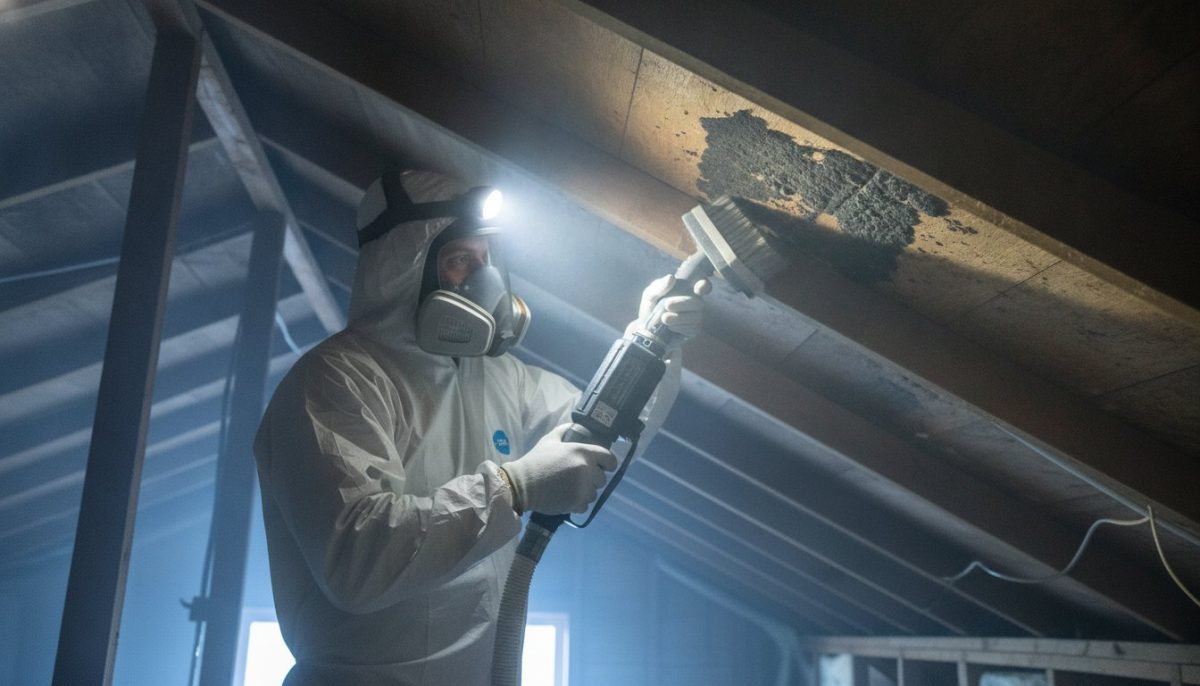
Would you trust a standard cleaning crew to handle a biological hazard that could compromise your home’s structural integrity and your family’s respiratory health? When fungal growth exceeds the EPA’s 10-square-foot threshold for professional intervention, hiring qualified attic mold removal specialists becomes a technical necessity to prevent the cross-contamination of your living spaces. You’re likely anxious about the health risks of airborne spores or the potential for a failed home inspection to derail a property sale. It’s common to feel overwhelmed by varying quotes and methods that don’t clearly address the underlying moisture problem.
This article details how specialists apply rigorous containment protocols and advanced abatement techniques to eliminate hazardous growth safely. You’ll learn how experts identify the specific environmental triggers behind the infestation and ensure a permanent solution through methodical execution. We’ll walk you through the professional standards for safe removal, the importance of moisture source identification, and how a transferable warranty provides the long-term security your property deserves.
Key Takeaways
- Understand the technical distinction between surface cleaning and certified remediation to ensure the long-term structural integrity of your property.
- Identify how ventilation deficiencies and roofing failures act as primary moisture sources that fuel fungal colonization.
- Learn the containment protocols employed by attic mold removal specialists, including negative air pressure and industrial HEPA filtration, to protect indoor air quality.
- Recognize the risks associated with disturbing older insulation, where asbestos and lead abatement requirements often intersect with mold remediation projects.
- Gain the expertise to evaluate remediation quotes based on technical methodology and the quality of post-project documentation for future home inspections.
What Defines Qualified Attic Mold Removal Specialists?
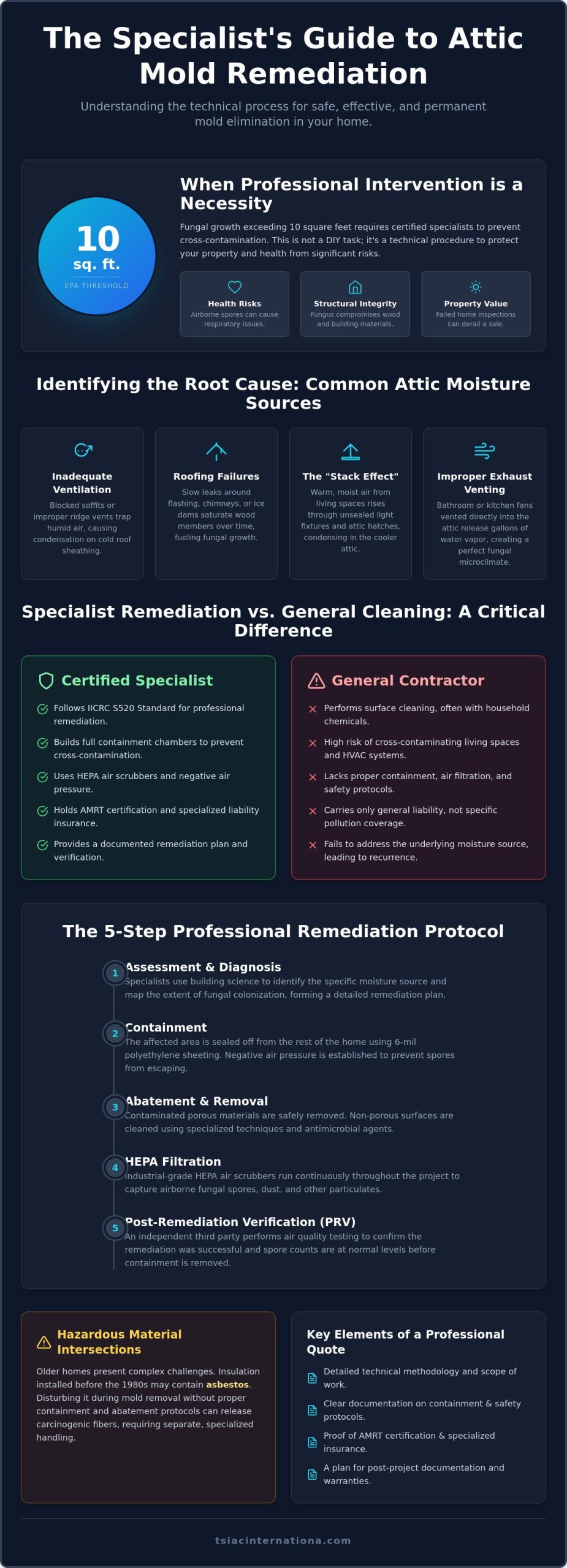
Professional attic mold remediation isn’t a simple cleaning task; it’s a technical abatement process that requires a deep understanding of microbiology and structural mechanics. While a general cleaning service might wipe down visible growth with household chemicals, true attic mold removal specialists focus on the total elimination of the fungal colony and the safe extraction of spores. This work is guided by the IICRC S520 Standard for Professional Mold Remediation, an industry benchmark that dictates how fungal ecology is managed within a built environment. Adhering to these standards ensures that the remediation doesn’t inadvertently worsen the building’s condition or compromise the health of its occupants.
Technical expertise must extend into the realm of building science. Specialists analyze attic thermodynamics, specifically how warm, moist air from the living space migrates through thermal bypasses and condenses on cold roof sheathing. Without this diagnostic approach, any removal effort is merely a temporary fix. Furthermore, professional contracts in this sector are backed by specialized environmental liability insurance and pollution bonding. These aren’t standard general liability policies; they’re specific protections that cover the unique risks associated with microbial handling and hazardous material transport.
Certifications and Regulatory Compliance
A qualified specialist holds specific credentials, most notably the Applied Microbial Remediation Technician (AMRT) certification. This training ensures the team understands the physics of containment and the chemistry of antimicrobial suppressants. Because attics are often cramped and poorly ventilated, teams must strictly follow OSHA safety protocols for confined spaces to protect workers from heat stress and high spore concentrations. The Professional Attic Mold Remediation Process also necessitates third-party post-remediation verification (PRV). This independent air quality testing confirms the project’s success before any containment barriers are removed, providing an objective “pass” for the work performed.
The Specialist vs. General Contractor Debate
Hiring a general contractor for mold issues often leads to cross-contamination. Many non-specialists lack industrial HEPA air scrubbers and the training to build effective 6-mil polyethylene chambers. Without these barriers, spores can easily enter the home’s HVAC system and settle in carpets or upholstery throughout the house. A dedicated specialist provides a documented remediation plan that details every step of the containment and removal process. This documentation isn’t just for safety; it’s a vital asset during future property sales, proving the issue was handled with methodological precision rather than a “quick fix” approach.
Common Causes of Fungal Growth in Residential Attics
Roofing failures also play a significant role in attic distress. While major leaks are obvious, slow seepage around chimney flashing or the structural stress caused by ice dams often goes unnoticed until the wood becomes structurally compromised. Additionally, the “stack effect” pulls warm, moist air from the living quarters through unsealed light fixtures and attic hatches. This bypass moisture is particularly dangerous during winter months when the temperature differential is highest. Similarly, venting bathroom or kitchen exhaust fans directly into the attic space introduces gallons of water vapor daily, creating an ideal microclimate for spores. Following the EPA guidelines for safe mold remediation requires addressing these sources before starting the technical cleanup.
The Role of Attic Insulation in Moisture Retention
Insulation is designed to resist heat flow, but once it becomes wet or compressed, its R-value plummets. This loss of thermal resistance shifts the dew point, causing water vapor to liquify directly within the fiberglass or cellulose fibers. Contaminated material cannot simply be dried; it often requires professional material recycling and disposal to ensure no dormant spores remain trapped in the substrate. If your insulation shows signs of saturation, consulting a team experienced in mold remediation is the most reliable way to prevent recurring growth.
Identifying Visible and Hidden Signs of Mold
Specialists look for specific indicators of moisture distress that go beyond simple discoloration. During winter, “frost” on the roof sheathing is a clear sign of frozen condensation that will eventually melt and fuel mold colonies. Dark staining or “foxing” on the wood indicates long-term exposure to high humidity levels. However, some of the most dangerous growth is invisible to the naked eye. We use thermal imaging cameras to detect temperature differentials that signal hidden moisture pockets behind knee walls or beneath thick layers of insulation. Musty odors that intensify during humid afternoons are another reliable indicator that a colony is actively off-gassing and requires immediate assessment.
The Professional Attic Mold Remediation Process
Professional attic mold remediation is a disciplined, multi-phase engineering project rather than a simple surface cleaning. The primary objective for attic mold removal specialists is the total isolation of the work area to prevent the dispersal of billions of microscopic spores. This process begins with the construction of critical barriers using 6-mil polyethylene sheeting, which effectively seals the attic from the rest of the building’s envelope. By establishing negative air pressure with industrial-grade HEPA air scrubbers, technicians ensure that airborne particulates are pulled into a filtration system rather than migrating into living spaces. Following the EPA guidelines on mold cleanup, this air management strategy is non-negotiable for protecting the property’s overall air quality.
Once containment is verified, specialists move into the physical removal phase. This isn’t just about aesthetics; it’s about removing the biological roots, or hyphae, that penetrate deep into porous wood. Structural members that remain viable are cleaned using specialized mechanical methods, while heavily compromised materials are removed through controlled demolition. The final step involves the application of EPA-registered antimicrobial sealants. These coatings encapsulate the remaining structural elements, providing a moisture-resistant finish that inhibits future fungal colonization even if humidity levels fluctuate.
Phase 1: Containment and Air Management
Technicians establish a decontamination chamber, or airlock, at the attic entrance to serve as a transition zone. This ensures that no spores are transferred on personal protective equipment (PPE) when staff exit the work area. A critical part of this phase is calculating the required Air Changes per Hour (ACH). Specialists typically aim for 4 to 6 air changes every hour to maintain a sterile environment. Negative pressure is the most vital safety mechanism here. It creates a vacuum effect that keeps all contaminants locked within the containment zone, even if a small breach in the poly sheeting occurs.
Phase 2: Remediation and Structural Cleaning
Cleaning wood rafters and joists often requires the “HEPA-Sand-HEPA” method. Technicians first vacuum the surface, sand the wood to reach embedded growth, and perform a final HEPA vacuuming pass to collect all debris. For large-scale projects, dry ice blasting is the preferred technical solution. It uses kinetic energy and thermal shock to lift mold off wood without introducing additional moisture or chemicals. When the infestation has bypassed the attic floor, a strategic interior gut-out may be required to safely remove contaminated drywall and insulation that can’t be salvaged through traditional cleaning.
Hazardous Material Intersections: Asbestos and Lead
In many older residential properties, mold remediation projects often collide with legacy hazardous materials that require specialized handling. Many attic mold removal specialists overlook the presence of vermiculite insulation, which frequently contains asbestos. Disturbing this material without proper testing and abatement protocols can release microscopic fibers into the air, creating a health risk far more severe than the fungal growth itself. Similarly, lead-based paint was commonly used on structural members in homes built before 1978. When remediation requires the mechanical agitation or removal of these members, strict adherence to EPA RRP (Renovate, Repair, and Painting) rules is mandatory to prevent lead dust contamination from migrating into the living spaces below.
Effective remediation in these environments requires a background in structural demolition. When a mold infestation is so severe that it has compromised the structural integrity of rafters or floor joists, a specialist must know how to perform a selective demolition without compromising the rest of the building. This integrated approach ensures that all hazardous materials, whether biological or mineral, are removed under a single, unified safety plan. If your project involves an older home, it’s critical to verify that your contractor has the expertise to manage these complex intersections safely.
Disturbing Hidden Dangers in Older Properties
The common practice of “just spraying” mold with biocides is a dangerous oversimplification in older attics. If the substrate contains asbestos, the application of liquids or the subsequent drying process can aerosolize mineral fibers. We maintain a strict protocol: if a technician uncovers suspicious gray, pebble-like insulation or old paint layers during a project, all work stops immediately for laboratory testing. TSIAC manages the intersection of mold and hazardous material abatement by employing a unified strategy that prioritizes environmental safety over project speed. This ensures that hidden dangers are neutralized before they become a liability for the property owner.
Regulatory Compliance for Multi-Hazard Sites
Navigating the overlap between mold and NESHAP asbestos regulations requires a high level of technical literacy. Contaminated debris from these sites cannot be treated as standard construction waste; it requires specialized disposal at licensed facilities that can handle toxic materials. Hiring a firm that maintains both demolition and abatement licenses significantly reduces a property owner’s legal liability. This integrated approach ensures that asbestos removal services are seamlessly executed alongside mold remediation, maintaining a single point of accountability throughout the project. If you suspect your attic contains both mold and legacy hazards, contact our abatement team for a professional assessment.
Selecting a Specialist: Why Technical Expertise Matters
When property owners evaluate bids for remediation, the variance in pricing often causes confusion. It’s vital to understand that the lowest quote frequently reflects a “spray and pray” approach that lacks rigorous containment and source identification. Choosing attic mold removal specialists based solely on cost often leads to recurring fungal growth, as superficial cleaning fails to address the hyphae embedded within the wooden substrate. A technically superior specialist provides a comprehensive post-remediation report. This document, which includes air clearance data and moisture readings, serves as a critical legal and financial asset during future property sales or insurance audits.
The TSIAC International Standard of Abatement
With over 15 years of experience in hazardous material handling, TSIAC International applies a disciplined, industrial-scale approach to residential mold challenges. Our expertise in asbestos and lead abatement translates into a superior understanding of air filtration and containment physics. We specialize in surgical, selective demolition. This means we don’t gut an entire attic if only specific sections are compromised; instead, we use high-precision techniques to remove only the affected members. As a national-scale contractor, we bring a level of technical felicity and equipment redundancy that smaller, local cleaning crews simply cannot match.
Final Steps: Prevention and Maintenance
Successful remediation concludes with a strategy to prevent recurrence. We provide specific recommendations for improving attic ventilation, such as clearing blocked soffits or installing baffles to ensure consistent airflow. Proper insulation levels are also addressed to prevent the condensation cycles that fuel microbial colonies. Long-term maintenance often involves dehumidification and humidity monitoring, especially in climates prone to high ambient moisture. If you are dealing with a complex fungal infestation, contact TSIAC International today for a professional consultation and a methodical remediation plan that protects your property value.
Securing Your Property’s Environmental Integrity
Effective attic remediation demands a technical approach that extends beyond simple aesthetics. Successful projects rely on rigorous containment, the identification of thermodynamic moisture failures, and a deep understanding of how biological growth intersects with legacy hazards like asbestos or lead. Partnering with attic mold removal specialists ensures these complexities are managed through methodological precision rather than guesswork. A professional clearance report doesn’t just provide peace of mind; it protects your property’s market value and structural longevity.
With 15+ years of hazardous material experience, TSIAC International provides a unified solution for mold, asbestos, and lead abatement. Our team leverages comprehensive structural demolition capabilities to perform surgical removals that preserve your home’s integrity while eliminating health risks. You don’t have to navigate these technical challenges alone. Contact TSIAC International for Professional Mold Remediation and Abatement Services to restore your attic to a safe, controlled condition. We’re ready to help you reclaim your home’s air quality with the authority and precision your property deserves.
Frequently Asked Questions
Is attic mold remediation covered by standard homeowners insurance?
Homeowners insurance coverage for mold remediation is often dependent on the cause of the moisture problem, not the presence of mold itself. If the growth resulted from a sudden, accidental event like a burst pipe, coverage is more likely. Most policies exclude damage caused by long-term humidity, poor ventilation, or lack of maintenance. You’ll need to review your specific policy’s fungi or dry rot endorsements for confirmation.
Can I stay in my home while the attic mold is being removed?
You can typically remain in your home during the project because attic mold removal specialists establish critical containment barriers. These 6-mil polyethylene seals and negative air pressure systems prevent spores from entering the living quarters. While the industrial air scrubbers create some ambient noise, the workspace is isolated from the rest of the building’s envelope to ensure occupant safety throughout the abatement process.
What is the average duration of a professional attic mold removal project?
A professional remediation project generally requires between two and five business days to complete. The timeline depends on the attic’s accessibility, the square footage of the affected area, and the complexity of the containment setup. If the project requires the removal of contaminated insulation or structural demolition of compromised rafters, the schedule extends to allow for thorough HEPA vacuuming and antimicrobial sealing.
How do I know if my attic insulation contains asbestos before starting mold removal?
You cannot confirm the presence of asbestos through visual inspection alone, though pebble-like vermiculite insulation is a high-risk indicator. For homes built before 1980, it’s a technical necessity to have a certified laboratory analyze a physical sample before disturbing the material. If asbestos is detected, the project must transition into a formal abatement protocol to prevent the release of hazardous mineral fibers during the mold cleanup.
Will removing mold in my attic improve the indoor air quality of the whole house?
Eliminating attic mold significantly improves whole-house air quality by neutralizing the “stack effect.” This phenomenon naturally pulls air from the attic into lower living spaces through light fixtures, plumbing stacks, and HVAC ducting. By removing the source of airborne spores and off-gassing mycotoxins, you prevent these contaminants from circulating through your home’s central air system and settling in carpets or upholstery.
What happens if a home inspector finds mold during a real estate transaction?
Mold findings during a real estate transaction often lead to a “Notice of Correction” or a request for a price concession. Buyers typically require a professional remediation plan and a third-party post-remediation verification (PRV) report to proceed. Providing documented proof that the work was performed by licensed specialists can prevent the sale from collapsing and ensures the property meets structural safety standards.
Is it safe to use bleach to kill mold on attic rafters?
Using bleach on porous wood rafters is ineffective and often counterproductive. Bleach’s chemical structure prevents it from penetrating the wood’s surface to reach the mold’s roots or hyphae. Additionally, bleach is composed mostly of water, which can provide the moisture necessary for the colony to thrive. Professional-grade antimicrobial suppressants are required to neutralize growth on structural timber safely without adding excess liquid.
How can I prevent mold from returning after a professional remediation?
Prevention requires the permanent elimination of the moisture source that fueled the initial growth. You must ensure that soffit vents are unobstructed and that bathroom exhaust fans are ducted directly to the exterior, not into the attic space. Maintaining a consistent temperature differential through proper insulation and monitoring humidity levels with a hygrometer will prevent the condensation cycles that allow spores to colonize.
