
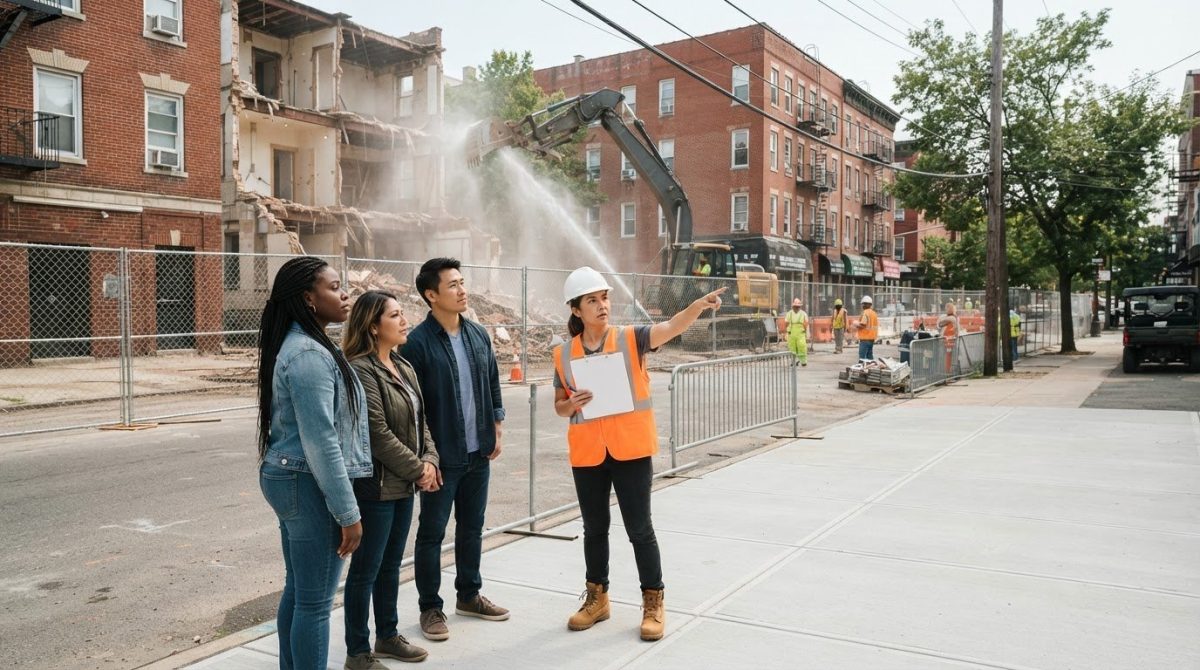
A demolition notice is not a one-time announcement. It starts an ongoing coordination plan. Noise, dust, vibration, and vehicle movements can affect nearby homes and businesses, so neighbors need more than a brief warning. A clear demolition project communication plan for neighbors explains the expected work, what may change, and how people can raise concerns.
It’s reasonable to want accurate information before work begins, especially when the schedule, access, or day-to-day conditions could affect your routine. Good communication can’t prevent every disruption or guarantee that plans won’t shift. It can set realistic expectations and help prevent unanswered questions from becoming avoidable conflict.
This guide explains what to share before demolition, how to describe likely impacts and mitigation measures, and when to provide updates. It also covers how to set up a reliable contact and response process throughout the work. The goal is a practical plan that supports organized site coordination and treats neighbors with consideration.
Key Takeaways
- Build a demolition project communication plan for neighbors around clear notices, dependable updates, and a defined process for handling concerns.
- Use a practical checklist to explain the project scope, anticipated phases, established dates, contact route, and update method.
- Adjust communication to the project’s scale, proximity to occupied spaces, access needs, and expected duration.
- Assign responsibility for preparing and approving information, sharing updates, and documenting follow-up so questions reach the right person.
- See how TSIAC’s demolition, interior gutting, and abatement work connects clear project information with organized coordination.
Why a demolition project communication plan for neighbors matters
A demolition neighbor communication plan is a repeatable process for notifying affected people, answering questions, sharing project updates, and routing concerns to the right person. A demolition project communication plan for neighbors makes those steps part of site coordination instead of relying on a one-time notice. Its purpose is to share useful information before and during the work, so people understand what is known and where to direct questions.
Demolition can change how nearby properties experience an ordinary day. Noise may interrupt calls or quiet activities; dust and vibration may be noticeable beyond the work area; deliveries and equipment movement can affect nearby access. The degree of disruption depends on the scope and conditions of each project. An overview of demolition’s stages and considerations is available in Demolition (Wikipedia), but neighbors also need project-specific information that reflects the actual site.
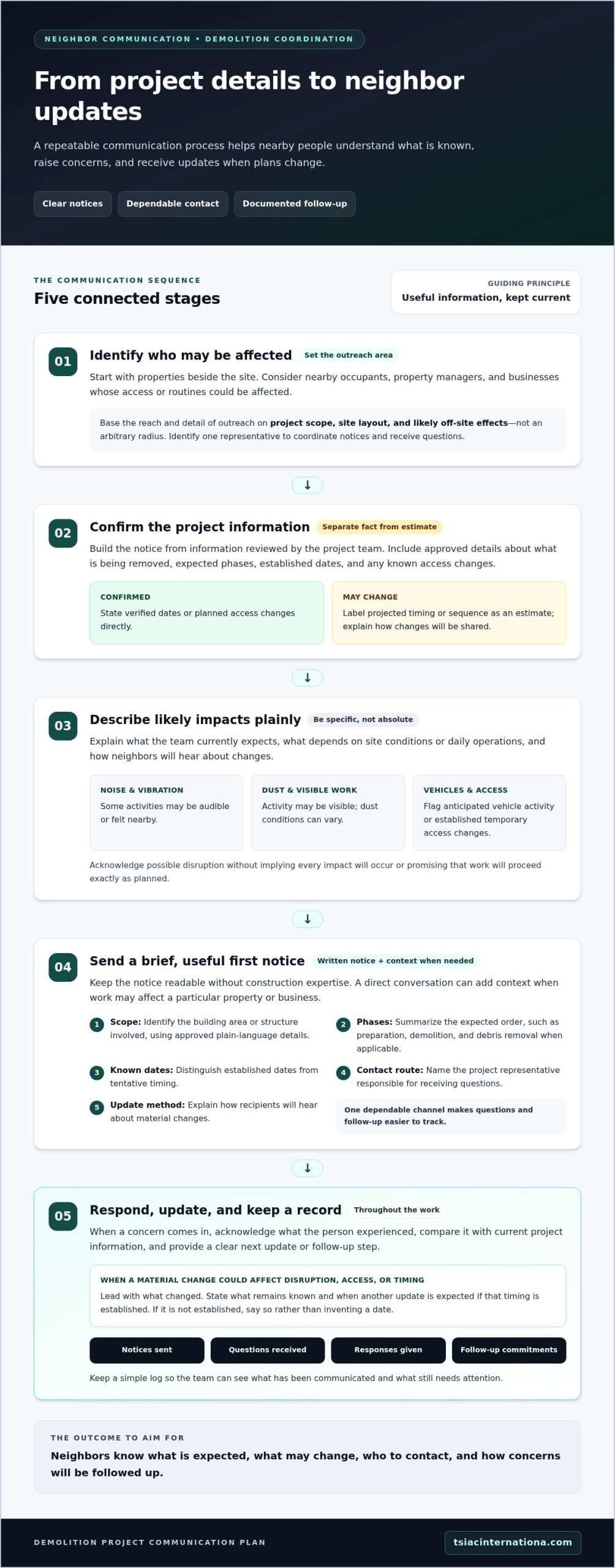
Separate confirmed facts from estimates. State a verified start date or planned access change directly. Label a projected duration or sequence that may shift as an estimate, and explain how the team will share updates if it changes. Early, accurate information supports coordination, but it cannot prevent every disruption or ensure that work proceeds exactly as planned.
Which neighbors and stakeholders may need notice?
Start with properties beside the site, then consider nearby occupants, property managers, and businesses whose access or routines could be affected. Set the outreach area and level of detail according to the project scope, site layout, and likely off-site effects, rather than an arbitrary radius. Identify one project representative to coordinate notices and receive questions. A consistent contact route makes follow-up easier to track.
What impacts should the plan acknowledge?
Describe plausible effects plainly without implying they will all occur. Explain what the team currently expects, what depends on site assessment or daily operations, and how updates will be shared if conditions change. Specific, measured language is more useful than broad reassurance. For example, distinguish scheduled deliveries from equipment movements that may vary with work progress.
- Noise and vibration: Note that some activities may be audible or felt nearby, without making unsupported claims about intensity or duration.
- Dust and visible work: Explain that demolition activity may be visible and that dust conditions can vary with the work and site conditions.
- Deliveries and access: Identify anticipated vehicle activity or temporary access changes when those details are established, and flag anything that may change.
These distinctions acknowledge neighbors’ concerns without minimizing them or presenting every possible impact as certain. They also give the project team a practical way to respond: acknowledge what the person experienced, compare it with current project information, and provide a clear next update or follow-up step.
What to include in a demolition project communication plan
A useful notice answers neighbors’ likely questions without presenting tentative details as fixed commitments. Build the demolition project communication plan for neighbors from information the project team has reviewed, then assign someone to keep it current. A concise written notice gives recipients something to refer back to. A direct conversation can add context when work may affect a particular property or business.
The U.S. Environmental Protection Agency’s EPA Guidance on Community Involvement in Demolition discusses ways to involve communities and communicate health and safety precautions. Apply that principle by making notices informative, while leaving technical direction and safety-sensitive site instructions to the project team.
What information belongs in the first neighbor notice?
Keep the opening notice brief, specific, and readable without construction expertise. Describe what is being removed and the broad sequence of work, such as preparation followed by demolition and debris removal, if those phases match the project. Include a confirmed start date or date range only when established, and explain that operational timing can shift. State how to reach the designated contact and how concerns will be received and routed.
- Scope: Identify the building area or structure involved, using plain language and only approved project details.
- Phases: Summarize the expected order of major activities without overloading the notice with technical methods.
- Known dates: Separate confirmed dates from estimates. Don’t present a tentative sequence as a promise.
- Contact route: Give one dependable channel and name the project representative responsible for receiving questions.
- Update method: Explain how recipients will hear about material changes, such as through a revised written notice or direct message.
How should updates handle schedule or scope changes?
Send an update when a material change could affect expected disruption, access, or timing. Lead with what changed, then state what remains known and when another update is expected, if that timing is established. If it isn’t, say so rather than inventing a date. Keep a simple log of notices sent, questions received, responses given, and follow-up commitments. This helps the team identify what has been communicated and what still needs attention.
For example, if a planned phase moves and nearby access may be affected, clarify which access detail is changing and which project information remains the same. Avoid sending updates for every minor adjustment. Focus on changes that matter to recipients, so communication stays useful and conflicting versions are less likely to circulate.
Before sending a notice, have the project team review it for accuracy, confirm that dates are current, and remove operational details that could be mistaken for instructions to enter or approach the work area. Keep the approved version and distribution record together. For demolition work, organized demolition planning and coordination provides a practical foundation for keeping project information consistent as work progresses.
Matching Neighbor Communication to Demolition Impacts
A permit is not a communication plan. Authorization to proceed does not automatically tell nearby occupants what activity may affect them, when it may happen, or where to direct a concern. Applicable notice requirements depend on the project and location, so the project team should account for them separately. A permit authorizes work under applicable conditions; considerate communication explains what nearby people may experience and how concerns will be handled.
Scale alone doesn’t determine who needs information. Proximity, shared access, building occupancy, work duration, and the location of equipment or delivery routes all affect what neighbors may notice. A demolition project communication plan for neighbors should match the detail and timing of updates to these site-specific conditions, rather than using one standard message for every project.
How does project scale change the communication approach?
For limited selective demolition, focus on the occupants closest to the work and explain the specific activity and disruption expected. Structural demolition may call for a broader overview of phases because site activity can change as work progresses. In an occupied or shared property, coordinate communication with the responsible property representative so residents, tenants, or businesses receive consistent information through an appropriate channel.
How should concerns about dust, noise, and access be addressed?
Take each concern seriously, record what happened and where, and route it to the designated project contact. Explain relevant controls only when they’re confirmed for that project. Don’t offer assurances about conditions or response times the team can’t support. If a concern needs investigation, acknowledge receipt and give a follow-up estimate only when the team can reliably meet it.
| Impact | Useful information to share | Appropriate update |
|---|---|---|
| Noise or vibration | Which phase may be noticeable, if established | Share a change if the expected activity or timing shifts materially |
| Dust or visible work | What activity neighbors may see, without promising a specific outcome | Respond to reported conditions through the project contact |
| Deliveries or equipment movement | Known routes or access effects that are relevant to nearby properties | Notify affected occupants if access arrangements change |
| Work near occupied or shared areas | Which representative coordinates information for those occupants | Align messages with that representative when plans change |
This matrix is a guide, not a substitute for project-specific judgment. A small scope beside a shared entrance, for example, may require more precise access communication than a larger scope separated from occupied areas. Match outreach to actual exposure and revise it when conditions or planned activities change.
Courtesy communication supports coordination; it doesn’t replace applicable permits, required notices, or safety controls. Keep these functions distinct: formal requirements establish what the project must do, while direct communication helps nearby people understand relevant effects and raise concerns through a clear route.
How to put the neighbor communication plan into action
A demolition project communication plan for neighbors works best when each step has an owner and a clear handoff. Assign someone to draft notices, a project lead to approve scope and schedule facts, a sender to distribute updates, and a contact to log and route concerns. One person may hold several roles, but responsibilities should be explicit so questions don’t sit unanswered or receive conflicting replies.
What sequence keeps communication organized?
Use a repeatable workflow from initial planning through closeout. Map likely affected properties, choose a suitable contact method for each, and coordinate with property representatives where needed. Draft the notice from verified project information, then have the responsible lead review it before distribution. Keep the communication sequence connected to the broader demolition plan so notices reflect the actual work and its approved phases.
- 1. Identify recipients: Review the site layout, nearby occupancy, access points, and anticipated off-site effects to determine who may need information and how to reach them.
- 2. Confirm the facts: Gather the approved scope, established schedule details, anticipated phases, relevant impacts, contact information, and update channel. Label estimates clearly.
- 3. Review and send: The project lead checks operational details for accuracy. The assigned sender distributes the notice through the selected channels and records when it was shared.
- 4. Check before work begins: Reconfirm that contact details remain valid and shared dates or plans haven’t changed. Correct outdated information before it creates confusion.
- 5. Update and document: Share changes that affect neighbors at meaningful milestones, and log the notice, questions, responses, and any unresolved follow-up.
Set a practical review point close to the planned start, rather than assuming information prepared earlier is still current. This check can catch a changed contact, revised sequence, or outdated access detail before it reaches recipients. Keep the current approved version easy for the project team to find, so everyone refers to the same information.
How should the team respond when a neighbor raises a concern?
Listen without interrupting or dismissing the report. Record the concern, where and when it occurred, and any relevant details the neighbor provides. Route operational or safety matters promptly to the responsible project lead rather than speculating about causes. Close the loop with a factual response, explain any next step the team has agreed to take, and document who owns that follow-up.
Good coordination depends on reliable information moving between the project team and the people affected by the work. For support with demolition planning and execution, talk with TSIAC about your demolition project.
How TSIAC supports clear communication during demolition projects
Clear neighbor communication is one part of disciplined demolition coordination. It supports project planning, but it doesn’t replace technical controls or the project team’s responsibility to manage the work. TSIAC International brings more than 15 years of industry experience to structural and selective demolition, interior gutting, and hazardous-material abatement. Understanding the work being planned helps connect project activity with accurate, practical information for people nearby, without promising dates or outcomes before project details are established.
A useful demolition project communication plan for neighbors reflects the actual scope and sequence of work. A limited selective demolition project and a structural demolition project don’t necessarily involve the same phases, site activity, or affected properties. The project team can use its understanding of the work to explain what is planned in plain language, distinguish established facts from details that may change, and update information when there is a meaningful change.
How does demolition experience support better coordination?
Project scope informs what neighbors need to know. Interior gutting, structural demolition, and abatement may involve different phases and considerations, so explanations should be based on the specific plan rather than generic assurances. TSIAC International’s work across residential and commercial demolition and abatement helps ground communication in project context, while schedules and impacts remain specific to the information established for each job.
Material handling can also be part of project planning. TSIAC International incorporates wood, metal, and plastic recycling practices on every project site. Sharing that information can help explain how materials are considered as work progresses, without making unsupported claims about quantities or outcomes. A clear account of the work sequence also helps align neighbor-facing updates with the project plan.
What are practical next steps for project owners?
Gather the information needed to make communication project-specific: the planned scope, established schedule details, properties or occupants that may be affected, and questions about access, updates, or concerns. This gives the project team a clearer basis for discussing what can be shared, which details are still estimates, and how communication responsibilities fit into the broader demolition plan.
Clarify who approves project facts, who sends neighbor updates, and who receives and routes concerns. Agree on a practical process for reviewing shared information before work begins and revising it if plans materially change. The objective is a consistent, considerate communication approach that supports organized coordination without suggesting every disruption can be prevented.
To discuss project scope and communication needs with TSIAC International, discuss a demolition project with TSIAC International.
Set Your Project Up for Clear Communication
Make communication part of the project’s working plan, not a separate task handled only when questions arise. Decide who owns each message, how changes will be shared, and how concerns move from initial report to documented follow-up. A demolition project communication plan for neighbors should stay connected to current project information, so recipients aren’t relying on outdated assumptions as work progresses.
Bring the project team together around the details that are known and the items that still need decisions. A focused conversation about scope, affected properties, and communication responsibilities can establish a practical starting point without promising conditions the team can’t control. Keep the process flexible enough to reflect changes while maintaining a reliable way for neighbors to be heard.
For a project-specific discussion about demolition scope and neighbor communication, discuss your demolition project with TSIAC International. A considered plan gives your team a stronger foundation for coordination and helps neighbors know where to turn as the work moves forward.
Frequently Asked Questions
When should neighbors be notified about a demolition project?
Notify affected neighbors as soon as the project team has reliable information to share and enough time remains for people to prepare. That may mean communicating before activity begins, then updating recipients if key details change. Timing can depend on the project and applicable local requirements, so distinguish a courtesy notice from any formal notification process. Early notice is most useful when it gives neighbors a clear way to ask questions.
What should a demolition notice to neighbors include?
A neighbor notice should identify the site and provide a plain-language description of the work, the best available timing, and a project contact. It can also explain how updates will be shared and how to report an issue. If a shared driveway may be affected, for example, state what is currently known about access and how changes will be communicated. Mark estimates as tentative rather than presenting them as fixed plans.
Do I have to notify neighbors before demolition?
There isn’t one federal rule that requires notification of adjacent neighbors for every standard demolition project. Local requirements may apply, and property or community rules can also affect notice expectations. Formal requirements are separate from considerate outreach, so confirm which notification rules apply to the specific project and location. A demolition project communication plan for neighbors helps organize voluntary updates and questions without treating them as a substitute for required notices.
How do you handle neighbor complaints during demolition?
Acknowledge the complaint, record the details, and direct it to the person responsible for the relevant project activity. Ask what happened and when, then share the information with the project lead so it can be assessed against current site operations. Avoid debating the neighbor’s experience or promising a remedy before the team has reviewed it. Keep a record of the response and any agreed next step.
What disruptions should neighbors expect during demolition?
Possible disruptions include intermittent noise, dust, vibration, visible work, vehicle activity, or temporary changes to nearby access. The mix and intensity depend on the scope, work methods, distance, and site conditions, so no single list predicts every project. Interior gutting may look different from structural demolition, for example. Neighbors should use project-specific updates for the most relevant information, rather than assume every possible impact will occur.
Can a demolition schedule change after neighbors have been notified?
Yes. A schedule may need revision as project conditions or work sequencing change. If a change affects expected disruption or access, share the revised information as soon as it is established, explain what has shifted, and identify which details remain unchanged. Keep the original notice and the update record together so the team can refer to the current version and avoid relying on outdated dates.
Who should neighbors contact with questions about demolition work?
Neighbors should use the project contact named in the notice, rather than approaching workers or entering the work area to seek information. That representative can route operational questions to the appropriate project lead and provide updates through the stated communication channel. For a property with tenants or shared spaces, the property manager may also help direct questions to the right person. Clear contact details make concerns easier to track and address.
