
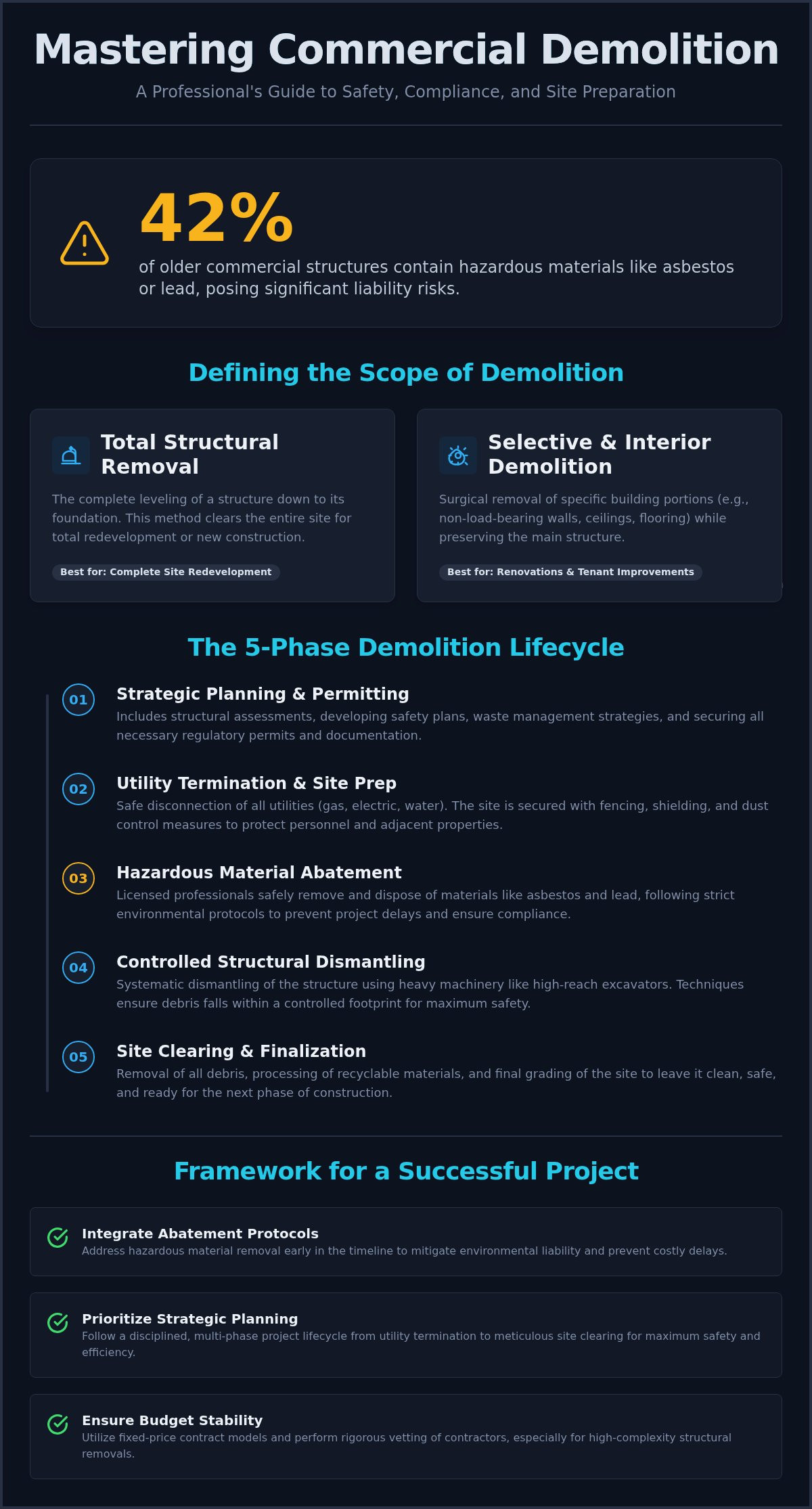
Approximately 42% of older commercial structures in the United States contain hazardous materials like asbestos or lead. When you’re initiating a project involving commercial interior demolition, these hidden substances aren’t just technical obstacles; they’re substantial liability risks that can halt progress. You likely understand that structural removal is a precise engineering discipline rather than a simple act of destruction. It requires a controlled methodology to protect both your investment and the surrounding environment.
This professional guide will help you master the complexities of large-scale structural removal, hazardous material abatement, and meticulous site preparation. We’ll provide a clear overview of the protocols necessary for a clean, build-ready site while ensuring you maintain full regulatory documentation. We’ll explore the transition to comprehensive environmental oversight and how to manage site logistics without safety incidents. By following this expert framework, you’ll ensure your project remains on schedule and fully compliant with modern safety standards.
Key Takeaways
- Identify the technical distinctions between total structural removal and selective demolition to ensure your project strategy aligns with specific redevelopment goals.
- Navigate the complexities of commercial interior demolition myrtle beach by implementing a systematic gutting process designed for efficient tenant improvements.
- Mitigate environmental liability and prevent project delays by integrating licensed asbestos and lead abatement protocols directly into the demolition timeline.
- Follow a disciplined five-phase project lifecycle that prioritizes strategic utility termination and meticulous site clearing for maximum safety.
- Ensure long-term budget stability for high-complexity structural removals by utilizing fixed-price contract models and rigorous contractor vetting.
The Critical Importance of Professional Commercial Demolition in 2026
Commercial demolition is the strategic removal of structures to clear the way for redevelopment or comprehensive renovation. It isn’t a simple act of destruction but the first phase of a building’s new lifecycle. In the 2026 landscape of urban renewal, the role of specialized contractors has become more vital than ever. As cities become denser, the margin for error during structural removal vanishes. Professional oversight is mandatory to ensure that every phase of the project aligns with modern safety protocols and environmental mandates. Without a disciplined approach, the risks to personnel and the public are unacceptably high.
There’s a significant difference between general excavation and professional structural removal. While excavation focuses on moving earth and preparing foundations, Demolition involves the systematic dismantling of complex, man-made systems. Managing a project like commercial interior demolition myrtle beach requires a partner who can navigate these differences with technical precision. This expertise ensures that the site is transitioned from a standing structure to a clean, build-ready state without compromising the project’s timeline or budget.
Structural Integrity and Risk Mitigation
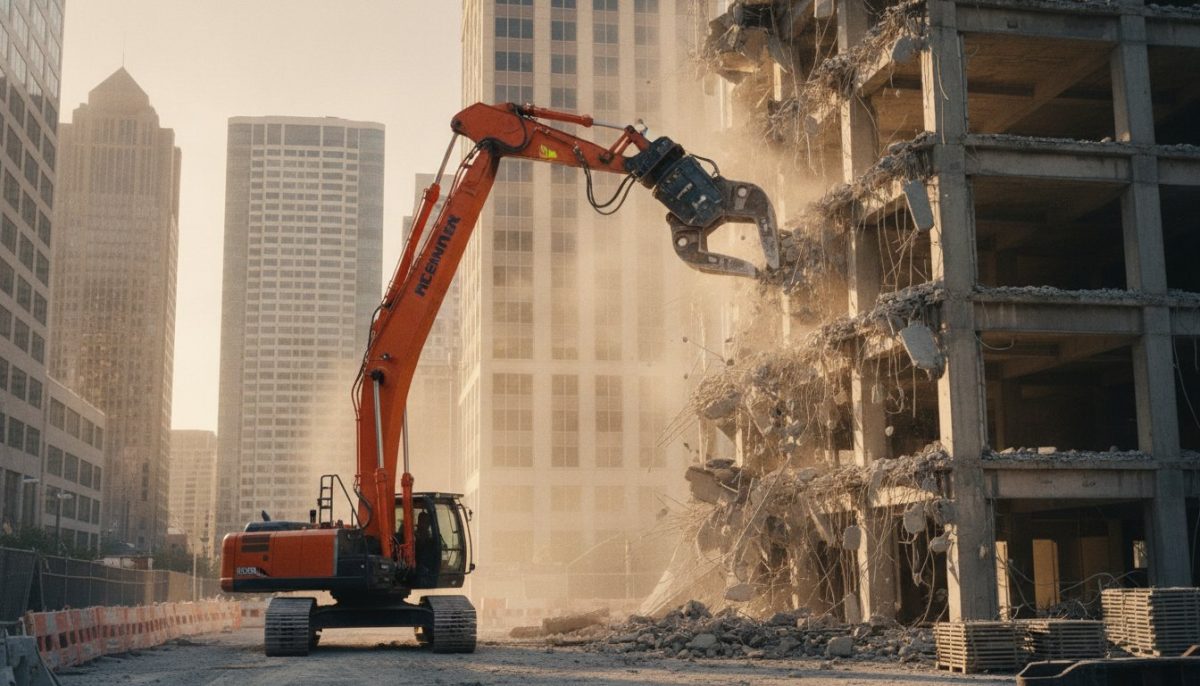
High-density environments require contractors to protect adjacent structures with surgical precision. Professional teams use seismic sensors to monitor vibrations and high-strength shielding to prevent debris from escaping the site perimeter. Heavy machinery, including high-reach excavators equipped with hydraulic shears, allows operators to dismantle buildings from the top down in a sequence that maintains stability. Structural demolition is a controlled engineering event. By utilizing these advanced tools, contractors manage debris flow and ensure that the collapse occurs within a strictly defined footprint, protecting both the workers and the neighboring assets.
Navigating Regulatory Compliance and Permitting
The administrative side of demolition is just as complex as the physical work. Legal structural removal requires a mountain of documentation, including utility disconnect certifications, safety plans, and waste management strategies. Environmental impact assessments are now a standard requirement for large-scale commercial projects to address concerns like dust mitigation and local runoff. Working with a contractor who handles all regulatory filings is a strategic advantage. It ensures that your project doesn’t get bogged down in bureaucratic delays and that you have a complete record of compliance to protect against future liability claims.
Defining the Scope of Commercial Demolition Services
Defining the scope of a project is the first step in technical planning. Commercial demolition is generally categorized into two primary methodologies: total structural removal and selective clearing. Total removal involves the complete leveling of a structure to its foundation, often necessary for total site redevelopment. In contrast, selective clearing focuses on removing specific portions of a building while preserving the primary structure. This surgical approach is essential for historic preservation or when a facility remains occupied during renovation. Successful commercial interior demolition myrtle beach relies on a clear understanding of these boundaries to maximize the value of the existing asset.
Structural Demolition vs. Selective Removal
Choosing total removal is often the most logical path when a building’s lifecycle has ended or its layout no longer supports modern operational needs. However, selective demolition offers significant advantages for preserving architectural integrity or structural shells. By targeting only specific areas, contractors can reduce waste and overall project costs during renovation phases. This level of precision requires strict adherence to OSHA demolition safety standards to ensure that the remaining structure’s stability isn’t compromised during the process. It’s a method that prioritizes the long-term viability of the building’s core while clearing the path for modernization.
Interior Gut-Outs for Commercial Renovations
For many redevelopment projects, the goal is a complete interior transformation. This process, often called an interior gut-out, involves stripping the space down to the studs or structural columns. Teams remove non-load-bearing walls, flooring, and finishes. In modern office retrofits, the systematic removal of acoustic ceilings and drywall is a critical step to clear the path for new HVAC and electrical systems. Managing these projects requires careful coordination of utility disconnects and safe interior debris hauling. You can find more detailed information on this process in our commercial interior gutting services guide.
The final phase of any scope includes concrete removal and thorough site clearing. Whether it’s breaking up old slabs or removing exterior walkways, these finishing steps ensure the ground is ready for new construction. It’s about leaving a site that’s truly build-ready. If you’re preparing for a complex renovation, partnering with an experienced firm like TSIAC International ensures your site is cleared with technical precision and methodical care.
Specialized Abatement: Managing Asbestos and Hazardous Materials
Asbestos and lead represent the primary hidden threats in commercial redevelopment. These materials aren’t just environmental concerns; they’re substantial legal and safety liabilities that can halt a project indefinitely. Approximately 42% of older commercial structures in the United States contain these hazardous substances. When you’re managing commercial interior demolition myrtle beach, identifying these risks before the first wall is breached is essential. Hazards shouldn’t stall progress. Professional abatement ensures that toxic elements are neutralized before they can contaminate the site or endanger the workforce.
The legal requirement for certified hazardous material disposal is absolute. In 2026, regulatory oversight has tightened, with the South Carolina Department of Environmental Services (SCDES) enforcing strict protocols. Civil penalties for non-compliance can reach $10,000 per violation. This makes working with a licensed partner a matter of financial survival. A disciplined approach to abatement provides the necessary documentation to prove that every ounce of regulated material was handled, transported, and disposed of according to federal and state mandates.
The Asbestos Abatement Lifecycle
Successful asbestos management follows a methodical lifecycle that begins with a thorough inspection by a licensed professional. This isn’t optional. Every commercial structure requires a certified inspection before any demolition activity occurs. Once identified, the process moves into the containment phase. Specialized containment zones, utilizing negative air pressure and HEPA filtration, prevent the spread of microscopic fibers. This ensures that the structural removal doesn’t release carcinogens into the surrounding air. Following removal, the site must pass a final air clearance test to be declared safe for other trades. For a deeper look at these requirements, see our guide on asbestos removal in South Carolina. These procedures strictly align with EPA asbestos regulations to protect public health and project integrity.
Safe Lead Paint Removal and Remediation
Lead-based paint is a frequent obstacle in industrial and aging commercial properties. Remediation requires more than simple scraping; it demands a controlled process to avoid environmental contamination. Methods such as chemical stripping or vacuum-shrouded power tool cleaning are employed to capture lead dust at the source. This technical precision prevents lead from leaching into the soil or becoming airborne during the gutting process. Comprehensive regulatory documentation is provided upon completion, confirming that the site is lead-safe. This transparency is vital for securing future building permits and ensuring the long-term safety of the facility’s new occupants.
The Demolition Lifecycle: From Strategic Planning to Site Clearing
Executing a successful commercial interior demolition myrtle beach requires moving through five distinct industrial phases. The process begins with a pre-demolition audit and permitting. In 2026, the South Carolina Department of Environmental Services (SCDES) requires an ePermitting application at least 10 working days before any regulated facility is disturbed. This phase ensures all hazardous material inspections are documented and utility termination is verified. Cutting off water, gas, and electricity isn’t just a safety step; it’s a foundational requirement to prevent catastrophic site incidents during the structural removal phase.
Efficient execution relies on the strategic deployment of heavy machinery and specialized tools. For high-density structural work, high-reach excavators provide the necessary leverage, while compact skid steers are used for surgical interior gutting. Once the primary removal is complete, the focus shifts to site restoration. According to regional regulations, the lot must be sodded or hydro-seeded with a silt fence installed to prevent erosion. All demolition materials must be removed within 14 days of the structure’s removal to ensure the site is truly build-ready for the next phase of development.
Environmental Stewardship and Material Recycling
Modern demolition isn’t about filling landfills. It’s about recovering value. Professional contractors now sort debris on-site to recover wood, metal, and plastic. With landfill tipping fees in South Carolina reaching up to $65 per ton, recycling isn’t just an environmental choice; it’s a fiscal necessity. Recovering these materials significantly reduces the project’s carbon footprint and keeps disposal costs under control. You can find more details on these requirements in our guide to the demolition process in South Carolina. This commitment to sustainability ensures that your project meets the highest standards of corporate responsibility.
Safety Protocols and Debris Management
Managing an active site requires constant vigilance regarding dust suppression and noise mitigation. High-pressure misting systems are used to keep particulates from leaving the site perimeter, which is critical in active commercial zones. Security is maintained through rigorous traffic management and perimeter fencing to prevent unauthorized access. Every crew member must follow OSHA-compliant safety standards to mitigate the risk of willful violations, which can carry penalties exceeding $165,000. If you need a partner who prioritizes these safety and environmental standards, contact TSIAC International to discuss your structural removal needs.
Selecting a National Contractor for High-Complexity Projects
Selecting the right partner for high-stakes structural removal is a decision that impacts your project’s financial and legal standing. For complex tasks like commercial interior demolition myrtle beach, you need a contractor who prioritizes technical precision over speed. Vetting should begin with a rigorous review of safety records and specialized licensing. A firm’s ability to provide a fixed-price contract model is a key indicator of professional maturity. It offers budget certainty by accounting for the technical variables of structural work before the first machine arrives on-site. This approach eliminates the risk of cost overruns that often plague projects managed by less experienced providers.
Choosing a firm that integrates hazardous material abatement with structural removal reduces project friction significantly. When these services are siloed, communication gaps between different contractors often lead to scheduling delays and secondary contamination risks. An integrated firm manages the entire site lifecycle, ensuring that the transition from abatement to structural clearing is seamless. This unified command structure provides a single point of accountability, which is essential for maintaining the aggressive timelines required in modern commercial redevelopment.
Evaluating Experience and Abatement Certification
Experience isn’t just a number; it’s a benchmark for site safety. Fifteen years of industry experience is the standard for contractors handling commercial-grade projects. At this level of tenure, a firm has encountered and resolved the most difficult technical challenges, from unstable structural members to complex hazardous material containment. When vetting, you should ask about specific insurance coverage and hazardous material bonding. It’s also vital to verify the contractor’s ability to handle interior gut-outs and structural removal simultaneously. A partner who can coordinate these distinct workflows without compromising safety protocols is a valuable asset for any high-density project.
Streamlining Your Project with TSIAC International
TSIAC International operates as a disciplined, single-source contractor for both demolition and abatement. This model saves time and money by eliminating the need for multiple vendors and redundant site mobilizations. Our commitment to environmental responsibility is reflected in our rigorous material management; we prioritize the recycling of wood, metal, and plastic on every site we manage. This reduces landfill waste and aligns your project with modern sustainability standards. By choosing a partner with over 15 years of specialized experience, you ensure that even the most difficult technical challenges are kept under control. Contact TSIAC International to discuss your commercial demolition needs and secure a partner dedicated to methodological precision.
Securing Your Site for Future Development
Mastering the complexities of structural removal requires a disciplined approach that integrates engineering precision with environmental compliance. By prioritizing thorough hazardous material abatement and methodical site clearing, you protect your investment from unforeseen delays and legal liabilities. Whether your project involves total structural removal or a detailed commercial interior demolition myrtle beach, the transition to a build-ready state depends on the technical expertise of your contracting partner. It’s a process where safety and documentation are just as critical as the physical work performed on-site.
TSIAC International brings over 15 years of specialized industry experience to every project. As licensed asbestos and lead abatement experts with national service capabilities, we provide the technical control necessary for high-stakes commercial work. Our fixed-price model and commitment to material recycling ensure that your site is prepared with both fiscal and environmental responsibility. Don’t leave your project’s compliance to chance when professional oversight is available.
Request a Professional Demolition and Abatement Quote from TSIAC International to begin your next project with confidence. We look forward to helping you transform your property safely and efficiently.
Frequently Asked Questions
What is the difference between selective and structural demolition?
Selective demolition targets specific interior or exterior elements while maintaining the building’s primary structural integrity, whereas structural demolition involves the complete removal of the facility down to its foundation. Selective removal is common for commercial interior demolition myrtle beach projects where the architectural shell is being repurposed for a new tenant. Structural demolition is typically chosen for total site redevelopment. Both methods require precise engineering to ensure site safety and structural stability.
How long does a typical commercial demolition project take to complete?
Project timelines vary based on structural complexity and hazardous material volume, but the pre-demolition phase alone requires at least 10 working days for mandatory state notification. A standard interior gut-out often takes two to four weeks, while total building removal can span several months. These estimates include time for utility termination, hazardous material abatement, and final site grading. Professional planning ensures these phases overlap efficiently to minimize project downtime.
Is asbestos abatement always required before a building can be demolished?
Asbestos abatement is mandatory if a licensed inspection identifies regulated asbestos-containing materials within the structure. In South Carolina, every commercial building must undergo a thorough asbestos inspection before any demolition or renovation activity, regardless of the construction date. If hazardous fibers are detected, they must be removed under strict containment protocols before structural work begins. This process prevents the release of carcinogens into the environment and ensures regulatory compliance.
What happens to the materials removed from a demolition site?
Materials removed from a site are sorted on-site to maximize recovery and meet environmental stewardship goals. Professional contractors separate wood, metal, and plastic for delivery to specialized recycling facilities. This process reduces landfill tipping fees and supports a lower project carbon footprint. Any non-recyclable debris is transported to licensed landfills using documented waste manifests, ensuring full regulatory accountability from the site to the final disposal point.
How do you ensure the safety of neighboring buildings during demolition?
Safety for adjacent structures is maintained through seismic vibration monitoring and high-strength debris shielding. High-reach excavators allow for top-down dismantling, which provides superior control over the direction of falling material. Seismic sensors track ground movement in real-time to ensure neighboring foundations remain undisturbed. These technical safeguards are essential in high-density urban areas where buildings are often separated by only a few feet of space.
What are the costs associated with hazardous material removal?
The costs for hazardous material removal depend on the volume of contaminated material and the specific containment methods required for safe extraction. Factors such as the accessibility of the asbestos or lead and the distance to a specialized disposal facility influence the final budget. A fixed-price contract from a professional firm provides the most budget certainty. This model accounts for the technical findings of the mandatory pre-demolition inspection.
Does a demolition contractor handle the permitting process?
A professional demolition contractor manages the entire permitting and regulatory filing process. This includes submitting ePermitting applications to the South Carolina Department of Environmental Services and obtaining local municipal permits. They also coordinate utility disconnect certifications and environmental impact assessments. Handling these administrative tasks ensures the project complies with all local and federal mandates, protecting the property owner from potential fines or project delays.
Can interior gutting be performed while other parts of the building are occupied?
Interior gutting can be performed in occupied buildings if strict containment and mitigation protocols are implemented. Contractors use negative air pressure zones and HEPA filtration to prevent dust and debris from entering occupied spaces. Noise-heavy activities are often scheduled during off-peak hours to minimize disruption to tenants. This approach allows for commercial interior demolition myrtle beach to proceed without requiring a total facility evacuation, maintaining operational continuity during the renovation.
