
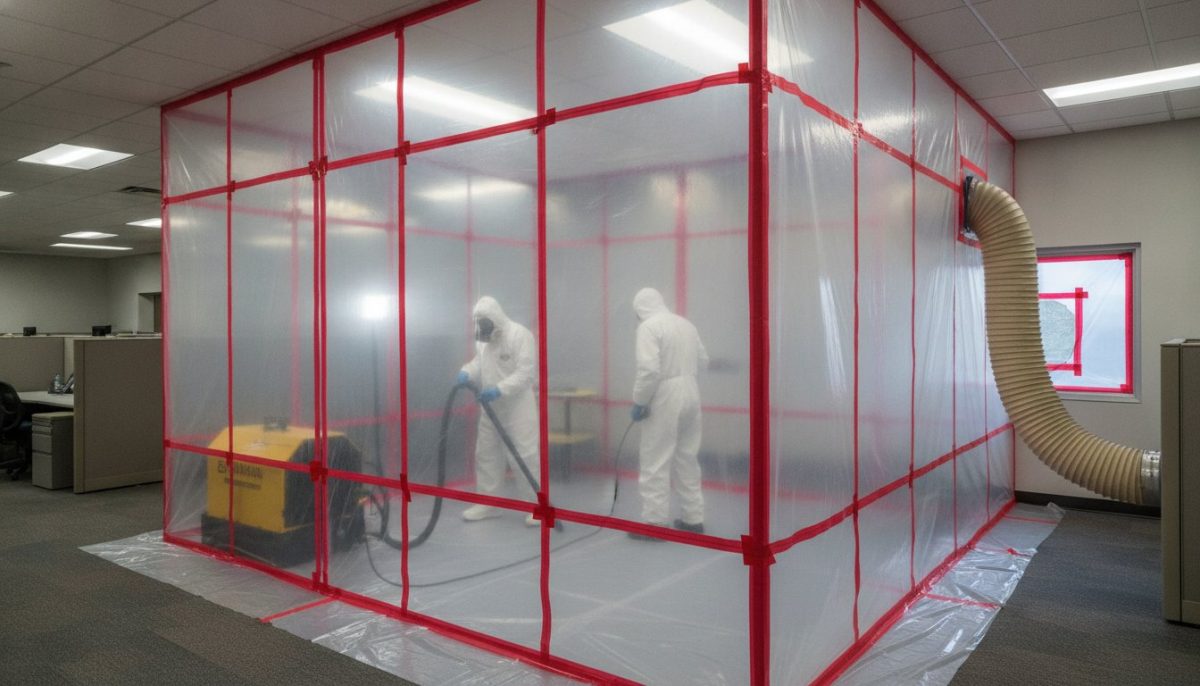
An asbestos containment zone isn’t just a plastic-wrapped room; it’s a precision-engineered life-support system designed to prevent invisible fibers from becoming a permanent liability. You’re likely aware that the stakes of disturbing legacy materials in occupied buildings are incredibly high, as a single breach can lead to severe health risks and massive regulatory fines. Mastering the technical requirements of asbestos abatement containment procedures is the only way to ensure your project meets the 0.1 fiber per cubic centimeter permissible exposure limit set by OSHA. This article provides a deep dive into the engineered safety protocols and multi-stage barriers required for professional-grade removal. We’ll examine the specific mechanics of negative-pressure filtration and the mandatory decontamination units that define the gold standard of site safety. By the end, you’ll have a clear methodology for verifying contractor compliance and the confidence that your building is truly ready for safe re-occupancy.
Key Takeaways
- Understand the critical role of physical barriers in isolating friable fibers to prevent cross-contamination throughout occupied buildings.
- Identify the technical specifications for high-stakes barriers, including the use of 6-mil fire-retardant sheeting and precision sealing for HVAC systems.
- Master the physics of negative air pressure and air change calculations essential to professional asbestos abatement containment procedures.
- Learn the mandatory three-stage decontamination protocols required to ensure technician safety and prevent the migration of hazardous particles.
- Gain a methodology for post-abatement verification, covering HEPA-filtration cleaning and the application of encapsulants for safe re-occupancy.
What is Asbestos Abatement Containment?
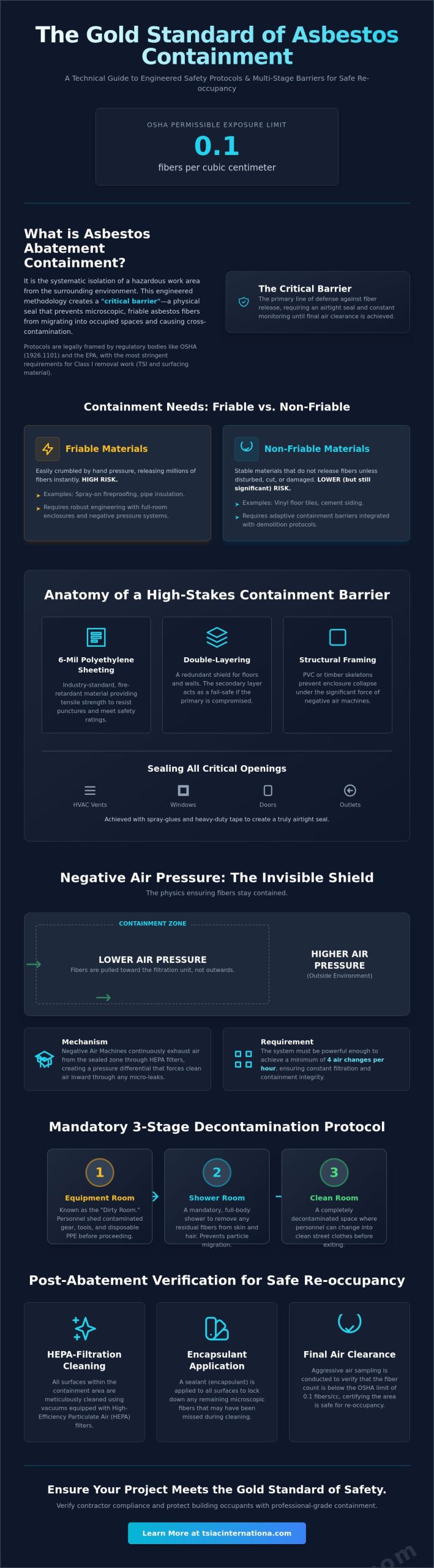
Professional asbestos abatement containment procedures represent the systematic isolation of a hazardous work area from the surrounding environment. This isn’t merely about hanging plastic sheets; it’s an engineered methodology designed to create a “critical barrier.” In the context of hazardous material remediation, a critical barrier is a physical seal that prevents the migration of microscopic, friable fibers into occupied spaces. These fibers are so small they remain buoyant in the air for hours, making precision containment the primary line of defense against cross-contamination and long-term liability.
Regulatory bodies like OSHA and the EPA provide the legal framework for these protocols. Specifically, OSHA 1926.1101 mandates strict asbestos abatement procedures based on the risk level of the activity. Class I work, which involves the removal of thermal system insulation (TSI) and surfacing material, requires the most stringent containment. Class II and Class III activities, while often involving non-friable materials, still demand specific barrier protocols to ensure that any accidental fiber release is captured within the regulated zone. Following these standards ensures that the building remains habitable and legally compliant throughout the project lifecycle.
The Purpose of a Regulated Area
Establishing a regulated area is the first step in any professional abatement project. This involves setting a physical perimeter that clearly separates the work zone from the rest of the building. Federal safety standards require specific signage and labeling at all entry points to warn occupants of the respiratory hazards within. We maintain a zero-tolerance approach to fiber migration. This means the barrier must remain intact and under constant monitoring until final air clearance is achieved. Access is strictly limited to certified personnel who follow rigorous entry and exit sequences to prevent tracking dust into clean zones.
Friable vs. Non-Friable Containment Needs
The intensity of the containment strategy depends heavily on the material’s friability. Friable materials, such as spray-on fireproofing or pipe insulation, can be easily crumbled by hand pressure, releasing millions of fibers instantly. These projects require robust engineering, including full-room enclosures and negative pressure systems. Non-friable materials, like vinyl floor tiles or cement siding, are more stable but can become friable during selective demolition or mechanical removal. We integrate abatement barriers with demolition protocols to ensure that even “low-risk” materials don’t compromise site safety. Whether we’re gutting an interior or removing specific components, the containment must adapt to the physical reality of the materials being handled. This methodical approach ensures that every fiber is accounted for and safely removed.
The Anatomy of a High-Stakes Containment Barrier
Building a containment barrier is an exercise in structural engineering rather than simple site preparation. Properly executed asbestos abatement containment procedures require a rigid adherence to material specifications and sealing techniques. We use 6-mil fire-retardant polyethylene sheeting as the industry standard for all enclosures. This material provides the necessary tensile strength to resist punctures and meets essential safety ratings for work in enclosed environments. For large-scale projects, we don’t just hang plastic; we build a skeleton using PVC or wood framing to ensure the enclosure doesn’t collapse under the force of negative air pressure.
Redundancy is a core principle of our safety protocol. We apply double-layering to all floors and walls within the work zone. If the top layer is compromised during the removal of heavy debris, the secondary layer remains as a fail-safe. This meticulous approach to asbestos abatement containment procedures is what separates professional remediation from amateur attempts that risk the health of building occupants.
- 6-Mil Polyethylene: Fire-retardant sheeting provides the necessary tensile strength and safety rating for hazardous zones.
- Double-Layering: Applying two distinct layers to floors and walls creates a redundant shield against accidental tears.
- Structural Framing: PVC or timber skeletons prevent enclosure failure when negative air machines are active.
Sealing the Critical Openings
A critical barrier is the primary defense against fiber release. To achieve an airtight seal, we use a combination of spray-glues and heavy-duty tape on all seams and joints. Every HVAC vent, window, door, and electrical outlet must be individually sealed before the main enclosure is even built. These protocols align with EPA NESHAP regulations, which demand that containment areas remain leak-tight throughout the project. Managing active utilities requires specialized care; electrical lines are often rerouted or sealed with specific gaskets to prevent air leakage while maintaining site power. For complex projects, consulting with an expert in asbestos abatement ensures these technical nuances are handled with precision.
Viewing Ports and Emergency Egress
Safety extends beyond fiber containment. We install transparent viewing ports at strategic locations to allow external supervisors to monitor the work zone without entering the contaminated area. This increases accountability and allows for immediate response if a barrier is compromised. Emergency egress is equally vital. We design exits using a series of overlapping poly flaps that maintain the seal during normal operations but allow workers to exit quickly in a crisis. This balance of security and accessibility is a hallmark of high-stakes containment design.
Negative Air Pressure: The Invisible Shield
Physical barriers like polyethylene sheeting provide the necessary boundary, but the true security of asbestos abatement containment procedures lies in the management of air movement. While a plastic shell is static, a containment zone is a dynamic, engineered environment. Negative air pressure creates a vacuum effect that ensures air only flows into the contaminated area, never out of it. If a micro-tear occurs in the poly shell, this pressure differential forces clean air from the outside to rush into the containment, effectively trapping hazardous fibers within the regulated zone. This directional flow is the primary mechanism that prevents cross-contamination in occupied buildings.
To maintain this environment, we utilize high-volume negative air machines equipped with HEPA (High-Efficiency Particulate Air) filtration. These units don’t just circulate air; they scrub it. According to the Safe Work Practices outlined by the EPA, maintaining area isolation is a cornerstone of fiber control. We calculate the required number of machines based on the total volume of the enclosure to ensure a minimum of four air changes per hour (ACH). This constant refreshment of the air volume reduces the concentration of airborne fibers, providing a safer working environment for technicians and a lower risk profile for the building owner.
HEPA Filtration Mechanics
HEPA filters are the technical heart of the containment system. These filters are rated to capture 99.97% of particles as small as 0.3 microns, which includes the microscopic asbestos fibers that pose the greatest respiratory risk. We employ a multi-stage filtration approach to ensure maximum efficiency. Pre-filters and secondary filters catch larger dust and debris, preventing the primary HEPA stage from clogging prematurely. Best practices dictate that the filtered, “clean” air is exhausted directly to the building’s exterior. This ensures that even in the unlikely event of a filter bypass, no air from the work zone is recirculated into the property.
Pressure Differential Standards
Precision measurement is what transforms a simple enclosure into a regulated environment. The industry standard requires a minimum pressure differential of -0.02 inches of water column relative to the outside area. We monitor this constantly using digital manometers. These devices don’t just show a real-time reading; they provide 24/7 data logging, which serves as a legal record of compliance throughout the project’s duration. If a pressure drop occurs, it’s an immediate signal to the crew to inspect the poly shell for leaks or check if the HEPA units require a filter change. This continuous monitoring is a non-negotiable component of professional asbestos abatement containment procedures, ensuring the integrity of the barrier remains absolute from the first cut to the final clearance.
Decontamination Units and Personnel Protocols
The integrity of a containment zone depends heavily on the transition points where personnel and materials cross the barrier. Even the most robust negative pressure system cannot prevent fiber migration if workers track dust out on their clothing or equipment. Professional asbestos abatement containment procedures mandate the use of a three-stage decontamination unit, often referred to as a “decon.” This system acts as a pressurized airlock, ensuring that every individual exiting the work area is physically scrubbed of hazardous particles before returning to clean environments. It’s a disciplined sequence that leaves no room for error or shortcutting.
The Three-Chamber Decon System
The process begins in the “Dirty Room,” which is the chamber directly connected to the work zone. Here, technicians remove their contaminated disposable coveralls and outer boots. This room is kept under the same negative pressure as the main work area to ensure any loose fibers released during suit removal are captured by the HEPA filtration system. It serves as the primary collection point for heavily soiled PPE.
From the dirty room, personnel move into the “Shower Room.” This is a mandatory wet-decontamination stage. Workers must shower with their respirators still on, thoroughly washing their bodies and the exterior of their breathing apparatus. This step is non-negotiable because water is the most effective medium for suppressing and removing microscopic fibers from surfaces. The shower water itself is filtered through a specialized system before being discharged into the sanitary sewer.
The final stage is the “Clean Room.” Once dried and dressed in street clothes or fresh work wear, technicians leave their respirators here for cleaning and storage. This room serves as the staging area for entering the containment, where workers don new PPE and perform seal checks on their respiratory equipment. This clear separation of zones ensures that the building’s common areas remain untouched by hazardous dust.
Waste Load-Out Procedures
Managing the removal of asbestos-containing waste requires a separate, equally rigorous protocol to prevent barrier failure. All debris is double-bagged or placed in sealed, leak-tight containers within the work zone. Before these containers pass through the airlock or “wash-down” station, the exterior of each bag must be wet-wiped or HEPA-vacuumed. This meticulous cleaning ensures that no fibers are carried out on the surface of the waste packaging itself. See how this fits into our broader hazardous material abatement services.
Adhering to these strict personnel and waste protocols is the only way to guarantee a zero-tolerance environment for fiber migration. If you’re planning a renovation that involves disturbing regulated materials, you need a partner who treats these protocols with methodological precision. Contact us today for a consultation on professional asbestos abatement services to secure your facility and protect its occupants.
Post-Abatement Verification and Site Clearance
The removal of hazardous material is only the midpoint of a professional project. The most critical phase of asbestos abatement containment procedures occurs after the physical removal is complete but before the containment barriers are dismantled. This stage focuses on microscopic decontamination and objective verification. We employ a dual-method cleaning approach, starting with a comprehensive HEPA-vacuuming of all surfaces within the enclosure, followed by a meticulous wet-wipe of every square inch of the poly shell and structural components. This process ensures that any settled fibers disturbed during removal are captured and eliminated.
Once the area is visually clean, we apply a “lock-down” encapsulant. This specialized liquid sealant is sprayed over all surfaces where asbestos was removed, such as floor slabs or ceiling joists. The encapsulant penetrates the substrate and binds any microscopic residual fibers that might remain, effectively pinning them in place. This provides an additional layer of security, ensuring that even if a fiber was missed during the cleaning phase, it cannot become airborne once the building is returned to service.
Visual Inspection Standards
Before any air testing begins, a thorough visual inspection is mandatory. We conduct what is often called a “white glove” test, where every surface is scrutinized for visible dust or debris. This isn’t limited to open floors; we inspect hard-to-reach areas like wall cavities, ceiling joists, and behind structural supports. Identifying even the smallest trace of dust at this stage is vital, as any visible residue will cause an automatic failure of the clearance test. Learn more about the final steps of the demolition process to understand how these safety checks fit into larger renovation timelines.
Final Air Clearance and Re-Occupancy
The final hurdle for any project is third-party air clearance testing. To ensure the results are accurate, we utilize aggressive air sampling techniques. This involves using leaf blowers or high-powered fans to stir the air within the containment, ensuring that if any fibers are present, they are forced into the sampling cassettes. For the highest level of precision, particularly in schools or high-occupancy commercial buildings, we recommend Transmission Electron Microscopy (TEM) analysis. Unlike standard Phase Contrast Microscopy (PCM), TEM can distinguish between asbestos and other fibers, providing a definitive profile of site safety.
Only after the independent laboratory issues a passing report can the final teardown begin. The containment barrier is dismantled from the inside out, with the plastic sheeting being carefully folded and disposed of as contaminated waste. This methodical conclusion to the asbestos abatement containment procedures ensures that when the building is handed back to the owner, it’s not just “clean” by appearance, but scientifically proven safe for re-occupancy. A final clearance report is then issued, providing a permanent legal record of compliance and safety for the property’s history.
Securing Your Facility with Engineered Precision
Professional remediation is more than just a regulatory hurdle; it’s a commitment to protecting human health and long-term property value. By implementing rigorous asbestos abatement containment procedures, you eliminate the risk of fiber migration and ensure that hazardous materials are managed within a strictly controlled, negative-pressure environment. From the structural integrity of redundant 6-mil barriers to the scientific precision of TEM air clearance, every stage of this process serves as a critical safeguard against liability and environmental contamination.
TSIAC International brings over 15 years of hazardous material experience to every site, maintaining full compliance with OSHA 1926.1101 and EPA NESHAP standards. We specialize in the complex containment requirements of commercial and industrial facilities, ensuring that even the most challenging environments are handled with methodical accuracy. Our team provides the technical expertise needed to return your building to service with absolute confidence. Contact TSIAC International for Expert Asbestos Abatement Services to discuss your project’s specific needs and secure a partner dedicated to the gold standard of safety.
Frequently Asked Questions
What is the difference between an asbestos enclosure and a containment?
An enclosure is the physical barrier, usually made of polyethylene sheeting, that isolates the work area from the rest of the building. Containment refers to the entire engineered system, which includes the enclosure plus the active negative air pressure and filtration. While an enclosure provides a static boundary, professional asbestos abatement containment procedures rely on dynamic air management to ensure no fibers escape the regulated zone if the barrier is breached.
How long does it take to set up a professional asbestos containment area?
Setting up a professional containment area typically takes between one and three days, depending on the project’s complexity and total square footage. A standard commercial room might be secured in a single shift, but large-scale industrial projects requiring custom framing and multiple negative air machines demand more time. This period includes sealing all critical barriers, establishing decontamination units, and verifying the mandatory pressure differential before work begins.
Can I stay in my building while asbestos abatement is being performed?
You can often remain in the building provided the work area is completely isolated and the HVAC system is properly bypassed or sealed. Professional containment systems are designed to ensure that air in occupied zones remains unaffected by remediation activities. However, for Class I projects involving high-risk friable materials, some facility managers choose to vacate adjacent rooms as an extra precaution during the most intensive removal phases.
What happens if the negative air machine fails during removal?
If a negative air machine fails, all abatement activities must stop immediately to prevent the loss of directional airflow. The site supervisor will activate backup units or replace the faulty machine before any work resumes. Because we utilize digital manometers with 24/7 logging, any significant drop in pressure triggers an immediate alert. This ensures the containment’s protective vacuum is restored before any further hazardous materials are disturbed.
Is a decontamination unit required for all asbestos projects?
A three-stage decontamination unit is legally required for Class I asbestos projects and most Class II work where friable materials are disturbed. While smaller, non-friable removals might use simplified techniques, a full decon system is the industry standard for ensuring technician and site safety. It prevents the tracking of microscopic fibers into clean zones, which is a fundamental requirement of professional asbestos abatement containment procedures.
How do you test if the containment is actually airtight?
We test the integrity of the containment using visual inspections combined with smoke testing. By releasing a non-toxic fog within the enclosure while the negative air machines are running, we can observe the airflow patterns. If smoke escapes the barrier, it indicates a leak that must be sealed immediately. Additionally, the continuous monitoring of the pressure differential provides real-time data on whether the enclosure is maintaining its airtight status.
What are the specific requirements for 6-mil poly sheeting in abatement?
The 6-mil polyethylene sheeting must be fire-retardant and possess high tensile strength to withstand the constant pull of negative pressure. Federal standards specify this thickness because it provides the necessary durability to resist punctures from tools or heavy debris during the removal process. We typically use clear poly for walls to allow for external supervision, while reinforced black poly is often used for floor layers to improve visibility of dust.
Who is allowed to enter an asbestos regulated area?
Only certified asbestos abatement technicians and authorized inspectors are permitted to enter a regulated area. Every individual must have current training credentials, a valid medical clearance, and a recent respirator fit test. Unauthorized entry is strictly prohibited by law to prevent accidental exposure and to maintain the integrity of the decontamination protocols. All entrants must sign a daily access log for legal and safety documentation.
