
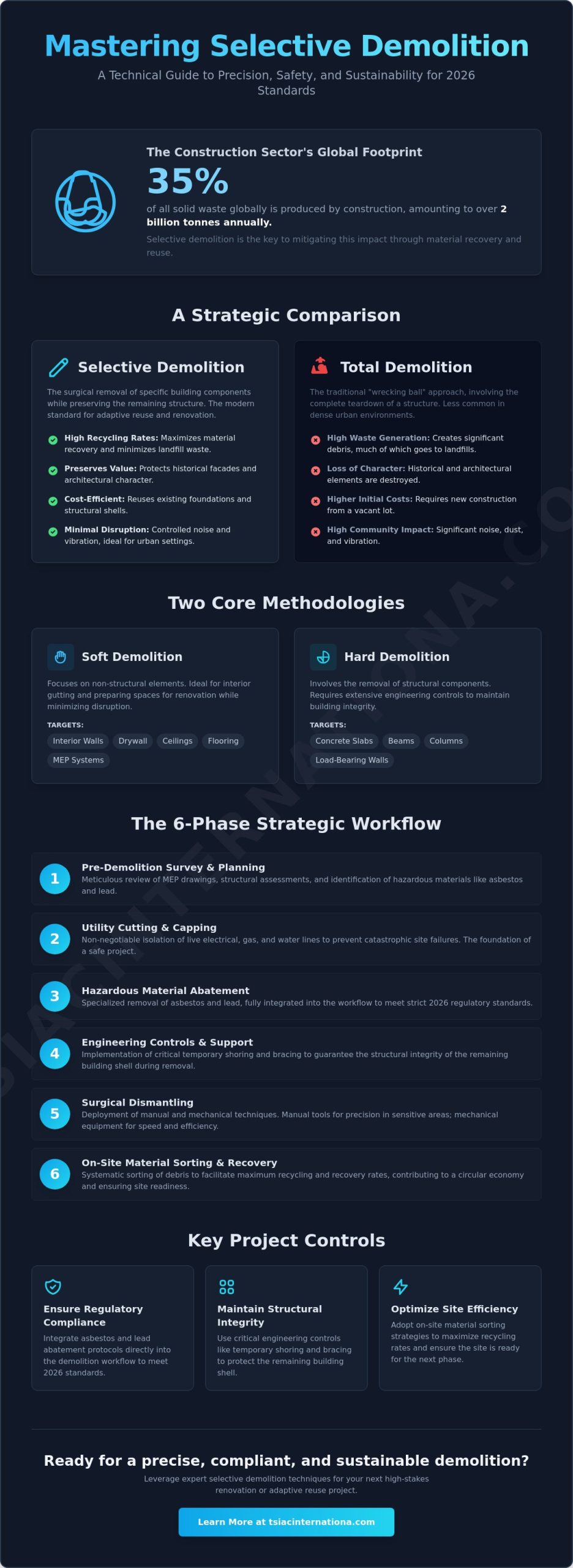
Did you know that the construction sector produces approximately 35% of all solid waste globally, accounting for over 2 billion tonnes annually? In an industry where the 2026 OSHA and EPA standards demand extreme precision, relying on broad-stroke methods often leads to structural damage or project-stalling hazardous material discoveries. Mastering advanced selective demolition techniques is no longer just an operational preference; it’s a technical requirement for any high-stakes renovation or adaptive reuse project.
You likely recognize the difficulty of maintaining structural stability while stripping a building to its core, especially when dealing with the threat of unmapped utilities or hidden lead. It’s a high-stakes environment that demands methodical planning and unwavering safety protocols. This guide promises to equip you with the engineering controls and methodologies required for precise structural removal without compromising the remaining building. We will preview the essential pre-demolition surveys, surgical mechanical methods, and material recovery strategies that define modern, professional deconstruction in 2026.
Key Takeaways
- Differentiate between soft and hard deconstruction to apply the most effective methodology for your specific renovation project.
- Identify the specific mechanical and manual selective demolition techniques required to navigate sensitive interior environments and high-risk structural zones.
- Integrate asbestos and lead abatement protocols directly into your dismantling workflow to ensure compliance with 2026 regulatory standards.
- Implement critical engineering controls, such as temporary shoring and bracing, to maintain the structural integrity of the remaining building shell.
- Optimize site readiness and sustainability by adopting on-site material sorting strategies that facilitate maximum recycling and recovery rates.
What is Selective Demolition? Precision Engineering for Modern Renovations
Selective demolition represents the strategic and methodical removal of specific building components while maintaining the structural integrity of the remaining edifice. Unlike traditional wrecking ball approaches, these procedures require a high degree of engineering control and technical oversight. It’s a surgical process that separates the obsolete from the essential, ensuring that the functional shell of a building remains ready for its next phase of life.
The industry distinguishes between two primary categories of selective demolition techniques: soft and hard. Soft demolition focuses on non-structural elements such as interior gutting, acoustic ceilings, and drywall. Hard demolition involves the removal of structural components like concrete slabs or load-bearing partitions, which requires temporary shoring to ensure site safety. Various Demolition methods are employed based on the building’s material composition and future use requirements.
In 2026, economic and environmental drivers have shifted the industry toward deconstruction. Urban density makes total teardowns logistically difficult and socially disruptive for neighboring properties. Additionally, the global push for a circular economy has made material recovery a priority. Since the construction sector produces approximately 35% of all solid waste globally, surgical removal is now the technical standard for modern adaptive reuse projects.
The Core Objectives of Selective Removal
The primary goal is the preservation of architectural value and historical structural integrity. By targeting only the necessary sections, contractors protect ornamental facades or unique structural skeletons that are impossible to replicate with modern materials. This approach offers several advantages:
- Environmental Impact: Targeted debris generation allows for higher recycling rates and less landfill waste.
- Historical Preservation: Maintaining the character of a property while upgrading its internal systems.
- Cost-Efficiency: Reusing existing foundations and building envelopes often yields a faster return on investment than starting from a vacant lot.
Selective vs. Total Demolition: A Strategic Comparison
Choosing between a total teardown and a selective gut involves a complex decision-making matrix. Engineers must evaluate the current load-bearing capacity and identify hidden hazards such as asbestos or lead. If the building shell is sound, selective removal is often the superior choice for urban projects where vibration and noise must be strictly controlled. It allows for a fegyelmezett, disciplined site environment that minimizes community impact. Professional selective demolition is the surgical extraction of specific structural or aesthetic elements executed with such precision that the remaining building’s stability is never compromised.
Mechanical and Manual Selective Demolition Techniques
Effective selective demolition begins with technical preparation. Utility cutting and capping is the non-negotiable prerequisite for any physical removal. It involves identifying and isolating live electrical circuits, gas lines, and water mains to prevent catastrophic site failures. This phase requires a meticulous review of MEP (mechanical, electrical, and plumbing) drawings to ensure that the capping occurs at the correct junctions. Only after these systems are certified as safe can the team deploy specific selective demolition techniques tailored to the project’s structural requirements.
The choice between manual and mechanical intervention is dictated by the sensitivity of the building shell and the proximity of occupied spaces. While mechanical tools offer speed, manual dismantling provides the surgical precision necessary for high-stakes renovations. Both methods must be integrated into a single, cohesive workflow that prioritizes site safety and structural stability.
Manual Dismantling for Interior Gutting
Manual dismantling defines the soft demolition phase. This approach is vital for commercial interior gutting services in active environments where noise, vibration, and dust must be strictly managed. Skilled technicians use reciprocating saws, pry bars, and high-precision hand tools to dismantle metal framing and acoustic ceilings. This granular level of deconstruction prevents dust migration through the building’s HVAC system. It also ensures that materials like aluminum and steel are recovered in a clean state, which is essential for meeting 2026 recycling standards. By separating components at the source, we reduce the volume of commingled waste and improve the overall sustainability of the project.
Robotic and Mechanical Dismantling
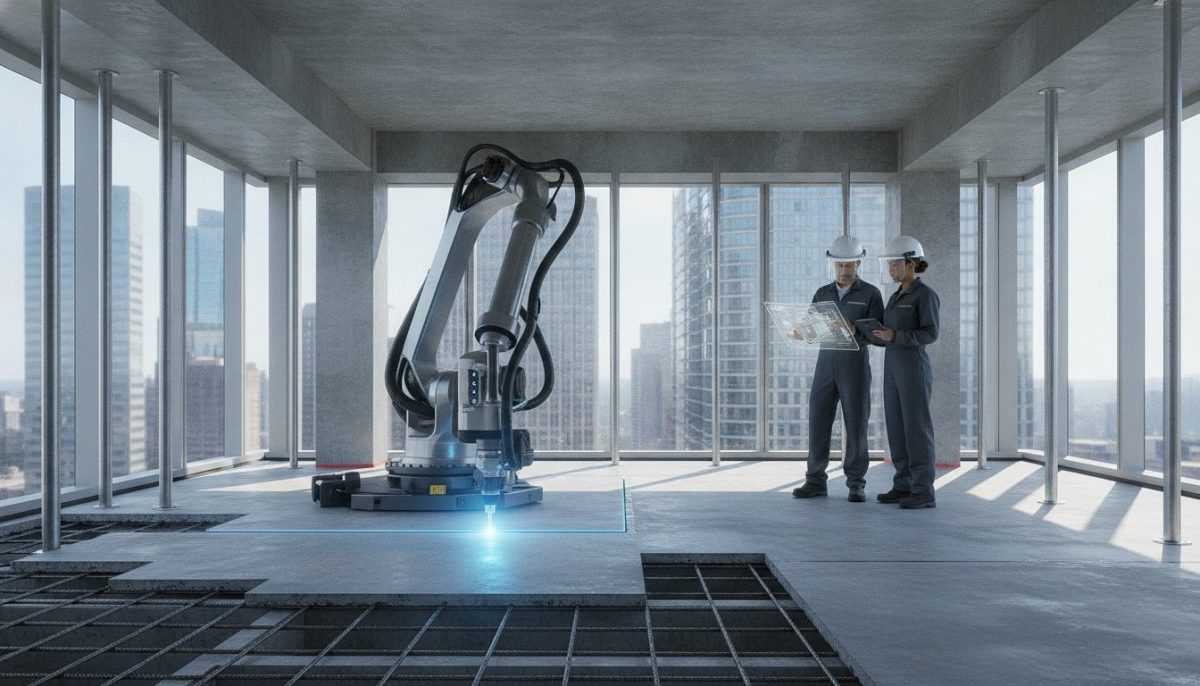
Mechanical methods address the structural, or hard demolition, components. Remote-controlled robots have revolutionized this field, particularly in high-risk or confined spaces where human presence is unsafe. These machines can be equipped with various specialized attachments, including shears, grapples, and hydraulic breakers. Choosing the right attachment is a critical engineering decision. When vibration control is paramount, hydraulic crushing is the preferred technique over impact hammering. Crushing applies steady pressure to break concrete, whereas hammering creates percussive waves that can travel through the building’s skeleton and potentially damage sensitive architectural elements.
For precise structural modifications, advanced concrete sawing and coring methods are employed. Diamond-tipped blades provide the clean, straight edges necessary for creating new openings for elevators, stairwells, or modern utility shafts. This level of precision eliminates the need for extensive patchwork during the build-back phase. If your project demands this degree of technical accuracy, our team provides the structural removal expertise required to handle complex site conditions.
The Critical Intersection: Abatement and Selective Removal
Selective demolition in older structures is rarely a straightforward physical removal process. When applying selective demolition techniques, the dismantling of wall assemblies or floor systems often uncovers regulated hazardous materials. This reality necessitates the seamless integration of asbestos removal into the broader project timeline. It isn’t merely a separate service; it’s a critical prerequisite that must be managed with engineering precision. OSHA and EPA regulations for 2026 mandate that no “hard demo” or structural disturbance occurs until a comprehensive hazardous material survey identifies the presence of lead, mercury, or asbestos-containing materials (ACMs).
Lead paint abatement protocols must be woven directly into the structural dismantling workflow. For instance, if a load-bearing steel beam is coated in lead-based paint, traditional mechanical shearing or torch cutting can aerosolize toxic particles. A “containment-first” approach is the only professional standard to prevent cross-contamination across the site. This methodology ensures that the building’s functional shell remains clean and safe for the subsequent build-back phase. By isolating the work zone, we protect the integrity of the remaining structure and the health of other trades on-site.
Hazardous Material Containment Strategies
Effective containment during selective removal relies on negative air pressure systems and high-efficiency particulate air (HEPA) filtration. These systems ensure that air always flows into the contaminated zone, preventing the escape of microscopic fibers or dust. Technicians also employ wet-method demolition, which involves misting materials with water to suppress dust at the point of impact. When we remove contaminated drywall or insulation, we seal the materials in specialized containers within the containment area. This prevents fiber release during transport through the building to the disposal manifest point.
Regulatory Compliance in Abatement
The hazardous material abatement standards for 2026 require rigorous documentation and chain-of-custody manifests for all toxic debris. This transparency is vital for property owners to mitigate long-term legal and environmental liabilities. Every piece of contaminated waste must be tracked from the moment of removal to its final certified disposal site. TSIAC treats every selective demo site as a potential abatement environment, ensuring that no material is disturbed until its composition is verified through laboratory analysis. This fegyelmezett, disciplined approach is what allows us to maintain a zero-incident safety record even in the most complex industrial and commercial environments.
Structural Integrity: Engineering Controls and Safety
Before the first hammer strike, a licensed structural engineer must complete a comprehensive survey. This isn’t a cursory walkthrough. It’s a technical audit of the building’s load-bearing capacity and current state of repair. These surveys identify how the removal of specific slabs or partitions will redistribute weight across the remaining frame. Implementing advanced selective demolition techniques without this foundational data risks catastrophic collapse. Engineers use this data to design a shoring plan that accounts for both static and dynamic loads during the dismantling phase.
Technical precision in the planning stage prevents project delays. We analyze the building’s original blueprints against its current condition to find discrepancies. This ensures that the structural removal is surgical rather than destructive. Every intervention is calculated to protect the building’s functional shell for future build-back.
Shoring and Bracing Methodologies
Temporary supports are the lifeblood of structural preservation. Hydraulic shores provide adjustable, high-capacity support for vertical loads. Needle beams are essential when a large section of a bearing wall must be removed, as they transfer weight to temporary towers on either side of the opening. Dead shores provide fixed support for floors above the work zone. Calculating these requirements requires absolute precision. We account for the weight of the structure and the added stress of demolition equipment. Real-time monitoring using laser levels and sensors allows us to detect structural shifts as small as a few millimeters, triggering immediate adjustments to the shoring system.
Site Safety and Spore/Dust Mitigation
In occupied buildings, managing the demolition process requires strict isolation. We use 6-mil poly sheeting to create airtight physical barriers, preventing the migration of dust and spores into clean zones. OSHA-compliant egress routes must remain clear and well-lit, even as the building’s interior layout changes. Fire safety protocols, including temporary standpipes and fire-rated barriers, are maintained throughout the project duration.
Vibration monitoring is equally critical for protecting adjacent structural elements. We deploy seismographs to ensure that mechanical impacts don’t exceed thresholds that could damage sensitive architectural features or neighboring foundations. If you require a partner who prioritizes this level of technical safety, contact us for a structural demolition consultation to secure your project’s integrity.
The TSIAC Advantage: Sustainable Disposal and Site Readiness
Professional deconstruction is measured by the quality of what remains, not just what is removed. With a 15-year legacy in high-stakes structural and selective removal, TSIAC has refined the transition from a “demo-ready” site to a “build-ready” environment. We leverage industrial-grade equipment and specialized attachments to execute projects that demand surgical precision. Our approach ensures that the structural shell is immediately ready for the next trade, whether that involves metal framing, drywall installation, or complex MEP upgrades. By utilizing advanced selective demolition techniques, we eliminate the traditional cleanup gap that often stalls commercial renovation timelines.
Site readiness is a byproduct of methodical planning. We don’t view demolition as the end of a building’s life but as the preparation for its next phase. This requires a disciplined workflow where every structural modification is verified against the original engineering survey. Our teams operate with a fegyelmezett, expert character, ensuring that every cut is clean and every utility is capped according to 2026 safety standards. This level of technical preparedness is what allows general contractors to begin build-back activities without the need for additional site remediation or debris removal. Our word is a guarantee of quality in specialized work environments.
Material Recovery and Recycling
Sustainability in 2026 is driven by both regulatory compliance and economic efficiency. Our on-site material sorting process is designed to maximize recovery rates for wood, metal, and plastics. By separating these materials at the point of deconstruction, we provide clean waste streams for recycling centers, which is a critical factor for developers seeking maximum LEED points. TSIAC maintains a steadfast commitment to diverting at least 90% of non-hazardous debris from landfills, a figure that represents our dedication to the circular economy. This process reduces the environmental footprint of the project and often lowers disposal costs by avoiding commingled waste surcharges.
Final Site Preparation
The final phase of our work involves a rigorous post-demolition cleanup and structural verification. We ensure that all surfaces are stripped to the required specification and that the site is free of microscopic dust or debris. Our “clean-site” policy is a hallmark of our professional reliability. It directly reduces build-back costs for general contractors by providing a pristine canvas for metal framing, drywall, and painting services. When we hand over a project, it’s certified as safe, stable, and structurally sound. We don’t just provide a service; we act as a responsible partner, ensuring that the transition from deconstruction to construction is seamless and efficient.
Securing Structural Integrity Through Technical Precision
Modern renovation projects demand more than just removal; they require a surgical approach that balances architectural preservation with rigid safety standards. By integrating advanced selective demolition techniques with real-time structural monitoring and certified abatement protocols, project owners can navigate the complexities of 2026 regulatory environments. We’ve explored how mechanical precision and manual deconstruction allow for the recovery of building shells while maximizing material recycling rates.
Success in high-stakes environments depends on a partner who understands the technical intersection of engineering and environmental safety. With over 15 years of structural demolition expertise and a team of certified hazardous material abatement specialists, we ensure your site is build-ready and LEED-compliant. Don’t leave your building’s integrity to chance or generalist methods that overlook the nuances of load-bearing redistribution.
Partner with TSIAC International for Precision Selective Demolition and Abatement to guarantee methodical accuracy from the initial engineering survey to the final site handover. We look forward to securing the technical success of your next commercial renovation.
Frequently Asked Questions
What is the difference between selective demolition and interior gutting?
Selective demolition is a comprehensive category that includes the strategic removal of both structural and non-structural components. Interior gutting, often referred to as soft demolition, is a specific subset of this process that focuses exclusively on non-structural finishes such as drywall, flooring, and acoustic ceilings. While gutting prepares a space for cosmetic renovation, broader selective demolition techniques are required when the project involves altering the building’s load-bearing skeleton or foundation.
Does selective demolition require a structural engineer’s approval?
Engineering approval is mandatory for any project involving the removal of load-bearing elements. A licensed structural engineer must perform a pre-demolition survey to calculate load redistribution and design the necessary shoring and bracing systems. This technical oversight ensures that the building’s functional shell remains stable and prevents catastrophic collapse during the dismantling phase. Proceeding without certified engineering controls is a violation of 2026 safety standards.
How do you handle hidden asbestos found during a selective demo project?
If suspicious materials are uncovered, work must immediately stop in the affected zone to prevent fiber release. The area is isolated using physical barriers while certified abatement specialists collect samples for laboratory analysis. If asbestos is confirmed, it must be removed under negative air pressure and HEPA filtration before any selective demolition techniques can be resumed in that section. This integrated approach prevents cross-contamination and ensures site safety.
Can selective demolition be performed while a building is still occupied?
It’s entirely possible to perform selective removal in occupied buildings by implementing rigorous environmental controls. We utilize sound-dampening barriers and negative air machines to isolate noise and dust from active tenant spaces. Scheduling high-impact mechanical tasks during off-peak hours further minimizes disruption. Maintaining clear egress routes and fire safety protocols is a non-negotiable requirement for these complex, live-environment projects.
What are the most common tools used for precision concrete removal?
Precision concrete removal relies on diamond-tipped wall saws, wire saws, and core drills to achieve clean, surgical edges. For structural sections where vibration must be minimized, we deploy remote-controlled demolition robots equipped with hydraulic crushers. These tools apply steady pressure to break the concrete rather than the percussive force of traditional hammers, which protects the integrity of the remaining reinforced structure and adjacent architectural features.
How long does a typical selective demolition phase take for a commercial floor?
The timeline for a standard commercial floor typically ranges from two to four weeks. This duration depends on the complexity of the structural modifications and the extent of the utility capping required. Factors such as the presence of hazardous materials or restricted elevator access in urban high-rises can influence the schedule. A disciplined project plan identifies these variables early to ensure the site is handed over to the next trade on time.
What safety certifications should a selective demolition contractor hold?
A professional contractor must hold OSHA 30-hour construction safety certifications and EPA-approved hazardous material abatement licenses. Because selective removal often intersects with toxic materials, specialized certifications for lead and asbestos handling are essential. These credentials verify that the team is trained in engineering controls, personal protective equipment (PPE) protocols, and the latest 2026 regulatory requirements for high-risk work environments.
How is debris managed and recycled in a selective demolition project?
Debris management involves meticulous on-site sorting to separate clean wood, metals, and concrete from non-recyclable waste. This methodology facilitates high recovery rates and supports LEED-compliant practices for modern developers. Every waste stream is documented with a certified manifest, providing a transparent audit trail from the point of removal to the final recycling facility. This process reduces landfill impact and often lowers total disposal costs through cleaner waste streams.
