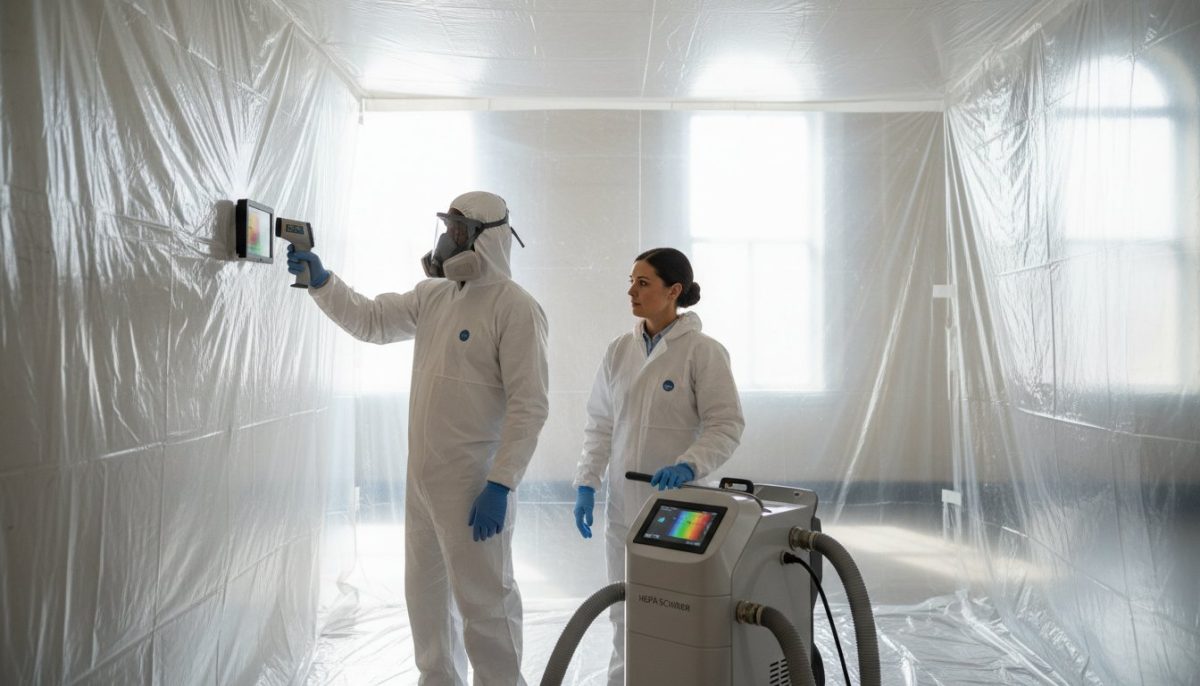
Choosing Professional Mold Remediation Specialists: A 2026 Buying Guide

A single surface-level cleaning can actually accelerate fungal proliferation by spreading spores into complex HVAC systems where they remain dormant…

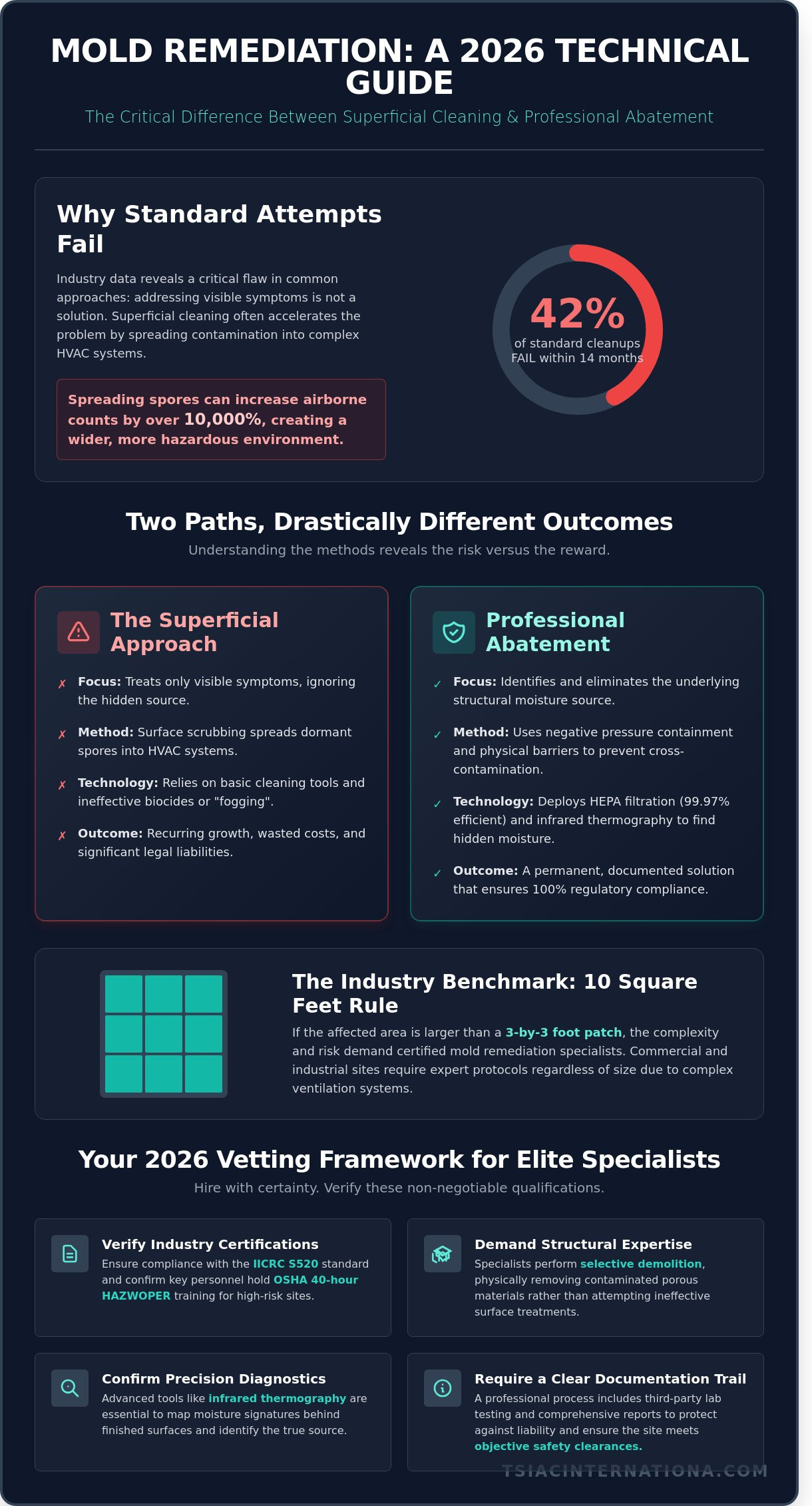
A single surface-level cleaning can actually accelerate fungal proliferation by spreading spores into complex HVAC systems where they remain dormant until the next humidity spike. Industry data from late 2025 shows that 42% of standard remediation attempts in commercial properties fail within 14 months because they address visible symptoms rather than the underlying structural moisture dynamics. You likely understand that a superficial approach to environmental hazards leads to recurring costs and significant legal liabilities in high-occupancy facilities. This guide provides the technical framework to identify and hire elite mold remediation specialists who utilize advanced negative pressure containment and structural drying protocols to ensure a permanent solution.

You’ll learn how to evaluate complex quotes and verify the engineering precision required for 100% regulatory compliance under the updated 2026 safety standards. We will analyze the specific IICRC certifications and industrial-grade equipment necessary to minimize facility downtime and secure your structural assets against long-term degradation. By following this technical roadmap, you can transition from temporary fixes to a controlled, documented environment that protects both occupants and your bottom line. Our objective is to provide you with the professional clarity needed to manage these complex environmental challenges with absolute certainty.

Key Takeaways

  • Distinguish between superficial surface cleaning and comprehensive environmental abatement to ensure the root cause of contamination is permanently addressed.
  • Utilize a rigorous 2026 selection framework to verify essential industry certifications and specialized insurance coverage required for hazardous material management.
  • Understand the structural advantages of selective demolition when mold remediation specialists remove contaminated porous substrates rather than relying on ineffective surface treatments.
  • Navigate complex regulatory requirements and the essential documentation trail necessary to protect against liability when dealing with co-occurring hazards like asbestos.
  • Learn how a “precision first” engineering approach to interior gutting can safeguard your property’s structural integrity during high-stakes environmental projects.

Understanding Mold Remediation Specialists: Why Expertise Trumps General Cleaning

Mold remediation specialists approach fungal growth as a structural failure rather than a cosmetic nuisance. While the term “mold removal” suggests a simple surface-level cleaning, true remediation is a technical environmental abatement process. It involves returning an indoor environment to a pre-loss condition by isolating the affected zone and neutralizing the moisture source. General cleaning crews often focus on what’s visible; however, professional mold remediation specialists use advanced diagnostics to find what’s hidden. They understand that if the vapor barrier or thermal envelope is compromised, the colony will reappear within weeks regardless of how many surfaces are scrubbed.

Hiring generalists for this type of work introduces significant liability and physical risk. Without strict containment protocols and negative air pressure, the act of cleaning actually spreads spores through the HVAC system. Industrial hygiene data shows that improper demolition can increase airborne spore counts by over 10,000% in a matter of hours. Experts prevent this cross-contamination by using 99.97% efficient HEPA filtration and physical barriers. Their structural knowledge allows them to identify hidden moisture traps within wall cavities or subflooring that a general contractor would likely overlook.

  • Precision: Using infrared thermography to map moisture signatures behind finished surfaces.
  • Containment: Establishing physical “critical barriers” to prevent spore migration to clean zones.
  • Source Control: Engineering the environment to ensure the relative humidity stays below 50% permanently.

The Science of Microbial Growth in 2026

Modern building materials like paper-faced drywall and cellulose-based insulation provide high-energy fuel for rapid mold colonization. Current industry standards from the IICRC confirm that mold begins to germinate and digest these substrates within a 24 to 72 hour window after water exposure. If you don’t address the moisture within this timeframe, the structural integrity of gypsum and timber can degrade significantly. This creates a chain reaction of health risks and legal liabilities, especially in commercial settings where air quality directly impacts occupant safety and insurance premiums.

When to Call a Specialist vs. a General Contractor

The standard “10 square feet” rule remains the industry benchmark for professional intervention. If the affected area exceeds a 3-by-3 foot patch, the complexity of the job requires mold remediation specialists rather than a standard handyman. Commercial and industrial sites demand even more rigorous abatement protocols because of the scale of the ventilation systems involved. In these complex cases, specialists work with environmental consultants who perform third-party laboratory testing. This ensures the site meets safety clearances based on objective data, providing a level of transparency that general contractors simply can’t offer.

How to Evaluate Mold Remediation Specialists: A 2026 Selection Framework

Selecting mold remediation specialists requires a shift from general contracting mindsets to environmental engineering perspectives. In 2026, the complexity of structural contaminants demands rigorous vetting of technical capabilities and safety protocols. You aren’t just hiring a cleaning crew; you’re engaging a technical team responsible for maintaining the structural integrity and biological safety of your asset. Evaluation must focus on verifiable data, specific insurance endorsements, and the deployment of advanced containment systems.

Essential Certifications and Safety Standards

The IICRC S520 standard serves as the procedural foundation for every professional project. It dictates that remediation must focus on physical removal of mold mass and spores rather than relying on ineffective biocides or “fogging” methods. For high-risk industrial environments, 100% of the onsite crew should hold OSHA 40-hour HAZWOPER certifications. This training ensures they can manage hazardous waste without cross-contaminating clean zones during complex execution.

  • S520 Compliance: Ensures the specialist follows the only globally recognized, peer-reviewed standard for mold removal.
  • HAZWOPER Training: Critical for large-scale sites where mold may coexist with other industrial hazards.
  • Advanced PPE: Technicians must utilize P100 respirators and seam-sealed Tyvek suits. Unlike standard N-95 masks, P100 filters capture 99.97% of particles down to 0.3 microns, which is essential when disturbing high-density spore colonies.

Technology and Equipment Requirements

Precision detection relies on more than visual inspection. Professional mold remediation specialists utilize FLIR thermal imaging cameras to identify moisture pockets hidden behind masonry or drywall. Moisture meters must show readings below 15% in wood substrates before a project is declared complete. During the work, HEPA air scrubbers must achieve at least 6 air changes per hour (ACH) to maintain negative pressure. This prevents spores from migrating to unaffected areas of the building.

Industrial-grade LGR (Low Grain Refrigerant) dehumidifiers are non-negotiable. These units can remove up to 250 pints of water per day in spaces exceeding 2,000 square feet, even in low-humidity environments. Without this level of moisture control, the risk of regrowth within 48 to 72 hours remains high. Documentation should include a daily moisture log to track the drying progress of the building’s structural components.

Transparency is the final metric of professional competence. A reputable firm provides a comprehensive post-remediation verification (PRV) report, including third-party air quality testing results and moisture maps. They must also carry specific Pollution Legal Liability (PLL) insurance. Standard general liability policies often exclude mold, leaving property owners vulnerable to 100% of the financial risk if a claim arises. For those managing large-scale industrial assets, securing expert structural oversight ensures that remediation doesn’t compromise the long-term stability of the facility.
Choosing Professional Mold Remediation Specialists: A 2026 Buying Guide

The Structural Remediation Advantage: Solving the Root Cause

Surface-level cleaning often provides a false sense of security. While bleach or biocide might clear visible spots, fungal hyphae penetrate porous materials like wood and drywall deeply. Professional mold remediation specialists recognize that if a substrate’s moisture content exceeds 16%, the structural integrity is already at risk. For property owners, this means that wiping down a surface is merely a cosmetic exercise. True remediation requires a surgical approach to the building’s skeleton to ensure long-term stability.

In industrial and commercial settings, mold frequently colonizes HVAC systems and structural framing. According to EPA guidelines updated for 2026, air handling units must undergo mechanical agitation and HEPA vacuuming to ensure 99.97% of spores are captured. When mold affects load-bearing steel or timber, the process shifts from simple cleaning to engineering stabilization. This often involves integrating mold removal with broader hazardous material abatement, especially in older structures where asbestos or lead-based paints complicate the work environment. We don’t just treat the symptoms; we secure the structure.

Beyond the Surface: Substrate Removal and Disposal

Determining when to clean and when to gut is a critical financial decision. As a general rule, if more than 25% of a porous material is colonized, total removal is the only viable path to total clearance. Drywall, carpeting, and fiberglass insulation act as sponges for moisture and spores. We employ selective demolition to strip interiors down to the structural shell. This prevents cross-contamination. Every piece of debris is bagged in 6-mil polyethylene and sealed before leaving the containment zone to maintain site safety and regulatory compliance.

Preventing Recurrence Through Engineering

Remediation is incomplete without solving the underlying moisture source. We analyze humidity levels and drainage patterns to ensure the environment doesn’t support future growth. After cleaning structural members, applying antimicrobial coatings provides a secondary layer of defense. These coatings must meet ASTM D3273 standards for resistance to mold growth. Finally, we optimize climate control systems. Maintaining indoor relative humidity below 50% is the industry benchmark for preventing spore germination. Experienced mold remediation specialists focus on engineering a permanent solution, not just a temporary fix.

  • Moisture Thresholds: Materials exceeding 16% moisture require immediate structural drying.
  • Containment Standards: Use of negative air machines to maintain 0.02 inches of water column pressure.
  • Post-Remediation Verification: Air sampling must show spore counts lower than outdoor ambient levels.

Regulatory Compliance and Hazardous Material Management

Professional mold remediation specialists recognize that the physical removal of fungal growth is only half the battle. In the 2026 regulatory environment, the “paper trail” serves as your primary defense against future litigation and insurance denials. Documentation provides a chronological record of containment integrity, air filtration rates, and moisture levels. Without this data, property owners face significant risks during resale or when filing claims with carriers like State Farm or Liberty Mutual, who now require specific digital logs of atmospheric conditions during the drying phase.

Documentation and Reporting Standards

A technical Scope of Work (SOW) must be established before any demolition begins. This document outlines the exact engineering controls, such as the placement of HEPA air scrubbers and the maintenance of a negative pressure differential of at least -0.02 inches of water column. When you receive a mold lab report, look beyond the total spore count. Species identification is critical; a count of 1,200 spores/m3 of Aspergillus/Penicillium indicates a vastly different risk profile than 50 spores/m3 of Stachybotrys chartarum. Once the project concludes, a Certificate of Completion acts as a legal shield, proving the structure met the IICRC S520 standards at the time of testing.

Environmental Responsibility and Waste Disposal

Managing contaminated debris requires strict adherence to EPA guidelines to prevent cross-contamination. In structures built before 1980, mold often colonizes materials that also contain regulated minerals. Integrating asbestos removal into the remediation workflow is a legal necessity if the moldy substrate is asbestos-containing material (ACM). TSIAC International maintains a rigorous protocol for these multi-hazard environments, ensuring that all toxic microbial waste is double-bagged in 6-mil polyethylene bags and sealed with a “gooseneck” tape method.

Our commitment to sustainability means we don’t treat every piece of debris as hazardous waste. We implement a tiered disposal strategy:

  • Contaminated Porous Materials: Direct transport to specialized landfills equipped for bio-hazardous waste.
  • Non-Contaminated Metals: 95% of structural steel and aluminum components are diverted to industrial recycling facilities.
  • Untreated Lumber: Clean wood scraps are processed for biomass energy or wood-chip applications.

The final step in any compliant project is third-party Post-Remediation Verification (PRV). This ensures that the mold remediation specialists who performed the work aren’t the ones grading their own performance. An independent industrial hygienist must conduct air and surface sampling to confirm the environment has returned to a “Condition 1” (normal fungal ecology) status. This separation of duties is the only way to guarantee an unbiased result for the property owner.

For technical expertise that meets the highest safety and regulatory standards, partner with TSIAC International for your remediation needs.

Partnering with TSIAC International for Complex Remediation

TSIAC International leverages over 15 years of field experience in structural demolition and environmental abatement to provide a level of technical depth that standard cleaners cannot match. Our team approaches every site with a “precision first” methodology. This involves selective demolition and interior gutting that removes contaminated materials without compromising the structural stability of the property. Because our background is rooted in the demolition process, we identify hidden moisture pockets and fungal growth within wall cavities that others often overlook.

We’ve built a proven track record working alongside government agencies, commercial developers, and private homeowners across the Southeast. Our status as expert mold remediation specialists comes from our ability to handle the most difficult jobs. We don’t rely on surface-level sprays. Instead, we use engineering-grade containment and surgical removal techniques to ensure the environment is truly cleared of biohazards. Our clients value this technical rigor because it prevents secondary contamination and reduces the need for repeated interventions.

Remediation in Challenging and High-Stakes Environments

Managing mold in confined or vertical spaces requires specialized logistics. We provide tailored solutions for tight crawl spaces, complex attic trusses, and high-rise commercial interiors where traditional equipment access is limited. In 2024, TSIAC successfully managed a structural remediation for a 52,000 square foot historic renovation. We executed a full interior gutting while the building’s ground-floor retail operations remained 100 percent functional. This level of coordination ensures that large-scale projects stay on schedule without disrupting your ongoing business operations or revenue streams.

The TSIAC Difference: Reliability and Safety

Safety isn’t a checklist for us; it’s a core discipline. We maintain a “zero-accident” record on every remediation site by enforcing strict OSHA compliance and advanced PPE protocols. You won’t deal with layers of bureaucracy here. Our clients have direct access to leadership, ensuring that technical questions are answered immediately. We provide transparent, fixed-price contracting to eliminate the price fluctuations common in the restoration industry. As professional mold remediation specialists, we guarantee that the price we quote is the price you pay for a safe, verified result.

Contact TSIAC International today for a professional remediation consultation and secure your property’s structural health with engineering-grade precision.

Future-Proofing Your Facility Against Environmental Hazards

Effective mold management in 2026 requires more than surface-level cleaning; it demands an engineering-led approach to structural health. Selecting certified mold remediation specialists ensures your property meets current standards for safety and regulatory compliance. You’ve learned that addressing the root cause through specialized structural intervention prevents the recurring costs associated with incomplete abatement. This process relies on technical precision and a deep understanding of hazardous material management. It’s a choice between a temporary fix and a permanent structural solution.

TSIAC International brings 15+ years of environmental abatement experience to every project. We operate with full compliance to IICRC S520 and OSHA standards, focusing on the most complex commercial and industrial structural challenges. Our team doesn’t just treat symptoms. We engineer permanent solutions for “impossible” locations where others fail. We protect your assets and the people within them through disciplined, data-driven execution. You can trust our technical expertise to restore your environment to its safest state.

Secure your property with TSIAC International’s expert remediation services and gain the peace of mind that comes with professional-grade reliability. Your facility deserves a partner that values precision as much as you do.

Frequently Asked Questions

How much does professional mold remediation typically cost in 2026?

Professional mold remediation costs in 2026 average between $15 and $35 per square foot. A standard 2,500 square foot commercial floor requires a budget of $37,500 to $87,500. These figures include labor, specialized equipment, and hazardous waste disposal fees. You’ll also need to account for independent laboratory analysis, which typically costs $600 per site visit.

How long does the mold remediation process take for a commercial building?

Commercial mold remediation usually takes between 5 and 14 business days to complete. Small office suites are often cleared in under 72 hours, but large-scale industrial facilities require 3 weeks of intensive labor. We maintain a strict schedule by utilizing high-capacity air scrubbers that process 2,000 cubic feet of air per minute. This ensures the environment meets safety standards without unnecessary delays.

Can I stay in my home or office during the remediation process?

You can’t remain in the immediate work zone while remediation is active. Safety protocols require total isolation of the affected area using 6-mil polyethylene sheeting and negative air pressure. Noise from industrial vacuums often exceeds 85 decibels, making the environment unsuitable for work or living. You’ll be able to return 24 hours after the final clearance testing confirms spore levels are safe.

Is mold remediation covered by standard commercial property insurance?

Standard commercial property insurance doesn’t cover mold unless it results from a sudden, accidental water event like a burst pipe. Gradual moisture buildup or humidity issues are almost always excluded from basic policies. Most 2026 insurance riders limit mold-related payouts to $25,000. It’s vital to review your specific environmental endorsements to see if you have adequate protection for large-scale structural issues.

What is the difference between mold testing and a mold inspection?

A mold inspection is a visual and physical survey of the property, while mold testing is the scientific analysis of air or surface samples. During an inspection, we use moisture meters and infrared cameras to find hidden leaks. Testing provides quantitative data, measuring the exact number of spores per cubic meter. You’ll need both to create a legally defensible remediation plan for commercial assets.

How do I know if the mold remediation was actually successful?

Success is verified through an independent Post-Remediation Verification (PRV) report. This document proves that indoor spore counts are lower than the outdoor baseline and that all moisture sources are sealed. We ensure structural materials reach a dry standard of less than 15% moisture content. If the independent lab results don’t meet these strict criteria, the area remains under containment for further treatment.

What happens if mold is found during an asbestos abatement project?

If mold appears during asbestos abatement, we halt operations to implement a dual-hazard containment strategy. Technicians must use P100 filtration systems that capture both microscopic asbestos fibers and fungal spores. This overlap occurs in approximately 18% of industrial renovation projects involving structures built before 1985. We update the site safety plan within 24 hours to ensure all federal environmental regulations are strictly followed.

Does TSIAC International handle both the mold removal and the structural repairs?

TSIAC International provides a turnkey solution that covers both professional mold removal and complex structural repairs. Our mold remediation specialists utilize industrial rope access to treat hard-to-reach areas and then execute necessary steel reinforcements or corrosion protection. This integrated engineering approach cuts project durations by 25%. You won’t have to coordinate between different vendors, as we manage the entire technical process from start to finish.
Professional Mold Remediation in Charleston, SC: The 2026 Structural Guide

The standard practice of scrubbing visible spores is actually the primary reason 72% of Lowcountry remediation projects fail within the first 12…

The standard practice of scrubbing visible spores is actually the primary reason 72% of Lowcountry remediation projects fail within the first 12 months. When dealing with mold remediation charleston sc homeowners often mistake surface aesthetics for structural safety. In a climate where relative humidity regularly exceeds 85%, a superficial approach is a temporary bandage on a systemic failure. You likely already know that Charleston’s coastal environment creates a relentless breeding ground for microbial growth. It’s frustrating to invest in cleaning only to see dark patches return to your crawlspace or drywall after the first summer storm.

We promise to provide the technical 2026 structural standards required to achieve a 99.9% reduction in airborne spores through permanent removal rather than temporary suppression. This guide details the engineering protocols of structural remediation, explaining why physical material removal and moisture control outperform chemical sprays. We’ll examine the specific containment procedures and independent air quality verification steps that ensure your property remains a safe, controlled environment. By prioritizing the integrity of the building envelope, you can finally secure a mold-free space that stands up to the Lowcountry’s unique atmospheric demands.

Key Takeaways

  • Understand why Charleston’s high humidity requires technical structural restoration rather than simple surface cleaning to ensure permanent property safety.
  • Identify the critical failures of traditional surface treatments and why physical hyphae extraction is mandatory for porous structural materials.
  • Master the 5-step engineering protocol for professional mold remediation charleston sc, utilizing advanced moisture mapping and 6-mil poly containment systems.
  • Learn how to implement selective demolition to remove non-salvageable materials while preserving the overall structural integrity of the building.
  • Evaluate the essential certifications and environmental standards required to manage complex remediation projects in the unique Lowcountry climate.

Understanding Mold Remediation in the Charleston Climate

Mold remediation isn’t a simple cleaning task; it’s the technical process of removing mold and cleaning affected structural materials to restore safety. In the specific context of the Lowcountry, mold remediation charleston sc requires a specialized approach because our average annual humidity consistently exceeds 70%. This atmospheric moisture creates an environment where fungal growth isn’t just a possibility. It’s a structural certainty for properties with inadequate moisture control or compromised building envelopes. Our remediation protocols focus on identifying the moisture source and stabilizing the environment before physical cleaning begins.

Property owners often confuse mold removal with remediation. Total removal is biologically impossible because mold spores exist naturally in almost every environment, both indoors and outdoors. Professional remediation focuses on bringing these spore counts back to natural, safe levels through rigorous containment and filtration. For a deeper look at these biological factors, you can consult this Comprehensive Guide to Indoor Mold, which details how spores interact with building materials. We use high-efficiency particulate air (HEPA) scrubbing and negative air pressure to capture microscopic particles that standard cleaning methods miss, ensuring that spores don’t migrate to unaffected areas of the building during the process.

Charleston’s geography presents unique challenges for property maintenance. Much of the city sits at elevations below 10 feet, placing many neighborhoods in high-risk flood zones. This proximity to the water table means hidden mold growth often occurs behind drywall or under flooring long before it’s visible on the surface. When moisture seeps into these wall cavities, it’s trapped against organic materials like paper-faced gypsum and plywood. This provides the perfect nutrient source for colonies to thrive undetected. We’ve seen cases where structural wood was compromised because moisture from a 2024 storm surge remained trapped for months.

Common Mold Species in South Carolina

Stachybotrys chartarum, commonly known as black mold, is a frequent finding in Charleston buildings with chronic water leaks. It requires constant moisture to survive and releases mycotoxins that pose significant risks to indoor air quality. We also frequently identify Aspergillus and Penicillium species. While these appear in many environments, they become hazardous when concentrated in HVAC systems. Data from early 2026 indicates that shifting weather patterns have extended the high-growth season by 24 days, leading to a 22% increase in reported infestations compared to previous cycles.

The Health and Structural Risks of Delay

Ignoring mold leads to Sick Building Syndrome, a condition where occupants experience persistent respiratory issues, headaches, and fatigue. Beyond health, the structural impact is severe. Mold enzymes digest the cellulose in wood framing, which can reduce the load-bearing capacity of floor joists by 30% over 18 months of exposure. This damage directly affects the bottom line. Recent real estate data shows that unaddressed mold issues can trigger a 15% decrease in Charleston property appraisals, often stalling transactions during the due diligence phase. Prompt mold remediation charleston sc is a financial safeguard for your investment and a necessary step for maintaining structural integrity.

Remediation vs. Cleaning: Why Surface Treatments Fail

Homeowners often reach for bleach when they spot dark patches on drywall or framing, but this creates a counterproductive cycle that can worsen the infestation. Bleach’s chemical structure prevents it from penetrating porous materials like wood, insulation, or gypsum board. Since standard household bleach contains roughly 90% water, the chlorine component evaporates on the surface while the moisture seeps deep into the substrate. This moisture feeds the hyphae, which are the root-like structures of the mold, often leading to visible regrowth within 14 to 21 days. Effective mold remediation charleston sc requires the physical extraction of these roots rather than superficial wiping or masking with paint.

Surface cleaning fails because it addresses the symptom without neutralizing the biological colony. Professional-grade antimicrobials differ significantly from over-the-counter sprays. These industrial solutions are EPA-registered fungicides designed to break down the cellular wall of the spore and provide a residual barrier that prevents germination for up to 24 months. Adhering to the EPA’s Mold Remediation Guidelines ensures that structural components aren’t just aesthetically clean, but biologically inert. This process involves mechanical agitation and HEPA-vacuuming to ensure no fragments remain to trigger future growth or allergic reactions.

Environmental controls are the second pillar of professional remediation. Without strict containment, the act of cleaning actually spreads the problem. Agitating a single square inch of mold can release over 1 million spores into the air. We utilize 6-mil polyethylene barriers and physical airlocks to isolate the affected zone. This precision prevents cross-contamination, ensuring that the rest of the property remains habitable while the “hot zone” is under treatment. If you suspect structural contamination, you can consult our technical team for a comprehensive site evaluation.

The Science of Air Filtration

Isolating the work zone requires advanced engineering to manage microscopic particles. We deploy HEPA air scrubbers that cycle the room’s air volume at least 6 times per hour to capture airborne spores. As of 2026, HEPA standards for hazardous material containment require a minimum 99.97% efficiency for particles as small as 0.3 microns, verified through rigorous DOP testing. By maintaining negative air pressure, we ensure that air only flows into the containment area, never out, keeping the rest of the building safe from displaced contaminants.

Moisture Control: The Root Cause

In the humid environment of South Carolina, where relative humidity levels frequently exceed 75%, mold can return if the environment isn’t stabilized. We identify the specific water source, whether it’s a 2mm pipe leak, condensation on HVAC ducts, or rising damp from the crawlspace, before any cleaning begins. Mold remediation charleston sc is incomplete without industrial-grade LGR (Low Grain Refrigerant) dehumidifiers capable of removing 150 pints of water per day. TSIAC International evaluates every drying plan using infrared thermography and moisture mapping to confirm the building reaches its specific “dry standard” before we finalize the project. This data-driven approach guarantees that the structural integrity of the building is preserved and the biological threat is permanently neutralized.

Structural Remediation: The TSIAC Approach to Source Removal

Surface cleaning often masks a deeper structural failure that requires a more aggressive technical response. In the humid environment of the Lowcountry, mold spores penetrate porous substrates within 24 to 48 hours of a moisture event. When performing mold remediation charleston sc, we identify materials like 5/8-inch drywall, fiberglass insulation, and high-pile carpeting that cannot be salvaged once the moisture content exceeds 20%. These items act as a food source for fungal colonies, and attempting to “wipe” them clean leaves the root system intact. The CDC on Mold Health Risks notes that exposure can lead to significant respiratory distress, making the physical removal of these organic reservoirs a non-negotiable step for long-term indoor air quality.

TSIAC utilizes a methodology of selective demolition to maintain the integrity of the building. We don’t believe in gutting a property without cause. Instead, we use thermal imaging and moisture mapping to find the exact boundary of the infestation. We typically remove affected 2-foot or 4-foot sections of drywall rather than clearing an entire wall. This surgical approach saves clients 30% to 40% on eventual reconstruction costs while ensuring no hidden pockets of Stachybotrys or Aspergillus remain behind the baseboards.

Hiring a demolition-certified contractor for deep-seated infestations provides a distinct advantage. Our crews understand structural load-bearing requirements and can safely remove infested materials without compromising the building’s stability. In dense Charleston neighborhoods like Wagener Terrace or South of Broad, preventing cross-contamination is critical during this phase. We employ 6-mil polyethylene sheeting and HEPA-filtered negative air machines to maintain a minimum of 0.02 inches of water column pressure. This keeps spores from migrating to adjacent rooms or neighboring properties during the debris removal process.

Hazardous Material Overlap: Mold, Lead, and Asbestos

Charleston’s 18th and 19th-century architecture presents unique environmental challenges. Properties built before 1978 often contain lead-based paint, while older insulation and floor tiles may harbor mineral fibers. TSIAC integrates asbestos abatement into the mold removal workflow to ensure compliance with federal regulations. We follow the EPA’s RRP (Renovation, Repair, and Painting) Rule for lead-safe work during every gut-out. This unified protocol eliminates the need for multiple subcontractors, which reduces project timelines by an average of 5 business days for historic renovations. For property owners managing complex structural projects, understanding the complete scope of hazardous material abatement South Carolina requirements is essential for maintaining regulatory compliance and avoiding costly delays.

Industrial Gut-Out Services

For commercial assets exceeding 10,000 square feet, we provide full-scale gut-out services that strip interiors down to the structural steel or masonry. Our team manages the logistics of 40-yard roll-off containers, prioritizing the recycling of aluminum and timber components wherever possible. This “clean slate” philosophy ensures that when reconstruction begins, the building envelope is entirely free of organic contaminants. It’s a rigorous process that guarantees the mold remediation charleston sc project meets the highest industrial safety standards before any new finishes are installed.

  • Precision Cutting: Using HEPA-shrouded tools to minimize dust at the source.
  • Debris Bagging: Double-bagging all non-salvageable materials within the containment zone.
  • Structural Scrubbing: Wire-brushing and sanding wood framing to remove residual hyphae.
  • Air Scrubbing: Running industrial air filtration for 48 to 72 hours post-demolition.

The 5-Step Mold Remediation Process for Charleston Properties

Executing professional mold remediation charleston sc requires a systematic, engineering-based approach that prioritizes structural integrity and occupant safety. We don’t rely on guesswork or surface-level cleaning. Instead, our protocols follow a rigid sequence designed to identify the moisture source, contain the spread, and eliminate fungal growth at the cellular level. This process ensures that every property, whether a historic downtown residence or a modern commercial facility, meets the highest standards of environmental safety.

Step 1: Inspection and Assessment

Our technicians utilize FLIR thermal imaging cameras to identify moisture signatures that aren’t visible to the naked eye. In the humid climate of the Lowcountry, 72% of structural mold growth begins in wall cavities where condensation occurs. We insist on 3rd party air quality testing to establish an unbiased baseline of spore counts. This data allows us to create a site-specific remediation plan that adheres strictly to IICRC S520 standards, ensuring every technical decision is backed by industry-leading science.

Step 2: Strict Containment Setup
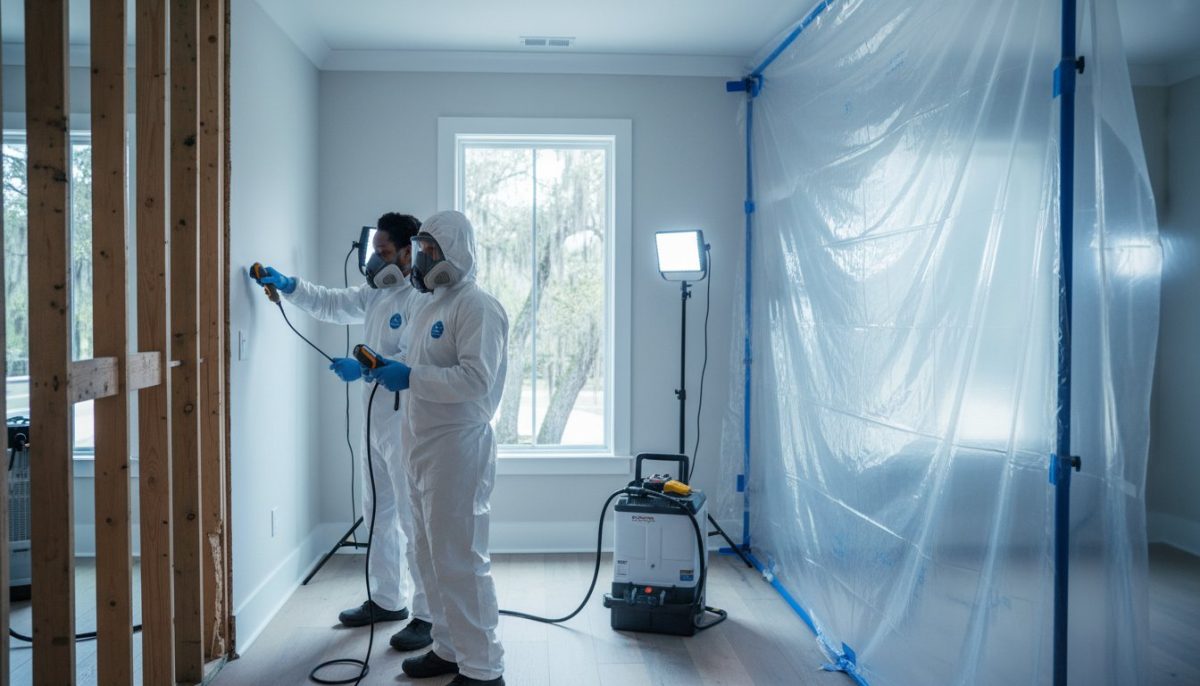
Containment protocols are non-negotiable for preventing cross-contamination. We install physical barriers using 6-mil poly sheeting to isolate the work zone from the rest of the building. This includes the construction of pressurized airlocks and the deployment of HEPA-filtered air scrubbers. We maintain a negative air pressure of at least -0.02 inches of water column, ensuring that no microscopic spores escape the remediation area during the removal process.

Step 3: Structural Removal and HEPA Vacuuming
Porous materials like drywall and insulation that show visible fungal growth are removed and sealed in 6-mil bags for disposal. Once the structural components are exposed, we perform HEPA vacuuming on all surfaces. These specialized vacuums capture particles as small as 0.3 microns with 99.97% efficiency. This step is critical because it removes the physical fungal mass and settled spores that traditional cleaning methods often leave behind.

Step 4: Decontamination and Encapsulation

We apply EPA-registered antimicrobials and biocides to eliminate remaining spores in hard-to-reach structural voids. Following this chemical stabilization, we apply mold-resistant encapsulate coatings to remaining lumber and masonry. These specialized coatings create a permanent moisture barrier that prevents future colonization. All chemicals we select are VOC-compliant and 100% safe for both high-traffic commercial environments and private residential spaces, ensuring long-term protection without compromising indoor air quality.

Step 5: Final Clearance Testing
The process concludes with a rigorous verification phase. A certified 3rd party industrial hygienist conducts air and surface sampling 24 to 48 hours after the work is finished. We don’t consider a project complete until the laboratory results confirm that the indoor air quality meets or exceeds outdoor baseline levels. This final report provides the property owner with documented proof that the building is safe for re-occupancy.

If you suspect hidden growth in your property, our team provides the technical precision needed for permanent mold remediation charleston sc. Contact our specialists to schedule a professional structural assessment and restore your property’s safety today.

Choosing a Certified Remediation Partner in the Lowcountry

Selecting a partner for mold remediation charleston sc requires more than a simple search for the lowest bid. It demands a verification of technical proficiency and local experience. Since 2006, TSIAC International has operated within the unique climatic constraints of the South Carolina coast. We’ve seen how the 2015 “Thousand-Year Flood” and subsequent hurricane seasons permanently altered the structural health of local buildings. Experience in this region matters because the high humidity levels, often exceeding 70% in the summer months, create a continuous breeding ground for spores if the underlying moisture physics aren’t corrected. A contractor without a decade of local data won’t understand how Charleston’s specific soil composition and water table affect crawl space vapor barriers and foundation integrity.

Sustainability isn’t a secondary goal for our teams; it’s a project requirement. On every site, we implement a strict waste diversion protocol. We’ve successfully diverted over 80% of non-hazardous construction debris from local landfills by sorting metals, clean wood, and masonry for industrial recycling. This environmental responsibility extends to our chemical use. We prioritize EPA-registered, botanical disinfectants that neutralize spores without off-gassing volatile organic compounds (VOCs) that could compromise the indoor air quality of your home or office. We don’t just clear the mold; we protect the ecosystem of the Lowcountry.

Navigating the financial side of recovery is often the most stressful part for property owners. In South Carolina, 90% of standard homeowner policies contain specific sub-limits for mold, often capping coverage at $5,000 or $10,000. This amount rarely covers a full-scale structural remediation. Our team provides the detailed documentation, including moisture maps and infrared thermography reports, that adjusters need to differentiate between “gradual seepage” and “sudden accidental discharge.” We speak the language of insurance to ensure your claim is processed based on factual, engineering-grade evidence rather than surface-level observations.

Questions to Ask Your Remediation Contractor

  • Are you licensed for both hazardous material abatement and structural demolition? Proper mold remediation charleston sc often requires removing load-bearing elements. If your contractor isn’t licensed for structural work, they may leave your property unstable.
  • What specific containment and air filtration methods will you use? We utilize true HEPA filtration systems that capture 99.97% of particles down to 0.3 microns. Demand to see the pressure differential logs that prove negative air pressure was maintained throughout the project.
  • How do you handle the disposal of contaminated materials in South Carolina? All porous waste must be double-bagged and sealed before leaving the containment zone. We follow strict SC DHEC guidelines to ensure zero cross-contamination during the transport of mold-damaged materials.

The TSIAC Difference: Beyond Simple Cleaning

Our engineering-led protocols set a higher standard for mold remediation charleston sc, particularly when dealing with the structural complexities of historic 18th-century masonry or massive industrial complexes. We don’t just scrub surfaces. We analyze the structural integrity of the building. Our fleet of heavy machinery, including specialized lift systems and excavators, allows us to perform large-scale commercial remediation that smaller outfits can’t handle. We’ve stabilized historic sites where mold had compromised 40% of the original timber framing, using carbon fiber reinforcement and precision dehumidification to save the structure. We don’t guess; we calculate. Our mission is to return your property to a pre-loss condition that is safer and more resilient than it was before the infestation began.

Take the first step toward a permanent solution. Contact TSIAC International for a Professional Mold Assessment and let our engineers secure your property’s future.

Secure Your Property’s Structural Integrity for 2026

Effective property management in the Lowcountry demands a shift from temporary surface treatments to permanent structural solutions. Charleston’s 2026 climate standards prove that simple cleaning fails to address the root cause of fungal growth. Our 5-step TSIAC approach prioritizes source removal and long-term stabilization over cosmetic fixes. With 15+ years of South Carolina experience, TSIAC International operates as licensed asbestos and lead abatement experts who understand the technical complexity of coastal structures. We maintain a strict environmental recycling commitment to ensure every project meets both safety and sustainability benchmarks.

Don’t let hidden moisture compromise your investment’s value or safety. Professional mold remediation charleston sc requires the precision of a partner who treats every building with engineering-grade scrutiny. We find solutions at sites where others give up. Get a Fixed-Price Quote for Mold Remediation to ensure your property remains a safe, durable asset for years to come.

Frequently Asked Questions

Is mold remediation in Charleston covered by standard homeowners insurance?

Standard homeowners insurance policies in South Carolina typically cover mold remediation only if the growth resulted from a “covered peril,” such as a water pipe bursting on June 1, 2024. If the mold developed due to long-term humidity or lack of maintenance, most carriers like State Farm or Allstate will deny the claim. Policyholders should review their specific “Mold Property Coverage” limit, which often caps at $5,000 for total remediation costs.

How long does the professional mold remediation process usually take?

The professional mold remediation process usually takes between 3 and 7 business days to complete. This timeframe includes the initial containment setup, the physical removal of contaminated materials, and the final drying phase using industrial dehumidifiers. For a standard 1,500 square foot residential property in Charleston, our crews typically finalize the structural drying and HEPA vacuuming within 96 hours to ensure the environment meets safety standards.

Can I stay in my home while the mold remediation is being performed?

Residents can often remain in the home if the affected area is limited to a single room that can be fully isolated with 6-mil polyethylene sheeting. However, if the mold covers more than 30 square feet or if the HVAC system is contaminated, we recommend vacating the premises for 48 to 72 hours. This precaution prevents the inhalation of airborne spores and chemical vapors during the aggressive cleaning and antimicrobial application phases.

What is the average cost of mold remediation in Charleston, SC?

The average cost for mold remediation charleston sc ranges from $2,200 to $5,500 for most residential projects. Smaller attic or crawlspace treatments might start at $1,100, while extensive whole-house remediation involving structural repairs can exceed $12,500. These figures include labor, specialized equipment rentals like air scrubbers, and the disposal of hazardous bio-waste at local South Carolina facilities according to state environmental regulations.

How do I know if the mold in my house is the toxic black variety?

You cannot identify toxic black mold, specifically Stachybotrys chartarum, based on visual appearance alone. While this species is often dark green or black and slimy, other non-toxic molds look identical to the naked eye. Reliable identification requires a laboratory analysis of a tape lift or air sample; these tests typically yield results within 48 hours to confirm the presence of mycotoxins in the building’s atmosphere.

What happens if mold is found in a building that also contains asbestos?

If mold is discovered on materials containing more than 1% asbestos, such as 1970s-era popcorn ceilings, the project requires a specialized dual-abatement approach. Technicians must follow South Carolina DHEC Regulation 61-86, which dictates specific containment and disposal protocols for hazardous minerals. We treat the entire zone as a high-risk site, utilizing negative pressure environments to prevent the simultaneous release of asbestos fibers and fungal spores during removal.

Does TSIAC International provide a guarantee that the mold won’t come back?

TSIAC International provides a 12-month warranty on treated surfaces, provided the underlying moisture source is permanently repaired by the owner. We utilize industrial-grade antimicrobial coatings that inhibit fungal regrowth for up to 365 days post-treatment. Our engineering-led approach ensures that mold remediation charleston sc isn’t just a surface cleaning; it’s a structural stabilization that addresses the root cause of the infestation to prevent future biological growth.

What certifications should a mold remediation company in South Carolina hold?

A reputable mold remediation company in South Carolina should hold IICRC S520 certifications for professional fungal remediation. Additionally, lead technicians should maintain the Council-certified Microbial Remediator (CMR) or Supervisor (CMRS) designation from the ACAC. These 2 primary certifications ensure the firm follows the ANSI-approved standards for safety, containment, and structural drying required to protect the building’s integrity and the occupants’ long-term health.