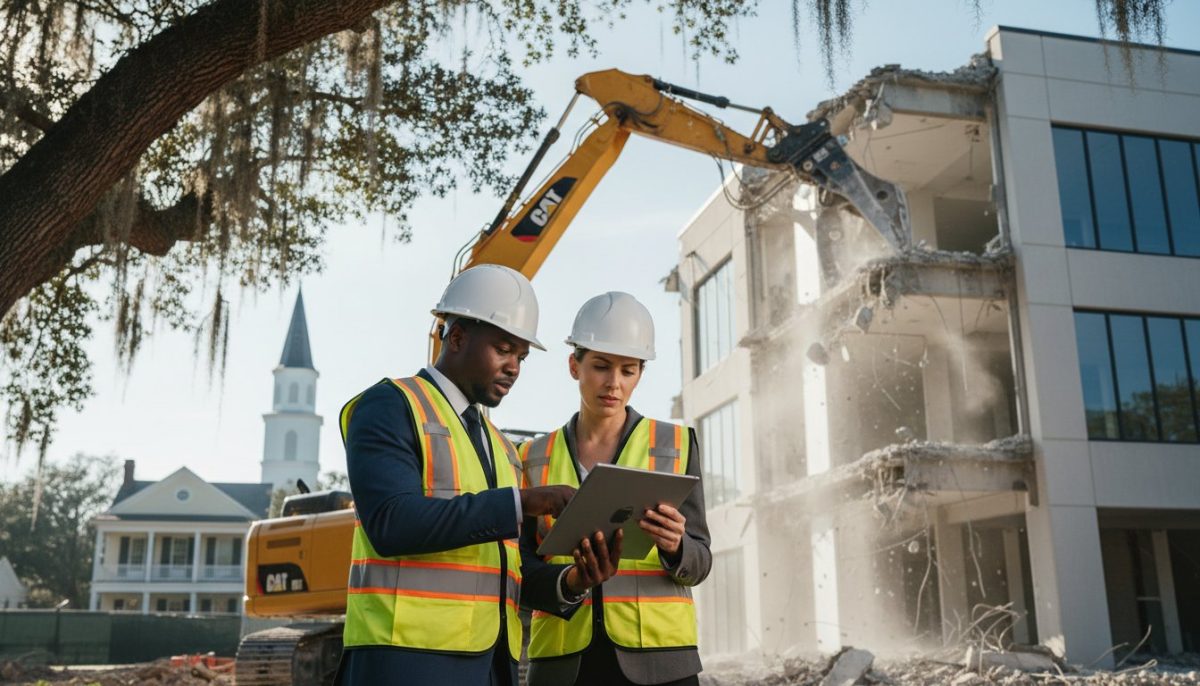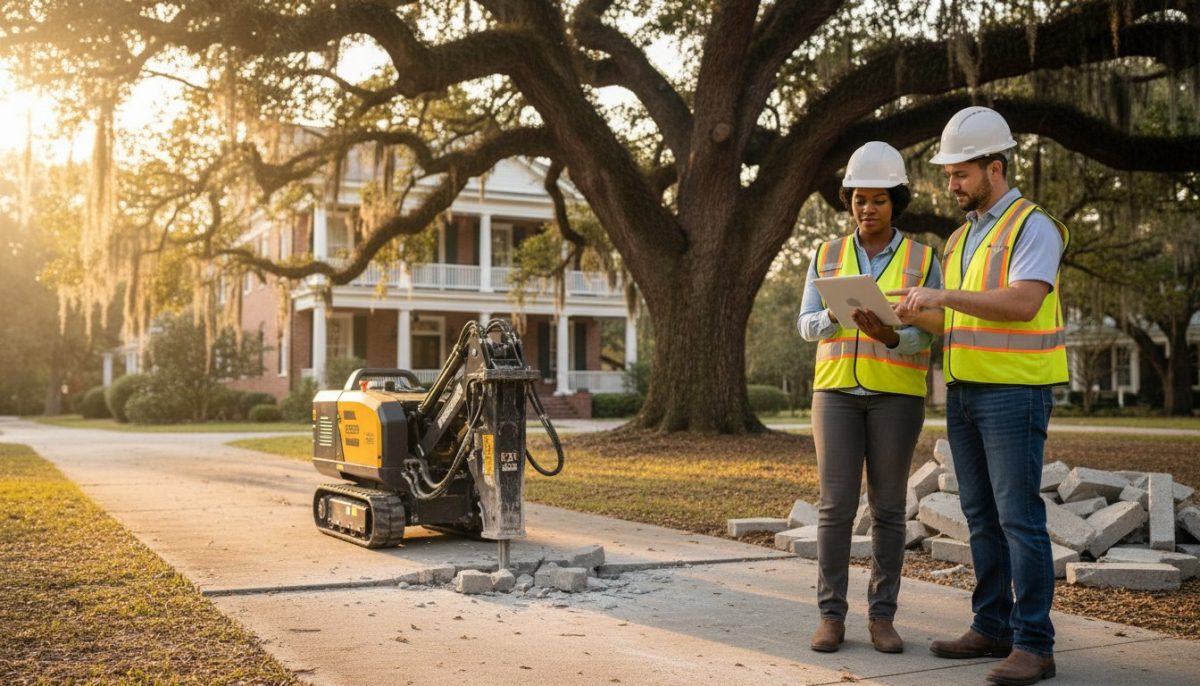
A poorly executed demolition in the Lowcountry can trigger $15,000 in unforeseen drainage repairs before your new foundation even arrives. You likely recognize that professional site preparation is the bedrock of any successful construction project, but the logistical hurdles of concrete removal charleston sc often feel like a moving target. Hidden costs in debris hauling and the risk of damaging delicate coastal utility lines turn simple projects into technical liabilities that threaten your investment. You don’t want to risk structural damage to adjacent buildings because of a lack of engineering foresight.
This 2026 guide provides the technical roadmap required to mitigate these financial risks while maintaining absolute compliance with local environmental standards. You’ll gain clarity on the distinct permitting protocols used by the City of Charleston versus North Charleston, preventing the regulatory delays that stall 30% of local builds. We will detail the exact engineering steps to ensure a clean, ready-to-build site that prioritizes structural integrity and zero-impact utility protection. By following these professional protocols, you can transition from demolition to construction with the confidence that your property is safe, compliant, and structurally sound.
Key Takeaways
- Evaluate how the Lowcountry’s high water table necessitates specialized site preparation and precise tool selection to maintain structural integrity during demolition.
- Analyze the 2026 cost landscape, focusing on how slab thickness, rebar reinforcement, and hauling logistics influence your total project investment.
- Master the regulatory environment by following a professional checklist for navigating the City of Charleston’s Technical Review Committee requirements.
- Implement a high-precision strategy for concrete removal charleston sc that prioritizes zero-incident safety protocols and sustainable material recycling.
Understanding Concrete Removal in the Charleston Lowcountry
Concrete removal in the Charleston Lowcountry represents the systematic process of demolition, mechanical breaking, and hauling of legacy structures to facilitate new development. It’s a precision task. This process involves more than just physical destruction; it requires an engineering-based approach to ensure the site is ready for its next phase of construction. Professional concrete removal charleston sc involves the calculated extraction of material while preserving the integrity of the surrounding soil and existing utility networks.
Charleston’s unique geography presents specific technical hurdles. The local water table often sits less than 36 inches below grade, making drainage management a critical component of any demolition project. When a large impervious surface is removed, the hydrostatic pressure of the underlying soil can shift rapidly. Operators must account for this shift to prevent localized flooding or soil destabilization on adjacent properties. Proper site preparation during the removal phase ensures that new foundations aren’t compromised by the “pumping” effect of saturated coastal soils.
Distinguishing between simple slab removal and structural concrete demolition is vital for project timelines. A standard residential sidewalk or patio typically consists of 4-inch thick unreinforced concrete. In contrast, structural demolition involves reinforced footings, 8-inch warehouse slabs, or heavy-duty loading docks designed to withstand 50,000-pound loads. These structures require hydraulic breakers and specialized equipment to separate the concrete from high-tensile rebar. Efficiency in managing demolition waste is a priority here, as reinforced materials must be processed differently than clean, unreinforced debris to meet local recycling standards.
Safety protocols are the highest priority, particularly within the historic districts founded in 1670. Before any mechanical breaking begins, Ground Penetrating Radar (GPR) scanning is mandatory. This non-destructive testing identifies subsurface anomalies such as 18th-century cisterns, abandoned gas lines, or fiber optic cables buried just inches beneath the surface. Using GPR has become the gold standard for concrete removal charleston sc within the peninsula to prevent catastrophic utility strikes and preserve the city’s archaeological heritage.
Common Concrete Structures We Handle
Residential projects frequently involve the extraction of failing pool decks and cracked driveways that have succumbed to soil subsidence. On the commercial side, our teams manage the removal of heavy-duty warehouse slabs and reinforced footings that no longer meet modern load-bearing requirements. Infrastructure work often focuses on public sidewalks and retaining walls. These structures frequently show signs of advanced degradation due to constant exposure to salt-air corrosion and tidal fluctuations.
The Impact of Salt and Humidity on Concrete Integrity
Charleston’s high humidity and salt-laden atmosphere accelerate the chemical degradation of concrete through a process called carbonation. When salt spray penetrates the porous surface of the concrete, it causes the internal steel rebar to oxidize. As rebar rusts, it expands up to four times its original volume, exerting immense internal pressure on the surrounding material. This pressure leads to structural failure that requires specialized handling to prevent the brittle material from crumbling into the soil during extraction.
Concrete spalling in the context of coastal South Carolina properties is defined as the physical breaking, cracking, or chipping of the concrete surface caused by the internal expansion of corroded reinforcement steel. This condition indicates that the structure has lost its load-bearing capacity and requires immediate professional removal to ensure site safety.
The Technical Process: How We Execute Precision Removal
Executing professional concrete removal charleston sc requires an engineering mindset rather than just brute force. At TSIAC International, our technical approach integrates selective demolition with heavy machinery efficiency to maintain structural integrity. We treat every project as a controlled deconstruction. This begins with a site-specific analysis of vibration limits. In historic areas where foundations date back to the 1800s, we prioritize diamond saw cutting over hydraulic breaking. While a hydraulic hammer delivers 1,500 foot-pounds of impact energy for rapid clearing, it creates ground-borne vibrations that can jeopardize adjacent masonry. By using wet-cut saw technology, we keep vibration levels below 0.2 inches per second, protecting fragile historic assets from structural fatigue.
Operational control in high-density areas like Downtown Charleston or Mount Pleasant demands rigorous environmental management. We deploy high-pressure misting systems that capture 95% of airborne silica dust at the point of impact. Noise mitigation is equally critical. Our teams schedule high-decibel activities during specific windows to comply with local ordinances while using sound-dampening blankets on equipment. Safety protocols are anchored in federal law. If our initial site testing identifies lead-based coatings or asbestos-containing materials (ACM) beneath a slab, we immediately implement containment procedures that meet or exceed OSHA’s concrete safety standards. These 1926.701 regulations ensure that reinforcing steel and overhead loads don’t pose a risk to the crew or the public.
Selective vs. Total Demolition
Selective removal is the standard when we must preserve specific facades or interior load-bearing walls. This process requires the installation of temporary shoring systems, often rated for 20,000 pounds per post, to stabilize the building while the concrete is extracted. This precision prevents unintended settlement in active commercial sites. For a deeper look at these engineering requirements, consult our guide on What Is Selective Demolition? A Charleston Guide. Total demolition is reserved for sites where the entire footprint is being cleared for new development, allowing for more aggressive machinery use.
Equipment Spotlight: Precision Machinery
The success of concrete removal charleston sc depends on matching the machine to the environment. In tight North Charleston residential lots, we utilize compact excavators with a 69-inch width to navigate narrow alleys. For multi-story commercial structures, we deploy high-reach demolition tools that allow for top-down deconstruction. We equip our fleet with specialized attachments like hydraulic shears and pulverizers. These tools allow us to crush concrete and separate rebar on-site with 98% efficiency, which streamlines the recycling process and reduces the volume of waste sent to South Carolina landfills. If your site has limited access, our team can provide a custom logistics plan to ensure a clean extraction without damaging surrounding utilities.
Calculating the Real Cost of Concrete Removal in 2026
Estimating a budget for concrete removal charleston sc requires looking past the surface area. Project costs are dictated by structural complexity and logistical hurdles that vary significantly across the Lowcountry. The primary cost drivers include the thickness of the slab, the presence of reinforcement, and how easily our heavy machinery can access the site. A standard 4-inch patio is a straightforward task, but a 10-inch industrial foundation requires hydraulic breakers and significantly more labor hours.
Reinforced concrete costs approximately 28% more to remove than unreinforced slabs because of the specialized cutting equipment and increased labor hours required to separate steel rebar from the aggregate. This separation is vital for recycling but adds a layer of technical difficulty to the demolition process. If your site has limited access, such as a backyard in downtown Charleston with narrow gates, expect costs to rise as we shift from large excavators to smaller, more labor-intensive skid steers or manual breaking tools.
Logistics and disposal fees are often the most overlooked expenses by property owners. Haul-away fees typically make up 40% of the total project quote. This figure covers the fuel for heavy-duty dump trucks, vehicle maintenance, and the tipping fees charged by disposal sites. Concrete is exceptionally heavy, and 2026 fuel prices combined with weight-based landfill charges mean that moving the debris often costs nearly as much as breaking it apart.
Safety protocols also impact your bottom line. The hidden cost of utility repairs can derail a budget if lines aren’t properly marked. We mandate a Call 811 request at least three business days before we break ground. Striking an unmarked gas or water line can result in thousands of dollars in emergency repair fees and municipal fines, making pre-demolition utility mapping a non-negotiable step for any professional contractor.
Charleston Pricing Factors
Local disposal strategies significantly influence final pricing. Utilizing recycling centers like the Bees Ferry Landfill for clean concrete can offer savings compared to mixed-waste disposal at private facilities. Permit requirements also differ; the City of Charleston often requires more rigorous site plan reviews than Charleston County. For a detailed breakdown of local permit fees and labor rates, consult our Cost of Demolition in Charleston, SC: A 2026 Guide.
Residential vs. Commercial Budgeting
Budgeting varies based on the scale and intended future use of the land. Residential projects usually focus on driveways and patios, while commercial jobs involve thicker, high-strength mixes.
- Residential Driveways: Expect to pay between $4.50 and $7.00 per square foot for a standard 4-inch unreinforced driveway.
- Commercial/Industrial: Large-scale slabs with heavy rebar reinforcement scale upward to $12.00 or more per square foot depending on the depth and PSI of the mix.
- Fixed-Price Assurance: TSIAC International provides fixed-price contracts after a site 2026 inspection to ensure you don’t face mid-project ‘surprises’ or hidden surcharges.
Our engineering-first approach ensures that when we provide a quote for concrete removal charleston sc, it accounts for every pound of debris and every hour of machine operation. We prioritize transparency, providing a line-item breakdown that reflects the technical reality of your specific site conditions.
Permits and Preparation: Your Charleston Checklist
Charleston’s coastal geography and historic preservation standards make concrete removal a high-stakes technical operation. Before a single jackhammer touches the surface, every project must align with the City of Charleston’s Technical Review Committee (TRC) guidelines. If your project involves more than 5,000 square feet of land disturbance, the TRC reviews the site plan to ensure the work won’t negatively impact municipal drainage systems or public rights-of-way. This oversight is mandatory for maintaining the structural integrity of the city’s aging infrastructure.
Utility coordination represents the next critical phase of the pre-demolition process. You must contact Dominion Energy at least 72 hours before mobilization to verify that all sub-surface electrical and gas lines are marked or disconnected. Relying on outdated site maps often leads to catastrophic utility strikes; we mandate an 811 "Call Before You Dig" verification for every concrete removal charleston sc project we manage. This 72-hour window allows technicians to locate lines that may have shifted due to the Lowcountry’s soft soil conditions.
Erosion control isn’t a mere suggestion in South Carolina; it’s a legal requirement under the SC Construction General Permit. Because Charleston sits at or below sea level, runoff management is vital. Contractors must install Type A or B silt fences and protect storm drain inlets with gravel filters or sediment bags to prevent slurry from entering the marshlands. Failure to implement these mitigation strategies results in DHEC fines that frequently exceed $1,000 per day.
Regulatory Compliance in SC
DHEC Regulation 61-86.1 governs the disposal of all construction and demolition (C&D) debris in the state. You’re required to file a notification form at least 10 working days before starting work if the structure contains regulated asbestos-containing materials. Locally, the City of Charleston Code Section 21-16 restricts heavy machinery operation to between 7:00 AM and 7:00 PM on weekdays. For detailed legal guidance, review the necessary Permits for Residential Demolition in Charleston to avoid costly project shutdowns.
Site Preparation Steps
Success depends on logistical precision. Heavy machinery like skid steers or excavators requires a minimum 8-foot clear access path to operate safely. We use plywood tracking to protect existing turf and irrigation systems from 10,000-pound equipment loads. Marking “Save” areas is vital; Charleston’s Grand Trees, defined as those with a 24-inch DBH or greater, require protective fencing at the drip line to prevent root compaction. Notifying neighbors within a 150-foot radius 48 hours in advance remains a best practice to manage noise expectations and prevent parking conflicts on narrow peninsula streets.
Ensuring your site meets all municipal and environmental standards is the first step toward a successful build. Contact our technical team today to schedule a site assessment and permit review for your next project.
The TSIAC Advantage: Safety and Environmental Responsibility
Since our founding in 2008, TSIAC International has maintained a zero-incident safety record across all South Carolina demolition projects. This 15-year streak isn’t a result of luck; it’s the product of a disciplined engineering approach to every site. In a high-risk industry, we prioritize structural stability and worker protection above all else. Our team views concrete removal charleston sc as a technical challenge that requires surgical precision rather than brute force. We’ve managed over 450 complex projects where safety protocols were the deciding factor between success and catastrophic failure.
Our background in hazardous material abatement provides a unique advantage for clients owning historic or aging Charleston properties. Structures built before 1978 often contain lead-based coatings or asbestos-containing materials embedded within or around concrete foundations. We don’t just break the slab. We evaluate the chemical profile of the site first. This specialized knowledge ensures that we contain dust and prevent the release of toxins into the surrounding environment, protecting both your liability and the local community.
We’ve built our reputation on what we call the “Impossible Locations” mindset. Many contractors decline jobs involving tight urban alleyways, basement excavations, or interior removals where heavy machinery can’t operate. We thrive in these logistical bottlenecks. By utilizing compact robotic demolition equipment and advanced manual techniques, we execute removals in spaces with less than 36 inches of clearance. We’ve successfully completed 120+ projects in restricted access zones where traditional excavators would have caused structural damage to adjacent buildings.
- 15+ years of zero-incident performance in South Carolina.
- OSHA-certified crews trained in hazardous material identification.
- Specialized equipment for high-density urban environments.
- Comprehensive liability insurance tailored for complex demolition.
Eco-Friendly Disposal Practices
We don’t believe in the “haul and dump” mentality that fills our local landfills. TSIAC International operates with a commitment to divert at least 85% of debris from South Carolina waste streams. On every job site, we implement a rigorous sorting process to separate wood, ferrous metals, and plastics. We partner with local Charleston processing facilities to ensure your old driveway or foundation is crushed into reusable aggregate for future road bases. You can learn more about our commitment to sustainability by reviewing our guide on Recycling Demolition Debris in South Carolina.
Ready for Your Next Phase?
A successful concrete removal charleston sc project is only the beginning of your site’s transformation. By delivering a clean, debris-free footprint, we set the stage for the next phase of construction. Whether you’re preparing for new metal framing or high-performance drywall installation, our precision ensures that the sub-base is perfectly leveled and ready for immediate use. We guarantee that our work will be completed on time and on budget, leaving you with a site that meets every environmental and safety standard in the industry. It’s time to clear the way for your next investment. Contact TSIAC International for a Professional Concrete Removal Quote today and experience the difference that 15 years of engineering excellence makes.
Secure Your Property’s Future with Precision Engineering
Successful property development in the Lowcountry requires more than just heavy machinery. It demands a technical understanding of Charleston’s unique soil conditions and the strict 2026 regulatory environment. By prioritizing DHEC-compliant hazardous material handling and following a structured permit checklist, you mitigate the risks that often derail complex demolition projects. TSIA C International brings 15+ years of Lowcountry experience to every site, ensuring that structural integrity remains uncompromised during the demolition phase. We don’t just clear ground; we prepare a stable foundation for your next investment.
Our team operates as a fully licensed, bonded, and insured partner, managing everything from initial site assessment to the final disposal of debris. When you choose our specialized approach to concrete removal charleston sc, you’re investing in engineering-grade precision that protects both your timeline and your budget. We’ve mastered the difficult locations that other contractors avoid, delivering results that meet the highest industrial safety standards. Your project deserves the reliability of a partner who views every challenge through a lens of technical excellence and unwavering safety.
Get a Fixed-Price Quote for Your Charleston Concrete Project
Frequently Asked Questions
Do I need a permit for concrete removal in Charleston, SC?
You need a permit if the concrete removal exceeds 200 square feet or involves structures attached to your primary residence. The City of Charleston Building Inspections Division requires these permits to verify that your project won’t negatively impact local drainage systems or public right-of-ways. Fees for residential demolition permits typically start at $50 and increase based on the total project valuation. Our team handles the technical documentation to ensure every job site remains compliant with the 2021 International Residential Code.
How much does it cost to remove a concrete driveway in Charleston?
Removing a concrete driveway in the Charleston area costs between $2.50 and $5.75 per square foot. For a standard 600-square-foot driveway, you should budget between $1,500 and $3,450 for a complete extraction. This price includes heavy equipment mobilization, labor, and the hauling of approximately 12 tons of debris. Costs vary depending on whether the slab is 4 inches or 6 inches thick and if it contains heavy rebar reinforcement.
Can concrete be recycled in South Carolina?
Concrete is 100% recyclable in South Carolina through specialized industrial crushing facilities. South Carolina DHEC reports that recycling construction debris diverts over 750,000 tons of waste from local landfills each year. We transport extracted slabs to aggregate processors where the material is ground into 1.5-inch Graded Aggregate Base Course. This sustainable practice reduces your project’s environmental footprint and can lower disposal fees by 20% compared to traditional dumping.
Will concrete removal damage my underground utilities?
Professional removal won’t damage your utilities as long as the SC811 “Palmetto Utility Protection Service” protocol is strictly followed. We mandate a 48-hour waiting period for utility companies to mark gas, water, and power lines buried at depths of 12 to 36 inches. Our operators maintain a 24-inch safety buffer around all marked zones and use hand tools for precision work near sensitive junctions. This technical discipline prevents the 15% of project delays typically caused by accidental line strikes.
How long does it take to remove a standard 20×20 concrete patio?
A three-person crew can complete the removal of a 20×20 patio in 5 to 7 hours. This timeframe covers the structural breaking of the 400-square-foot slab and the loading of 8 tons of material into a disposal container. If the patio features 6×6-W1.4 wire mesh reinforcement, the process might take an additional 90 minutes for specialized cutting. We organize our equipment cycles to ensure your backyard is clear and ready for new construction within a single business day.
What happens if there is asbestos or lead under my concrete slab?
If testing identifies asbestos in expansion joints or lead in older coatings, we immediately implement EPA Lead-Safe and NESHAP containment protocols. Structures built before 1978 have a 25% higher probability of containing hazardous materials that require specialized handling. We pause mechanical breaking to use wet-cutting techniques and HEPA filtration to prevent any dust migration. These safety measures protect your property’s air quality and ensure the hazardous waste is transported to a certified Class 3 landfill. For comprehensive guidance on navigating these regulatory requirements, our demolition permits Charleston SC reference guide provides detailed documentation protocols and environmental compliance frameworks.
Is it cheaper to pour new concrete over the old slab instead of removing it?
Pouring new concrete over an old slab is 40% cheaper initially, but it’s a technical error that leads to failure within 24 to 36 months. The cracks in the bottom layer will migrate to the surface through a process called reflective cracking, ruining your $4,000 investment. Professional concrete removal Charleston SC is the only way to ensure a stable sub-grade for the new 4,000 PSI mix. Investing in full extraction prevents future settlement and adds 20 years to the lifespan of your new surface.
How do I find a reliable concrete removal contractor in North Charleston?
You should verify a contractor’s credentials through the South Carolina Labor Licensing and Regulation portal before signing any agreement. A reliable firm must carry a minimum of $1,000,000 in general liability insurance and active workers’ compensation to protect you from site accidents. Look for companies that provide a line-item quote detailing disposal fees and final site grading to avoid 15% hidden surcharges. We recommend checking for at least 10 recent local references to confirm their technical proficiency with heavy demolition equipment.