
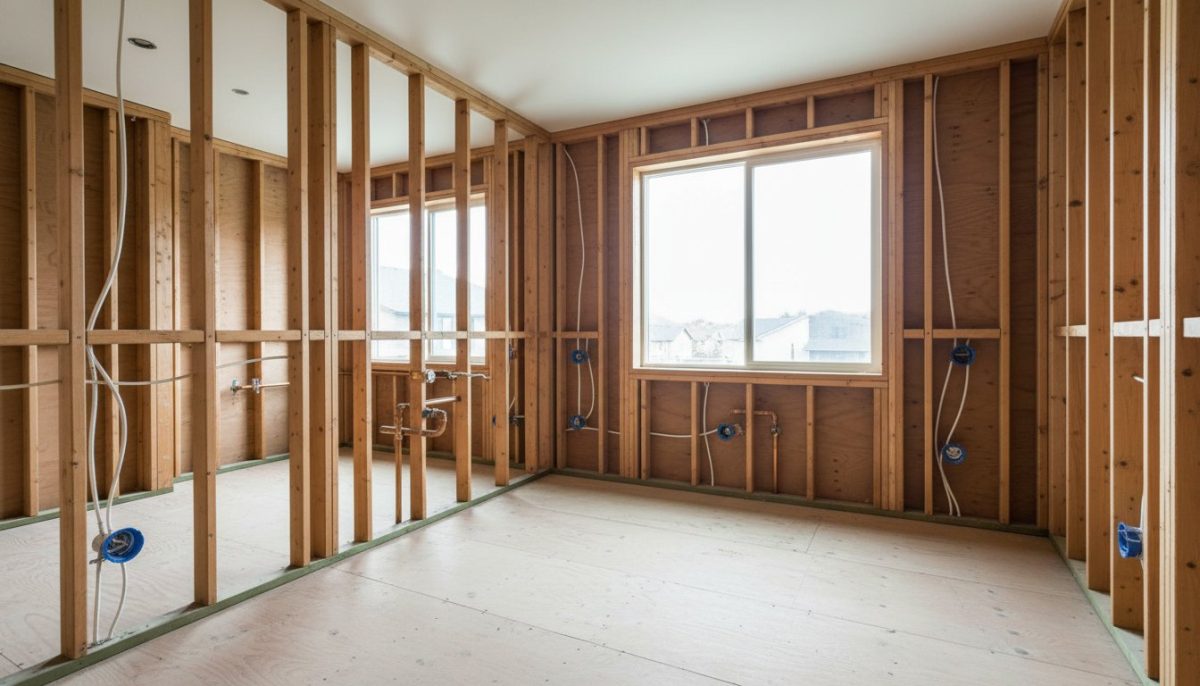
Did you know that 32% of homeowners exceed their original renovation budget, often because of the “surprises” lurking behind their bathroom walls? Gutting a bathroom for renovation is far more than a simple demolition task; it’s a surgical procedure that requires technical precision to avoid structural damage. You likely feel the weight of uncertainty, worrying about the location of live wires or the hidden presence of hazardous materials like asbestos in your vintage tile and insulation.
We understand that a successful remodel depends entirely on the quality and safety of the foundation you leave behind. This guide provides a methodical, professional approach to stripping your space to the studs while ensuring your home remains a controlled, hazard-free environment. You’ll learn how to navigate the 2026 EPA lead-safe standards, manage debris according to modern recycling mandates, and prepare a perfectly clean shell ready for your new plumbing and electrical upgrades. By following a disciplined workflow, you can move from a cluttered, outdated room to a verified clean slate with total confidence.
Key Takeaways
- Learn how to perform a comprehensive pre-demolition assessment to map utility lines and prevent accidental damage to your home’s vital systems.
- Discover the methodology of selective demolition, a surgical approach that protects structural integrity by following a disciplined, top-down removal sequence.
- Identify the high-risk areas for asbestos and lead paint to ensure your project complies with current safety regulations when gutting a bathroom for renovation.
- Understand professional debris management protocols, including how to sort materials on-site to meet strict recycling mandates and reduce environmental impact.
- Master the final inspection process to verify the structural shell is free of dust and damage, providing a stable foundation for the next phase of construction.
Pre-Demolition Assessment: Preparing for a Safe Gut-Out
Before the first hammer strike, we must establish a clear definition of the project scope. Gutting a bathroom for renovation isn’t merely removing outdated fixtures; it’s the systematic stripping of the space down to its structural shell. This high-precision Demolition process involves removing all finished surfaces, including tile, drywall, and flooring, to expose the underlying studs, joists, and subflooring. This methodical approach allows for a full inspection of the building’s skeleton and ensures that any underlying rot or structural fatigue is addressed before new materials are installed.
Mapping the anatomy of the room is the foundation of a safe gut-out. You must identify the exact locations of water supply lines, waste pipes, and electrical conduits hidden behind the walls. Securing the work zone is equally vital. We use heavy-duty polyethylene sheeting to create a airtight dust containment barrier, preventing fine particulates from migrating to the rest of the residence. Floor protection, such as reinforced cardboard or adhesive films, must be laid along the entire path to the exit to manage debris transport without damaging existing finishes in the home.
Utility Shut-Off and Safety Protocols
Isolating the workspace from the home’s vital systems is a non-negotiable safety step. Start by shutting off the main water supply and draining the lines to prevent high-pressure bursts during pipe removal. Identify the dedicated bathroom circuits at the breaker panel and switch them to the off position. Use a non-contact voltage tester to verify every outlet, switch, and light fixture is dead; don’t assume the labels on the panel are accurate. Once fixtures are removed, cap the water supply lines with temporary compression fittings to prevent accidental leaks. This creates a controlled environment where the physical work can proceed without the risk of electrical shock or water damage.
Structural Integrity and Load-Bearing Walls
When gutting a bathroom for renovation, identifying load-bearing walls is critical for the home’s stability. Look for walls that run perpendicular to the floor joists or those that sit directly above another wall in the basement or crawlspace. While most interior bathroom walls are partition walls, removing any vertical stud without verifying the load path is a significant risk. If your design requires removing a wall to expand the footprint, you must install temporary shoring to support the ceiling weight. We recommend consulting a structural engineer if there’s any doubt about a wall’s role in the home’s structural integrity. Removing a load-bearing element without professional oversight can lead to sagging ceilings or even catastrophic structural failure.
The Selective Demolition Process: A Step-by-Step Guide
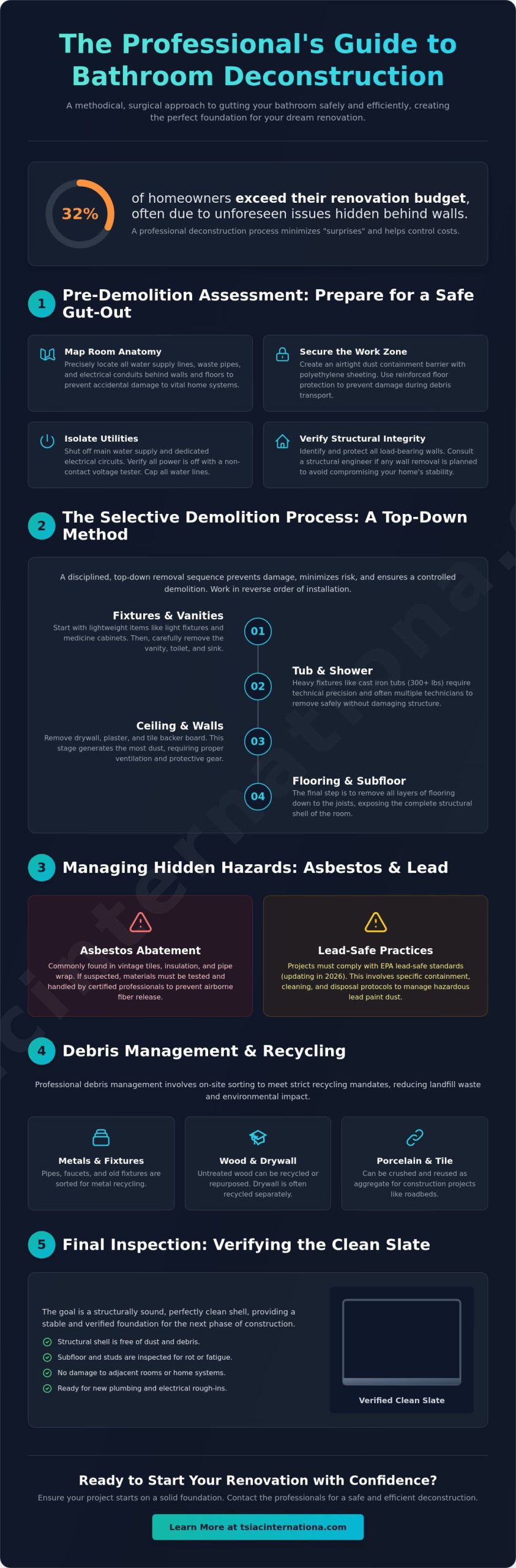
Selective demolition is the disciplined alternative to the chaotic “smash-and-grab” approach often seen in amateur projects. It involves the surgical extraction of specific components to preserve the home’s structural integrity while clearing the way for new mechanicals. When gutting a bathroom for renovation, we follow a strict top-down order of operations. This sequence prevents heavy debris from accumulating on top of active work areas and minimizes the risk of ceiling collapses or floor overloads. We start with light fixtures and medicine cabinets, followed by the ceiling material, before moving to the wall surfaces and finally the floor.
This methodical approach ensures that the selective demolition phase remains controlled. By removing layers in reverse order of their installation, you avoid damaging the underlying studs or neighboring rooms. The goal is a clean, level surface where every square inch of the room’s skeleton is visible and accessible for the next phase of the project.
Removing Fixtures and Finishes
Extracting heavy fixtures requires technical precision rather than brute force. Cast iron tubs, which can weigh over 300 pounds, often require multiple technicians or strategic cutting with a reciprocating saw to remove safely. It’s vital to protect adjacent rooms from vibration and debris impact by using thick moving blankets and temporary plywood barriers at the doorway. If you are working with high-value vintage fixtures, take the time to disconnect them carefully to allow for resale or donation. Once the vanity, toilet, and tub are removed, you can begin the process of stripping the wall and floor surfaces without obstruction.
Stripping to the Studs and Subfloor
After the fixtures are cleared, the focus shifts to removing drywall, plaster, and tile backer board. This stage generates the highest volume of airborne particulates, making asbestos safety a top priority for older homes. Use wet-scraping techniques and HEPA-filtered vacuums to suppress dust while stripping the walls to the bare studs. Once the subfloor is exposed, conduct a rigorous inspection for rot or water damage. Look for dark staining or soft spots, particularly around the toilet flange and shower drain, as these structural issues are much easier to fix during the phase of gutting a bathroom for renovation than after the new finishes are installed. Finally, pull every remaining nail and screw from the studs to ensure a perfectly flush surface for the new drywall.
Managing Hidden Hazards: Asbestos and Lead Abatement
Gutting a bathroom for renovation in a property built before 1990 introduces technical challenges that extend beyond simple demolition. Older structures often harbor hazardous materials that remain stable until they’re disturbed by mechanical force. Identifying these risks during the pre-demolition phase is a critical safety requirement. Attempting to strip a bathroom without a professional assessment can lead to the release of microscopic fibers and toxic dust, contaminating the entire residence and creating long-term health liabilities for the occupants.
The legal landscape regarding these materials is strictly regulated. For instance, the EPA’s January 2026 updates have established more rigorous standards for lead-based paint, introducing the “Dust-Lead Reportable Level (DLRL)” to replace older hazard standards. If you’re managing a project in the Southeast, partnering with asbestos removal South Carolina experts ensures that your gut-out complies with these specific federal and state-level safety mandates. Professional intervention is the only way to guarantee a truly clean slate for your renovation.
Identifying Asbestos and Lead Paint
Asbestos was widely utilized in bathroom construction for its thermal resistance and durability. It’s most frequently found in vinyl floor tiles, the black mastic adhesive used for flooring, and the insulation surrounding vintage plumbing lines. Lead-based paint is equally pervasive in homes built before 1978, often hidden under multiple layers of modern latex coatings. While hardware store test kits are available, they lack the precision of professional X-ray fluorescence (XRF) testing. A professional inspection identifies these hazards with scientific accuracy, preventing the accidental disturbance of toxic substances during the process of gutting a bathroom for renovation.
The Abatement and Remediation Process
When hazardous materials are detected, the site must be transitioned into a controlled abatement zone. This involves establishing negative air pressure using HEPA-filtered air scrubbers and sealing all vents to prevent cross-contamination. Technicians must use specialized Personal Protective Equipment (PPE) and follow documented decontamination protocols. Disposal is a highly regulated phase; toxic materials must be separated from standard debris recycling streams and transported to licensed hazardous waste landfills. Following abatement, the site must pass a clearance test, ensuring that lead dust levels meet the new 2026 DLAL standard of 5 µg/ft² for floors before the renovation crew can safely return to the workspace.
Debris Management and Material Recycling
A single bathroom gut-out generates a disproportionate volume of waste relative to its square footage. In 2018, the United States produced over 600 million tons of construction and demolition (C&D) debris, which was more than double the country’s municipal solid waste output. When gutting a bathroom for renovation, the sheer weight of tile, mortar, and cast iron can quickly overwhelm a standard residential waste plan. A professional approach moves beyond the simple “dumpster-only” model, utilizing a systematic sorting process to maximize material recovery and environmental compliance.
Professional demolition process South Carolina services prioritize the diversion of materials from landfills. This involves identifying recyclable assets such as copper piping, brass valves, and steel tubs before they’re mixed with general debris. By categorizing waste on-site into wood, metal, masonry, and plastics, we meet the increasingly strict regulatory standards seen across the country. For example, California’s CALGreen code requires a 65% diversion rate, while Los Angeles County increased its recycling mandate for mixed C&D to 70% as of August 19, 2024. Following these protocols isn’t just a legal necessity; it’s a core component of a disciplined work site.
Sorting and Hauling Debris
Setting up a multi-stream waste management system on-site is essential for operational efficiency. Scrap metal from plumbing fixtures and copper lines represents high-value material that shouldn’t be discarded. We separate these from non-recyclable C&D waste, such as contaminated drywall or composite materials. This disciplined sorting reduces the environmental footprint and complies with local ordinances that ban specific materials, like concrete or clean gypsum wallboard, from landfills. Once the materials are categorized, they’re hauled to specialized facilities that can process mixed debris into reusable aggregate or raw industrial feedstocks.
Sustainable Demolition Practices
Selective deconstruction allows for the recovery of high-quality materials that still hold value. Whether it’s salvaging vintage brick or protecting old-growth wood framing, our method focuses on preservation where possible. TSIAC remains committed to environmental responsibility, ensuring that every gut-out follows a rigorous disposal protocol that exceeds baseline requirements. We don’t just clear the space; we manage the lifecycle of every material removed to ensure the project remains sustainable from start to finish. Ready to clear your space with a professional, eco-conscious team? Contact TSIAC for expert interior gutting services.
Preparing the Shell for the Next Phase
The final stage of gutting a bathroom for renovation is arguably the most critical for the success of the build team. Once the fixtures and finishes are removed, the space must undergo a rigorous structural audit. This is the first time in decades that the home’s skeleton is fully visible, offering a unique window to identify issues that could compromise the new installation. We examine every vertical stud for plumbness and every floor joist for level. Any signs of past leaks, such as wood rot or fungal growth, must be addressed now. A professional gut-out ensures that these “hidden” problems don’t become expensive change orders three weeks into the tiling phase.
A clean slate is more than an empty room; it’s a workspace optimized for technical precision. When you transition from professional interior gutting services to the reconstruction phase, the quality of the demolition dictates the speed of the renovation. A disciplined site reduces the friction between trades, allowing plumbers and electricians to begin their rough-ins without navigating debris or hazardous remnants. This methodical preparation is an investment that pays dividends in the final fit and finish of the room.
Final Cleaning and Inspection
Precision in the final cleaning phase prevents downstream failures. We don’t just sweep the floor; we pull every individual nail, staple, and screw from the studs and subfloor. Protruding fasteners are the primary cause of uneven drywall and squeaky floors. Following the removal of fasteners, we use HEPA-rated industrial vacuums to clear the wall cavities and joist bays of fine particulates. This step is vital because trapped dust can migrate later, contaminating new paint finishes or clogging high-efficiency ventilation fans. Finally, we document the “as-is” condition of the shell, providing the build team with a verified, hazard-free foundation.
Handing Off to the Renovation Team
A surgical gut-out provides the incoming general contractor with a clear roadmap for the project. By exposing the exact routing of existing vent stacks and supply lines, we eliminate the guesswork that often leads to project delays. This level of transparency allows for more accurate bidding and scheduling from subcontractors. Providing a clean, safe environment for plumbers and electricians isn’t just a courtesy; it’s a safety requirement that ensures your project remains compliant with local building codes. When gutting a bathroom for renovation, the goal is to hand over a site where the only remaining task is the creation of the new space, free from the physical and legal liabilities of the old one.
Securing Your Foundation for a Successful Remodel
A successful bathroom transformation depends entirely on the precision of the initial teardown. By prioritizing utility mapping, selective demolition, and rigorous hazard identification, you eliminate the structural and legal risks that often derail residential projects. Gutting a bathroom for renovation is a technical process that demands a clean, level shell ready for the next generation of plumbing and electrical systems. When you strip the space to its studs with a methodical approach, you provide your construction team with the best possible starting point.
With over 15 years of demolition and abatement expertise, TSIAC International delivers the technical control your home requires. Our certified asbestos and lead abatement specialists ensure your site meets the latest 2026 safety standards. We maintain a deep commitment to environmental responsibility by recycling wood, metal, and plastic from every project. Contact TSIAC International for a professional interior gut-out quote to secure a hazard-free foundation for your renovation. Your vision doesn’t have to be compromised by hidden hazards; start your project with total confidence.
Frequently Asked Questions
Do I need a permit for gutting a bathroom for renovation?
Most municipalities require a building permit for gutting a bathroom for renovation if the project involves structural changes or rerouting mechanical systems. In many regions, permit costs range from $50 to over $450 depending on the scope of work. Unpermitted work can void your homeowners’ insurance and complicate future property sales. You should always verify local building codes before starting any demolition to ensure your project remains compliant with current safety regulations.
How long does it take to gut a bathroom to the studs?
A professional crew can typically strip a standard bathroom to the studs in one to three business days. This timeline accounts for utility isolation, fixture extraction, and the systematic removal of wall and floor surfaces. Projects involving heavy cast iron tubs or thick mortar-set tile floors often require additional labor hours. Factors like debris transport distance and site accessibility also influence the total duration. It’s a fast but intensive process.
What is the difference between demolition and gutting?
Demolition is a broad term for the destruction of any structure, while gutting refers specifically to the surgical removal of all interior finishes to expose the structural skeleton. Gutting focuses on preservation. It involves a disciplined top-down approach rather than the indiscriminate destruction often associated with general structural demolition. This surgical method protects the building’s shell while providing a clean, stable foundation for new construction and mechanical installations.
Can I stay in my house while the bathroom is being gutted?
You can generally remain in your home during the process, provided you have access to a secondary functional bathroom. Professional crews use heavy-duty polyethylene sheeting and negative air pressure systems to prevent dust from migrating into living areas. However, the noise levels and utility shut-offs required for a safe gut-out can be disruptive. If your project involves extensive asbestos or lead abatement, you might need to vacate the property during the remediation phase.
How do I know if my bathroom has asbestos before I start?
Visual inspection is insufficient for identifying asbestos fibers in materials like mastic, tile, or insulation. If your home was built before 1990, you should assume hazardous materials are present until a professional X-ray fluorescence (XRF) test or laboratory analysis proves otherwise. In Colorado, buildings of any age must be inspected for asbestos before renovation. Professional testing provides the scientific data needed to determine if specialized abatement protocols are legally required for gutting a bathroom for renovation.
What tools are essential for a professional interior gut-out?
Essential tools include heavy-duty pry bars, reciprocating saws for cutting through pipes, and non-contact voltage testers for electrical safety. A HEPA-rated industrial vacuum is critical for managing fine dust and particulates during the removal of drywall and plaster. For floor stripping, floor scrapers and rotary hammers are often necessary to remove hardened thinset or mortar beds. Using the correct mechanical tools ensures the demolition is precise rather than destructive. Safety gear is mandatory.
Is it worth hiring a pro for a small bathroom gut-out?
Hiring a professional is often safer and more efficient even for smaller spaces due to the technical risks of utility damage and hazardous material exposure. Professionals manage the entire lifecycle. This includes debris recycling and regulatory compliance. A pro-grade gut-out provides a perfectly level and plumb shell, which reduces the time and labor costs for your incoming tiling and plumbing contractors. It’s an investment in the quality of the final result.
How do I dispose of old bathroom fixtures and tile?
Old fixtures and tile should be sorted on-site into specific waste streams like masonry, metal, and wood. Many regions now mandate high diversion rates, such as California’s 65% requirement for construction and demolition waste. Metal fixtures can often be recycled at scrap yards, while tile and concrete are crushed for use as aggregate. Professional demolition services handle this logistical burden by transporting materials to licensed C&D recycling facilities rather than local landfills.