
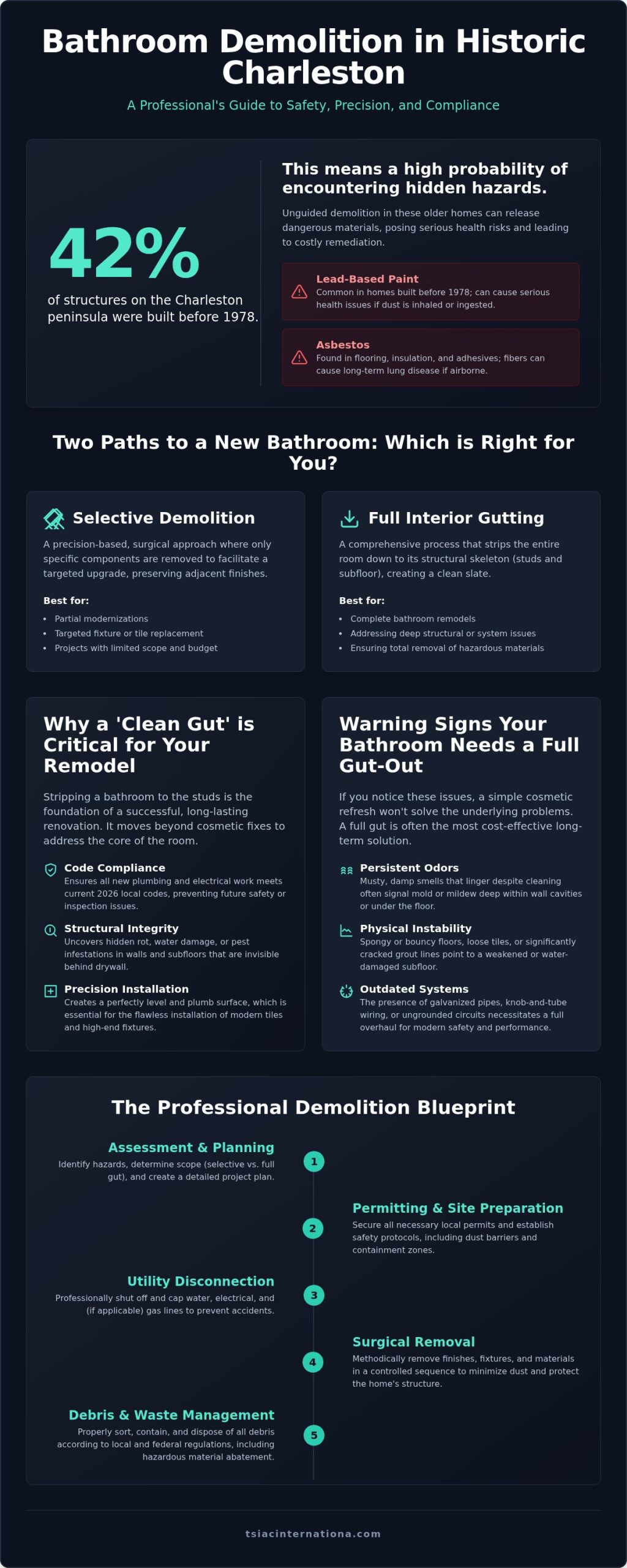
Did you know that approximately 42% of the structures on the Charleston peninsula were built before 1978? This statistic is more than just a historical footnote; it’s a critical safety indicator for anyone considering a bathroom demolition in Charleston, SC. When you’re dealing with older coastal homes, a simple weekend project can quickly escalate into a complex environmental challenge involving lead-based paint or asbestos. It’s natural to feel a sense of trepidation about what’s hiding behind those tiles. You want a fresh start for your home, but you don’t want to risk structural damage, accidental utility cuts, or long-term health hazards.
We believe that a successful remodel depends entirely on the methodological precision of the gutting phase. This professional guide will teach you how to execute a surgical, selective demolition that leaves your space clean and stud-ready for your contractors. You’ll learn how to navigate the 2026 South Carolina Department of Environmental Services notification requirements and manage hazardous material abatement with technical accuracy. We’ll walk through the essential steps of utility disconnection and debris management; ensuring your renovation begins on a foundation of safety and regulatory compliance rather than uncertainty.
Key Takeaways
- Understand the technical distinction between selective demolition and full interior gutting to align your project with your 2026 renovation goals.
- Identify the critical safety protocols required for managing asbestos and lead-based paint in Charleston’s historic pre-1978 properties.
- Learn the specific permitting and utility disconnection requirements necessary for a compliant bathroom demolition charleston sc project.
- Discover how a surgical approach to demolition prevents structural damage and ensures a clean, stud-ready environment for your renovation team.
- Gain clarity on waste disposal and environmental recycling standards to minimize the ecological footprint of your home improvement project.
The Essentials of Bathroom Demolition in Charleston, SC
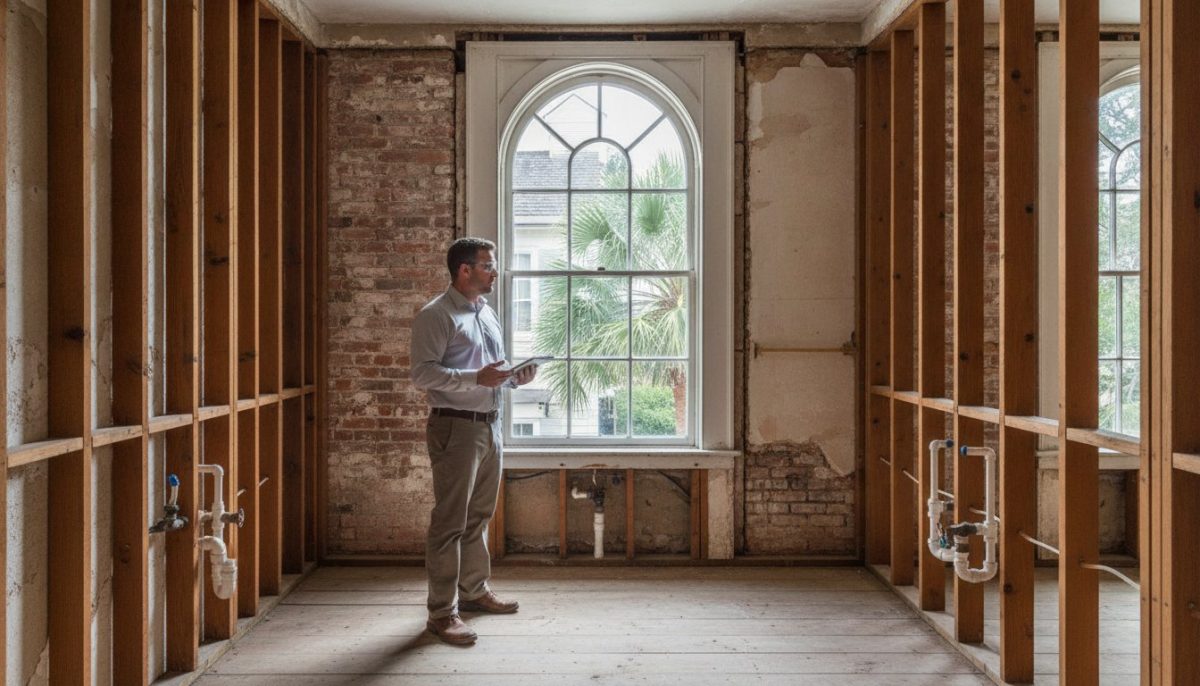
Bathroom demolition is often misunderstood as a chaotic act of destruction. In reality, a professional bathroom demolition in Charleston, SC, is a controlled, systematic process of removing architectural finishes, fixtures, and structural components. This methodical approach ensures that the surrounding home remains undisturbed while the target area is stripped to its skeleton. Unlike the “smash and grab” style of amateur DIY projects, professional selective demolition prioritizes the preservation of structural integrity and the safety of the occupants. It’s the difference between a project that starts with a clean slate and one that begins with expensive, accidental damage.
In older Charleston homes, unguided demolition risks releasing hazardous fibers into the air, highlighting the documented dangers of asbestos exposure. Professionals use specialized tools and containment strategies to mitigate these risks before they become a liability. By 2026, regulatory standards for waste disposal and environmental safety have become increasingly stringent. Following a technical, planned approach isn’t just about aesthetics; it’s about meeting legal requirements and ensuring the longevity of your investment.
Why a ‘Clean Gut’ Matters for Your Remodel
Stripping a bathroom to the studs provides a blank slate that’s essential for modern construction standards. This process removes the “symptoms” of an old bathroom and addresses the root causes of potential failure.
- Code Compliance: It ensures that all new plumbing and electrical installations meet current 2026 local codes, preventing future legal or safety issues during home inspections.
- Structural Integrity: A full gut allows for a thorough inspection of wall studs and subfloors to identify hidden rot, water damage, or pest infestations that remain invisible behind drywall.
- Precision Installation: Removing all old layers provides a perfectly level and plumb surface. This is critical for the installation of large-format tiles and high-end fixtures that require tight tolerances to look professional.
Common Signs Your Bathroom Needs a Full Gut-Out
Sometimes, a cosmetic refresh isn’t enough to address underlying systemic failures. If you notice these signs, a total interior gutting is usually the most cost-effective long-term solution.
- Persistent Odors: Musty, damp smells that linger despite deep cleaning often indicate mold growth deep within the wall cavities or under the flooring.
- Physical Instability: Spongy floors or cracked tile grout lines usually suggest that the subfloor has suffered water damage and lost its structural capacity.
- Outdated Systems: If your home still utilizes galvanized piping or ungrounded electrical circuits, a full demolition is necessary to modernize the infrastructure for safety and performance.
Selective Demolition vs. Full Interior Gutting
Choosing the appropriate method for your bathroom demolition in Charleston, SC, depends on your 2026 renovation objectives and the current state of your property’s infrastructure. Selective demolition is a precision-based approach where only specific components are removed to facilitate a targeted upgrade. This requires a high degree of technical control to avoid damaging adjacent structures or finishes that are meant to remain. In contrast, a full interior gutting involves stripping the room to its structural skeleton. This is often the more efficient choice for comprehensive projects, especially when aging infrastructure requires a total overhaul to meet modern standards.
While selective demolition may seem less invasive, it often demands more labor-intensive “surgical” techniques. Professionals must carefully navigate existing plumbing and electrical lines that are still in use. A full gut-out, while higher in debris volume, provides a faster path to a “stud-ready” state. This method is particularly effective for ensuring compliance with federal asbestos regulations, as it allows for the total removal of contaminated materials rather than attempting to work around them. TSIAC International brings over 15 years of experience to these complex decisions, providing the technical oversight necessary to maintain structural integrity regardless of the project’s scope.
When to Choose Selective Demolition
Selective demolition is the preferred strategy when the project’s goal is a partial modernization rather than a complete reconfiguration. It’s often chosen for:
- Preserving High-Value Assets: Many Charleston homes feature vintage clawfoot tubs, historic millwork, or intact marble wainscoting that are impossible to replace.
- Targeted Upgrades: If you’re only converting a tub into a walk-in shower, selective removal limits the work area and reduces overall project costs.
- Occupied Environments: This method minimizes dust and noise disruption, which is vital if the home remains occupied during the renovation.
The Benefits of a Full Interior Gut-Out
A total gut-out is a definitive investment in the long-term health of your home. It’s the only way to guarantee that every hidden issue is addressed before new finishes are installed.
- Floor Plan Flexibility: Stripping the room to its studs allows you to move walls, relocate toilets, or expand the footprint without being limited by old layouts.
- Infrastructure Modernization: It provides unrestricted access for the total replacement of aging galvanized pipes or outdated wiring, ensuring your new bathroom meets 2026 safety codes.
- Efficient Remediation: A full gut is the most thorough way to handle hazardous material abatement, removing all traces of mold, lead, or asbestos in a single, controlled phase.
Determining the right scope for your project requires a balance of budget, timeline, and structural necessity. If you’re ready to clear the way for your new design, consulting with a specialized demolition partner ensures the job is done with technical precision.
Identifying Asbestos and Lead in Older Bathrooms
Charleston’s architectural heritage presents unique technical challenges during a bathroom demolition charleston sc. Approximately 42% of the structures on the peninsula were constructed before 1978, a period when asbestos and lead were industry standards for their durability and fire resistance. These materials are relatively stable when left undisturbed. However, the mechanical force of demolition transforms them into friable particles and toxic dust. Without professional containment, these microscopic hazards circulate through your home’s HVAC system, creating long-term health risks for all occupants. Methodological precision is required to identify these threats before the first tile is removed.
Professional testing is the only reliable way to confirm the presence of hazardous materials. Relying on visual inspections is a common error that leads to accidental exposure. Before beginning work, property owners should consult the requirements for Charleston demolition permits, as local regulations often mandate hazardous material screenings for older residential structures. TSIAC International integrates 15+ years of abatement experience into every project, ensuring that hazardous substances are identified, contained, and removed according to strict environmental protocols. This proactive approach prevents the costly work stoppages that occur when contractors discover unexpected hazards mid-project.
Common Asbestos-Containing Materials (ACMs)
Asbestos was frequently used in bathroom components due to its superior moisture and heat resistance. During an interior gutting, we commonly encounter ACMs in several specific areas:
- Flooring Systems: 9-inch vinyl floor tiles and the high-strength black adhesives (mastic) used beneath them often contain high concentrations of asbestos.
- Thermal Insulation: Older pipe insulation, particularly around hot water lines behind wet walls, is a frequent source of friable asbestos fibers.
- Wall and Ceiling Finishes: Textured “popcorn” ceiling finishes and certain types of joint compounds or plaster used in wet areas were manufactured with asbestos until the late 1970s.
- Cement Board: Transite or asbestos-cement boards were often used as fireproofing behind older heaters or as a moisture barrier in shower stalls.
Lead Paint Risks in Historic Renovations
Lead-based paint remains a significant concern in Charleston’s historic districts. While often buried under layers of modern latex paint, it’s frequently found on original bathroom cabinetry, window trim, and door frames. Demolition activities like sanding, scraping, or structural removal create lead-enriched dust that’s easily ingested or inhaled. In 2026, safe disposal of lead-contaminated waste requires adherence to specific SCDES regulations. We utilize specialized HEPA filtration systems and negative air pressure zones to ensure that toxic particles never leave the work area. This level of technical oversight is essential for maintaining a safe living environment during and after the renovation process.
Preparation, Permits, and Site Safety
Executing a bathroom demolition charleston sc requires more than just physical labor; it demands a rigorous logistical framework to protect the home’s value and the occupants’ health. Preparation is the phase where most amateur projects fail, often due to a lack of containment or improper utility management. A professional site setup creates a “clean zone,” ensuring that the dust and debris generated during the removal of tile, mortar, and drywall don’t migrate into living areas. This stage is also when we verify that the project aligns with the latest 2026 local building standards and environmental protections.
Permitting is a critical component of regulatory compliance in the Lowcountry. For projects within Charleston County’s jurisdiction, homeowners should account for a flat demolition permit fee of $75.00. However, if your property sits within the City of Charleston, the fee structure is valuation-based, typically starting at $15 for the first $1,000 of project value plus additional costs for higher valuations and a non-refundable $40 application fee. Navigating these requirements ensures your renovation remains legally sound and avoids the steep civil penalties associated with unpermitted structural work.
Pre-Demolition Checklist
Before the first hammer swing, our teams follow a strict protocol to isolate the workspace. This methodical approach prevents accidental damage to the home’s core systems.
- Utility Isolation: We locate and test all main water shut-off valves and electrical breakers. It’s not enough to turn them off; we verify that no residual pressure or “phantom” circuits remain.
- Dust Containment: We establish “zip-wall” barriers using heavy-duty poly sheeting and tension poles. This creates a negative pressure environment that traps silica dust and fine particulates.
- Permit Verification: Our team ensures all documentation is posted on-site, particularly when the project involves structural demolition that could affect the building’s load-bearing capacity.
Responsible Debris Management
Demolition is a major contributor to landfill waste, but it doesn’t have to be. At TSIAC International, we prioritize environmental recycling as part of our standard operating procedure. We sort materials on-site, separating wood, metal, and certain plastics to divert them from local Charleston landfills. When dealing with heavy materials like concrete bedding or thick ceramic tile, we utilize specialized machinery to break down and transport debris safely, reducing the risk of worker injury and floor-load stress. This commitment to sustainability ensures that your “clean gut” is as environmentally responsible as it is technically precise.
Starting your remodel with a professionally cleared space is the best way to ensure a smooth installation phase. If you’re planning a project and need expert oversight, contact us for a professional interior gutting consultation.
Why TSIAC International is the Standard for Interior Demolition
TSIAC International has established itself as the premier choice for bathroom demolition charleston sc by treating every project with industrial grade discipline. With over 15 years of specialized industry experience, we understand that interior gutting is a technical trade requiring more than just brute force. Our approach is defined by methodological precision, ensuring that hazardous materials like asbestos and lead are mitigated before they can compromise the safety of your home. We provide a predictable, controlled environment where technical solutions replace guesswork, allowing homeowners to proceed with their renovations with total confidence.
Safety and reliability are the cornerstones of our professional service. By choosing a partner that specializes in both hazardous material abatement and surgical interior gutting, you eliminate the risks associated with amateur demolition. We offer fixed-price contract quotes to provide our clients with financial clarity and professional accountability from the initial assessment. This commitment to transparency ensures that your project remains on schedule and within the established scope of work without the threat of hidden costs or safety violations.
Expertise Beyond the Sledgehammer
Our crews are specifically trained to identify load-bearing structures and navigate complex utility grids without causing collateral damage. This surgical selective demolition is essential for preserving the surrounding rooms while creating a clean, stud-ready shell. We don’t just clear a space; we prepare it for the next phase of construction. This includes providing comprehensive documentation for insurance and regulatory compliance, ensuring that your renovation starts on a foundation of verified safety and technical accuracy.
Nationwide Standards, Local Execution
While we serve customers nationally, we apply the same rigorous safety protocols to every residential bathroom demolition charleston sc project. We act as a responsible partner for both general contractors and homeowners, delivering results that meet the highest environmental and structural standards. You can learn more about TSIAC International Charleston and how our commitment to technical excellence has set the regional benchmark for demolition and abatement services. We bridge the gap between heavy industrial safety and residential renovation needs.
The success of your bathroom remodel depends on the quality of the demolition that precedes it. Contact TSIAC International today to request a fixed-price quote and ensure your project begins with a professionally prepared, hazardous-free environment.
Securing the Foundation for Your Renovation
A successful bathroom remodel begins long before the first new fixture is installed. It starts with a controlled, surgical demolition that addresses structural integrity and environmental safety with technical precision. By prioritizing a methodological gut-out, you eliminate the risks of hidden mold, outdated infrastructure, and hazardous material exposure. This professional approach ensures your space is truly “stud-ready” and fully compliant with 2026 local regulations.
Selecting a partner with 15+ years of industry experience provides the reliability your home deserves. We specialize in certified asbestos and lead abatement, ensuring that your bathroom demolition charleston sc is executed without compromising your family’s health or your property’s value. Our dedicated on-site material recycling program reflects a commitment to sustainable practices that benefit the entire Lowcountry community. You don’t have to navigate the complexities of permits and hazardous waste alone.
Take the first step toward a safe and seamless transformation by partnering with experts who value precision as much as you do. Get a Fixed-Price Quote for Your Bathroom Demolition today and move forward with the confidence that your project is in professional hands.
Frequently Asked Questions
How long does a typical bathroom demolition take?
A standard bathroom demolition charleston sc typically requires one to three business days to reach a “stud-ready” state. The exact duration depends on the material composition, such as ceramic tile over a thick mortar bed versus standard drywall. Structural modifications or the discovery of hazardous materials can extend this timeline. Our crews prioritize a methodical pace to ensure that utility lines are safely isolated and the home’s structural integrity remains uncompromised.
Do I need a permit for bathroom demolition in Charleston, SC?
Yes, most interior demolition projects in the Lowcountry require official authorization. For a bathroom demolition charleston sc, the City of Charleston bases permit fees on project valuation, starting with a non-refundable $40 application fee. Charleston County utilizes a flat $75.00 demolition permit fee. Work involving structural changes or properties in historic districts often requires additional review. We ensure all necessary documentation is secured and displayed on-site to maintain full regulatory compliance.
Can I stay in my home during the demolition process?
Residents can typically remain in the home, provided that professional containment protocols are strictly followed. We establish negative air pressure zones and utilize heavy-duty “zip-wall” barriers to prevent silica dust and debris from migrating into living areas. While the noise and utility interruptions are temporary, it’s vital the workspace remains physically isolated. If significant asbestos or lead abatement is required, we’ll recommend limiting access to adjacent hallways during the most intensive removal phases.
How much of the bathroom material can be recycled?
A significant portion of bathroom debris is eligible for environmental recycling. We sort materials on-site, specifically targeting wood framing, metal piping, and certain plastic components for diversion from local landfills. Ceramic tile and concrete bedding are handled as heavy masonry waste. By utilizing a systematic sorting process, we reduce the project’s ecological footprint while adhering to the sustainability standards expected in modern 2026 construction and demolition practices.
What happens if asbestos is found during the gut-out?
If suspected asbestos-containing materials are identified, all work stops immediately to prevent fiber release. We implement strict containment protocols and perform professional abatement using specialized HEPA filtration and protective gear. As 15-year experts in hazardous material removal, we manage the entire process from identification to safe disposal according to SCDES regulations. It’s essential to ensure the environment is safe for both the renovation crew and the homeowners before any further demolition continues.
Is selective demolition cheaper than a full gut-out?
Selective demolition is not always the less expensive option. While it involves removing fewer materials, it requires high-precision “surgical” techniques to protect existing fixtures or structural elements. This labor-intensive process can sometimes match the cost of a full gut-out due to the specialized tools and time required. A full interior gutting is often more efficient for projects requiring total infrastructure replacement, as it provides unrestricted access for plumbers and electricians.
Do you handle the removal of heavy cast iron tubs?
Our teams are fully equipped to manage the systematic removal of heavy cast iron tubs. These fixtures often weigh several hundred pounds and require mechanical breaking or specialized lifting equipment to remove without damaging the subfloor or door frames. We treat this as a technical task, ensuring that the tub is safely disconnected from the drain assembly before being processed as scrap metal for recycling. This prevents the physical strain and property damage common in DIY removals.
Will demolition damage the plumbing in other parts of my house?
Professional demolition is designed to isolate the work zone, preventing damage to the rest of the home’s plumbing grid. We locate and test all shut-off valves before the project begins to ensure the bathroom is completely disconnected from the main system. This technical oversight prevents pressure surges or accidental pipe fractures during the removal of wall-mounted fixtures. Our goal is to leave the rest of your home’s infrastructure fully operational and undisturbed throughout the process.
