
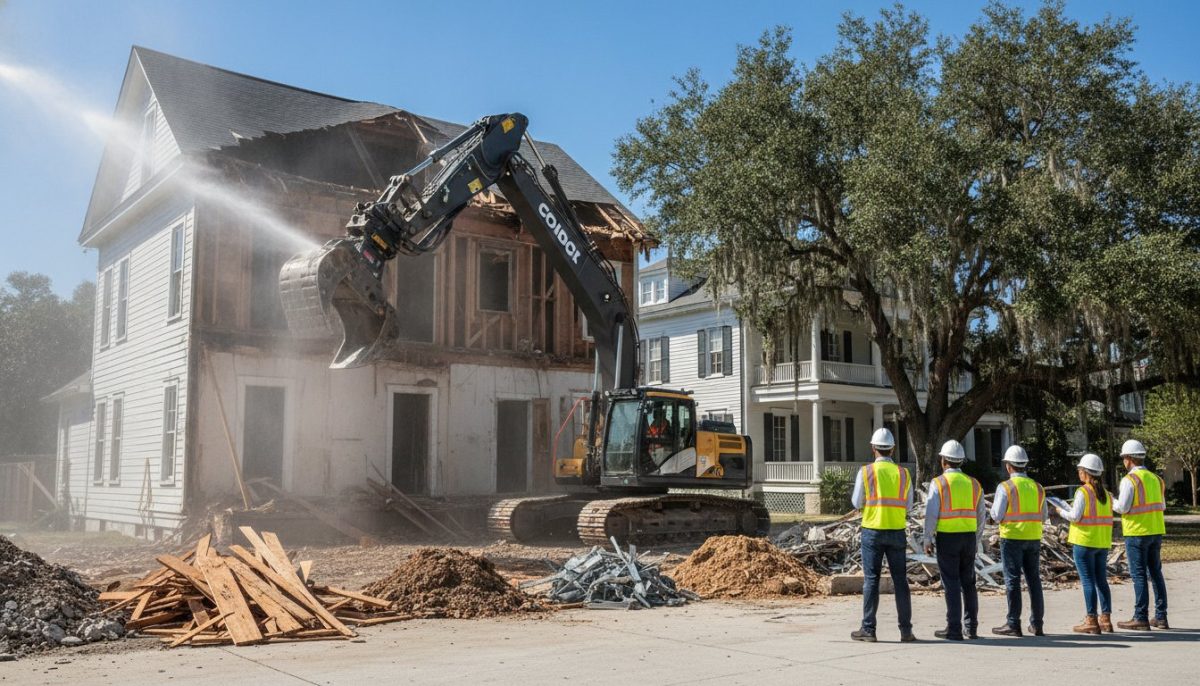
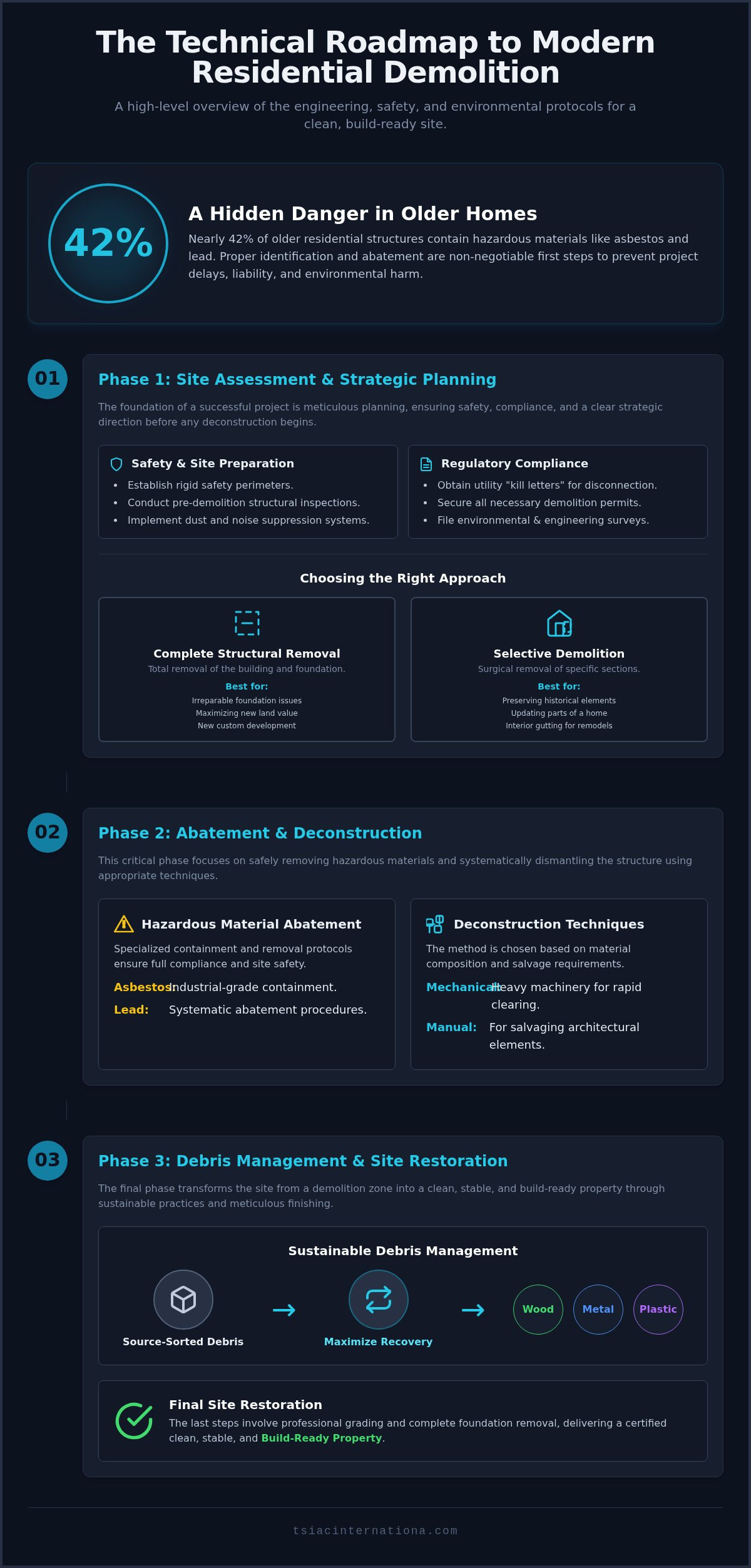
Did you know that nearly 42% of older residential structures contain hazardous materials that can stop a project in its tracks? For those coordinating residential demolition charleston sc, the process is no longer just about clearing a lot; it’s a complex engineering task where technical precision is the only acceptable standard. You likely recognize that a site isn’t truly ready for new construction until every trace of lead, asbestos, and structural risk is mitigated. It’s a high-stakes environment where a single oversight can lead to significant liability or long-term environmental damage.
This guide provides a technical roadmap for modern residential structure removal, focusing on high-level safety protocols and environmental compliance. You’ll learn how industrial-grade containment and systematic hazardous material abatement ensure a clean, build-ready site. We’ll also detail the methodology behind selective removal and the recycling-first debris management that defines professional standards in 2026. By following these rigorous procedures, you can achieve full regulatory compliance while maintaining a zero-incident record on your property.
Key Takeaways
- Learn why modern demolition is a controlled engineering process requiring strict site stabilization and utility termination protocols.
- Understand the technical distinctions between complete structural removal and selective demolition for preserving existing building sections.
- Discover how specialized containment for asbestos and lead abatement ensures your residential demolition charleston sc project remains compliant and safe.
- Explore the methodology of source-sorting debris to maximize the recovery of wood, metal, and plastic through sustainable recycling.
- Identify the final grading and foundation removal procedures essential for transforming a demolition site into a build-ready property.
The Fundamentals of Residential Structural Removal
Residential structural removal is far more than the simple destruction of a building. It’s a calculated engineering process designed to dismantle a structure while mitigating risks to the surrounding environment. Professionals treat every project with methodological precision, moving from the top down to maintain structural stability throughout the process. Various Demolition techniques are deployed based on the building material composition and proximity to other residences. While mechanical demolition uses heavy machinery like excavators for rapid clearing, manual deconstruction is used when specific architectural elements or materials must be salvaged for reuse.
Site stabilization serves as the foundation of any successful project. This involves more than just putting up a fence; it requires a comprehensive understanding of the soil, the existing foundation, and the potential for vibration to impact neighboring properties. Utility termination is equally critical. Every service line, from gas and electricity to water and sewer, must be professionally disconnected and sealed at the street level to prevent catastrophic site accidents during the structural removal phase.
Safety Protocols and Site Preparation
Before any machinery arrives, a rigid safety perimeter is established. This prevents unauthorized access and protects adjacent homeowners from debris. Pre-demolition inspections are a non-negotiable step. These surveys identify hidden structural weaknesses or compromised load-bearing walls that could cause an unplanned collapse. To maintain community standards, teams implement advanced dust suppression systems, often using high-pressure water mist, and schedule high-impact activities to minimize noise pollution during the workday.
Regulatory Compliance and Permitting
Executing a residential demolition charleston sc project requires navigating a complex web of federal and state level regulations. A primary requirement is obtaining “kill” letters from every utility provider. These documents serve as official verification that all services are inactive and safe for removal. Beyond basic permits, engineering surveys and environmental clearances are mandatory. These documents ensure that the project adheres to safety standards and that any hazardous materials have been identified before the first wall falls. Final site clearance documentation is then filed to confirm the lot is clean and ready for future development.
Strategic Planning: Structural vs. Selective Demolition
Strategic planning serves as the pivot point for any successful structural project. It isn’t a one-size-fits-all decision, but a technical evaluation of the building’s current state and its future purpose. For experts managing residential demolition charleston sc, the choice between structural and selective methods depends on the long-term vision for the property. Structural demolition involves the complete removal of the building footprint, clearing the way for entirely new construction. Conversely, selective demolition requires a surgical approach to remove specific sections while maintaining the integrity of the remaining structure.
Interior gutting represents a third specialized category. This process involves stripping a residence down to its studs, removing all non-structural elements, finishes, and outdated utilities. It’s the preferred choice for comprehensive remodels where the exterior shell remains viable, but the internal systems need a total overhaul. Choosing the right path requires a careful balance of project goals, available budget, and the actual structural condition of the materials involved.
When to Choose Structural Demolition
Total structural removal is often the most cost-effective path when a building suffers from irreparable foundation issues or catastrophic environmental damage. If the cost of retrofitting an old structure exceeds the value of a new build, clearing the site is the logical engineering choice. This method maximizes land value, allowing for custom residential development that adheres to modern building codes and energy standards. It’s a clean slate approach that removes the limitations of an existing footprint, ensuring that every square inch of the property is utilized according to the new design specifications.
The Precision of Selective Demolition
Selective demolition demands a higher level of technical control and specialized equipment. This method is used when owners want to preserve historical elements or specific architectural features while updating other parts of the home. Managing load-bearing structures during these partial removals is critical. Engineers must design temporary shoring systems to support the building as sections are removed. This allows for the seamless integration of new additions into existing residential shells without compromising the safety of the original structure. For projects requiring this level of technical oversight, choosing a partner with specialized experience in selective demolition ensures the project remains on schedule and within safety parameters.
Before any physical work begins, a thorough engineering survey identifies the load paths and material strengths. This data prevents accidental collapses and ensures that the transition between the old and new sections is structurally sound. Whether the goal is a complete clearing or a surgical update, the planning phase dictates the safety and efficiency of the entire operation.
Hazardous Material Management: Asbestos and Lead Abatement
In any residential demolition charleston sc project involving older homes, the management of hazardous materials is the most critical phase. Many structures built before the late 1970s contain hidden toxins that, if disturbed without proper containment, pose severe health risks and legal liabilities. Asbestos is frequently found in vinyl flooring, cement siding, and pipe insulation. Lead-based paint is another common hazard, often buried under layers of modern coatings. Federal and state regulations mandate thorough testing before any structural disturbance occurs. This isn’t just a recommendation; it’s a legal safeguard against environmental contamination and site-wide liability.
Professional abatement differs significantly from simple removal. While removal might imply taking material away, abatement involves a systematic approach to neutralize the threat entirely. This includes the use of specialized containment barriers and high-efficiency particulate air (HEPA) filtration to ensure that toxic fibers or dust particles don’t escape the work area. By applying industrial-grade safety protocols to residential sites, contractors prevent the spread of contaminants that could otherwise impact the surrounding neighborhood and soil quality.
Asbestos Abatement Procedures
Safely managing asbestos requires establishing a negative pressure environment. This technical setup uses specialized air scrubbers to pull air into the workspace, preventing microscopic fibers from drifting into neighboring residential areas. Technicians use wet-removal methods to keep fibers from becoming airborne during the dismantling process. Once the material is carefully removed, it’s sealed in labeled, leak-tight containers and transported to designated hazardous waste landfills. Following the physical removal, independent post-abatement air quality testing is conducted. This certification verifies that the environment is clear of airborne toxins, providing a documented guarantee of safety before the main structural demolition begins.
Lead Remediation Standards
Lead-based paint requires equally rigorous protocols. When dealing with older residential structures, crews must manage lead-contaminated dust and debris using specialized scraping techniques and industrial vacuum systems. Every technician on-site adheres to strict Personal Protective Equipment (PPE) requirements, including N100 respirators and disposable coveralls, to prevent cross-contamination. The process often involves the application of chemical stabilizers or encapsulants to prevent dust migration. The ultimate goal is to achieve a “lead-safe” status, ensuring the site is ready for future construction crews without the risk of residual exposure. This level of precision is a hallmark of professional residential demolition charleston sc, protecting the property owner from future litigation and ensuring the project meets modern environmental standards.
Sustainable Practices in Debris Management and Recycling
Modern residential demolition charleston sc projects are no longer measured solely by speed, but by the volume of material diverted from landfills. A professional standard in 2026 dictates a shift from simple disposal to high-level material recovery. This process relies on a methodology called source-sorting, where debris is categorized as it’s removed rather than being mixed into a single waste stream. By applying this technical approach, contractors can recover up to 90% of a structure’s components, transforming what was once considered waste into secondary raw materials for the construction industry.
On-site concrete crushing has emerged as a cornerstone of sustainable structural removal. Instead of hauling heavy foundation slabs to distant disposal sites, specialized mobile jaw crushers process masonry and concrete into usable structural fill right on the property. This eliminates significant transport fees and reduces the carbon footprint of the project. This methodology ensures that a residential demolition charleston sc site remains an asset, providing the base material for future grading and site stabilization without the need for imported aggregate.
The Sorting and Recovery Process
The recovery process follows a disciplined, three-step sequence to ensure maximum efficiency and material purity:
- Step 1: Architectural Salvage. Before mechanical demolition begins, crews identify and remove salvageable elements such as antique wood beams, doors, and hardware. These items are diverted to specialized reuse markets.
- Step 2: Metal Segregation. Technicians separate ferrous and non-ferrous metals, including copper wiring, steel framing, and aluminum siding. These materials have high industrial recycling value and are processed at specialized facilities.
- Step 3: Masonry and Wood Processing. Clean wood is separated for mulching or biomass fuel, while brick and concrete are prepared for crushing. This step prevents the bulk of the building’s mass from entering the municipal waste stream.
Environmental Responsibility in Demolition
Environmental responsibility is a technical requirement, not a secondary concern. Adhering to LEED certification standards in residential projects requires meticulous documentation of material diversion rates. By recycling structural components, contractors significantly reduce hauling costs and overall project expenses. This level of transparency is essential for environmental reporting and ensures the project meets the rigorous standards expected in 2026. For property owners seeking a partner committed to these high-level recycling services, professional debris management provides a documented guarantee of a minimized environmental footprint. This disciplined approach protects the local ecosystem while preparing the site for a sustainable future.
Professional Project Management and Site Restoration
A successful residential demolition charleston sc project doesn’t conclude with the removal of the vertical structure. The final phase is a technical transition where the site is converted from a debris field into a build-ready asset. This requires a disciplined approach to site restoration, ensuring that the ground is stable, clean, and ready for the next phase of construction. Professional management during this stage prevents the “hidden” problems that often plague new builds, such as settling foundations or discovered underground obstructions.
The transition to a new contractor is a critical handover point. If the demolition team hasn’t cleared the site to professional standards, the incoming builder will face delays and unexpected costs. A clean site delivery means all foundations, footings, and underground utilities have been completely extracted and the soil has been professionally graded. This level of precision is what separates industrial-grade demolition from simple lot clearing, ensuring the property owner is left with a site that meets all engineering requirements for future development.
Foundation and Concrete Removal
Removing the subterranean footprint is one of the most labor-intensive parts of the process. Crews use specialized machinery to extract reinforced concrete slabs and deep footings that anchored the original structure. Once these materials are removed, the site requires meticulous soil compaction. This process involves backfilling the voids with clean, structural fill and using vibration equipment to reach the required density. Managing subterranean infrastructure is also vital; this includes the removal of old septic tanks, grease traps, or abandoned piping that could interfere with new utility lines. Every underground element must be accounted for to ensure the site’s long-term stability and compliance with local building codes.
Final Site Delivery and Handover
The ultimate goal of site restoration is to provide a clean, level surface for immediate redevelopment. The project isn’t finished until the site passes a final inspection and the property owner receives a comprehensive close-out package. This package includes all regulatory permits, environmental clearance certificates, and utility termination letters. These documents provide the legal and technical assurance that the lot is safe and ready for a new permit application. Learn more about the demolition process in South Carolina to see how these final steps finalize a compliant and professional structure removal. This rigorous handover ensures a seamless transition for the property owner and the future construction team, maintaining the highest standards of site safety and regulatory integrity.
Securing Your Site for Future Development
Professional residential demolition is a high-stakes engineering process that requires technical precision and absolute regulatory compliance. From surgical selective removal to complete footprint clearing, every phase must prioritize site stabilization and environmental safety. By implementing EPA-compliant hazardous material abatement and industry-leading debris recycling practices, you ensure your property is not only clean but legally protected for future development. This disciplined approach eliminates the risk of unexpected costs and long-term liability.
The transition to new construction begins with a build-ready site that has been cleared of all foundations, footings, and underground obstructions. With over 15 years of expert demolition experience, TSIAC International applies industrial-grade protocols to every project. This commitment to methodical accuracy ensures a site with zero safety incidents and a minimized environmental footprint. It’s the standard required for a successful residential demolition charleston sc in 2026.
Ready to prepare your lot for its next chapter? Contact TSIAC International for a professional structural demolition consultation and ensure your site is cleared with the highest level of professional integrity. Your future build starts on a solid, expertly prepared foundation.
Frequently Asked Questions
How long does a typical residential demolition project take?
A standard residential structural removal typically requires two to five days for the physical dismantling and debris hauling phase. However, the comprehensive timeline extends when factoring in mandatory regulatory steps. You must account for the ten-working-day notification period required by SCDES for hazardous material disturbance. Additionally, obtaining utility “kill” letters and local permits can add several weeks to the project’s pre-construction phase before any machinery arrives on the site.
Is asbestos testing required before demolishing a house?
Mandatory asbestos surveys conducted by licensed inspectors are a professional standard for all demolition projects. While owner-occupied single-family homes may have specific exemptions under 2026 SCDES regulations, professional handling is strongly recommended to mitigate health risks. Conducting a thorough survey is the only way to avoid catastrophic liability and ensure the safety of both the crew and neighboring property owners. This data provides the necessary environmental clearance required for a safe structural removal.
Can I salvage materials like flooring or fixtures before demolition starts?
Property owners can salvage high-value architectural elements such as hardwood flooring, antique fixtures, or structural beams before mechanical demolition begins. This step is integrated into the pre-demolition phase to maximize material recovery and reduce landfill waste. It’s essential to coordinate this with your contractor to ensure that the removal of these items doesn’t compromise the site’s structural stability. Professional teams categorize these materials as part of a systematic, recycling-first debris management protocol.
What is the difference between selective demolition and a total gut-out?
Selective demolition involves the surgical removal of specific building sections, such as an attached garage or a rear wing, while preserving the main structure’s integrity. A total gut-out is the process of stripping a building’s interior down to the structural studs, removing all finishes and utilities. For those planning a residential demolition charleston sc, choosing between these methods depends on whether you’re performing a structural expansion or a complete internal modernization of the existing shell.
Do I need to notify my neighbors before a demolition project begins?
Formal notification is often a requirement of local municipal codes or neighborhood association bylaws to ensure community safety. Providing adjacent residents with a project timeline allows them to prepare for temporary noise and dust suppression activities. Professional contractors manage this communication as part of their site preparation protocol, establishing clear expectations regarding work hours and safety perimeters. This maintains positive community relations and ensures that neighboring properties are protected from accidental debris or structural vibration.
How is hazardous waste like lead paint disposed of?
Hazardous materials like lead-contaminated debris must be sealed in leak-tight, labeled containers and transported to specialized hazardous waste landfills. Disposal facilities require specific documentation to track the material’s chain of custody. Following the 2026 EPA dust-lead action level of 5 µg/ft², crews use HEPA-filtered vacuums and wet-scraping techniques to contain all particulates on-site. This prevents the contamination of local soil and ensures the property meets all environmental safety standards for future construction teams.
What happens to the foundation during a whole-structure demolition?
During a comprehensive residential demolition charleston sc, the foundation, including all reinforced concrete slabs and deep footings, is completely extracted from the ground. Leaving subterranean concrete can interfere with new utility lines and foundation stability for future builds. After extraction, the resulting voids are backfilled with clean structural fill and compacted to specific engineering standards. This ensures the lot is a stable, build-ready asset for the incoming construction team and prevents future soil settling issues.
Is a permit required for small structures like garages or sheds?
Most local building departments require a demolition permit for any structure, regardless of size, if it’s anchored to a foundation or connected to utility lines. This includes detached garages, sheds, and accessory dwelling units. Obtaining a permit ensures that the removal process adheres to local zoning laws and environmental safety standards. Failing to secure proper documentation can result in significant fines and may complicate the legal status of your property during future real estate transactions.
