

Discovering asbestos during a home inspection isn’t a deal-breaker; it’s a powerful leverage point that most buyers waste through emotional bargaining. It’s understandable to feel a sense of dread when a report flags friable materials, especially as EPA and OSHA regulations continue to evolve through 2026. However, negotiating asbestos removal costs with a seller requires a shift from fear to a methodical, data-driven approach. You aren’t just asking for a discount. You’re ensuring the long term safety and financial viability of a significant real estate investment.
We recognize that the uncertainty of remediation expenses and complex disposal requirements can be overwhelming during a high-stakes closing. This guide provides the technical clarity you need to move forward with confidence. You’ll learn how to use professional abatement data and current regulatory standards to secure a significant price reduction or a specific closing credit. We’ll also examine the essential documentation required to protect your property’s future resale value. By following this strategic framework, you can transform a potential liability into a professionally remediated, safe environment that meets the highest industry standards.
Key Takeaways
- Approach asbestos discovery as a standard real estate contingency that provides a data-driven opportunity to adjust the property’s purchase price.
- Identify specific material classifications, such as friable versus non-friable, to accurately project containment and labor expenses.
- Opt for closing credits rather than seller-led remediation to ensure the work meets professional safety standards and regulatory requirements.
- Utilize certified laboratory testing and detailed professional estimates as your primary tools when negotiating asbestos removal costs with seller.
- Secure your investment by requiring comprehensive disposal manifests and specific contract language in the final closing addendum.
Why Asbestos Discovery is a Negotiation Lever, Not a Deal-Breaker
Finding asbestos during a property transaction is often viewed as a catastrophic event, yet in a professional real estate context, it functions as a standard contingency. It’s a technical variable, much like a structural foundation issue or a localized environmental concern. To navigate this effectively, one must first understand the fundamental nature of the risk by asking: What is Asbestos? and how does its specific condition affect the property’s safety? Once identified, this hazard becomes a primary tool for price adjustment. It allows the buyer to align the purchase price with the asset’s true market value, accounting for necessary remediation.
Lenders and underwriters distinguish sharply between cosmetic defects and hazardous material liabilities. While a dated kitchen is a matter of preference, asbestos is a documented risk that can impact the long term valuation of the collateral. By negotiating asbestos removal costs with seller, you’re pursuing what we call “Abatement Equity.” This involves recovering the full cost of professional remediation through a price reduction or credit, ensuring that the property is returned to a safe, certified state without devaluing your initial investment.
The Shift from Inspection to Abatement Strategy
A general home inspection is merely the diagnostic phase of the process. It identifies a potential issue but lacks the technical depth to solve it. You must transition from the discovery of a problem to the quantification of a solution. Obtaining a professional hazardous material abatement report is the most critical step in this transition. This document provides a line-item breakdown of the required containment, labor, and disposal protocols. It shifts the negotiation from emotional bargaining to a discussion centered on verified industrial data.
Lender Requirements and Asbestos Liability
Mortgage approval for commercial or specific residential property types often depends on the absence of environmental hazards. If a deal collapses because of asbestos, the seller faces a significant legal hurdle. In most jurisdictions, once a hazard is documented, the seller is legally obligated to disclose those findings to all future prospective buyers. This mandatory disclosure requirement is a silent but formidable leverage point. It means the seller cannot simply wait for a less informed buyer. The issue must be addressed, making negotiating asbestos removal costs with seller the most efficient path to a successful closing for all parties involved.
Quantifying the Cost: Factors That Influence Abatement Estimates
Securing a fair deal requires more than a rough guess; it demands a line-item understanding of the technical variables involved. When negotiating asbestos removal costs with seller, your argument is only as strong as the data backing it. Several factors dictate the final quote, ranging from the physical state of the material to the logistical challenges of the site itself. Understanding these drivers ensures you don’t accept a credit that fails to cover the actual remediation invoice.
Friable vs. Non-Friable Material Costs
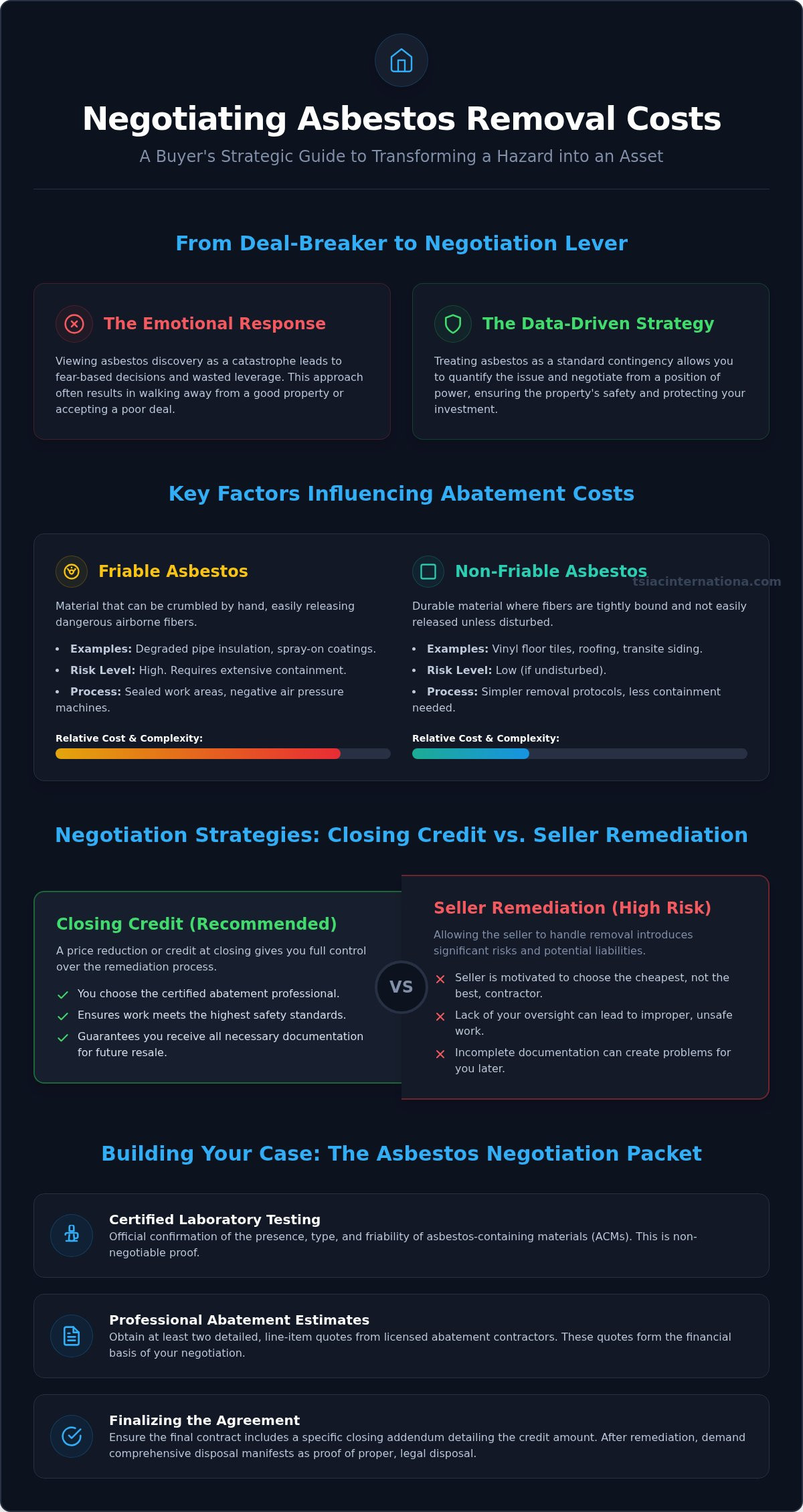
The physical condition of the material is the primary cost driver. Friable asbestos is material that can be crumbled by hand, releasing dangerous fibers into the air. Because of the heightened asbestos health risks associated with airborne particles, removing friable items like degraded pipe insulation requires extensive containment. This process involves sealing the work area in polyethylene sheeting and using negative air pressure machines to prevent cross-contamination. Conversely, non-friable materials, such as vinyl floor tiles or transite siding, are often less expensive to manage because they don’t release fibers as easily unless they’re mechanically disturbed. The level of specialized equipment and labor hours required for friable abatement significantly increases the baseline estimate.
The “Volume and Access” rule also plays a vital role in project budgeting. Remediation in a cramped, uninsulated attic requires more labor hours and stricter safety protocols than a wide-open basement. Similarly, the project timeline affects the quote. Emergency mobilizations or tight closing deadlines often carry a premium due to the resource scheduling required. You should also account for non-negotiable disposal fees at licensed toxic waste facilities, which are determined by weight and volume. For a precise breakdown of these technical variables, it’s advisable to consult with a specialized abatement partner early in the due diligence period.
Regulatory Documentation and Compliance Fees
Professional remediation isn’t complete until the regulatory paperwork is finalized. A critical component of the asbestos removal process is third-party air clearance testing. This involves an independent laboratory verifying that the air is safe for re-occupancy after the containment is removed. While some may attempt “cheap” removal through general contractors, doing so without proper manifests and clearance reports creates a massive financial liability. When negotiating asbestos removal costs with seller, you must insist on a budget that includes all 2026 environmental compliance documentation. This ensures that when you eventually sell the property, you have a clean paper trail to present to the next buyer.
Negotiation Strategies: Closing Credit vs. Seller Remediation
Determining who will oversee the technical execution of an abatement project is as critical as the final price. When negotiating asbestos removal costs with seller, you’re choosing between immediate financial compensation and the completion of a hazardous material project before you take possession. This decision involves a trade-off between project control and administrative burden. While a seller may prefer to handle the work to keep the deal moving, the buyer must consider the long-term implications of who selects the contractor and verifies the results.
Pros and Cons of the Closing Credit Approach
The closing credit is often the preferred strategy for sophisticated buyers. By receiving a credit toward closing costs or a direct reduction in the purchase price, you maintain total authority over the contractor selection process. This eliminates the risk of the “lowest-bidder trap,” where a seller might hire an uncertified crew to minimize their out-of-pocket expenses. When you control the contract, you ensure that the specialized containment and negative air pressure protocols meet the highest industrial standards.
The primary risk of this approach is that you assume responsibility for any cost overruns. If the abatement team discovers additional hazardous materials behind a wall that weren’t in the initial estimate, the financial burden falls on you. Despite this, credits remain the cleanest way to maintain a closing timeline. They remove the need for the seller to manage a complex construction project while they’re trying to vacate the property.
When to Let the Seller Handle Remediation
There are specific scenarios where the seller must perform the work. Certain lenders and government-backed loan programs refuse to fund a mortgage if a property has documented friable asbestos. In these cases, the material must be professionally removed and the air cleared before the final walkthrough. If the seller manages the project, they bear the risk of delays and unexpected costs, which protects your cash flow during the transition.
To prevent the seller from cutting corners, you must insert specific “Scope of Work” language into the contract addendum. This should mandate that the seller provides a post-abatement “Clearance Letter” from an independent laboratory before the deed transfer. Without this documentation, the remediation is technically incomplete. Successfully negotiating asbestos removal costs with seller requires this level of detail to ensure the property is safe for occupancy.
If the work must happen after closing, a “Holdback Escrow” is a powerful tool. In this arrangement, the title company holds a portion of the seller’s proceeds, typically 1.5 times the professional estimate. These funds are only released once you receive the final disposal manifests and air clearance reports. This ensures the seller remains financially committed to a high-quality outcome even after the keys have changed hands.
The Asbestos Negotiation Packet: Building Your Case
Successful negotiation isn’t about asking for a favor; it’s about presenting an evidence-based case that a seller cannot easily dismiss. When negotiating asbestos removal costs with seller, you must shift the conversation from subjective opinions to objective data. A “Negotiation Packet” functions as a comprehensive evidence file. It includes certified testing results from an accredited laboratory, a Regulatory Impact Statement, and professional estimates. By framing this packet as a “Solution Document” rather than a list of demands, you position yourself as a partner trying to finalize a complicated transaction.
Obtaining the ‘Expert Estimate’
Skeptical sellers often view a single quote as an outlier or an exaggeration. To counter this, gather three detailed estimates from a professional asbestos removal service. These quotes should provide a line-item breakdown of containment costs, labor hours, and hazardous waste disposal fees. If the project requires removing structural elements to access the asbestos, ensure the estimate accounts for those repairs as well. A professional abatement quote should always include the contractor’s license and insurance credentials. This technical transparency proves that the projected costs are based on industry standards rather than arbitrary figures. It leaves the seller with little room to argue that the remediation is overpriced or unnecessary.
Presenting the Data to the Seller
The most effective argument is the “Fair Market Value” approach. You’re demonstrating that the property is currently impaired by a hazardous material liability. While many sellers rely on “As-Is” clauses, safety hazards that impact mortgage approval or legal occupancy often override standard contract language. You must explain that once the hazard is documented, it’s a permanent part of the property’s history that they’re now legally required to disclose.
Urgency is your secondary leverage point. Use the demolition process timeline to show how remediation must happen before any other renovations can begin. If the seller delays, they risk the deal falling through while the property remains unmarketable. If you require a defensible, line-item estimate to move your transaction forward, contact TSIAC International for an expert assessment. Presenting this data clearly shows the seller that addressing the cost now is the only viable path to a successful closing.
Closing the Deal: Finalizing the Abatement Agreement
Finalizing a real estate transaction involving hazardous materials requires a shift from verbal agreements to rigorous legal documentation. Once you’ve finished negotiating asbestos removal costs with seller, the focus turns to the closing addendum. This document must clearly define the scope of work and the financial responsibility for disposal. It’s not enough to agree on a number; you must ensure the technical execution is verifiable and meets all 2026 environmental standards.
The verification phase is perhaps the most critical part of the closing process. You must demand all disposal manifests before the final deed transfer. These documents provide a legal chain of custody, proving that the toxic waste was transported to a licensed facility and didn’t end up in a standard landfill. During the final walkthrough, pay close attention to the containment areas. Look for any residual dust or debris in corners or HVAC vents. A professional abatement project should leave the site in a “white glove” condition, ready for re-occupancy or subsequent renovation.
Addendum Language for Asbestos Credits
Precision in the addendum prevents future disputes. You should specify that the credit is dedicated specifically for “Asbestos Abatement and Hazardous Waste Disposal.” This categorization is important for tax purposes and lender transparency. Including a “Right to Inspect” clause is also essential. This allows you to bring in a third-party consultant to verify the seller’s remediation efforts before the funds are released from escrow. It’s always a sound investment to have a real estate attorney review this language. They’ll ensure that the liability for any future environmental claims is clearly transferred or mitigated.
Choosing the Right Abatement Partner
The success of your investment depends on the technical proficiency of your contractor. Transitioning from negotiating asbestos removal costs with seller to the actual execution of the project requires a partner who understands the high stakes of real estate closings. TSIAC International is the preferred choice for complex remediations. We bring over 15 years of industry experience to every project, specializing in the containment and safe disposal of hazardous materials.
Our methodological approach ensures that all regulatory compliance documentation is provided for every project. This transparency protects your investment’s future resale value. Don’t leave the safety of your property to chance or uncertified general contractors who might cut corners. Contact TSIAC International today for a professional abatement estimate to secure your negotiation. Our team provides the expert data and technical precision needed to close your deal with absolute confidence.
Securing Your Real Estate Investment Through Technical Precision
Navigating a property purchase with environmental liabilities doesn’t have to be a source of anxiety. By shifting your focus from emotional bargaining to a data-backed strategy, you turn a potential risk into a managed variable. We’ve explored how material classification and regulatory compliance documentation serve as the foundation for your argument. Successfully negotiating asbestos removal costs with seller depends on your ability to present professional estimates that reflect the true scope of work.
A high-quality abatement project protects both your health and your property’s future resale value. Don’t settle for shortcuts or unverified remediation. With over 15 years of industry experience and deep expertise in structural and selective demolition, our team ensures your property meets all safety and regulatory standards. Get a Professional Abatement Estimate from TSIAC International to finalize your transaction with confidence. You’ve done the due diligence; now it’s time to secure a safe, compliant property for the long term.
Frequently Asked Questions
Can a seller refuse to pay for asbestos removal?
A seller has the legal right to refuse payment, but doing so often complicates their ability to sell the property to future buyers. Once a professional inspection documents the presence of asbestos, most state laws require the seller to disclose this hazard on future property disclosure forms. This documentation makes the property less attractive to other prospects and can impact mortgage approvals, often forcing the seller back to the negotiation table to avoid a failed transaction.
Is it better to get a price reduction or have the seller fix the asbestos?
Obtaining a closing credit or price reduction is generally superior because it grants you full control over the quality of the remediation. If the seller manages the project, they may prioritize the lowest bid over technical precision. By negotiating asbestos removal costs with seller as a credit, you can hire a certified abatement partner who provides the necessary air clearance testing and disposal manifests required to protect your future resale value.
How much does asbestos removal typically cost in 2026?
Market data from 2026 indicates that professional asbestos abatement typically ranges from $1,215 to $3,281 for standard residential projects, though whole-home remediation can exceed $30,000. These figures vary based on material type, volume, and accessibility. Labor accounts for approximately 65% to 80% of these totals. It’s essential to get a project-specific estimate rather than relying on national averages, as regional disposal fees and regulatory requirements significantly influence the final invoice.
Does an ‘As-Is’ clause protect the seller from asbestos remediation costs?
An ‘As-Is’ clause doesn’t automatically exempt a seller from the financial implications of discovering hazardous materials. While the clause limits the seller’s obligation to perform repairs, it doesn’t override state-level disclosure mandates or lender safety requirements. If a buyer’s lender identifies asbestos as a safety hazard that prevents funding, the ‘As-Is’ status becomes irrelevant to the loan’s approval, often necessitating a price adjustment to save the deal.
What happens if asbestos is found after the house is sold?
Discovering asbestos after closing makes negotiating asbestos removal costs with seller significantly more difficult. Unless you can prove the seller had prior knowledge and intentionally failed to disclose the hazard in violation of state law, the financial burden typically falls on the new owner. This reality underscores the critical importance of performing specialized environmental testing during the initial due diligence period before the deed transfer is finalized.
Can I negotiate asbestos costs if I’m buying a commercial property?
Negotiation is often more aggressive in commercial real estate due to strict NESHAP regulations and OSHA exposure limits. Commercial lenders have rigorous environmental assessment protocols, such as Phase I and Phase II ESA reports, which frequently flag asbestos as a liability. Because commercial remediation involves higher volumes of material and stricter disposal manifests, these costs are almost always leveraged to adjust the final purchase price or capitalized into the redevelopment budget.
How long does the average asbestos abatement project take to complete?
A standard residential abatement project typically requires two to five business days to complete. This timeline includes the initial setup of specialized containment, the actual removal of the material, and the mandatory waiting period for third-party air clearance testing. Complex projects involving structural demolition or difficult-to-access areas like crawlspaces can extend this duration. Efficient scheduling is vital to prevent the remediation from delaying your scheduled closing date.
Will my homeowners insurance cover the cost of asbestos removal?
Standard homeowners insurance policies generally don’t cover asbestos removal when it’s discovered during a real estate transaction or as part of a renovation. Coverage is typically limited to cases where the asbestos-containing material is damaged by a “covered peril,” such as a fire or a sudden pipe burst. Because discovery during a sale is considered a maintenance or disclosure issue rather than an accidental loss, the buyer or seller must fund the remediation out of pocket.
