
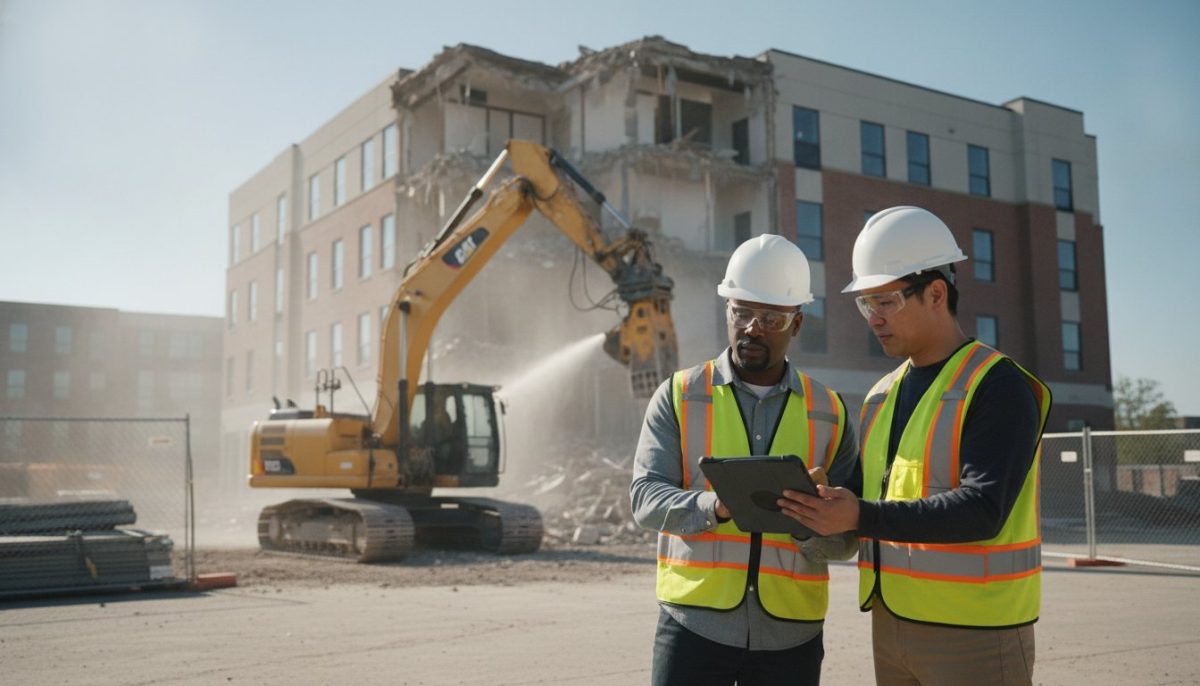
As of May 2026, a single oversight in your project could trigger civil penalties reaching $25,000 for underground facility violations alone. You’re likely feeling the pressure of shifting oversight as the South Carolina Department of Environmental Services (SCDES) takes over the reins from DHEC, making it harder than ever to stay current with demolition site safety regulations south carolina. It’s a high-stakes environment where a missing document or an overlooked 10-day notice period isn’t just a clerical error; it’s a massive financial and legal liability.
We understand that the complexity of these mandates can feel overwhelming, but maintaining professional compliance is the only way to protect your assets from litigation. This guide provides a definitive roadmap for 2026, ensuring your job site remains both hazard-free and fully aligned with the latest state and federal mandates. We’ll break down mandatory asbestos inspection protocols, clarify the new Hazard Communication Standard requirements, and explain how to manage the critical SCDES notification process to keep your project on track and under control.
Key Takeaways
- Identify the critical procedural shifts as SCDES assumes oversight from DHEC, including the non-negotiable 10-day notification rule for all regulated structures.
- Learn how to manage hazardous material risks by ensuring asbestos inspection reports are current and valid under the state’s 3-year validity standard.
- Master the specific demolition site safety regulations south carolina regarding perimeter security and mandatory utility disconnects to prevent catastrophic site failures.
- Align your operational protocols with OSHA 1926 Subpart T to ensure personnel safety and avoid the increased federal penalty rates of 2026.
- Understand the strategic advantage of professional abatement and structural demolition in mitigating the legal and financial liabilities of complex projects.
The South Carolina Demolition Regulatory Framework for 2026
The South Carolina Department of Environmental Services (SCDES) now manages the state’s environmental oversight, succeeding the Department of Health and Environmental Control (DHEC). This transition hasn’t loosened the strict demolition site safety regulations south carolina requires; instead, enforcement has intensified. For any project involving a regulated facility, the 10-working-day notification rule remains the most critical legal threshold. You can’t begin structural impact until this period has elapsed, regardless of whether your initial asbestos inspection returned negative results.
SCDES defines a “facility” broadly, including commercial buildings, industrial plants, and even certain large-scale residential complexes. While minor residential removals for single-family homes may occasionally fall under different criteria, most commercial-grade Demolition processes and safety protocols require full state-level documentation. Ignoring these boundaries invites severe repercussions. For 2026, civil penalties for violating the Underground Facility Damage Prevention Act can reach $25,000 for severe infractions, while willful OSHA violations now carry a maximum penalty of $165,514.
Mandatory Notification Procedures
Compliance begins with the submission of a formal “Notification of Demolition and Renovation” form to the SCDES. This document must include your certified asbestos inspection report and a detailed project timeline. For 2026, the state prefers digital submissions to ensure immediate access to safety plans during inspections. If your project qualifies as a “large project” under the new H. 3571 law, you’re now required to provide at least 30 days of notice to the notification center rather than the standard 10. If your start date shifts or the scope of work changes, you must submit a revised notification immediately. Failure to update the state before work commences is often treated with the same severity as failing to notify entirely.
Local vs. State Jurisdiction
State-level environmental mandates don’t replace local building codes; they operate in tandem. A state license for asbestos abatement or structural demolition doesn’t waive your need for a municipal building permit. Local building inspectors often serve as the first line of defense, verifying that all SCDES notifications are in place before issuing a permit to hit the ground. You’ll need to coordinate utility disconnects with local providers while ensuring your site plan adheres to both state environmental standards and local zoning safety requirements. In many South Carolina jurisdictions, a project isn’t legally safe until both the state environmental officers and the local building department have signed off on your containment and safety strategies.
Managing Hazardous Materials: Asbestos and Lead Regulations
Compliance with demolition site safety regulations south carolina requires more than just a passing glance at old building records. One of the most frequent points of failure for project managers is the “3-Year Rule.” In South Carolina, a building inspection report for asbestos is only valid for 36 months. If your documentation predates this window, the SCDES considers it expired. You must commission a new survey from a state-certified inspector before any structural impact occurs. It’s a hard deadline. Even if a previous report was negative, environmental conditions or structural degradation can change the status of friable materials over time.
SCDES mandates that any demolition of a regulated facility must be performed by a licensed contractor, regardless of the inspection results. This procedural safeguard ensures that if hidden pockets of hazardous materials are uncovered during impact, they’re handled with professional containment immediately. For 2026, the updated Hazard Communication Standard, which went into effect on May 19, 2026, adds new layers to how these materials are labeled and documented on-site. Precision in your waste shipment records and disposal manifests isn’t just good practice; it’s the only way to avoid the daily failure-to-abate penalties that OSHA strictly enforces.
The Asbestos Abatement Process
Effective asbestos removal South Carolina protocols demand a controlled environment. This involves high-efficiency particulate air (HEPA) filtration and negative pressure enclosures to prevent fiber release into the surrounding atmosphere. Throughout the removal phase, air monitoring must be conducted by a third-party laboratory to provide an unbiased record of site safety. This documentation is vital for your final project closeout. Integrating these steps early into your timeline prevents the costly work stoppages that occur when SCDES inspectors find inadequate containment during a surprise visit.
Lead Paint and Mold Remediation
Lead-based paint remains a significant hurdle, especially in historic districts. Statistics show that approximately 42% of pre-1978 structures on the Charleston peninsula contain lead or asbestos. When these materials are disturbed, they must be managed under OSHA demolition standards to protect workers from systemic toxicity. This often overlaps with mold remediation during interior gutting, where moisture-damaged substrates require specialized handling to prevent spore dispersal. Implementing a comprehensive hazardous material abatement South Carolina strategy protects your site crew and shields you from long-term litigation. Partnering with a team experienced in selective demolition ensures these toxins are stripped away without compromising the building’s structural integrity or the safety of the public.
Physical Site Safety: Structural Stability and Debris Management
Physical execution of a demolition project requires more than heavy machinery; it’s a calculated engineering exercise that must be managed with absolute technical precision. To align with demolition site safety regulations south carolina mandates, you must establish a secure perimeter before any equipment arrives on site. This includes installing debris netting and high-visibility fencing that meets local municipal standards. Proper signage isn’t optional. It must clearly warn the public of structural hazards and indicate the required PPE for authorized personnel entering the exclusion zone.
Utility management is the most dangerous phase of pre-impact preparation. Under the Underground Facility Damage Prevention Act (H. 3571), which becomes effective May 22, 2026, you’re required to verify all gas, water, and electrical disconnects through the state’s notification association. Failure to secure these lines leads to catastrophic site failures and civil penalties of up to $25,000. Once the site is cleared, dust suppression becomes the priority. SCDES monitors air quality strictly, requiring misting systems or water trucks to keep particulate matter from migrating into neighboring properties during the loading of debris.
Selective vs. Structural Demolition Safety
Maintaining the structural integrity of a building during commercial interior gutting services requires surgical precision. Unlike total structural demolition, selective work often involves removing non-structural partitions or heavy mechanical systems while the building’s shell remains preserved for future use. We use shoring and bracing to prevent unintended collapses during these phases. It’s a high-stakes balance that demands constant vibration monitoring, especially when working in South Carolina’s historic districts where adjacent structures are vulnerable to seismic shifts from heavy tools.
Environmental Responsibility and Recycling
Debris management is no longer just about hauling waste to a landfill. The modern demolition process South Carolina contractors follow emphasizes the systematic sorting of wood, metal, and plastic. We focus on material recovery to reduce the environmental footprint of every project. By separating structural steel and concrete on-site, we minimize landfill impact and ensure that your project adheres to the state’s broader sustainability goals. Professional debris management isn’t just about cleanliness; it’s a methodical approach to resource recovery that fulfills your legal and ethical obligations as a property owner.
Personnel and Operational Safety Standards (OSHA Compliance)
Adherence to OSHA 1926 Subpart T serves as the operational foundation for every project we undertake. This federal standard isn’t a suggestion; it’s a rigorous framework that requires a written engineering survey before any structural impact begins. In 2026, OSHA has increased programmed construction inspections in the Carolinas by approximately 8%, focusing specifically on high-energy hazards and documentation accuracy. For site owners, the financial stakes are higher than ever. A single serious violation now carries a maximum penalty of $16,550, while willful non-compliance can result in fines reaching $165,514 per instance.
Maintaining demolition site safety regulations south carolina standards requires a methodical approach to Personal Protective Equipment (PPE) and heavy machinery management. Workers in high-risk zones must utilize specialized respirators when dealing with the toxic particulates discussed in previous sections, alongside standard-issue hard hats, high-visibility vests, and reinforced footwear. We ensure every machine operator holds current certifications for their specific equipment, recognizing that foundational safety education—similar to the professional programs at Seattle Driving Academy—is the prerequisite for handling complex machinery. Beyond technical skill, our emergency response protocols include established fire safety perimeters and immediate medical contact points, ensuring that the site remains under control even during unforeseen events.
Fall Protection and Falling Object Hazards
Multi-story demolitions introduce complex vertical risks that demand specialized scaffolding and ladder safety protocols. We establish clearly defined debris drop zones, utilizing enclosed chutes to prevent material from migrating outside the exclusion area. Overhead protection is a non-negotiable requirement for any personnel working near the structure’s footprint. During South Carolina’s frequent high-wind events, all loose materials and tools must be secured or lowered to ground level to prevent them from becoming dangerous projectiles. This level of discipline is what separates a professional site from a liability-prone disaster.
Training and Daily Safety Briefings
The human element is the most critical variable in site safety. Every workday begins with a Job Hazard Analysis (JHA), where the specific risks of the day’s tasks are identified and mitigated before a single engine starts. On South Carolina job sites, monitoring for heat stress and physical fatigue is a core safety requirement, as high humidity can rapidly compromise a worker’s focus and reaction time. We verify the safety certifications of every individual on-site, ensuring that the entire crew operates with a unified understanding of the project’s technical demands. To ensure your project is handled with this level of methodological precision, consider our professional structural demolition services for your next site clearing.
Ensuring Total Compliance Through Professional Demolition Services
Attempting to manage a large-scale project without professional oversight is a high-risk gamble that rarely pays off. In 2026, the sheer complexity of demolition site safety regulations south carolina makes DIY structural work legally and financially untenable for commercial property owners. A single documentation error or an improper waste manifest can trigger the maximum OSHA penalties we discussed previously. By utilizing a fixed-price model for structural demolition, owners shift the burden of regulatory risk to the contractor. This approach ensures that unforeseen compliance costs don’t derail the project budget while guaranteeing that every SCDES mandate is met with technical precision.
Professional contractors do more than operate heavy machinery; they act as your primary compliance officers. They handle the exhaustive documentation burden, from the initial SCDES notification to the final disposal manifests. Choosing a partner with a proven South Carolina safety record means your project is backed by 15+ years of industry experience and a deep understanding of local soil and structural conditions. This expertise is vital in a state where high-energy hazards and environmental sensitivities require a disciplined, expert-led approach to every impact phase.
The Role of the Abatement Contractor
Experienced demolition contractors Charleston SC must maintain specific hazardous-certified status to manage the critical “containment to disposal” chain of custody. This process involves more than just hauling debris. It requires a verifiable paper trail that proves every gram of regulated material was handled, transported, and buried according to strict environmental laws. We provide detailed recycling and environmental compliance reporting, proving that wood, metal, and plastic were diverted from landfills whenever possible. This documentation serves as your ultimate defense against future environmental litigation.
Final Site Clearance and Certification
The project lifecycle doesn’t end when the structure is leveled. For sites impacted by asbestos or lead, obtaining a formal final air clearance is a mandatory step before the area can be turned over for redevelopment. This certification, provided by an independent laboratory, confirms that the site is safe for future occupants. Following the removal of debris, we implement site stabilization and erosion control measures to prevent sediment runoff into South Carolina’s protected waterways. Closing out permits with both state and local agencies requires a final reconciliation of all safety logs and disposal records. This methodical closeout ensures that your legal liability is fully resolved before the next phase of construction begins.
Securing Your Project’s Legal and Structural Future
Success in the 2026 landscape depends on your ability to integrate SCDES mandates and OSHA standards into a single, cohesive workflow. By strictly observing the 10-day notification threshold and maintaining valid asbestos inspection reports, you shield your project from the severe civil penalties currently enforced across the state. Compliance with demolition site safety regulations south carolina provides a clear roadmap for mitigating risk, ensuring that every structural impact is calculated and every hazardous material is professionally contained. It’s the difference between a project plagued by stop-work orders and one that moves forward with technical certainty.
Our team provides the deep expertise required to manage these challenges, offering fully licensed asbestos and lead abatement alongside comprehensive debris recycling. We bring over 15 years of industry experience to your site, ensuring that every safety protocol is executed with methodological precision. Request a Safety-First Demolition Quote from TSIAC International to secure a partner who values reliability and regulatory accuracy as much as you do. Let’s ensure your site is safe, compliant, and ready for its next chapter.
Frequently Asked Questions
Do I need a permit to demolish a shed or small outbuilding in South Carolina?
Yes, most municipalities require a local demolition permit even for small residential structures like sheds or detached garages. If the outbuilding is part of a commercial property or a larger “facility” as defined by state law, you must also submit a notification to the SCDES. You should always check with your local building department to verify specific zoning requirements before any structural impact occurs.
How long does the DHEC demolition application process take?
The standard notification period for the SCDES is 10 working days for most regulated structures. However, for projects designated as “large projects” under the 2026 H. 3571 legislation, the notice period increases to 30 days. You must account for these timelines in your project schedule, as work cannot legally commence until the state has processed the notification and the mandatory wait period has fully elapsed.
Is an asbestos inspection mandatory even if I know the building is new?
Yes, an inspection is mandatory for any regulated facility regardless of its age. South Carolina law doesn’t provide an exemption based on the year of construction. A state-certified inspector must perform a thorough survey to confirm the absence of asbestos-containing materials. This documentation is a prerequisite for filing your SCDES notification. Skipping this step violates demolition site safety regulations south carolina and can lead to immediate stop-work orders.
What are the penalties for starting a demolition without a 10-day notice?
Starting without notice triggers heavy financial penalties. For 2026, civil penalties for excavation or demolition violations reach $5,000 for general infractions and $25,000 for severe violations. If OSHA determines the lack of notice led to willful safety hazards for workers, you could face federal fines up to $165,514. These costs don’t include the legal fees associated with potential litigation from neighboring property owners or environmental groups.
Can I perform my own asbestos removal if I own the property?
No, you cannot perform your own abatement for regulated facilities. South Carolina law requires that asbestos removal be conducted by a state-licensed and certified abatement contractor. This mandate ensures that hazardous fibers are contained using negative pressure systems and HEPA filtration. Handling these materials without professional certification creates significant health risks and leaves the property owner liable for improper toxic waste disposal and environmental contamination.
What is the difference between selective and total structural demolition?
Selective demolition involves the surgical removal of specific interior or exterior components while preserving the main building shell for renovation. Total structural demolition involves the complete leveling of the entire structure down to the slab or foundation. Both methods must adhere to demolition site safety regulations south carolina, though selective work often requires more complex shoring, bracing, and vibration monitoring to maintain structural integrity.
How does South Carolina regulate the disposal of demolition debris?
Debris must be transported to a permitted landfill, and hazardous materials like asbestos require specific disposal manifests and specialized waste shipment records. Current 2026 standards emphasize material recovery, requiring contractors to document the recycling of wood, metal, and concrete to minimize landfill impact. Professional contractors manage this entire chain of custody, providing you with the necessary documentation to prove environmental compliance during a state audit.
Are there specific safety rules for demolition in historic districts?
Yes, historic districts often have stringent rules regarding vibration limits and structural preservation. In addition to standard SCDES and OSHA protocols, you must often secure approval from local architectural review boards. These projects typically require advanced vibration monitoring equipment to ensure that the demolition process doesn’t cause seismic damage to adjacent historic structures, which are often more vulnerable to structural shifts from heavy machinery.
