
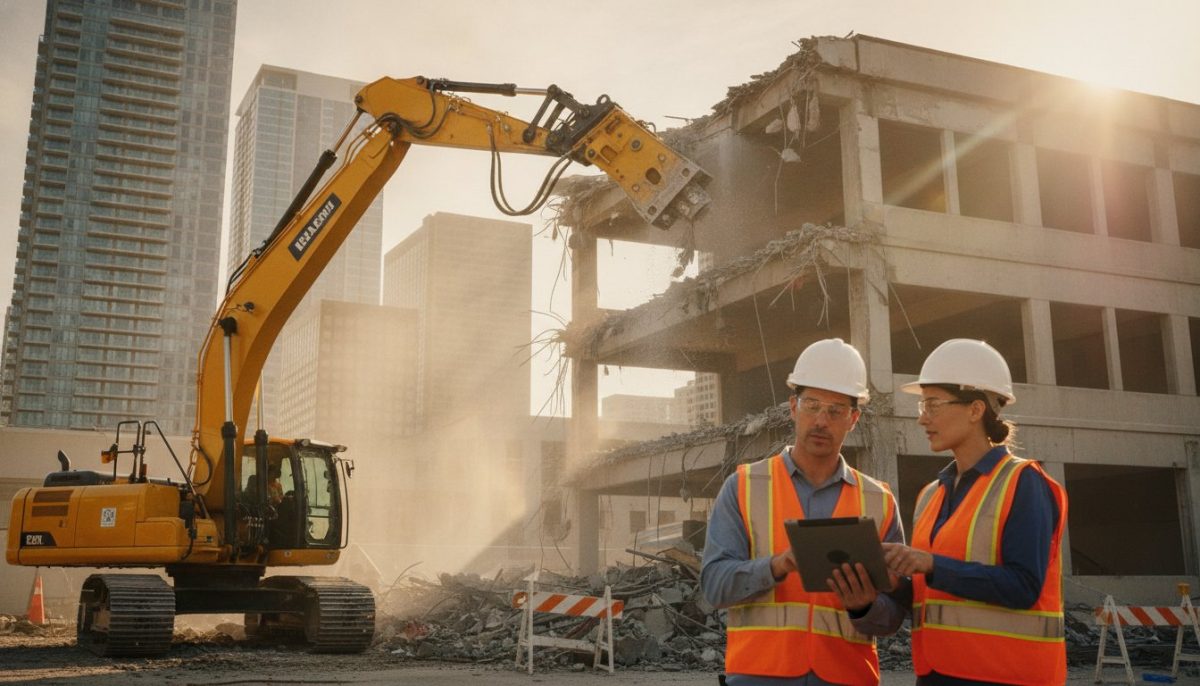
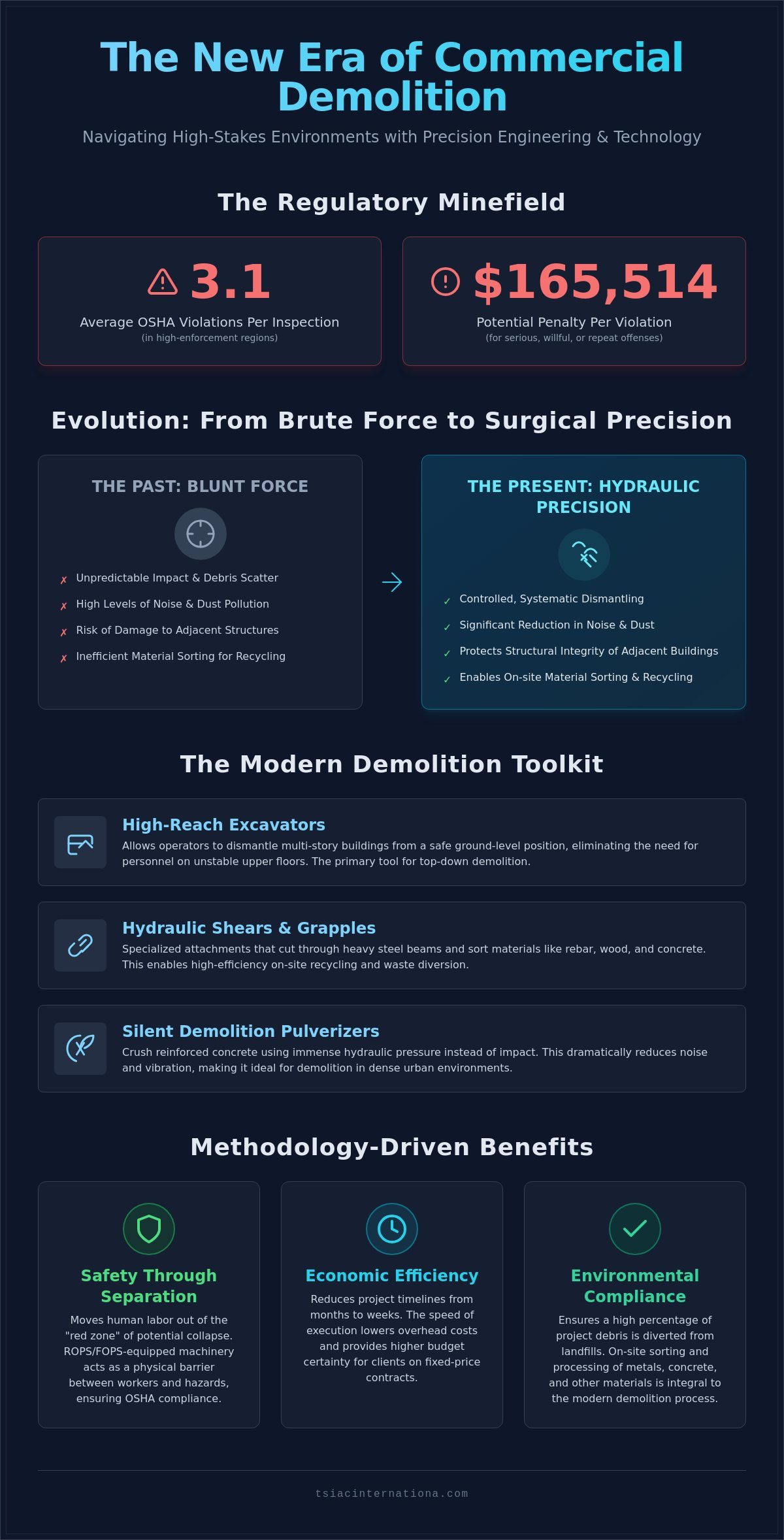
Did you know that certain areas across the nation currently face elevated rates of OSHA violations? With an average of 3.1 violations per inspection in some regions, the margin for error on a job site has effectively disappeared. For commercial demolition contractors south carolina, this means the challenge isn’t just about knocking down walls. It’s about navigating a strict regulatory environment where a single oversight in asbestos abatement or heat illness prevention can lead to penalties as high as $165,514 per violation. TSIAC International provides the expertise to navigate such high-stakes environments.
You’re likely concerned about project delays from equipment failure or the complexities of mandatory regulatory notification rules. It’s a valid worry because technical precision and safety are the only things standing between a successful site clearance and a costly legal nightmare. This guide, brought to you by TSIAC International, promises to show you how specialized heavy machinery and engineering expertise transform these high-risk variables into a controlled, efficient process. We’ll examine the specific equipment required for 2026 standards, from silent demolition pulverizers to high-reach excavators, and how they ensure your project finishes safely, on time, and in full environmental compliance.
Key Takeaways
- Learn how the transition from blunt force to hydraulic precision reduces project timelines and operational costs in modern commercial environments.
- Understand why leading commercial demolition contractors south carolina utilize specialized excavators and high-reach machinery to manage complex structural removals.
- Identify the specific technical factors, including site access and material composition, that determine the choice between total demolition and surgical interior gutting.
- Discover the critical role of specialized machinery in maintaining safety during asbestos and lead abatement through integrated containment and filtration.
- Gain insight into how a methodology-driven approach ensures that a high percentage of project debris is diverted from landfills through onsite recycling.
The Evolution of Demolition Heavy Machinery in Modern Construction
The image of a swinging wrecking ball is largely a relic of the past. Modern demolition is a controlled engineering discipline that prioritizes surgical precision over blunt force. This evolution has fundamentally changed how commercial demolition contractors south carolina approach site clearance. Instead of unpredictable impact, we now rely on hydraulic pressure and mechanical leverage to dismantle structures systematically. This shift doesn’t just look different; it actively protects the structural integrity of adjacent buildings and significantly reduces the noise and dust pollution common in urban centers. It’s a transition from chaos to calculated mechanical force.
The transition to heavy machinery has also optimized the economic side of the industry. While the initial mobilization of a high-reach excavator is a significant logistical step, the speed of execution far outpaces manual dismantling. Projects that once took months now conclude in weeks. This efficiency reduces the overhead costs for clients and minimizes the window of liability on the job site. By integrating these technical advancements, commercial demolition contractors south carolina can offer fixed-price contracts with much higher budget certainty. The machinery isn’t just a tool; it’s the primary driver of project viability, and for those who manage fleet maintenance and component sourcing, you can discover ELart, UAB for professional automotive spare parts and accessories.
From Wrecking Balls to Hydraulic Precision
Traditional impact methods are often obsolete in modern South Carolina urban environments because they lack the control required for tight property lines. Modern Demolition methods and engineering focus on high-reach excavators equipped with specialized attachments that can dismantle a building from the top down. Hydraulic power allows for the steady, silent crushing of reinforced concrete rather than the violent shattering caused by older techniques. Hydraulic shears are specialized attachments designed to cut through heavy steel beams with the same ease as scissors through paper, allowing for immediate material sorting and onsite recycling of metal components.
Why Specialized Equipment is Non-Negotiable for Safety
Safety is the primary driver behind machinery innovation in 2026. By utilizing advanced equipment, we’ve successfully moved human labor out of “the red zone,” which is the immediate area where structural collapse or falling debris is possible. Modern fleets feature ROPS (Roll-Over Protective Structures) and FOPS (Falling Object Protective Structures) to ensure operator safety even in the event of an unexpected structural shift. Adherence to OSHA standards is no longer just about wearing a hard hat; it’s about deploying machinery that acts as a physical barrier between the worker and the hazard.
This technical approach ensures that high-risk tasks are handled by reinforced steel and hydraulics rather than manual crews. At TSIAC International, we position our team as the “brain” behind the heavy machinery, ensuring that every mechanical movement is guided by 15 years of technical expertise. This methodology is essential in Region 4, where OSHA enforcement is at its peak, and any safety lapse can result in catastrophic project delays and financial penalties.
Essential Heavy Equipment for Structural and Selective Demolition
The excavator serves as the primary engine for any large-scale project managed by commercial demolition contractors south carolina. It’s not just a digging machine. In a demolition context, it’s a mobile power plant for high-torque hydraulic tools. We select specific models based on their lifting capacity and hydraulic flow rates. These parameters determine how effectively an attachment can process material. Without the right balance of weight and power, the machine becomes a bottleneck rather than an asset. Our methodology relies on matching the machine’s technical specifications to the structural load of the building.
High-Reach Excavators and Hydraulic Attachments
High-reach excavators are the standard for multi-story structural demolition. They allow operators to dismantle upper floors from a safe distance, adhering strictly to OSHA demolition safety standards. This equipment eliminates the need for workers to be on top of a destabilized structure. We pair these machines with hydraulic grapples for precise material sorting on-site. This sorting is critical for our commitment to recycling wood, metal, and plastic. For projects in noise-sensitive areas, commercial demolition contractors south carolina often utilize “munchers” or concrete processors. These tools use high-pressure hydraulic force to crush concrete silently, avoiding the percussive noise of traditional breakers.
Specialized Loaders and Material Handlers
Selective demolition and interior gutting require a different scale of power. Compact track loaders and skid steers are indispensable for navigating the tight corridors of commercial buildings. These units are small enough to fit through standard double doors but powerful enough to move heavy debris. In extremely hazardous areas, such as those requiring mold remediation or lead abatement, we may deploy robotic demolition units. These remote-controlled machines allow our team to perform structural tasks without entering high-risk zones. Material handlers then expedite the hauling process, using high-capacity grapples to move sorted debris into containers efficiently. For projects that require the secure storage of salvaged equipment or high-value materials, visit ICAT Detroit for specialized warehousing solutions.
Mechanical failure is the leading cause of project delays. A single blown hydraulic hose can halt an entire job site. We maintain a rigorous fleet maintenance schedule to prevent such downtime. This isn’t just about operational efficiency; it’s a safety mandate. A well-maintained machine responds predictably to operator inputs, which is vital when working near load-bearing walls or hazardous materials. If you’re planning a complex project, reviewing a contractor’s equipment list and maintenance record is a logical step. You can consult with our technical team to see how our fleet is optimized for your specific site requirements.
Strategic Machinery Selection: Matching Equipment to Project Scope
Selecting the appropriate machinery is a matter of engineering logic rather than sheer force. Every site in South Carolina presents a unique set of constraints, including soil stability, proximity to active utilities, and the structural composition of the building itself. For National Demolition Association members, the planning phase involves a meticulous assessment of these variables to determine the most efficient mechanical path. We don’t simply deploy the largest machine available. We match the equipment’s reach and breakout force to the specific material density and height of the structure. This technical alignment is what prevents project delays and ensures structural stability throughout the process.
Site access is often the primary bottleneck in urban environments. A high-reach excavator is useless if the staging area cannot support its ground pressure or if overhead power lines obstruct its movement. Experienced commercial demolition contractors south carolina evaluate these logistical barriers weeks before the first machine arrives on-site. This foresight ensures that the chosen fleet can operate at peak capacity without endangering adjacent structures or causing unnecessary vibration. Precision is the priority. We use seismic monitoring equipment to ensure that mechanical operations remain within safe vibration thresholds, protecting the foundations of neighboring properties. It’s a disciplined approach that prioritizes the safety of the surrounding community.
Structural Removal vs. Selective Interior Stripping
Total structural removal requires heavy-duty excavators capable of processing reinforced concrete and structural steel simultaneously. In contrast, selective demolition demands a more nimble approach. We utilize mini-excavators and specialized skid steers for commercial interior gutting services where preserving the building’s envelope is mandatory. These smaller units allow for the removal of non-load-bearing walls and mechanical systems with surgical accuracy. It’s a controlled process that prevents collateral damage to the elements of the building intended for reuse. Using the right scale of equipment is the only way to maintain this level of technical control.
The Impact of Machinery on Recycling and Waste Management
Modern machinery is the cornerstone of our sustainability commitment. By using hydraulic grapples and magnet attachments, we can sort materials directly at the point of demolition. This immediate separation of wood, metal, and plastic is far more efficient than bulk hauling to a landfill. Understanding the demolition process in South Carolina reveals that on-site processing significantly reduces transportation costs and environmental impact. We process steel and copper for secondary markets, while concrete is often crushed for use as on-site aggregate. This methodical approach ensures that over 85% of non-hazardous debris is diverted from landfills, aligning project goals with long-term environmental responsibility.
Safety Protocols and Hazardous Material Management with Heavy Machinery
The intersection of heavy mechanical force and hazardous material management is where technical precision becomes a legal necessity. In South Carolina, approximately 42% of buildings constructed before 1978 harbor lead paint or asbestos. For commercial demolition contractors south carolina, managing these sites requires more than just standard protective gear. It demands the integration of heavy machinery into a strictly controlled containment environment. We don’t just knock down walls; we dismantle them within a framework of negative air pressure and specialized misting systems that prevent toxic particulates from becoming airborne. This methodological approach ensures that every mechanical movement adheres to the strict 2026 environmental standards.
Regulatory compliance in 2026 is non-negotiable. With serious OSHA violations carrying penalties of up to $16,550 per occurrence, the cost of a safety lapse is unsustainable. We prioritize the documentation of every hazardous component from the initial survey through to final disposal. This process begins with the SCDES 10-day notification rule, which applies to all regulated facilities regardless of the building’s age. By combining heavy equipment capability with abatement expertise, we provide a single point of accountability that reduces the risk of project delays and regulatory fines.
Asbestos and Lead Abatement Logistics
Machinery plays a critical role in the safe removal of structural components that contain lead or asbestos. Instead of manual scraping, which increases worker exposure, we utilize hydraulic attachments to remove entire sections of contaminated material. This process is always supported by wet-method demolition, which uses high-volume misting to suppress dust at the point of impact. Following the guidelines for asbestos removal in South Carolina is mandatory. This includes the formal notification to the state before any regulated facility is touched, ensuring that the site remains in full legal compliance throughout the demolition phase.
Operator Training and Site Containment Standards
Operating a 40-ton machine in a hazardous zone requires specialized certification beyond standard equipment handling. Our operators are trained in the 2026 OSHA Hazard Communication Standard updates, ensuring they understand the latest chemical labeling and Safety Data Sheet requirements. We establish clear exclusion zones and decontamination stations to prevent the cross-contamination of machinery between hazardous and clean areas of the site. Daily equipment inspections in these abatement zones are essential to ensure that seals on pressurized cabs and air filtration units are functioning perfectly. This level of technical oversight is what separates professional contractors from general excavators.
Safe disposal of toxic debris is the final, critical step in the chain. Every ton of hazardous material must be documented with a clear manifest from the point of origin to a certified disposal facility. This level of transparency protects the property owner from future environmental liabilities. If your project involves a structure built before 1978, you need a partner who understands the engineering of abatement. Contact TSIAC International today to review our hazardous material management protocols and ensure your site remains compliant.
Partnering with TSIAC International for High-Stakes Demolition
Choosing a partner for a high-stakes project requires more than a review of available machinery. It demands a methodology-driven approach developed over 15 years of technical execution in the field. In a state where the rate of OSHA violations exceeds the federal average, we provide the professional oversight necessary to keep your project on schedule and within legal bounds. We don’t just supply equipment; we provide the strategic planning that transforms a high-risk site into a cleared, ready-to-build property. This level of technical control is why we’re positioned as the “brain” behind the heavy machinery we deploy.
One of the most significant advantages we offer is budget certainty through predictive engineering. By utilizing specialized heavy machinery and 15 years of data from previous sites, we can provide fixed-price structural demolition contracts. This eliminates the financial volatility often associated with site clearance and hazardous material management. Our clients understand the final cost before the first machine is mobilized, providing a level of transparency that general excavators rarely match. You can learn more about our technical evolution and brand history by exploring TSIAC International.
Our Commitment to Advanced Technology and Safety
Professionalism meets specialized heavy machinery in every project we undertake. We don’t rely on outdated impact methods that endanger adjacent structures or create unnecessary vibration. Instead, we use a fleet of high-reach excavators and hydraulic shears to dismantle buildings systematically. This focus on technology allows us to maintain a safe “red zone” while accelerating project timelines. Every operator in our fleet is trained to handle the specific complexities of the South Carolina regulatory landscape, ensuring that technical precision and worker safety are never compromised for the sake of speed.
Integrated Services from Abatement to Structural Removal
The benefit of a single-source contractor is most evident during the transition between hazardous material abatement and structural removal. Many commercial demolition contractors south carolina require third-party abatement teams, which creates a fragmented chain of command and a high potential for communication failures. TSIAC manages the entire lifecycle of the project, from the initial asbestos survey to the final site clearing. We handle the SCDES 10-day notification, the interior gutting, and the final structural dismantle under a single point of accountability. This integrated model ensures that safety protocols remain consistent throughout the project.
Environmental stewardship is a core component of our operational model. We actively divert over 85% of non-hazardous material through on-site recycling of wood, metal, and plastic. This approach reduces landfill impact and can often lower project logistical costs. Initiating a project requires a professional site assessment to identify structural challenges and potential hazards. Contact TSIAC International for a professional demolition consultation to begin your next project with a partner who prioritizes precision, reliability, and safety.
Advancing Your Next Demolition Project with Precision
The transition from blunt force to hydraulic precision isn’t just an industry trend; it’s a technical necessity for safe urban development in 2026. By matching specialized heavy machinery to the specific engineering requirements of a structure, we eliminate the unpredictability that often leads to safety violations and project delays. As leading commercial demolition contractors south carolina, TSIAC International ensures that every mechanical movement is guided by rigorous safety protocols and a commitment to environmental stewardship.
Success on a high-stakes site depends on the seamless integration of hazardous material management and structural removal. With 15+ years of industry experience and a team of certified asbestos and lead abatement experts, we provide a single point of accountability for your most complex challenges. We also prioritize sustainability by implementing comprehensive material recycling on every site we manage. This disciplined approach guarantees that your project remains compliant, on time, and within budget.
If you’re ready to transform your site clearance into a controlled engineering process, we’re here to help. Request a Professional Demolition Quote from TSIAC International to see how our expertise can secure your project’s success. We look forward to partnering with you on your next site transformation.
Frequently Asked Questions
What is the most common heavy machinery used by commercial demolition contractors in South Carolina?
Excavators are the primary tools used by commercial demolition contractors south carolina due to their hydraulic versatility and high breakout force. These machines serve as a mobile power plant for attachments like hydraulic shears for steel cutting and processors for concrete crushing. Their ability to rotate 360 degrees while maintaining stability makes them essential for both structural removal and heavy debris management on a regulated site.
Can heavy machinery be used for selective interior demolition without damaging the shell?
Precision machinery like mini-excavators and compact track loaders allows for selective interior demolition without compromising the building’s structural shell. These units are small enough to navigate internal corridors and light enough to operate on standard floor loads. By utilizing specialized attachments, operators can remove non-load-bearing walls and mechanical systems with minimal vibration, protecting the preserved elements of the property during a renovation.
How do demolition contractors handle hazardous materials like asbestos with machinery?
Contractors integrate heavy machinery with hazardous material management through wet-method techniques and pressurized operator cabins equipped with HEPA filtration. Hydraulic grapples allow for the removal of structural components containing asbestos or lead without direct manual contact, which reduces worker exposure. This mechanical approach is always secondary to a comprehensive state-certified inspection, which is legally required in South Carolina before any demolition begins.
Why is hydraulic machinery preferred over older demolition methods like wrecking balls?
Hydraulic machinery is preferred because it offers a level of control and safety that older impact methods like wrecking balls cannot match. Modern equipment allows for the systematic dismantling of a structure, which significantly reduces noise and dust pollution in urban environments. This surgical approach also facilitates immediate on-site material sorting, ensuring that recyclable components are separated from waste at the point of origin.
What safety regulations govern the use of heavy equipment on a South Carolina demolition site?
Heavy equipment operation on South Carolina sites is governed by federal OSHA standards and state-specific SCDES regulations. This includes compliance with the 2026 Heat Illness Prevention Standard and the mandatory 10-day Notification of Demolition. Operators must also adhere to strict Hazard Communication standards regarding the handling of toxic debris and chemical labeling, ensuring the site remains in full regulatory compliance.
How does the use of specialized machinery affect the overall cost of a demolition project?
While specialized machinery increases initial mobilization expenses, it typically reduces the overall project cost by accelerating the timeline and lowering manual labor requirements. Efficient mechanical sorting with grapples also decreases landfill tipping fees by diverting wood, metal, and plastic toward recycling markets. The speed and precision of modern fleets provide a higher degree of budget certainty for the client through fixed-price contracts.
What happens to the debris generated by heavy machinery during the demolition process?
Debris generated during the process is sorted on-site using hydraulic grapples and magnetic attachments to maximize material recovery rates. We process wood, metal, and plastic for secondary markets, while concrete is often crushed into aggregate for future construction use. This methodical waste management ensures that over 85% of non-hazardous debris is diverted from local landfills, aligning with modern sustainability standards.
Is a specific permit required for operating heavy demolition machinery on my commercial property?
Operating heavy machinery for demolition requires local building permits and a state-level “Notification of Demolition” from the SCDES. This notification must be submitted at least 10 working days before work starts, even if no asbestos was found during the initial inspection. Professional commercial demolition contractors south carolina handle these regulatory filings as part of the standard project mobilization phase to ensure legal compliance.
