
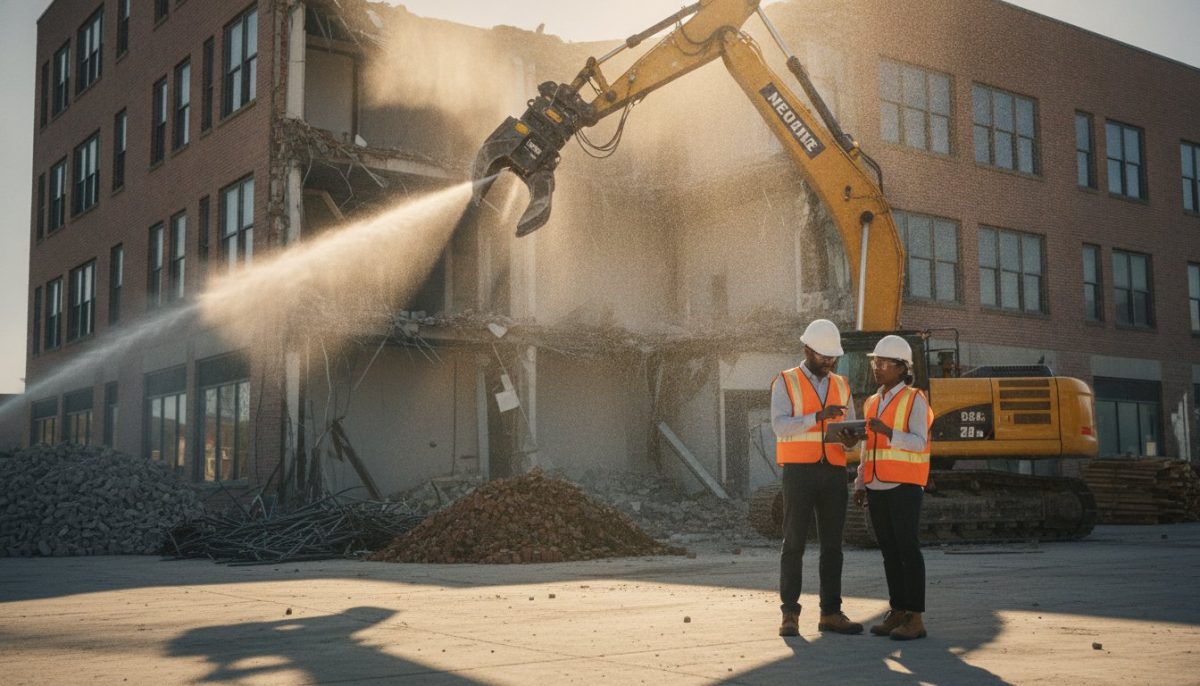
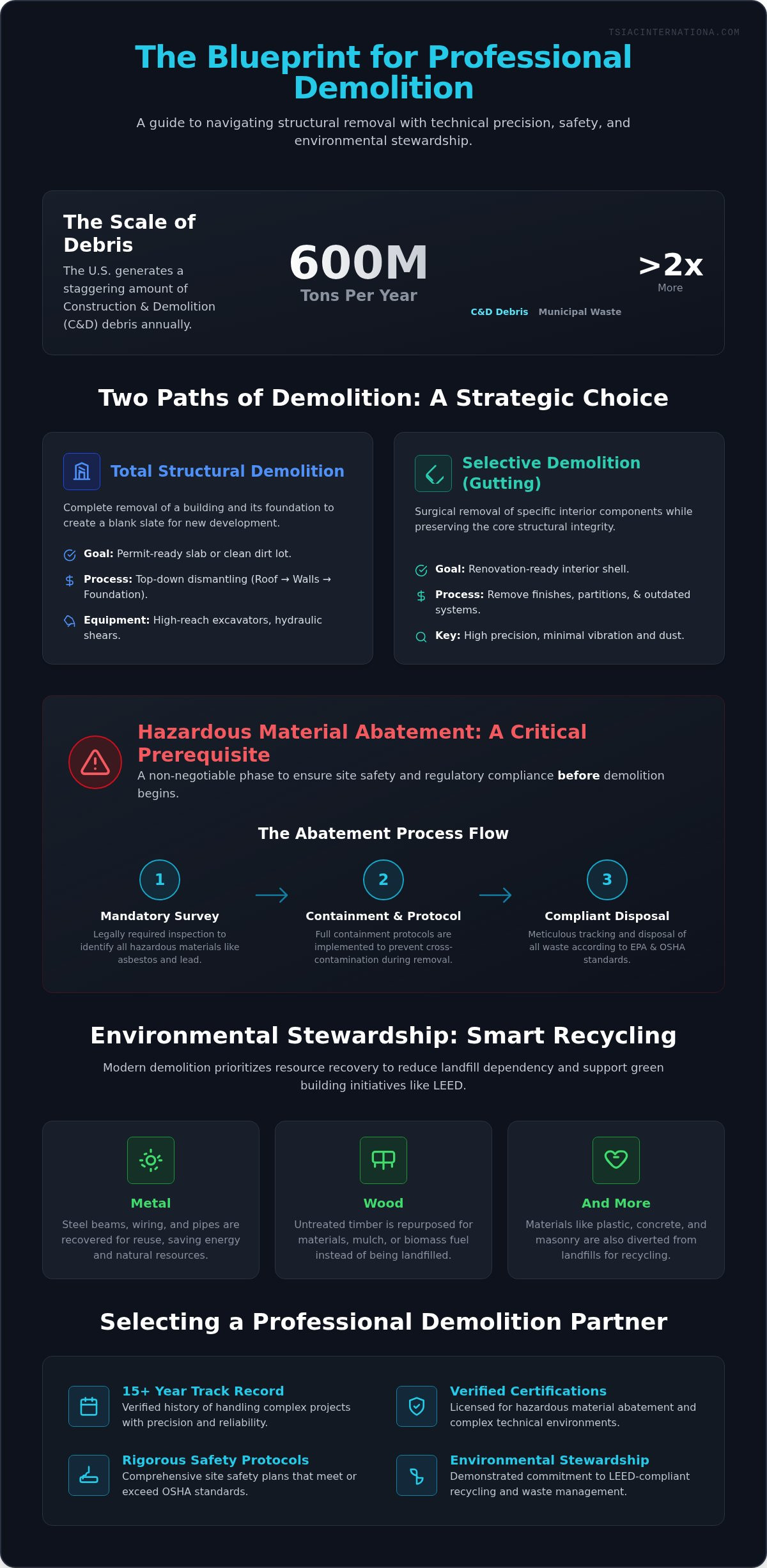
The U.S. Environmental Protection Agency estimates that 600 million tons of construction and demolition debris are generated nationwide each year, a figure that is more than double the amount of municipal solid waste. For property owners and developers, this statistic highlights the massive scale of responsibility involved in structural removal. Engaging with professional demolition contractors columbia sc requires more than just hiring a crew with heavy machinery; it demands a partnership with experts who prioritize technical precision and environmental stewardship over simple teardowns.
It’s a common concern that hidden hazardous materials or poor utility management will lead to cascading project delays and legal liabilities. You likely recognize that a single oversight in asbestos abatement or lead containment can compromise the safety of the entire site and the surrounding community. This guide provides the professional framework needed to navigate these structural and regulatory challenges with calm confidence. You’ll learn how to secure a clean, permit-ready site while maintaining rigorous documentation for every phase of the process.
We will examine the essential standards for hazardous material abatement, the logistics of selective interior gutting, and the sophisticated recycling practices that define modern industry leaders. From understanding the mandatory notification periods to implementing full containment protocols, this overview ensures your project meets the highest benchmarks of safety and efficiency.
Key Takeaways
- Differentiate between total structural teardowns and surgical selective demolition to determine the most efficient and cost-effective path for your site requirements.
- Understand why mandated asbestos and lead surveys must precede physical work to prevent cross-contamination and ensure full regulatory compliance.
- Learn the systematic hierarchy for utility disconnection and safety protocols that professional demolition contractors columbia sc use to eliminate project delays.
- Discover how LEED-compliant recycling practices for wood, metal, and plastic reduce landfill dependency and support rigorous environmental stewardship.
- Identify the critical criteria for selecting a demolition partner, including a 15-year track record and verified certifications for handling complex technical environments.
Defining the Scope: Structural vs. Selective Demolition
Demolition isn’t merely about destruction; it’s a disciplined engineering phase that requires methodological accuracy. Professional demolition contractors columbia sc categorize work based on the intended final outcome of the site and the preservation needs of the existing environment. A comprehensive Demolition overview highlights that while the terms are often used interchangeably, the technical requirements for a total teardown differ significantly from a surgical interior gut-out. Defining the scope early prevents budget overruns and ensures that the correct machinery and safety protocols are deployed from day one.
The distinction between structural and selective work lies in the preservation of assets. Total structural demolition involves the complete removal of a building and its foundation to create a blank slate. In contrast, selective demolition focuses on removing specific portions of a structure while maintaining the integrity of the remaining sections. This requires strategic planning, especially when dealing with shared utilities or load-bearing walls that must remain intact for future use or adjacent occupancy.
Total Structural Removal and Site Clearing
Complete teardowns follow a rigorous sequence to maintain site control. The process typically begins with roof-level dismantling, which may involve the removal of heavy HVAC units and specialized roofing materials, before progressing to the walls and eventually the foundation. Managing heavy machinery like high-reach excavators and hydraulic shears is essential for maintaining safety in tight environments. The ultimate goal is to deliver a permit-ready slab or a clean dirt lot, free of subsurface obstructions like old footings or utility lines. Professional demolition contractors columbia sc prioritize systematic debris hauling to ensure the transition from a standing structure to an empty site is seamless and compliant with regional waste regulations.
Selective Demolition for Renovations
Renovation projects demand a much higher level of precision than total teardowns. Stripping a building to its studs or removing an entire wing requires a deep understanding of structural load paths to protect shared utilities and essential elements. This is where commercial interior gutting services become a vital component of the project lifecycle. These services allow for the removal of finishes, partitions, and outdated mechanical systems without compromising the building’s core shell. Experts use specialized tools to minimize vibration and dust, ensuring that adjacent business operations or residential spaces aren’t compromised. This surgical approach is the cornerstone of successful commercial tenant improvements, where the structure’s exterior is preserved while the interior is completely reimagined.
Hazardous Material Abatement: Asbestos and Lead Management
Abatement represents the specialized containment and elimination of toxic substances like asbestos, lead paint, and mold. It’s a critical prerequisite to any physical structural work. Before any mechanical impact occurs, a comprehensive hazardous material survey is legally required to identify dormant risks. Failing to identify these materials can lead to the accidental disturbance of friable asbestos; these are fibers that easily crumble into lethal microscopic dust. Engaging experienced demolition contractors columbia sc ensures that these surveys are integrated into the initial engineering phase, preventing cross-contamination and massive regulatory fines. Compliance with OSHA demolition safety protocols demands that these surveys be documented and verified before a single wall is breached.
The presence of toxic materials doesn’t just threaten health; it creates a significant legal liability for property owners. Current 2026 federal EPA standards require meticulous tracking of every pound of hazardous waste from the site to the disposal facility. This chain-of-custody documentation is vital for demonstrating full regulatory compliance. When toxins are identified, the project must pivot to a containment-first strategy where safety overrides speed.
Asbestos Abatement Protocols
Containment is achieved through the establishment of negative pressure environments. These zones use HEPA-filtered air scrubbers to ensure that no fibers escape the designated work area. Technicians follow a strict process of wetting the materials to suppress dust, sealing them in leak-tight containers, and transporting them to approved disposal facilities. For a deeper technical breakdown, consult our complete 2026 safety guide for asbestos removal.
Lead Paint and Mold Remediation
Structures built before 1978 frequently contain lead-based paint within their structural frameworks. When these surfaces are cut or crushed, they release toxic dust that poses severe health risks to workers and neighbors. Safe removal involves specialized chemical stripping or HEPA-shrouded tools that capture debris at the point of origin. Integrating hazardous material abatement into your broader project timeline prevents the work stoppages that occur when toxins are discovered mid-project. If you’re managing a site with complex environmental needs, it’s vital to partner with abatement specialists who provide full regulatory documentation.
Safety Protocols and Regulatory Compliance for Site Preparation
Site preparation is a disciplined engineering phase that transforms a hazardous environment into a controlled workspace. A systematic approach to safety doesn’t just protect personnel; it minimizes the property owner’s legal liability and prevents the structural failures that lead to project delays. High-standard demolition contractors columbia sc operate under a strict hierarchy of safety controls, ensuring that every mechanical strike is preceded by a verified engineering survey. This phase bridges the gap between hazardous material abatement and active dismantling, requiring a seamless transition from containment to physical removal.
The complexity of modern site preparation demands a focused technical approach. On multi-story projects, the implementation of OSHA-compliant safety zones and enclosed debris chutes is non-negotiable. These systems prevent uncontrolled falling debris and keep the site perimeter secure for both workers and the public. Safety isn’t a secondary consideration; it’s the foundation of a permit-ready site.
Utility Management and Site Reinforcement
Verifying the termination of all utility connections is the most critical step before heavy machinery arrives. The industry follows a strict hierarchy of disconnection: gas lines are capped first to eliminate explosion risks, followed by water and sewer seals to prevent site flooding or environmental contamination. Electrical lines are typically the final utility to be managed, often requiring the installation of temporary, safety-rated power for site lighting and specialized tools. Once utilities are secured, technicians focus on site reinforcement. This includes bracing floors and shoring up walls to prevent unplanned collapses during the dismantling of adjacent sections. We maintain rigorous illumination standards for all passageways, stairs, and crawlspaces to ensure that every square foot of the project remains visible and accessible for inspection.
Regulatory Documentation and Permitting
Navigating the permit process requires a methodological understanding of both structural removal and hazardous waste hauling. Every project demands a specific set of authorizations that cover the physical teardown, the transport of heavy debris, and the disposal of toxic materials. We maintain a detailed log of every site inspection and air quality monitoring report to ensure total transparency. This documentation is essential for demonstrating compliance with EPA asbestos laws and other federal safety mandates. Our safety framework extends to every subcontractor on the site, ensuring a unified approach to risk management. By maintaining these high standards, demolition contractors columbia sc provide property owners with the peace of mind that their project is fully compliant with national safety regulations and environmental protections.
Environmental Stewardship: Recycling and Debris Management
Modern demolition practices have evolved beyond simple disposal. Leading demolition contractors columbia sc now view structural removal as a material recovery operation rather than a waste generation event. This shift aligns with LEED-compliant practices, where the primary goal is to divert the maximum percentage of debris away from landfills. By implementing rigorous on-site sorting protocols, we transform what was once considered debris into valuable resources for future construction projects. This methodological approach supports sustainable urban development and significantly reduces the carbon footprint associated with structural dismantling.
The logistical process of hauling and processing recovered site debris requires a disciplined workflow. It isn’t enough to simply clear a site; every ton of material must be accounted for and directed toward its most productive secondary use. This level of environmental stewardship ensures that property owners meet their sustainability goals while remaining in full compliance with regional and national waste management standards.
Recovering Recyclable Materials
Effective material recovery begins with precision on-site sorting. Technicians use specialized attachments and manual labor to separate structural steel, copper piping, and aluminum framing from other debris streams. These metals are highly recyclable and provide a secondary industrial use that preserves raw materials and reduces energy consumption in the manufacturing sector. Clean wood waste is similarly processed; it’s ground into mulch or utilized as fuel in specialized biomass facilities. By isolating these materials at the point of origin, we ensure they aren’t contaminated by non-recyclable waste, which maximizes the efficiency and value of the entire recycling stream.
Concrete and Asphalt Disposal
Concrete and asphalt often represent the largest volume of debris on a structural site. Rather than transporting these heavy materials to a landfill, high-standard demolition contractors columbia sc utilize mobile crushing units to process them into aggregate. This crushed material serves as an ideal road base or structural fill for new developments, effectively closing the loop on the building material lifecycle. Managing non-recyclable debris requires equal responsibility, ensuring that any residual waste is disposed of in approved facilities according to environmental regulations. For a detailed breakdown of these logistical stages and debris workflows, you should consult our comprehensive guide to the demolition process.
If your project requires a partner committed to environmental compliance and sustainable material recovery, contact us to discuss our specialized recycling services.
Criteria for Selecting a Professional Demolition Partner
Selecting from the available demolition contractors columbia sc requires a methodological evaluation of technical capabilities and safety records. In an industry where a single error can compromise structural integrity or lead to hazardous exposure, experience isn’t just a preference; it’s a requirement for risk mitigation. A 15-year industry track record serves as a mark of reliability, especially when managing complex environments where structural removal and toxic material removal intersect. Property owners should prioritize partners who demonstrate a disciplined approach to every phase of the project lifecycle.
Safety benchmarks provide the most objective view of a contractor’s operational discipline. You should assess a firm’s Experience Modification Rate (EMR), which reflects their historical safety performance. A low EMR indicates that the company maintains rigorous safety protocols, reducing the likelihood of site incidents that cause project delays and legal liabilities. Additionally, evaluate their equipment fleet to ensure they possess the specialized machinery required for your project’s specific scale, whether that involves high-reach excavators for total teardowns or precision tools for selective interior work.
Vetting for Technical Expertise
Technical vetting focuses on the contractor’s ability to handle integrated services. A partner who manages both structural demolition and hazardous material abatement eliminates the communication gaps and cross-contamination risks that occur when using multiple vendors. Verify that the company holds current certifications for both structural work and the handling of toxic substances. It’s also essential to ensure the firm carries specialized liability insurance and adequate bonding, which protects the property owner against unforeseen site conditions. Reviewing case studies from similar projects provides concrete evidence of their ability to maintain the integrity of adjacent building sections while meeting tight renovation schedules.
Assessing Project Management and Communication
Clear documentation is the backbone of regulatory compliance and environmental stewardship. Professional partners provide detailed debris management and recycling reports as a standard part of their project closeout. This transparency is vital for LEED certification and demonstrating full compliance with waste disposal laws. The contractor’s ability to coordinate seamlessly with government agencies and General Contractors ensures that the project remains on its critical path without administrative friction. Once you’ve verified these technical and safety standards, the next step is requesting a fixed-price contract that clearly defines the scope of work. This ensures that the technical precision you’ve vetted is backed by a stable and predictable financial framework.
Securing Your Site for the Next Phase of Development
Successful demolition is a disciplined engineering process that requires the seamless integration of structural removal and environmental safety. Navigating the complexities of hazardous material containment and utility management is essential for maintaining site control and protecting your investment. By prioritizing a methodological approach, you ensure that every phase of the project, from the initial asbestos survey to the final debris hauling, meets the highest industry benchmarks. Choosing among demolition contractors columbia sc demands a focus on technical precision and a verified track record of handling high-stakes environments.
Reliability is built on a foundation of experience and a commitment to safety. With over 15 years of industry experience, our team specializes in integrated asbestos and lead abatement alongside LEED-compliant recycling practices for wood, metal, and plastic. This comprehensive strategy guarantees a clean, permit-ready site that’s prepared for your next construction milestone. Partner with the experts at TSIAC International for your next project to ensure your site is managed with the professional accuracy it deserves. We look forward to supporting your vision with our unwavering commitment to excellence and safety.
Frequently Asked Questions
What is the difference between structural and selective demolition?
Structural demolition focuses on the total removal of a building, including its foundation, to create a clear site for new construction. Selective demolition is a surgical process used to remove specific interior or exterior components while maintaining the structural integrity of the remaining building. This method is common in renovations where only certain sections are outdated or damaged, requiring high precision to protect shared utilities and load-bearing elements.
How is asbestos handled during a demolition project?
Asbestos management begins with a mandatory state-certified survey before any physical impact occurs. If identified, technicians establish negative pressure containment zones using HEPA-filtered air scrubbers to prevent fiber release. The materials are wetted to suppress dust, sealed in leak-tight containers, and transported to approved hazardous waste facilities. This process ensures full compliance with current federal EPA standards while preventing cross-contamination of the surrounding environment during structural removal.
Do I need a separate contractor for hazardous material abatement?
While you can hire separate firms, partnering with integrated demolition contractors columbia sc who handle both structural work and abatement is highly recommended. An integrated approach eliminates communication gaps between teams and ensures that hazardous material containment is built directly into the dismantling schedule. This unified project management reduces the risk of accidental exposure and prevents the costly delays often caused by coordinating multiple independent subcontractors on a single site.
What materials can be recycled from a demolition site?
Modern recovery practices allow for the recycling of a vast majority of building debris. Structural steel, copper piping, and aluminum framing are highly sought after for secondary industrial use. Clean wood waste is often processed into mulch or biomass fuel. Additionally, concrete and asphalt can be crushed on-site and repurposed as structural fill or road base; this significantly reduces the volume of material sent to landfills and supports LEED-compliant sustainability goals.
How long does the typical commercial interior gutting process take?
Timeline duration varies based on the building’s square footage and the complexity of the mechanical systems involved. A standard commercial gut-out typically ranges from one to four weeks, depending on whether the scope includes stripping to the studs or just removing finishes. Factors such as the presence of hazardous materials or the need for vibration control in occupied buildings can extend this timeframe. Professional planning ensures that these schedules are optimized for minimal disruption.
Is lead paint abatement required for residential demolition?
Lead paint abatement is required whenever the removal process risks creating toxic dust that could affect the environment or public health. For residential structures built before 1978, testing is essential to identify lead-based hazards. If lead is present, specialized removal methods, such as chemical stripping or HEPA-shrouded tools, are used to capture debris at the source. This prevents soil and air contamination, ensuring the site remains safe for future occupants and workers.
What permits are necessary before demolition can begin?
Compliance requires a suite of authorizations, including a structural removal permit and specific permits for hazardous waste transport. Before work starts, you must provide verified documentation of utility disconnections for gas, water, and electricity. Many jurisdictions also require a 10-day notification period for environmental agencies to review asbestos survey results. Professional demolition contractors columbia sc manage this administrative burden to ensure every permit is secured and active before the first strike.
How is site safety maintained during a top-down demolition?
Top-down demolition maintains safety through a systematic dismantling sequence that starts at the roof and moves downward. This prevents uncontrolled collapses and keeps the building’s center of gravity stable. Technicians utilize enclosed debris chutes to direct materials safely to ground-level collection points, while OSHA-compliant safety zones keep the perimeter secure. Constant monitoring of structural load paths and the use of specialized shoring ensure that the dismantling remains predictable and controlled throughout the project.
