
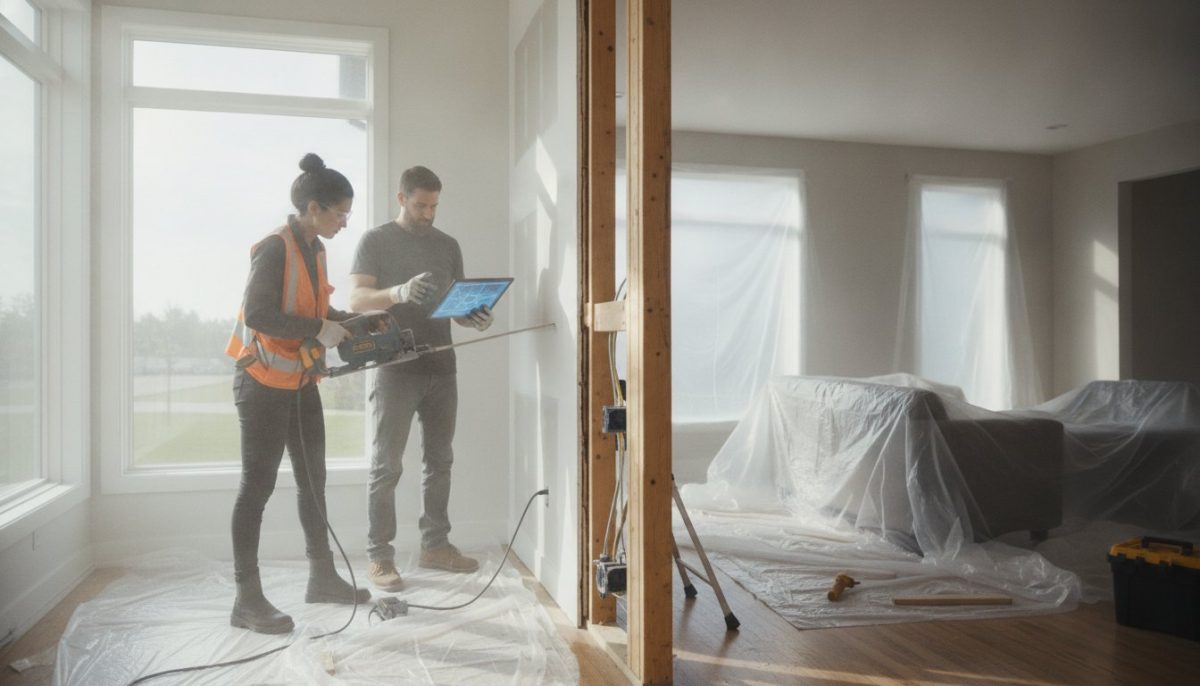
What if the simple act of opening up your floor plan is actually a complex engineering challenge disguised as a blunt-force task? Many property owners view interior wall removal demolition as a basic step in renovation, yet the reality involves navigating intricate load paths and stringent environmental regulations. You likely want a modern, open space, but the anxiety surrounding structural integrity and hidden hazardous materials like asbestos or lead paint is a significant barrier to starting your project.
We recognize that a successful renovation depends on technical accuracy and disciplined planning. This professional guide ensures you master the structural and safety requirements necessary for a flawless execution. You’ll gain a clear understanding of the differences between load-bearing and partition walls, learn about the updated 2026 EPA lead dust action levels, and establish a methodical roadmap for hazardous material abatement. By following these engineering protocols, you’ll ensure your site is clean, compliant, and ready for its next phase of construction.
Key Takeaways
- Learn to analyze load paths and engineering principles to accurately distinguish between critical load-bearing structures and simple partition walls.
- Identify hidden risks within wall cavities, including active utility rerouting requirements and the presence of hazardous materials like asbestos or lead.
- Master selective interior wall removal demolition techniques that utilize precision tools to protect adjacent finishes and structural integrity.
- Implement professional-grade environmental management protocols, including multi-stage dust containment and compliant waste recycling systems.
- Evaluate the specific credentials and abatement licenses necessary to differentiate a qualified demolition contractor from general labor services.
Structural Assessment: Distinguishing Load-Bearing vs. Partition Walls
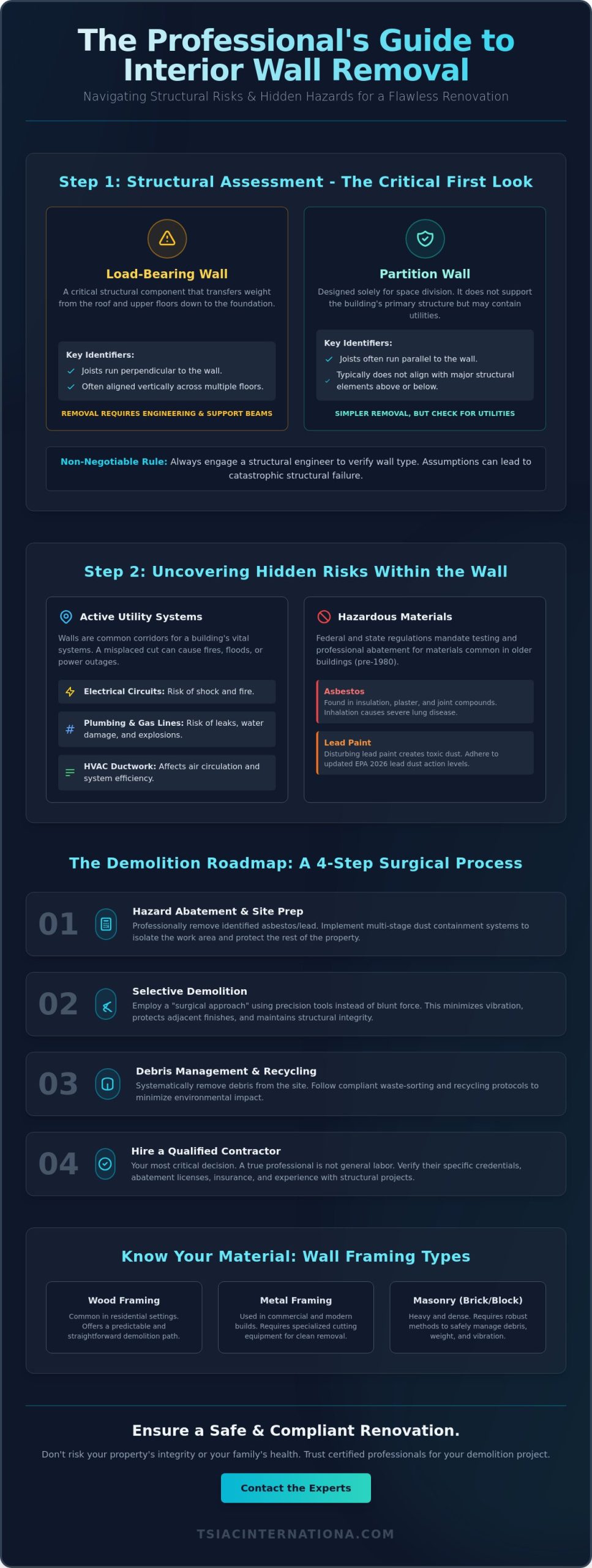
Structural integrity is the foundation of every safe renovation. Before initiating any interior wall removal demolition, you must understand the physics of the building’s skeletal system. A building is more than just a collection of rooms; it’s a dynamic assembly where every component plays a specific role in managing gravity loads. Load-bearing walls serve as the primary conduits for these forces, transferring the weight of the roof, upper floor joists, and even the wall’s own mass directly to the foundation. Removing these elements without a calculated support plan is not just a mistake; it’s a risk to the entire structure’s stability.
Partition walls, by contrast, are designed solely for space division. While they don’t support the building’s weight, they often house critical utility lines. Identifying the difference requires a disciplined eye. You can often spot a load-bearing wall by looking at the floor joists in the attic or crawlspace. If the joists run perpendicular to the wall, that wall is likely supporting them. Additionally, walls that are vertically aligned across multiple floors are almost always structural. This methodical approach to interior wall removal demolition prevents the sagging ceilings and cracked foundations that plague poorly planned projects.
Engineering Verification Protocols
Professional engineering oversight is a non-negotiable requirement for modern demolition. A structural engineer provides the calculations needed to determine the exact load a wall carries. This is especially vital in older properties where previous renovations might have shifted load paths in unexpected ways. Never assume a wall is non-structural just because it looks thin or was added later. During the transition phase, we utilize temporary shoring systems. These heavy-duty adjustable posts and beams mimic the wall’s support, holding the building’s weight securely until a permanent header or beam is installed.
Identifying Wall Framing Materials
The material composition of a wall dictates the tools and techniques required for its removal. Traditional wood framing is common in residential settings, offering a predictable demolition path. However, modern commercial and high-end residential projects often utilize metal framing, which requires specialized cutting equipment to prevent jagged edges and ensure a clean site. In industrial or older urban settings, you may encounter masonry partition walls made of brick or cinder block. These structures are significantly heavier and require more robust demolition methods to manage the debris and vibration safely. Choosing the right methodology based on material science ensures that the removal process is surgical rather than destructive.
Hidden Risks in the Wall: Utilities and Hazardous Materials
Once the structural load is secured, the project enters a surgical discovery phase. You can’t simply swing a sledgehammer into a wall without knowing what’s behind the surface. Interior walls often act as hidden corridors for the building’s vital systems. This stage of interior wall removal demolition requires precision to identify active electrical circuits, plumbing stacks, and HVAC ductwork embedded within the framing. A single misplaced cut can lead to localized flooding or electrical fires, which is why we treat every wall as a high-risk environment until proven otherwise.
The intersection of hazardous material abatement in South Carolina and interior demolition is where many projects face their steepest challenges. Federal and state regulations mandate specific testing for lead and asbestos in structures built before 1980. These materials are frequently found in old plaster, joint compounds, and thermal insulation. Identifying these Hazardous Materials in Demolition early is essential for maintaining a safe workspace and ensuring legal compliance. If you suspect your property contains legacy materials, professional asbestos removal in South Carolina is the only way to guarantee a safe renovation site.
Asbestos and Lead Paint Mitigation
Asbestos often hides in plain sight within wall insulation, older plaster, and joint compounds. When these materials are disturbed during interior wall removal demolition, they release microscopic fibers that pose severe health risks. We implement rigorous containment strategies, including the use of negative air pressure machines and high-efficiency particulate air (HEPA) filtration. These systems ensure that dust and contaminants remain within a regulated area. Because South Carolina requires specialized licensing and documentation for hazardous material handling, working with a certified team is the only way to avoid the heavy penalties associated with non-compliance.
Utility Rerouting and Safety
Safety protocols begin with strict lock-out/tag-out (LOTO) procedures. All electrical and gas lines must be de-energized and physically locked before any physical disturbance occurs. Managing “wet-wall” removals is particularly complex, as these walls house main plumbing stacks that serve other areas of the building. Coordination with plumbing specialists is required to ensure that rerouting doesn’t disrupt the entire property’s service. These utility adjustments are a primary driver of project timelines and budgets, often requiring several days of specialized labor to relocate lines before the framing can be safely removed.
Selective Demolition Techniques: The Surgical Approach
Selective demolition is defined by what remains, not just what’s removed. Unlike blunt-force methods that prioritize speed over precision, this surgical approach focuses on removing specific components while protecting adjacent finishes and structural elements. In a high-stakes interior wall removal demolition, we don’t rely on sledgehammers alone. Instead, we use precision sawing with diamond-tipped blades or reciprocating saws to create clean, controlled breaks at transition points. This prevents vibration damage from traveling through the framing and cracking plaster or drywall in rooms that aren’t part of the renovation.
Maintaining a clean site is a hallmark of professional execution. We prioritize stripping walls down to the studs, a process that ensures a “clean” gut-out. This level of detail allows subsequent trades to install new mechanical, electrical, and plumbing systems without fighting through debris or jagged remnants of old materials. Protecting the path of egress is equally vital. We use reinforced floor protection and pressurized dust barriers to ensure that the transport of debris doesn’t compromise the air quality or the condition of non-work areas within the property.
Interior Gutting for Commercial and Residential Spaces
The methodology shifts significantly when transitioning from residential remodels to commercial interior gutting services. In office or industrial environments, we often deal with large-scale metal framing and expansive acoustic ceiling systems. Commercial projects typically require stripping the interior down to the structural shell to accommodate new tenant improvements. Managing the disposal of metal studs and ceiling grids requires a disciplined recycling plan, ensuring that high-value materials are diverted from landfills and handled according to modern sustainability standards.
Protecting Structural Integrity During Removal
The sequence of operations is the most critical factor in preserving a building’s stability. You don’t simply pull out a wall; you follow a calculated order of material removal. When replacing a load-bearing wall with a new beam, such as a Laminated Veneer Lumber (LVL) or a steel I-beam, shoring techniques are employed first. These temporary supports must be verified for stability before the original framing is touched. Our goal is to ensure zero-impact on the building’s envelope and foundation. By carefully managing the transfer of weight, we prevent the structural sagging or door-frame misalignment that often results from undisciplined interior wall removal demolition practices.
Environmental Management: Dust, Debris, and Recycling
Professional demolition is defined by how the resulting waste stream is managed, not just by the speed of the removal. Every interior wall removal demolition project generates a significant volume of particulate matter and physical debris that requires a disciplined management strategy. We view the environmental footprint of a project as a technical challenge that must be controlled through rigorous on-site protocols. By sorting materials at the source, we ensure that the demolition phase supports the broader sustainability goals of your renovation rather than becoming a liability for the property.
Modern standards for the demolition process in South Carolina place a heavy emphasis on material recovery and indoor air quality. We separate debris into distinct categories, such as wood, metal, and masonry, which allows for higher recycling rates and reduced landfill fees. This methodical approach ensures that the site remains organized and safe for all trades involved in the subsequent construction phases. It’s a process built on engineering precision and environmental responsibility.
Advanced Dust Control Protocols
Drywall and plaster removal create fine particulates that can easily migrate through a building’s HVAC system. To prevent cross-contamination, we utilize floor-to-ceiling plastic barriers secured with heavy-duty tension poles to achieve total isolation of the work zone. Industrial air scrubbers equipped with HEPA filtration run continuously during the interior wall removal demolition, pulling contaminated air through a multi-stage cleaning process. Our final cleanup protocol involves HEPA vacuuming of all horizontal and vertical surfaces, which exceeds the standard “broom clean” expectations and ensures the air is safe for immediate occupancy or follow-on work.
Material Recycling and Debris Management
Diverting waste from landfills is a core component of our operational methodology. We prioritize the recovery of metal framing, copper wiring, and clean wood, often achieving significant diversion rates that can contribute to LEED certification for commercial projects. When hazardous materials are identified, we implement strict manifest tracking to document the safe transport and disposal of waste at authorized facilities. This transparency is vital for regulatory compliance and provides property owners with a clear record of environmental stewardship. If you are planning a project that requires high-standard material handling, our professional recycling services ensure your site meets all local and federal environmental mandates.
Hiring a Professional Demolition Contractor: What to Expect
Selecting a partner for structural modification requires a transition from technical understanding to rigorous due diligence. While the temptation to hire a general handyman for interior wall removal demolition is common, the risks involved in structural failure or hazardous material exposure are too high for uncertified labor. A qualified demolition contractor brings more than just tools to the site. They bring specialized insurance, bonding, and abatement licenses that protect your liability and the property’s long-term value. You aren’t just hiring labor; you’re hiring a risk management team.
Professional contracts should clearly define the scope of work. A fixed-price structural removal quote typically covers the engineering verification and shoring, while selective demolition fees account for the surgical precision required to preserve adjacent finishes. A reliable partner manages the entire lifecycle of the project, from initial permitting and utility coordination to the final disposal of materials. This comprehensive oversight ensures that your renovation remains on schedule and compliant with all local safety standards.
The Permitting and Compliance Phase
Navigating local building codes is a critical step that must occur before any walls are disturbed. Most municipalities require a specific demolition permit for structural changes, which often involves submitting an engineer’s report and a hazardous material survey. We coordinate closely with third-party inspectors to secure necessary clearances for asbestos or lead before work begins. This professional documentation isn’t just a legal requirement. It’s a vital asset during future property sales or appraisals, proving that all modifications were performed to code and that the environment is certified clean.
Why TSIAC International is the Standard in Selective Demolition
With a 15-year legacy of excellence, TSIAC International has established itself as the premier choice for complex interior modifications. Our team approaches every project with a commitment to surgical precision, ensuring that only the intended structures are removed while the building’s integrity remains untouched. We don’t believe in “smash and grab” tactics. Instead, we follow a disciplined, engineering-led methodology that prioritizes safety, environmental responsibility, and site cleanliness. Whether you’re gutting a commercial suite or opening a residential floor plan, our experience ensures a flawless transition to your next construction phase. Ready to start your renovation? Request a professional demolition quote from TSIAC International today and experience the difference that disciplined expertise makes.
Executing Your Vision with Engineering Precision
A successful renovation depends on more than just a creative floor plan; it requires the disciplined execution of the interior wall removal demolition process. By accurately identifying load-bearing structures and implementing surgical removal techniques, you protect the long-term stability and value of your property. We’ve established that managing hidden risks, from active utility rerouting to the mitigation of legacy hazardous materials, is a non-negotiable requirement for a safe and compliant site. These technical protocols ensure that your project moves forward without the threat of structural failure or environmental liability.
TSIAC International brings over 15 years of industry experience to every project, providing the specialized asbestos and lead abatement licensing necessary for full regulatory compliance. Our commitment to 100% material recycling ensures your demolition phase aligns with modern sustainability standards. When you prioritize technical accuracy and site safety, you create a clean foundation for the next stage of your construction. We’re ready to help you transform your space with the reliability and precision your project deserves. Request a Professional Demolition & Abatement Quote to secure your property’s future today.
Frequently Asked Questions
How do I know if an interior wall is load-bearing?
You can identify a load-bearing wall by inspecting the attic or crawlspace to see if floor joists run perpendicular to the wall’s top plate. Walls that align vertically across multiple floors or are positioned centrally in the structure are also likely structural. Because visual cues aren’t always definitive, you should consult a structural engineer to verify load paths before any physical disturbance occurs.
Do I need a permit for interior wall removal or demolition?
Most municipalities require a building permit for any project involving structural modifications or changes to a building’s egress. While non-load-bearing partition walls may not always require a permit, the presence of electrical or plumbing lines often triggers the need for trade-specific inspections. Professional documentation ensures your property remains compliant with local building codes and protects its value during future sales.
What are the health risks of DIY interior wall removal in older homes?
DIY removal in homes built before 1980 carries the risk of aerosolizing asbestos fibers found in joint compounds or lead dust from legacy paint layers. These microscopic particulates pose severe respiratory and neurological health risks if they aren’t contained. Professional teams use negative air pressure and HEPA filtration to prevent these contaminants from migrating into the rest of your living space.
How much does professional interior wall removal typically cost?
The total investment for interior wall removal demolition depends on several technical factors, including whether the wall is structural and the complexity of utility rerouting. Costs are also influenced by the need for temporary shoring systems and the volume of hazardous material abatement required. We recommend a detailed site assessment to provide an accurate scope based on your building’s specific engineering needs.
How long does the average interior wall demolition project take?
A standard interior wall removal demolition project typically requires one to three days for the physical removal and site cleanup. This timeline can extend if the project involves complex structural shoring or extensive rerouting of plumbing and electrical stacks. A disciplined schedule ensures that each phase, from utility lock-out to final HEPA vacuuming, is completed without compromising safety or quality.
Can I stay in my home during a professional interior demolition?
Occupants can usually remain in the home, provided that the work zone is fully isolated with floor-to-ceiling plastic barriers. You should expect significant noise during work hours and temporary interruptions to utility services like water or electricity. Our containment protocols are designed to protect indoor air quality, ensuring that dust and debris remain confined to the regulated demolition area.
What happens to the debris after a wall is removed?
Debris is sorted at the source to maximize material recovery and ensure environmental compliance. We separate recyclable materials like metal framing and clean wood from general construction waste to divert them from landfills. Any hazardous materials, such as asbestos-containing plaster, are handled through manifest-tracked disposal at authorized facilities to ensure a transparent and legal waste stream.
How do professionals handle dust control during demolition?
Professionals utilize a multi-stage containment system that includes pressurized plastic barriers and industrial air scrubbers. These machines create negative air pressure, pulling air through HEPA filters to capture 99.97% of fine particulates before the air is exhausted. This methodical approach prevents drywall dust and old insulation fibers from settling on your furniture or entering your building’s HVAC system.
