
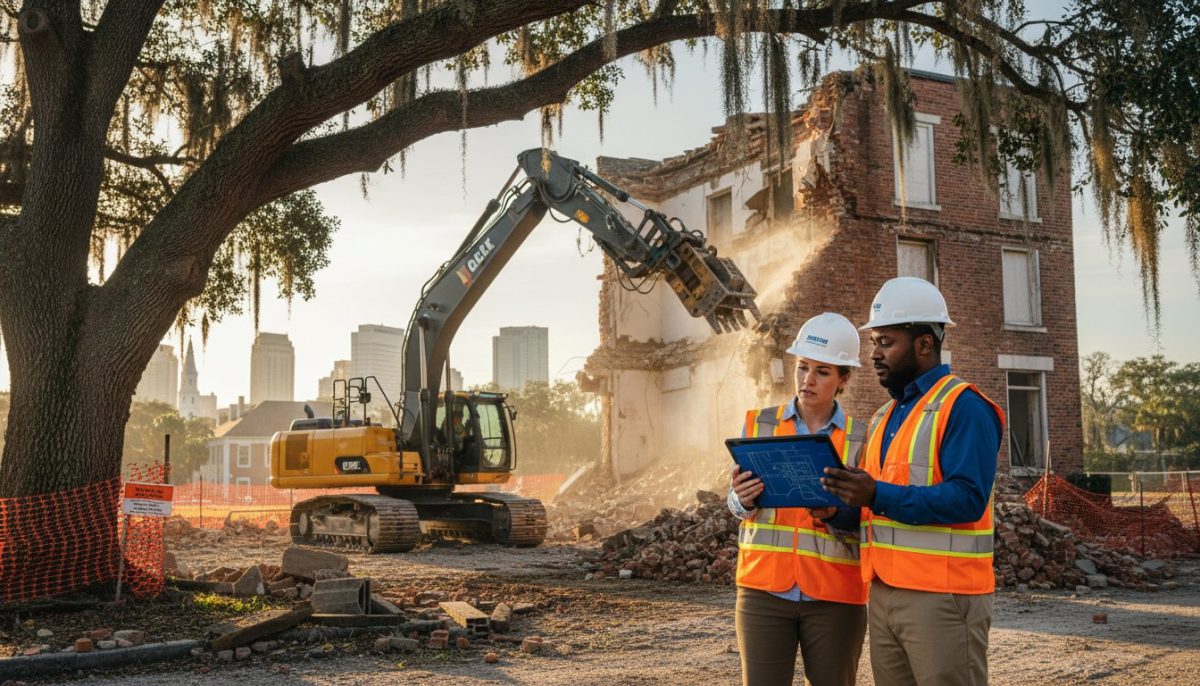
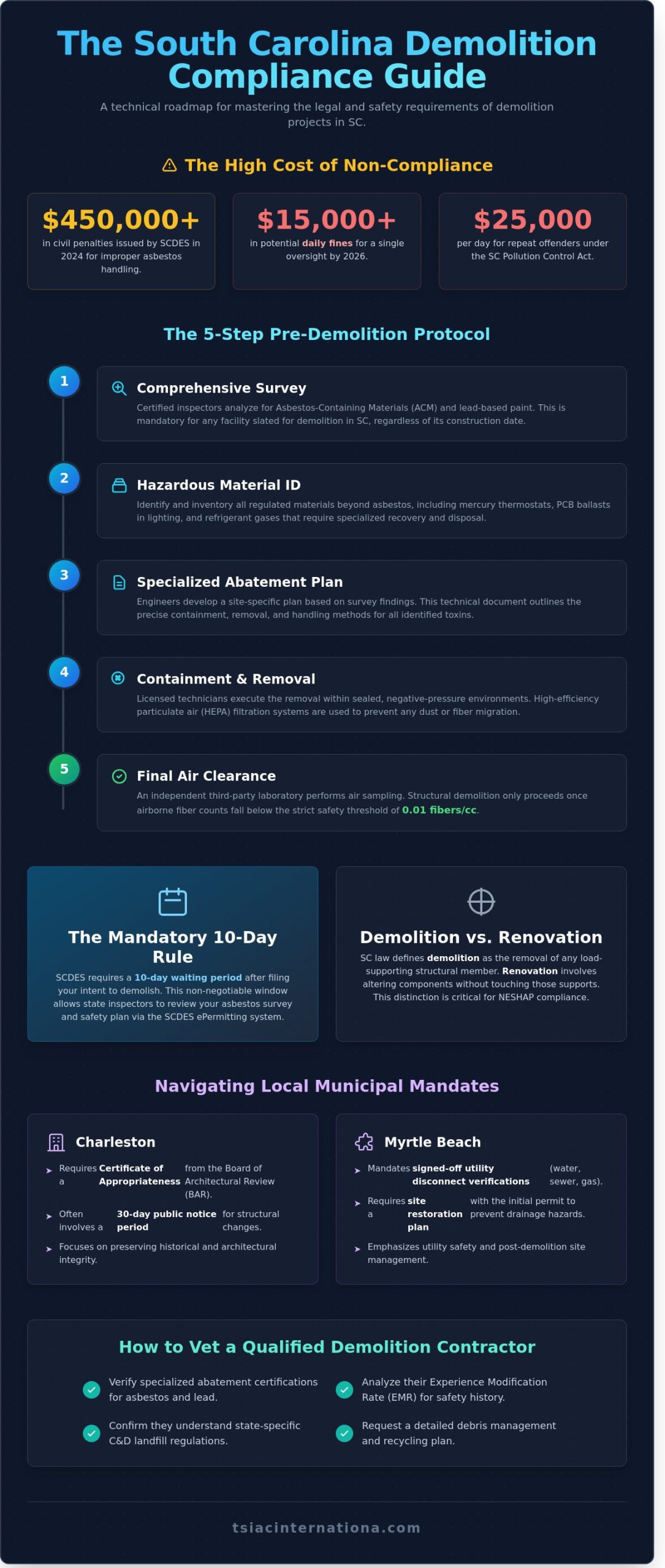
In 2024, the South Carolina Department of Environmental Services (SCDES) issued enforcement actions resulting in over $450,000 in civil penalties for improper asbestos handling and site mismanagement. By 2026, the financial stakes for a single oversight in the demolition process south carolina can easily exceed $15,000 in daily fines. You likely understand that a successful project depends on more than just heavy machinery. It requires a disciplined approach to environmental regulations and structural safety protocols that leave no room for error.
We’ve engineered this guide to provide the technical roadmap you need to master every legal and safety requirement for a compliant project. You’ll gain a clear understanding of the 10-day SCDES notification window, the critical differences between interior gutting and full structural removal, and the precise documentation required for legal debris disposal. We’ll walk you through the process from the initial permit application to the final site clearance, ensuring your operation remains efficient and fully compliant with state law.
Key Takeaways
- Understand the critical regulatory distinctions between renovation and demolition defined by the South Carolina Department of Environmental Services (SCDES) to ensure full legal compliance.
- Identify the essential steps for conducting comprehensive asbestos and lead surveys to mitigate environmental liabilities before any structural intervention begins.
- Evaluate the technical requirements for the demolition process south carolina projects, comparing high-impact mechanical removal with surgical selective demolition methods.
- Implement professional debris management strategies that prioritize material sorting and recycling in accordance with state-specific C&D landfill regulations.
- Discover how to rigorously vet contractors by analyzing specialized abatement certifications and Experience Modification Rate (EMR) scores to guarantee site safety and technical precision.
Understanding the Legal Framework for South Carolina Demolition
South Carolina law draws a sharp line between renovation and demolition. Demolition involves the removal of any load-supporting structural member of a facility. Renovation covers altering components without touching those structural supports. The South Carolina Department of Environmental Services (SCDES) enforces these definitions to manage hazardous materials like asbestos. It’s a system built on precision and safety. The SCDES acts as the primary regulatory body ensuring every project follows the National Emission Standards for Hazardous Air Pollutants (NESHAP).
A professional site assessment identifies hidden risks before they become legal liabilities. Every demolition process south carolina begins with this technical audit. Skipping this step isn’t just risky; it’s illegal. Fines for non-compliance often reach $25,000 per day for repeat offenders under the South Carolina Pollution Control Act. These regulations protect air quality and public health by preventing the uncontrolled release of toxic fibers into the environment.
The Mandatory 10-Day Notification Rule
The SCDES requires a mandatory 10-day waiting period before any structural removal starts. You’ll use the SCDES ePermitting system to file your intent. This window allows state inspectors to review your asbestos survey and safety plan. Commercial projects must provide a full survey from a licensed consultant. Residential owners should know that while single-family homes have some exemptions, any structure being cleared for commercial redevelopment must follow the full 10-day protocol. It’s a non-negotiable timeline that keeps your project compliant.
Local Permitting in Charleston and Myrtle Beach
Municipalities add their own layers of complexity to the demolition process south carolina. In downtown Charleston, the Board of Architectural Review (BAR) oversees structural changes. You can’t just tear down a building; you need a Certificate of Appropriateness first. This often involves a 30-day public notice period. Myrtle Beach focuses heavily on utility safety. You’ll need signed off verifications for water, sewer, and gas disconnects from providers like Santee Cooper or Dominion Energy. In 2023, Myrtle Beach updated its building codes to require a site restoration plan as part of the initial permit application. This ensures the lot doesn’t become a drainage hazard. Understanding these demolition methods and local mandates keeps your project on schedule and within budget.
The Pre-Demolition Phase: Inspections and Abatement
A successful demolition process south carolina begins long before the first excavator arrives on site. Precision in the pre-demolition phase prevents environmental contamination and protects workers from invisible hazards. At this stage, the project follows a strict five-step protocol to ensure compliance with state and federal regulations. Skipping these steps doesn’t just risk fines; it puts the surrounding community at risk.
- Step 1: Comprehensive Survey. Certified inspectors conduct a thorough analysis for asbestos-containing materials (ACM) and lead-based paint. In South Carolina, any facility slated for demolition must undergo this inspection regardless of the construction date.
- Step 2: Hazardous Material Identification. Beyond asbestos, we identify mercury-containing thermostats, PCB ballasts in older lighting fixtures, and refrigerant gases that require specialized recovery.
- Step 3: Specialized Abatement Planning. Based on the survey findings, engineers develop a site-specific plan. This document outlines the exact methods for handling identified toxins.
- Step 4: Containment and Removal. Technicians execute the removal within sealed environments. High-efficiency particulate air (HEPA) filtration systems maintain negative pressure to prevent dust migration.
- Step 5: Final Air Clearance. Independent third-party laboratories perform air sampling. Structural work only proceeds once fiber counts fall below the 0.01 fibers per cubic centimeter threshold.
Asbestos and Lead Abatement Protocols
Older industrial structures in the Upstate and Lowcountry frequently contain regulated materials. We distinguish between friable asbestos, which can be crumbled by hand pressure and becomes airborne easily, and non-friable materials like floor tiles. While non-friable items are less volatile, they still require professional handling to avoid breakage. For historic renovations, lead-based paint stabilization often involves specialized primers that encapsulate the lead, preventing it from leaching into the soil. Following guidelines from the National Demolition Association ensures these high-risk tasks meet the industry’s most rigorous safety benchmarks. For comprehensive guidance on managing these toxic materials during your project, our detailed hazardous material abatement south carolina protocols provide the technical roadmap for full regulatory compliance.
Site Stabilization and Utility Safing
Before mechanical demolition starts, the site must be “killed” or rendered inert. This involves the physical disconnection of power, water, and gas lines at the street level to prevent accidental strikes. We install silt fences and erosion control blankets to shield South Carolina’s sensitive waterways from sediment runoff. A 6-foot chain-link perimeter fence with locked gates prevents unauthorized access, maintaining a controlled environment for our teams. If your project involves complex structural challenges, our technical consultancy services provide the engineering oversight necessary for a secure transition from inspection to active demolition.
Execution Methods: Structural vs. Selective Demolition
The demolition process south carolina contractors implement varies significantly based on the final objective of the site. Mechanical structural demolition involves the total removal of a building using heavy machinery like high-reach excavators equipped with hydraulic shears or concrete processors. This method’s efficiency relies on a systematic collapse plan that ensures debris falls within a predetermined footprint. Safety protocols for these operations require a 1.5x height exclusion zone to protect personnel from unpredictable structural failures. Operators use specialized attachments to grip and lower heavy steel beams, preventing the dangerous kinetic energy associated with free-falling materials.
Selective demolition serves a different purpose. It’s a surgical approach used when a portion of the building must remain intact for future use. This often involves interior gutting, where teams strip a commercial space down to its structural studs to prepare for tenant improvements. We focus on maintaining the load-bearing integrity of the remaining sections while removing outdated MEP (mechanical, electrical, plumbing) systems. It’s a disciplined process that requires constant monitoring of structural shoring and bracing.
Structural Removal Techniques
Total removal usually follows a top-down or high-reach methodology. Top-down demolition is necessary for dense urban environments where space doesn’t allow for large machinery footprints; instead, small skid steers and handheld tools dismantle the building floor by floor. High-reach excavators, some extending over 75 feet, allow for ground-based operations that keep workers away from the immediate fall zone. To manage environmental impact, we deploy high-pressure water misting systems that achieve a 90% reduction in airborne dust. We also utilize seismic monitors to track noise and vibration levels, ensuring they stay below 0.5 inches per second to prevent damage to neighboring foundations. Concrete slab removal follows, using hydraulic breakers with 2,000 ft-lb impact classes to fracture heavy foundations for recycling.
Surgical and Selective Demolition
Precision is the priority during selective projects. Hand-demolition techniques are used near sensitive structural joints to avoid the micro-fractures that heavy machinery can cause. This was evident in a 2022 project involving a 1920s Charleston warehouse. The goal was converting 42,000 square feet of industrial space into modern offices. We preserved the original heavy timber trusses and brick envelope while removing 100% of the internal partitions and decayed flooring. This required custom shoring solutions to support the roof during the removal of internal load-bearing walls. Every phase of the demolition process south carolina developers request must balance this technical accuracy with strict adherence to safety schedules.
- Vibration Control: Continuous monitoring prevents structural fatigue in adjacent historic buildings.
- Precision Cutting: Diamond wire sawing allows for clean breaks in reinforced concrete without impacting structural stability.
- Material Segregation: Sorting at the source increases the recovery rate of high-value metals and clean masonry.
Debris Management and Environmental Stewardship
The demolition process south carolina utilizes is governed by strict SC DHEC R.61-107.19 regulations. These rules dictate how Construction and Demolition (C&D) landfills operate; specifically banning municipal solid waste from these sites to prevent groundwater contamination. We treat every project as a resource recovery operation rather than a simple clearing task. This approach is vital in the Lowcountry, where logistical constraints like the Arthur Ravenel Jr. Bridge weight limits or narrow historic corridors in Charleston require precise load planning. For developers seeking LEED v4.1 certification, our team documents every kilogram of material. We provide the necessary 50% to 75% diversion rate data through rigorous manifesting, ensuring your project meets green building standards without administrative delays.
Recycling Wood, Metal, and Plastic
TSIAC International maximizes the value of every structural component. We extract structural steel and non-ferrous metals, which are processed at local SC recycling centers to reduce the carbon footprint of the project. Concrete isn’t simply hauled away. We utilize mobile crushing units to transform old foundations into 1.5-inch minus aggregate on-site. This crushed material serves as a stable road base for future construction, effectively eliminating the $18 to $22 per ton cost of importing new stone. This closed-loop system reduces truck traffic by 40% on average, minimizing the impact on local South Carolina infrastructure and reducing site wear.
Hazardous Waste Disposal Logistics
Handling hazardous materials requires technical precision and total compliance with federal and state laws. Before any structure is touched, we identify Asbestos-Containing Materials (ACM) and lead-based paint. We file the mandatory 10-day NESHAP notification with SC DHEC for every project involving regulated asbestos. Our team follows a disciplined protocol to ensure no cross-contamination occurs during the removal phase. For property owners managing complex contamination scenarios, our comprehensive hazardous material abatement south carolina guide provides the detailed containment protocols and regulatory compliance strategies necessary to protect your investment.
- ACM Manifesting: Every load is tracked from the site to a certified Subtitle D landfill using EPA-approved transport containers.
- Lead Mitigation: Lead-contaminated debris is handled under strict chain-of-custody protocols to prevent soil leaching and airborne exposure.
- Documentation: We maintain disposal records for a minimum of 30 years, protecting our clients from future liability and ensuring full transparency.
Safety isn’t a suggestion; it’s our standard operating procedure. Our team coordinates with facilities like the Richland County Landfill to ensure all hazardous streams are neutralized according to EPA standards. We don’t leave environmental compliance to chance. We manage it with engineering precision.
Selecting a Qualified South Carolina Demolition Contractor
Choosing the right partner for the demolition process south carolina requires more than a cursory glance at a price tag. You must verify that the contractor holds a valid South Carolina LLR (Labor, Licensing and Regulation) license and carries comprehensive bonding. Specialized abatement certifications are non-negotiable if the structure contains hazardous materials like asbestos or lead-based paint. These credentials ensure the team follows legal disposal protocols and protects you from massive regulatory fines.
Evaluating safety records is equally critical. You should request a contractor’s Experience Modification Rate (EMR). An EMR below 1.0 indicates a company maintains a safer work environment than the industry average. This metric directly impacts your liability and the project’s insurance costs. Local experience in South Carolina’s regulatory climate is another pillar of success. Knowledge of SCDHEC (Department of Health and Environmental Control) protocols ensures that disposal and site clearance meet every legal requirement without costly delays.
Finally, insist on a fixed-price contract. This approach provides budget predictability by locking in costs for labor, equipment, and debris management. It prevents the 15% to 20% budget overruns often seen in less structured, hourly billing agreements.
The TSIAC International Advantage
TSIAC International brings 17 years of specialized expertise to the demolition process south carolina, serving Charleston, Myrtle Beach, and the surrounding regions. We offer a comprehensive “one-stop” service that integrates hazardous material abatement with structural demolition. This eliminates the communication gaps that occur when managing multiple vendors. Our team is already implementing 2026 environmental standards; we prioritize recycling 80% of site materials to reduce landfill impact and support sustainable development goals. We don’t just clear sites; we prepare them for the future with engineering precision.
Requesting a Comprehensive Project Quote
To receive an accurate structural removal estimate, you should provide the following data:
- Total building square footage and construction materials
- Original construction date and existing environmental reports
- Site access limitations for heavy machinery
- Utility disconnect status and site maps
Our typical timeline from the initial consultation to a clean, shovel-ready site spans 30 to 45 days, depending on local permit approvals. Every project follows a disciplined, engineering-led workflow to ensure site safety and technical excellence. We handle the complexity so you can focus on the next phase of your development.
Ready to begin your next project? Schedule a site assessment with TSIAC International today to ensure your site is cleared with professional accuracy.
Secure Your Project’s Foundation with Technical Precision
Navigating the demolition process south carolina in 2026 requires a disciplined approach to DHEC legal frameworks and structural safety. Success depends on executing rigorous pre-demolition inspections and managing debris through 100% compliant environmental channels. You shouldn’t leave these complex variables to chance when structural integrity and legal liability are on the line. Precision isn’t just a goal; it’s a requirement for modern site preparation. It’s about transforming a liability into a clean slate for future investment.
TSIAC International delivers 15+ years of South Carolina expertise to every job site. Our team includes certified asbestos and lead abatement specialists who manage hazardous materials with surgical accuracy. We also operate a comprehensive debris recycling program that ensures your project meets the highest sustainability standards. We’ve mastered the art of “impossible locations” by combining engineering logic with heavy-duty execution. We don’t just clear land; we provide the professional certainty your capital deserves.
When you’re ready to move from planning to action, we’re prepared to lead the way. Get a Professional Demolition Quote for Your SC Project and start your next build on solid ground.
Frequently Asked Questions
Do I need a permit to demolish a house in South Carolina if it is small?
You need a permit for any structure exceeding 200 square feet according to South Carolina building codes. Local jurisdictions like Charleston or Greenville enforce specific zoning ordinances that mandate a demolition permit before any heavy machinery arrives on site. Our team ensures all municipal paperwork is filed 14 days before the scheduled start to prevent legal delays or fines.
How long does the SCDES 10-day notification process actually take?
The notification process requires exactly 10 working days from the date of submission before any work begins. This period allows the South Carolina Department of Environmental Services to review the project’s environmental impact and asbestos survey results. We submit these notifications electronically to ensure the clock starts immediately; failing to wait the full 240 hours can result in heavy fines and stop-work orders.
Is asbestos testing mandatory for every demolition project in SC?
Asbestos inspections are mandatory for all commercial buildings and residential structures with more than four units under SCDES Regulation 61-86.1. Even for single-family homes, we recommend a survey if the structure was built before 1980 to ensure the demolition process south carolina remains safe and compliant. Licensed inspectors must collect at least 3 samples from each suspect material to verify safety before we disturb the site.
What is the average cost of demolition per square foot in Charleston?
Demolition costs in Charleston typically range from $5 to $15 per square foot depending on the material and site accessibility. A standard 1,500 square foot residential home usually costs between $7,500 and $18,000 for a full tear-down and site clearing. These figures include the 7% local sales tax and standard disposal fees at Berkeley or Charleston County landfills.
Can I perform interior gutting myself before a professional team arrives?
You can perform non-structural interior gutting, but we advise against it due to significant safety risks. Removing load-bearing walls or disturbing lead-based paint can lead to structural collapse or health hazards. If you decide to proceed, you must wear a P100 respirator and ensure all 240-volt electrical circuits are disconnected at the main breaker to avoid lethal shocks during the demolition process south carolina.
What happens to the materials after my building is torn down?
We divert approximately 75% of demolition debris from landfills by sorting materials on-site. Concrete and brick are crushed into 2-inch aggregate for road bases, while structural steel is sent to local scrap processors for melting and reuse. Our commitment to sustainability ensures that clean timber is often reclaimed or mulched, reducing the project’s total environmental footprint by several tons.
How do you protect neighboring properties during a tight-quarters demolition?
We utilize 6-foot high chain-link fencing with dust screens and vibration monitoring sensors to protect adjacent structures within 10 feet of the site. Our operators use high-reach excavators with hydraulic shears for surgical dismantling rather than traditional wrecking balls. This approach limits debris scatter to a 5-foot radius and keeps seismic vibrations below 0.5 inches per second to prevent foundation cracks next door.
Does TSIAC International handle both residential and commercial projects?
TSIAC International manages both residential tear-downs and complex commercial deconstructions across the state. We’ve successfully completed over 150 projects involving high-rise structural steel and delicate historic residential sites. Our fleet includes specialized equipment for 40-foot vertical reaches and tight-access urban environments, ensuring every project meets our 100% safety compliance record.
