
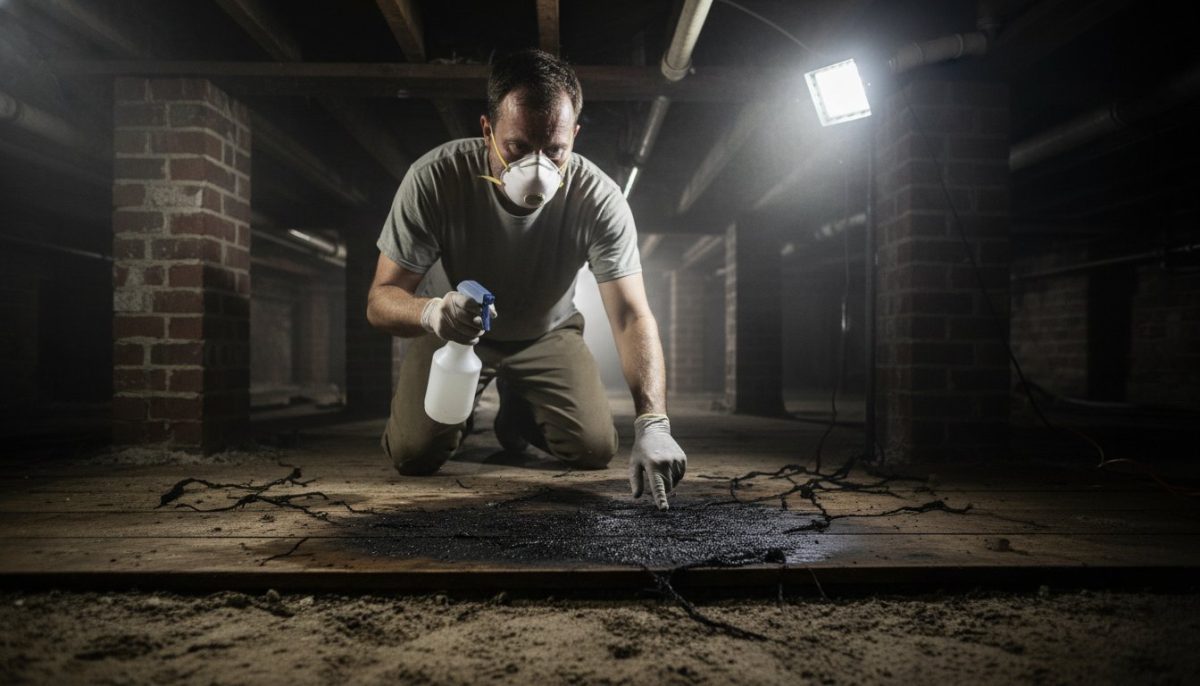
Spraying a bottle of bleach on a patch of black mold in a Charleston crawl space feels like a quick victory, yet you are likely feeding the fungus rather than killing it. In the consistent 80% humidity of the Lowcountry, diy mold removal south carolina attempts often result in a recurring cycle of growth that compromises your home’s structural integrity. You likely want to avoid the $3,000 to $5,000 expense of professional remediation while ensuring your family stays safe from respiratory triggers. It’s understandable to try and handle a small surface stain yourself to maintain control over your living environment and your budget.
This article details the technical risks of independent cleanup in our subtropical climate and provides the specific metrics you need to decide if a project requires certified abatement. We will debunk five dangerous myths that lead to failed property inspections and persistent health risks. By the end of this guide, you’ll understand the engineering behind effective moisture control and the legal implications of improper mold handling in the Palmetto State.
Key Takeaways
- Understand how South Carolina’s high humidity transforms mold from a cosmetic issue into an aggressive biological hazard that requires technical precision.
- Learn why common household remedies like bleach fail to penetrate porous surfaces and can actually facilitate deeper mold growth within your walls.
- Identify the critical safety risks of diy mold removal south carolina, including the danger of cross-contaminating your home with disturbed spores or legacy toxins like asbestos.
- Master the EPA’s 10-square-foot rule to accurately determine when a project exceeds safe DIY limits and requires industrial-grade abatement.
- Discover the professional standards necessary to integrate mold remediation with structural demolition to ensure the long-term integrity of your property.
The Reality of Indoor Mold in South Carolina’s Climate
Indoor mold isn’t a cosmetic issue you can resolve with a spray bottle and a rag. It’s a biological hazard that compromises the structural integrity of a building. In South Carolina, the environment acts as a natural incubator for fungal growth. The state maintains an average relative humidity of 70%, which provides the precise moisture levels required for spores to transition from a dormant state to active colonization. The Reality of Indoor Mold is that it functions as a decomposer; if it’s growing on your drywall or floor joists, it’s actively consuming those materials.
The geography of the South Carolina Lowcountry exacerbates these risks. High water tables and porous coastal soil lead to persistent hydrostatic pressure against foundations. Projections for 2026 weather patterns indicate an increase in localized flooding and storm surges, with some coastal areas expecting 2 to 3 feet of additional water intrusion during peak seasons. This influx of moisture into crawlspaces and wall cavities makes diy mold removal south carolina a complex technical challenge rather than a simple weekend project. Professional remediation requires precise atmospheric control that consumer-grade dehumidifiers can’t achieve.
The 24-48 Hour Window for SC Homeowners
In the heat of a Charleston summer, where afternoon temperatures regularly exceed 90°F, mold spores don’t wait. Fungal reproduction rates accelerate in high temperatures. You have a strict 24 to 48 hour window to dry out a water-damaged area before colonization becomes permanent. Waiting to see if a spot grows larger is a mistake that leads to deep-seated structural damage. Once spores penetrate porous materials like insulation or unsealed wood, surface cleaning becomes ineffective. The contamination is then embedded within the building’s skeleton.
Common Mold Species in the Grand Strand and Lowcountry
Homeowners in the Grand Strand often encounter a variety of species that require different handling protocols. While aesthetic mildew is common in bathrooms, hazardous structural molds are more prevalent in HVAC systems and crawlspaces. Common types include:
- Aspergillus and Penicillium: Frequently found in damp drywall and carpet.
- Cladosporium: A hardy species that thrives in both warm and cool conditions.
- Stachybotrys chartarum: Often called black mold, this requires constant moisture and is highly toxigenic.
Don’t rely on over-the-counter mold test kits. These retail products often yield a 40% to 50% false positive rate because they don’t distinguish between normal outdoor spore counts and an active indoor infestation. Using these kits as a basis for diy mold removal south carolina often leads to an incomplete cleanup that leaves the root cause unaddressed.
Myth vs. Reality: Why Popular DIY Mold Remedies Often Fail
Homeowners often attempt diy mold removal south carolina using household chemicals, unaware that these methods frequently exacerbate structural damage. While a surface might appear clean after a scrub, the biological reality of fungal growth is far more complex. Mold isn’t just a stain; it’s a living organism that thrives on the organic components of your home, such as the paper backing on drywall or the cellulose in wooden studs. Relying on “hacks” like vinegar or essential oils provides a false sense of security while the underlying colony continues to expand within the wall cavity.
The “Out of Sight, Out of Mind” approach is a significant risk factor in South Carolina’s humid climate. If you see mold on a baseboard, there’s an 85% chance that a more extensive colony exists behind the wood. Simply wiping the exterior or applying a coat of “mold-resistant” paint without proper remediation is a temporary mask. This encapsulation fails because it traps moisture against the substrate, allowing the fungus to consume the material from the inside out. For a detailed breakdown of proper moisture control, consult the EPA’s guide to mold cleanup to understand the technical requirements of a dry environment.
The Science of Bleach on Porous Materials
Most commercial bleach products contain approximately 90% water. When applied to porous materials like drywall or wood, the chlorine stays on the surface while the water component sinks deep into the material. This creates a counterproductive cycle where the moisture actually feeds the hyphae, or root system, of the mold. Bleach fails to kill the root of the mold because its chemical structure cannot penetrate porous substrates. Additionally, mixing various DIY cleaners in poorly ventilated crawlspaces creates immediate respiratory hazards, as the reaction between bleach and ammonia-based products produces toxic chloramine gas.
Air Scrubbers vs. Standard Fans
A common mistake in diy mold removal south carolina involves using standard floor fans to “dry out” a damp area. A typical high-velocity fan moves air at 2,000 cubic feet per minute but lacks any filtration system. This process effectively aerosolizes millions of microscopic spores, leading to cross-contamination of the entire HVAC system and adjacent rooms. Professional remediation requires industrial air scrubbers equipped with HEPA filters. These units are designed to capture 99.97% of particles as small as 0.3 microns, ensuring the air remains safe during the cleaning process. If your project involves complex structural elements, it’s safer to consult with a technical specialist who understands the physics of moisture migration and containment.
The Hidden Dangers of Improper DIY Mold Removal
Attempting diy mold removal south carolina without professional containment protocols frequently escalates a localized issue into a structural crisis. When a homeowner scrubs a mold colony, the mechanical action releases millions of microscopic spores and hyphal fragments into the breathing zone. This airborne surge causes immediate respiratory distress for occupants. According to EPA mold cleanup guidelines, any mold growth exceeding 10 square feet requires professional remediation to ensure safety and effective removal. Without high-efficiency particulate air (HEPA) filtration and negative air pressure, you’re simply moving the contamination from the wall to your lungs.
Disturbing Asbestos and Lead Paint
South Carolina’s architectural history presents a unique “abatement overlap” challenge. In historic Charleston and parts of Myrtle Beach, roughly 65% of homes built before 1978 contain lead-based paint. Many structures from the mid-20th century also feature asbestos in joint compounds, ceiling textures, or floor tiles. When you tear out moldy drywall, you’re likely disturbing these hazardous materials. This mistake often necessitates an emergency asbestos removal south carolina project that costs triple the original repair estimate. Inhaling lead dust or asbestos fibers leads to permanent neurological and pulmonary complications that far exceed the risks of the mold itself. For comprehensive guidance on managing multiple contaminants during renovation projects, understanding hazardous material abatement south carolina protocols becomes essential to avoid costly regulatory violations.
Cross-Contamination and Mycotoxins
Spores aren’t static; they use your HVAC system as a delivery vehicle. A failed diy mold removal south carolina attempt can contaminate the entire ductwork of a 2,500-square-foot home in under four hours. This leads to persistent mycotoxin exposure, which is linked to “Sick Building Syndrome.” Modern, tightly sealed homes in SC lack the air exchange rates necessary to dilute these toxins naturally. While a professional uses specialized antimicrobial encapsulates, a DIYer often relies on bleach. Bleach is 90% water; the chlorine stays on the surface while the water soaks into porous studs, essentially feeding the next generation of mold growth.
The financial risks are equally severe. South Carolina real estate laws require the disclosure of past moisture intrusion. If a home inspector finds evidence of uncertified mold work, it can decrease the property’s market value by 12% or more during resale. Most insurance carriers will also deny coverage for secondary damage if they determine the initial remediation didn’t meet industry standards like the IICRC S520. Professional intervention isn’t just about cleaning; it’s about protecting the structural integrity and the legal standing of your asset.
When to DIY vs. When to Call a South Carolina Professional
Determining the scope of a fungal infestation requires an objective, technical mindset. The Environmental Protection Agency (EPA) establishes a clear threshold for homeowners: if the visible mold covers less than 10 square feet, roughly a three-by-three-foot patch, diy mold removal south carolina might be feasible. However, this metric only applies to surface-level growth on non-porous materials. You must evaluate the water source with precision. A localized pipe leak under a kitchen vanity is a contained issue; a foundation breach or a Category 3 flood event, similar to the 2015 historic South Carolina floods, demands industrial-grade extraction and dehumidification.
Health variables significantly shift the risk profile. Approximately 25 million Americans live with asthma, and for these individuals, even minor mold exposure can trigger severe respiratory distress. If any occupant has a compromised immune system or chronic lung disease, DIY attempts are unsafe. Furthermore, identifying Stachybotrys chartarum, often called black mold, requires laboratory analysis. This specific strain produces mycotoxins that necessitate professional containment protocols to prevent cross-contamination during the removal process.
The DIY-Safe Zone: Small Surface Areas
Small-scale remediation is only appropriate for non-porous surfaces like metal, glass, or ceramic tile. Porous materials like drywall or insulation act as a substrate for deep root systems and usually require full replacement. If you proceed with a small project, you must wear NIOSH-approved N95 respirators, unvented goggles, and long nitrile gloves. Once the area is scrubbed with a detergent solution, all contaminated wipes must be double-bagged in 6-mil polyethylene bags and sealed with duct tape to meet safety standards for disposal.
The Red Flags for Professional Abatement
Certain scenarios indicate a structural or systemic failure that exceeds the capabilities of diy mold removal south carolina. If you detect a musty odor when the air conditioning cycles, the mold has likely colonized the HVAC ductwork. This requires specialized mechanical agitation and HEPA-filtered vacuuming. Other critical red flags include:
- Crawlspace Infestations: South Carolina’s relative humidity often exceeds 70%, turning crawlspaces into high-risk zones that require professional vapor barriers.
- Recurring Growth: Mold reappearing in the same 24-inch radius indicates a persistent moisture intrusion or a failure in the building envelope.
- Inaccessible Areas: Mold inside wall cavities or attic insulation requires professional equipment to prevent spore release into the living space.
Professional Remediation: The TSIAC Standard for SC Properties
TSIAC International brings 15 years of technical expertise to South Carolina’s hazardous material landscape. We don’t view mold as a simple surface issue; it’s a structural threat that requires engineering precision. While property owners often attempt diy mold removal south carolina to save on immediate costs, these efforts usually ignore the microscopic spores embedded deep within wall cavities. Our professional approach integrates precise remediation with structural demolition to ensure total removal of the source. We utilize high-efficiency particulate air (HEPA) scrubbing systems and negative pressure containment to prevent the spread of contaminants during the process.
Our commitment to the environment remains a core pillar of our operations. In 2023 alone, our teams successfully recycled 82% of non-contaminated structural materials from our abatement project sites. We believe in responsible disposal and rigorous safety standards that protect both the property and the surrounding ecosystem. This disciplined approach ensures that we leave every site cleaner and safer than we found it.
Our Multi-Stage Remediation Process
We follow a disciplined protocol that begins with the selective demolition of infected studs and porous substrates. This isn’t guesswork; it’s a calculated removal of compromised materials that harbor growth. We provide comprehensive documentation, including moisture maps and digital logs, to satisfy insurance requirements and regulatory bodies. Our process finishes with third-party clearance testing. This guarantees that your interior environment meets a 100% safety rating before the first nail of reconstruction is driven.
Serving Charleston and the Grand Strand
The humid climates of North Charleston and Myrtle Beach require specialized knowledge of local building codes and moisture behavior. We provide rapid response services for commercial interior gut-outs and residential clears throughout the Grand Strand, often arriving on-site within 24 hours of a call. Our technicians understand the architectural nuances of Lowcountry properties, ensuring that structural integrity is never compromised during abatement. If you’re facing a complex contamination issue and want to avoid the long-term failures of diy mold removal south carolina, contact TSIAC International for a professional assessment of your SC property today.
Securing Your Property Against Structural Mold Risks
South Carolina’s average humidity levels frequently exceed 70 percent, creating a persistent breeding ground that household chemicals simply can’t neutralize. Relying on diy mold removal south carolina often masks surface issues while microscopic spores continue to degrade the building’s structural integrity behind the drywall. TSIAC International brings over 15 years of specialized field experience to every remediation project, ensuring that we address the root cause rather than applying a temporary cosmetic fix. Our team is fully licensed and insured for both structural and selective demolition, providing the technical precision required for residential homes and large-scale commercial gut-outs alike.
We approach every site with engineering-grade discipline to prevent cross-contamination and ensure a complete hazardous material recovery. By choosing a partner with a proven track record in complex SC environments, you’re protecting both your financial investment and the long-term safety of the building’s occupants. You don’t have to face these technical challenges alone. Contact TSIAC International for Professional Mold & Asbestos Abatement to restore your property to a clean, safe, and stable condition today.
Frequently Asked Questions
Is mold removal legally required for home sales in South Carolina?
South Carolina law requires sellers to disclose known mold issues on the Residential Property Condition Disclosure Statement. While the law doesn’t mandate removal before a sale, most lenders won’t approve a mortgage if a professional inspection finds active growth. In 2023, approximately 15% of SC home sales faced delays due to environmental contingencies. You must report any history of water intrusion or fungal growth to avoid future legal liability.
Can I stay in my house during mold remediation?
You can usually stay in your home if the affected area is smaller than 10 square feet and properly contained. Professional teams use 6-mil polyethylene sheeting to create airtight barriers and negative air pressure. If the HVAC system requires cleaning or the mold covers over 30 square feet, safety protocols dictate vacating the premises for 48 to 72 hours. This prevents cross-contamination of spores during the structural cleaning process.
Does South Carolina homeowners insurance usually cover mold removal?
Standard South Carolina homeowners insurance covers mold remediation only if it results from a sudden, accidental water event like a burst pipe. Most policies exclude mold caused by humidity or lack of maintenance, which is common in coastal climates. Many carriers cap mold coverage at $5,000 unless you’ve purchased a specific endorsement. Check your policy’s Section I Perils for specific exclusions regarding long-term seepage and moisture intrusion.
How much does professional mold remediation cost in Charleston?
Professional mold remediation in Charleston typically costs between $2,200 and $5,500 for a standard crawlspace or attic project. Total expenses depend on the square footage and the complexity of the structural drying required. For example, a 1,200 square foot crawlspace encapsulation with mold treatment often ranges from $8,000 to $12,000. These figures include labor, HEPA filtration, and antimicrobial applications designed for high-humidity environments.
What is the difference between mold cleaning and mold abatement?
Mold cleaning involves removing visible surface growth, while abatement is a comprehensive engineering process that eliminates the root cause and contaminated materials. Abatement follows IICRC S520 standards, requiring specialized equipment like air scrubbers and HEPA vacuums. Simple cleaning often fails because it leaves behind microscopic hyphae embedded in porous surfaces. Effective diy mold removal south carolina attempts often fail at this stage because they don’t address the structural moisture source.
How do I know if the mold in my SC home is the “toxic” kind?
You can’t identify “toxic” mold like Stachybotrys chartarum by sight alone; you need laboratory analysis. A professional mold inspector will collect air samples or tape lifts for microscopic examination. In South Carolina, approximately 30% of indoor mold samples contain species that produce mycotoxins under specific conditions. If your home has a musty odor or visible black spotting after a flood, testing provides the necessary data for a safety plan.
Can I use a dehumidifier to kill existing mold in my crawlspace?
Dehumidifiers don’t kill existing mold; they only force the fungus into a dormant state by lowering relative humidity below 50%. While a dehumidifier is essential for preventing new growth, the existing spores remain allergenic and can reactivate when moisture returns. You must physically remove the colonies through abrasive cleaning or HEPA vacuuming. Attempting diy mold removal south carolina without first drying the structure to a 12% wood moisture content is a temporary fix.
What happens if I ignore a small patch of mold in a humid climate?
Ignoring a small mold patch in South Carolina’s 70% average humidity leads to rapid colonization of structural timbers within 24 to 48 hours. Small colonies quickly expand into wall cavities, compromising drywall integrity and insulation R-values. A 1-foot patch can become a 10-foot contamination zone in less than 2 weeks during the summer months. This delay increases remediation costs from a few hundred dollars to several thousand as structural damage occurs.
