
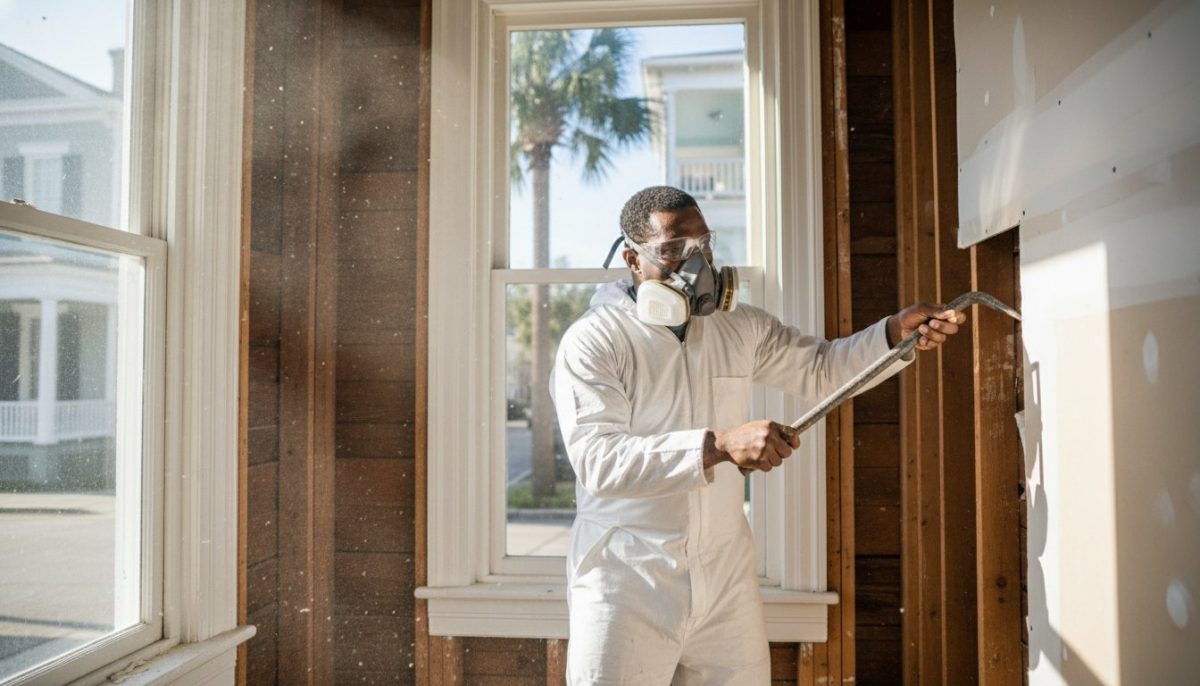
According to South Carolina DHEC data, approximately 75% of residential structures built before 1978 in the Lowcountry contain trace amounts of asbestos or lead-based compounds within their wall assemblies. When you initiate a full gut-out, you aren’t just clearing space; you’re managing a complex environmental site that requires technical oversight. Professional drywall removal charleston sc demands a level of engineering precision that goes far beyond simple demolition. It’s natural to feel concerned about the fine particulate dust and the potential for hazardous exposure that accompanies these large-scale interior projects.
This guide provides the technical framework to help you master the complexities of drywall abatement, from initial testing to eco-friendly disposal. You’ll gain the knowledge needed to secure a site that’s verified free of hazardous materials and ready for immediate structural framing. We’ll examine the specific 2024 Charleston County disposal regulations, advanced dust containment protocols, and the recycling standards necessary to maintain strict SC environmental compliance.
Key Takeaways
- Learn to distinguish between minor cosmetic patches and the technical requirements of full-scale interior gutting for flood-damaged or historic properties.
- Identify the mandatory South Carolina regulatory protocols for asbestos and lead testing to ensure safety in Charleston’s older structures.
- Evaluate the structural risks and hidden costs of DIY projects compared to the precision of professional drywall removal charleston sc services.
- Navigate the complex demolition permitting process in the Lowcountry while implementing eco-friendly waste diversion and recycling practices.
- Discover how professional engineering expertise and rapid–response capabilities ensure the safe execution of high-stakes demolition and hazardous material abatement.
The Scope of Drywall Removal in Charleston: When Repair Isn’t Enough
Drywall patching typically addresses localized punctures or hairline fractures. Full-scale interior gutting involves the systematic extraction of all gypsum board to expose the underlying structure. In the coastal environment of South Carolina, drywall removal charleston sc often transitions from a cosmetic choice to a structural necessity. When moisture levels remain high, the integrity of the gypsum core fails. This isn’t just about aesthetics; it’s about the fundamental stability of the interior envelope.
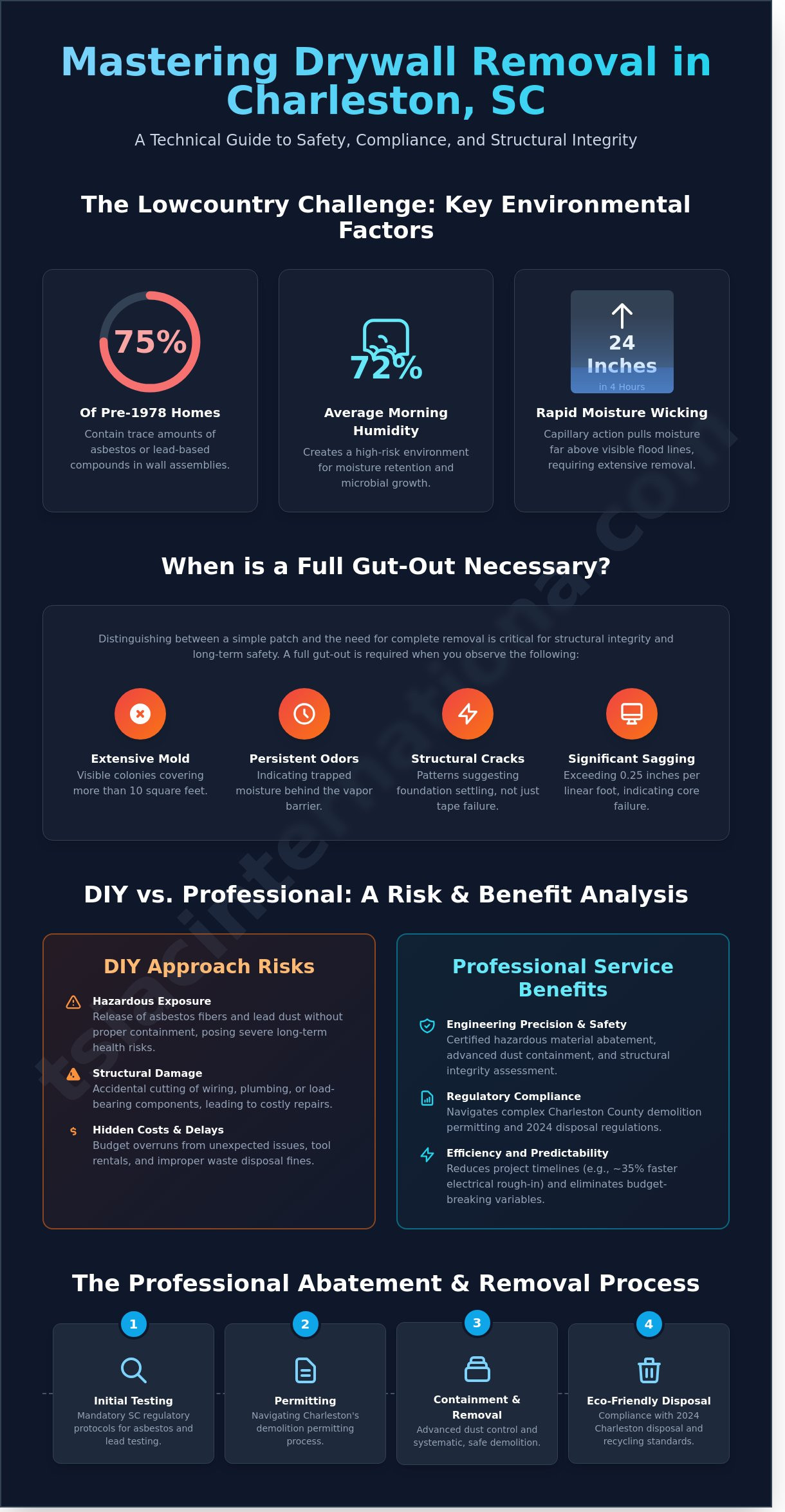
Charleston’s 72% average morning humidity creates a high-risk environment for moisture retention. When floodwaters or heavy leaks penetrate a building, capillary action can pull moisture up to 24 inches above the visible water line within 4 hours. This creates an immediate requirement for removal to prevent microbial growth. Historic properties built before 1978 often hide legacy materials that present asbestos health risks, requiring certified abatement protocols during the demolition phase. We don’t guess with safety. We treat every pre-1980 structure with the technical scrutiny required for hazardous material handling.
Selective demolition serves as the primary tool for modernizing Charleston’s aging commercial and residential stock. Many downtown structures feature layers of outdated renovations that compromise floor space and utility access. By removing these layers, we allow engineers to inspect the original framing and plan for modern loads. This process is essential for buildings that have survived multiple hurricane seasons, as hidden structural fatigue often hides behind intact-looking drywall.
Identifying Structural vs. Cosmetic Needs
Technicians look for sagging exceeding 0.25 inches per linear foot. This indicates fastener failure or core degradation that a simple patch can’t fix. The 2026 local building code revisions mandate higher energy efficiency standards for R-value ratings in exterior walls. Stripping old drywall allows for the installation of closed-cell spray foam or mineral wool, ensuring compliance with these updated thermal regulations. Professional drywall removal charleston sc also creates the necessary clearance for installing 20-gauge metal framing in commercial retrofits, which provides better fire resistance and longevity than traditional wood studs.
- Visible mold colonies covering more than 10 square feet.
- Persistent odors that indicate trapped moisture behind the vapor barrier.
- Cracking patterns that suggest foundation settling rather than simple joint tape failure.
- Water stains that reappear after painting, indicating a failure in the underlying substrate.
The ‘Gut-Out’ Advantage for Major Renovations
Stripping to the studs reduces electrical rough-in time by approximately 35% compared to fishing wires through existing cavities. For commercial tenant improvements (TI), this process provides a blank canvas for reconfiguring floor plans to meet 2025 occupancy standards. Interior gutting is the surgical removal of non-structural elements to facilitate total redesign. This precision ensures that plumbing stacks and HVAC ductwork can be optimized without the constraints of 40-year-old wall placements. It’s a cleaner, faster, and more predictable way to manage a large-scale project. We eliminate the variables that cause budget overruns by exposing every potential issue before the new construction phase begins.
Safety First: Asbestos and Lead Abatement in SC Drywall Projects
Charleston’s residential landscape features a high concentration of homes built before 1980. These structures frequently contain legacy hazardous materials that require professional handling. When performing drywall removal charleston sc, we treat every project with engineering-level scrutiny. South Carolina law requires specific testing for asbestos before any demolition or renovation begins on commercial structures; it’s also a critical safety standard for residential properties. Skipping this step risks legal fines and long-term health complications for occupants. Our team treats hazardous material identification as the foundation of the project, not an afterthought.
Asbestos in Drywall: A Legacy Issue
Between 1930 and 1980, asbestos was a standard additive in joint compounds and textured “popcorn” ceilings throughout South Carolina. The danger lies in the material’s friability. When you break or sand old drywall, it releases microscopic fibers into the air. These fibers can remain suspended for 72 hours or longer, making them easy to inhale. We ensure full compliance with DHEC regulations by securing the necessary abatement permits. This documentation is vital for your property’s permanent record and future resale value. Our team manages the entire professional site assessment to identify these risks before the first hammer swings.
Lead-Based Paint and Dust Control
Homes built before 1978 have an 87% chance of containing lead-based paint according to federal data. During drywall removal charleston sc, the primary threat is lead-contaminated dust. We operate as an EPA Lead-Safe Certified firm, adhering to rigorous Renovation, Repair, and Painting (RRP) standards. Our containment strategy involves sealing all HVAC vents with 6-mil poly sheeting to prevent contaminants from entering the ductwork. We utilize industrial HEPA vacuums that capture 99.97% of particles as small as 0.3 microns. This ensures the air quality remains stable throughout the demolition process and protects the home’s mechanical systems from microscopic debris.
Our technical protocol relies on negative air pressure zones. We use high-volume air scrubbers to create a pressure differential. This ensures that air only flows into the work area, never out into the living spaces. We don’t just clear the room; we build a temporary laboratory-grade environment. This level of precision is why clients trust us with complex historical renovations in downtown Charleston. We provide a final clearance report that confirms the site is safe for reconstruction. This gives you a transparent paper trail of safety and compliance that protects your investment and your health.
Disturbing these materials without certification isn’t just a health risk; it’s a significant legal liability. Uncertified contractors often lack the specialized insurance required for hazardous material handling. If a site becomes contaminated due to poor practices, the cleanup costs can exceed the original renovation budget by 300% or more. We eliminate this risk through disciplined execution and constant monitoring. Our workers use specialized respirators and disposable suits, ensuring that no contaminants leave the designated work zone on clothing or tools. We prioritize a clean exit, leaving the structure ready for the next phase of construction without lingering invisible hazards.
DIY vs. Professional Drywall Removal: A Comparison of Scale
Property owners often underestimate the sheer physical mass involved in a full-scale renovation. For a standard 2,000 square foot interior, the gypsum wallboard alone weighs approximately 3,200 pounds. This isn’t a simple weekend task; it’s an industrial logistical challenge. Choosing professional drywall removal charleston sc ensures that these 1.6 tons of material are handled with engineering precision rather than brute force. A dedicated crew of four technicians can gut a 2,000 square foot space in roughly 6 hours, whereas a DIY attempt typically stretches over 4 days of grueling labor.
The risk of “accidental demolition” remains the most significant threat to a project’s budget. Unskilled removal often leads to punctured 1/2-inch copper plumbing lines or severed electrical conduits hidden within the wall cavities. A single nicked pipe can result in $5,000 in emergency water damage restoration costs. Professional teams use thermal imaging and moisture meters to map internal wall components before the first strike. In Charleston’s commercial sector, licensed demolition contractors are mandatory. Most commercial leases and insurance policies in the 29401 and 29403 zip codes require $1 million in general liability coverage, a standard that DIY projects cannot meet.
The Hidden Costs of Doing It Yourself
Financial evaluations of DIY often ignore the cumulative expenses of specialized equipment. Renting a 20-yard roll-off dumpster in Charleston costs between $450 and $600 per week, excluding overage fees. If you haul it yourself, the Bees Ferry Landfill charges $70 per ton for construction and demolition waste. You must also factor in the cost of industrial-grade HEPA dust extractors, which rent for $110 per day, and high-strength floor protection like Ram Board at $1.25 per linear foot. When you calculate the 32 to 40 hours of lost personal productivity, the professional alternative often presents a higher ROI.
- Weight Logistics: 1,000 square feet of 1/2-inch drywall weighs about 1,600 lbs.
- Disposal Fees: Current Charleston County C&D rates are $70/ton.
- Safety Gear: Professional-grade respirators and puncture-resistant suits add $200 in upfront costs.
Professional Selective Demolition Framework
TSIAC International utilizes a surgical approach to drywall removal, particularly in mixed-use developments along King Street or the Upper Peninsula. We don’t just “bash” walls. We employ a selective demolition framework that protects existing architectural features, such as original heart pine flooring or historic masonry. Our process involves scoring joints with precision oscillators to prevent structural vibration that could crack plaster in adjacent rooms. This level of control is vital for maintaining the integrity of Charleston’s older building stock.
Efficiency also stems from source-separation. Our crews sort debris at the point of removal, separating clean gypsum from metal studs and wiring. This method is more cost-effective for large-scale projects because it reduces landfill tipping fees and supports LEED certification goals. By diverting 85% of waste from the landfill through meticulous sorting, we provide a sustainable solution that matches the rigorous standards of modern South Carolina construction codes. Precision saves money. Expertise prevents delays.
Charleston Regulations and Environmental Recycling Practices
Executing a professional drywall removal charleston sc project requires more than physical labor; it demands strict adherence to South Carolina building codes and municipal ordinances. The City of Charleston and North Charleston maintain rigorous standards for structural alterations to ensure public safety and environmental protection. Our team manages these regulatory hurdles by integrating compliance into the initial project engineering phase, preventing costly delays or stop-work orders from local building departments.
Navigating the Permit Process
The City of Charleston Building Inspections Division requires a formal permit for any interior demolition exceeding 200 square feet or involving structural components. For structures built before 1978, federal EPA RRP standards dictate specific lead-paint and asbestos testing before a single sheet of gypsum is disturbed. We coordinate directly with the North Charleston Building Department and Charleston County officials to secure these clearances. Our process involves three distinct phases: the pre-demolition site assessment, the filing of the C&D (Construction and Demolition) waste management plan, and the final inspection sign-off. We work alongside your general contractor to ensure all permit closures align with the broader project timeline, maintaining a clear paper trail for insurance and resale purposes.
- Structural Assessment: We identify load-bearing studs versus partition framing to prevent structural compromise.
- Utility Clearance: Coordination with SCE&G or Dominion Energy ensures all electrical and plumbing lines are safely capped or rerouted.
- Inspection Scheduling: We manage the 24-hour notice periods required for municipal inspectors to visit the job site.
Sustainable Demolition: Material Recovery
Standard drywall disposal is a significant burden on the Bees Ferry Landfill, where gypsum can break down and release hydrogen sulfide gas. TSIAC utilizes a technical recovery model that treats demolition debris as a resource rather than waste. Our on-site technicians perform source-separation, isolating gypsum board from metal fasteners, aluminum tracks, and lumber. This methodology follows the 2022 Charleston County Solid Waste Management Plan, which encourages the diversion of C&D materials to specialized recycling facilities. By grinding recovered gypsum, we provide raw material for local agricultural soil amendments or new wallboard manufacturing, significantly reducing the carbon footprint of your renovation.
TSIAC recovers up to 80% of site materials through disciplined sorting. This efficiency is achieved through a multi-stage reclamation process:
- Metal Reclamation: Steel and aluminum studs are extracted and sent to local scrap processors for 100% recycling.
- Wood Recovery: Clean, non-treated wood framing is diverted to mulching facilities or biomass energy plants.
- Gypsum Processing: Core material is stripped of paper backing to ensure high-purity calcium sulfate recovery.
Our commitment to technical precision ensures that your project meets the highest environmental standards while remaining compliant with all local disposal rules. We don’t just clear the space; we manage the lifecycle of every material we touch. If you’re ready to start your project with a partner who prioritizes regulatory accuracy and sustainability, contact our Charleston demolition experts today to schedule a site evaluation.
Why TSIAC International is Charleston’s Trusted Demolition Partner
TSIAC International has spent 15 years refining the technical execution of interior demolition and hazardous material abatement. We don’t view a project as a simple tear-down. Instead, we see it as a critical engineering phase that dictates the success of everything that follows. Our firm has completed over 450 large-scale commercial gut-outs since 2009, maintaining a safety record that far exceeds industry averages. For developers and facility managers seeking drywall removal charleston sc, we provide a level of oversight that eliminates the unpredictability often found in standard demolition work.
Our operations are headquartered at 2150 West Rhett Ave in North Charleston. This central hub allows our heavy response teams to reach project sites across the Lowcountry and the Grand Strand within 60 minutes. We understand that construction delays cost thousands of dollars per hour. Because our logistics are managed from this regional nerve center, we maintain a 98% on-time mobilization rate. Our team treats every interior project with surgical precision, ensuring that structural elements, HVAC systems, and electrical conduits remain undisturbed while the secondary materials are stripped away.
Initiating a project with us follows a disciplined sequence designed for maximum transparency. We start with a 48-hour site assessment to identify load-bearing risks and potential environmental hazards. Once the assessment is complete, we provide a comprehensive mobilization plan that outlines every phase of the debris clearance. This structured approach ensures that when we hand the site back to your team, it’s not just empty; it’s ready for immediate reconstruction.
Our Industrial-Grade Fleet and Expertise
We invest heavily in high-performance machinery that smaller contractors simply can’t access. Our fleet includes specialized HEPA-filtered dust extraction units and electric-powered compact loaders that allow for emission-free operation in enclosed spaces. These tools are essential for maintaining air quality during drywall removal charleston sc in occupied buildings or sensitive environments. Every piece of equipment at our 2150 West Rhett Ave facility undergoes a rigorous 25-point inspection every 30 days to prevent mechanical failure on the job site.
The machinery is only as effective as the crew operating it. Our technicians complete 40 hours of mandatory safety and technical training every year. This discipline ensures that our teams work with a level of coordination that minimizes noise and vibration. We don’t hire temporary labor for our demolition projects. You’ll only see full-time, highly trained TSIAC professionals who understand the complexities of South Carolina building codes and environmental regulations.
Partnering for Success
We operate as a strategic extension of your management team. Whether you’re a general contractor or a property manager, we provide the data and reliability you need to stay on schedule. We utilize fixed-price contracts to prevent budget creep, and our project timelines are backed by a performance guarantee. In 2023, we met our projected completion dates for 94% of our commercial interior projects, often finishing 12 to 24 hours ahead of the client’s aggressive deadline.
Our commitment to transparent communication means you’ll receive daily progress reports and waste diversion manifests. We take the burden of debris management off your shoulders, allowing you to focus on the high-value aspects of your build. To experience a more professional approach to site preparation, Contact TSIAC International for a professional site assessment. We’ll provide a clear, technical roadmap for your next interior gut-out or recycling project.
Advancing Your Charleston Renovation with Precision and Safety
Successful property transformation begins with a clean, safe slate. Professional drywall removal charleston sc isn’t just about demolition; it’s about mitigating hidden risks like asbestos and lead through rigorous abatement protocols. With over 15 years of industry expertise, TSIAC International ensures every project adheres to 100% safety compliance and local environmental recycling mandates. Our certified specialists handle the technical complexities of hazardous material disposal so you don’t have to worry about regulatory fines or health hazards. We approach every site with engineering precision, whether it’s a residential strip-out or a complex commercial abatement project. You deserve a partner who views safety as a non-negotiable standard rather than a suggestion. We’ve built our reputation on solving difficult site challenges that others avoid. Let’s ensure your next construction phase starts on a foundation of professional reliability and technical excellence. Your property is a significant investment, and our team is ready to protect its value through disciplined, expert execution.
Request a Professional Demolition Quote from TSIAC International
Frequently Asked Questions
Do I need a permit for drywall removal in Charleston, SC?
Yes, the City of Charleston Building Inspections Division requires a permit for most drywall removal projects that involve structural modifications or exceed $200 in total valuation. We ensure all documentation complies with the 2021 International Residential Code standards to avoid legal delays. This oversight ensures your property maintains its structural integrity and safety throughout the entire renovation process.
How can I tell if my drywall contains asbestos before removal?
You can only confirm the presence of asbestos through professional laboratory testing of samples taken from the drywall and joint compound. Structures built before 1980 have a 75% higher probability of containing asbestos fibers in the finishing materials. We coordinate with NVLAP accredited laboratories to analyze samples before starting any drywall removal charleston sc projects to guarantee site safety for everyone involved.
How much does professional interior gutting cost in the Lowcountry?
Professional interior gutting in the Lowcountry typically costs between $2.50 and $6.00 per square foot for standard residential or commercial spaces. A 2,000 square foot project might range from $5,000 to $12,000 depending on debris volume and the presence of hazardous materials. These figures include labor, hauling fees, and disposal costs at local South Carolina recycling centers.
What is the difference between selective demolition and a full gut-out?
Selective demolition targets specific walls or finishes while a full gut-out removes every non-structural element down to the framing. Selective work often involves 15% to 30% of the total floor area to preserve historical features or functional zones. A full gut-out is a comprehensive 100% removal of all interior surfaces, including ceilings and flooring, to prepare for a complete architectural redesign.
Does TSIAC International handle both residential and commercial drywall removal?
TSIAC International executes both residential and commercial drywall removal charleston sc projects using industrial grade equipment and specialized crews. Our portfolio includes 50,000 square foot warehouse clearances and 1,500 square foot residential renovations. We apply the same engineering precision to a single family home that we use for complex industrial steel structure projects across the state.
How do you handle dust control during a large-scale interior project?
We manage dust using industrial HEPA air scrubbers and negative pressure environments to contain 99.97% of airborne particles. Our teams install 6-mil polyethylene vapor barriers at every entry point and seal all HVAC vents before work starts. This technical approach prevents fine gypsum dust from migrating into non-work areas, protecting your indoor air quality and sensitive mechanical systems.
Can you recycle drywall in South Carolina?
South Carolina allows for the recycling of clean, unpainted gypsum board at specialized facilities that process the material for agricultural or manufacturing use. Approximately 15% of construction waste in the state consists of drywall, so we prioritize diversion from local landfills. We transport eligible scrap to local processors where the paper is separated and the gypsum is repurposed for soil amendments.
What happens to the electrical and plumbing lines during a gut-out?
Licensed electricians and plumbers must de-energize and cap all utility lines before we begin the physical gut-out process. We verify that 100% of the power is disconnected at the breaker and water mains are shut off to prevent accidental flooding or electrical arcs. This systematic coordination ensures that 0% of your critical infrastructure is damaged during the removal of wall and ceiling surfaces.
